
Motivation Ch 8 Understanding SLA Lourdes Ortega 2009
- Slides: 12
Motivation (Ch. 8) Understanding SLA Lourdes Ortega (2009) www. routledge. com/cw/ortega Published by Routledge © 2009 Mark Sawyer
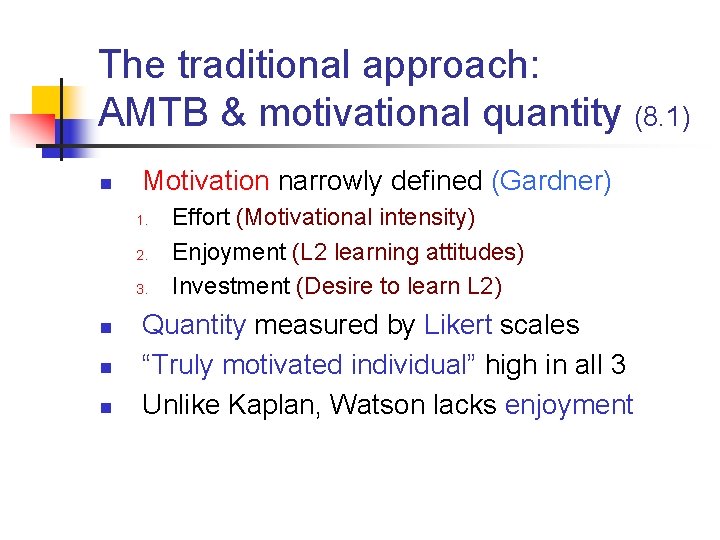
The traditional approach: AMTB & motivational quantity (8. 1) n Motivation narrowly defined (Gardner) 1. 2. 3. n n n Effort (Motivational intensity) Enjoyment (L 2 learning attitudes) Investment (Desire to learn L 2) Quantity measured by Likert scales “Truly motivated individual” high in all 3 Unlike Kaplan, Watson lacks enjoyment
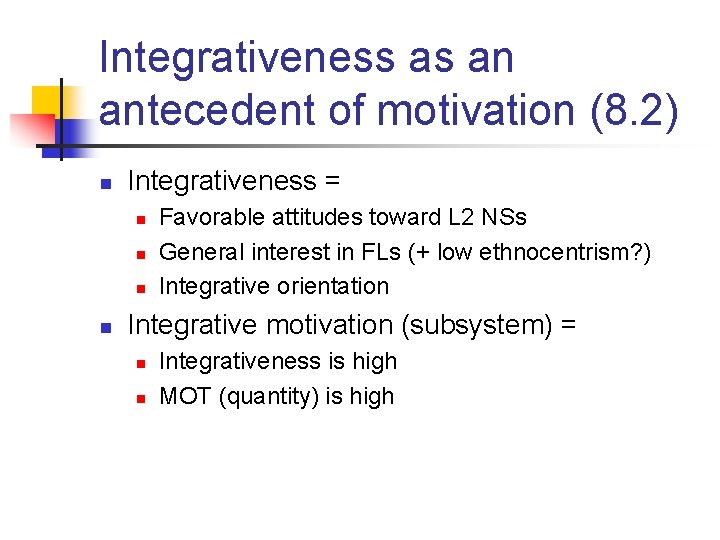
Integrativeness as an antecedent of motivation (8. 2) n Integrativeness = n n Favorable attitudes toward L 2 NSs General interest in FLs (+ low ethnocentrism? ) Integrative orientation Integrative motivation (subsystem) = n n Integrativeness is high MOT (quantity) is high
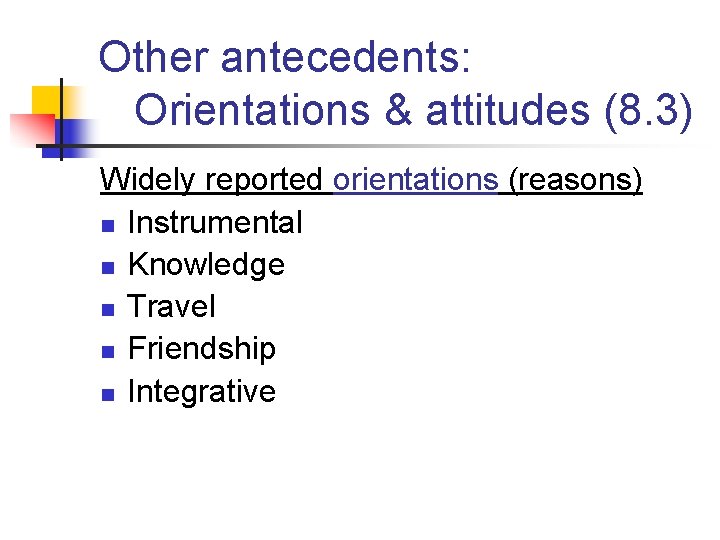
Other antecedents: Orientations & attitudes (8. 3) Widely reported orientations (reasons) n Instrumental n Knowledge n Travel n Friendship n Integrative
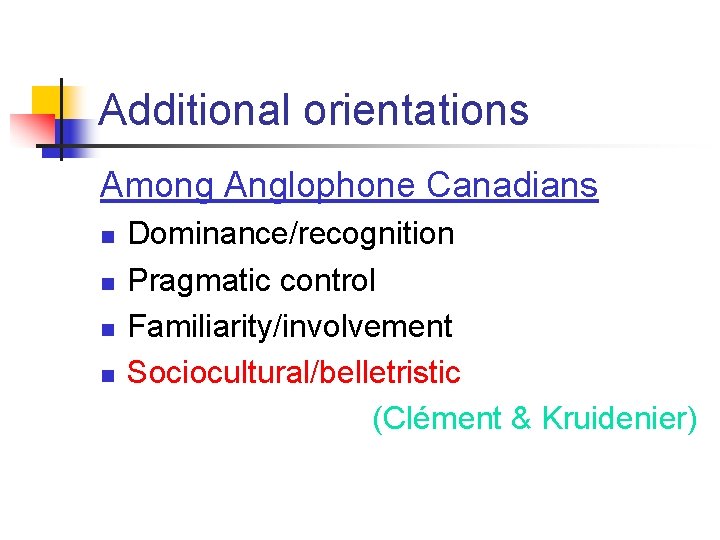
Additional orientations Among Anglophone Canadians n n Dominance/recognition Pragmatic control Familiarity/involvement Sociocultural/belletristic (Clément & Kruidenier)
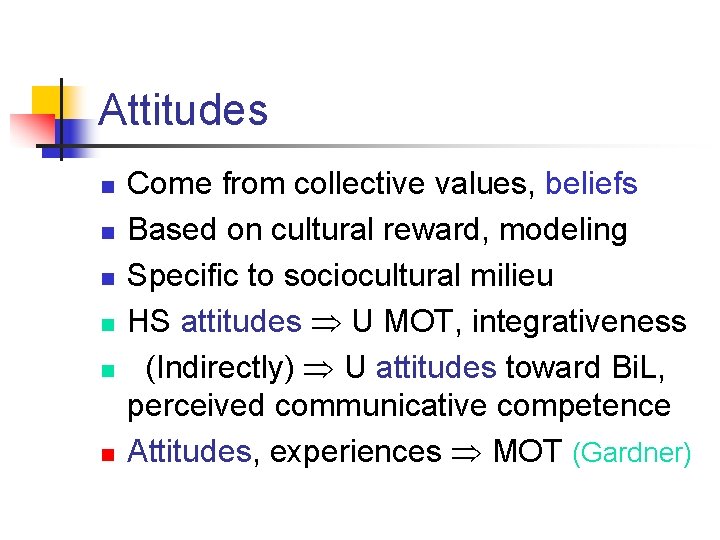
Attitudes n n n Come from collective values, beliefs Based on cultural reward, modeling Specific to sociocultural milieu HS attitudes U MOT, integrativeness (Indirectly) U attitudes toward Bi. L, perceived communicative competence Attitudes, experiences MOT (Gardner)
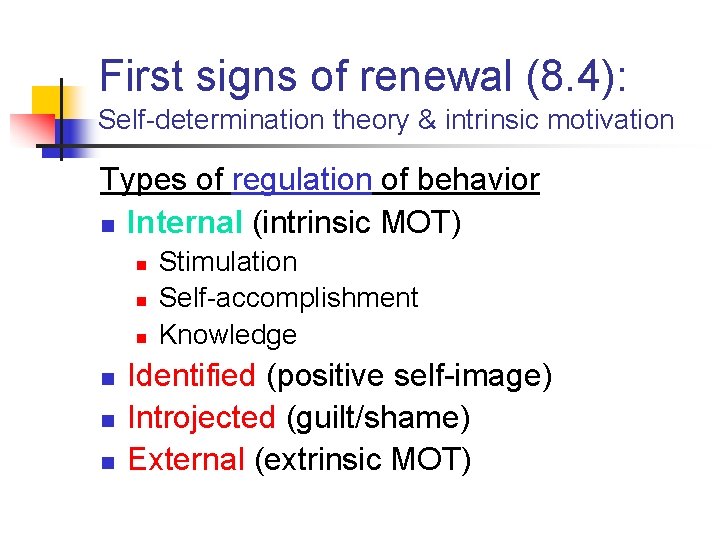
First signs of renewal (8. 4): Self-determination theory & intrinsic motivation Types of regulation of behavior n Internal (intrinsic MOT) n n n Stimulation Self-accomplishment Knowledge Identified (positive self-image) Introjected (guilt/shame) External (extrinsic MOT)
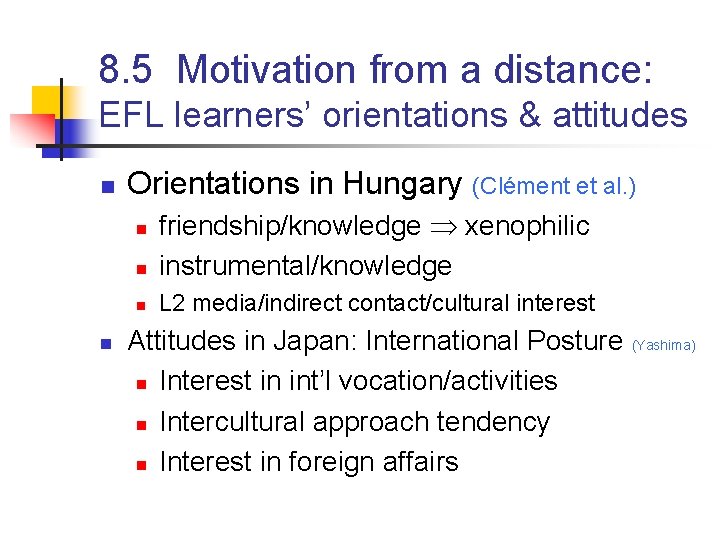
8. 5 Motivation from a distance: EFL learners’ orientations & attitudes n Orientations in Hungary (Clément et al. ) n friendship/knowledge xenophilic instrumental/knowledge n L 2 media/indirect contact/cultural interest n n Attitudes in Japan: International Posture (Yashima) n Interest in int’l vocation/activities n Intercultural approach tendency n Interest in foreign affairs
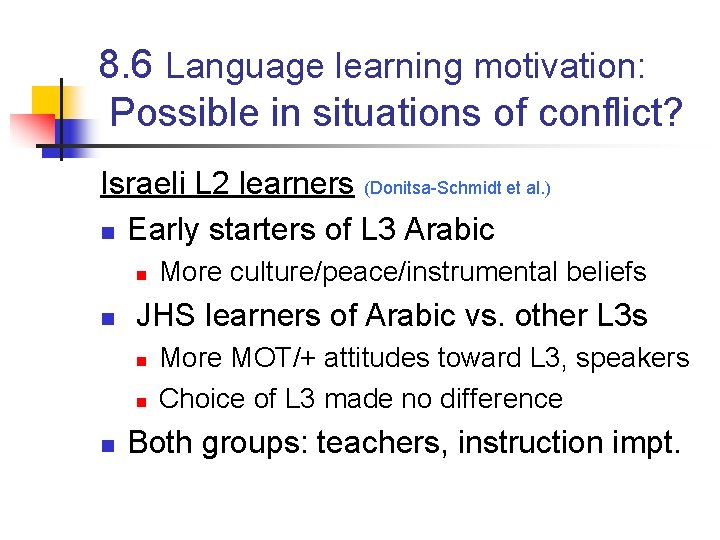
8. 6 Language learning motivation: Possible in situations of conflict? Israeli L 2 learners (Donitsa-Schmidt et al. ) n Early starters of L 3 Arabic n n JHS learners of Arabic vs. other L 3 s n n n More culture/peace/instrumental beliefs More MOT/+ attitudes toward L 3, speakers Choice of L 3 made no difference Both groups: teachers, instruction impt.
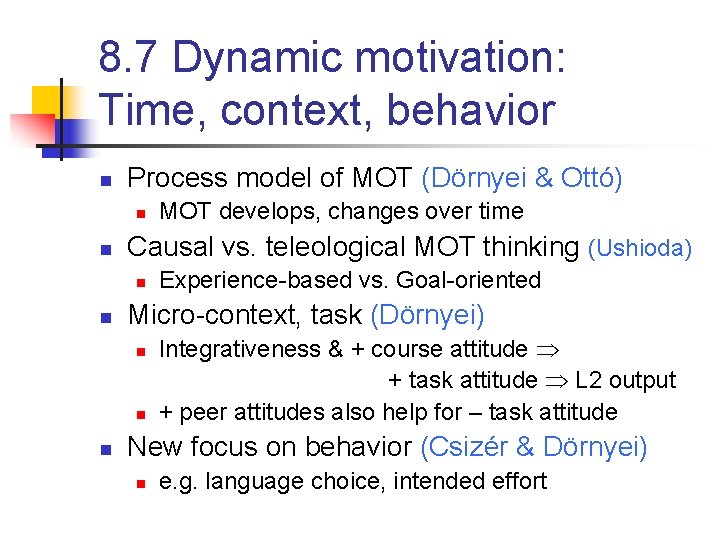
8. 7 Dynamic motivation: Time, context, behavior n Process model of MOT (Dörnyei & Ottó) n n Causal vs. teleological MOT thinking (Ushioda) n n Experience-based vs. Goal-oriented Micro-context, task (Dörnyei) n n n MOT develops, changes over time Integrativeness & + course attitude + task attitude L 2 output + peer attitudes also help for – task attitude New focus on behavior (Csizér & Dörnyei) n e. g. language choice, intended effort
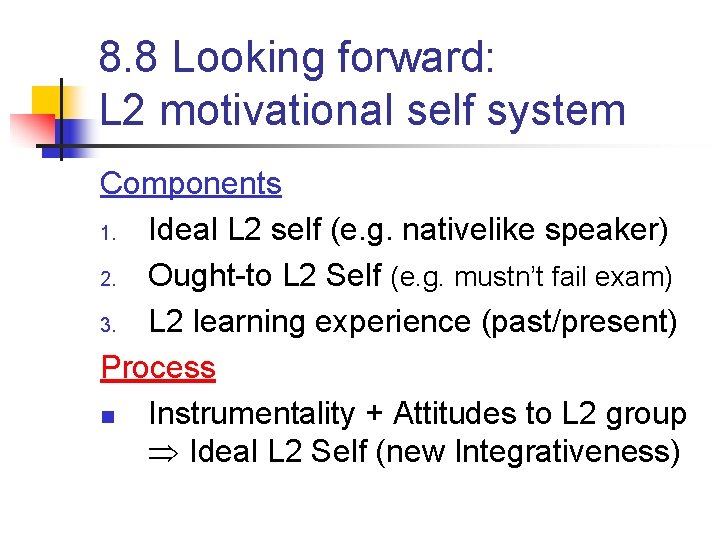
8. 8 Looking forward: L 2 motivational self system Components 1. Ideal L 2 self (e. g. nativelike speaker) 2. Ought-to L 2 Self (e. g. mustn’t fail exam) 3. L 2 learning experience (past/present) Process n Instrumentality + Attitudes to L 2 group Ideal L 2 Self (new Integrativeness)
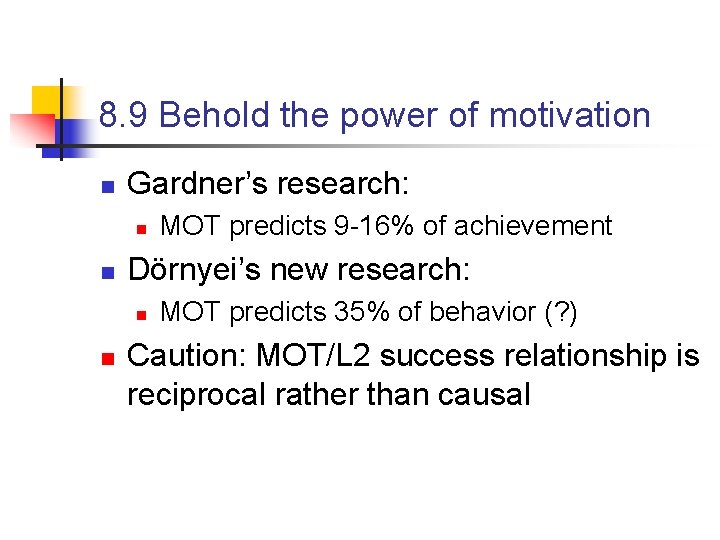
8. 9 Behold the power of motivation n Gardner’s research: n n Dörnyei’s new research: n n MOT predicts 9 -16% of achievement MOT predicts 35% of behavior (? ) Caution: MOT/L 2 success relationship is reciprocal rather than causal