
Motivation Background and Theories Theory Founders n Content

Motivation: Background and Theories

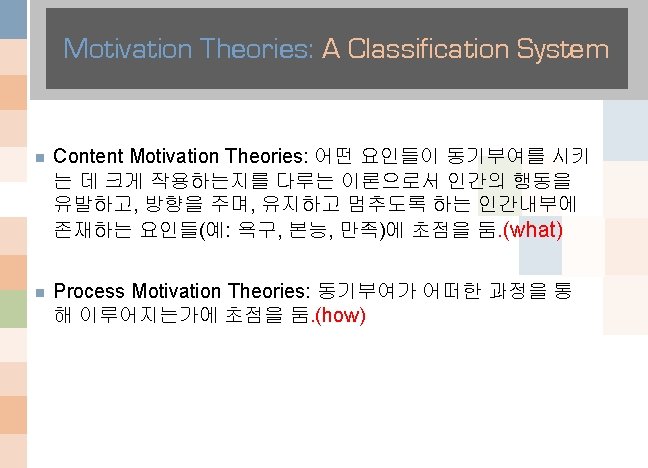
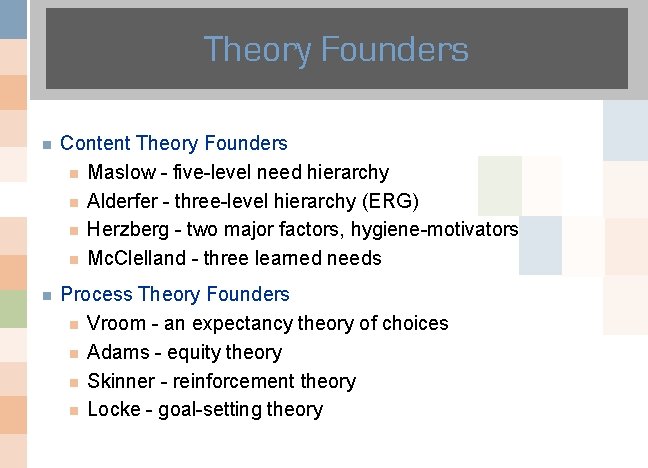
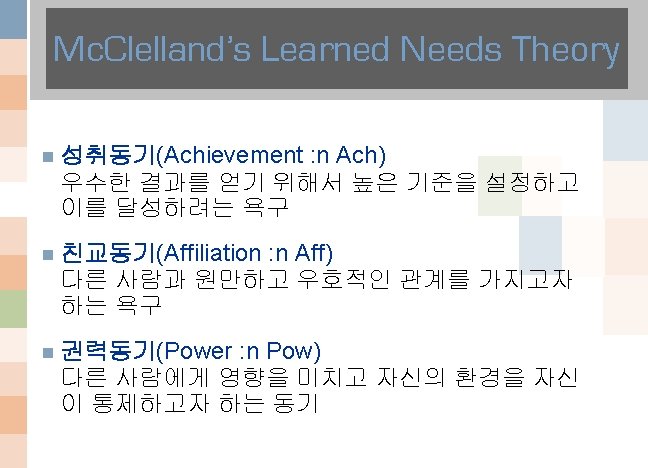
Theory Founders n Content Theory Founders n Maslow - five-level need hierarchy n Alderfer - three-level hierarchy (ERG) n Herzberg - two major factors, hygiene-motivators n Mc. Clelland - three learned needs n Process Theory Founders n Vroom - an expectancy theory of choices n Adams - equity theory n Skinner - reinforcement theory n Locke - goal-setting theory
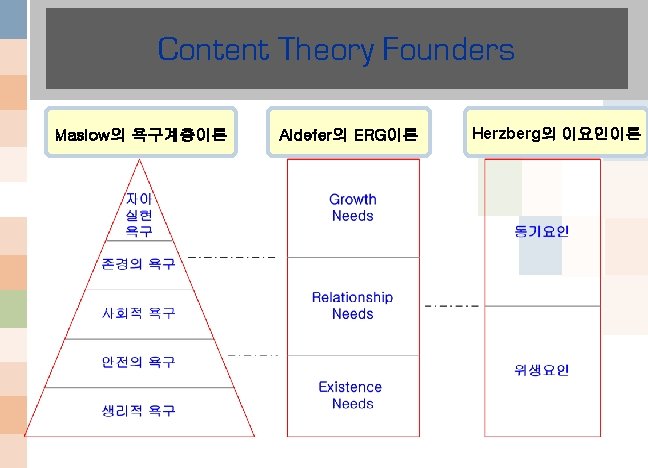
Content Theory Founders Maslow의 욕구계층이론 Aldefer의 ERG이론 Herzberg의 이요인이론
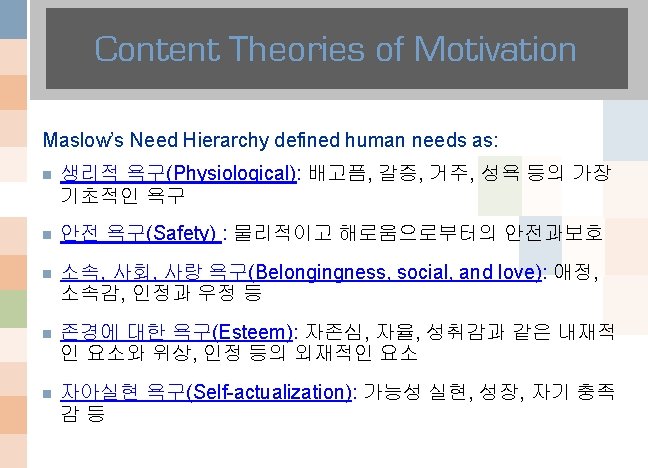
Content Theories of Motivation Alderfer proposes a hierarchy involving three sets of needs: n 존재욕구(Existence): needs satisfied by such factors as food, air, water, pay, and working conditions. n 관계욕구(Relatedness): needs satisfied by meaningful social and interpersonal relationships. n 성장욕구(Growth): needs satisfied by an individual making creative or productive contributions.
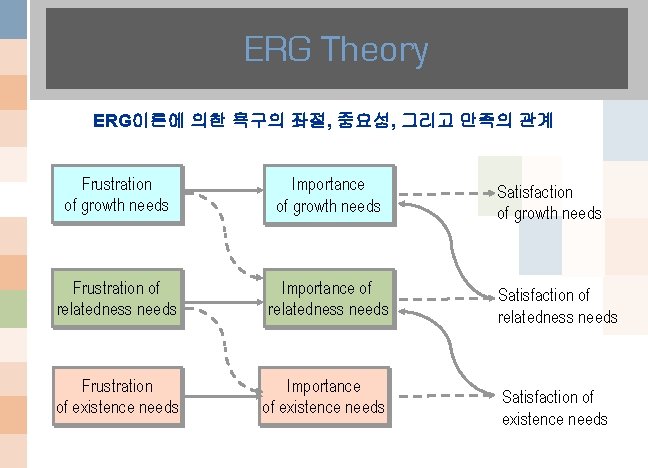
ERG Theory ERG이론에 의한 욕구의 좌절, 중요성, 그리고 만족의 관계 Frustration of growth needs Importance of growth needs Frustration of relatedness needs Importance of relatedness needs Frustration of existence needs Importance of existence needs Satisfaction of growth needs Satisfaction of relatedness needs Satisfaction of existence needs
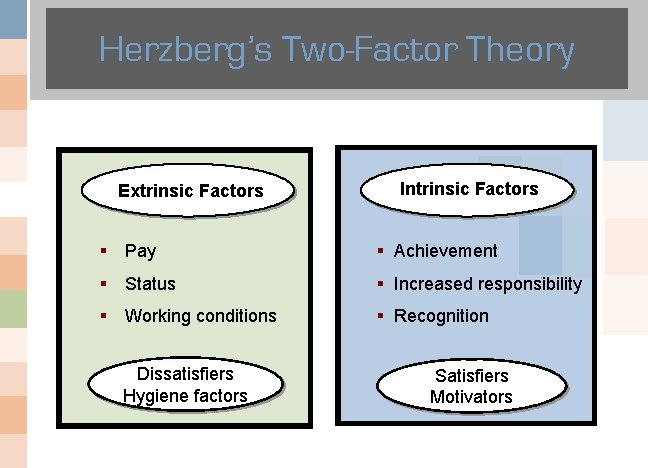
Herzberg’s Two-Factor Theory Extrinsic Factors Intrinsic Factors § Pay § Achievement § Status § Increased responsibility § Working conditions § Recognition Dissatisfiers Hygiene factors Satisfiers Motivators
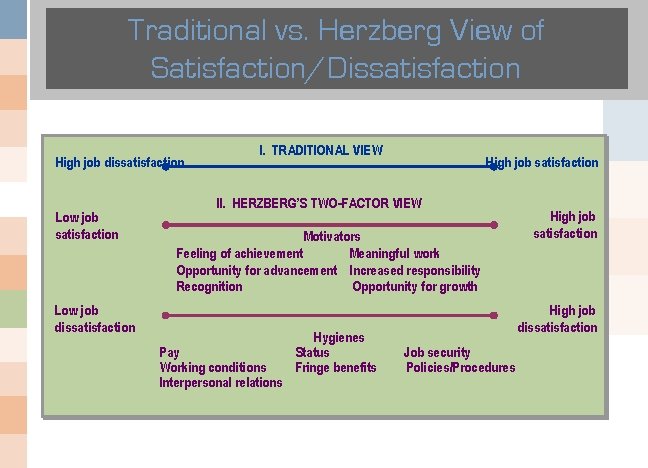
Traditional vs. Herzberg View of Satisfaction/Dissatisfaction High job dissatisfaction Low job satisfaction I. TRADITIONAL VIEW High job satisfaction II. HERZBERG’S TWO-FACTOR VIEW Motivators Feeling of achievement Meaningful work Opportunity for advancement Increased responsibility Recognition Opportunity for growth Low job dissatisfaction Pay Working conditions Interpersonal relations Hygienes Status Fringe benefits High job satisfaction High job dissatisfaction Job security Policies/Procedures
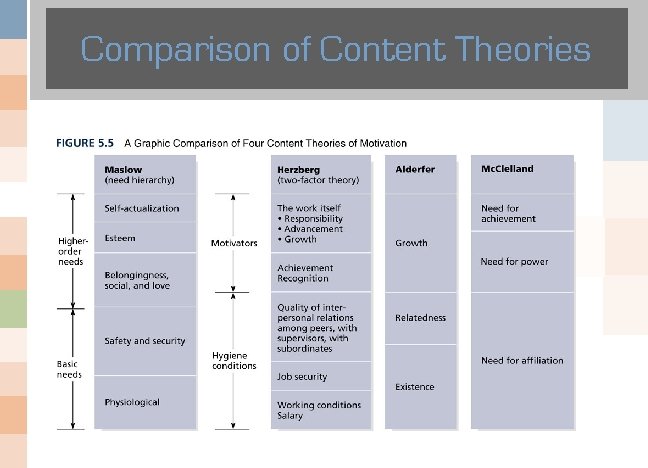
Comparison of Content Theories
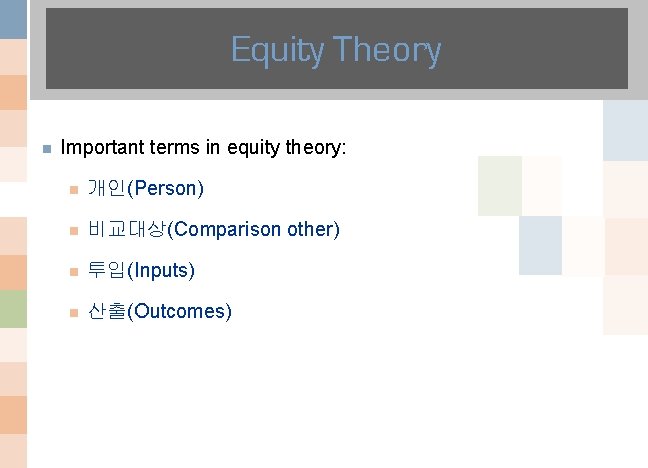
Equity Theory n Important terms in equity theory: n 개인(Person) n 비교대상(Comparison other) n 투입(Inputs) n 산출(Outcomes)
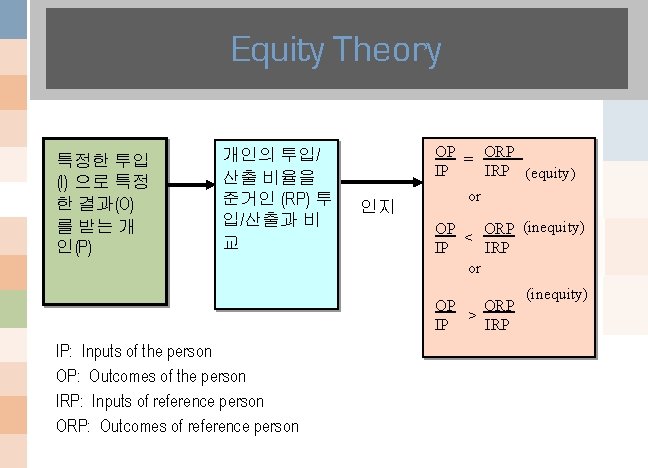
Equity Theory 특정한 투입 (I) 으로 특정 한 결과(O) 를 받는 개 인(P) 개인의 투입/ 산출 비율을 준거인 (RP) 투 입/산출과 비 교 인지 OP = ORP IP IRP (equity) or OP ORP (inequity) < IP IRP or OP ORP > IP IRP IP: Inputs of the person OP: Outcomes of the person IRP: Inputs of reference person ORP: Outcomes of reference person (inequity)
- Slides: 22