
Motivation and Emotion Chapter 10 Internal processes that

- Slides: 15
Motivation and Emotion Chapter 10 Internal processes that: 1. Guide 2. Activate 3. Sustain
Motivation Physiological ü ü Hunger Sexual motivation Cognitive ü ü Expectancy Self-fulfillment
Theories of Motivation n n Drive Theory Arousal Theory Expectancy Theory Goal-Setting Theory p. 377
Drive Theory • • Biological needs arising within our bodies create unpleasant states of arousal Hunger, thirst, fatigue, etc. Homeostasis- balanced physiological state Motivation is basically a process in which various biological needs PUSH us to actions
Drive Theory: An Overview
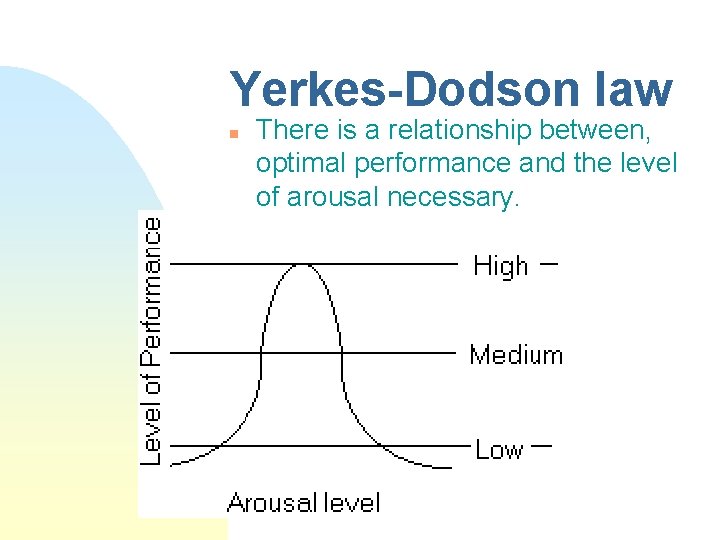
Arousal Theory n n Optimization NOT Minimization Arousal: our general level of activation May fluctuate Biological influences? ? v Sensation n seekers Yerkes-Dodson law
Yerkes-Dodson law n There is a relationship between, optimal performance and the level of arousal necessary.
Expectancy Theory n n n Behavior is determined by expectations (desirable outcomes). Thoughts about future PULL your behavior. Incentives: almost anything we have learned to value.
Goal-Setting Wood & Locke(1990) • • • Specific Challenging Attainable Feedback can improve performance. Take life in strides…
Maslow’s Needs Hierarchy
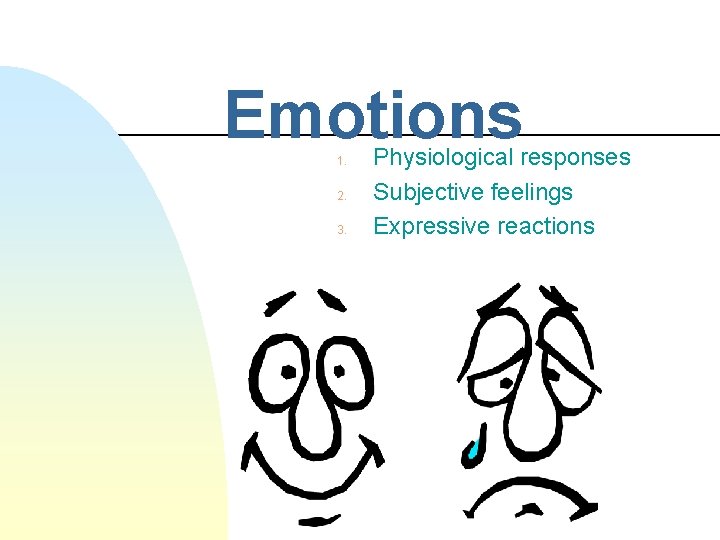
Emotions 1. 2. 3. Physiological responses Subjective feelings Expressive reactions
How do we respond? Cannon – Bard • • Earliest theory Simultaneous occurrence. James – Lange • More preferred • Interpretations determine emotions • Facial feedback hypothesis
Why go to scary movies? Schacter – Singer • • Two stage theory Dutton & Aron (1974) Opponent-Process • Every action has an equal and opposite reaction
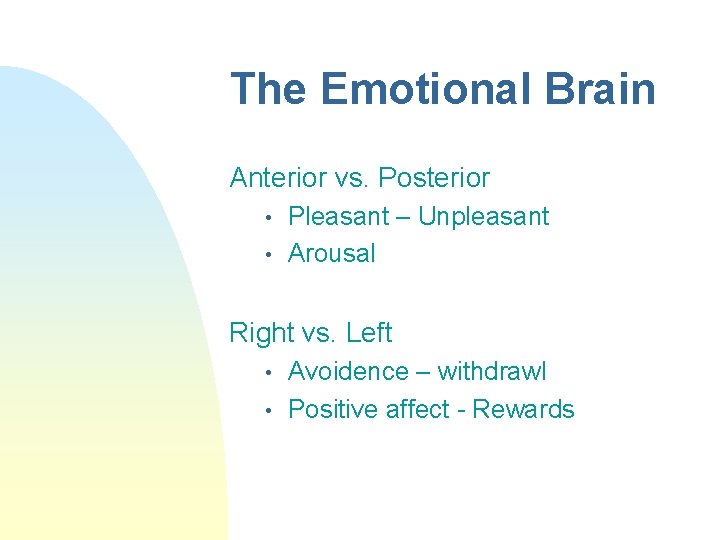
The Emotional Brain Anterior vs. Posterior • • Pleasant – Unpleasant Arousal Right vs. Left • • Avoidence – withdrawl Positive affect - Rewards
Speaking without Words 1. Nonverbal Cues 2. Gestures 3. Body language