
Motions of the Ocean Motions of the Ocean
- Slides: 12
Motions of the Ocean
Motions of the Ocean Three basic motions of ocean water: • The up and down movement of waves • the steady movement of ocean currents • The rise and fall of ocean water in tides
Waves • Waves are pulses of energy that move through the ocean. • The main source of energy for waves is wind.
Waves The height of surface waves depends on three things: • Wind speed • Length of time the wind blows • distance that wind blows
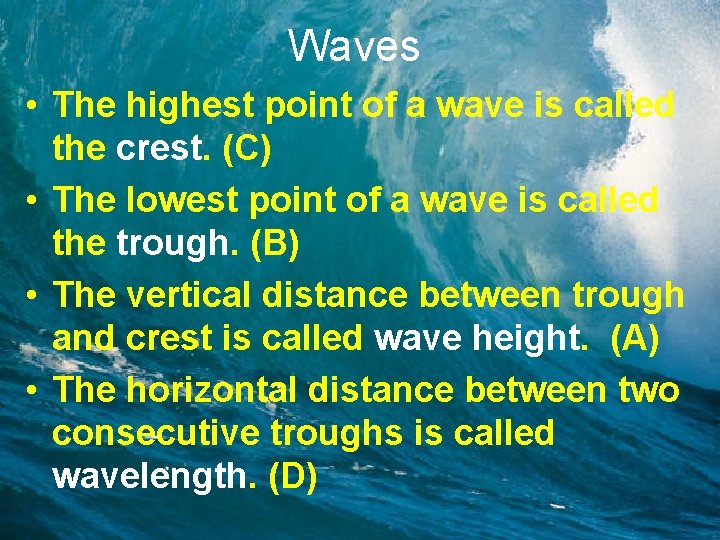
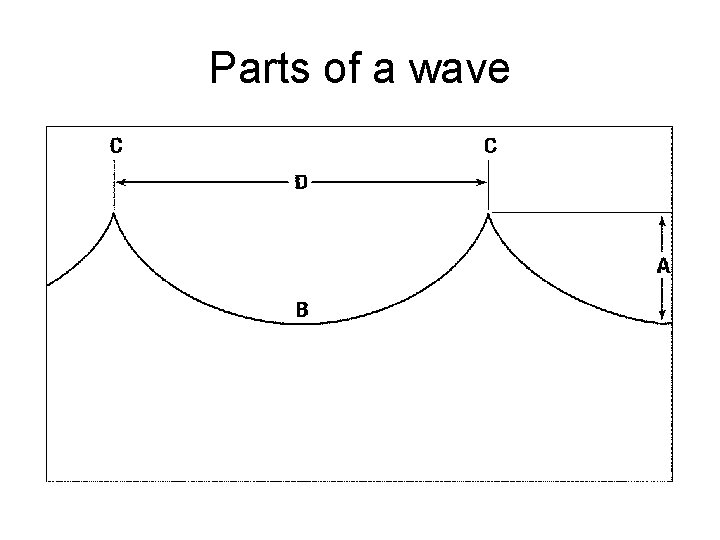
Waves • The highest point of a wave is called the crest. (C) • The lowest point of a wave is called the trough. (B) • The vertical distance between trough and crest is called wave height. (A) • The horizontal distance between two consecutive troughs is called wavelength. (D)
Parts of a wave
Waves • Ocean waves that are caused by earthquakes are called tsunamis. • Tsunamis are the highest ocean waves.
Currents Ocean waters move beneath the surface, sort of like rivers. These movements are called currents. Currents are caused by: • wind patterns • Water density
Currents There are two types of currents: • Surface currents - caused mainly by wind patterns • Deep currents - caused mainly by density differences in the ocean
Currents Upwelling occurs when deep cold currents rise to the ocean surface.
Tides • Tides are the regular rise and fall of ocean water caused by the gravitational attraction among the Earth, moon, and sun.
Tides • Spring tides occur during the new and full moon phases They cause higher than normal high tides. • Neap Tides occur during the first and third quarter moon phases. They cause lower than normal high tides.