
Motion Sensors Displacement velocity and acceleration 1 Dimensional






- Slides: 19
Motion Sensors Displacement, velocity and acceleration 1
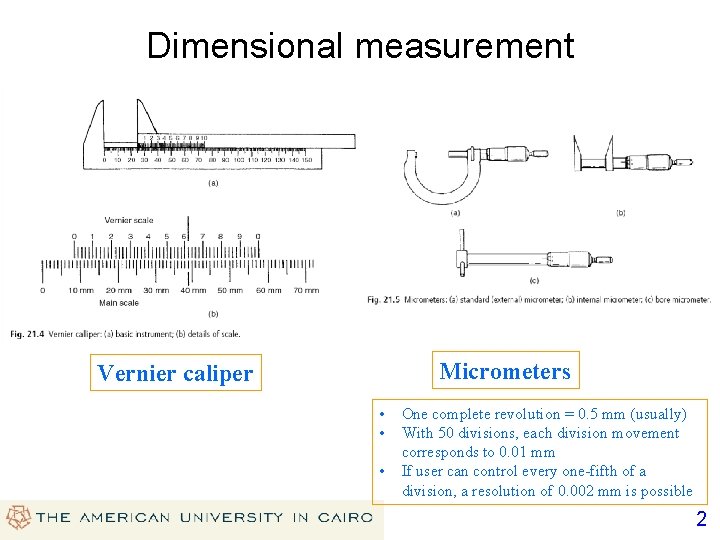
Dimensional measurement Micrometers Vernier caliper • • • One complete revolution = 0. 5 mm (usually) With 50 divisions, each division movement corresponds to 0. 01 mm If user can control every one-fifth of a division, a resolution of 0. 002 mm is possible 2
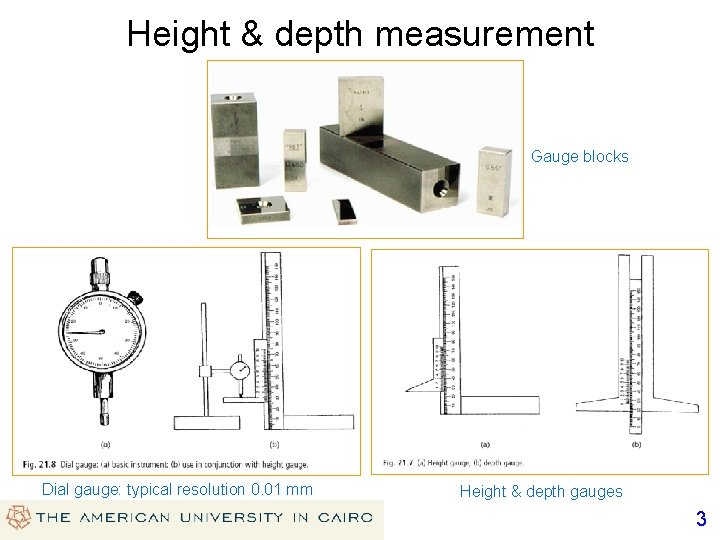
Height & depth measurement Gauge blocks Dial gauge: typical resolution 0. 01 mm Height & depth gauges 3
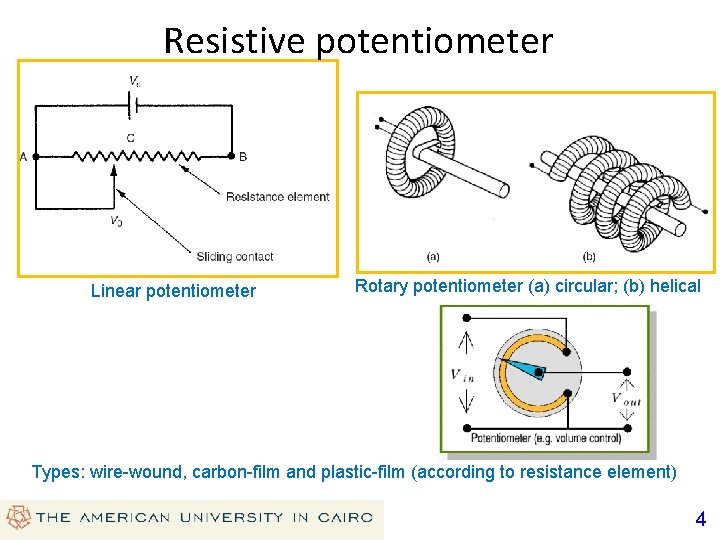
Resistive potentiometer Linear potentiometer Rotary potentiometer (a) circular; (b) helical Types: wire-wound, carbon-film and plastic-film (according to resistance element) 4
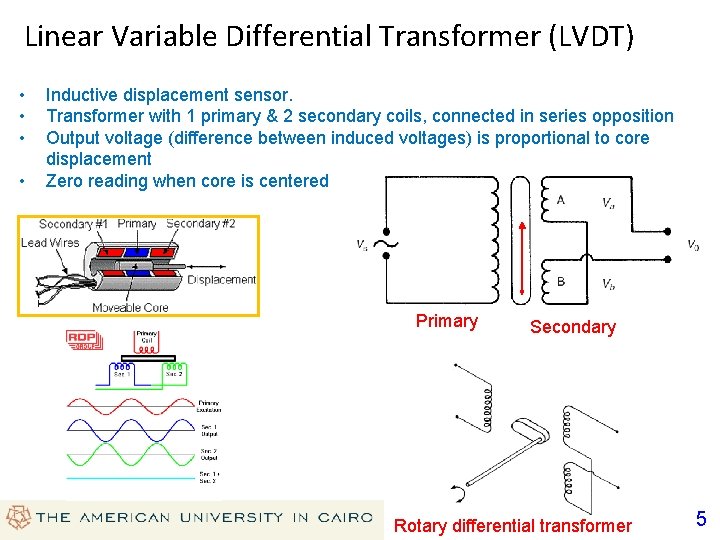
Linear Variable Differential Transformer (LVDT) • • Inductive displacement sensor. Transformer with 1 primary & 2 secondary coils, connected in series opposition Output voltage (difference between induced voltages) is proportional to core displacement Zero reading when core is centered Primary Secondary Rotary differential transformer 5
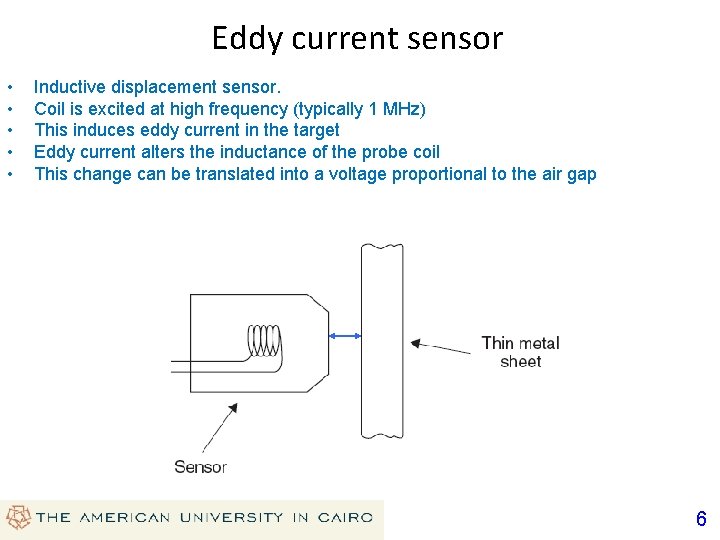
Eddy current sensor • • • Inductive displacement sensor. Coil is excited at high frequency (typically 1 MHz) This induces eddy current in the target Eddy current alters the inductance of the probe coil This change can be translated into a voltage proportional to the air gap 6
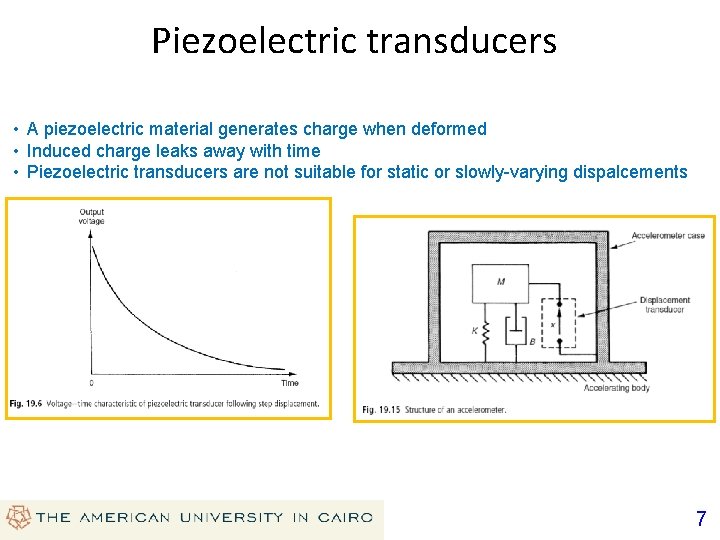
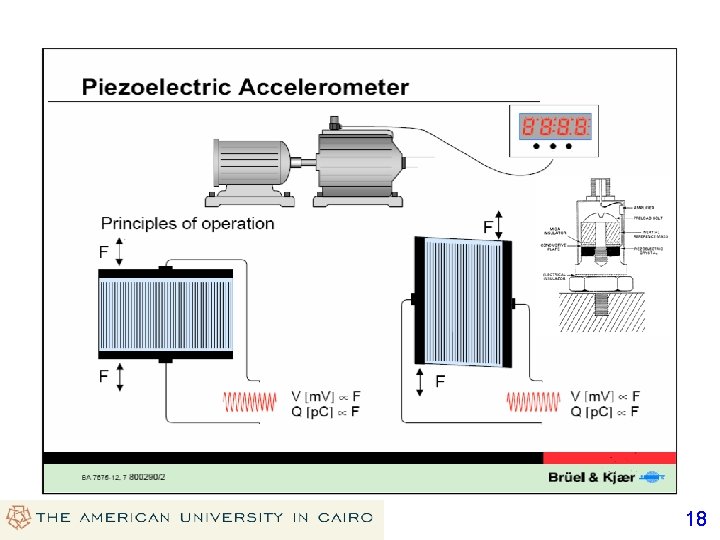
Piezoelectric transducers • A piezoelectric material generates charge when deformed • Induced charge leaks away with time • Piezoelectric transducers are not suitable for static or slowly-varying dispalcements 7
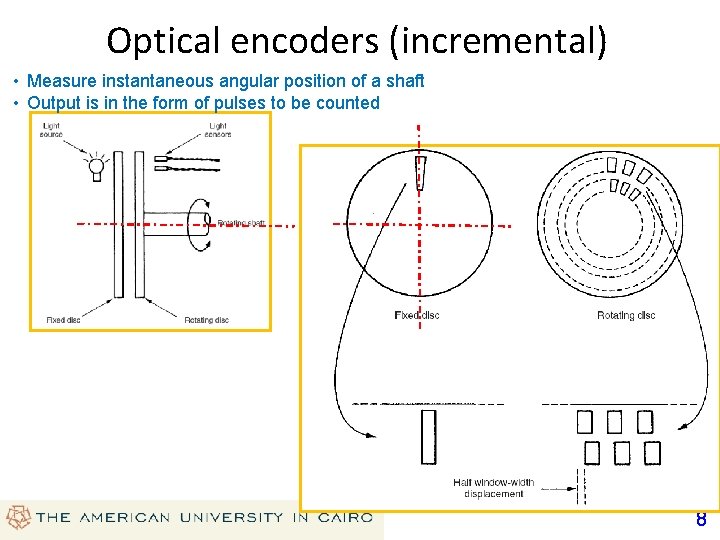
Optical encoders (incremental) • Measure instantaneous angular position of a shaft • Output is in the form of pulses to be counted 8
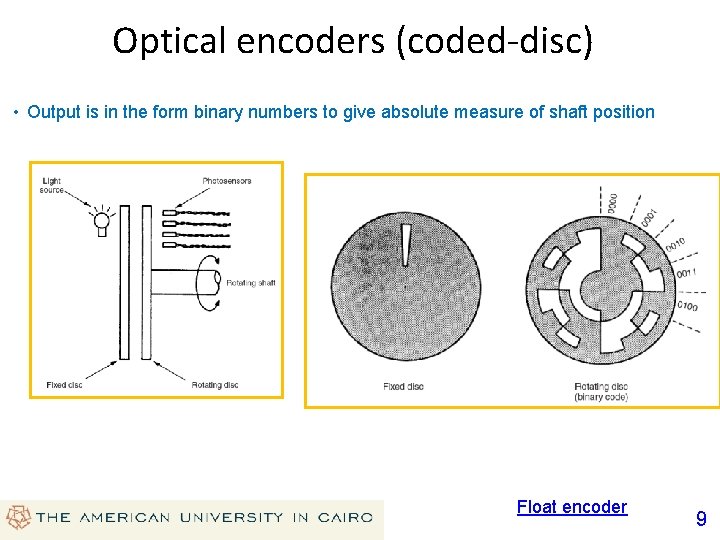
Optical encoders (coded-disc) • Output is in the form binary numbers to give absolute measure of shaft position Float encoder 9
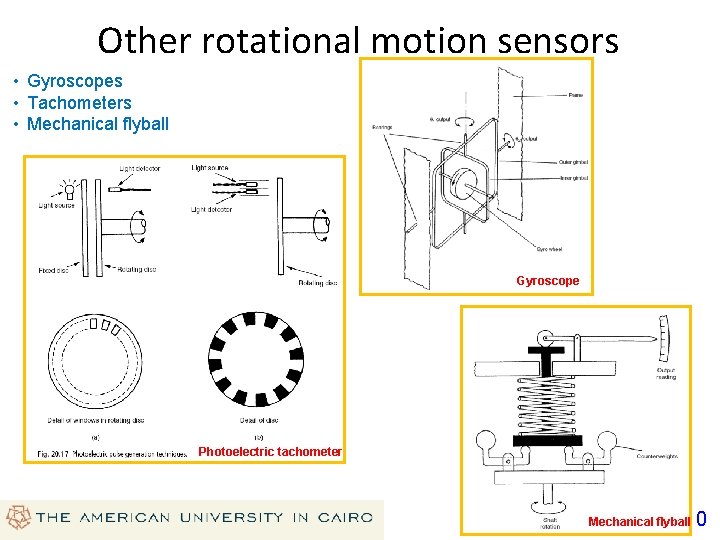
Other rotational motion sensors • Gyroscopes • Tachometers • Mechanical flyball Gyroscope Photoelectric tachometer 10 Mechanical flyball
Vibration Measurement 11
12
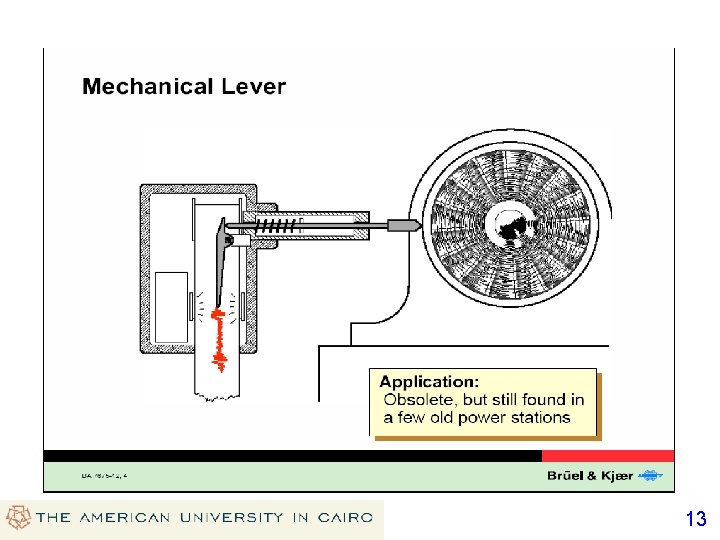
13
14
15
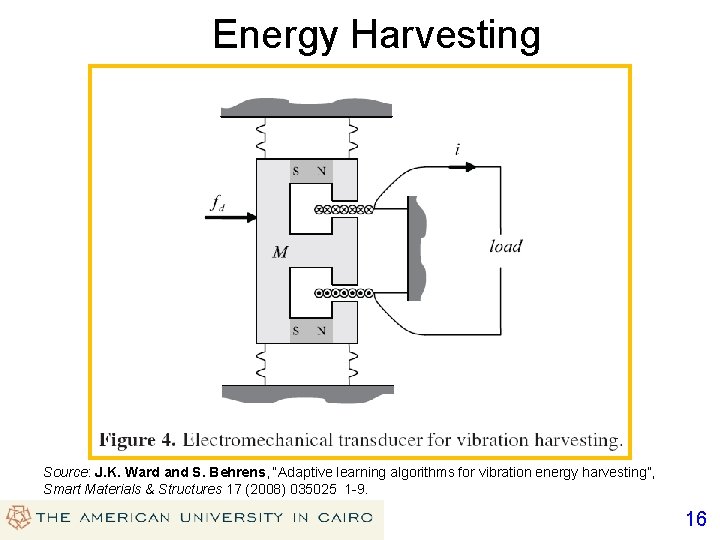
Energy Harvesting Source: J. K. Ward and S. Behrens, “Adaptive learning algorithms for vibration energy harvesting”, Smart Materials & Structures 17 (2008) 035025 1 -9. 16
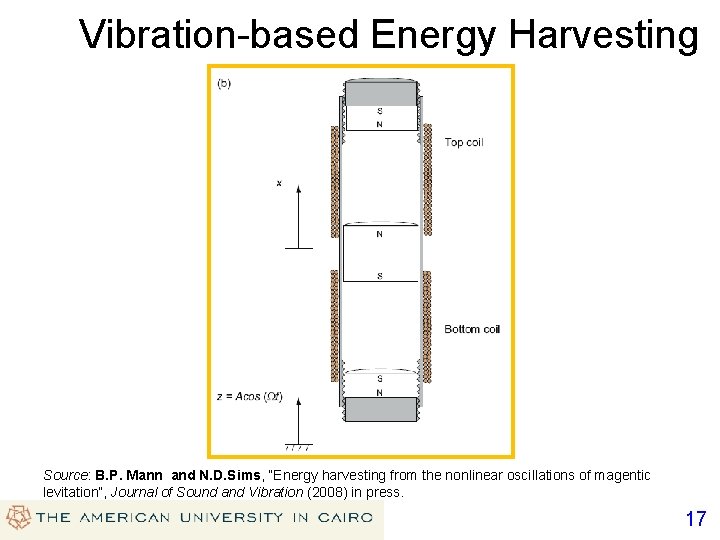
Vibration-based Energy Harvesting Source: B. P. Mann and N. D. Sims, “Energy harvesting from the nonlinear oscillations of magentic levitation”, Journal of Sound and Vibration (2008) in press. 17
18
19