
Motion Capture in 3 D Animation Movies n
- Slides: 23
Motion Capture in 3 D Animation : Movies n Video Games n Robot Control n
Motion Capture as a Tool Motion capture (MOCAP) is an effective 3 D animation tool for realistically capturing human motion n Outline n Rotoscoping n The MOCAP Pipeline n Limitations of MOCAP n The Future of MOCAP n
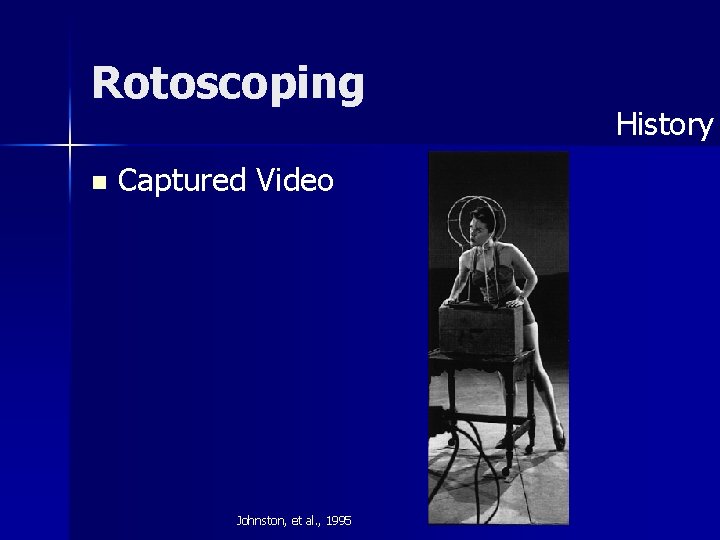
Rotoscoping n Captured Video Johnston, et al. , 1995 History
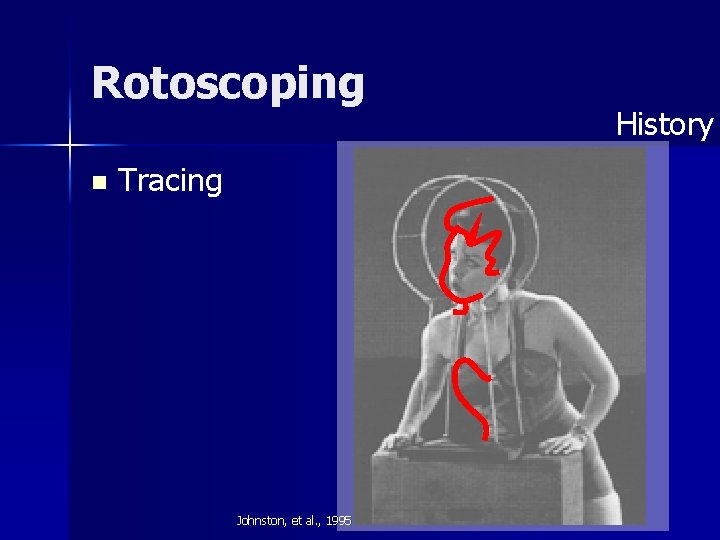
Rotoscoping n Tracing Johnston, et al. , 1995 History
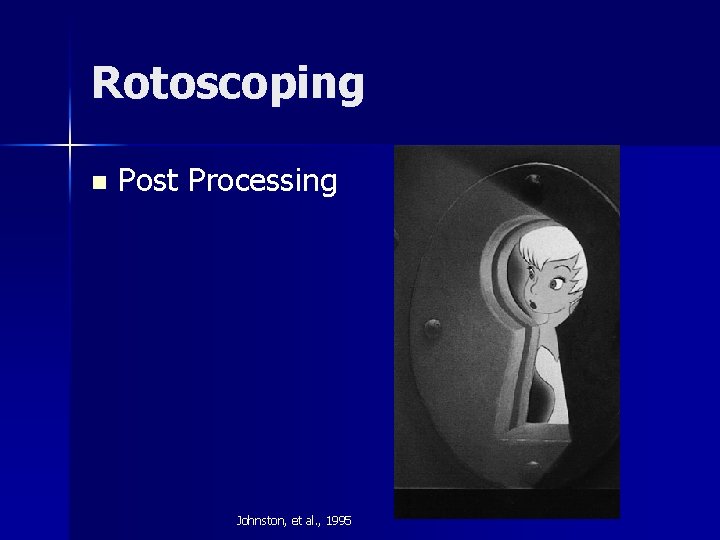
Rotoscoping n Post Processing Johnston, et al. , 1995
The MOCAP Pipeline Calibration n Capture n 3 D Position Reconstruction n Fitting to the Skeleton n Post Processing: IK Inverse Kinematics n
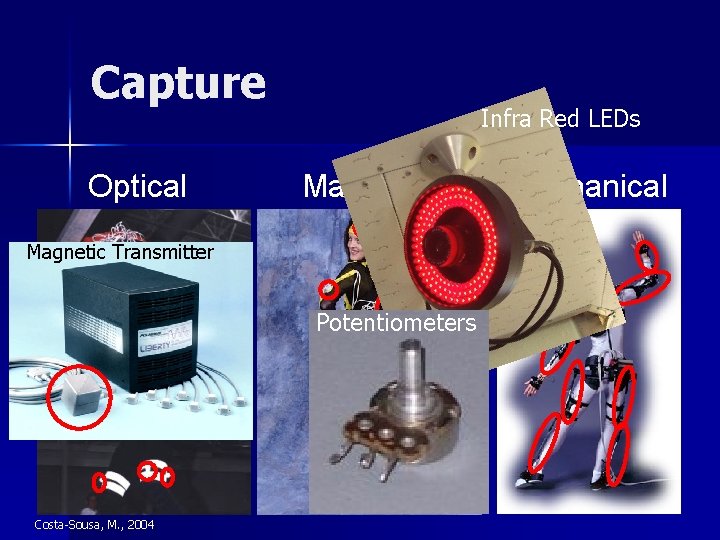
Capture Optical Infra Red LEDs Magnetic Transmitter Potentiometers Costa-Sousa, M. , 2004 Mechanical
MOCAP issues n Issues: data inaccuracy, Expensive n Optical: $90’ 000 – $210’ 000 high res cameras, occlusion, no outdoors, more and more markers, cameras n Magnetic: $100’ 000 – $120’ 000 heavier sensors, body wires, 10 x accurate < optical, smaller workspaces, sensitive to metal, EMI, flooring n Mechanical: $20’ 000 – $30’ 000 US limited movement, heavy and cumbersome, must know rigid body at design time
MOCAP issues • Resolution/range of motion • Calibration • Accuracy – Marker movement – Capture rate • Occlusion/correspondence
MOCAP issues: Marker Placement • Location should move rigidly with limb • Stay away from bulging muscles • Shoulders: skeletal motion not closely tied to skin • Shoulders: not a rigid body chain
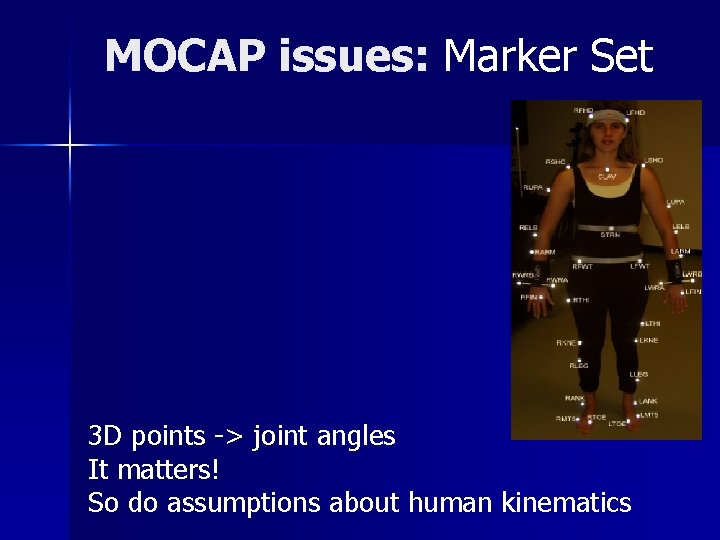
MOCAP issues: Marker Set 3 D points -> joint angles It matters! So do assumptions about human kinematics
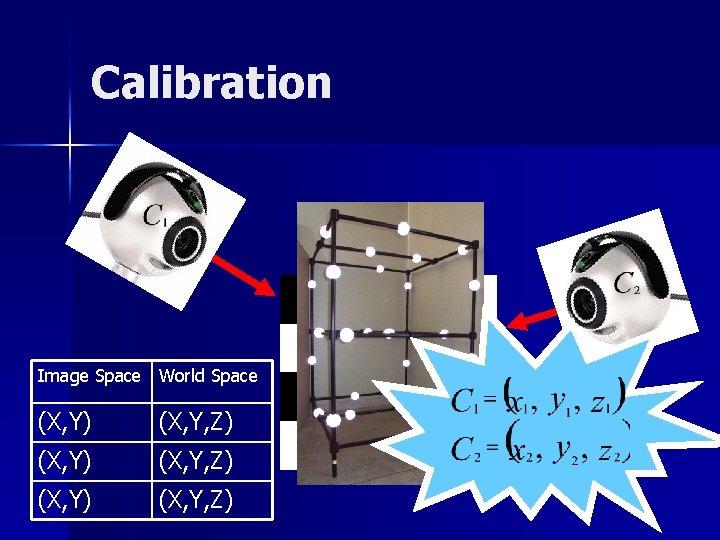
Calibration Image Space World Space (X, Y) (X, Y, Z)
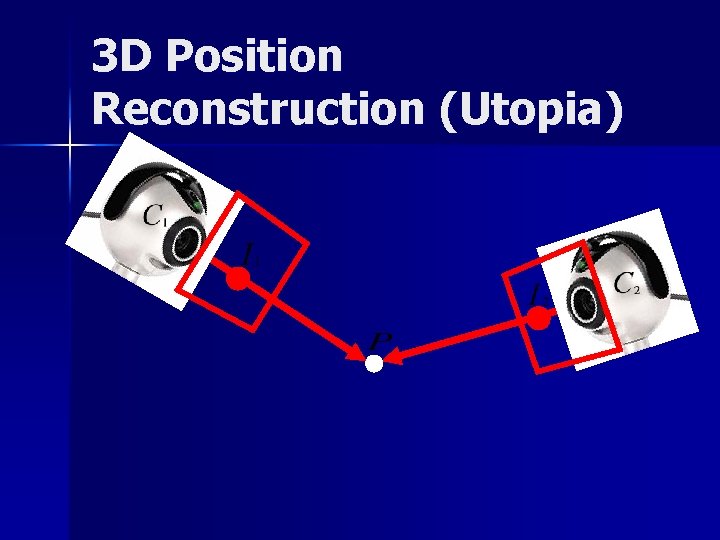
3 D Position Reconstruction (Utopia)
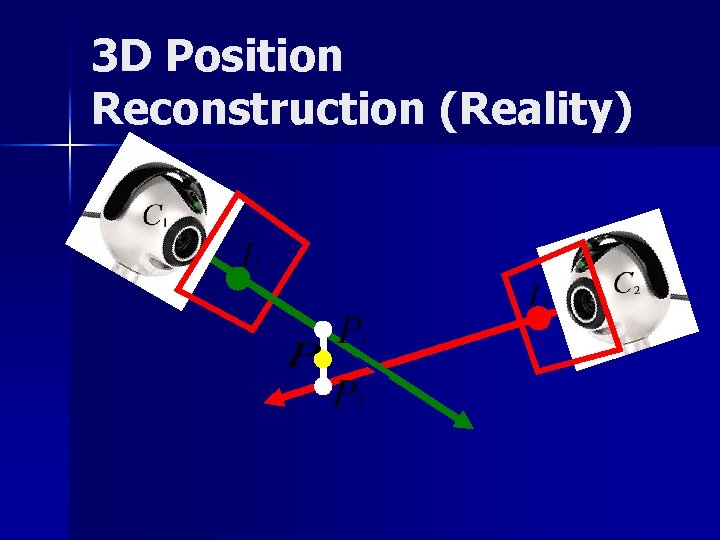
3 D Position Reconstruction (Reality)
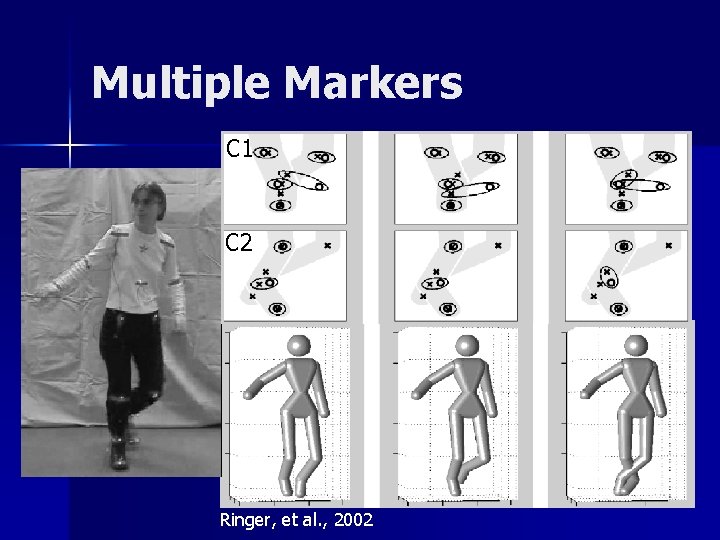
Multiple Markers C 1 For small number of markers: Size n Occlusions are a problem C 2 n Multiple Hypothesis Tracking n Ringer, et al. , 2002
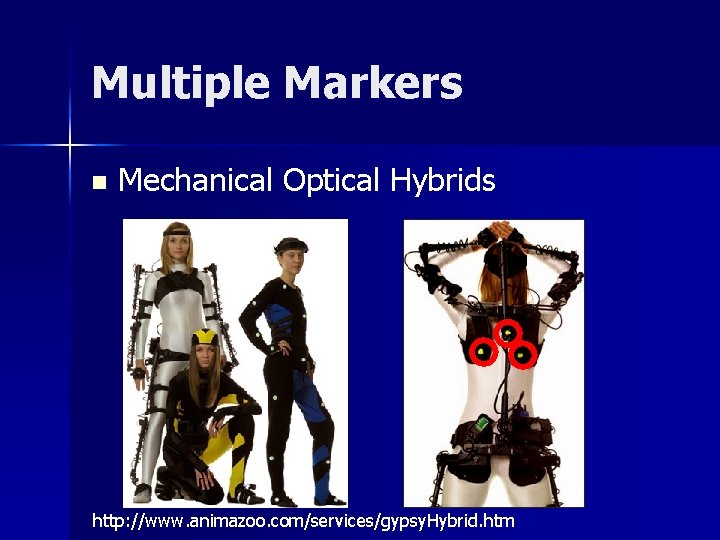
Multiple Markers n Mechanical Optical Hybrids http: //www. animazoo. com/services/gypsy. Hybrid. htm
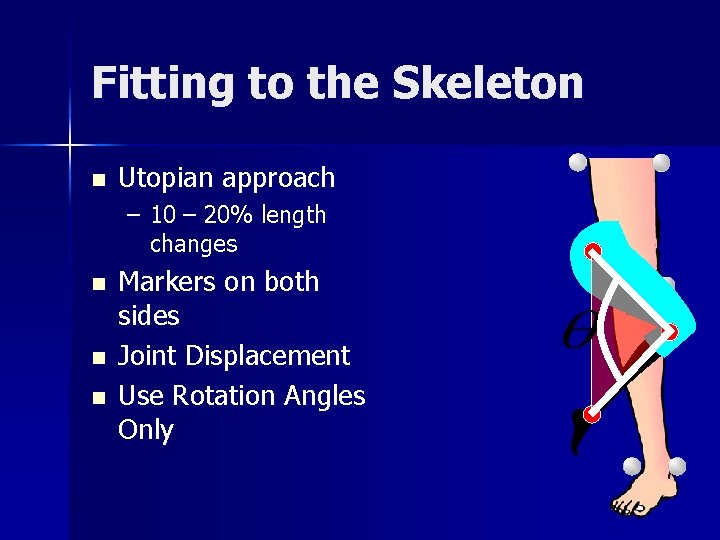
Fitting to the Skeleton n Utopian approach – 10 – 20% length changes n n n Markers on both sides Joint Displacement Use Rotation Angles Only
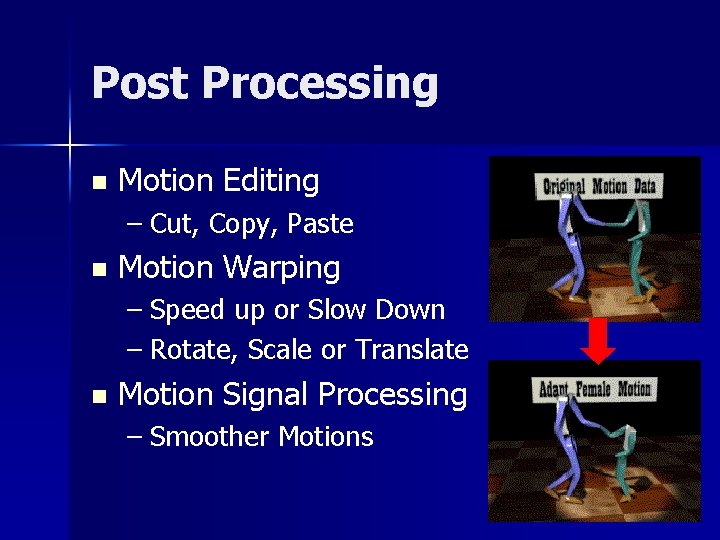
Post Processing n Motion Editing – Cut, Copy, Paste n Motion Warping – Speed up or Slow Down – Rotate, Scale or Translate n Motion Signal Processing – Smoother Motions
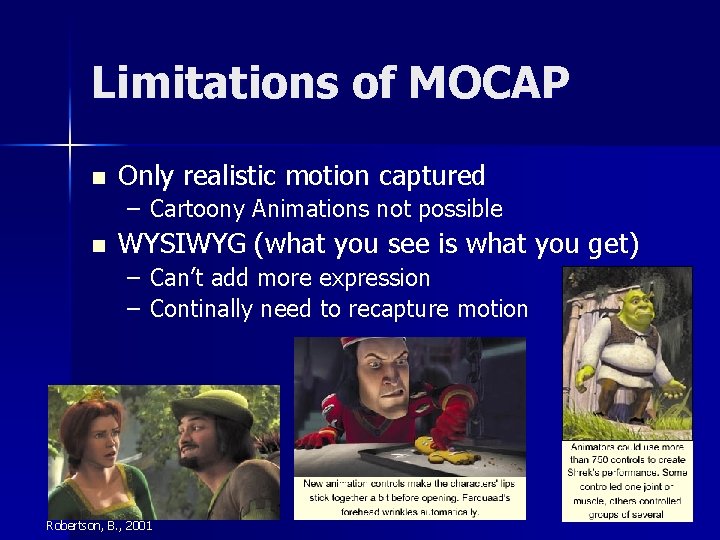
Limitations of MOCAP n Only realistic motion captured – Cartoony Animations not possible n WYSIWYG (what you see is what you get) – Can’t add more expression – Continally need to recapture motion Robertson, B. , 2001
Eric Darnell, co-director of Antz The main problem with motion capture associated with characters has to do with mass distribution, weight, and exaggeration. He says that it is impossible for a performer to produce the kind of motion exaggeration that a cartoon character needs, and the mass and weight of the performer almost never looks good when applied to a character of different proportions.
Richard Chuang, VP at PDI The mapping of human motion to a character with non-human proportions doesn’t work, because the most important things you get out motion capture are the weight shifts and the subtleties and that balancing act of the human body. If the proportions change, you throw all that out the door, so you might as well animate it.
MOCAP issues: Marker Placement • Location should move rigidly with limb • Stay away from bulging muscles • Shoulders: skeletal motion not closely tied to skin • Shoulders: not a rigid body chain
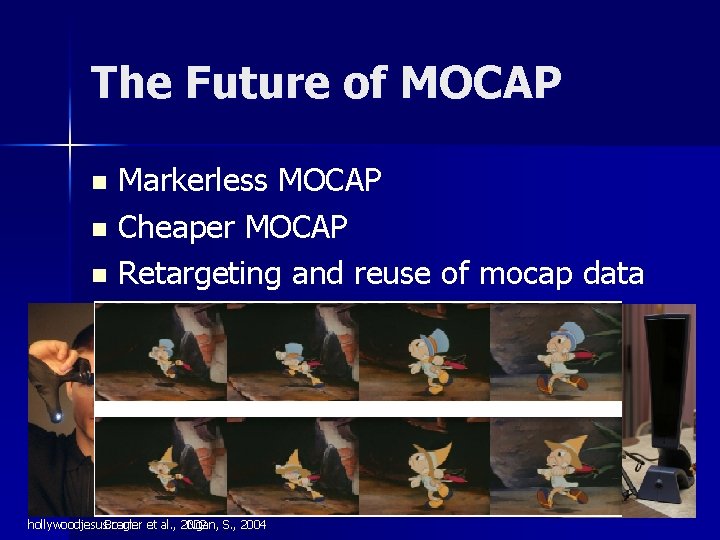
The Future of MOCAP Markerless MOCAP n Cheaper MOCAP n Retargeting and reuse of mocap data n Bregler et al. , 2002 Ngan, S. , 2004 hollywoodjesus. com