
MOTION AND FORCES EQ 2 Contract 5 CORNELL

- Slides: 22
MOTION AND FORCES EQ #2 Contract 5
CORNELL NOTES • Bullets are to be written into your notes ü Checks do not need to be written into your notes q Boxes are things to be completed. Put a check in the box when completed ? Questions are to be written into your questions section. Summaries are to be recorded in the bottom Summary section.
ESSENTIAL QUESTION #2: • How can you use Newton’s laws of motion to predict the behavior of objects?
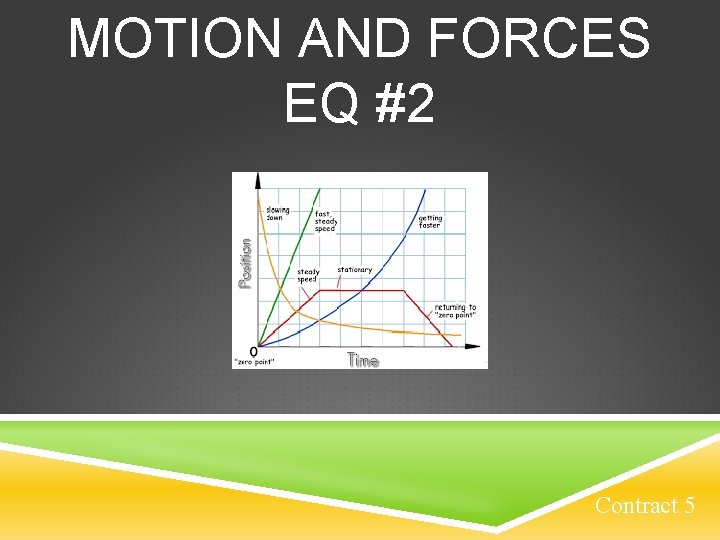
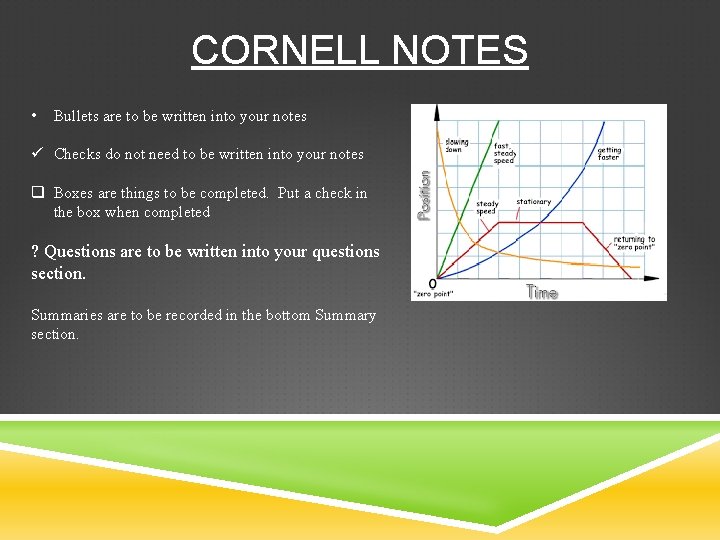
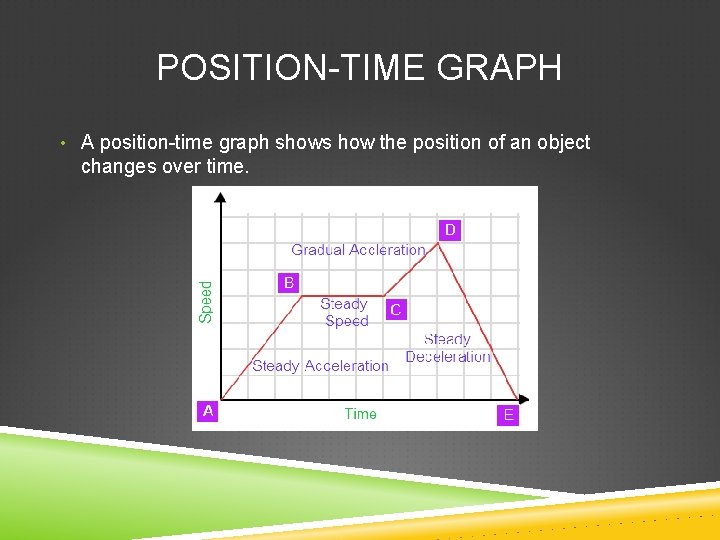
POSITION-TIME GRAPH • A position-time graph shows how the position of an object changes over time.
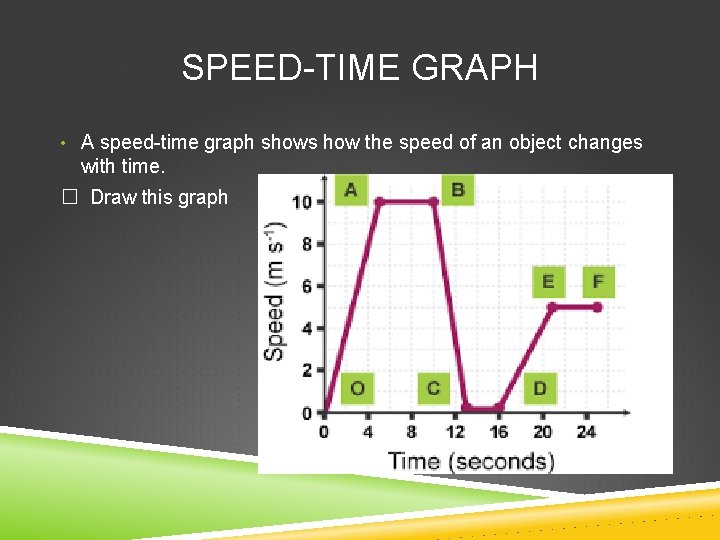
SPEED-TIME GRAPH • A speed-time graph shows how the speed of an object changes with time. ☐ Draw this graph
SPEED-TIME GRAPH ☐ Describe what is happening… O-A : A-B : B-C : C-D : D-E : E-F :
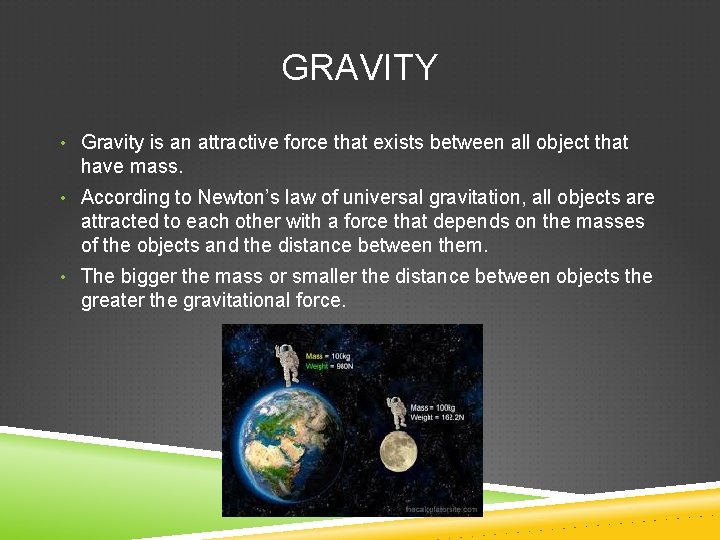
GRAVITY • Gravity is an attractive force that exists between all object that have mass. • According to Newton’s law of universal gravitation, all objects are attracted to each other with a force that depends on the masses of the objects and the distance between them. • The bigger the mass or smaller the distance between objects the greater the gravitational force.
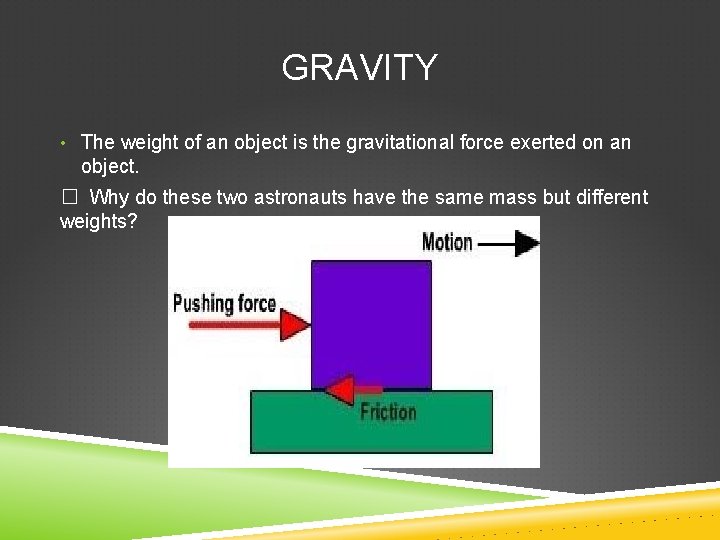
GRAVITY • The weight of an object is the gravitational force exerted on an object. ☐ Why do these two astronauts have the same mass but different weights?
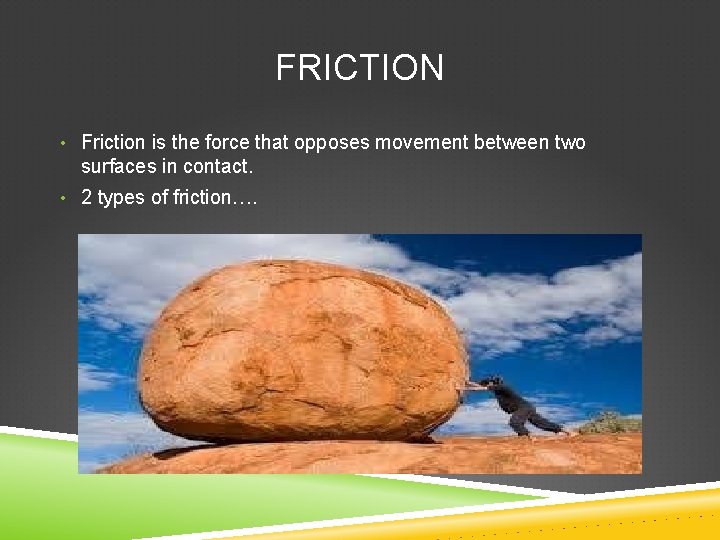
FRICTION • Friction is the force that opposes movement between two surfaces in contact. • 2 types of friction….
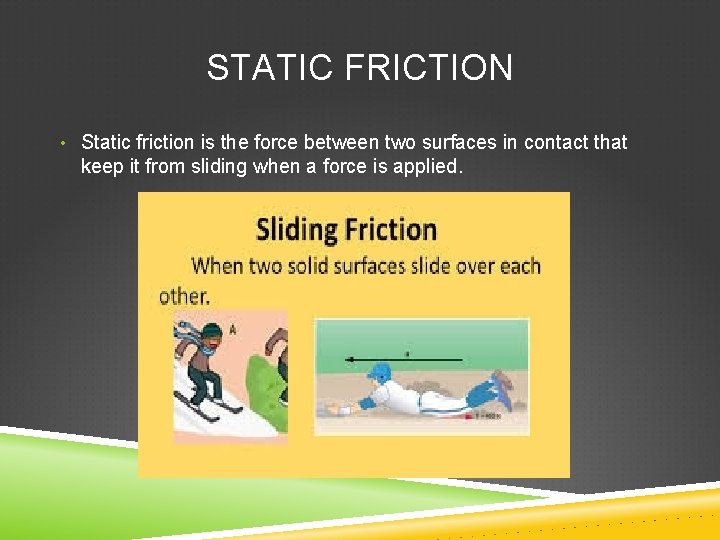
STATIC FRICTION • Static friction is the force between two surfaces in contact that keep it from sliding when a force is applied.
SLIDING FRICTION • Sliding friction is the force applied in the opposite direction while two surfaces that are in contact are sliding.
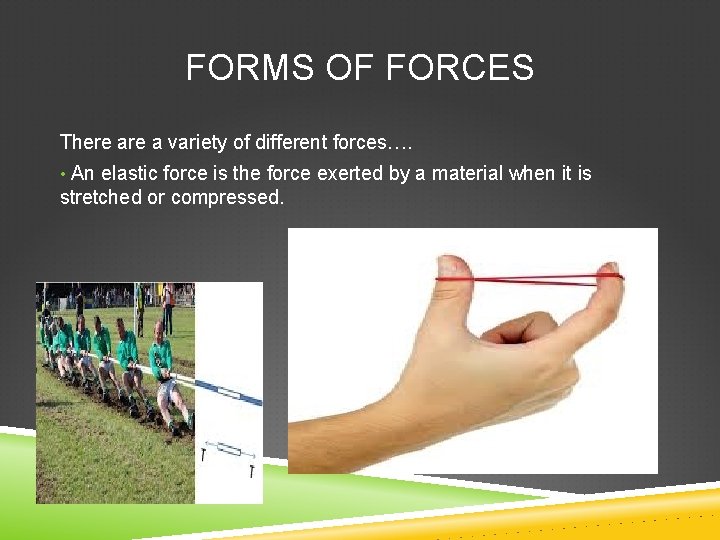
FORMS OF FORCES There a variety of different forces…. • An elastic force is the force exerted by a material when it is stretched or compressed.
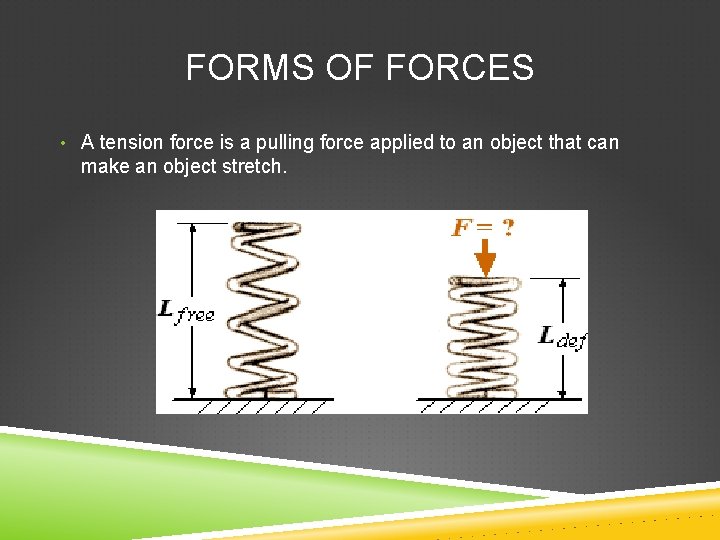
FORMS OF FORCES • A tension force is a pulling force applied to an object that can make an object stretch.
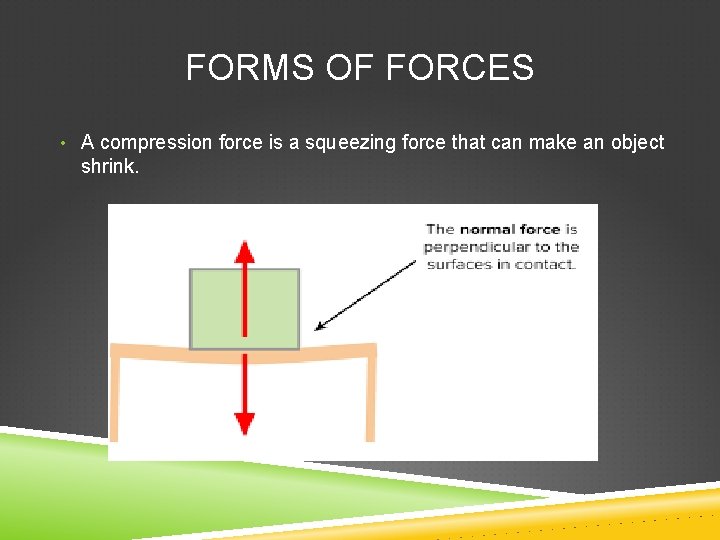
FORMS OF FORCES • A compression force is a squeezing force that can make an object shrink.
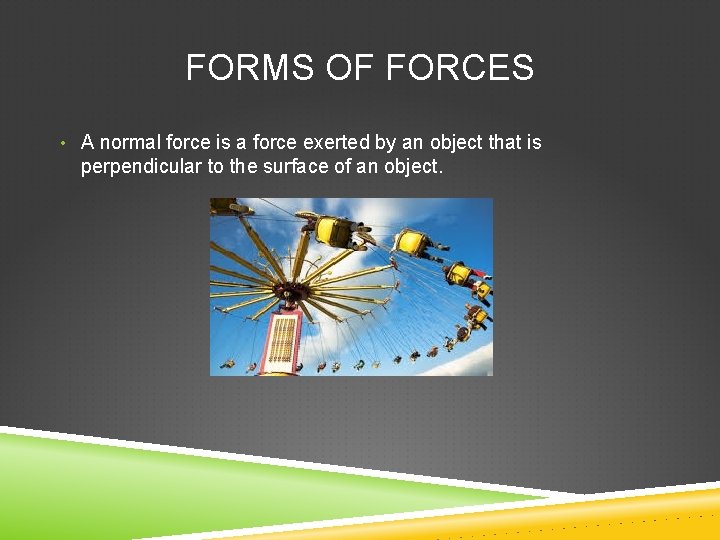
FORMS OF FORCES • A normal force is a force exerted by an object that is perpendicular to the surface of an object.
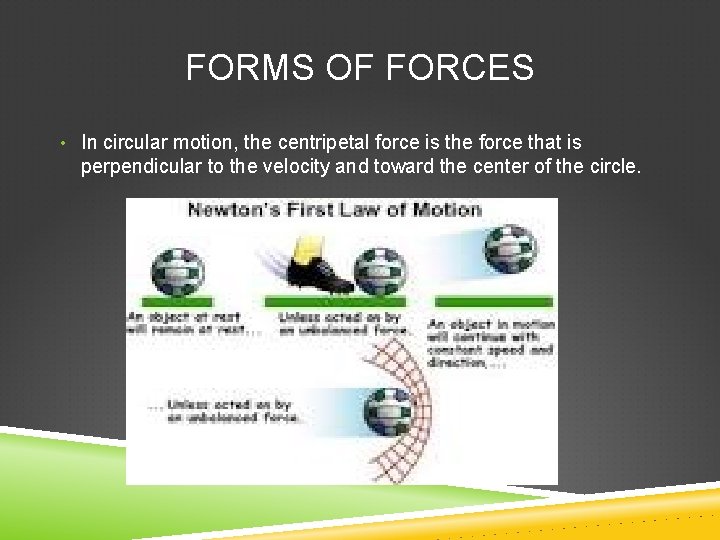
FORMS OF FORCES • In circular motion, the centripetal force is the force that is perpendicular to the velocity and toward the center of the circle.
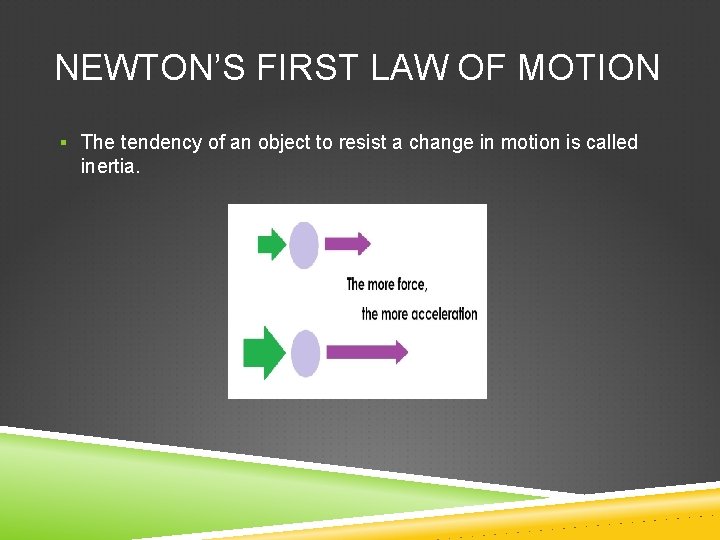
NEWTON’S FIRST LAW OF MOTION • Newton’s first law of motion states that if the net force on an object is zero, an object at rest remains at rest, or, if the object is in motion it stays in motion.
NEWTON’S FIRST LAW OF MOTION § The tendency of an object to resist a change in motion is called inertia.
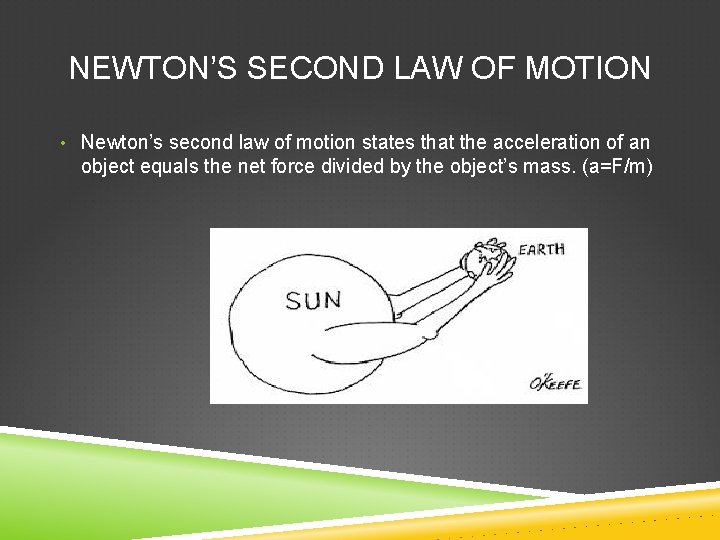
NEWTON’S SECOND LAW OF MOTION • Newton’s second law of motion states that the acceleration of an object equals the net force divided by the object’s mass. (a=F/m)
NEWTON’S SECOND LAW OF MOTION • The gravitational force exerted by the Sun is the centripetal force that keeps the planets moving around the Sun.
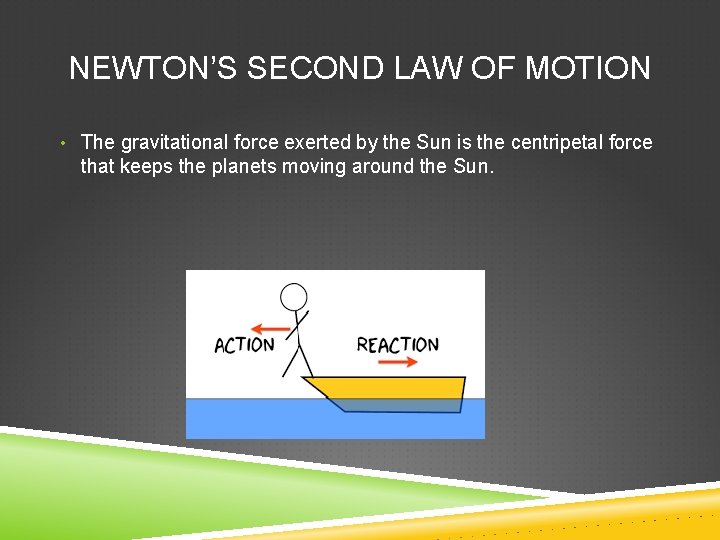
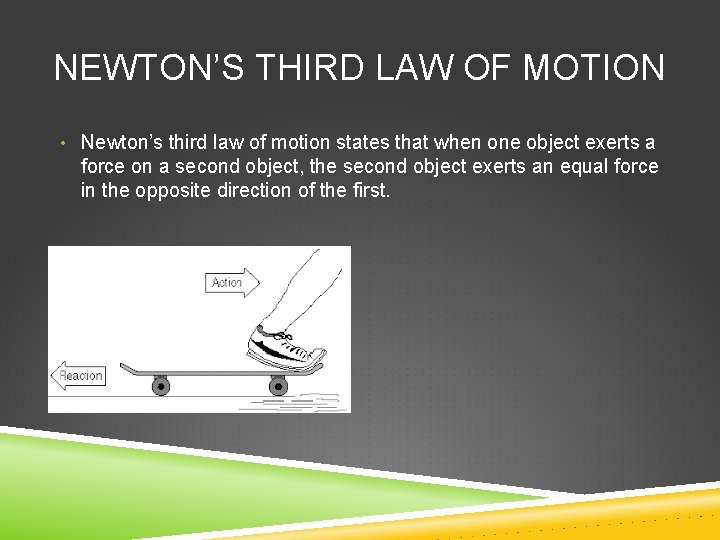
NEWTON’S THIRD LAW OF MOTION • Newton’s third law of motion states that when one object exerts a force on a second object, the second object exerts an equal force in the opposite direction of the first.
ESSENTIAL QUESTION #2: • How can you use Newton’s laws of motion to predict the behavior of objects?