
MOTION AND FORCES EQ 1 Contract 5 CORNELL

- Slides: 14
MOTION AND FORCES EQ #1 Contract 5
CORNELL NOTES • Bullets are to be written into your notes ü Checks do not need to be written into your notes q. Boxes are things to be completed. Put a check in the box when completed
INTERACTIVE CORNELL NOTES ? Questions are to be written into your questions section. Summaries are to be recorded in the bottom Summary section.
ESSENTIAL QUESTION #1: How does the motion of an object acted on by balanced forces compare with the motion of an object acted on by unbalanced forces?
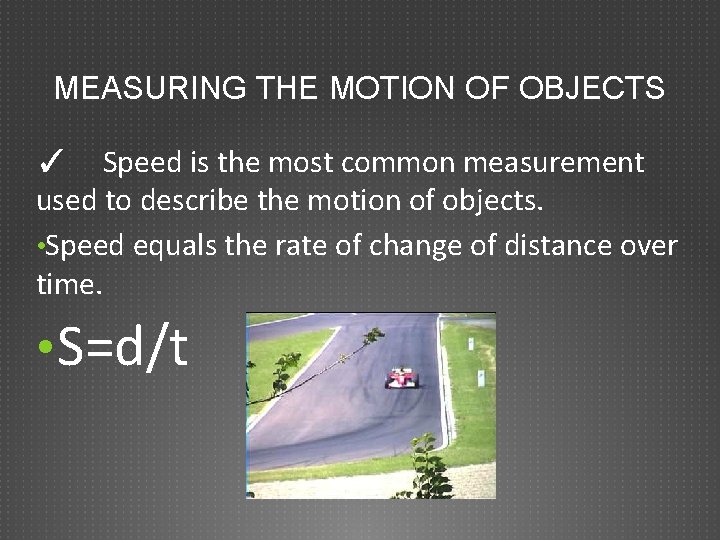
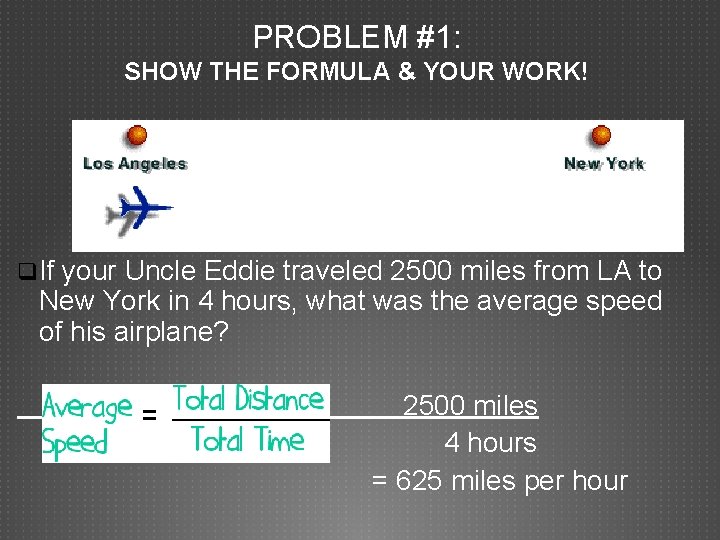
MEASURING THE MOTION OF OBJECTS ✓ Speed is the most common measurement used to describe the motion of objects. • Speed equals the rate of change of distance over time. • S=d/t
PROBLEM #1: SHOW THE FORMULA & YOUR WORK! q. If your Uncle Eddie traveled 2500 miles from LA to New York in 4 hours, what was the average speed of his airplane? 2500 miles 4 hours = 625 miles per hour
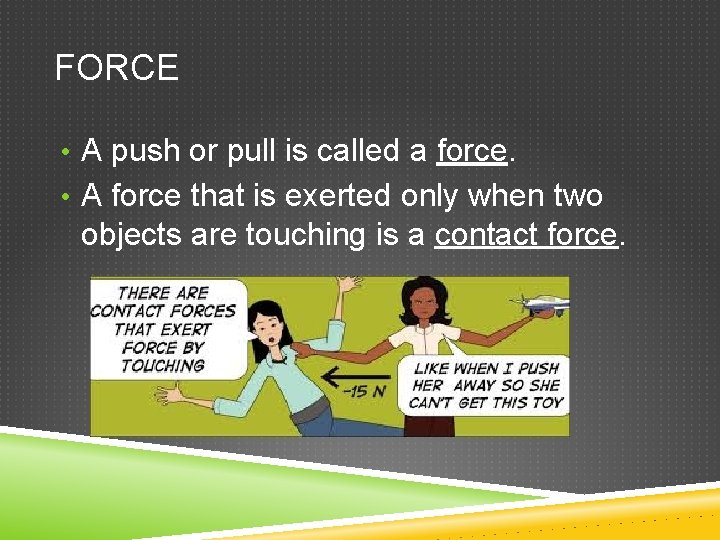
FORCE • A push or pull is called a force. • A force that is exerted only when two objects are touching is a contact force.
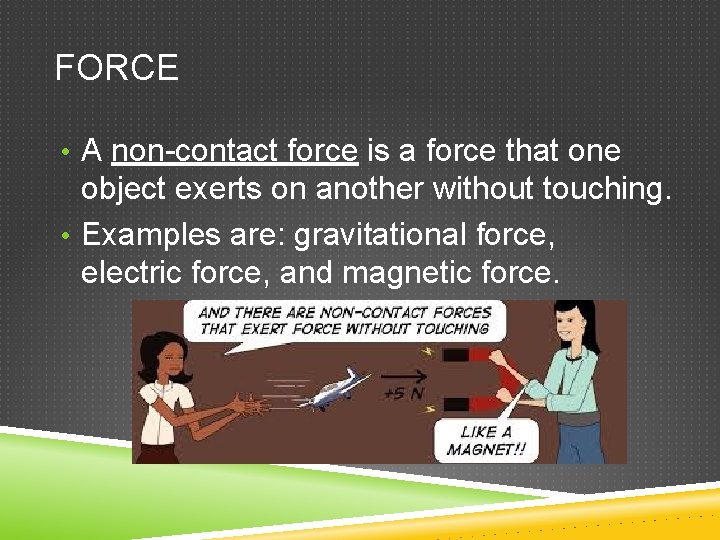
FORCE • A non-contact force is a force that one object exerts on another without touching. • Examples are: gravitational force, electric force, and magnetic force.
UNIT OF FORCE • The unit for the size of a force is the newton (N). • One newton of force is required to accelerate a one kilogram object one meter.
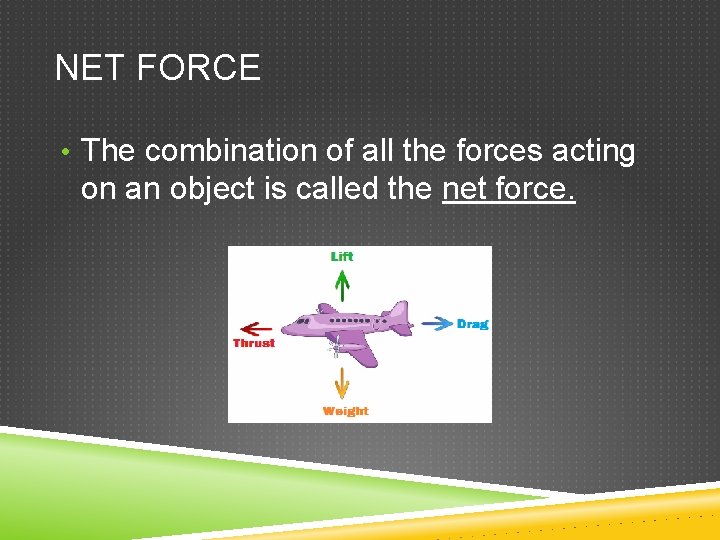
NET FORCE • The combination of all the forces acting on an object is called the net force.
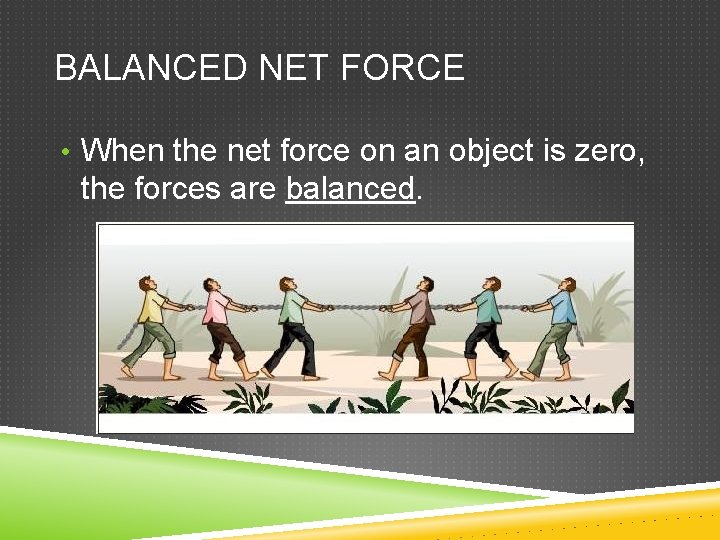
BALANCED NET FORCE • When the net force on an object is zero, the forces are balanced.
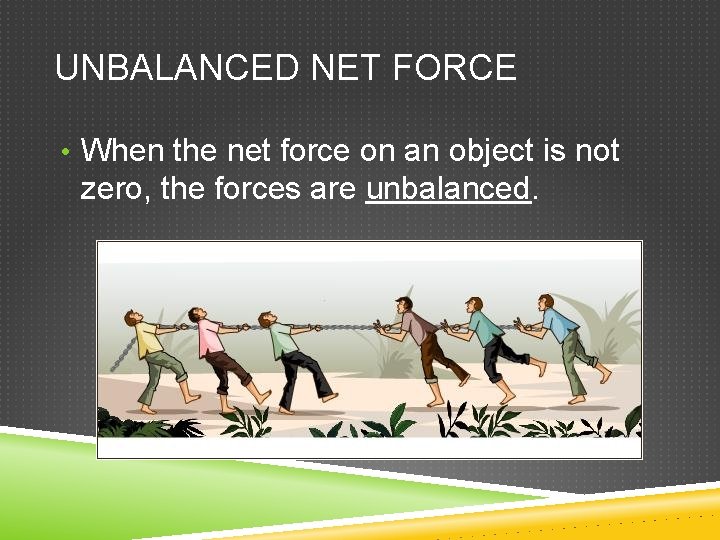
UNBALANCED NET FORCE • When the net force on an object is not zero, the forces are unbalanced.
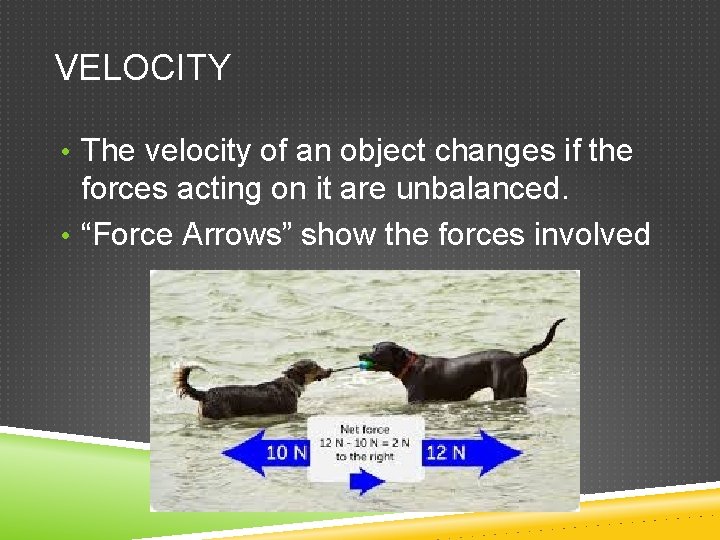
VELOCITY • The velocity of an object changes if the forces acting on it are unbalanced. • “Force Arrows” show the forces involved
ESSENTIAL QUESTION #1: How does the motion of an object acted on by balanced forces compare with the motion of an object acted on by unbalanced forces?