
Motility of Campylobacter jejuni Campylobacter jejuni The facts

Motility of Campylobacter jejuni
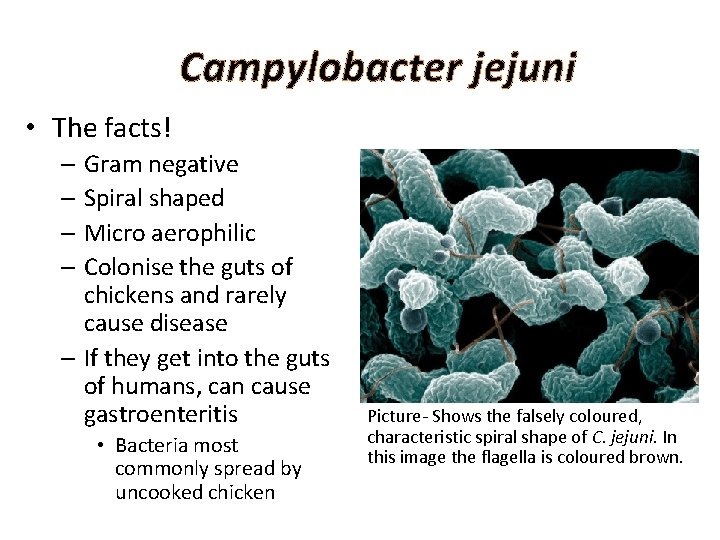
Campylobacter jejuni • The facts! – Gram negative – Spiral shaped – Micro aerophilic – Colonise the guts of chickens and rarely cause disease – If they get into the guts of humans, can cause gastroenteritis • Bacteria most commonly spread by uncooked chicken Picture- Shows the falsely coloured, characteristic spiral shape of C. jejuni. In this image the flagella is coloured brown.
C. jejuni disease The statistics- • C. jejuni is present in 65% of fresh chicken samples (source: 2007/8 survey). • 1 in 5000 campylobacterosis patients develop GBS. • GBS is fatal in 2 -3% of cases • Symptoms of gastroenteritis caused by C. jejuni (campylobacteriosis) include: – Bloody diarrhea – Dysentry – Abdominal pain • This is caused by damage of the gut epithelium by C. jejuni • In rare cases, campylobacteriosis can progress to the autoimmune disease Guillain–Barré syndrome
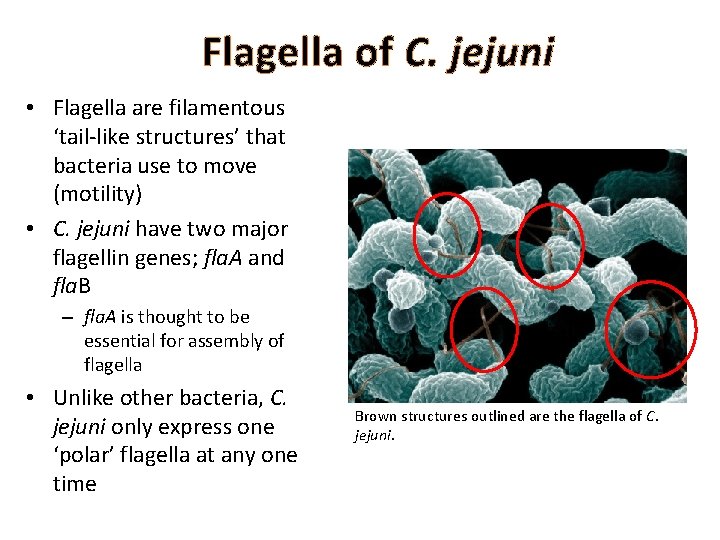
Flagella of C. jejuni • Flagella are filamentous ‘tail-like structures’ that bacteria use to move (motility) • C. jejuni have two major flagellin genes; fla. A and fla. B – fla. A is thought to be essential for assembly of flagella • Unlike other bacteria, C. jejuni only express one ‘polar’ flagella at any one time Brown structures outlined are the flagella of C. jejuni.
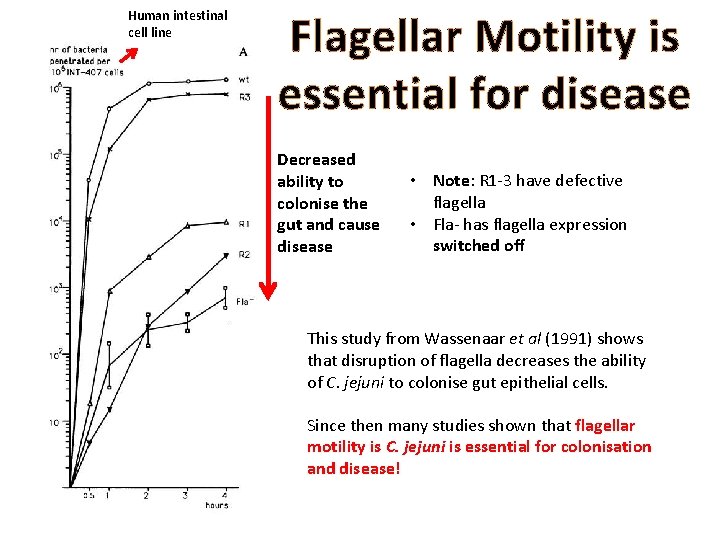
Human intestinal cell line Flagellar Motility is essential for disease Decreased ability to colonise the gut and cause disease • Note: R 1 -3 have defective flagella • Fla- has flagella expression switched off This study from Wassenaar et al (1991) shows that disruption of flagella decreases the ability of C. jejuni to colonise gut epithelial cells. Since then many studies shown that flagellar motility is C. jejuni is essential for colonisation and disease!
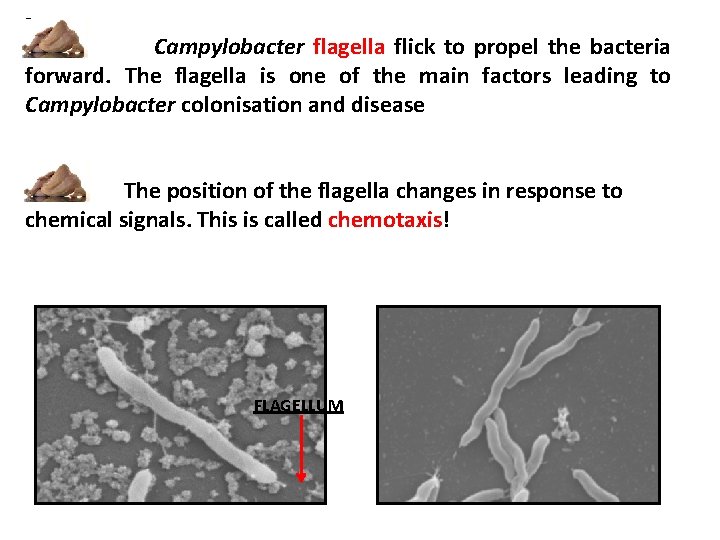
-Ca Campylobacter flagella flick to propel the bacteria forward. The flagella is one of the main factors leading to Campylobacter colonisation and disease The position of the flagella changes in response to chemical signals. This is called chemotaxis! FLAGELLUM
Why chemotaxis? • Bacteria lack the complex sensory system of higher eukaryotes. • They therefore need a method to get to beneficial environments • C. jejuni only have one flagella, therefore they need to know where to position it to get to these environments. ? ? ? ? ? ?
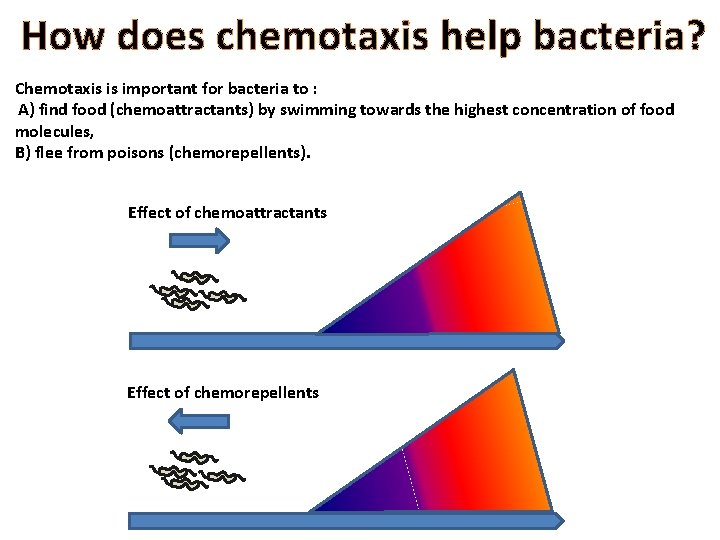
How does chemotaxis help bacteria? Chemotaxis is important for bacteria to : A) find food (chemoattractants) by swimming towards the highest concentration of food molecules, B) flee from poisons (chemorepellents). Effect of chemoattractants Effect of chemorepellents
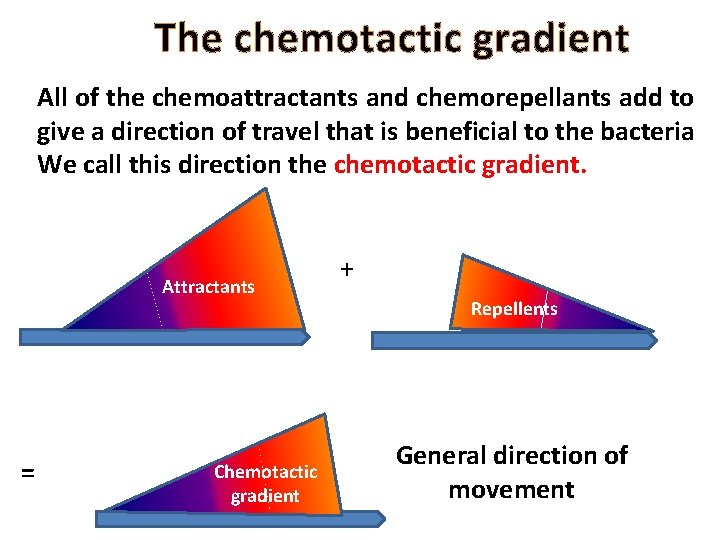
The chemotactic gradient All of the chemoattractants and chemorepellants add to give a direction of travel that is beneficial to the bacteria We call this direction the chemotactic gradient. Attractants = Chemotactic gradient + Repellents General direction of movement
Tumbling Periodically, C. jejuni will display a behaviour called tumbling -This is a random change in direction Q: Why do bacteria tumble and how does C. jejuni ever get closer to food? A: The bacteria move further down chemotactic gradients before tumbling than up them! This means the general direction of movement will be towards the highest concentration of chemoattractants and away from the highest concentration of chemorepellents. During the video on the next slide, keep an eye on the direction of movement and try to work out which direction the chemotactic gradient is…
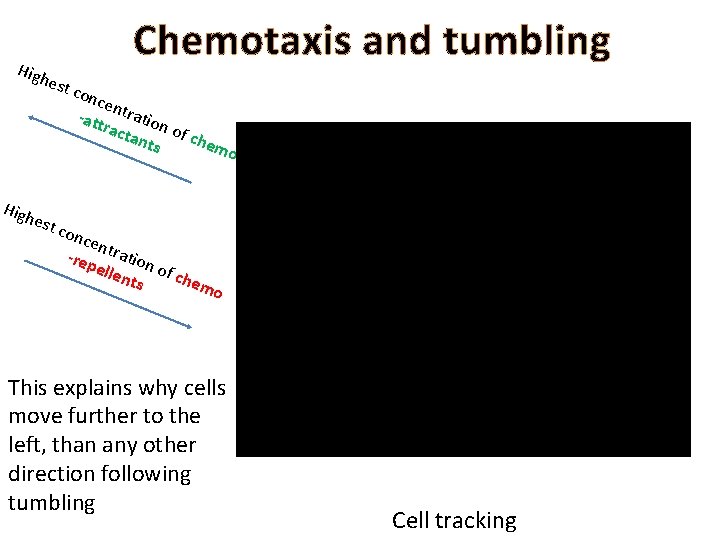
High Chemotaxis and tumbling est c onc en -att tration ract ant of che s mo onc entr -rep ation elle nts of chem o This explains why cells move further to the left, than any other direction following tumbling Cell tracking
Transducing chemotactic signals This video explains the signal transduction mechanisms underlying motility in E. coli. This system is similar to the signal transduction cascade seen I C. jejuni motility!
Phase variation of flagella Just to make motility in C. jejuni a bit more complicated… Flagellin genes in C. jejuni undergo a phenomenon known as Phase Variation. This is the random switching on and off of gene expression. Switching to the off phase diminishes motility in C. jejuni. You can learn more about phase variation and take our online tutorial on C. jejuni phase variation here!
- Slides: 13