
MOSCAP Nonidealities Effect of oxide charges PolySi gate
- Slides: 15
MOSCAP Non-idealities – Effect of oxide charges – Poly-Si gate depletion effect – VT adjustment – HW 9
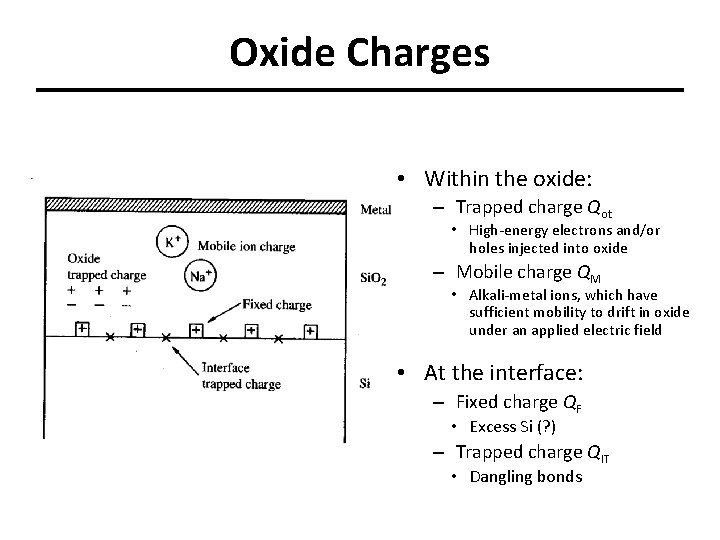
Oxide Charges • Within the oxide: – Trapped charge Qot • High-energy electrons and/or holes injected into oxide – Mobile charge QM • Alkali-metal ions, which have sufficient mobility to drift in oxide under an applied electric field • At the interface: – Fixed charge QF • Excess Si (? ) – Trapped charge QIT • Dangling bonds
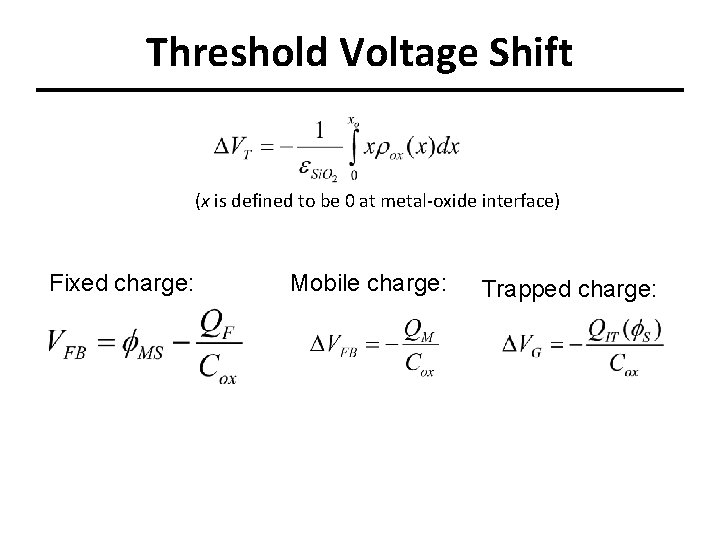
Threshold Voltage Shift (x is defined to be 0 at metal-oxide interface) Fixed charge: Mobile charge: Trapped charge:
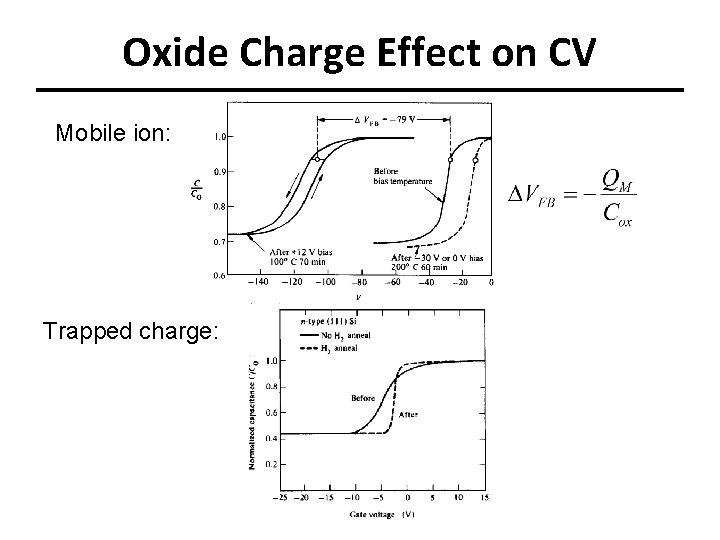
Oxide Charge Effect on CV Mobile ion: Trapped charge:
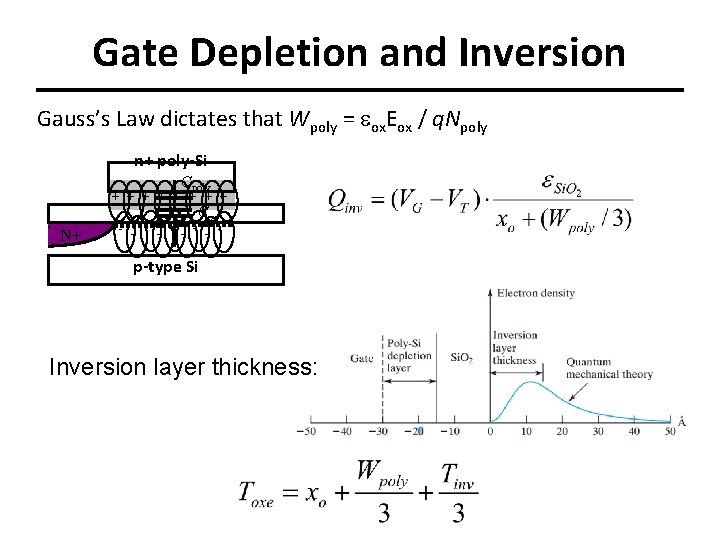
Gate Depletion and Inversion Gauss’s Law dictates that Wpoly = eox. Eox / q. Npoly n+ poly-Si Cpoly + + + + Cox N+ - - - - - p-type Si Inversion layer thickness:
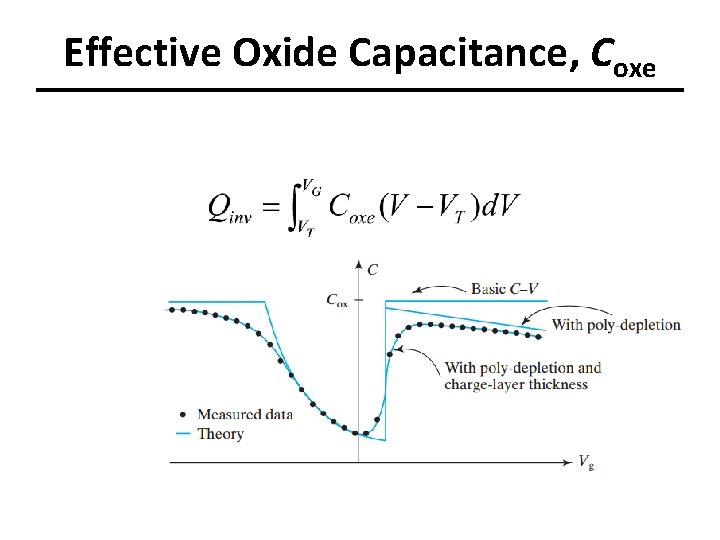
Effective Oxide Capacitance, Coxe
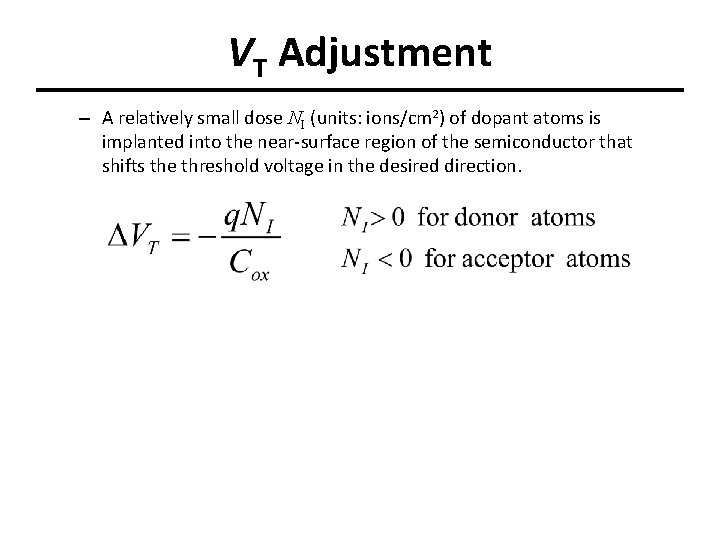
VT Adjustment – A relatively small dose NI (units: ions/cm 2) of dopant atoms is implanted into the near-surface region of the semiconductor that shifts the threshold voltage in the desired direction.
The MOSFET Non-idealities • Velocity saturation • Short channel effect • HW 11
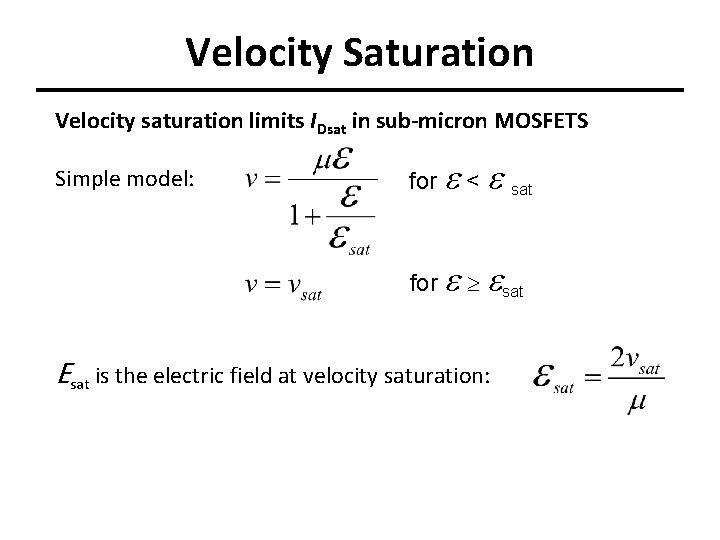
Velocity Saturation Velocity saturation limits IDsat in sub-micron MOSFETS Simple model: for e < e sat for e esat Esat is the electric field at velocity saturation:
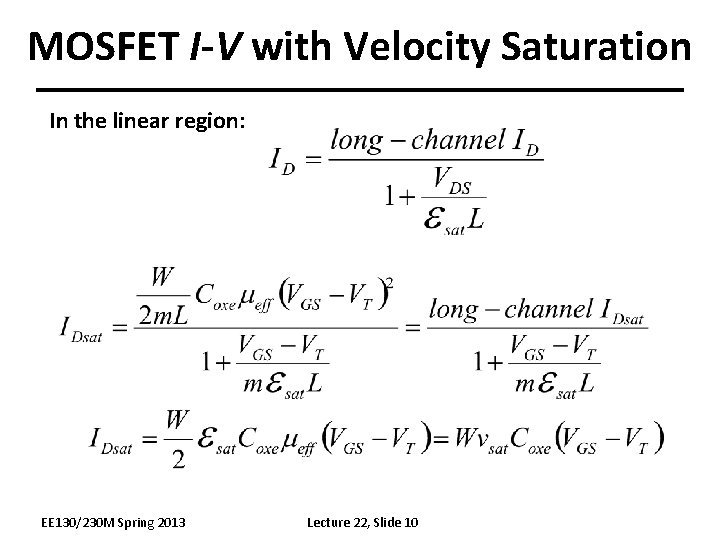
MOSFET I-V with Velocity Saturation In the linear region: EE 130/230 M Spring 2013 Lecture 22, Slide 10
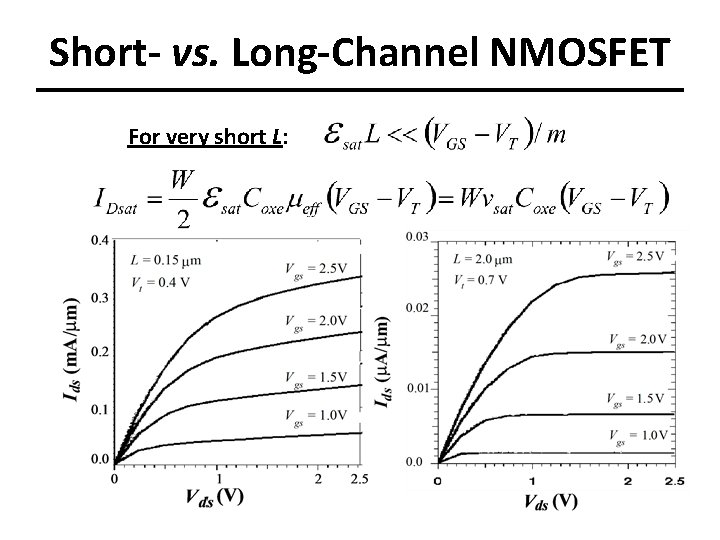
Short- vs. Long-Channel NMOSFET For very short L:
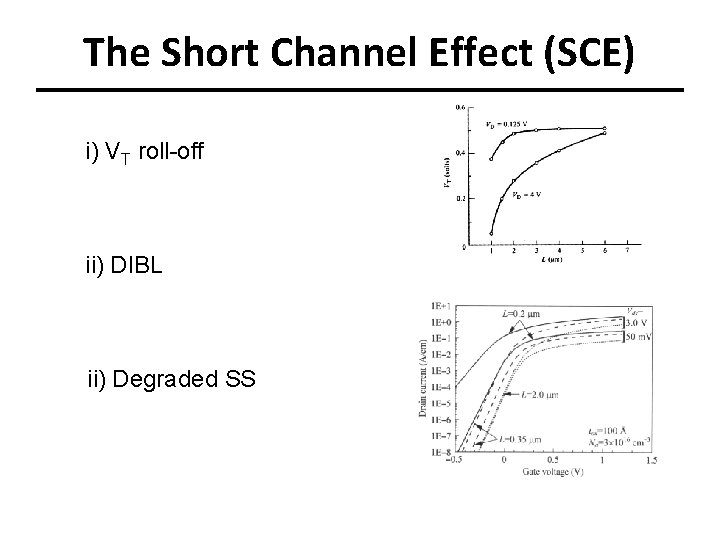
The Short Channel Effect (SCE) i) VT roll-off ii) DIBL ii) Degraded SS
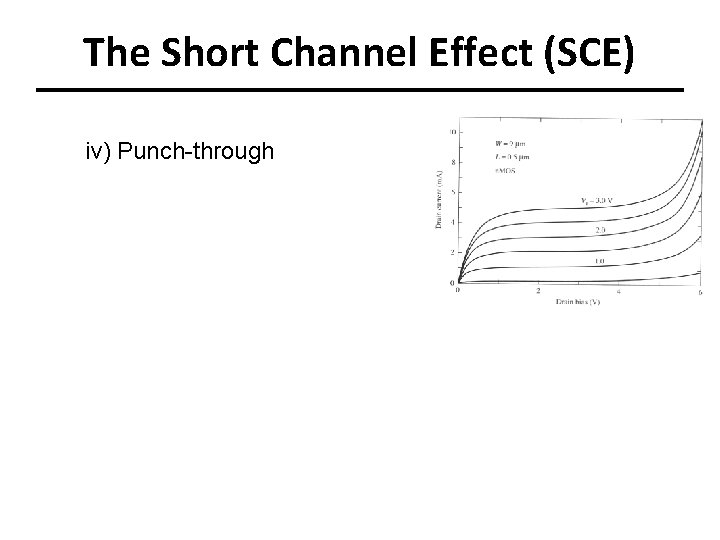
The Short Channel Effect (SCE) iv) Punch-through
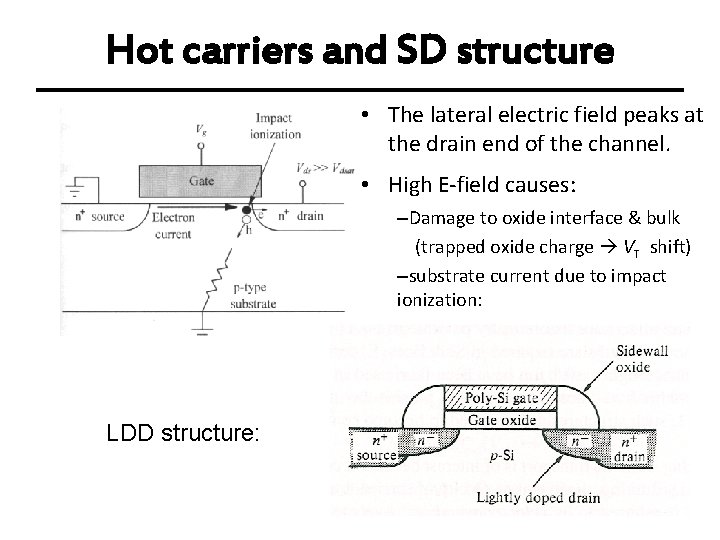
Hot carriers and SD structure • The lateral electric field peaks at the drain end of the channel. • High E-field causes: –Damage to oxide interface & bulk (trapped oxide charge VT shift) –substrate current due to impact ionization: LDD structure:
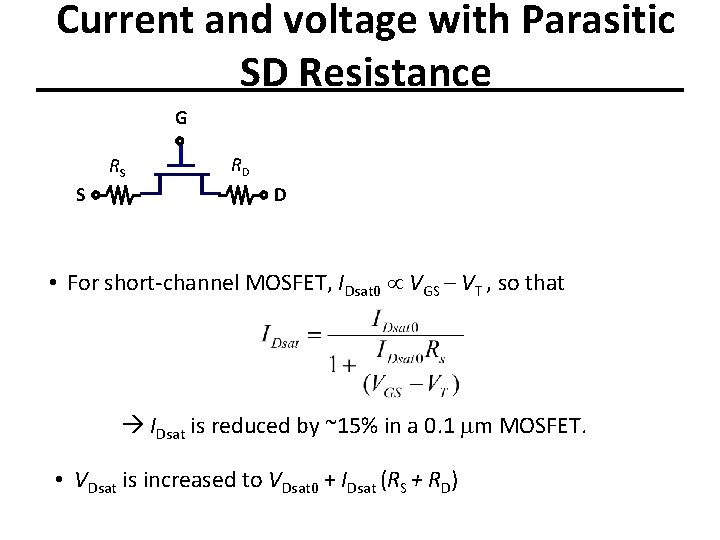
Current and voltage with Parasitic SD Resistance G RS S RD D • For short-channel MOSFET, IDsat 0 VGS – VT , so that IDsat is reduced by ~15% in a 0. 1 mm MOSFET. • VDsat is increased to VDsat 0 + IDsat (RS + RD)