
Morphology and Anatomy of Plants Ch 12 Organs
- Slides: 13
Morphology and Anatomy of Plants Ch. 12
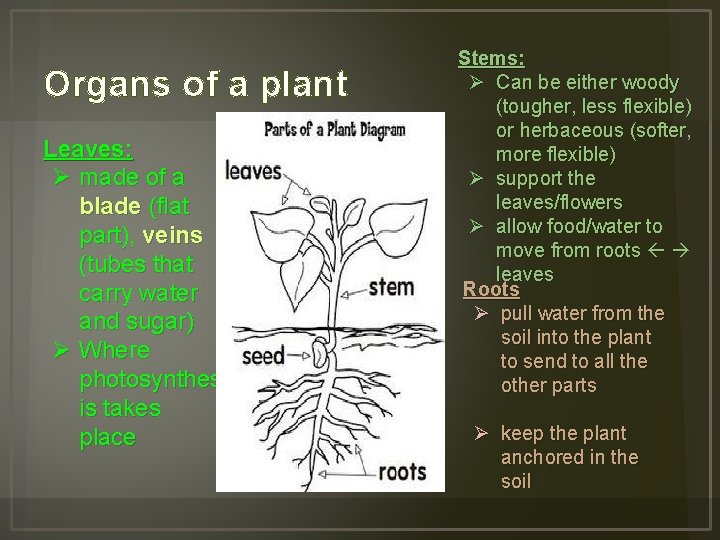
Organs of a plant Leaves: Ø made of a blade (flat part), veins (tubes that carry water and sugar) Ø Where photosynthes is takes place Stems: Ø Can be either woody (tougher, less flexible) or herbaceous (softer, more flexible) Ø support the leaves/flowers Ø allow food/water to move from roots leaves Roots Ø pull water from the soil into the plant to send to all the other parts Ø keep the plant anchored in the soil
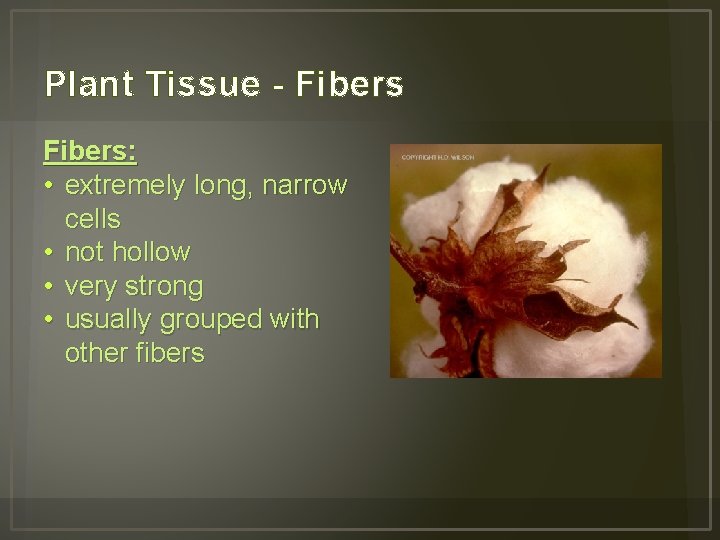
Plant Tissue - Fibers: • extremely long, narrow cells • not hollow • very strong • usually grouped with other fibers
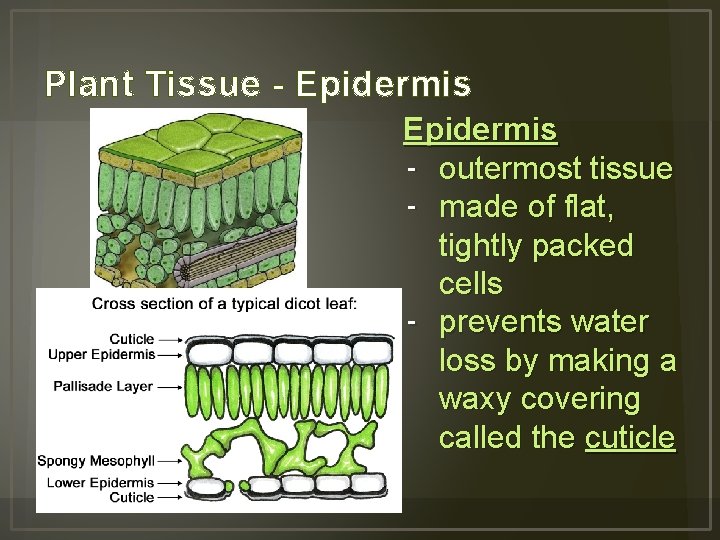
Plant Tissue - Epidermis - outermost tissue - made of flat, tightly packed cells - prevents water loss by making a waxy covering called the cuticle
Vocab • Anatomy is the bodily structure of an organism • There are 4 distinct anatomical parts of plant: • Cell walls • Plastids • Xylem • Phloem
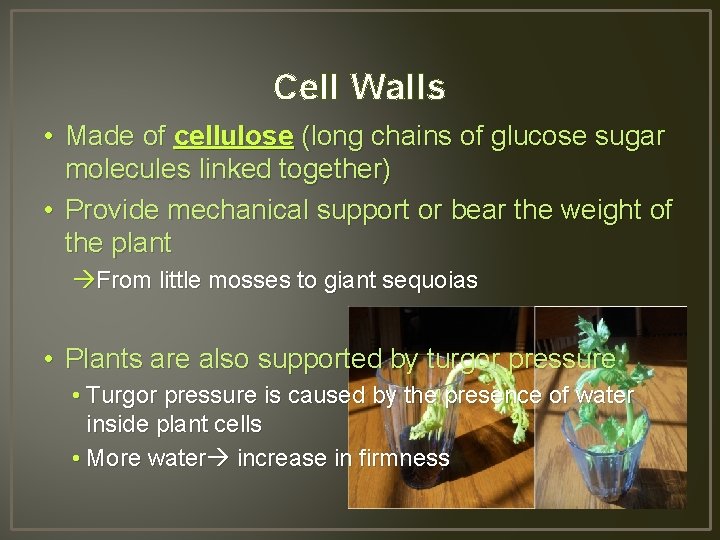
Cell Walls • Made of cellulose (long chains of glucose sugar molecules linked together) • Provide mechanical support or bear the weight of the plant From little mosses to giant sequoias • Plants are also supported by turgor pressure • Turgor pressure is caused by the presence of water inside plant cells • More water increase in firmness
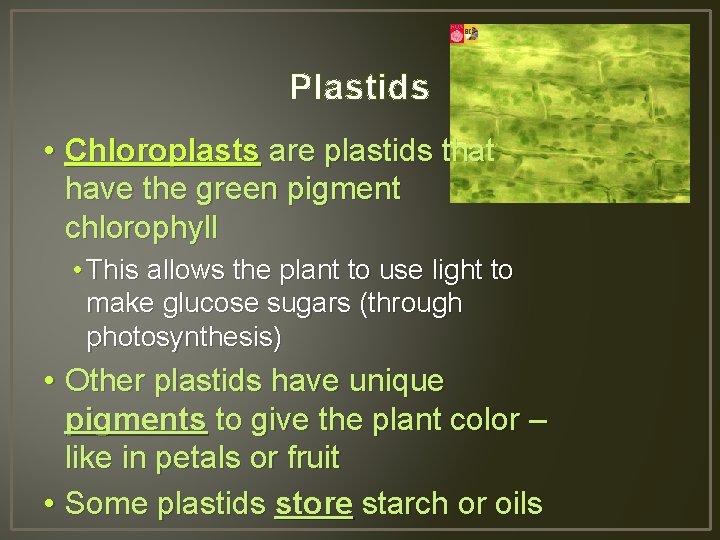
Plastids • Chloroplasts are plastids that have the green pigment chlorophyll • This allows the plant to use light to make glucose sugars (through photosynthesis) • Other plastids have unique pigments to give the plant color – like in petals or fruit • Some plastids store starch or oils
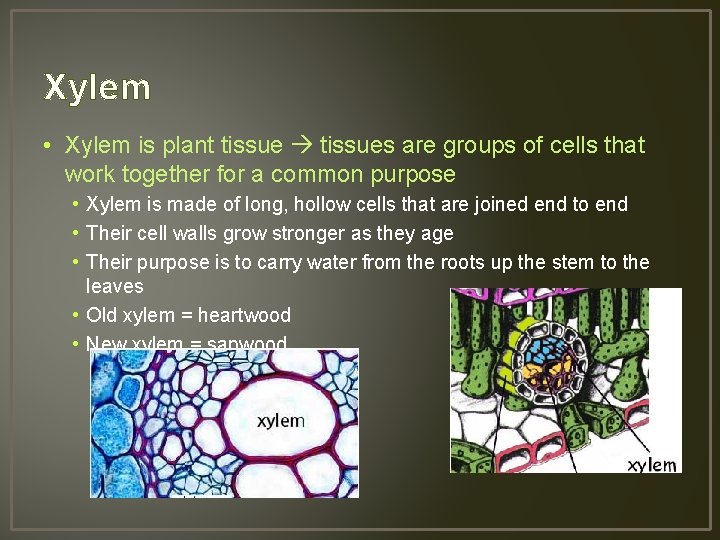
Xylem • Xylem is plant tissues are groups of cells that work together for a common purpose • Xylem is made of long, hollow cells that are joined end to end • Their cell walls grow stronger as they age • Their purpose is to carry water from the roots up the stem to the leaves • Old xylem = heartwood • New xylem = sapwood
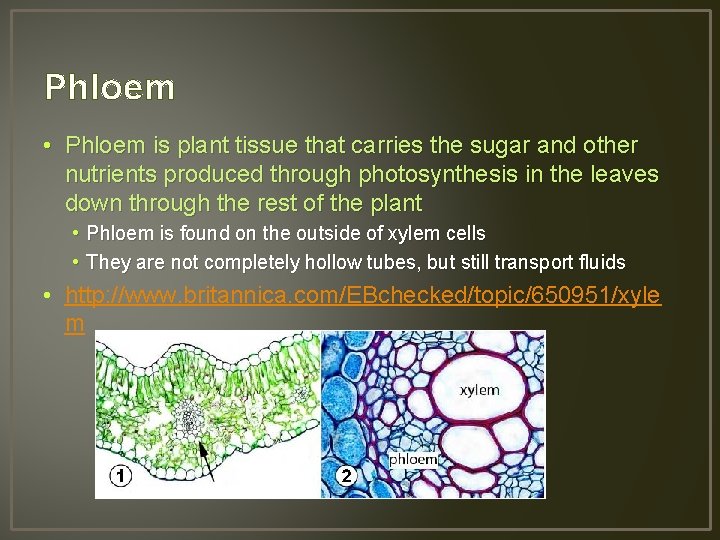
Phloem • Phloem is plant tissue that carries the sugar and other nutrients produced through photosynthesis in the leaves down through the rest of the plant • Phloem is found on the outside of xylem cells • They are not completely hollow tubes, but still transport fluids • http: //www. britannica. com/EBchecked/topic/650951/xyle m
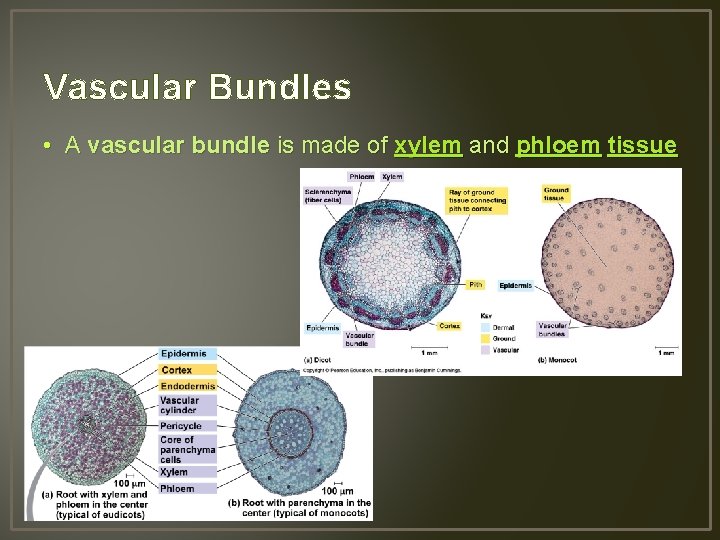
Vascular Bundles • A vascular bundle is made of xylem and phloem tissue
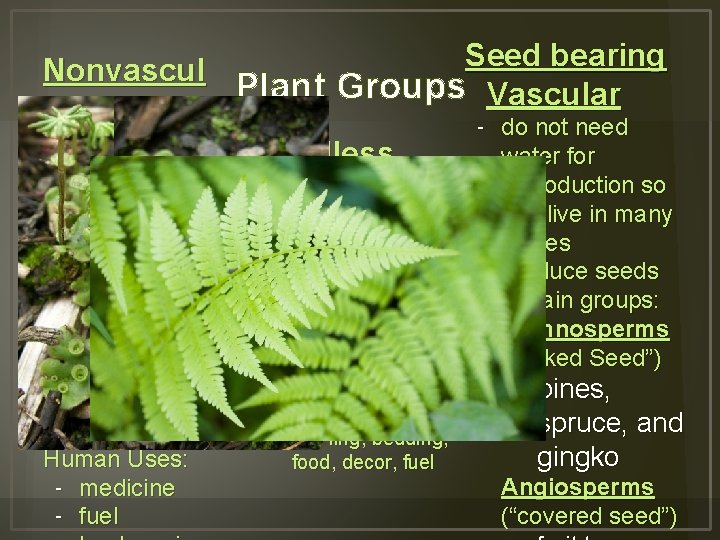
Seed bearing Nonvascul Plant Groups Vascular ar - do not need - no true water for Seedless tissues reproduction so Vascular - live near constant water sources Ex: - Mosses - liverworts - hornworts Human Uses: - medicine - fuel - have true tissues - must have water for reproduction - Do not produce seeds Ex: - Horsetails - ferns Human Uses: - clothing, bedding, food, decor, fuel can live in many places - produce seeds - 2 main groups: Gymnosperms (“naked Seed”) - pines, spruce, and gingko Angiosperms (“covered seed”)
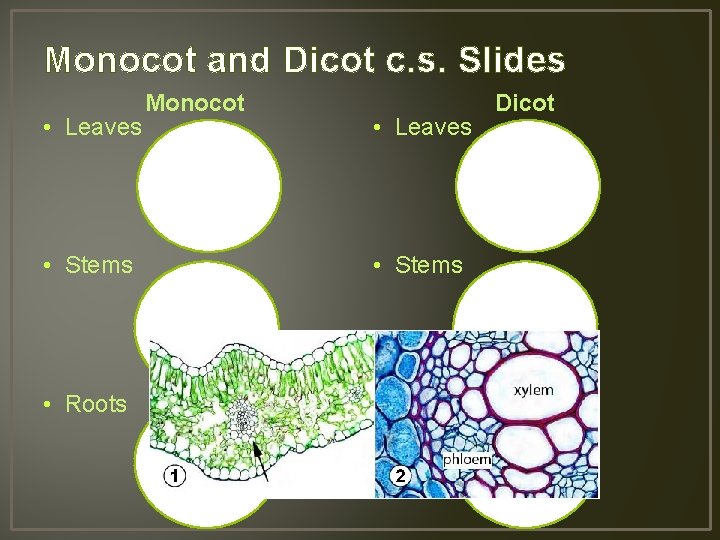
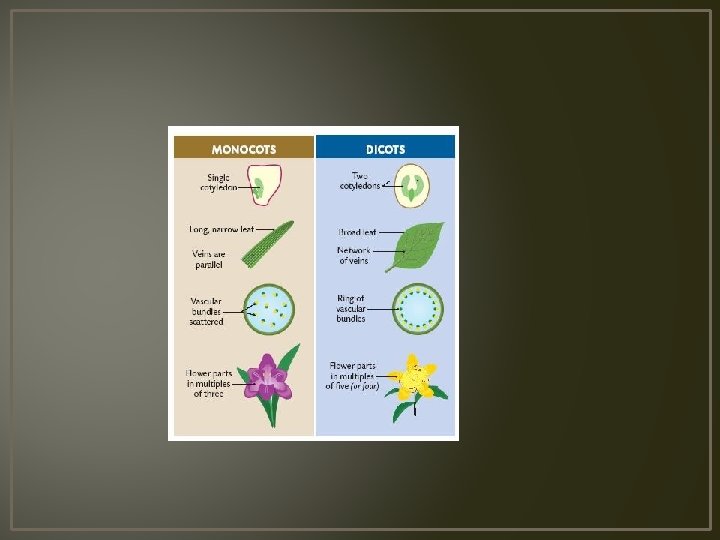
Monocot and Dicot c. s. Slides • Leaves Monocot • Leaves • Stems • Roots Dicot