
Morphologie Beispiel 3 Maori Language Dr Christina Alexandris
Morphologie Beispiel 3: Maori Language Dr. Christina Alexandris Nationale Universität Athen Deutsche Sprache und Literatur
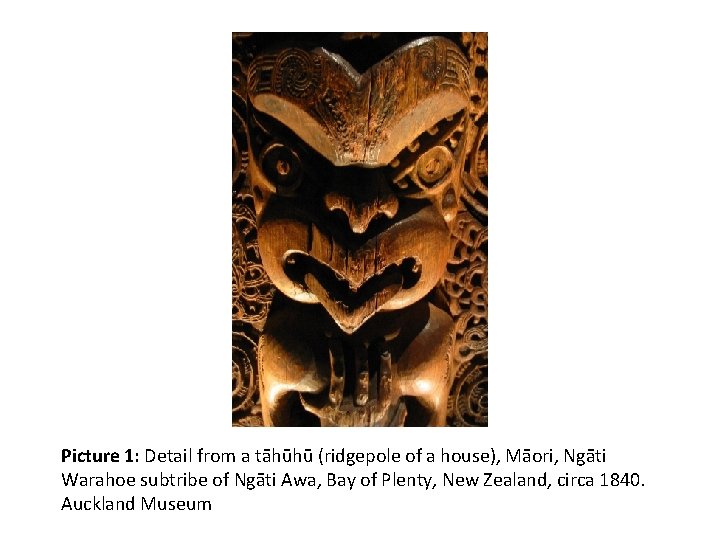
Picture 1: Detail from a tāhūhū (ridgepole of a house), Māori, Ngāti Warahoe subtribe of Ngāti Awa, Bay of Plenty, New Zealand, circa 1840. Auckland Museum
Māori or te reo Māori • Māori or te reo Māori (pronounced [ˈmaːoɾi, te ˈɾeo ˈmaːoɾi]) commonly te reo ("the language"), is the language of the indigenous population of New Zealand, the Maori people, where it has is the status of an official language. • Linguists classify it within the Eastern Polynesian languages as being closely related to Cook Islands Māori, Tuamotuan and Tahitian; somewhat less closely to Hawaiian and Marquesan; and more distantly to the languages of Western Polynesia, including Samoan, Tokelauan, Niuean and Tongan. From: http: //en. wikipedia. org/wiki Beispiel 3: Maori Language 4
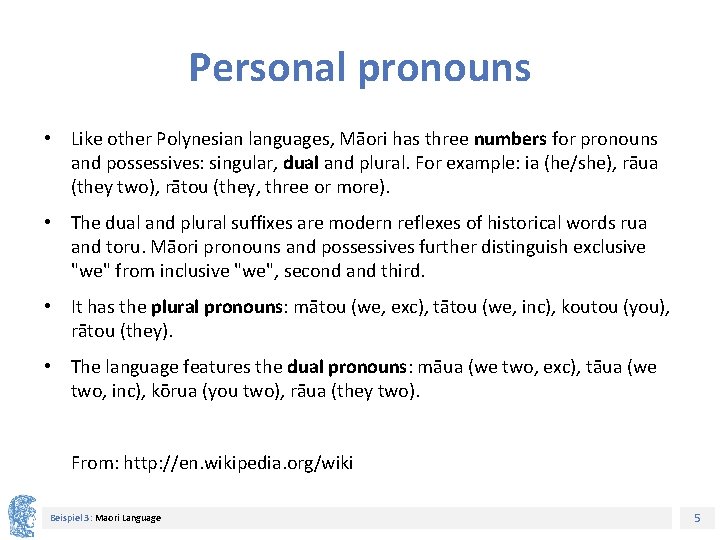
Personal pronouns • Like other Polynesian languages, Māori has three numbers for pronouns and possessives: singular, dual and plural. For example: ia (he/she), rāua (they two), rātou (they, three or more). • The dual and plural suffixes are modern reflexes of historical words rua and toru. Māori pronouns and possessives further distinguish exclusive "we" from inclusive "we", second and third. • It has the plural pronouns: mātou (we, exc), tātou (we, inc), koutou (you), rātou (they). • The language features the dual pronouns: māua (we two, exc), tāua (we two, inc), kōrua (you two), rāua (they two). From: http: //en. wikipedia. org/wiki Beispiel 3: Maori Language 5
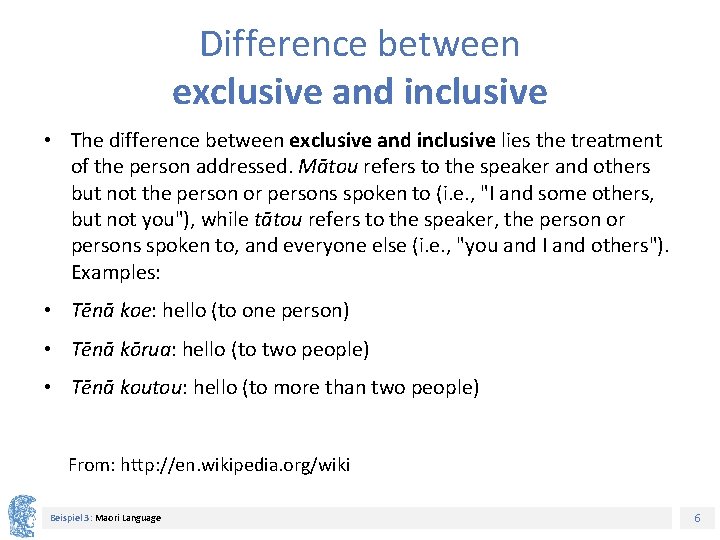
Difference between exclusive and inclusive • The difference between exclusive and inclusive lies the treatment of the person addressed. Mātou refers to the speaker and others but not the person or persons spoken to (i. e. , "I and some others, but not you"), while tātou refers to the speaker, the person or persons spoken to, and everyone else (i. e. , "you and I and others"). Examples: • Tēnā koe: hello (to one person) • Tēnā kōrua: hello (to two people) • Tēnā koutou: hello (to more than two people) From: http: //en. wikipedia. org/wiki Beispiel 3: Maori Language 6
Σημείωμα Χρήσης Έργων Τρίτων Το Έργο αυτό κάνει χρήση των ακόλουθων έργων: Εικόνα 1: Carved Maori tahuhu (ridgepole of a house), Ngati Warahoe subtribe of Ngati Awa, Bay of Plenty, New Zealand, circa 1840. Auckland Museum, 20 May 2006. public domain/no rights reserved, https: //mi. wikipedia. org/wiki/Ngāti_Awa, Wikimedia Commons, the free media repository Beispiel 3: Maori Language 14
- Slides: 14