
Morning report Shraddha Desai PGY 2 Internal Medicine








- Slides: 40
Morning report Shraddha Desai PGY 2 Internal Medicine
Case Presentation 76 year old male presenting with mild weakness, numbness and tingling in his bilateral upper extremities from the level of the fingertips up to about above the elbow……
History and Physical v PMH/PSH: Had URI like symptoms about 10 days ago, history of colon cancer s/p chemo, radiation and resection and s/p colostomy, history of neuropathy from chemo that had been improving, c-spine spondylosis with baseline radiculopathy, carotid stenosis s/p carotid stent placement and erectile dysfunction. v Meds: ASA: 81 mg, Lipitor: 20 mg, Sildenafil: 20 mg prn v Family Hx: Both parents had cardiovascular disease in their 80 s, father had prostate cancer v Social Hx: Lives with his wife, retired, quit smoking 40 years ago, occasional alcohol use, denied drug use v Allergies: None v Travel: None; Sick contacts: Wife had similar URI like symptoms prior to him
ROS v GEN: no fevers, night sweats, weight loss v HEENT: no visual changes, blurred vision or photophobia, no oral lesions, tinnitus, ear pain v NEURO: +4 extremity weakness, numbness and tingling; no headaches, speech changes v MUSK/EXT: no joint pains or joint swelling, no new back pain v CVS: no chest pain, dyspnea on exertion v RESP: + URI with sore throat and cough 2 weeks ago; no sputum production v GI/GU: mild dysphagia, no abdominal pain, nausea, vomiting, dysuria, incontinence v ENDO: no polyuria, polydipsia, head/cold intolerance v HEME: no easy bruising or bleeding v IMMUNE: no frequent infections, no swollen glands v PSYCH: no depression or anxiety
Physical Exam v T: 98. 1 F HR: 82 RR: 16 O 2 Sat: 99% on RA BP: 140/76 v GEN: NAD, appears stated age v HEAD: AT/NC, sclera anicteric, PERRLA, oral mucosa moist v CVS: RRR, no murmurs or rubs v LUNGS: CTAB, no wheezes or crackles v NECK: supple, no meningismus, no carotid bruits v ABD: soft, NT, +BS X 4, no rebound or guarding v MUSC/EXT: no erythematous or swollen joints, no edema, cyanosis or clubbing v SKIN: no rashes
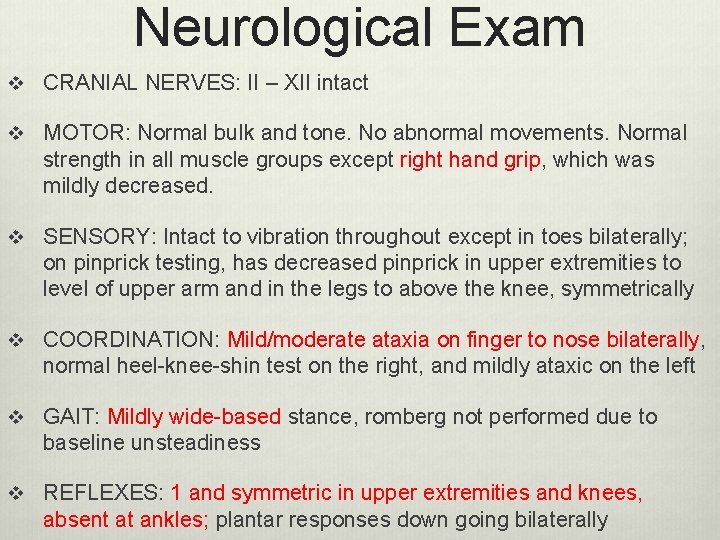
Neurological Exam v CRANIAL NERVES: II – XII intact v MOTOR: Normal bulk and tone. No abnormal movements. Normal strength in all muscle groups except right hand grip, which was mildly decreased. v SENSORY: Intact to vibration throughout except in toes bilaterally; on pinprick testing, has decreased pinprick in upper extremities to level of upper arm and in the legs to above the knee, symmetrically v COORDINATION: Mild/moderate ataxia on finger to nose bilaterally, normal heel-knee-shin test on the right, and mildly ataxic on the left v GAIT: Mildly wide-based stance, romberg not performed due to baseline unsteadiness v REFLEXES: 1 and symmetric in upper extremities and knees, absent at ankles; plantar responses down going bilaterally
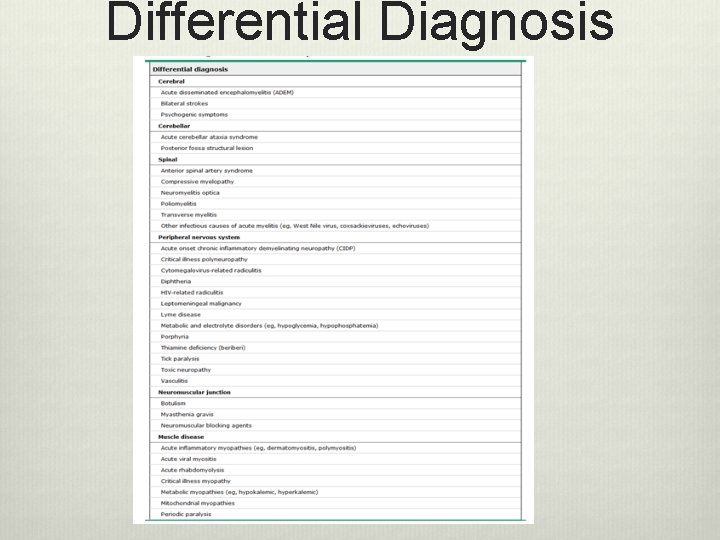
Differential Diagnosis v. Given what you know at this point, what is in your differential diagnosis?
Differential Diagnosis
Further Work Up v. Based on your differential, what do you want to do to further work this up?
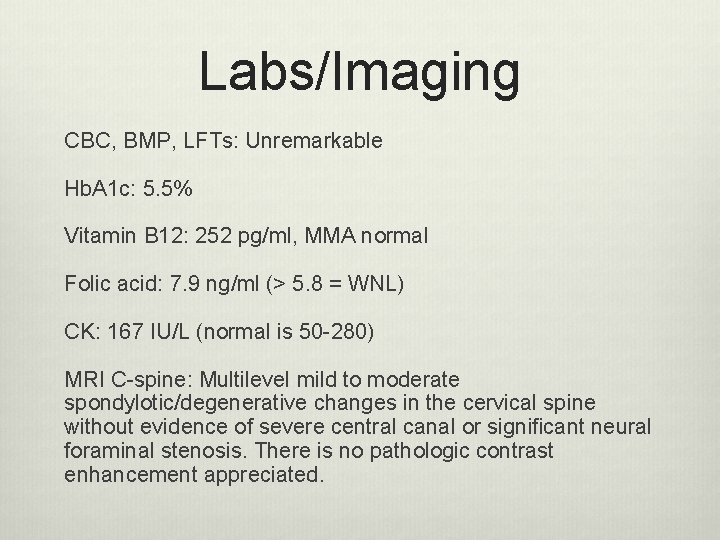
Labs/Imaging CBC, BMP, LFTs: Unremarkable Hb. A 1 c: 5. 5% Vitamin B 12: 252 pg/ml, MMA normal Folic acid: 7. 9 ng/ml (> 5. 8 = WNL) CK: 167 IU/L (normal is 50 -280) MRI C-spine: Multilevel mild to moderate spondylotic/degenerative changes in the cervical spine without evidence of severe central canal or significant neural foraminal stenosis. There is no pathologic contrast enhancement appreciated.
Guillain-Barré Syndrome (GBS) Georges Guillain Jean –Allexandre Barré Andre Strohl
Objectives v Understand the pathophysiology of GBS v Diagnostic modalities v Treatment v MKSAP questions/Cases – differentiating GBS from other neurologic disorders v Questions
GBS v Heterogeneous syndrome with numerous variants v Acute monophasic illness causing rapidly progressive polyneuropathy with paralysis or weakness v Usually provoked by a preceding infection v Prevalence: 1 -4 in 100, 000 persons v Mean age of onset: 40 years with bimodal peaks, at 20 - 24 years and 70 -74 years v Incidence increases with age v Male to female ratio 1. 3: 1
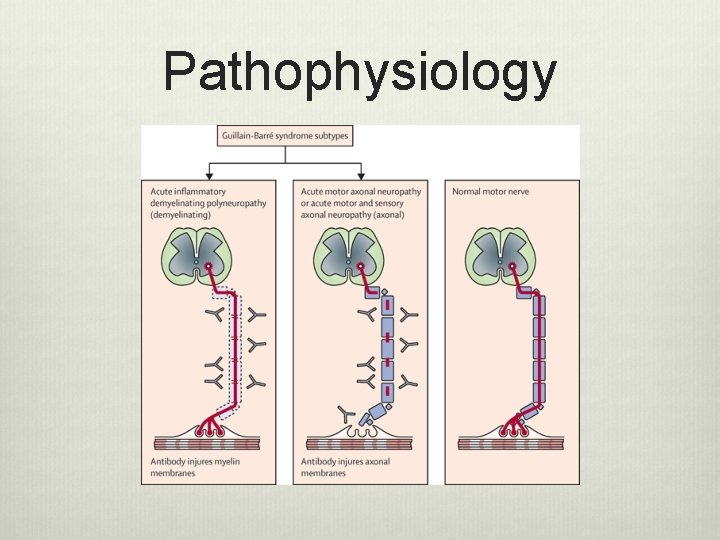
Variants of GBS v Acute inflammatory demyelinating polyneuropathy (AIDP) v Acute motor axonal neuropathy v Acute motor and sensory axonal neuropathy v Miller Fisher Syndrome – triad? v Bickerstaff encephalitis v Pharyngeal-cervical-brachial weakness
Pathophysiology
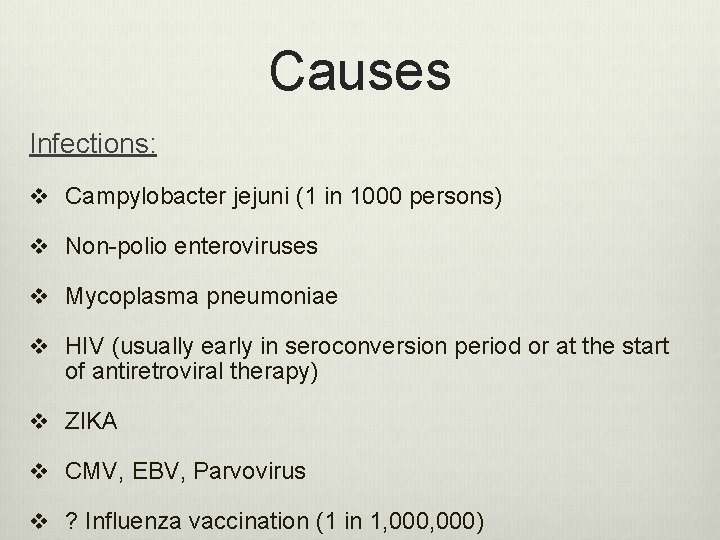
Causes Infections: v Campylobacter jejuni (1 in 1000 persons) v Non-polio enteroviruses v Mycoplasma pneumoniae v HIV (usually early in seroconversion period or at the start of antiretroviral therapy) v ZIKA v CMV, EBV, Parvovirus v ? Influenza vaccination (1 in 1, 000)
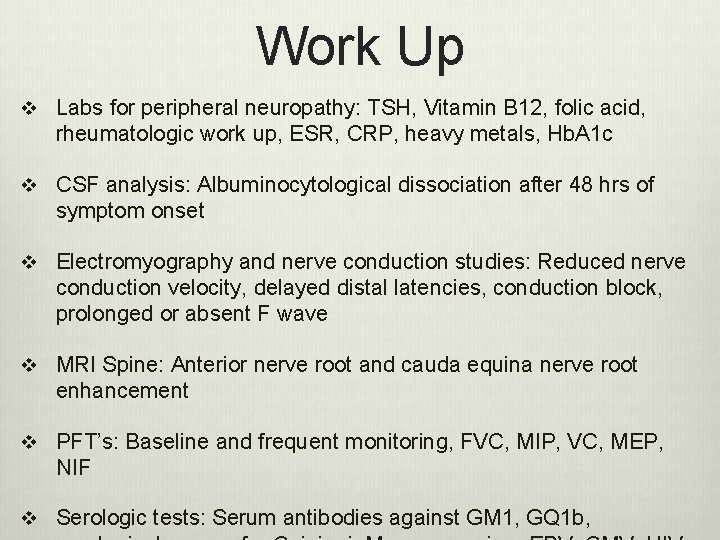
Work Up v Labs for peripheral neuropathy: TSH, Vitamin B 12, folic acid, rheumatologic work up, ESR, CRP, heavy metals, Hb. A 1 c v CSF analysis: Albuminocytological dissociation after 48 hrs of symptom onset v Electromyography and nerve conduction studies: Reduced nerve conduction velocity, delayed distal latencies, conduction block, prolonged or absent F wave v MRI Spine: Anterior nerve root and cauda equina nerve root enhancement v PFT’s: Baseline and frequent monitoring, FVC, MIP, VC, MEP, NIF v Serologic tests: Serum antibodies against GM 1, GQ 1 b,
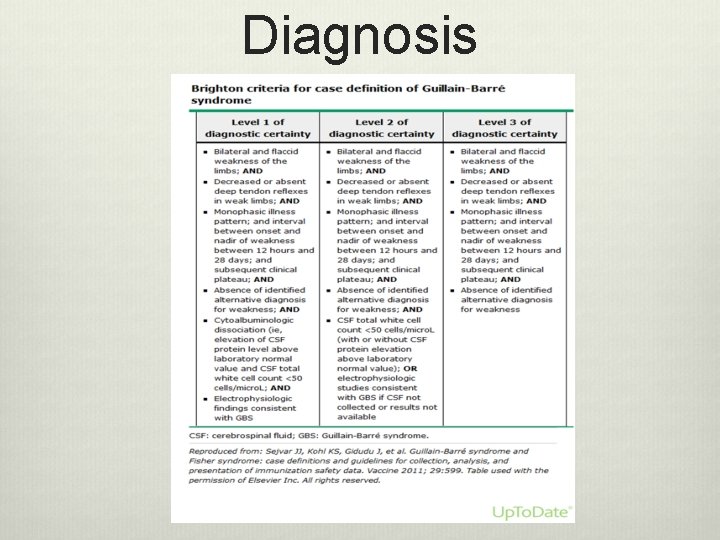
Diagnosis
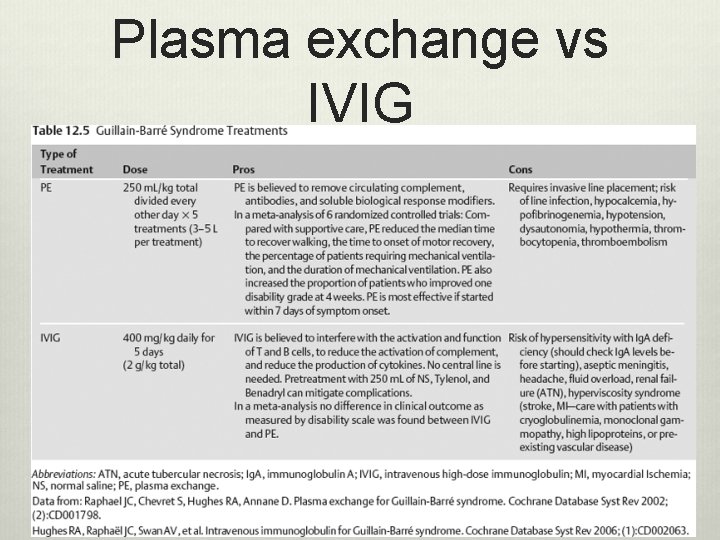
Treatment v IVIG – 0. 4 gm/kg daily for 5 days - recommended for patients unable to ambulate independently at 2 weeks (Grade 1) and 4 weeks (grade 2) v Plasma exchange: 4 - 5 exchanges, recommended for GBS pt. able to ambulate as well as mechanically ventilated pts v Steroids: not indicated for GBS v Rehabilitation v Pain control: Acute: Gabapentin, Carbamazepine, epidural Morphine Long term: Gabapentin, Carbamazepine, Pregabalin
Plasma exchange vs IVIG
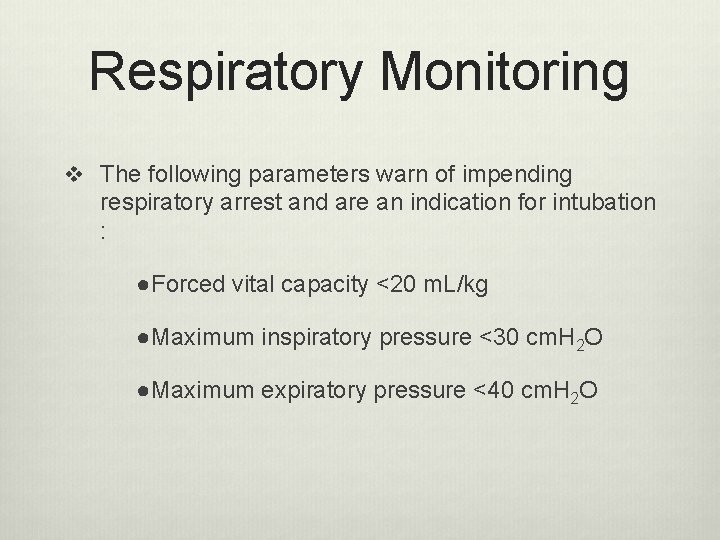
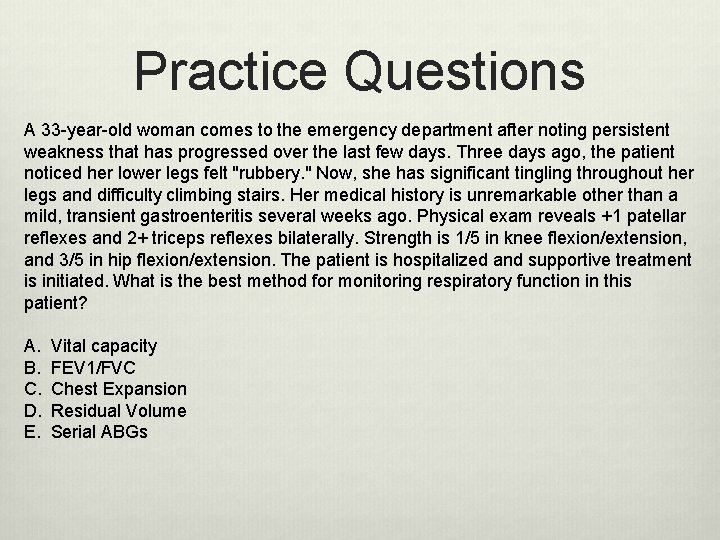
Respiratory Monitoring v The following parameters warn of impending respiratory arrest and are an indication for intubation : ●Forced vital capacity <20 m. L/kg ●Maximum inspiratory pressure <30 cm. H 2 O ●Maximum expiratory pressure <40 cm. H 2 O
What’s new? v Eculizumab: Antibody against C 5 of the complement pathway, thereby inhibiting the complement cascade v Alemtuzumab: Anti CD 52 monoclonal antibody v Rituximab: Anti CD 20 v Anti CD 2 and anti C 1 -q None of them are approved by FDA for GBS.
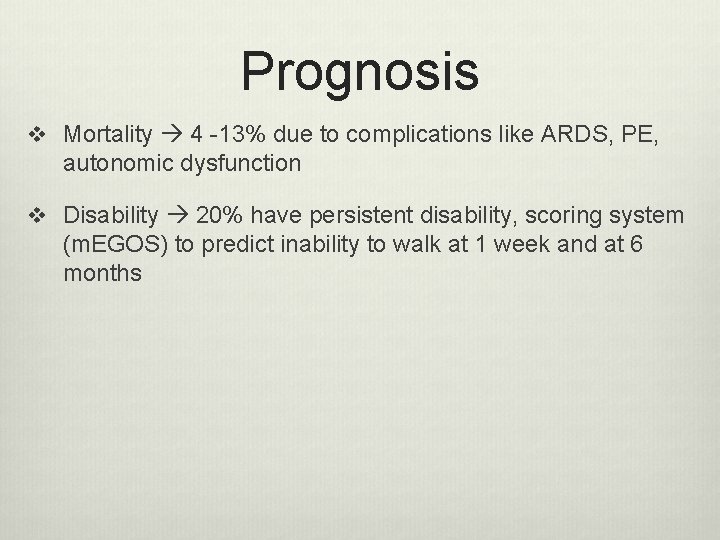
Prognosis v Mortality 4 -13% due to complications like ARDS, PE, autonomic dysfunction v Disability 20% have persistent disability, scoring system (m. EGOS) to predict inability to walk at 1 week and at 6 months
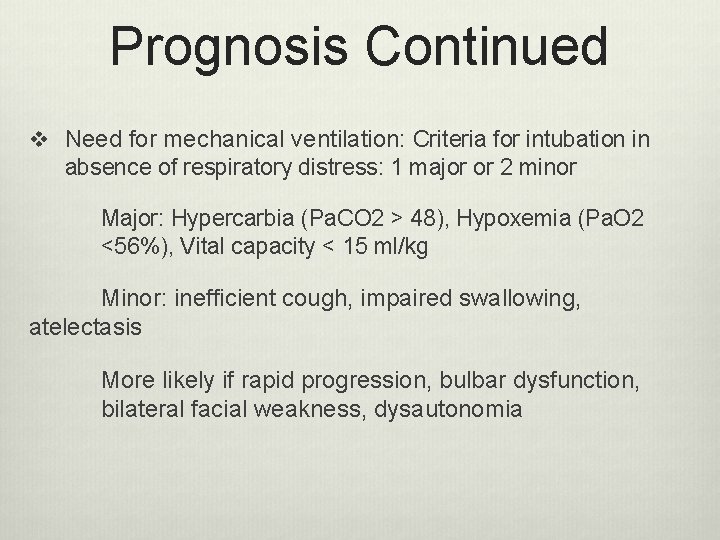
Prognosis Continued v Need for mechanical ventilation: Criteria for intubation in absence of respiratory distress: 1 major or 2 minor Major: Hypercarbia (Pa. CO 2 > 48), Hypoxemia (Pa. O 2 <56%), Vital capacity < 15 ml/kg Minor: inefficient cough, impaired swallowing, atelectasis More likely if rapid progression, bulbar dysfunction, bilateral facial weakness, dysautonomia
Prognostic Models v The Erasmus GBS Respiratory Insufficiency Score (EGRIS) is useful to predict whether or not the patient will need mechanical ventilation within 1 week of admission: v The modified EGOS (Erasmus GBS Outcome Score) is useful for predicting the need for aid with walking at 6 months: v https: //gbstools. erasmusmc. nl/prognosis-tool/0/0
EGRIS Scoring System
EGRIS Model
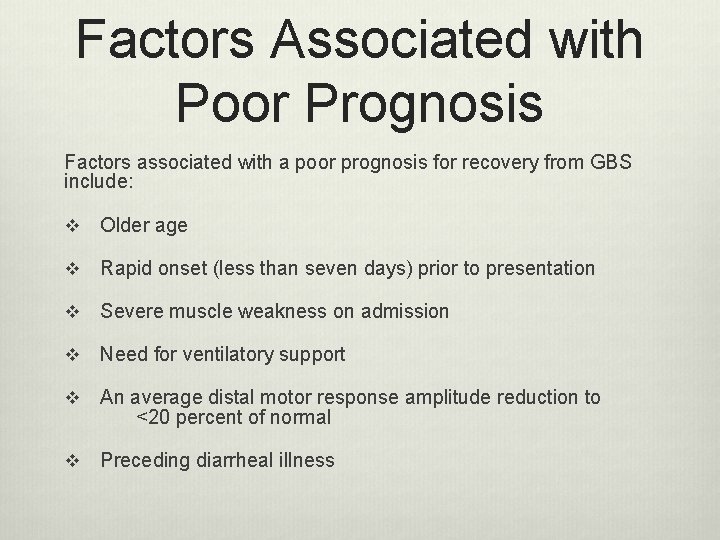
Factors Associated with Poor Prognosis Factors associated with a poor prognosis for recovery from GBS include: v Older age v Rapid onset (less than seven days) prior to presentation v Severe muscle weakness on admission v Need for ventilatory support v An average distal motor response amplitude reduction to <20 percent of normal v Preceding diarrheal illness
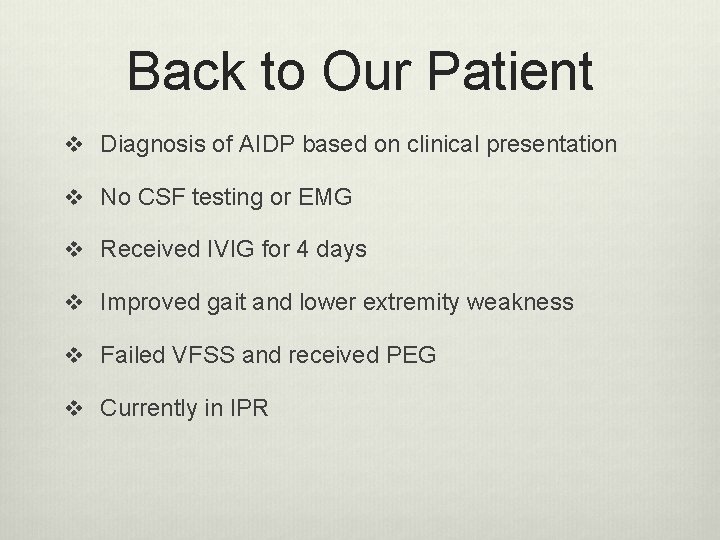
Back to Our Patient v Diagnosis of AIDP based on clinical presentation v No CSF testing or EMG v Received IVIG for 4 days v Improved gait and lower extremity weakness v Failed VFSS and received PEG v Currently in IPR
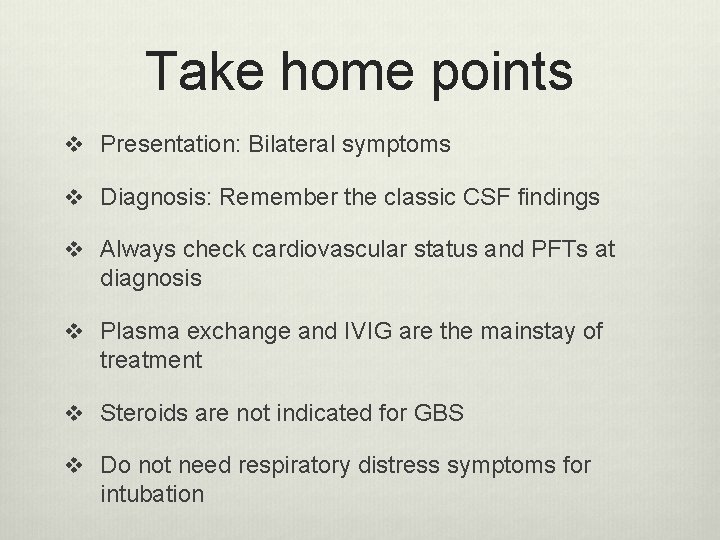
Take home points v Presentation: Bilateral symptoms v Diagnosis: Remember the classic CSF findings v Always check cardiovascular status and PFTs at diagnosis v Plasma exchange and IVIG are the mainstay of treatment v Steroids are not indicated for GBS v Do not need respiratory distress symptoms for intubation
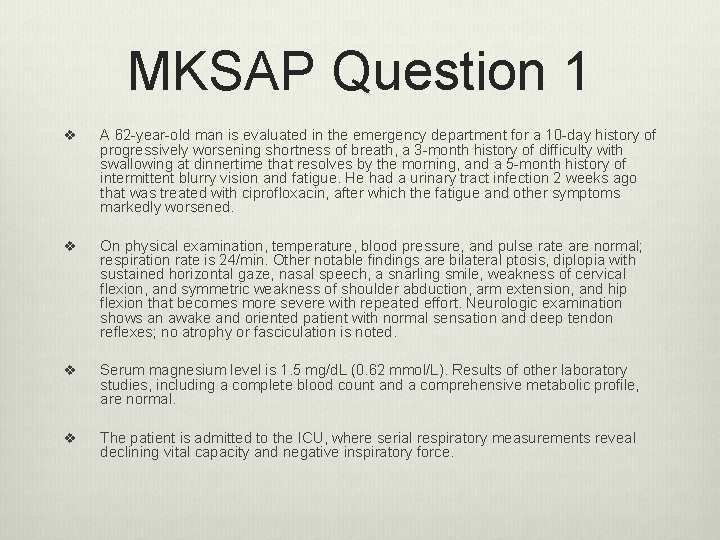
MKSAP Question 1 v A 62 -year-old man is evaluated in the emergency department for a 10 -day history of progressively worsening shortness of breath, a 3 -month history of difficulty with swallowing at dinnertime that resolves by the morning, and a 5 -month history of intermittent blurry vision and fatigue. He had a urinary tract infection 2 weeks ago that was treated with ciprofloxacin, after which the fatigue and other symptoms markedly worsened. v On physical examination, temperature, blood pressure, and pulse rate are normal; respiration rate is 24/min. Other notable findings are bilateral ptosis, diplopia with sustained horizontal gaze, nasal speech, a snarling smile, weakness of cervical flexion, and symmetric weakness of shoulder abduction, arm extension, and hip flexion that becomes more severe with repeated effort. Neurologic examination shows an awake and oriented patient with normal sensation and deep tendon reflexes; no atrophy or fasciculation is noted. v Serum magnesium level is 1. 5 mg/d. L (0. 62 mmol/L). Results of other laboratory studies, including a complete blood count and a comprehensive metabolic profile, are normal. v The patient is admitted to the ICU, where serial respiratory measurements reveal declining vital capacity and negative inspiratory force.
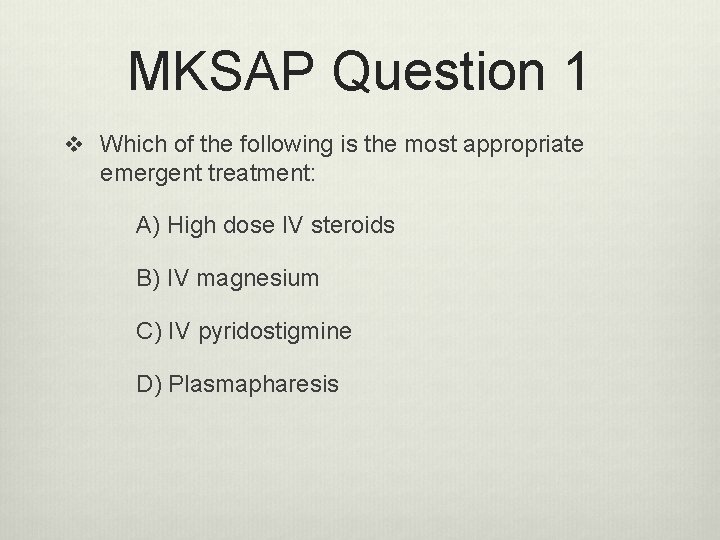
MKSAP Question 1 v Which of the following is the most appropriate emergent treatment: A) High dose IV steroids B) IV magnesium C) IV pyridostigmine D) Plasmapharesis
MKSAP Question 1 v Treatment with plasmapheresis should be started immediately in this patient with myasthenic crisis. His several-month history of fluctuating proximal weakness with ocular and bulbar involvement is consistent with myasthenia gravis. His rapid decline most likely has been precipitated by recent exposure to ciprofloxacin. Fluoroquinolones can decrease transmission at the neuromuscular junction and exacerbate myasthenia gravis. Although Guillain-Barré syndrome (GBS) also can present with rapidly progressive respiratory failure, the slow clinical course and preserved reflexes in this patient are not consistent with GBS. v Patients with suspected myasthenic crisis (rapid respiratory failure) should be admitted to the ICU and have their respiratory parameters (vital capacity and negative inspiratory force) closely monitored. If myasthenic crisis is confirmed, treatment should be started emergently with either plasmapheresis or intravenous immune globulin (IVIG). v High-dose glucocorticoids can initially aggravate symptoms of myasthenia gravis. These agents can be started after therapy with plasmapheresis or IVIG has been initiated. v Magnesium deficiency usually presents as neuromuscular hyperexcitability, not muscular weakness. Furthermore, because magnesium administration can exacerbate myasthenia gravis by neuromuscular junction blockade, it is inappropriate for this patient. Other medications that need to be used with caution in this setting include fluoroquinolones, aminoglycosides, βblockers, and calcium channel blockers. v Pyridostigmine can worsen respiratory secretions and should be avoided in the setting of acute respiratory failure with bulbar weakness.
MKSAP Question 2 v A 49 -year-old man is evaluated for persistent sensorimotor symptoms. Five months ago, he developed tingling and mild bilateral pain in the thighs followed by mild weakness and hand numbness. Over the next 3 months, his lower extremity weakness progressively worsened, and his gait became unstable. He began having difficulty going up stairs and opening jars and had several episodes of pre-syncopal symptoms on standing; his speech, swallowing, and vision were unaffected. His weakness has plateaued within the past 2 months without any improvement. He continues to have tingling in the lower extremities, but the pain has dissipated. The patient has diabetes mellitus treated with metformin. Family history is noncontributory. v On physical examination, blood pressure is 130/75 mm Hg sitting and 95/60 mm Hg standing; other vital signs are normal. Extraocular movements and muscle tone are normal; no fasiculations are present. Diffuse areflexia is noted, with moderate bilateral symmetric weakness in the distal upper extremities and proximal and distal lower extremities. Decreased sensation to pinprick and vibration is noted in both feet; no evidence of high arches or hammertoes is found. v Results of nerve conduction studies show diffuse and severe slowing of motor nerve conduction velocities and the presence of conduction blocks.
MKSAP Question 2 v Which of the following is the most likely diagnosis? A) Charcot Marie Tooth Disease Type 1 B) Chronic inflammatory demyelinating polyradiculoneuropathy C) Diabetic amyotrophy D) Guillain-Barre syndrome
MKSAP Question 2 v This patient most likely has chronic inflammatory demyelinating polyradiculoneuropathy (CIDP). His rapidly progressive symmetric distal and proximal weakness that plateaued 3 months after onset is consistent with this diagnosis. The diffuse areflexia and sensory and motor neuropathy noted on physical examination and the demyelinating pattern (conduction blocks and slowing of conduction velocities) detected on nerve conduction studies all support the diagnosis of CIDP can be idiopathic or associated with a range of systemic conditions, including diabetes mellitus, paraproteinemia, and HIV infection. Recognition of CIDP is essential because the disorder is responsive to glucocorticoids and other forms of immunomodulatory therapy. v Patients with Charcot-Marie-Tooth disease type 1 also have uniform demyelination on nerve conduction studies. However, the clinical course is much slower than in this patient, and symptoms are more prominent in the distal extremities. v Diabetic amyotrophy, also known as proximal lumbosacral radiculoneuropathy, presents with subacute pain and weakness in the proximal lower extremities. The simultaneous involvement of the upper extremities, diffuse areflexia, and diffuse motor nerve abnormalities on nerve conduction studies in this patient are inconsistent with this diagnosis. v The clinical features of CIDP are very similar to those of Guillain-Barré syndrome, but the latter condition has a faster progression and reaches its nadir within 4 weeks, whereas CIDP progression continues beyond 8 weeks from onset.
Practice Questions A 33 -year-old woman comes to the emergency department after noting persistent weakness that has progressed over the last few days. Three days ago, the patient noticed her lower legs felt "rubbery. " Now, she has significant tingling throughout her legs and difficulty climbing stairs. Her medical history is unremarkable other than a mild, transient gastroenteritis several weeks ago. Physical exam reveals +1 patellar reflexes and 2+ triceps reflexes bilaterally. Strength is 1/5 in knee flexion/extension, and 3/5 in hip flexion/extension. The patient is hospitalized and supportive treatment is initiated. What is the best method for monitoring respiratory function in this patient? A. Vital capacity B. FEV 1/FVC C. Chest Expansion D. Residual Volume E. Serial ABGs
References v Hughes, R, Wijdicks, E, Barohn, R, Benson, E, Cornblath, D, Hahn, A, Meythaler, J, Miller, R, Sladky, J and Stevens, J. “Practice paramenter: Immunotherapy for Guillain-Barré syndrome: Report of the quality Standards Subcommittee of the American Academy of Neurology. ” Neurology 61: 6 (2003): 736 – 740. Web. August 15, 2017. v Wilson, H, Jacobs, B and van. Doorn, P. “Guillain-Barré syndrome. ” The Lancet 388. 10045 (2016): 717 – 727. Web. August 15, 2017. v http: //onlinelibrary. wiley. com/store/10. 1002/ana. 21976/asset/image_n/ntbl 002. jpg? v=1&s=ca 1 c 29 b 92 c 43 fb 0 eba 08 f 2676 d 9 deb 8 dd 74 ab 0 a 4 v MKSAP v Uptodate v Dynamed
Thank You v Dr. Jennifer Hines
Questions? ? ?