
More RealWorld Applications of Nanotechnology Energy FUEL CELL
- Slides: 21
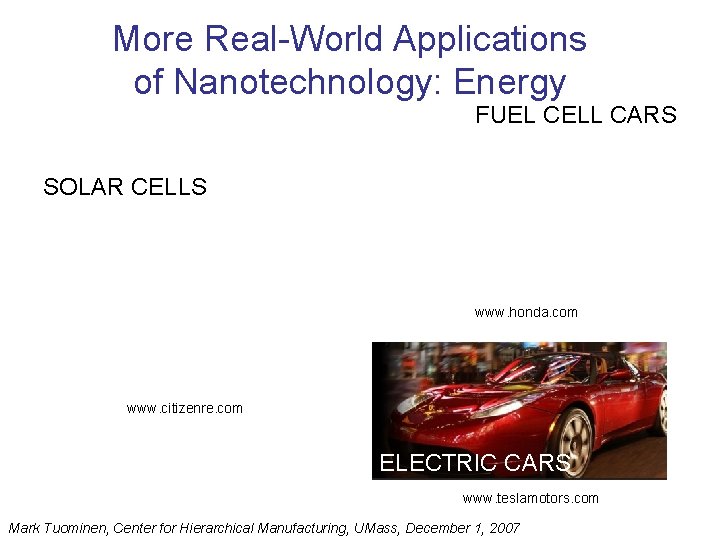
More Real-World Applications of Nanotechnology: Energy FUEL CELL CARS SOLAR CELLS www. honda. com www. citizenre. com ELECTRIC CARS www. teslamotors. com Mark Tuominen, Center for Hierarchical Manufacturing, UMass, December 1, 2007
Prior application examples: Nanoelectronics
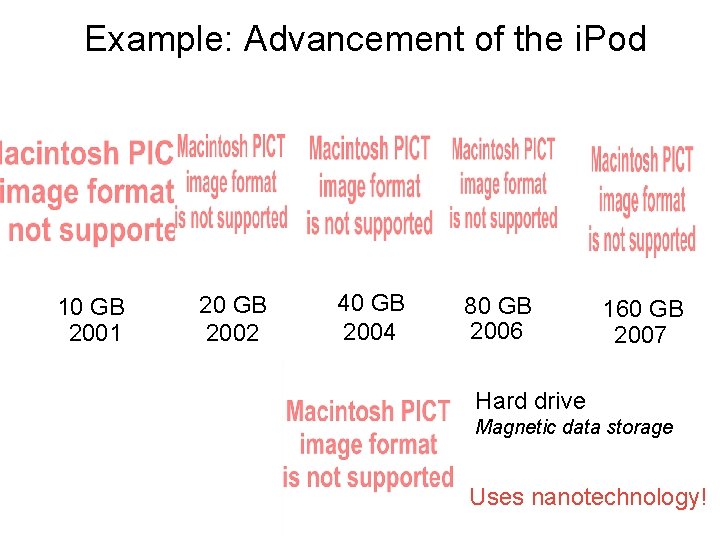
Example: Advancement of the i. Pod 10 GB 2001 20 GB 2002 40 GB 2004 80 GB 2006 160 GB 2007 Hard drive Magnetic data storage Uses nanotechnology!
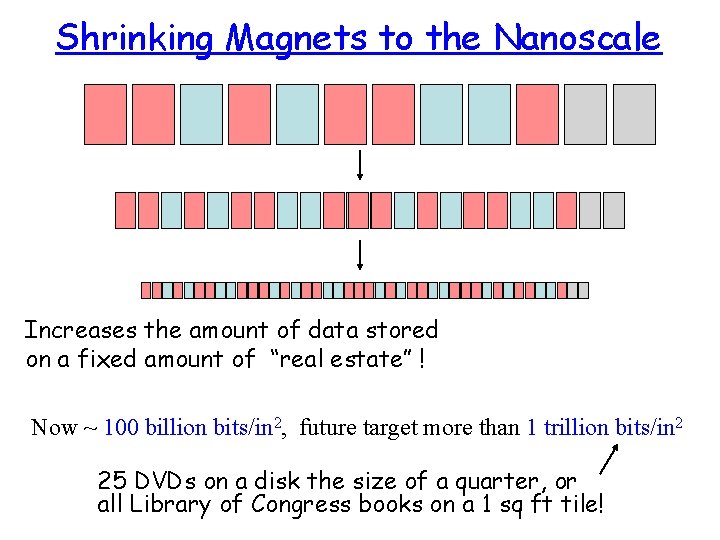
Shrinking Magnets to the Nanoscale Increases the amount of data stored on a fixed amount of “real estate” ! Now ~ 100 billion bits/in 2, future target more than 1 trillion bits/in 2 25 DVDs on a disk the size of a quarter, or all Library of Congress books on a 1 sq ft tile!
Computer Microprocessor "Heart of the computer" Does the "thinking"
Shrinking Transistors to the Nanoscale Moore's "Law": Number of Transistors per Microprocessor Chip intel. com
Can similar advancements be made in energy technology?
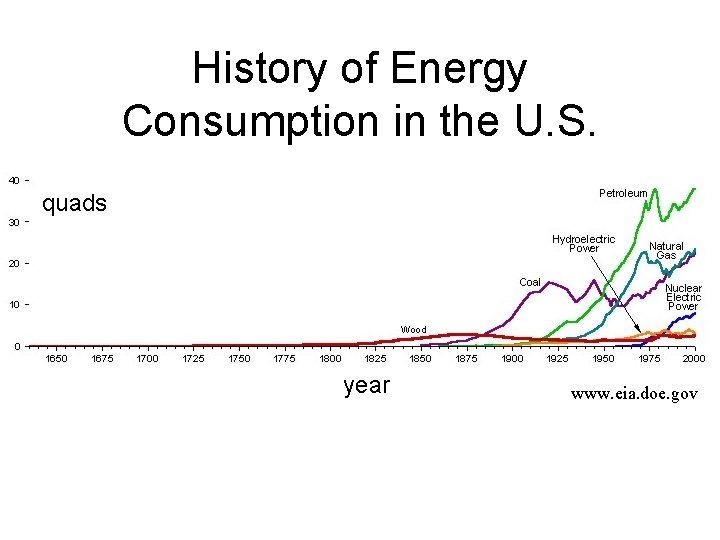
History of Energy Consumption in the U. S. quads year www. eia. doe. gov
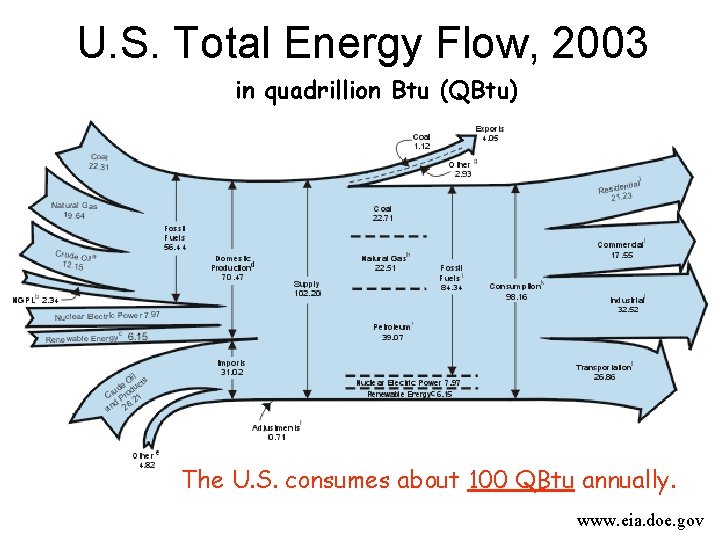
U. S. Total Energy Flow, 2003 in quadrillion Btu (QBtu) 1 BTU ~ 1055 Joule The U. S. consumes about 100 QBtu annually. www. eia. doe. gov
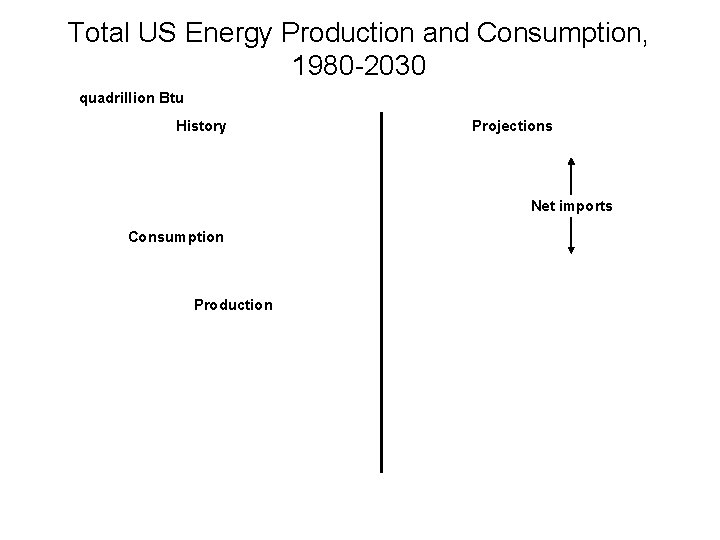
Total US Energy Production and Consumption, 1980 -2030 quadrillion Btu History Projections Net imports Consumption Production
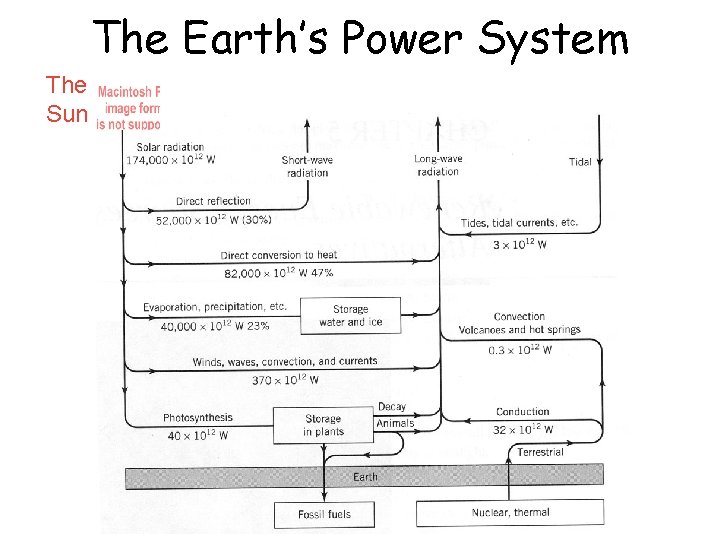
The Earth’s Power System The Sun
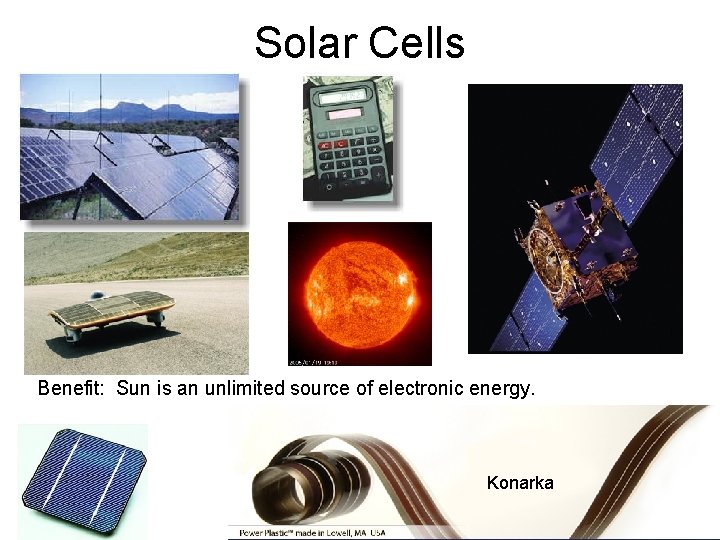
Solar Cells Benefit: Sun is an unlimited source of electronic energy. Konarka
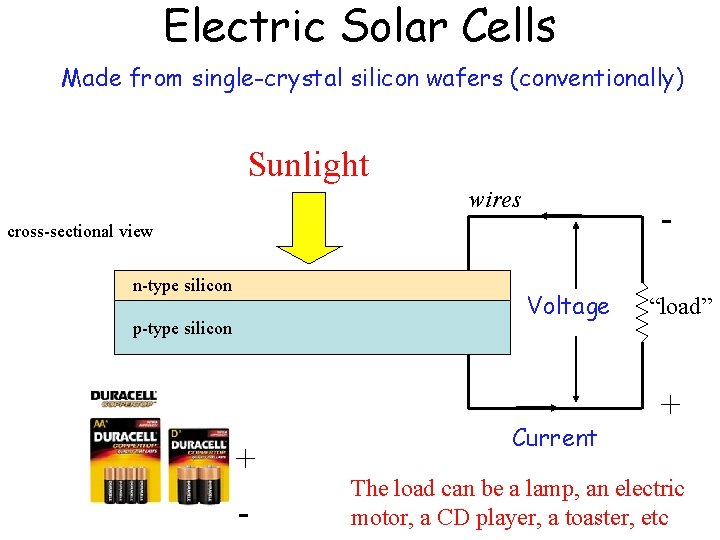
Electric Solar Cells Made from single-crystal silicon wafers (conventionally) Sunlight wires - cross-sectional view n-type silicon Voltage p-type silicon + - Current “load” + The load can be a lamp, an electric motor, a CD player, a toaster, etc
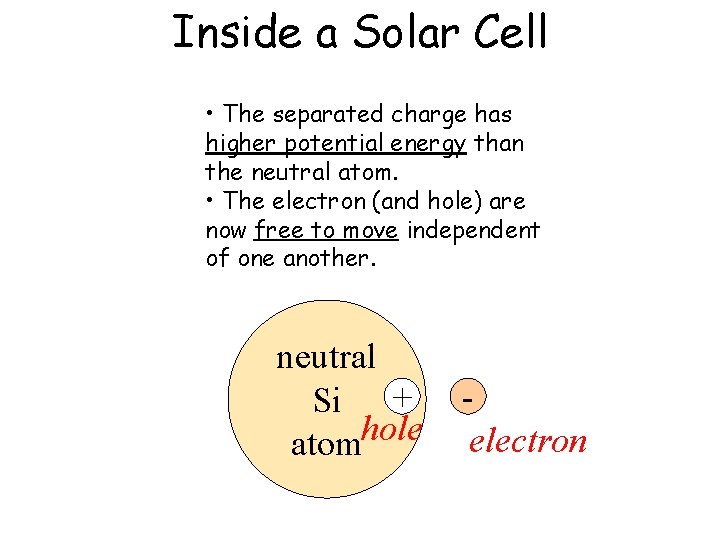
Inside a Solar Cell • The separated charge has higher potential energy than the neutral atom. light • The electron (and hole) are now free to move independent of one another. neutral Si + atomhole electron
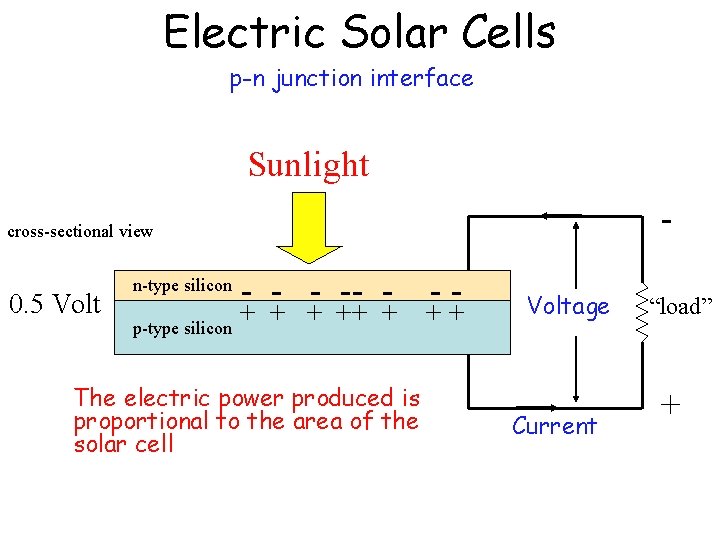
Electric Solar Cells p-n junction interface Sunlight - cross-sectional view 0. 5 Volt n-type silicon p-type silicon - -- - + ++ + The electric power produced is proportional to the area of the solar cell -- ++ Voltage Current “load” +
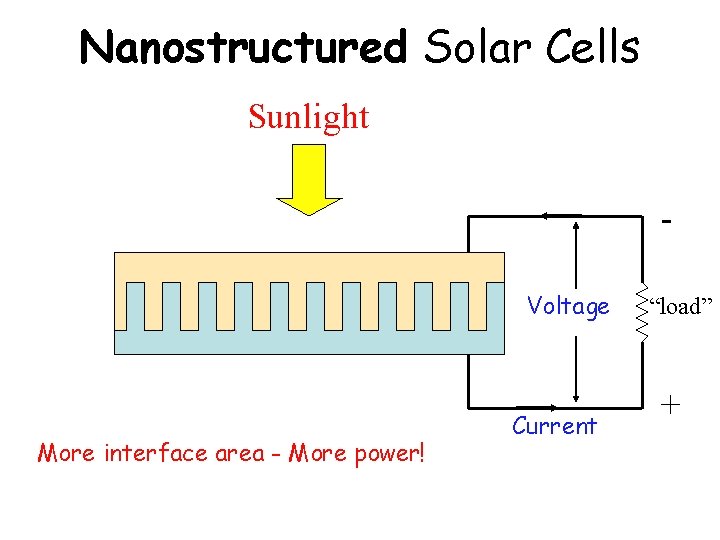
Nanostructured Solar Cells Sunlight Voltage More interface area - More power! Current “load” +
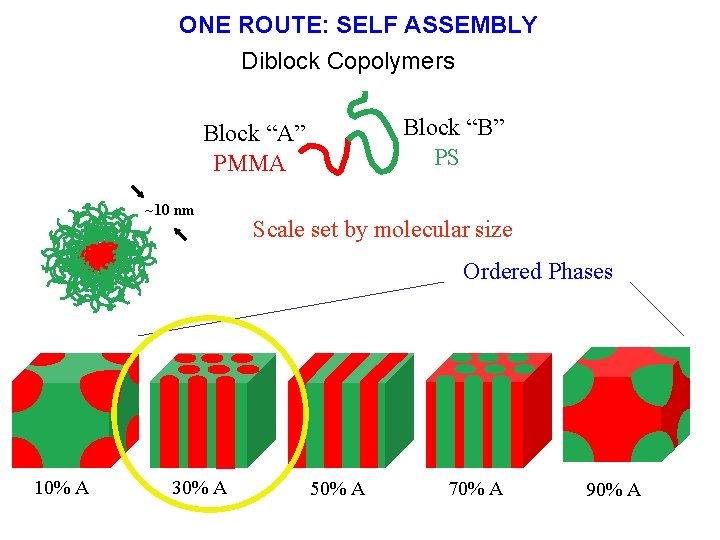
ONE ROUTE: SELF ASSEMBLY Diblock Copolymers Block “B” PS Block “A” PMMA ~10 nm Scale set by molecular size Ordered Phases 10% A 30% A 50% A 70% A 90% A
Hydrogen Fuel Cell • Lightest fuel • Can make H 2 from water Goals • Improve proton membrane • Use less catalyst • CHEAPER!
Nano-Battery
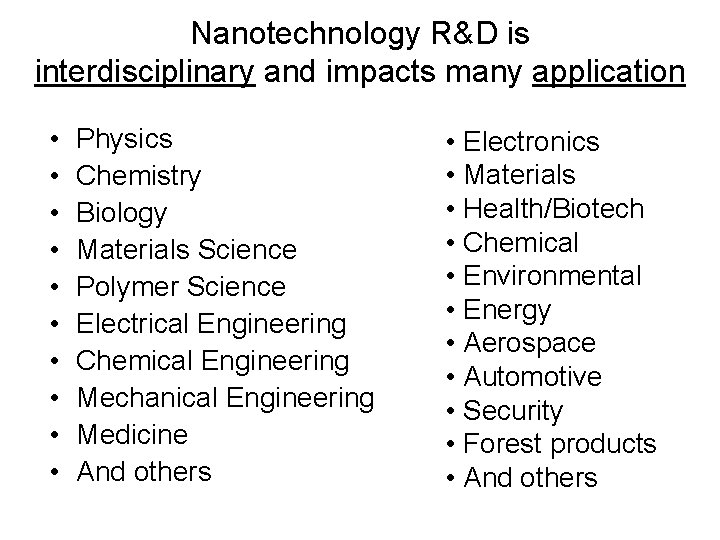
Nanotechnology R&D is interdisciplinary and impacts many application • • • Physics Chemistry Biology Materials Science Polymer Science Electrical Engineering Chemical Engineering Mechanical Engineering Medicine And others • Electronics • Materials • Health/Biotech • Chemical • Environmental • Energy • Aerospace • Automotive • Security • Forest products • And others
Re: Your future My Advice to Students: • Pursue your interests • Ask questions • Be clever • Do! Thanks for visiting UMass and learning about nanotechnology!