
More Oddballs Revision of re verbs and some

‘More Oddballs !’ Revision of ‘re’ verbs and some odd ‘er’ verbs in the Present Tense
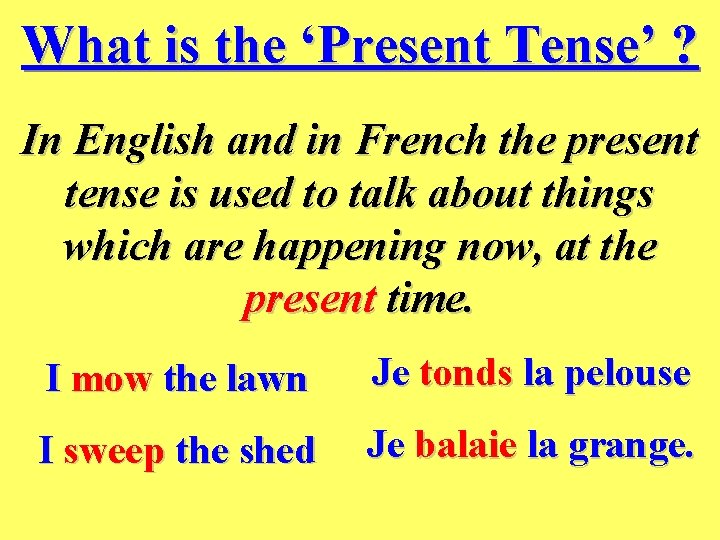
What is the ‘Present Tense’ ? In English and in French the present tense is used to talk about things which are happening now, at the present time. I mow the lawn Je tonds la pelouse I sweep the shed Je balaie la grange.

So what are ‘verbs’ all about ? Verbs are doing, being or having words. In their ‘unchanged’ state, they are called ‘VERB INFINITIVES’ To mow to sell to sweep to clean infinitive tondre vendre balayer nettoyer
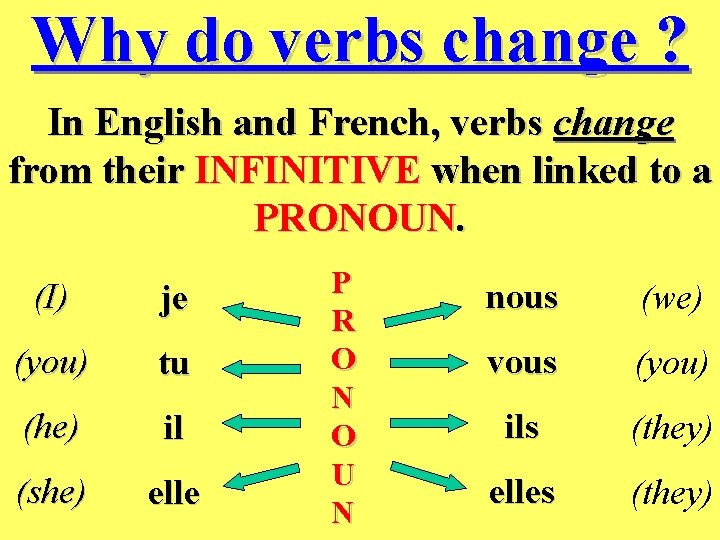
Why do verbs change ? In English and French, verbs change from their INFINITIVE when linked to a PRONOUN. (I) je (you) tu (he) il (she) elle P R O N O U N nous (we) vous (you) ils (they) elles (they)
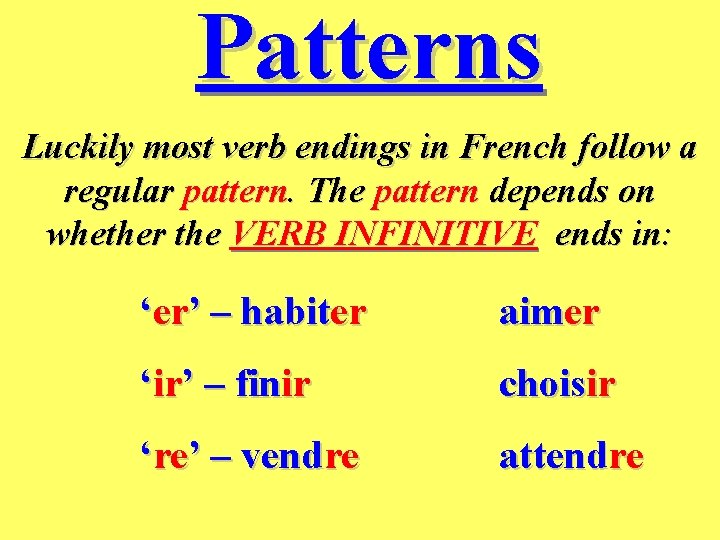
Patterns Luckily most verb endings in French follow a regular pattern. The pattern depends on whether the VERB INFINITIVE ends in: ‘er’ – habiter aimer ‘ir’ – finir choisir ‘re’ – vendre attendre
We have covered verbs ending in ‘er’ and ‘ir’ in units 1 and 2. Let’s revise those ending in ‘re’.
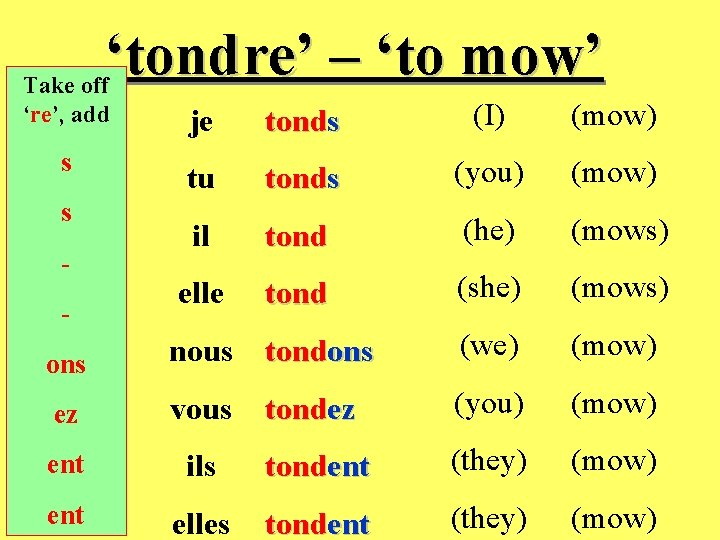
‘tondre’ – ‘to mow’ Take off ‘re’, add je tonds (I) (mow) tu tonds (you) (mow) il tond (he) (mows) elle tond (she) (mows) ons nous tondons (we) (mow) ez vous tondez (you) (mow) ent ils tondent (they) (mow) ent elles tondent (they) (mow) s s -
Some ‘odd’ ‘er’ verbs – balayer / nettoyer / envoyer Verbs ending in ‘…yer’ end in a slighly different way to ‘normal’ ‘er’ verbs. Let’s revise how ‘er’ verbs usually change.
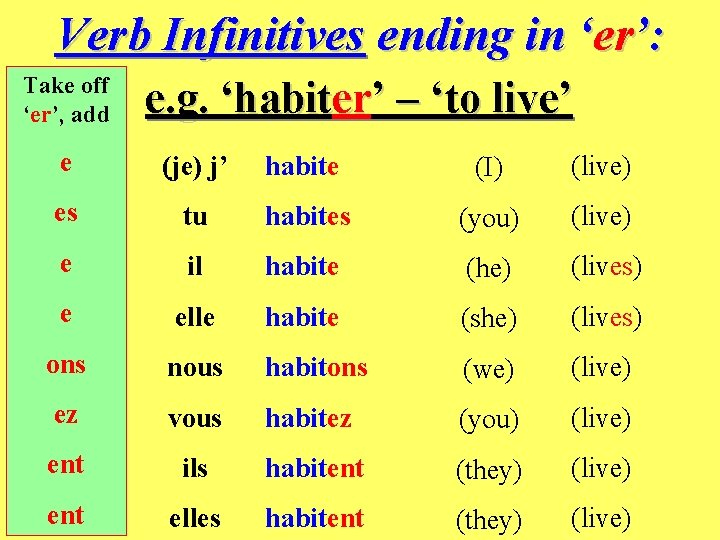
Verb Infinitives ending in ‘er’: Take off ‘er’, add e. g. ‘habiter’ – ‘to live’ e (je) j’ habite (I) (live) es tu habites (you) (live) e il habite (he) (lives) e elle habite (she) (lives) ons nous habitons (we) (live) ez vous habitez (you) (live) ent ils habitent (they) (live) ent elles habitent (they) (live)
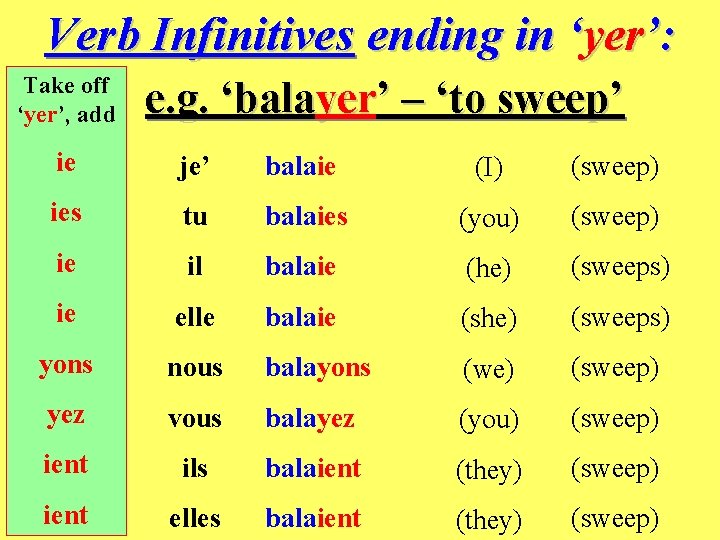
Verb Infinitives ending in ‘yer’: Take off ‘yer’, add e. g. ‘balayer’ – ‘to sweep’ ie je’ balaie (I) (sweep) ies tu balaies (you) (sweep) ie il balaie (he) (sweeps) ie elle balaie (she) (sweeps) yons nous balayons (we) (sweep) yez vous balayez (you) (sweep) ient ils balaient (they) (sweep) ient elles balaient (they) (sweep)
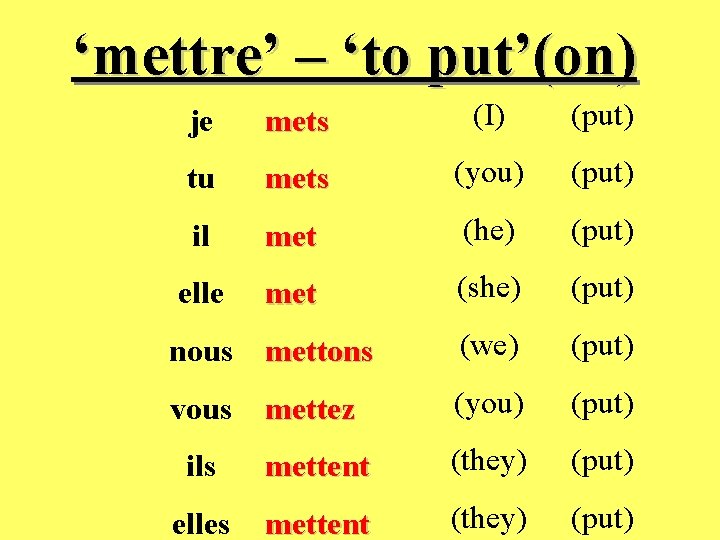
‘mettre’ – ‘to put’(on) je mets (I) (put) tu mets (you) (put) il met (he) (put) elle met (she) (put) nous mettons (we) (put) vous mettez (you) (put) ils mettent (they) (put) elles mettent (they) (put)
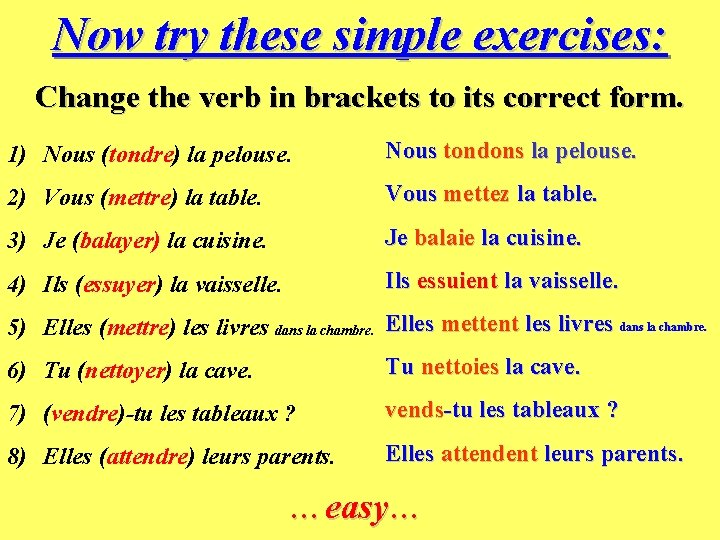
Now try these simple exercises: Change the verb in brackets to its correct form. 1) Nous (tondre) la pelouse. Nous tondons la pelouse. 2) Vous (mettre) la table. Vous mettez la table. 3) Je (balayer) la cuisine. Je balaie la cuisine. 4) Ils (essuyer) la vaisselle. Ils essuient la vaisselle. chambre. 5) Elles (mettre) les livres dans la chambre. Elles mettent les livres dans la chambre. 6) Tu (nettoyer) la cave. Tu nettoies la cave. 7) (vendre)-tu les tableaux ? vends-tu les tableaux ? 8) Elles (attendre) leurs parents. Elles attendent leurs parents. …easy…
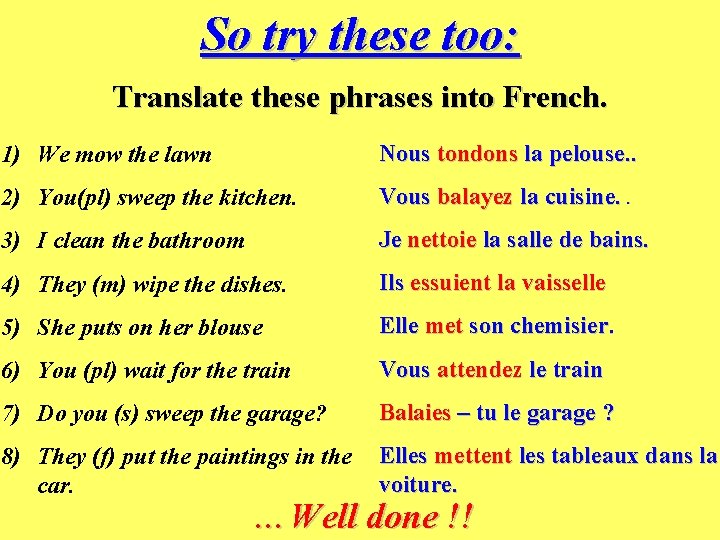
So try these too: Translate these phrases into French. 1) We mow the lawn Nous tondons la pelouse. . 2) You(pl) sweep the kitchen. Vous balayez la cuisine. . 3) I clean the bathroom Je nettoie la salle de bains. 4) They (m) wipe the dishes. Ils essuient la vaisselle 5) She puts on her blouse Elle met son chemisier. 6) You (pl) wait for the train Vous attendez le train 7) Do you (s) sweep the garage? Balaies – tu le garage ? 8) They (f) put the paintings in the car. Elles mettent les tableaux dans la voiture. …Well done !!

That’s it for the oddballs … Next we look back to the past!
- Slides: 14