
More Developed vs Less Developed Countries Background Questions

More Developed vs. Less Developed Countries
Background Questions 1. How many babies do you think the 2. 3. 4. 5. 6. average woman has over her lifetime in the United States? Do you have electricity in your home? Have you or a member of your family seen a doctor, nurse, or been to the hospital in the last year? Do you have a telephone, computer, OR television in your home? Does your family have at least one car? Do you attend school?

Your Family’s Stuff Next… On your paper list all of your family’s possessions you have 3 minutes

Outside your house!! Write 3 sentences describing the outside of your house My house is two stories has 14 windows and a 2 -car garage. My house is painted two different shades of tan. My front yard is landscaped with rock, bushes and trees.

Inside your house! Write 3 sentences describing the inside of your home. – Ex. . My home has 3 bedrooms, 2 bathrooms, a kitchen, a dinning room, a living room, and garage. My house laminate wood flooring. My house has electricity and several appliances like a dishwasher, refrigerator, oven, washer and dryer, air-conditioning and heater.
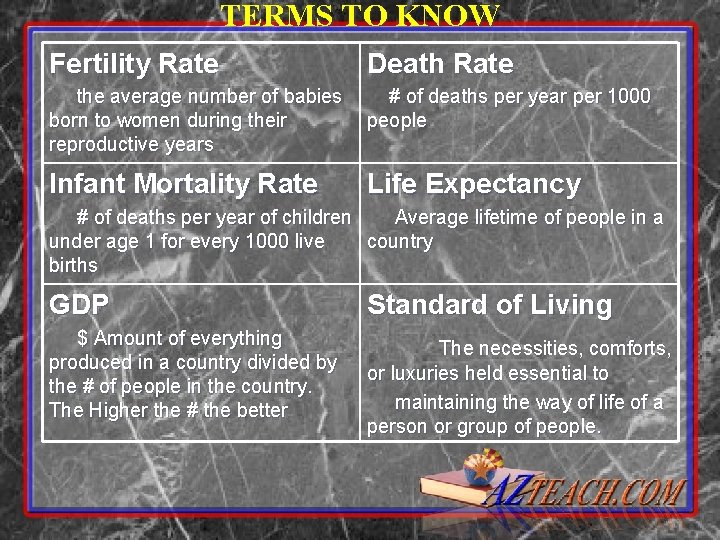
TERMS TO KNOW Fertility Rate Death Rate the average number of babies born to women during their reproductive years # of deaths per year per 1000 people Infant Mortality Rate Life Expectancy # of deaths per year of children Average lifetime of people in a under age 1 for every 1000 live country births GDP Standard of Living $ Amount of everything produced in a country divided by the # of people in the country. The Higher the # the better The necessities, comforts, or luxuries held essential to maintaining the way of life of a person or group of people.
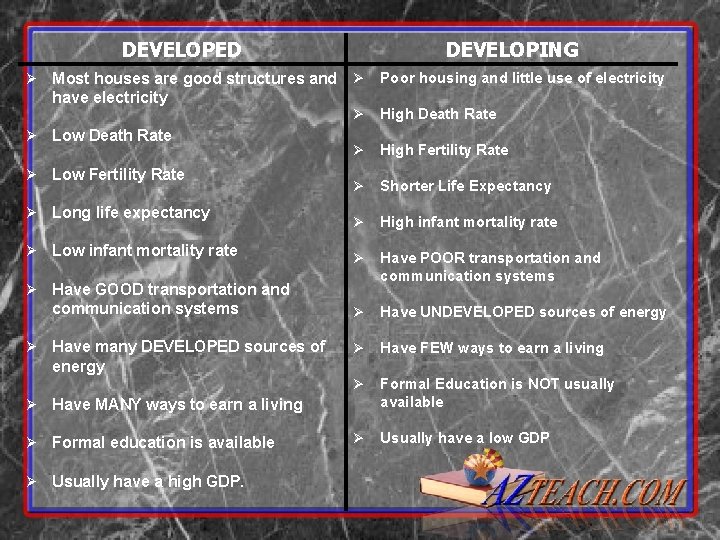
DEVELOPED Most houses are good structures and have electricity DEVELOPING Poor housing and little use of electricity High Death Rate High Fertility Rate Shorter Life Expectancy High infant mortality rate Low Death Rate Low Fertility Rate Long life expectancy Low infant mortality rate Have GOOD transportation and communication systems Have POOR transportation and communication systems Have UNDEVELOPED sources of energy Have FEW ways to earn a living Formal Education is NOT usually available Usually have a low GDP Have many DEVELOPED sources of energy Have MANY ways to earn a living Formal education is available Usually have a high GDP.
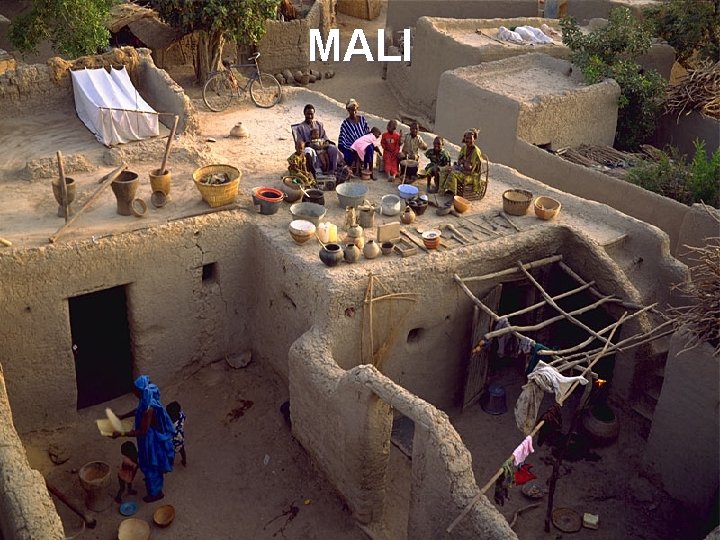
MALI
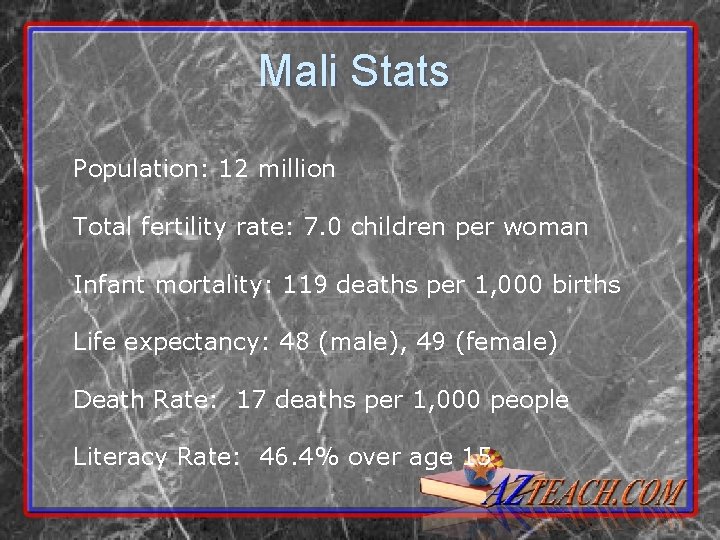
Mali Stats Population: 12 million Total fertility rate: 7. 0 children per woman Infant mortality: 119 deaths per 1, 000 births Life expectancy: 48 (male), 49 (female) Death Rate: 17 deaths per 1, 000 people Literacy Rate: 46. 4% over age 15
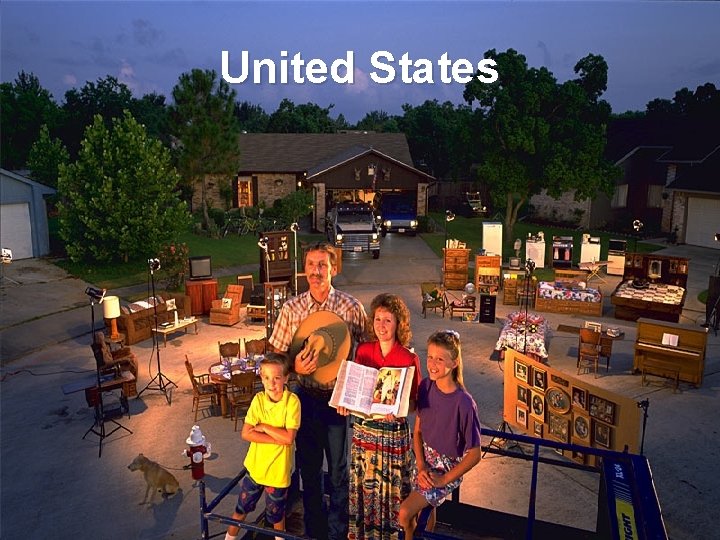
United States
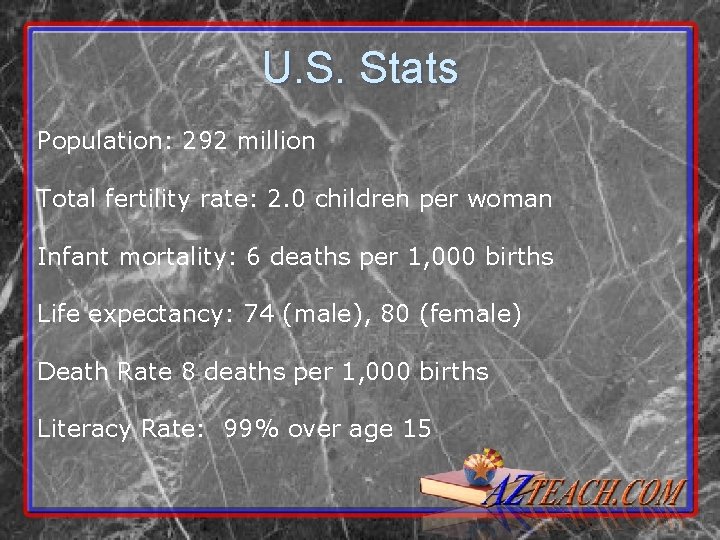
U. S. Stats Population: 292 million Total fertility rate: 2. 0 children per woman Infant mortality: 6 deaths per 1, 000 births Life expectancy: 74 (male), 80 (female) Death Rate 8 deaths per 1, 000 births Literacy Rate: 99% over age 15
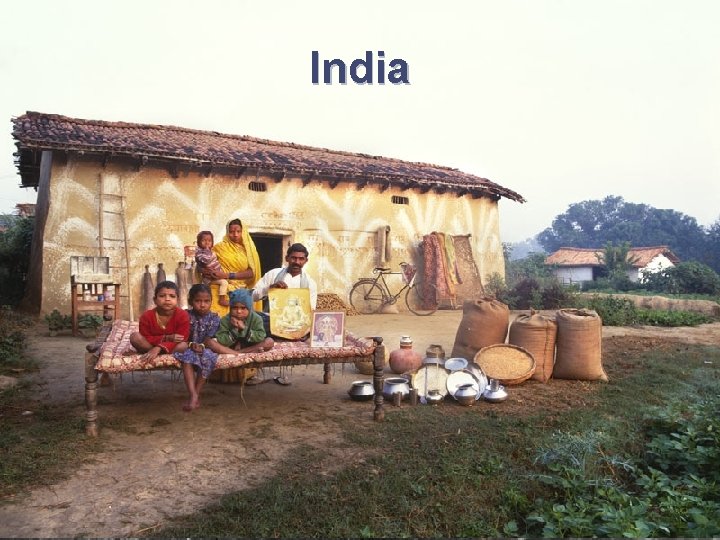
India
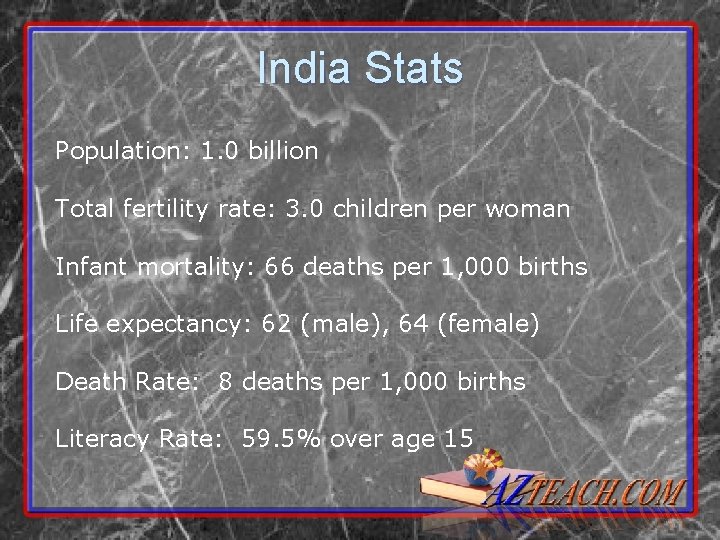
India Stats Population: 1. 0 billion Total fertility rate: 3. 0 children per woman Infant mortality: 66 deaths per 1, 000 births Life expectancy: 62 (male), 64 (female) Death Rate: 8 deaths per 1, 000 births Literacy Rate: 59. 5% over age 15
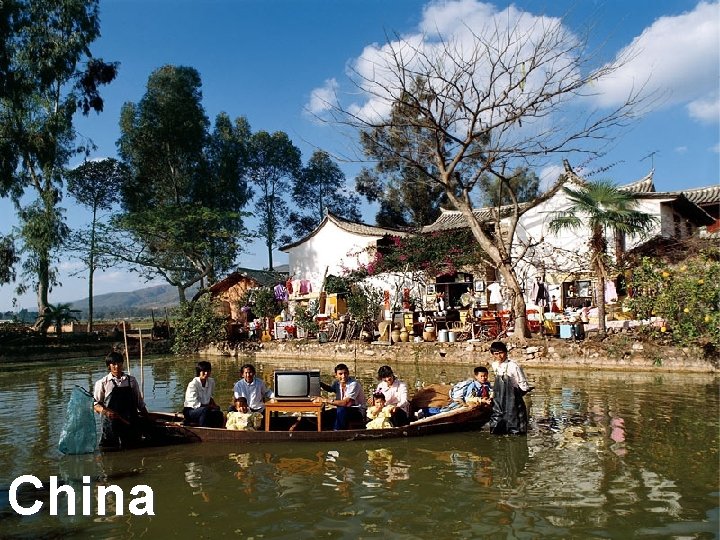
China
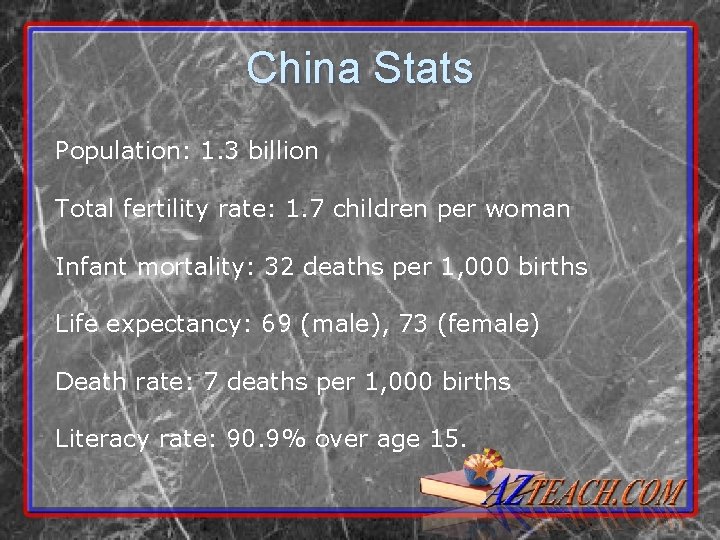
China Stats Population: 1. 3 billion Total fertility rate: 1. 7 children per woman Infant mortality: 32 deaths per 1, 000 births Life expectancy: 69 (male), 73 (female) Death rate: 7 deaths per 1, 000 births Literacy rate: 90. 9% over age 15.
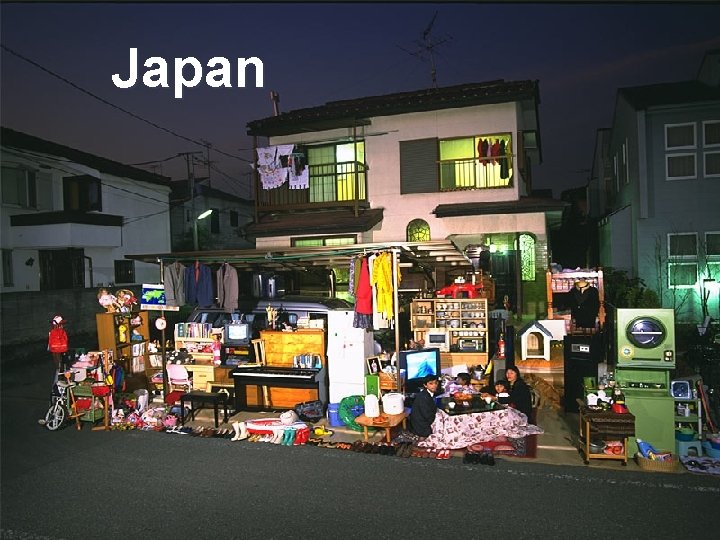
Japan
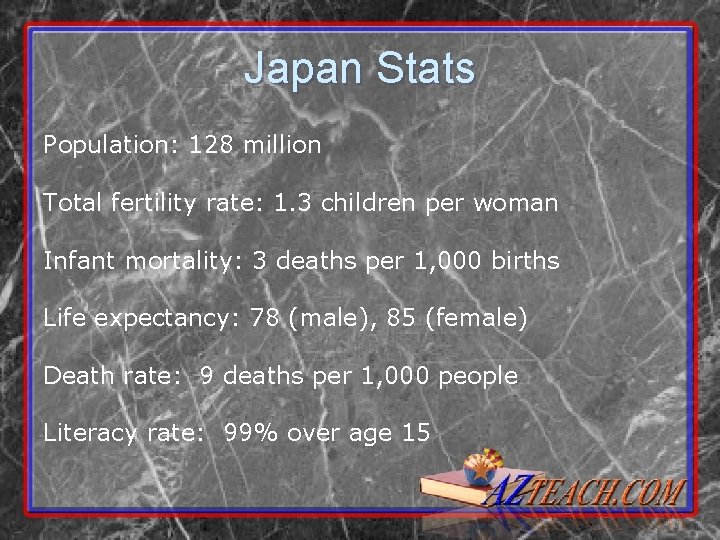
Japan Stats Population: 128 million Total fertility rate: 1. 3 children per woman Infant mortality: 3 deaths per 1, 000 births Life expectancy: 78 (male), 85 (female) Death rate: 9 deaths per 1, 000 people Literacy rate: 99% over age 15
- Slides: 17