
More about alpha beta gamma radiation 7 4
More about alpha, beta & gamma radiation (7. 4) LO: We are learning about properties and dangers of radiation I Can: DESCRIBE how far each type of radiation can travel in air & other materials DESCRIBE the ionising power of alpha, beta and gamma radiation Explain why alpha, beta and gamma radiation is dangerous STRETCH: Apply penetrating ability of alpha, beta, gamma radiation to medical and industrial uses. I have learned…
7. 4 More about alpha, beta, gamma radiation. DESCRIBE EXPLAIN APPLY how far each type of radiation can travel in air & other materials the ionising power of alpha, beta and gamma radiation why alpha, beta and gamma radiation is dangerous penetrating ability of alpha, beta, gamma radiation to medical and industrial uses Keywords & units Count rate Background radiation range ionisation irradiation radioactive Ionising Radiation exposure Peer review Starter Demo properties of radioactive sources (only if permitted to do so Complete wsheet page 1 Main Activity Describe some sources of background radiation (and the need to subtract background count from all data measurements Work through the PPT completing the FDN wsheet on page 2 Plenary Check answers to questions from Wsheets and TXBK Show some of the teachers TV clip Homework task TXBK Q p 98 -99 or use ‘EDUCAKE’ 4 -6 4 -6 6 - 8 )
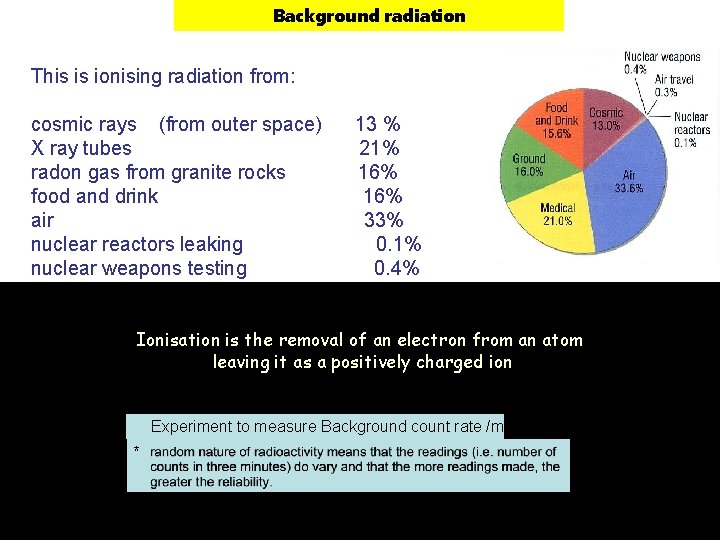
Background radiation This is ionising radiation from: cosmic rays (from outer space) X ray tubes radon gas from granite rocks food and drink air nuclear reactors leaking nuclear weapons testing 13 % 21% 16% 33% 0. 1% 0. 4% Ionisation is the removal of an electron from an atom leaving it as a positively charged ion Experiment to measure Background count rate /min: *
Uses of Radioactivity • Measuring the thickness of foil • Radioactive tracers to monitor the working of organs in the body • Smoke alarms • Radioactive tracers to look for water leaks
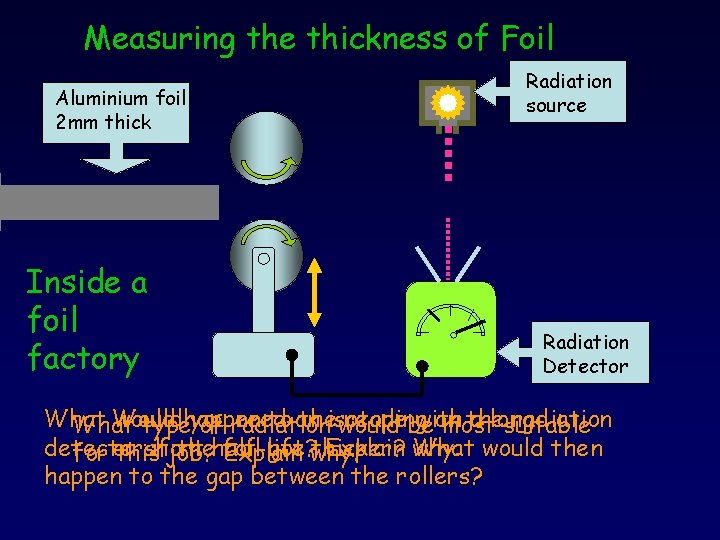
Measuring the thickness of Foil Aluminium foil 2 mm thick Inside a foil factory Radiation source Radiation Detector What Would would you need to an theisotope reading with on the a long radiation What typehappen of radiation would be most suitable detector short ifjob? thehalf-life? foil got why. thicker? Explain why. What would then for or this Explain happen to the gap between the rollers?
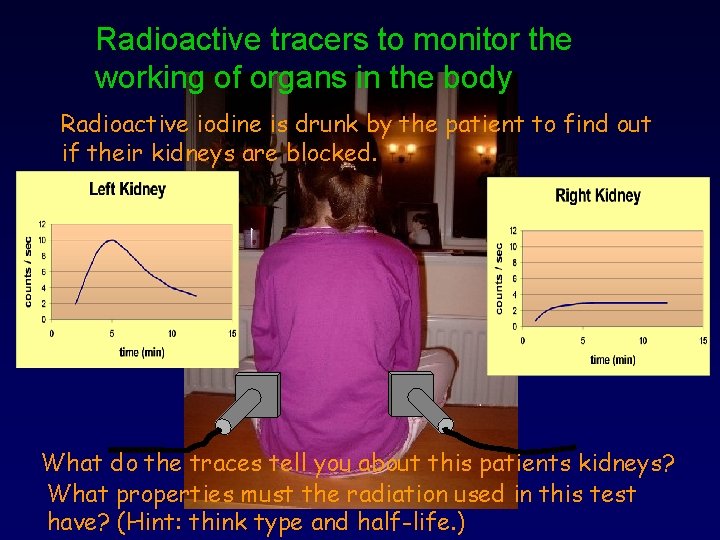
Radioactive tracers to monitor the working of organs in the body Radioactive iodine is drunk by the patient to find out if their kidneys are blocked. What do the traces tell you about this patients kidneys? What properties must the radiation used in this test have? (Hint: think type and half-life. )
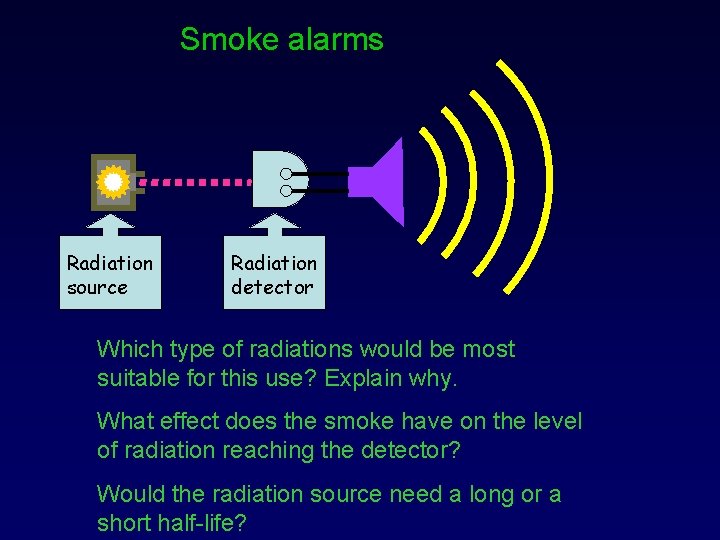
Smoke alarms Radiation source Radiation detector Which type of radiations would be most suitable for this use? Explain why. What effect does the smoke have on the level of radiation reaching the detector? Would the radiation source need a long or a short half-life?

Radioactive tracers to look for water leaks Radiation detector
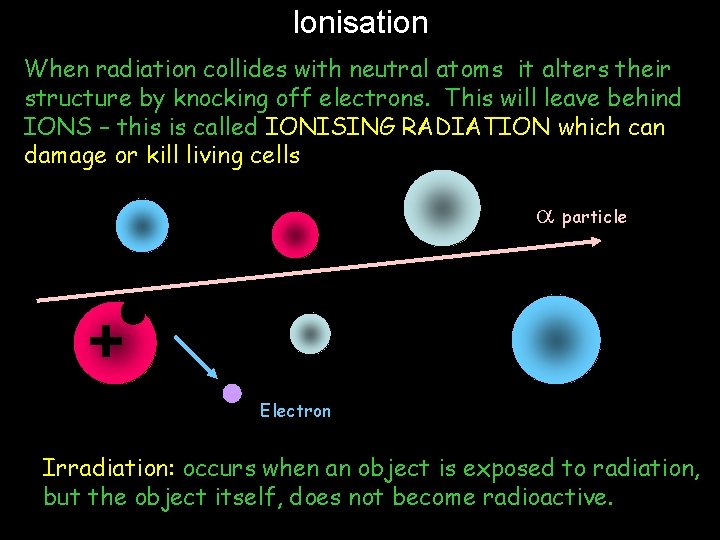
Ionisation When radiation collides with neutral atoms it alters their structure by knocking off electrons. This will leave behind IONS – this is called IONISING RADIATION which can damage or kill living cells particle + Electron Irradiation: occurs when an object is exposed to radiation, but the object itself, does not become radioactive.
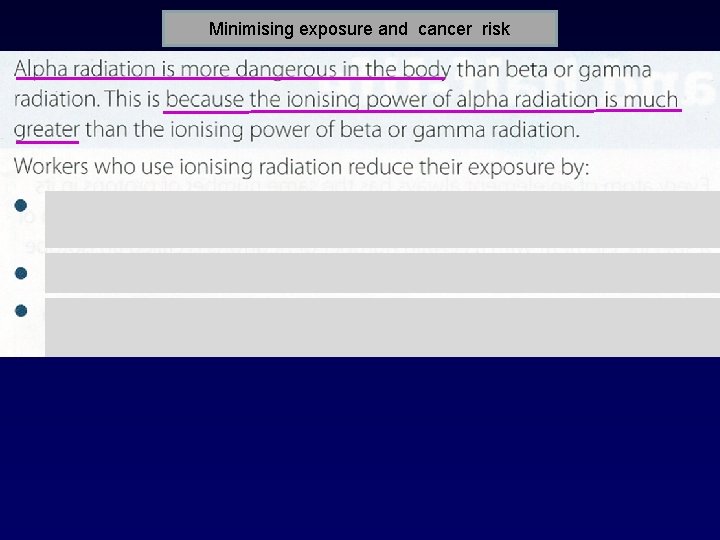
Minimising exposure and cancer risk
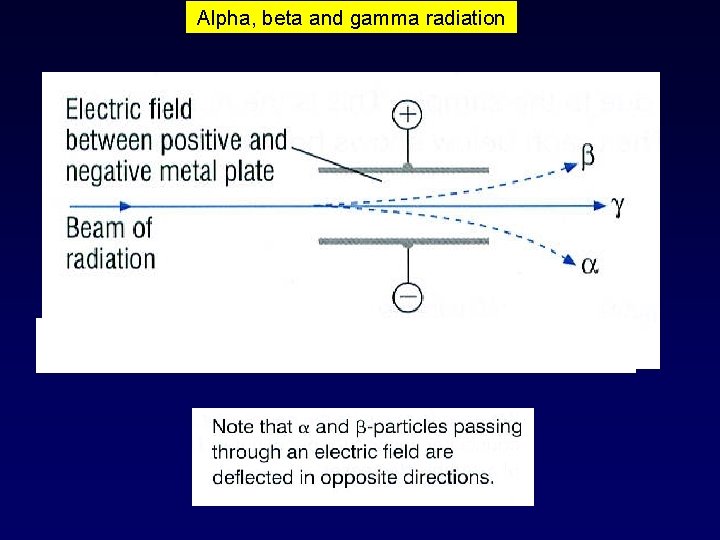
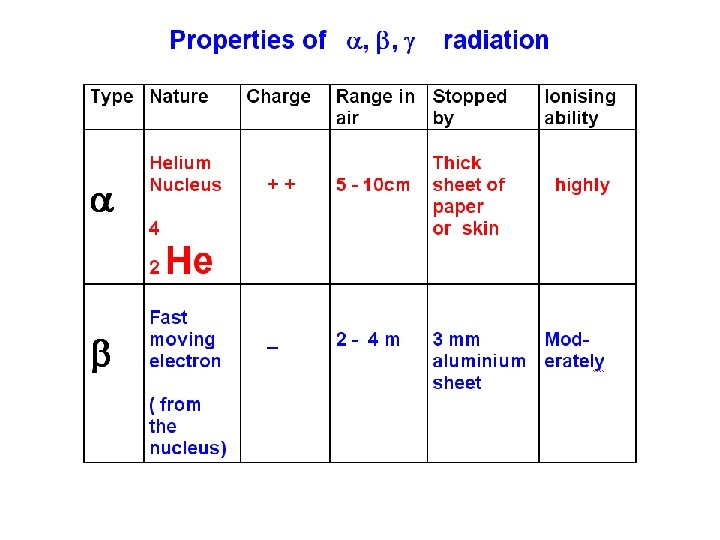
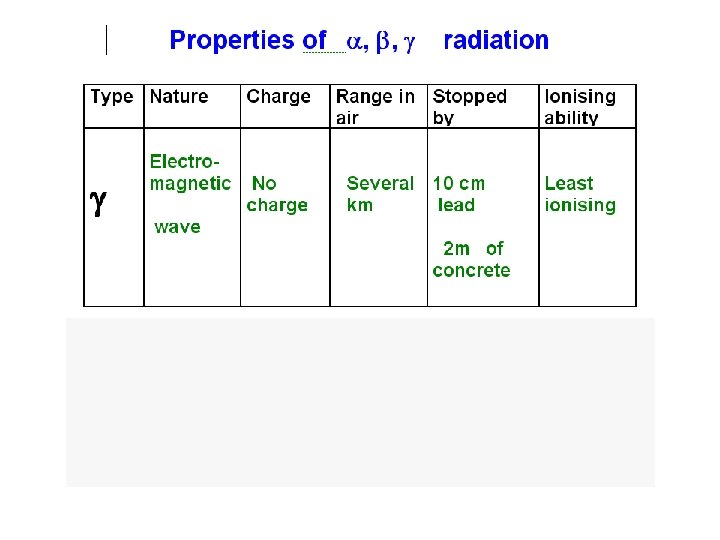
Alpha, beta and gamma radiation
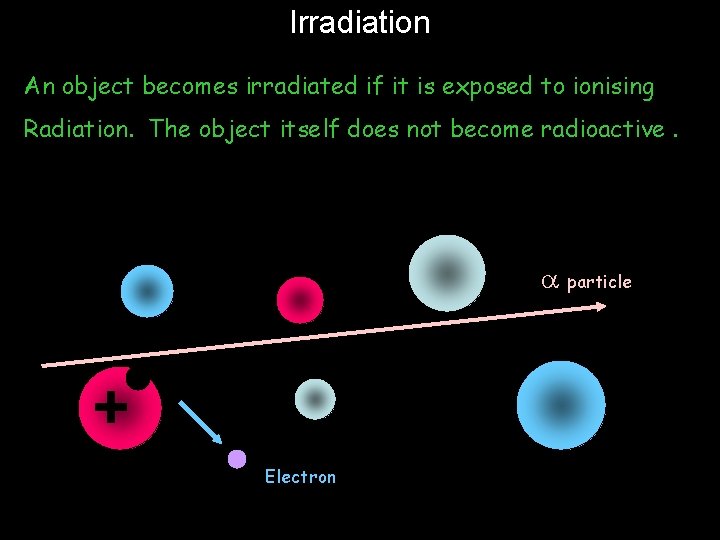
Irradiation An object becomes irradiated if it is exposed to ionising Radiation. The object itself does not become radioactive. particle + Electron
- Slides: 14