
Moral Panics LESSON OBJECTIVE 1 Explain deviancy amplification

Moral Panics

LESSON OBJECTIVE 1 Explain deviancy amplification in the media (answer at end of lesson)
Lesson objectives 2: To understand the process of how the media exaggerates media events and the consequences of this.

Define: MORAL PANIC Define:
Charlie Brooker’s Newswipe: 1. What moral panics does he identify? 2. Why do moral panics start?
TASK 1 Can you think of other potential moral panics?

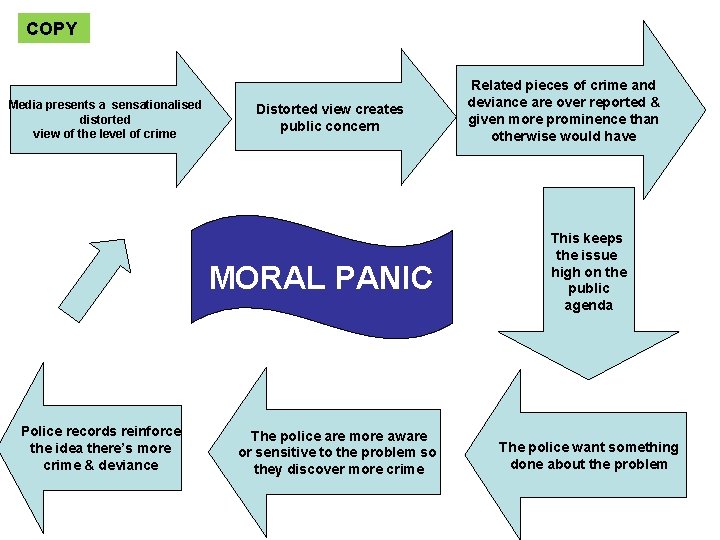
COPY Media presents a sensationalised distorted view of the level of crime Distorted view creates public concern MORAL PANIC Police records reinforce the idea there’s more crime & deviance The police are more aware or sensitive to the problem so they discover more crime Related pieces of crime and deviance are over reported & given more prominence than otherwise would have This keeps the issue high on the public agenda The police want something done about the problem

CRIME AND DEVIANCE CASE STUDY #1 THE LONDON RIOTS
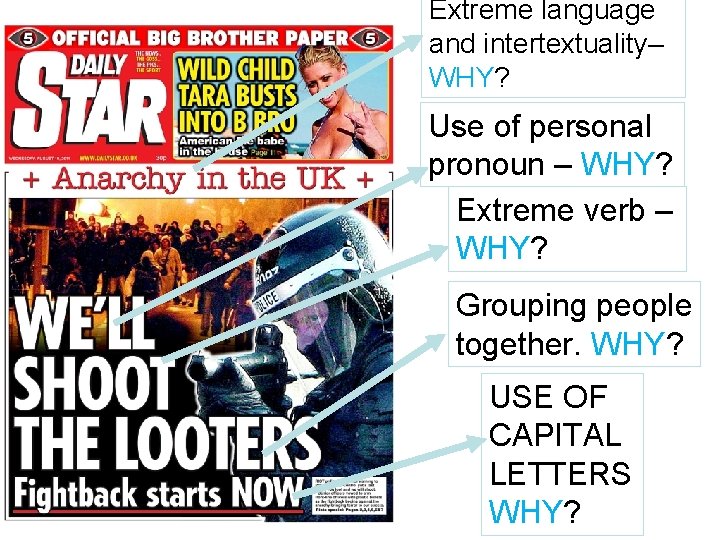
Extreme language and intertextuality– WHY? Use of personal pronoun – WHY? Extreme verb – WHY? Grouping people together. WHY? USE OF CAPITAL LETTERS WHY?

TASK 2 Annotate the newspapers articles

YOUR TURN
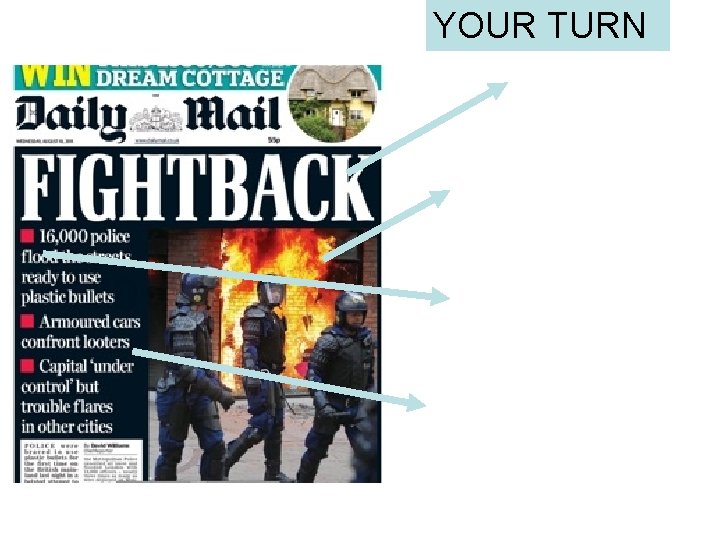
YOUR TURN
TASK 3 Read the newspaper article and answer the questions.
CASE STUDY #2 MODS AND ROCKERS
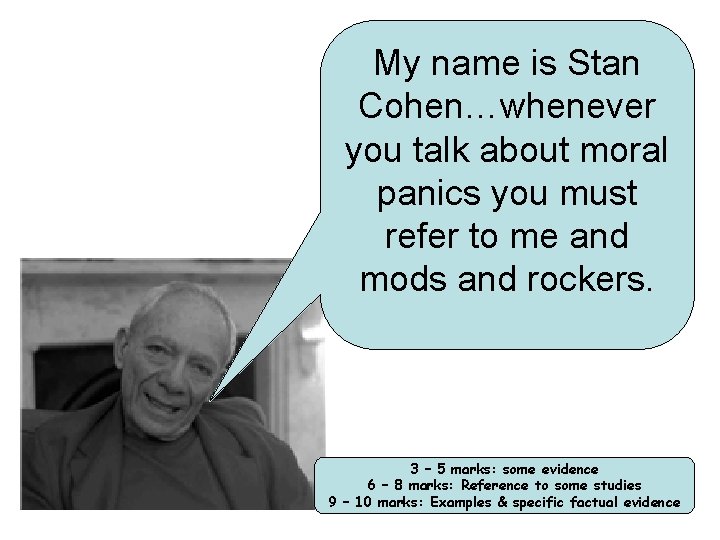
My name is Stan Cohen…whenever you talk about moral panics you must refer to me and mods and rockers. 3 – 5 marks: some evidence 6 – 8 marks: Reference to some studies 9 – 10 marks: Examples & specific factual evidence
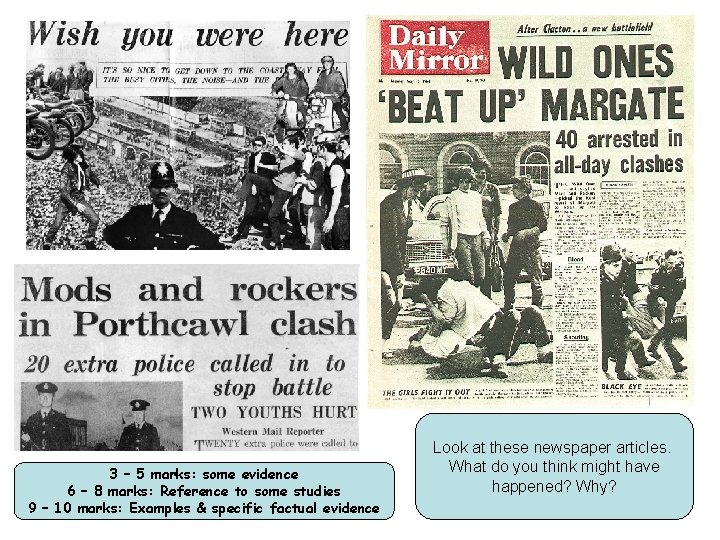
3 – 5 marks: some evidence 6 – 8 marks: Reference to some studies 9 – 10 marks: Examples & specific factual evidence Look at these newspaper articles. What do you think might have happened? Why?
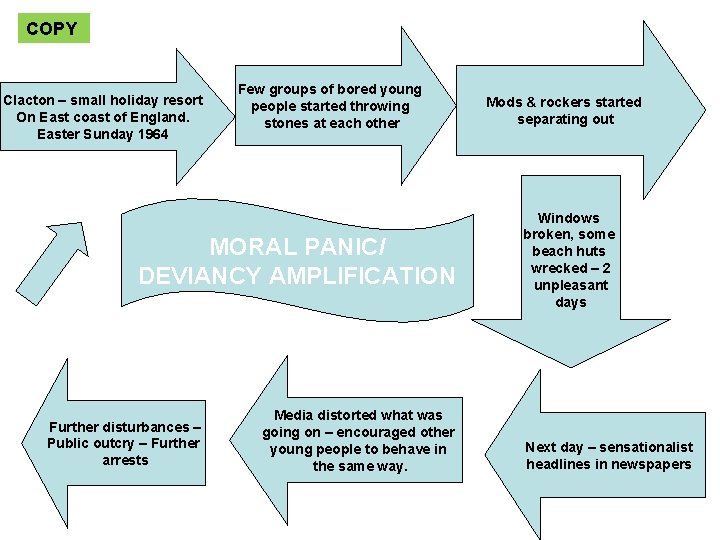
COPY Clacton – small holiday resort On East coast of England. Easter Sunday 1964 Few groups of bored young people started throwing stones at each other MORAL PANIC/ DEVIANCY AMPLIFICATION Further disturbances – Public outcry – Further arrests Media distorted what was going on – encouraged other young people to behave in the same way. Mods & rockers started separating out Windows broken, some beach huts wrecked – 2 unpleasant days Next day – sensationalist headlines in newspapers
TASK 4 Q 1. What have you noticed about the types of newspapers that are often highly emotive and sensational? Q 2. How might audiences respond to these articles? Q 1. What have you noticed about the types of newspapers that are often highly emotive and sensational?
Explain what sociologists mean by deviance amplification (4 marks)
- Slides: 20