
Mooring System Design Factors Single Point Recreational Marine



- Slides: 15
Mooring System Design Factors Single Point Recreational Marine Novabraid Feb. 2013 Mooring System Design Factors
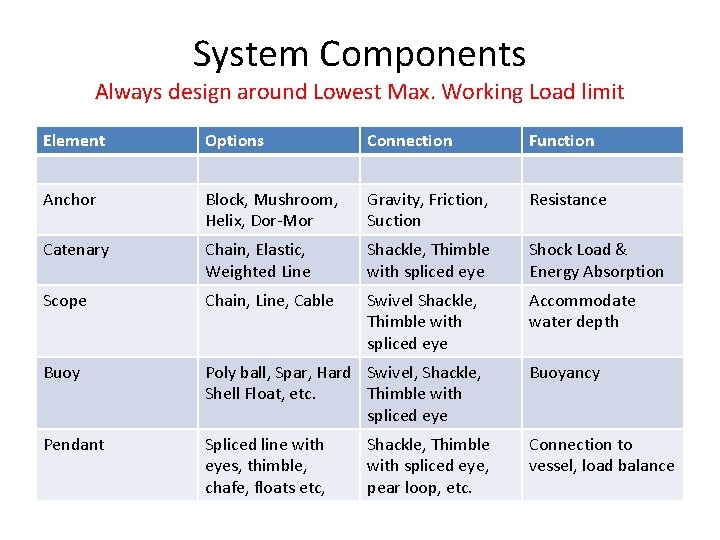
System Components Always design around Lowest Max. Working Load limit Element Options Connection Function Anchor Block, Mushroom, Helix, Dor-Mor Gravity, Friction, Suction Resistance Catenary Chain, Elastic, Weighted Line Shackle, Thimble with spliced eye Shock Load & Energy Absorption Scope Chain, Line, Cable Swivel Shackle, Thimble with spliced eye Accommodate water depth Buoy Poly ball, Spar, Hard Swivel, Shackle, Shell Float, etc. Thimble with spliced eye Buoyancy Pendant Spliced line with eyes, thimble, chafe, floats etc, Connection to vessel, load balance Shackle, Thimble with spliced eye, pear loop, etc.
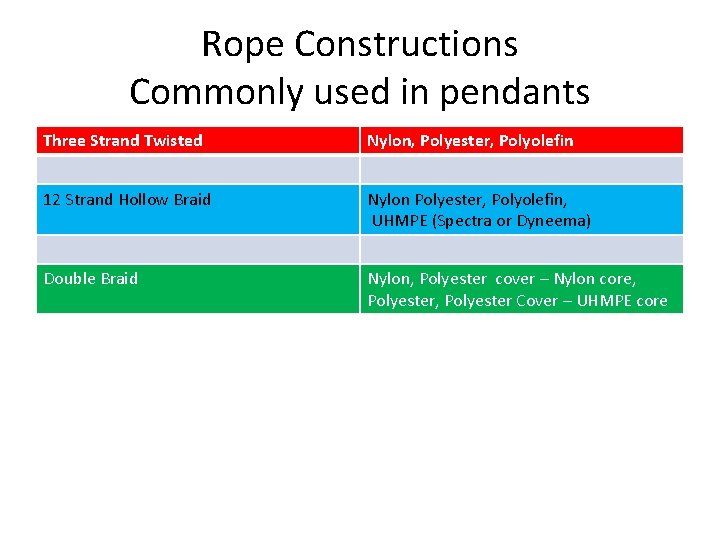
Rope Constructions Commonly used in pendants Three Strand Twisted Nylon, Polyester, Polyolefin 12 Strand Hollow Braid Nylon Polyester, Polyolefin, UHMPE (Spectra or Dyneema) Double Braid Nylon, Polyester cover – Nylon core, Polyester Cover – UHMPE core
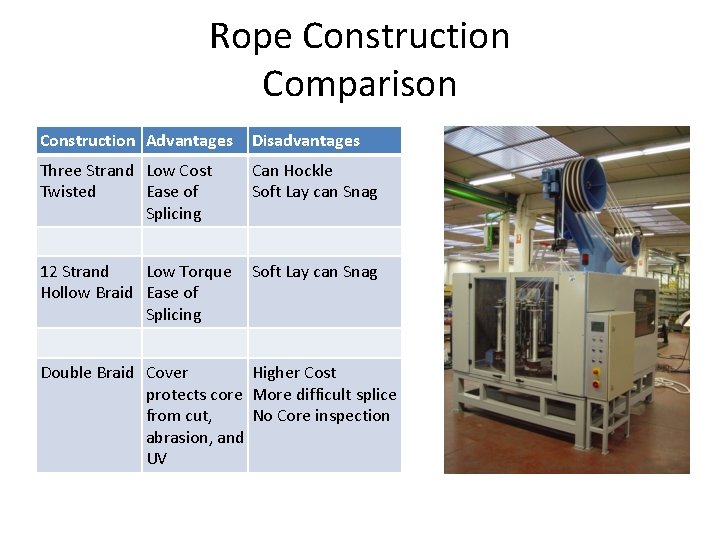
Rope Construction Comparison Construction Advantages Disadvantages Three Strand Low Cost Twisted Ease of Splicing Can Hockle Soft Lay can Snag 12 Strand Low Torque Hollow Braid Ease of Splicing Soft Lay can Snag Double Braid Cover Higher Cost protects core More difficult splice from cut, No Core inspection abrasion, and UV
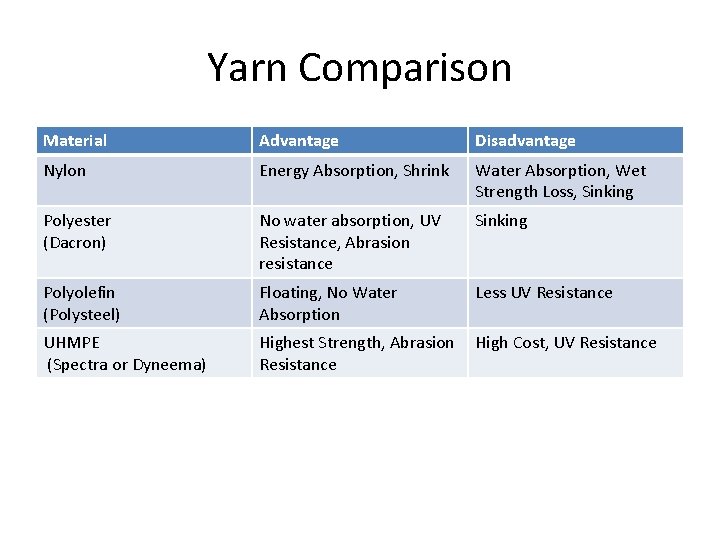
Yarn Comparison Material Advantage Disadvantage Nylon Energy Absorption, Shrink Water Absorption, Wet Strength Loss, Sinking Polyester (Dacron) No water absorption, UV Resistance, Abrasion resistance Sinking Polyolefin (Polysteel) Floating, No Water Absorption Less UV Resistance UHMPE (Spectra or Dyneema) Highest Strength, Abrasion Resistance High Cost, UV Resistance
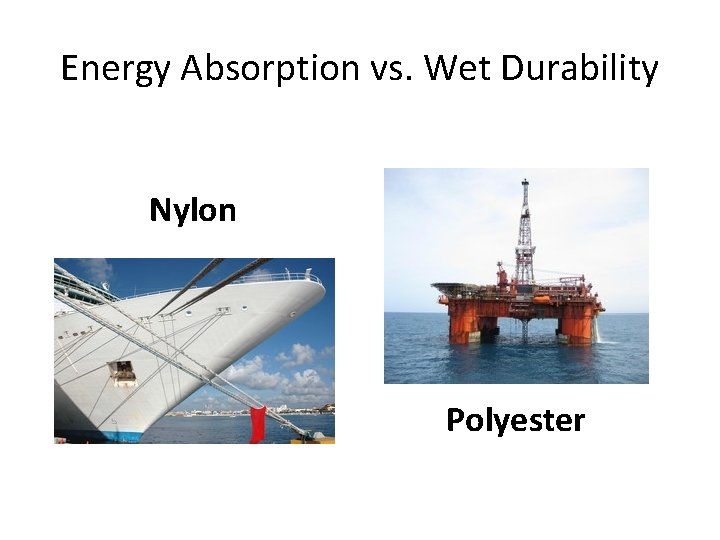
Energy Absorption vs. Wet Durability Nylon Polyester
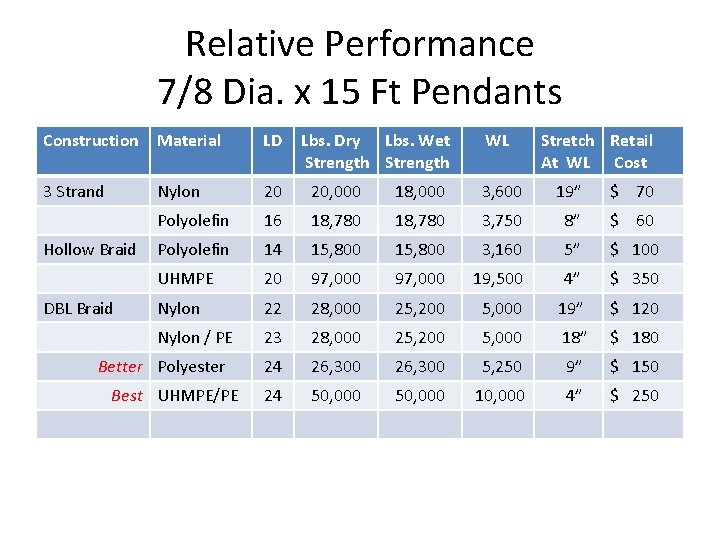
Relative Performance 7/8 Dia. x 15 Ft Pendants Construction Material LD 3 Strand Nylon 20 20, 000 18, 000 3, 600 19” $ 70 Polyolefin 16 18, 780 3, 750 8” $ 60 Polyolefin 14 15, 800 3, 160 5” $ 100 UHMPE 20 97, 000 19, 500 4” $ 350 Nylon 22 28, 000 25, 200 5, 000 19” $ 120 Nylon / PE 23 28, 000 25, 200 5, 000 18” $ 180 24 26, 300 5, 250 9” $ 150 24 50, 000 10, 000 4” $ 250 Hollow Braid DBL Braid Better Polyester Best UHMPE/PE Lbs. Dry Lbs. Wet Strength WL Stretch Retail At WL Cost
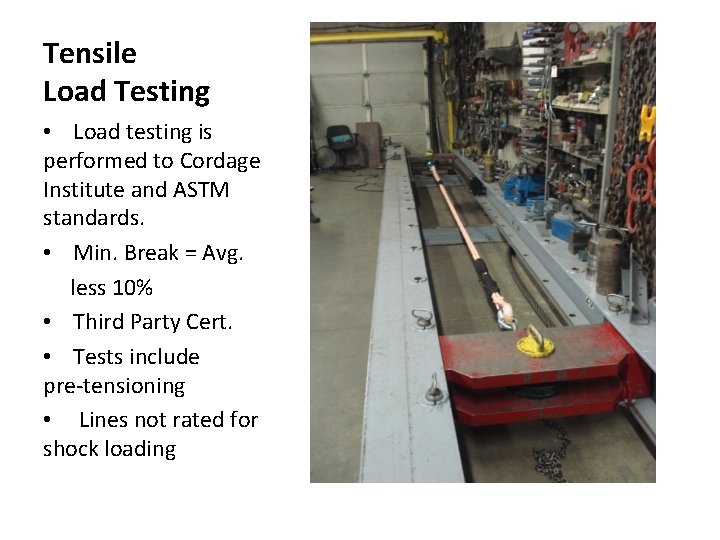
Tensile Load Testing • Load testing is performed to Cordage Institute and ASTM standards. • Min. Break = Avg. less 10% • Third Party Cert. • Tests include pre-tensioning • Lines not rated for shock loading
Shock Load ? Anchor Chafe ? Each wave 6’ x 1’ or 36 cu ft of water weighs 2885 lbs If traveling at 10 knots or 16. 13 ft / sec. A wave could generate 46, 535 lbs per sq in per second load on a mooring pendant line. http: //www. pbase. com/mai necruising/mooring_prep
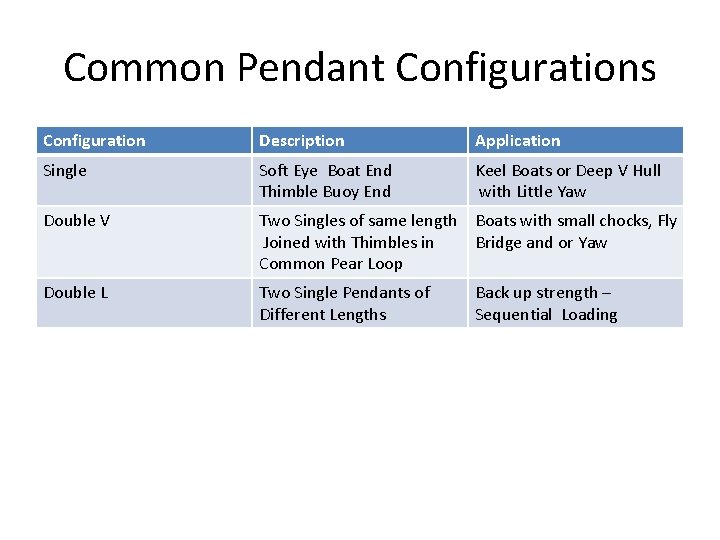
Common Pendant Configurations Configuration Description Application Single Soft Eye Boat End Thimble Buoy End Keel Boats or Deep V Hull with Little Yaw Double V Two Singles of same length Boats with small chocks, Fly Joined with Thimbles in Bridge and or Yaw Common Pear Loop Double L Two Single Pendants of Different Lengths Back up strength – Sequential Loading
Novabraid Pendant Options • Stainless Thimbles – More Durable but will increase corrosion of adjacent non stainless hardware. • Coated Thimble Eye – Minimize gear chafe • Urethane Coating Line – Improves UV resistance and wash ability but will wear off. • Chafe Sleeve - Fixed – A must in chocks but also useful on buoy end to protect from barnacles and chain wrap. • Chafe Sleeve – Movable – Hook & Loop version great for anchor, dolphin striker, or other gear chafe. • Floats – Can make pick up easy and prevent chain wrap • Bitter End – Instead of Soft Eye for V leg length adjustment • Keeper Line – Secure eye on cleat or tall boy attachment
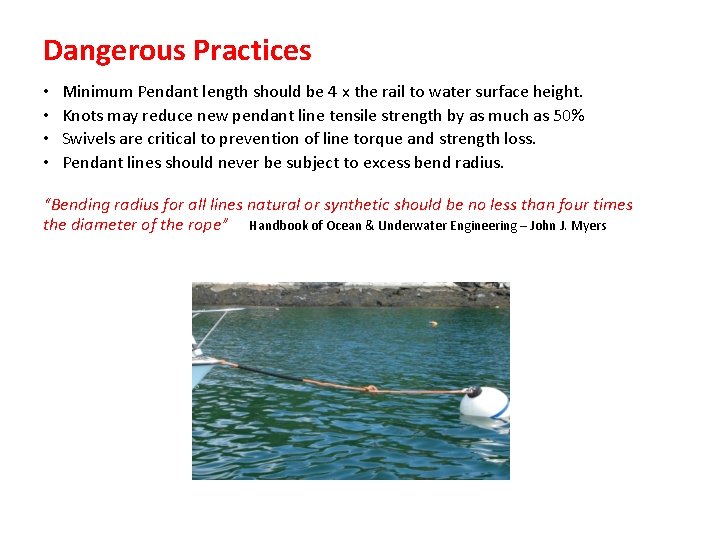
Dangerous Practices • • Minimum Pendant length should be 4 x the rail to water surface height. Knots may reduce new pendant line tensile strength by as much as 50% Swivels are critical to prevention of line torque and strength loss. Pendant lines should never be subject to excess bend radius. “Bending radius for all lines natural or synthetic should be no less than four times the diameter of the rope” Handbook of Ocean & Underwater Engineering – John J. Myers
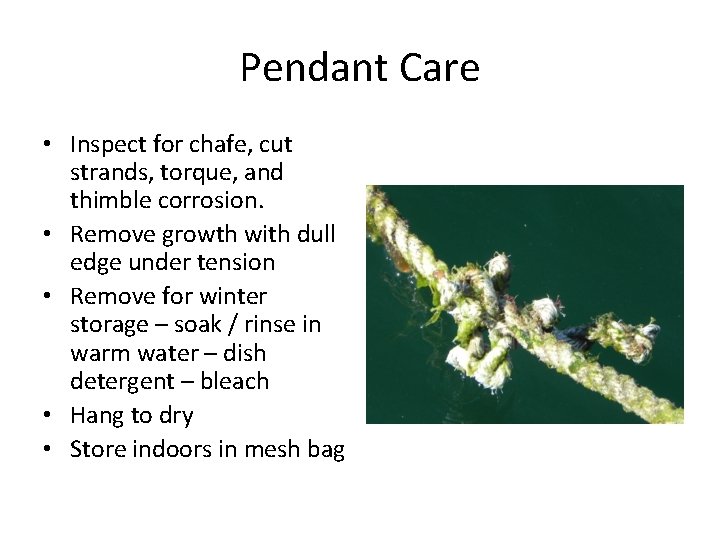
Pendant Care • Inspect for chafe, cut strands, torque, and thimble corrosion. • Remove growth with dull edge under tension • Remove for winter storage – soak / rinse in warm water – dish detergent – bleach • Hang to dry • Store indoors in mesh bag
Mooring System Inspection • Visually Inspect all components annually • Replace worn, corroded or over loaded chain, line & fittings regularly • Record check list of each component’s condition & replacement schedule. • Include inspector’s sign off
www. novabraid. com