
Moons of Jupiter total of 63 confirmed a
- Slides: 45
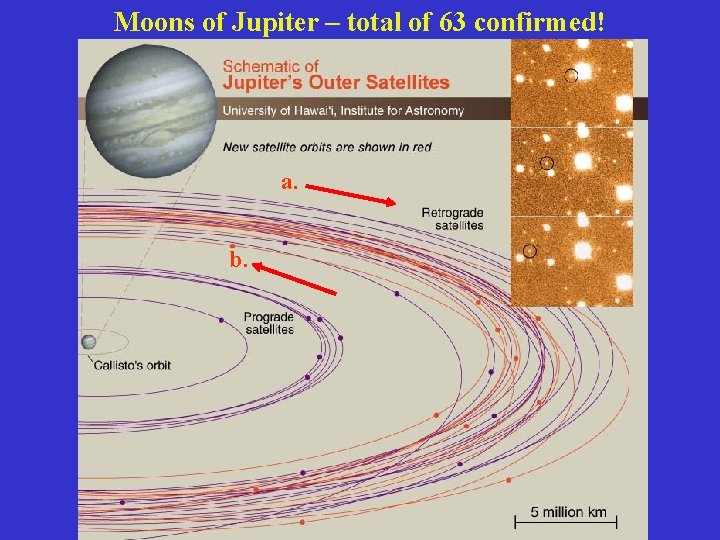
Moons of Jupiter – total of 63 confirmed! a. b.
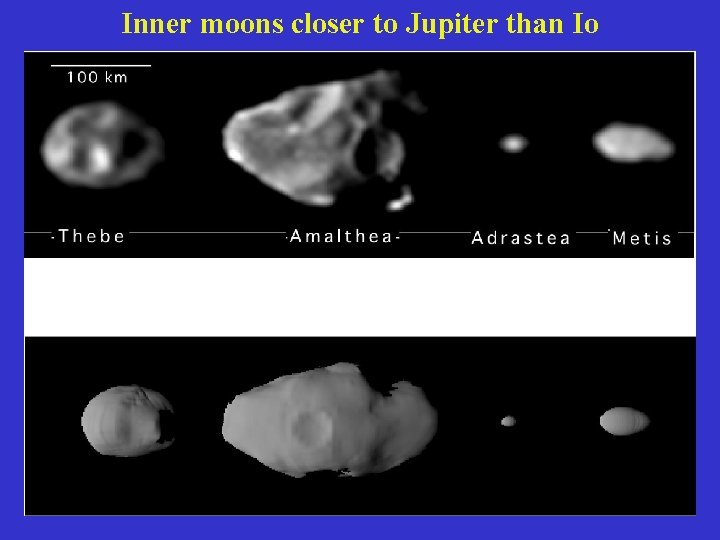
Inner moons closer to Jupiter than Io
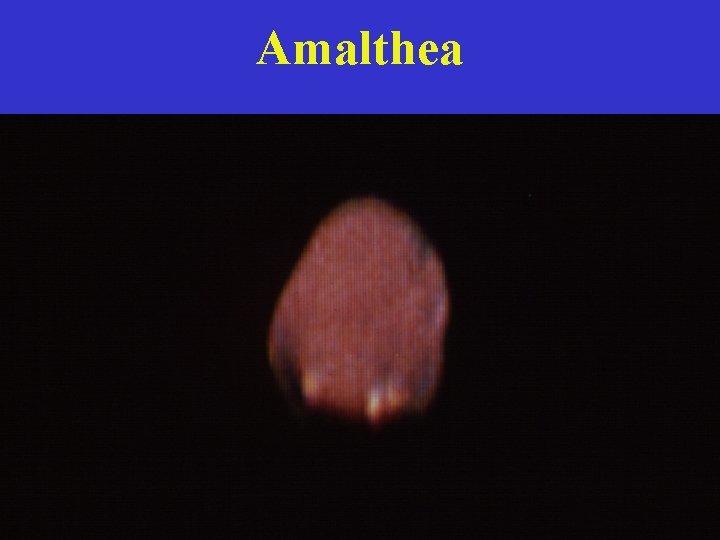
Amalthea
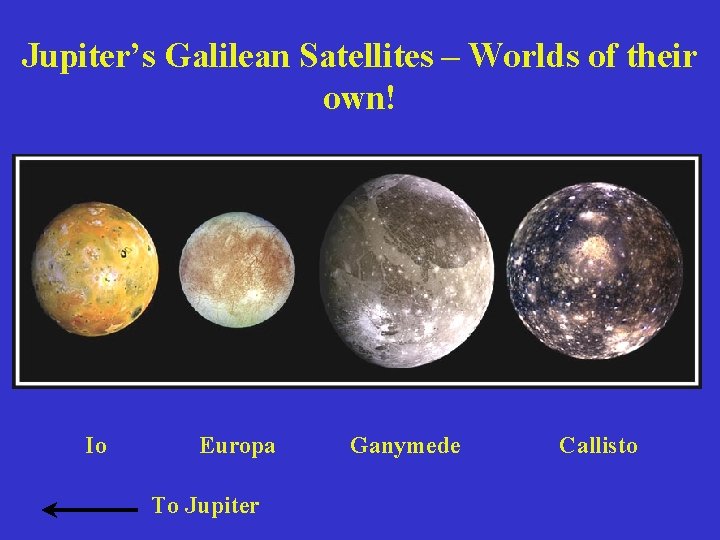
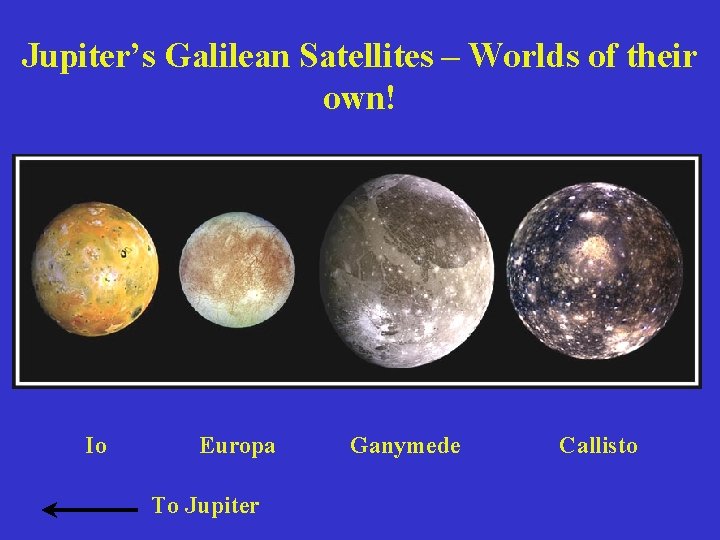
Jupiter’s Galilean Satellites – Worlds of their own! Io Europa To Jupiter Ganymede Callisto
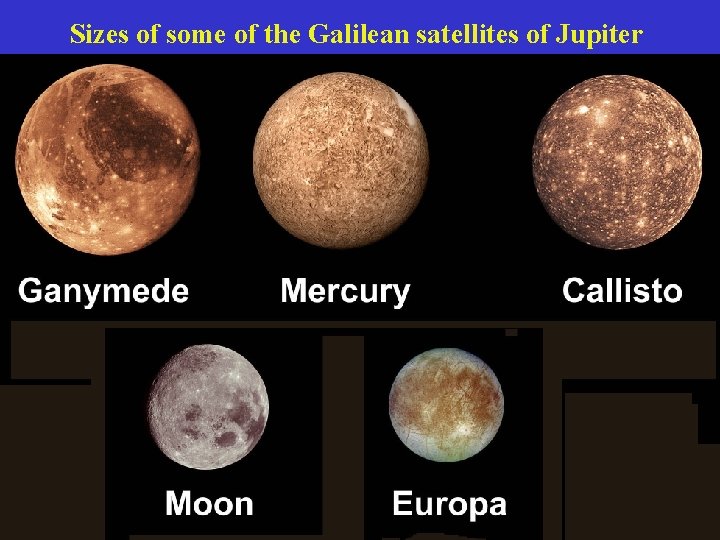
Sizes of some of the Galilean satellites of Jupiter
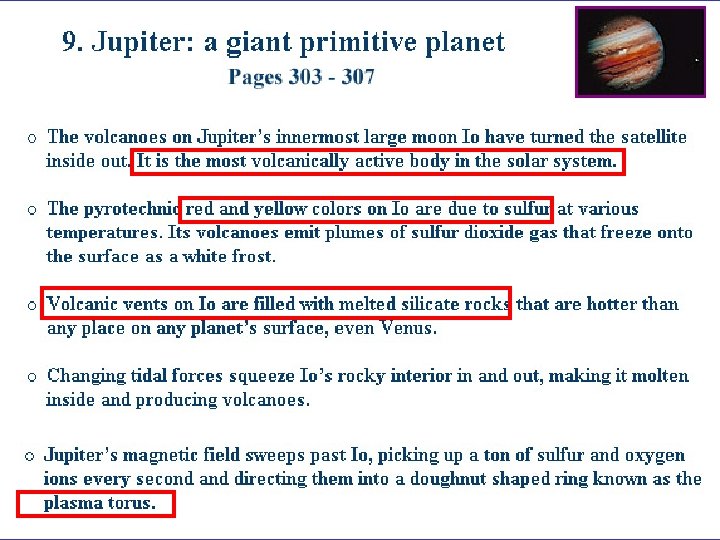
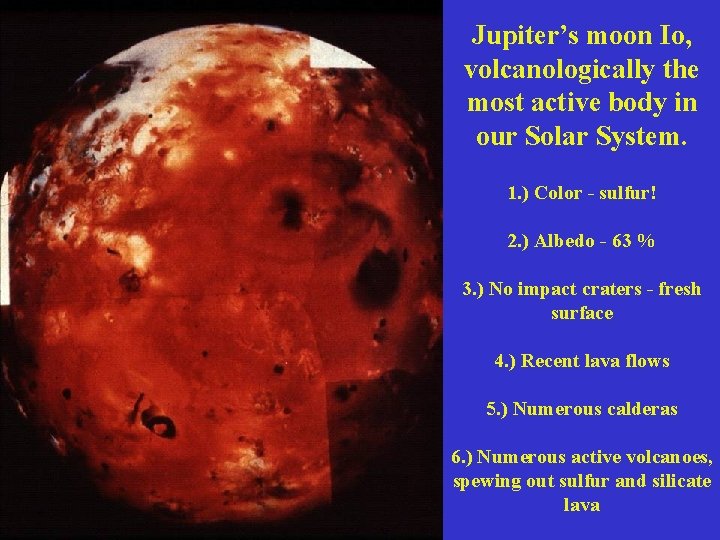
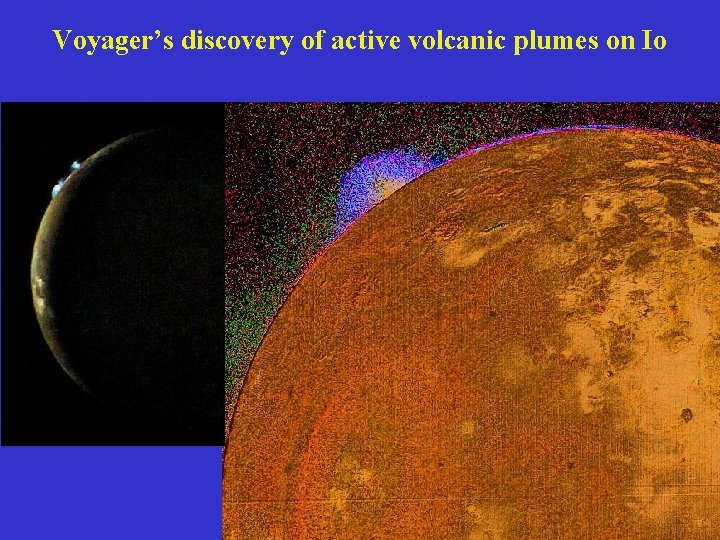
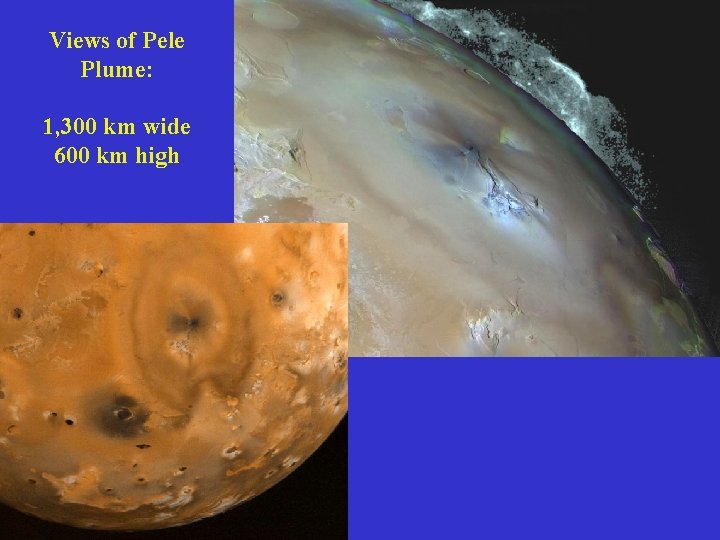
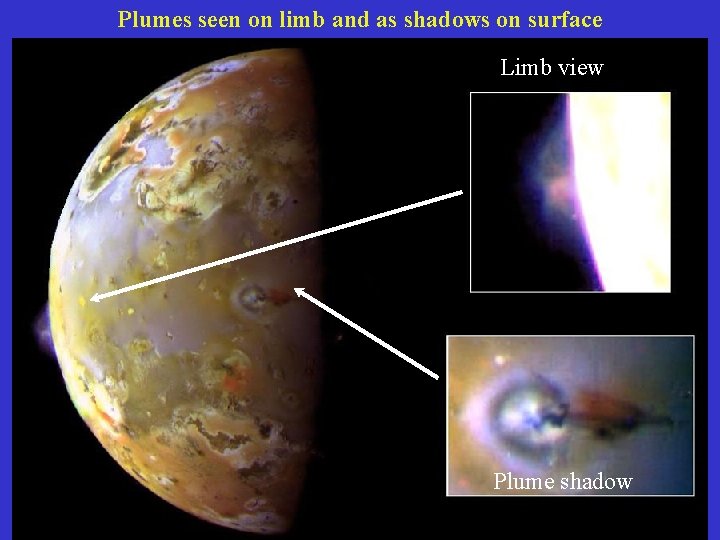
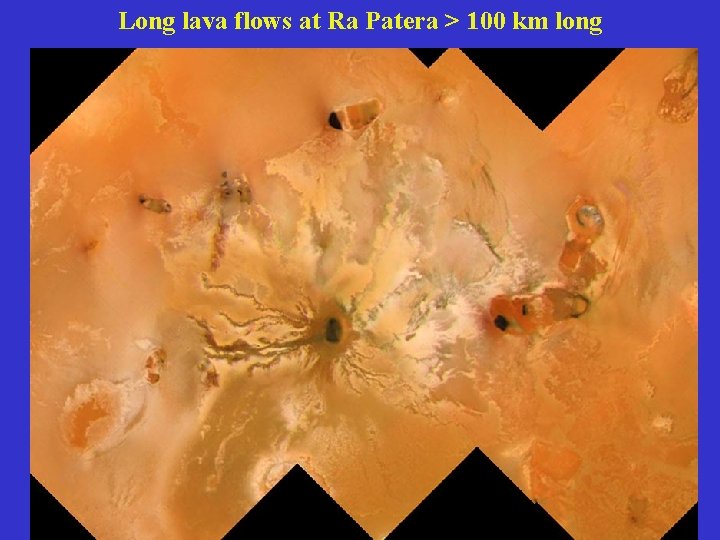
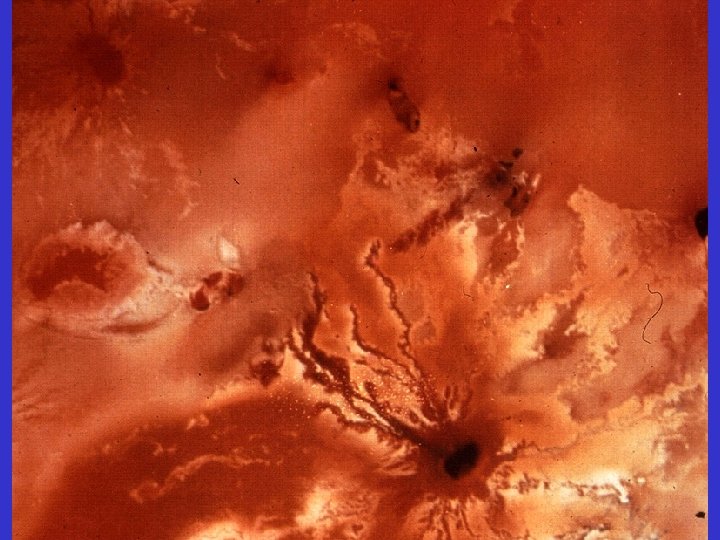
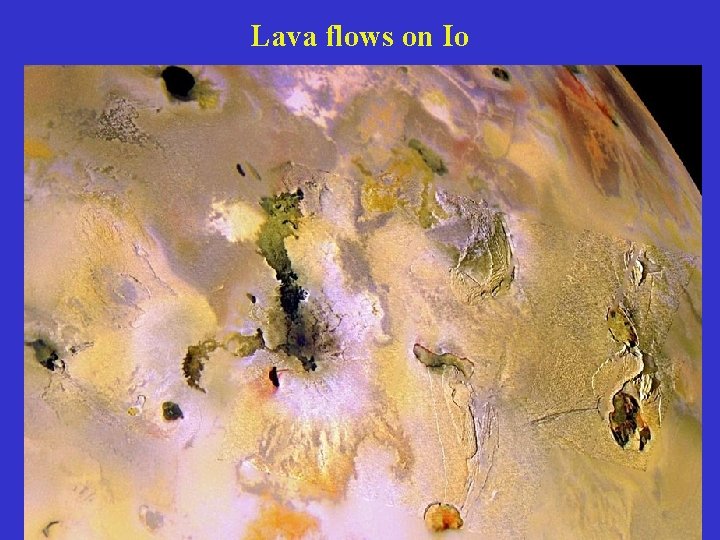
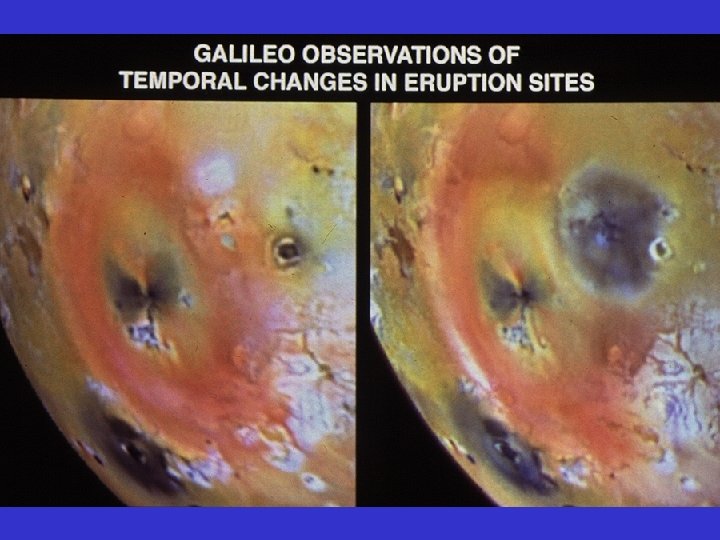
Jupiter’s moon Io, volcanologically the most active body in our Solar System. 1. ) Color - sulfur! 2. ) Albedo - 63 % 3. ) No impact craters - fresh surface 4. ) Recent lava flows 5. ) Numerous calderas 6. ) Numerous active volcanoes, spewing out sulfur and silicate lava
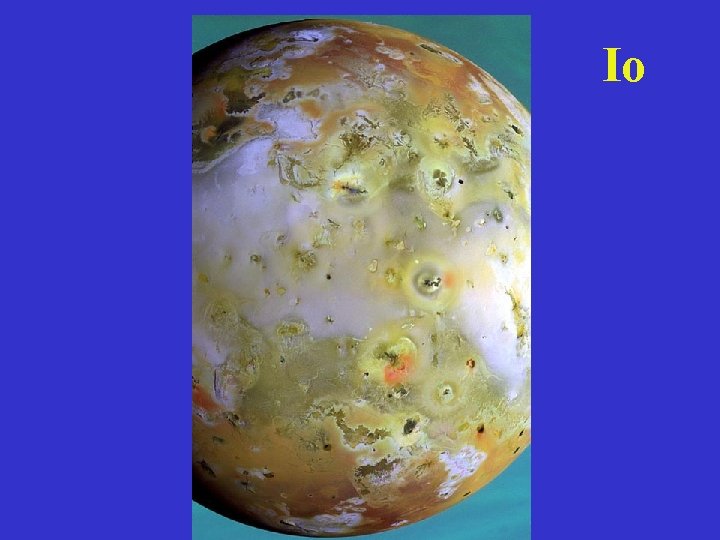
Io
Voyager’s discovery of active volcanic plumes on Io
Views of Pele Plume: 1, 300 km wide 600 km high
Plumes seen on limb and as shadows on surface Limb view Plume shadow
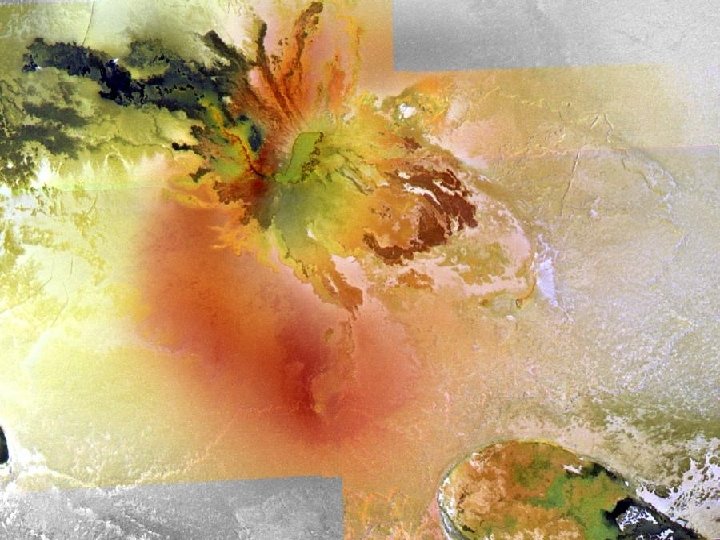
Long lava flows at Ra Patera > 100 km long
Lava flows on Io
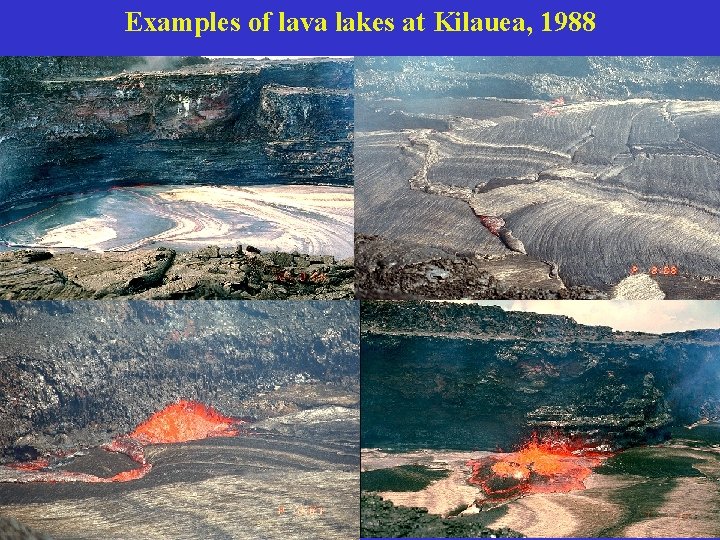
Examples of lava lakes at Kilauea, 1988
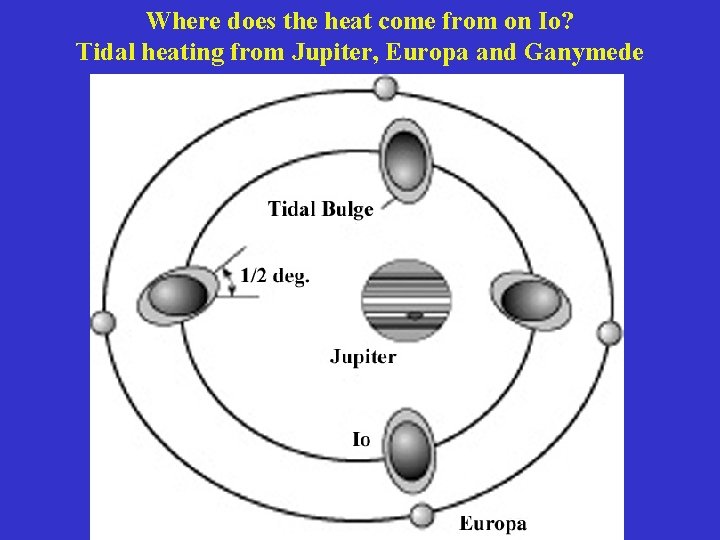
Where does the heat come from on Io? Tidal heating from Jupiter, Europa and Ganymede
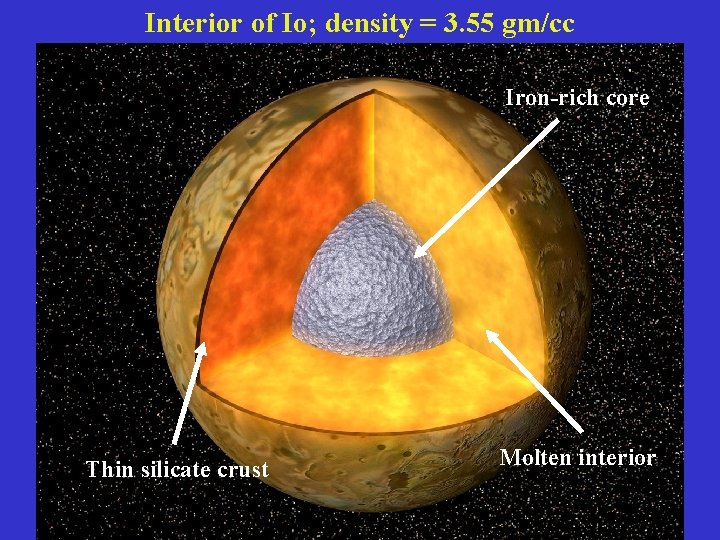
Interior of Io; density = 3. 55 gm/cc Iron-rich core Thin silicate crust Molten interior
Jupiter’s Galilean Satellites – Worlds of their own! Io Europa To Jupiter Ganymede Callisto
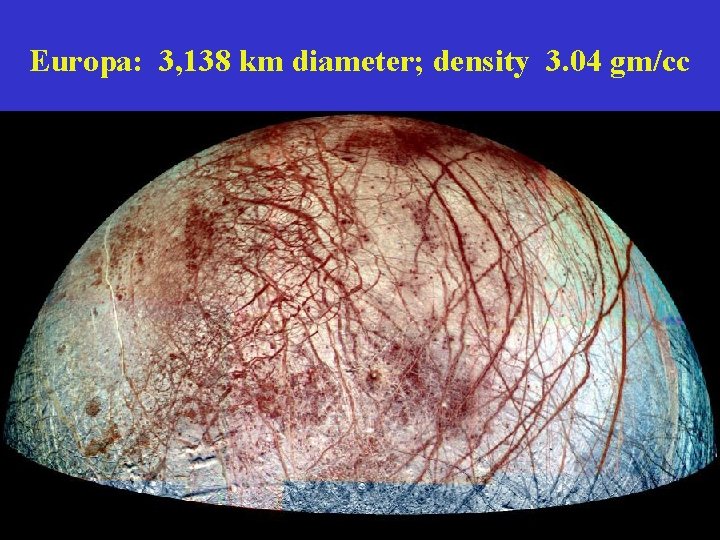
Europa: 3, 138 km diameter; density 3. 04 gm/cc
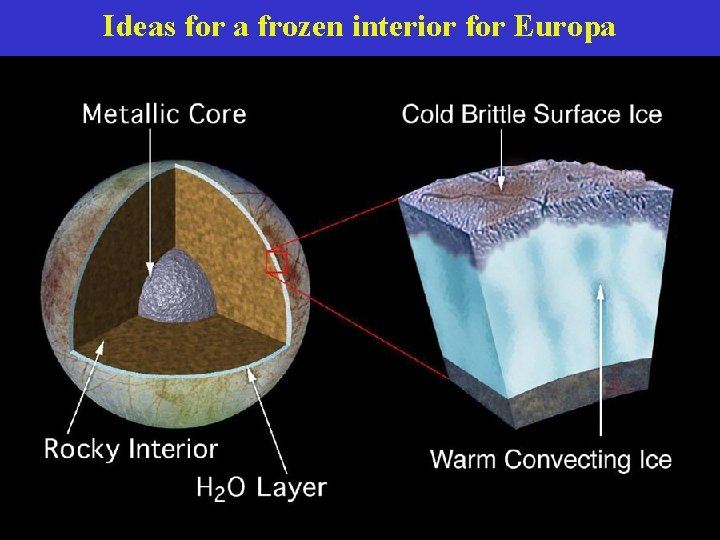
Ideas for a frozen interior for Europa
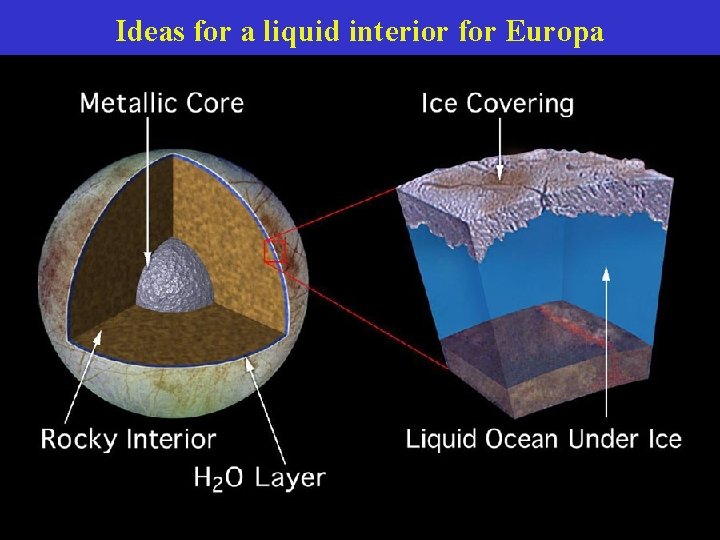
Ideas for a liquid interior for Europa
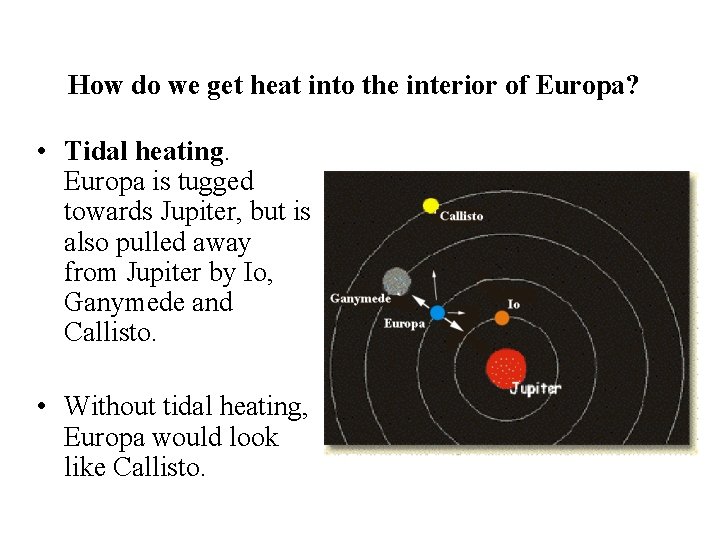
How do we get heat into the interior of Europa? • Tidal heating. Europa is tugged towards Jupiter, but is also pulled away from Jupiter by Io, Ganymede and Callisto. • Without tidal heating, Europa would look like Callisto.
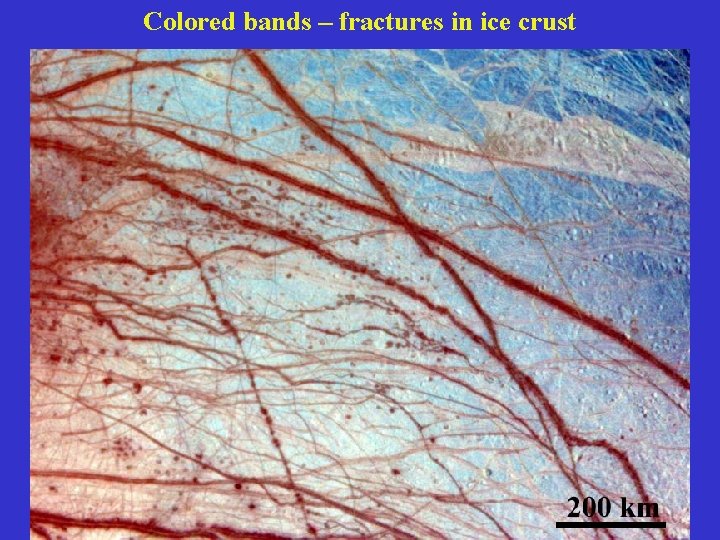
Colored bands – fractures in ice crust
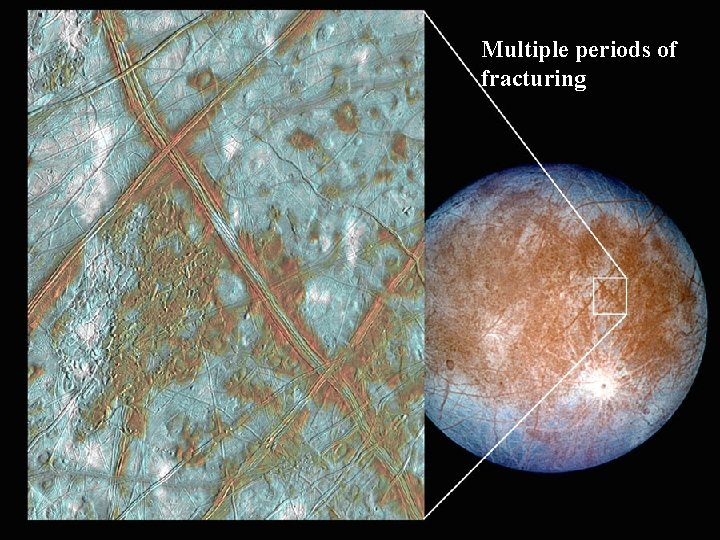
Multiple periods of fracturing
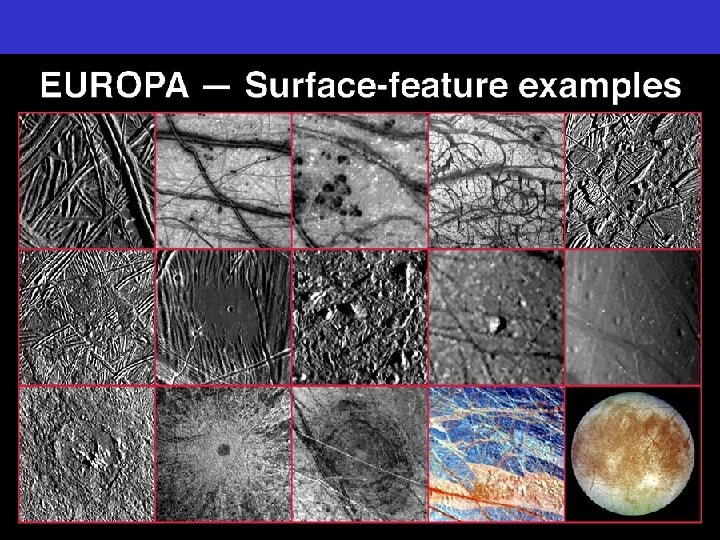
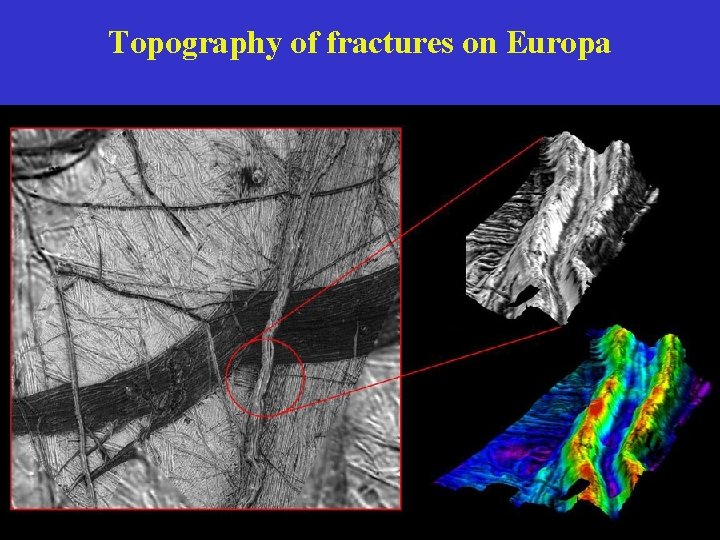
Topography of fractures on Europa
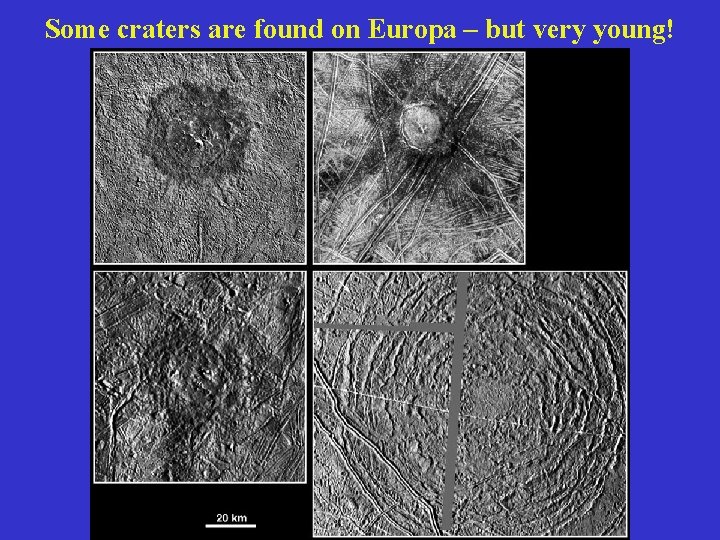
Some craters are found on Europa – but very young!
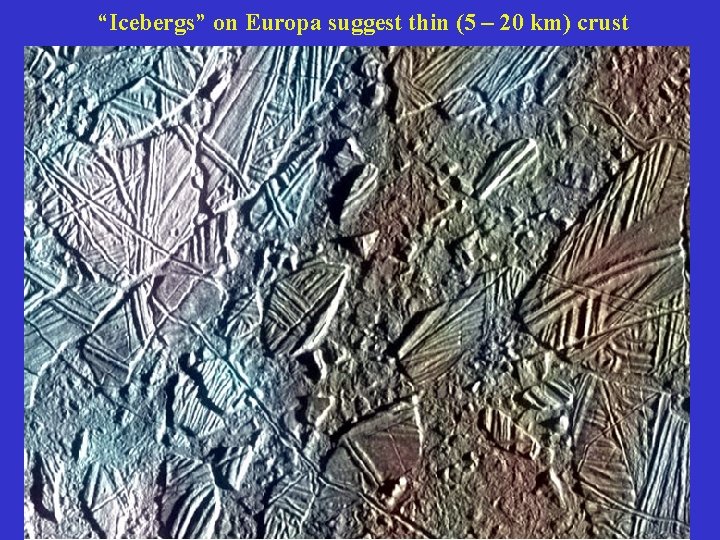
“Icebergs” on Europa suggest thin (5 – 20 km) crust
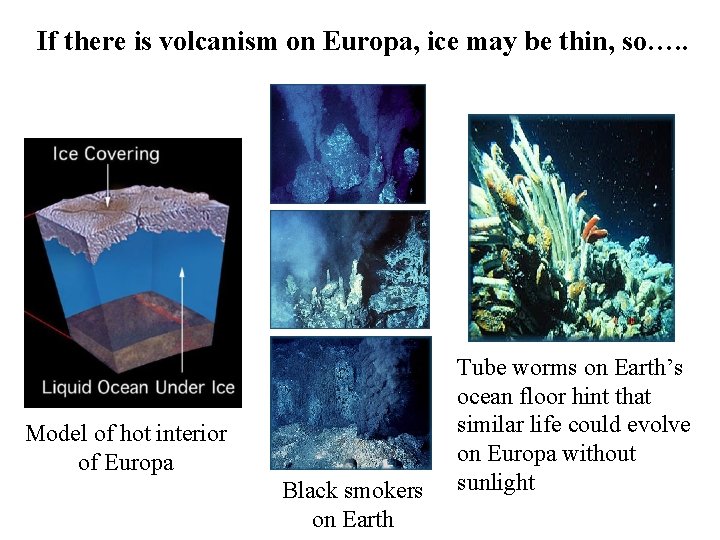
If there is volcanism on Europa, ice may be thin, so…. . Model of hot interior of Europa Black smokers on Earth Tube worms on Earth’s ocean floor hint that similar life could evolve on Europa without sunlight
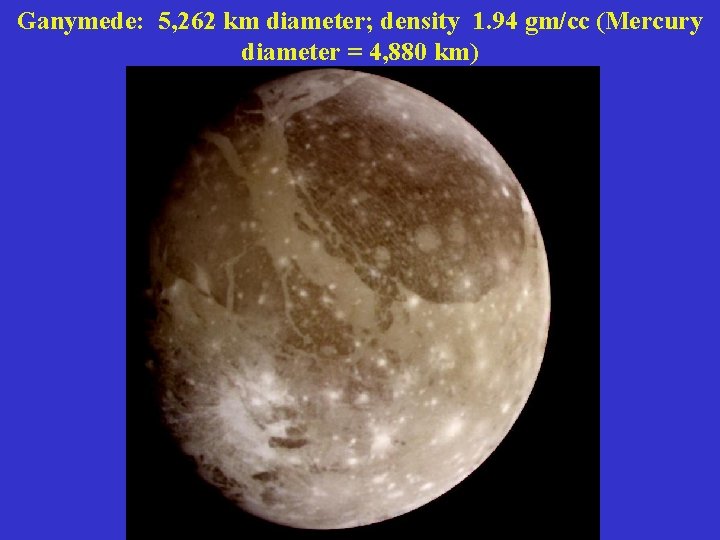
Ganymede: 5, 262 km diameter; density 1. 94 gm/cc (Mercury diameter = 4, 880 km)
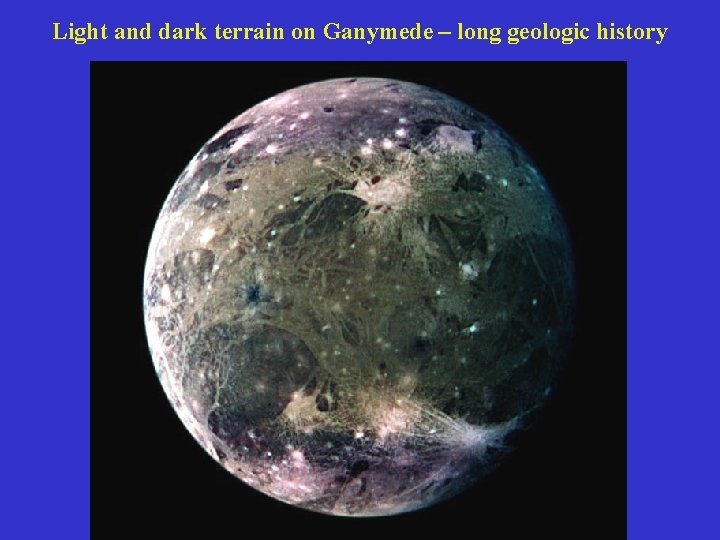
Light and dark terrain on Ganymede – long geologic history
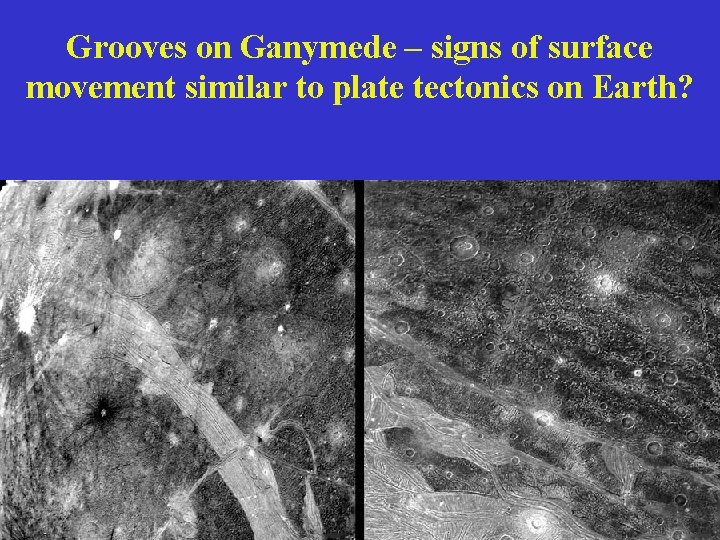
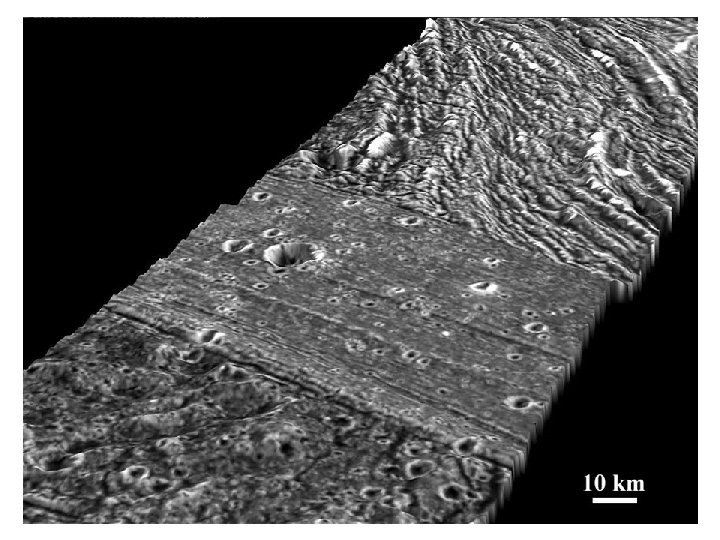
Grooves on Ganymede – signs of surface movement similar to plate tectonics on Earth?
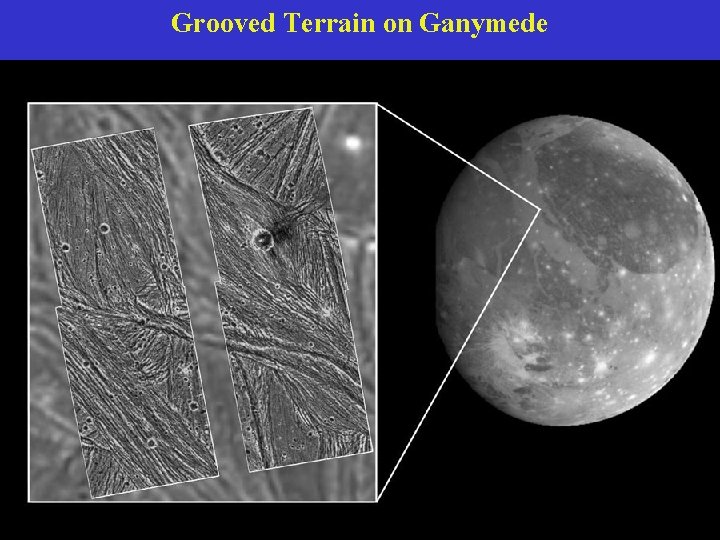
Grooved Terrain on Ganymede
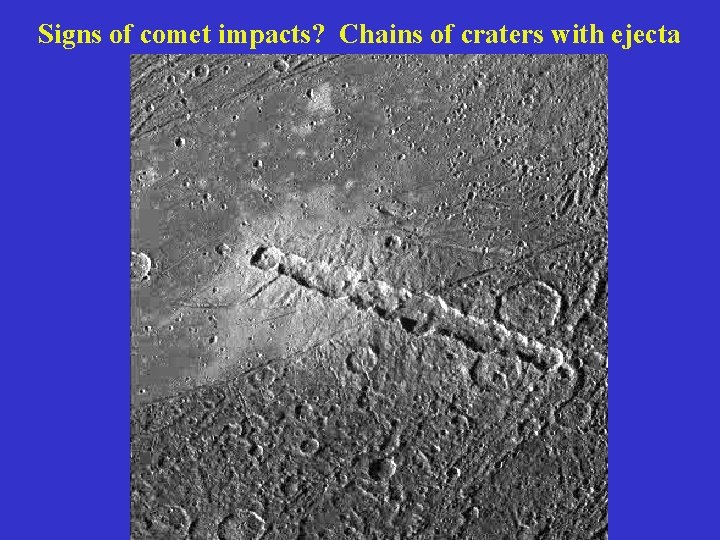
Signs of comet impacts? Chains of craters with ejecta
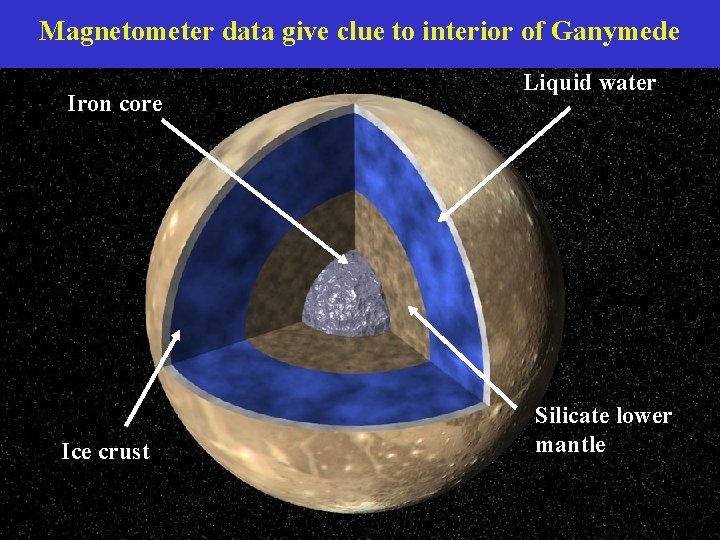
Magnetometer data give clue to interior of Ganymede Iron core Ice crust Liquid water Silicate lower mantle
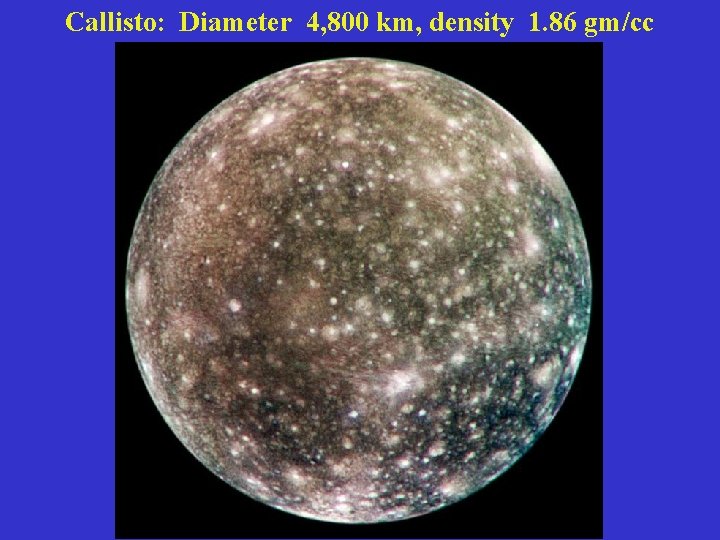
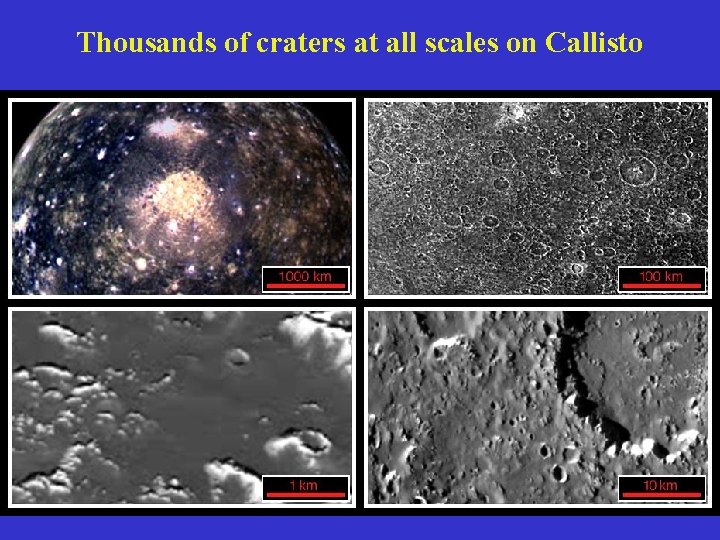
Callisto: Diameter 4, 800 km, density 1. 86 gm/cc
Thousands of craters at all scales on Callisto
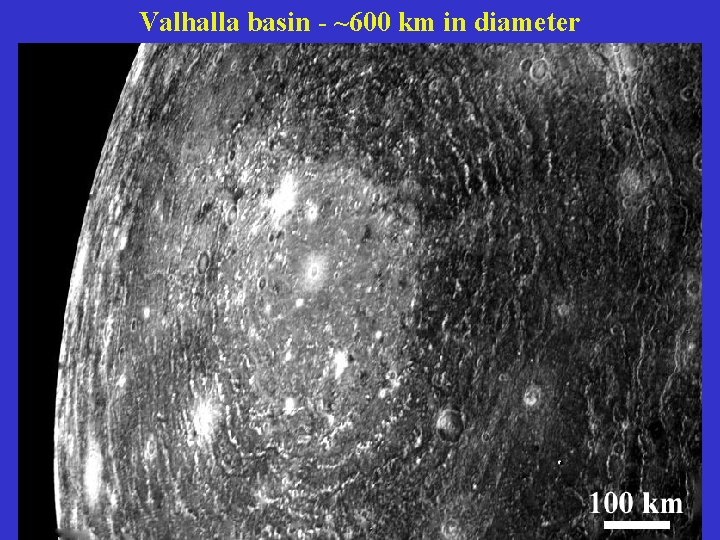
Valhalla basin - ~600 km in diameter
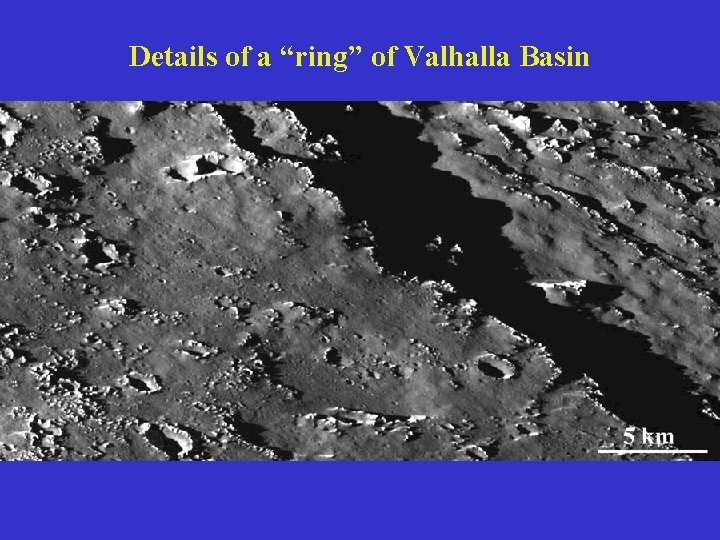
Details of a “ring” of Valhalla Basin
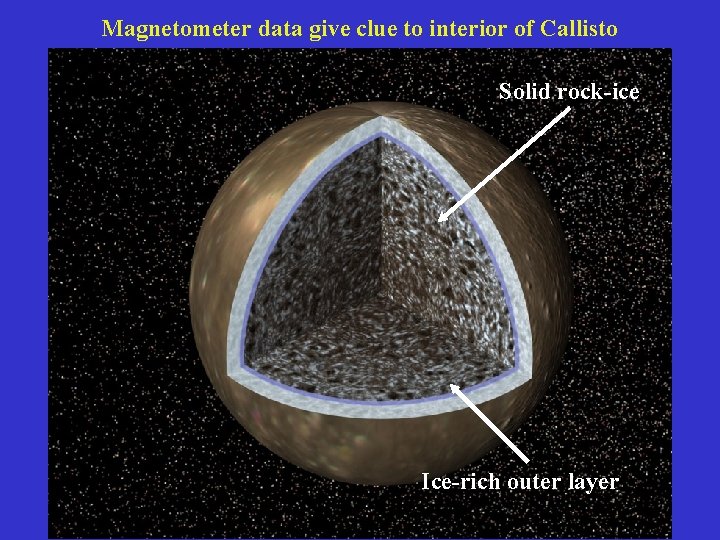
Magnetometer data give clue to interior of Callisto Solid rock-ice Ice-rich outer layer
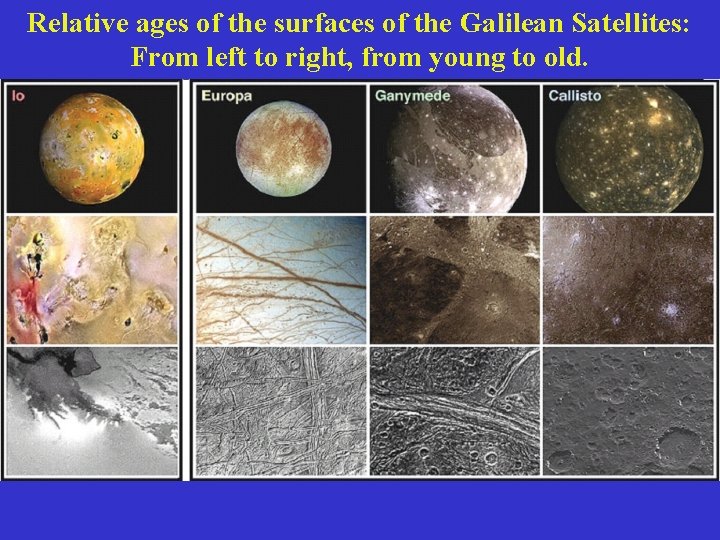
Relative ages of the surfaces of the Galilean Satellites: From left to right, from young to old.