
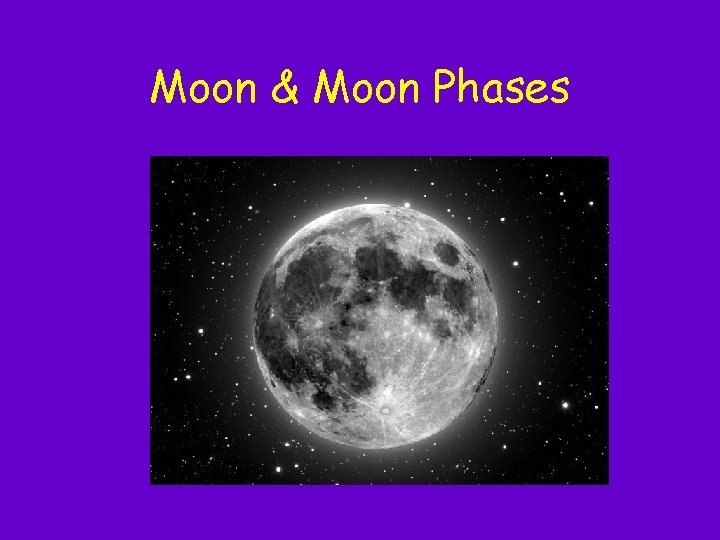
Moon Moon Phases Moon Moon Phases The moon
- Slides: 33
Moon & Moon Phases
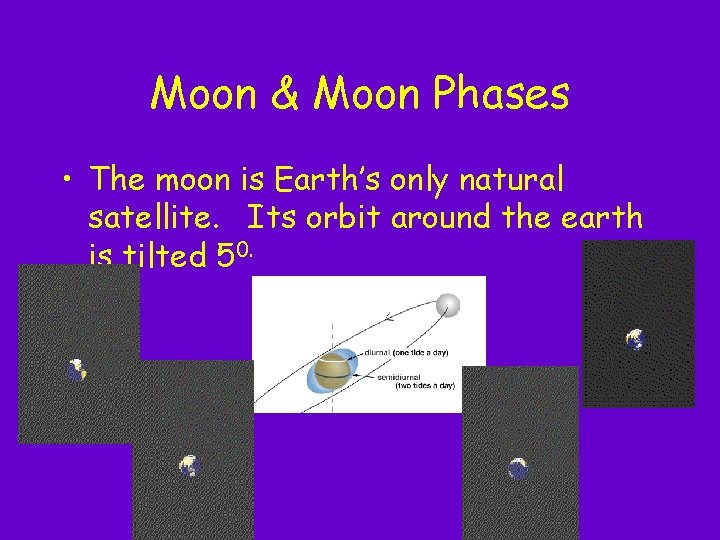
Moon & Moon Phases • The moon is Earth’s only natural satellite. Its orbit around the earth is tilted 50.
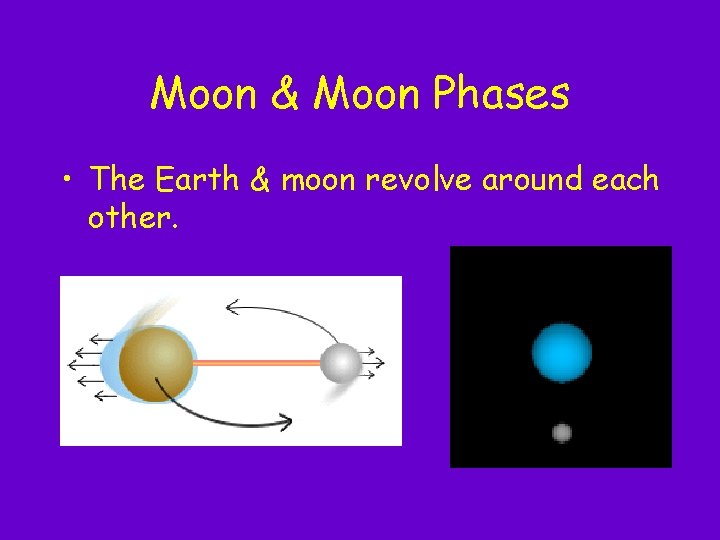
Moon & Moon Phases • The Earth & moon revolve around each other.
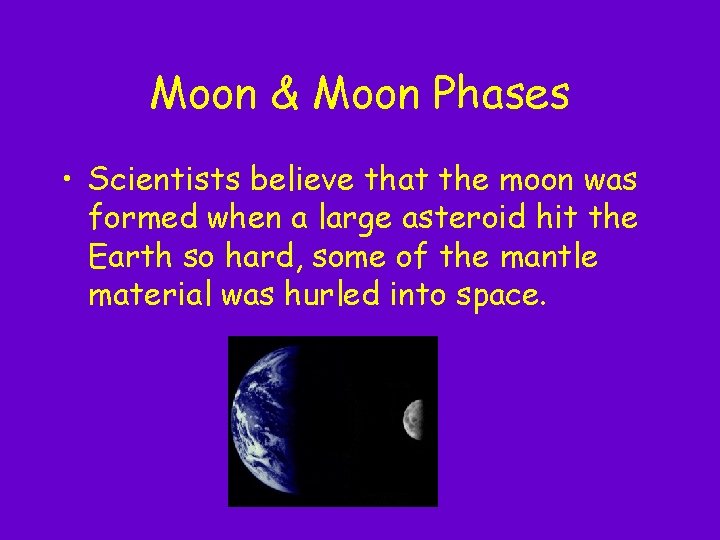
Moon & Moon Phases • Scientists believe that the moon was formed when a large asteroid hit the Earth so hard, some of the mantle material was hurled into space.
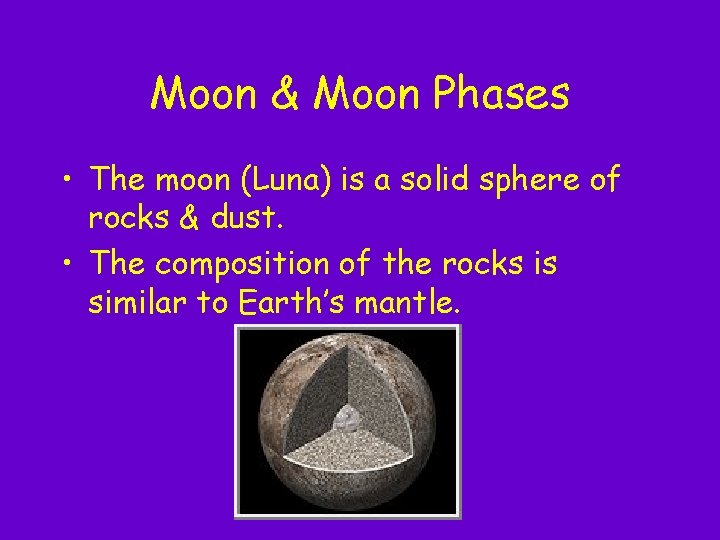
Moon & Moon Phases • The moon (Luna) is a solid sphere of rocks & dust. • The composition of the rocks is similar to Earth’s mantle.
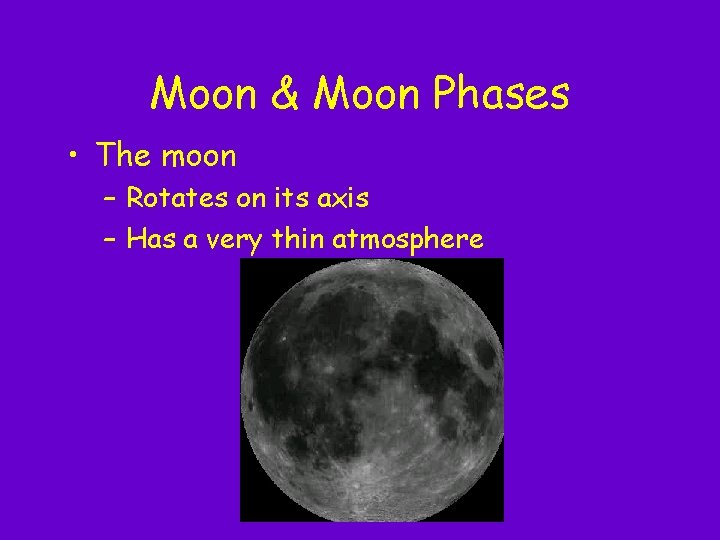
Moon & Moon Phases • The moon – Rotates on its axis – Has a very thin atmosphere
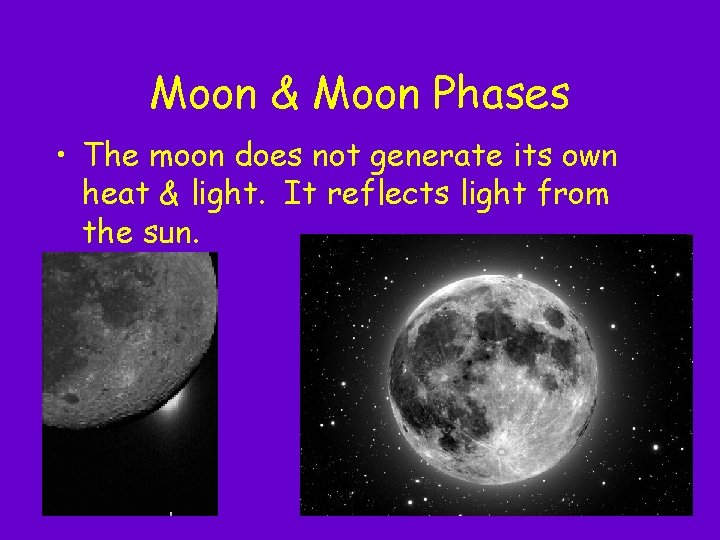
Moon & Moon Phases • The moon does not generate its own heat & light. It reflects light from the sun.
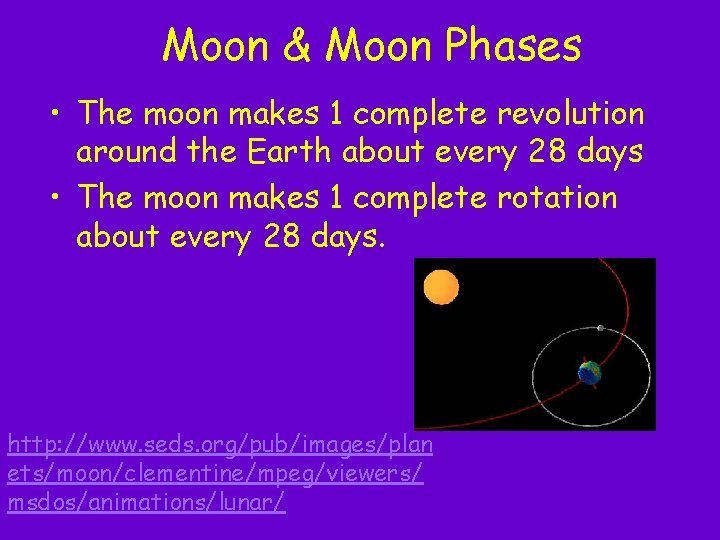
Moon & Moon Phases • The moon makes 1 complete revolution around the Earth about every 28 days • The moon makes 1 complete rotation about every 28 days. http: //www. seds. org/pub/images/plan ets/moon/clementine/mpeg/viewers/ msdos/animations/lunar/
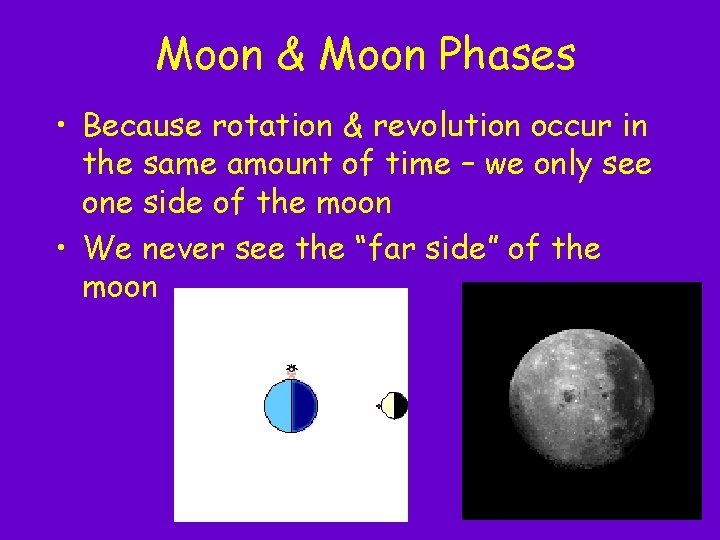
Moon & Moon Phases • Because rotation & revolution occur in the same amount of time – we only see one side of the moon • We never see the “far side” of the moon
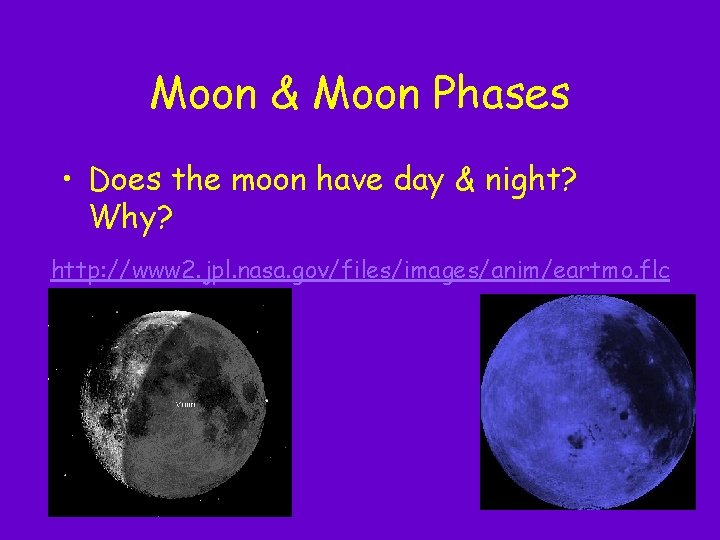
Moon & Moon Phases • Does the moon have day & night? Why? http: //www 2. jpl. nasa. gov/files/images/anim/eartmo. flc
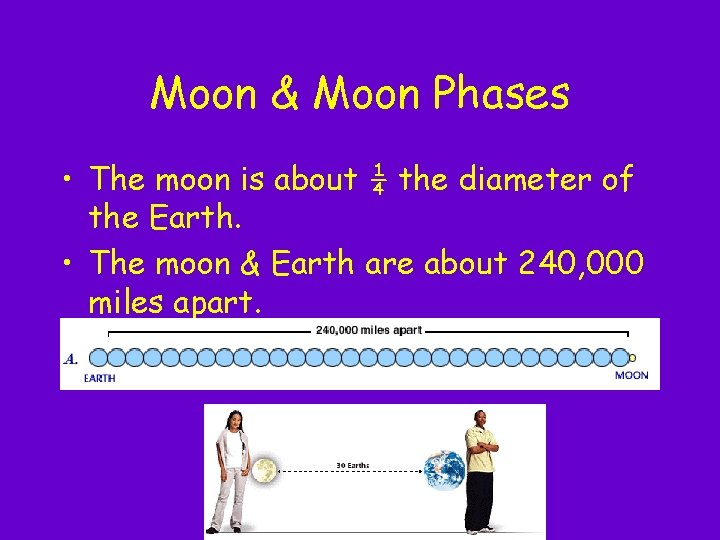
Moon & Moon Phases • The moon is about ¼ the diameter of the Earth. • The moon & Earth are about 240, 000 miles apart.
Moon & Moon Phases • ESSENTIAL QUESTION • IF HALF OF THE MOON IS ALWAYS LIT BY LIGHT FROM THE SUN, WHY DO WE NOT ALWAYS SEE ALL OF THE LIT HALF OF THE MOON?
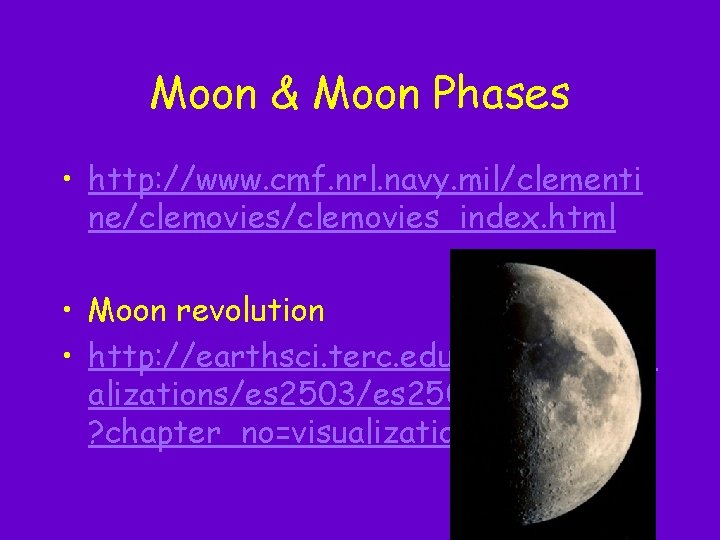
Moon & Moon Phases • http: //www. cmf. nrl. navy. mil/clementi ne/clemovies_index. html • Moon revolution • http: //earthsci. terc. edu/content/visu alizations/es 2503 page 01. cfm ? chapter_no=visualization
Moon & Moon Phases • http: //www. cmf. nrl. navy. mil/clementi ne/clemovies_index. html • Moonglow http: //www. cmf. nrl. navy. mil/clementi ne/clemovies_index. html
Moon & Moon Phases • The moon is ½ lit all the time • The relative positions of the Earth, moon, & sun determine how much of the lit half we can see • http: //www. astro. uiuc. edu/projects/data/ Moon. Phases/
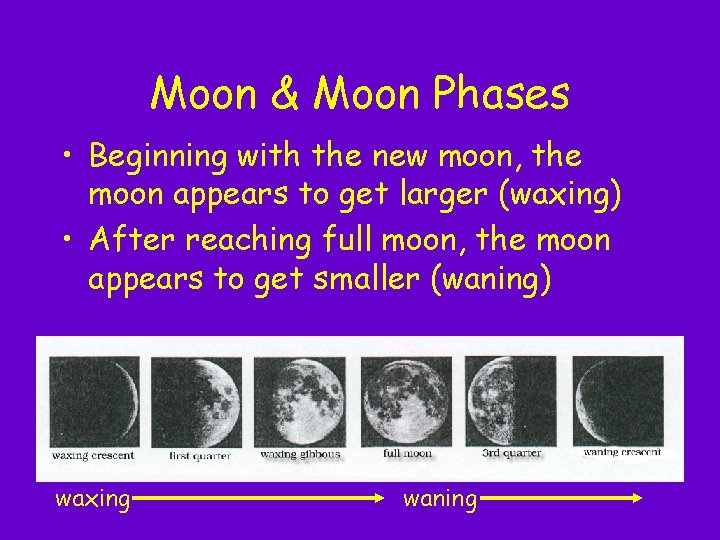
Moon & Moon Phases • The changing shapes of the moon are called phases.
Moon & Moon Phases • The phases range from a new moon to a full moon (in about 14 days) then back to new moon (in about 28 days) • This pattern repeats every 28 days
Moon & Moon Phases • Beginning with the new moon, the moon appears to get larger (waxing) • After reaching full moon, the moon appears to get smaller (waning) waxing waning
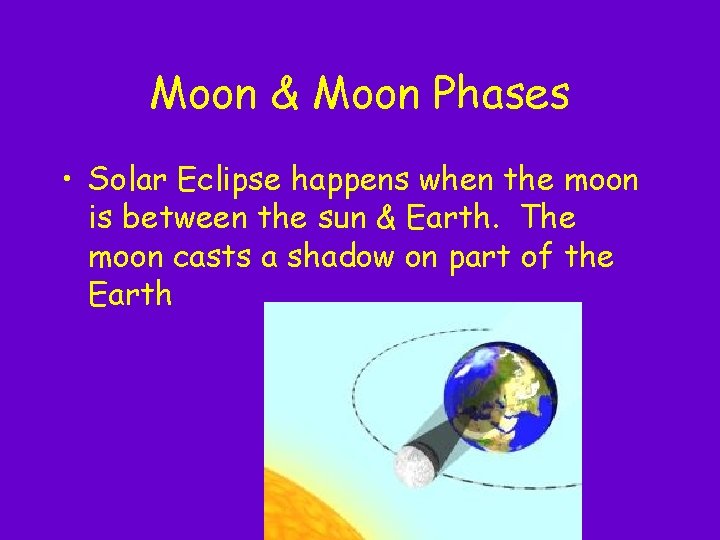
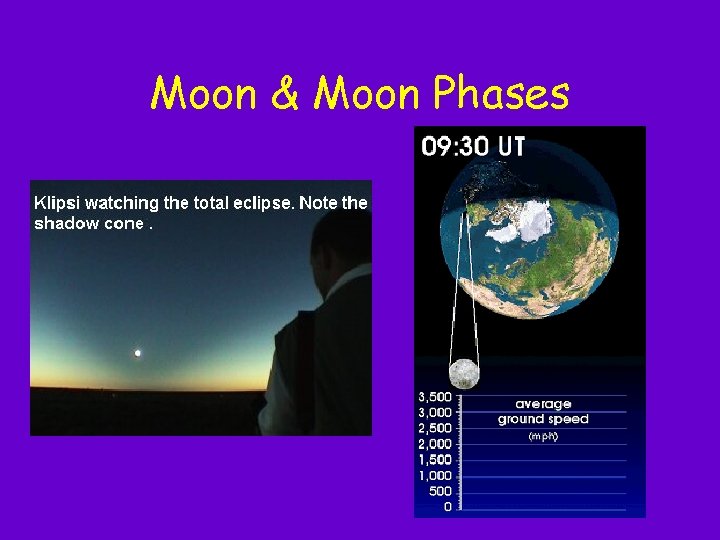
Moon & Moon Phases • Solar Eclipse happens when the moon is between the sun & Earth. The moon casts a shadow on part of the Earth
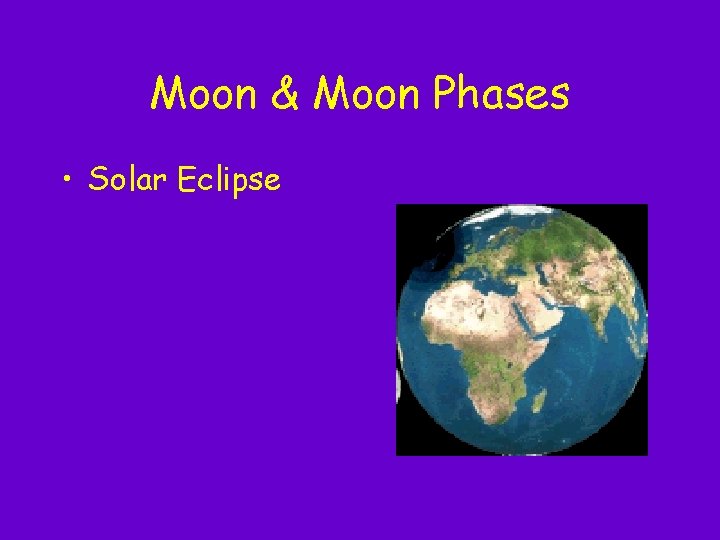
Moon & Moon Phases • Solar Eclipse
Moon & Moon Phases
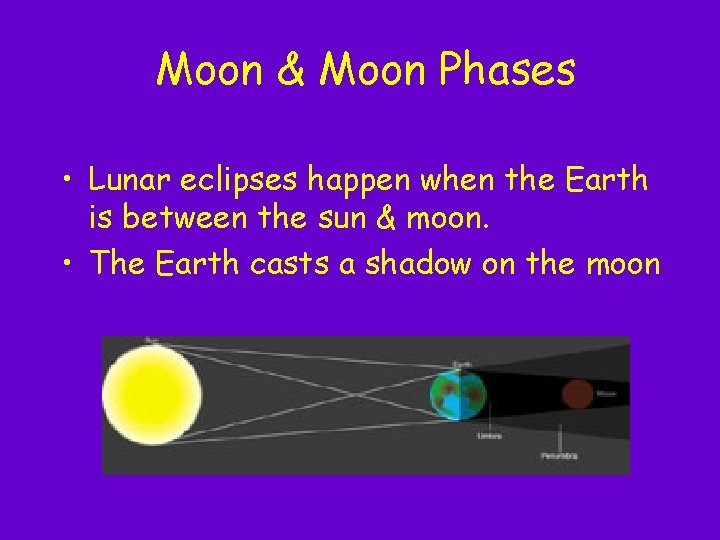
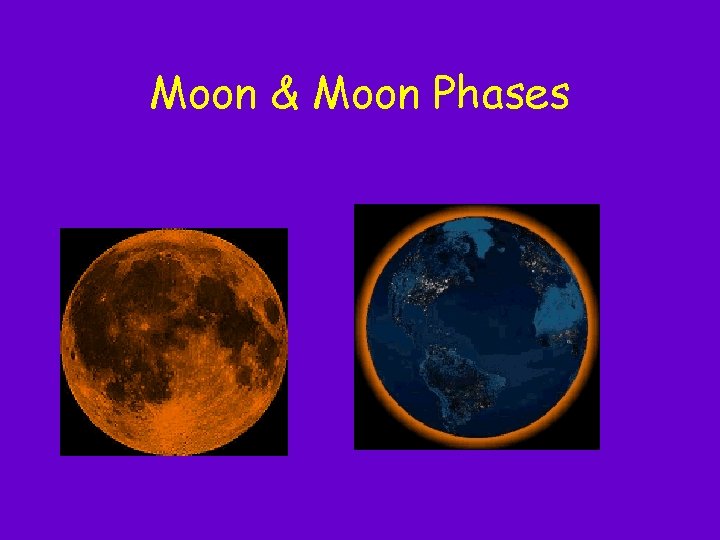
Moon & Moon Phases • Lunar eclipses happen when the Earth is between the sun & moon. • The Earth casts a shadow on the moon
Moon & Moon Phases
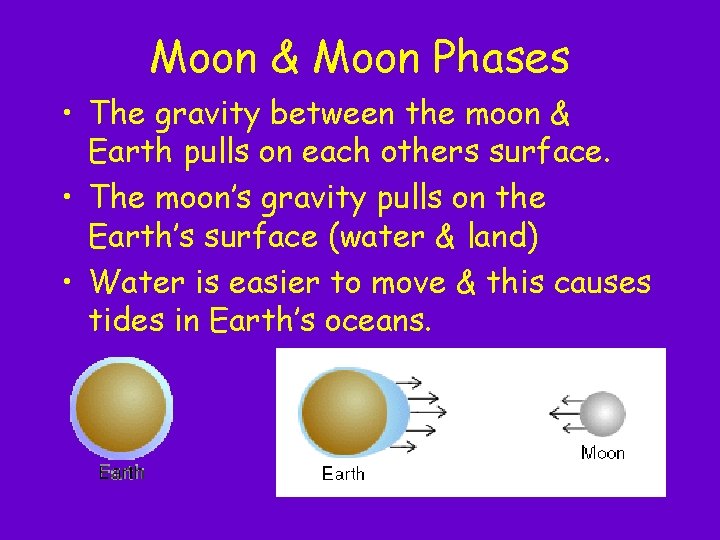
Moon & Moon Phases • The gravity between the moon & Earth pulls on each others surface. • The moon’s gravity pulls on the Earth’s surface (water & land) • Water is easier to move & this causes tides in Earth’s oceans.
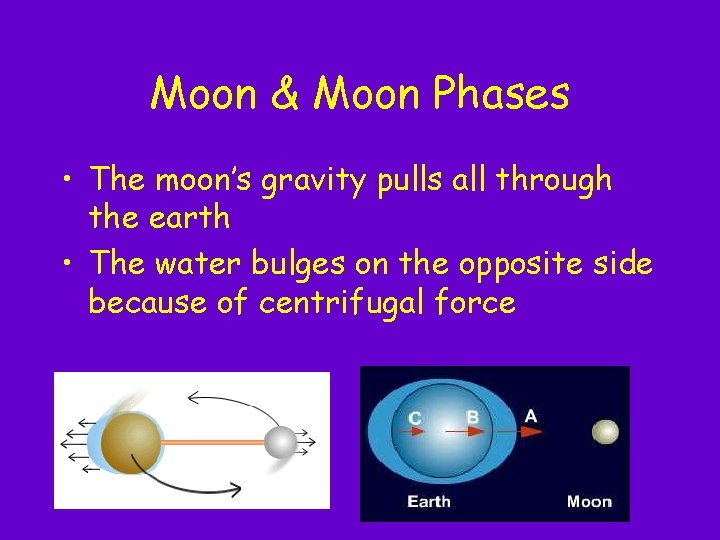
Moon & Moon Phases • The moon’s gravity pulls all through the earth • The water bulges on the opposite side because of centrifugal force
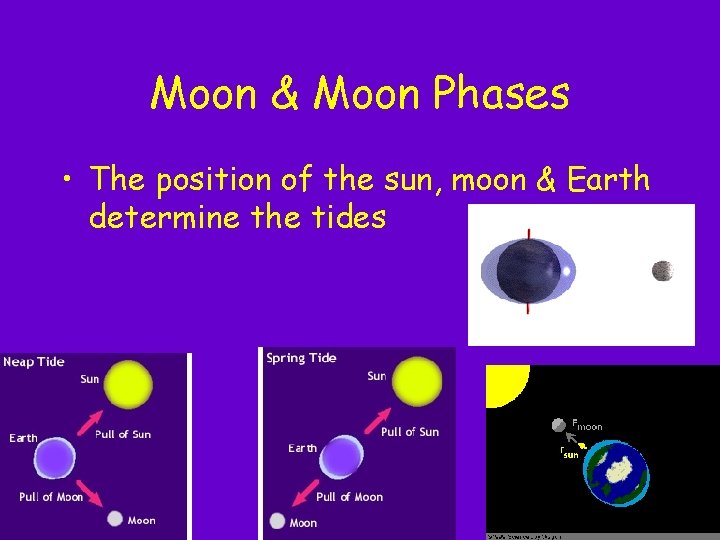
Moon & Moon Phases • The position of the sun, moon & Earth determine the tides
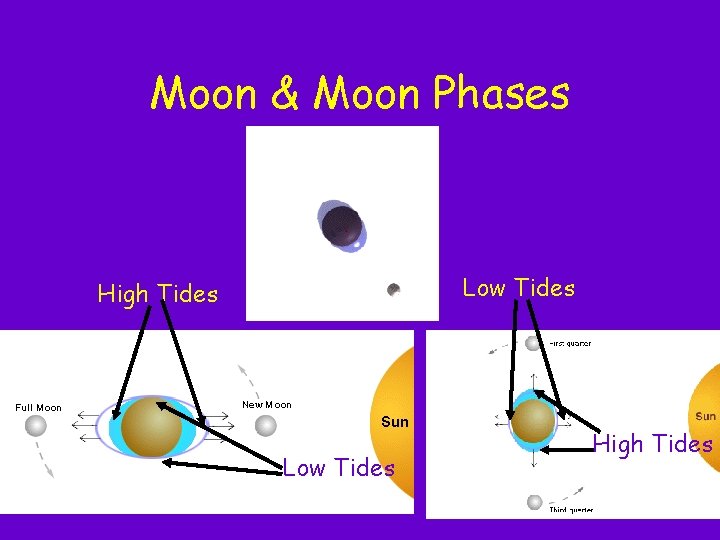
Moon & Moon Phases Low Tides High Tides
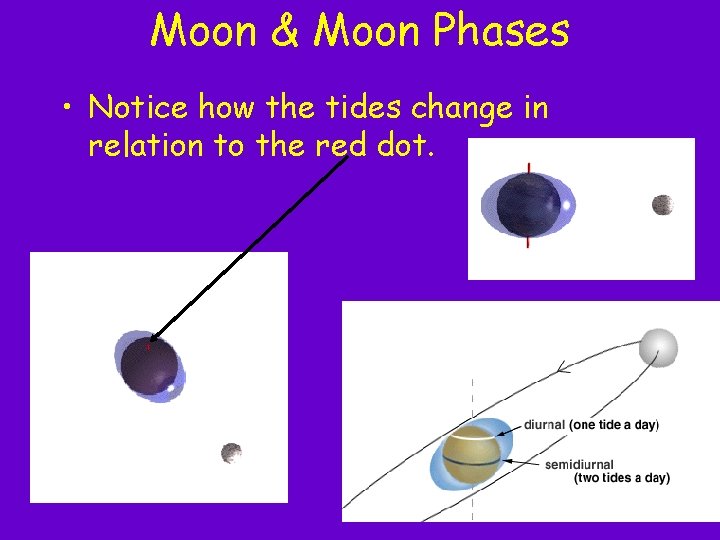
Moon & Moon Phases • Notice how the tides change in relation to the red dot.
Moon & Moon Phases
Moon & Moon Phases
Moon & Moon Phases
Moon & Moon Phases
Moon & Moon Phases