
Mood Disorders Abnormal Psychology Crash Course https youtu
Mood Disorders Abnormal Psychology

Crash Course – https: //youtu. be/Zw. Ml. Hk. WKDw. M? list=PL 8 d. Puua. Lj. Xt. OPRK z. VLY 0 j. JY-u. HOH 9 KVU 6
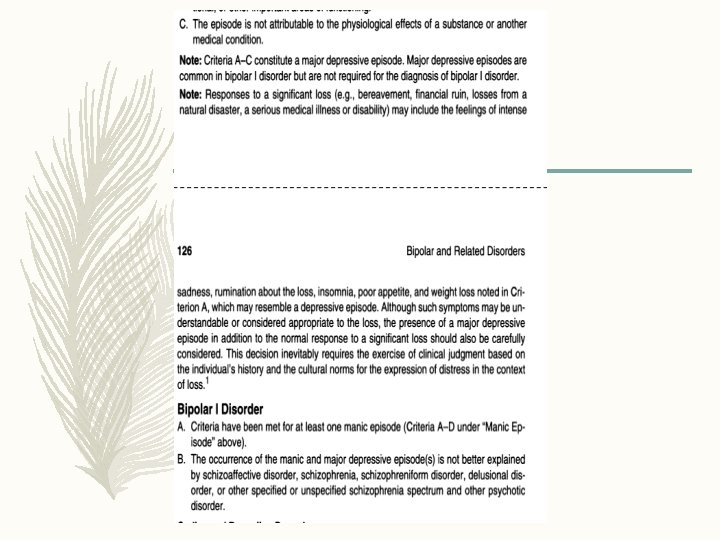
Mood Disorders The emotional extremes of mood disorders come in two principal forms: (1)major depressive disorder, with its prolonged hopelessness and lethargy, and (2) bipolar disorder (formerly called manic depressive disorder), in which a person alternates between depression and mania, an overexcited, hyperactive state.
Major Depressive Disorder – has been called the “common cold” of psychological disorders – it is the leading cause of disability worldwide – As anxiety is a response to the threat of future loss, depressed mood is often a response to past and current loss. – slows us down, defuses aggression, and restrains risk taking
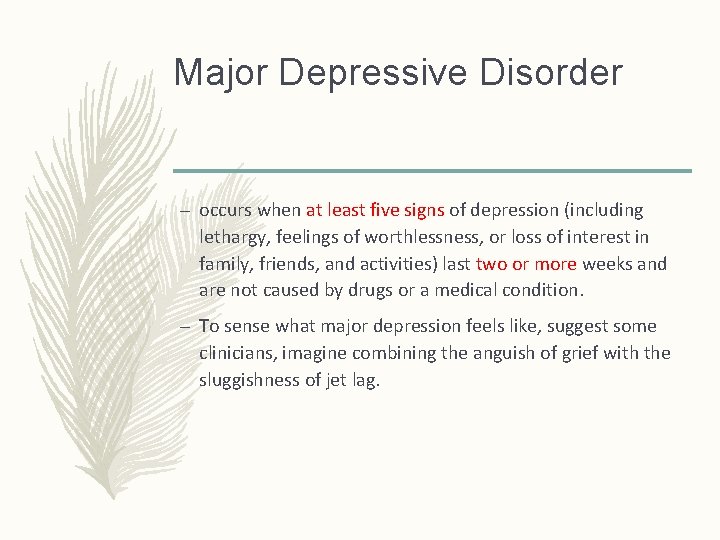
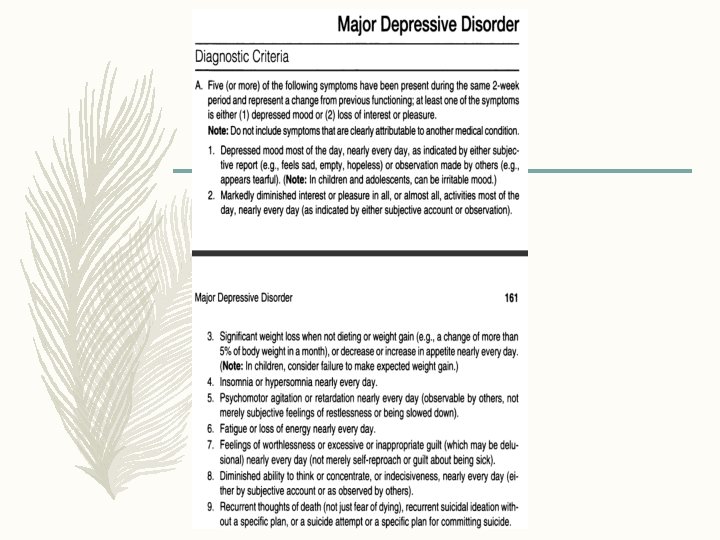
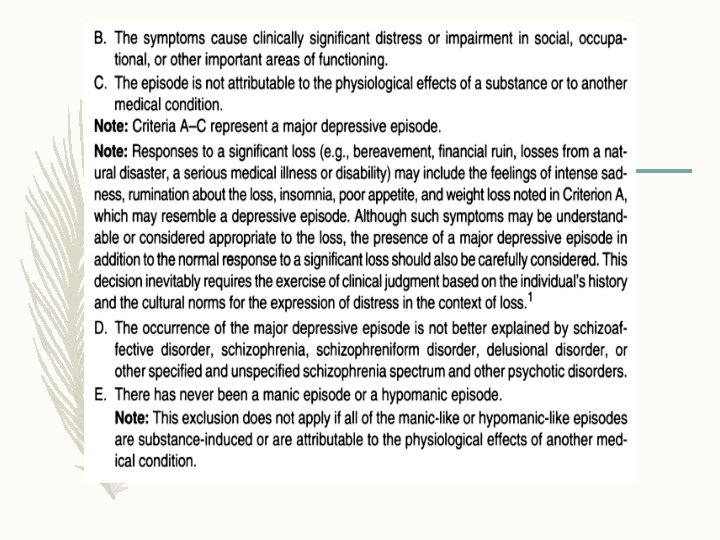
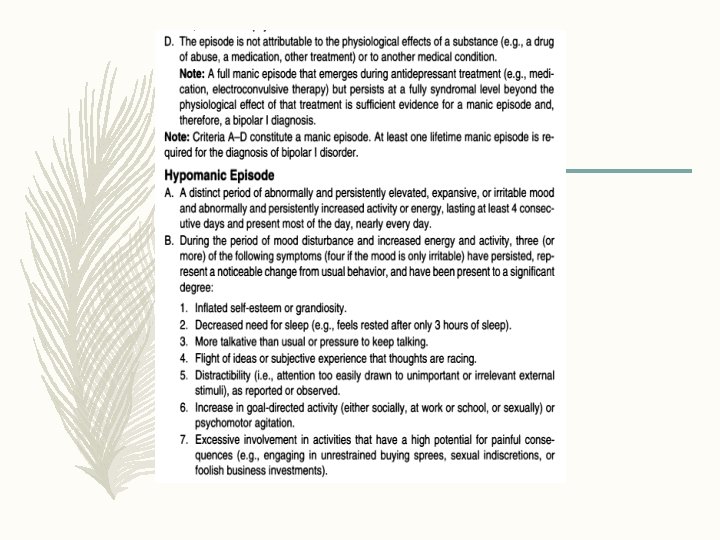
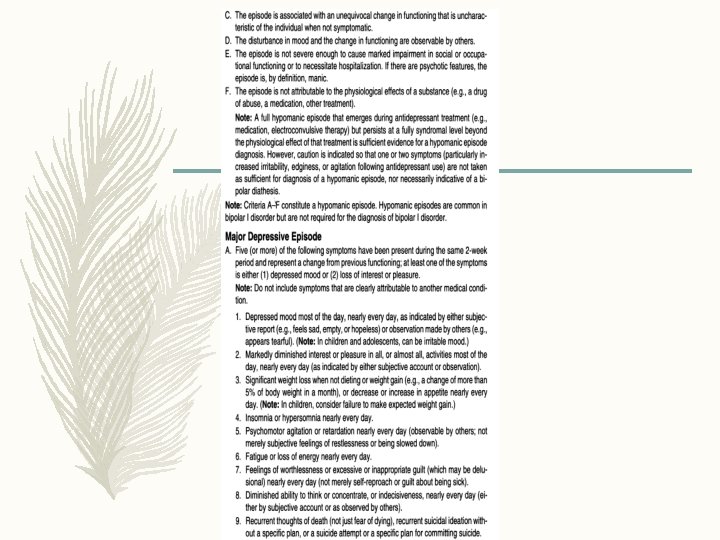
Major Depressive Disorder – occurs when at least five signs of depression (including lethargy, feelings of worthlessness, or loss of interest in family, friends, and activities) last two or more weeks and are not caused by drugs or a medical condition. – To sense what major depression feels like, suggest some clinicians, imagine combining the anguish of grief with the sluggishness of jet lag.
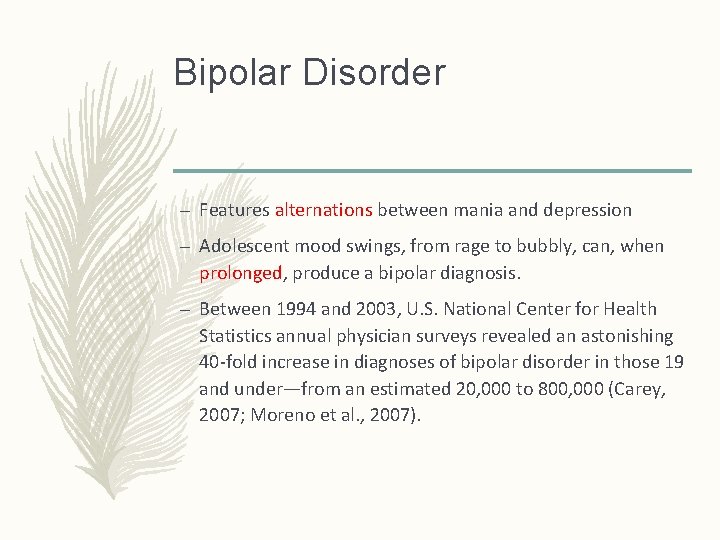
Bipolar Disorder – Features alternations between mania and depression – Adolescent mood swings, from rage to bubbly, can, when prolonged, produce a bipolar diagnosis. – Between 1994 and 2003, U. S. National Center for Health Statistics annual physician surveys revealed an astonishing 40 -fold increase in diagnoses of bipolar disorder in those 19 and under—from an estimated 20, 000 to 800, 000 (Carey, 2007; Moreno et al. , 2007).
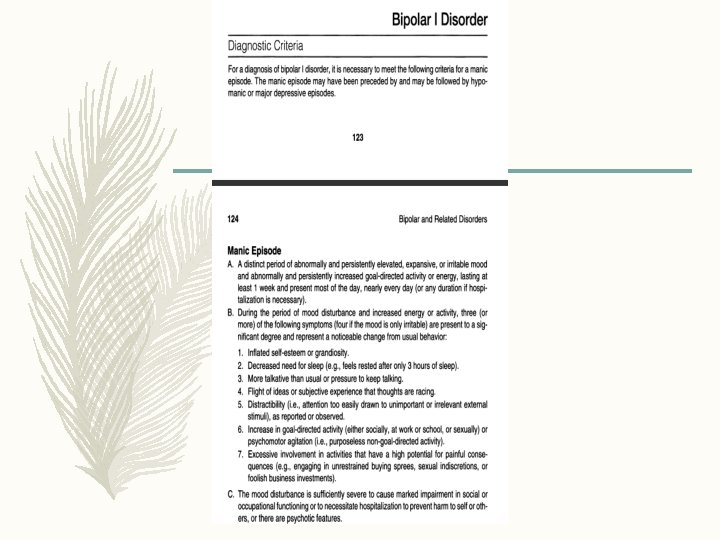
Bipolar Disorder – During the manic phase of bipolar disorder, the person is typically overtalkative, overactive, and elated (though easily irritated if crossed); has little need for sleep; and shows fewer sexual inhibitions. – Composers, artists, poets, novelists, and entertainers seem especially prone
Seasonal Affective Disorder (SAD) – Throughout the grey, bleariness of winter – some people develop a deep depression – Only lifts with oncoming spring – People tend to sleep and eat excessively – Researchers think melatonin is to blame – higher levels are indicated in the bloodstream – Treatment – sitting under bright fluorescents in morning and night
Explaining and Etiology of Mood Disorders – Genetic vulnerability – A predisposition – environmental stressors can trigger – Neurochemical factors – Serotonin and norepinephrine abnormalities – Depression thought due to decreased norepinephrine secretion
Explaining and Etiology of Mood Disorders – Psychological factors such as personality traits (such as selfesteem), amount of social support, and the ability to deal with stressful situation – Cognitive factors – I. E. depressed people tend to draw illogical conclusions about themselves, they blame themselves for normal problems and consider a minor failure to be a catastrophe – Learned helplessness – believe the he/she has no control over events in one’s life and that it is useless to try to make it better
Explaining and Etiology of Mood Disorders – Suicide and Depression – Not all people who commit suicide are depressed, and not all depressed people attempt suicide – After adolescence – women are 2 x more likely than men to experience depression. Why? – Hormonal change after pregnancy – More women report and seek help – Men try to distract themselves away from feelings
- Slides: 18