
Mood and Tone in Literature TwoColumn Notes Introduction
- Slides: 9
Mood and Tone in Literature Two-Column Notes
Introduction *Writers hope to stir emotions with their work. *Emotions can produce the mood or feeling in a piece of writing. *Mood may shift, but one mood usually prevails. *Setting affects the mood dramatically.
Introduction (Continued) *Tone describes the writer’s attitude toward his or her subject. *How do mood and tone differ? Mood refers to the reader’s response to the text, and tone refers to the feelings of the writer.
Mood *The writer may carefully select details such as descriptive words, dialogue, imagery, and setting to create a mood. *The writer may also rely on sounds and rhythms of words to convey mood. *May also use symbolism to create mood *Symbol: something that stands for something else
Mood: Your Turn Describe the mood in the excerpt. What descriptive details help create this mood? The narrator expresses a sense of danger and the need for caution. Suspense is created through repetition. The images of the spider’s web and the vulture’s eye suggest death and create a feeling of horror.
Tone *Tone: attitude the author takes toward the subject *The language and details the writer chooses to describe the characters, setting, and events help to create the tone. *Tone often reflects the author’s purpose.
Tone: Your Turn What attitude does Poe express about the speaker in the first tone excerpt? The narrator’s insistence that he is not mad (although he clearly is) suggests that Poe finds him pathetic but sympathetic. Poe feels sorry for the character’s torment because the character claims to hear what is happening in hell.
Tone: Your Turn In the second excerpt, what tone or attitude does the poet reveal? The speaker reveals that she is a widow and feels terrible about not being able to clothe her son properly. The poet’s attitude toward the speaker is one of sympathy and respect for her suffering.
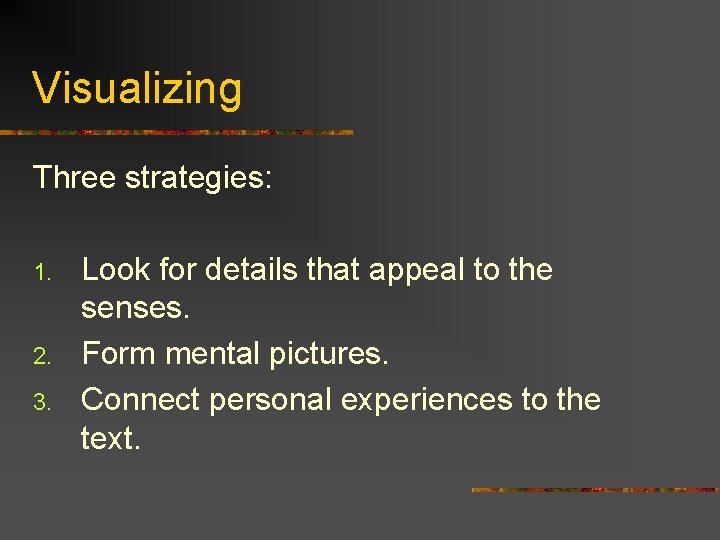
Visualizing Three strategies: 1. 2. 3. Look for details that appeal to the senses. Form mental pictures. Connect personal experiences to the text.