
MONTH APRIL TOPIC NUCLEAR POWER PLANT CLASS X

- Slides: 33
MONTH – APRIL TOPIC – NUCLEAR POWER PLANT CLASS - X Prepared by M. S Anwar TGT WET
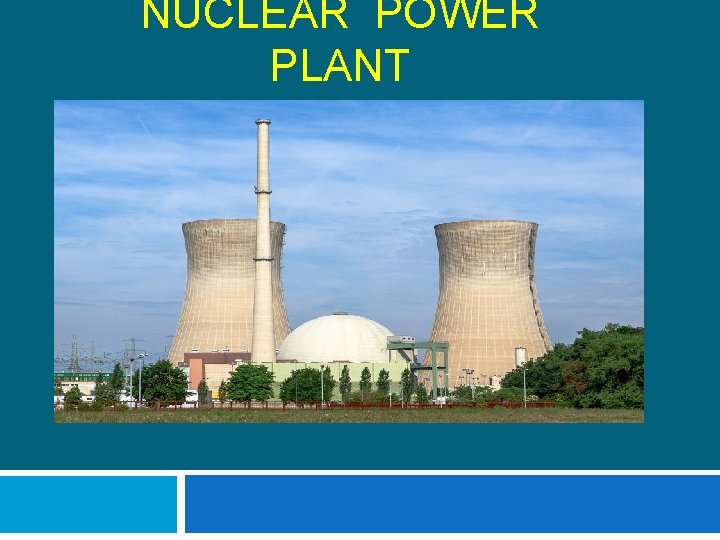
NUCLEAR POWER PLANT
CONTENTS q q q q Introduction Schematic diagram Nuclear plant layouts Nuclear chain reaction Nuclear fission… Important stages and equipments Advantages and Disadvantages Major Nuclear plants in India
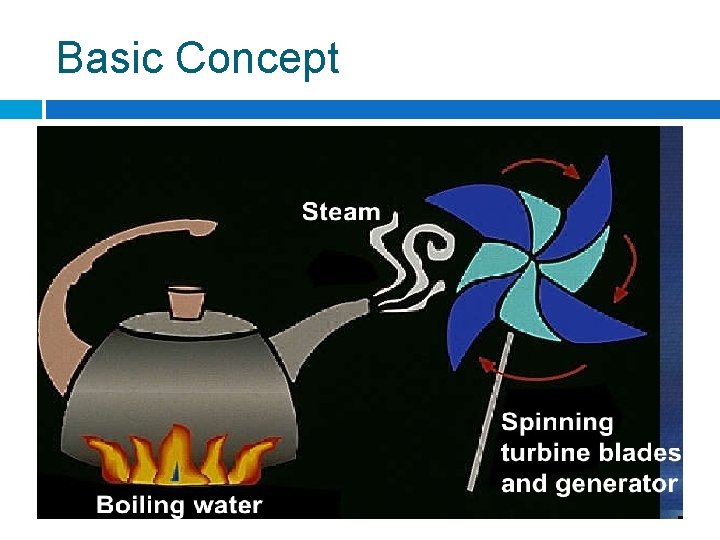
Basic Concept
Introduction q A nuclear power plant works in a similar way as a thermal power plant. The difference between the two is in the type of fuel they use to heat water in the boiler(steam generator). q Inside a nuclear power plant, energy is released by nuclear fission in the core of the reactor. q 1 kg of Uranium U 235 can produce as much energy as the burning of 4500 ton of high grade variety of coal.
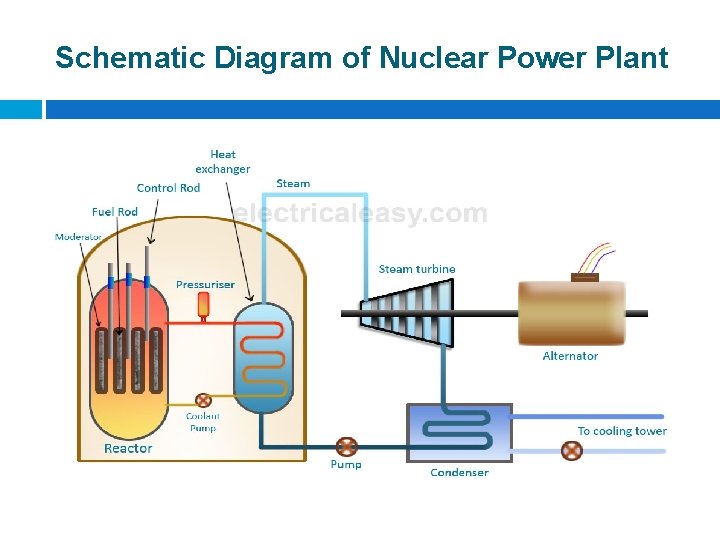
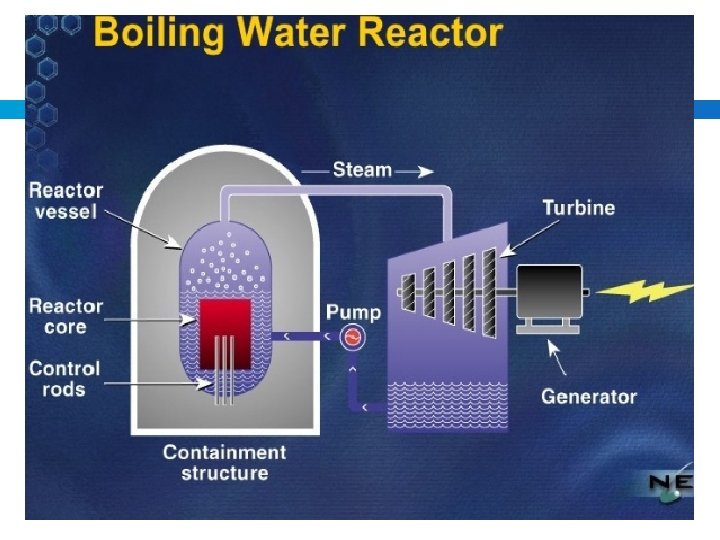
Schematic Diagram of Nuclear Power Plant
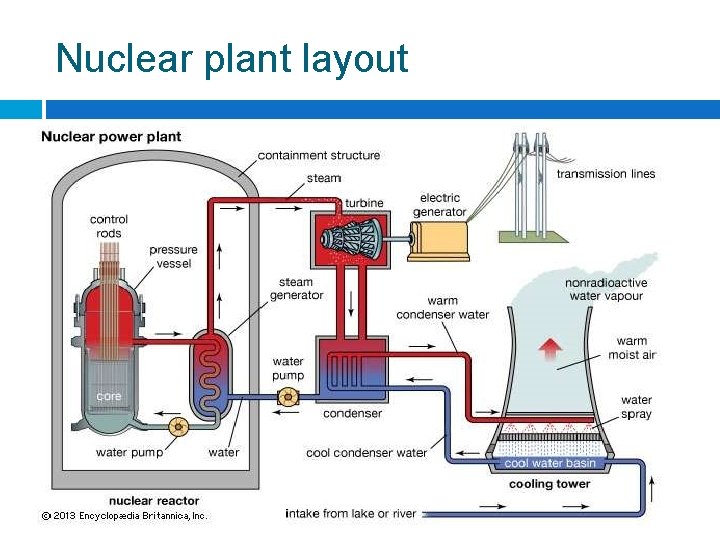
Nuclear plant layout
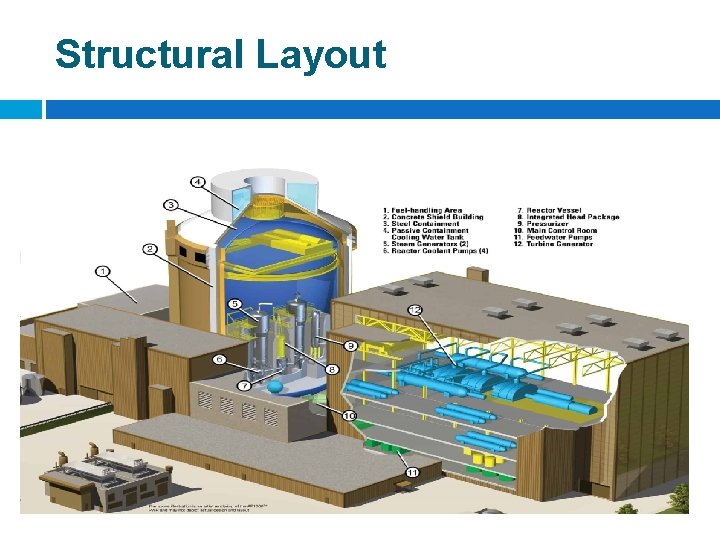
Structural Layout
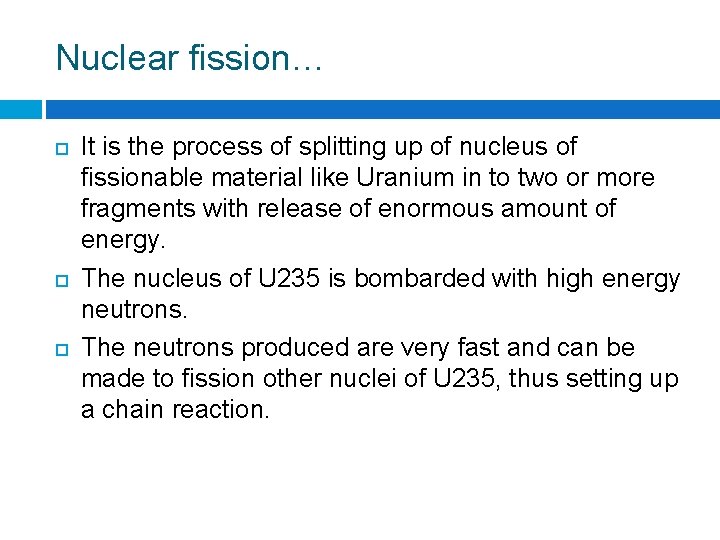
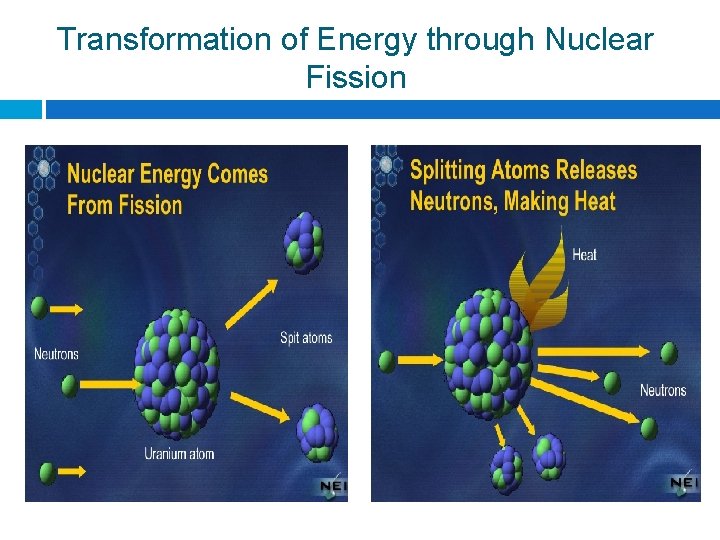
Nuclear fission… It is the process of splitting up of nucleus of fissionable material like Uranium in to two or more fragments with release of enormous amount of energy. The nucleus of U 235 is bombarded with high energy neutrons. The neutrons produced are very fast and can be made to fission other nuclei of U 235, thus setting up a chain reaction.
Transformation of Energy through Nuclear Fission
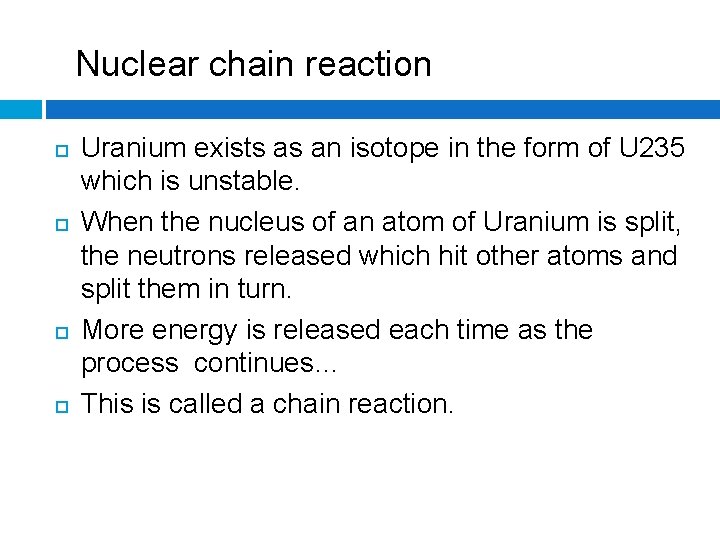
Nuclear chain reaction Uranium exists as an isotope in the form of U 235 which is unstable. When the nucleus of an atom of Uranium is split, the neutrons released which hit other atoms and split them in turn. More energy is released each time as the process continues… This is called a chain reaction.
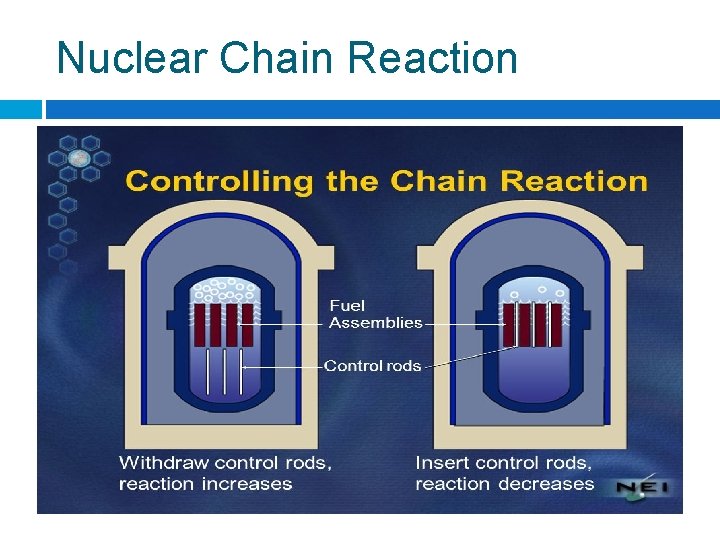
Nuclear Chain Reaction
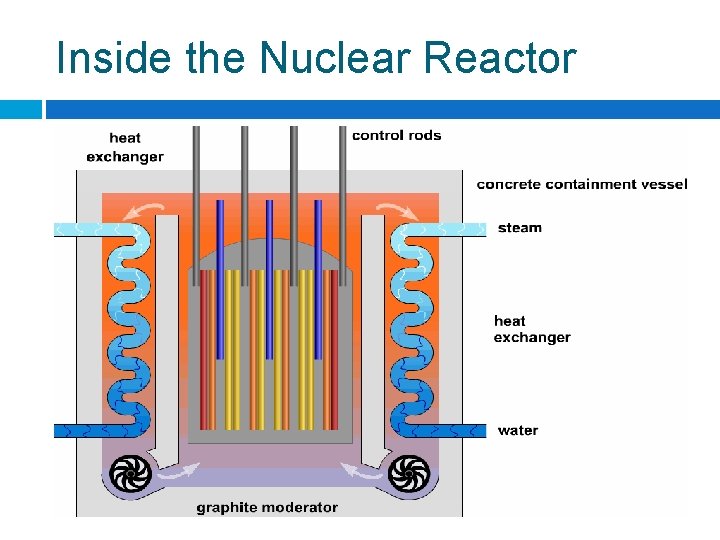
Inside the Nuclear Reactor
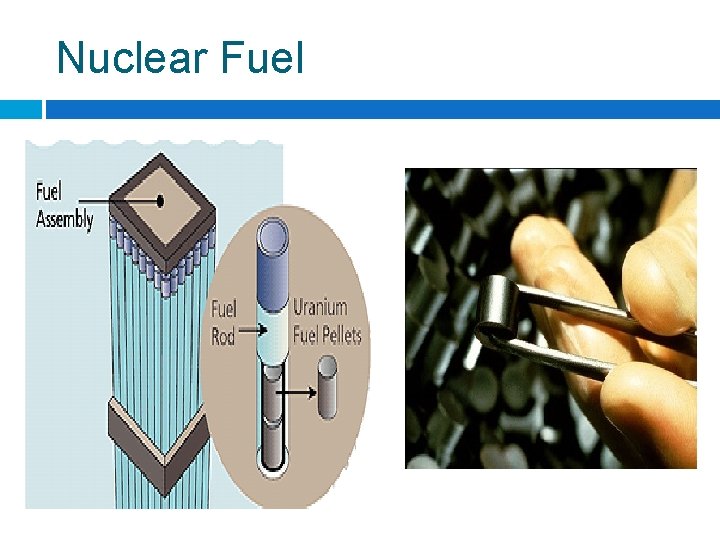
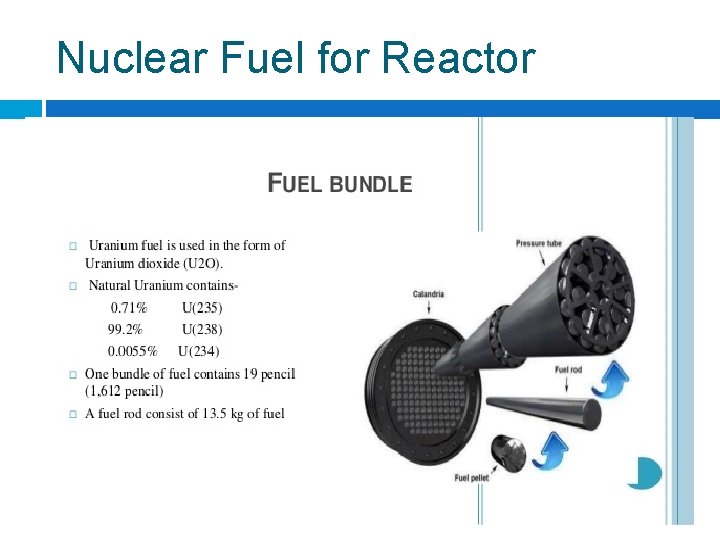
Nuclear Fuel The fissionable material used in the reactor is called a nuclear fuel. The commonly used nuclear fuels are Uranium, Plutonium or Thorium. It can be U-235, U-238, Pu-236 or Th-232. Uranium is mostly preferred as it has high melting point. Following the enrichment process, uranium becomes a very concentrated fuel.
Nuclear Fuel
Nuclear Fuel for Reactor
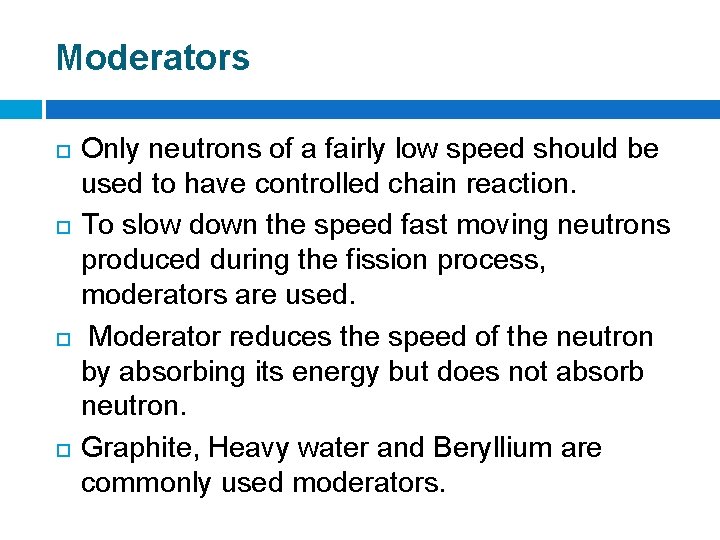
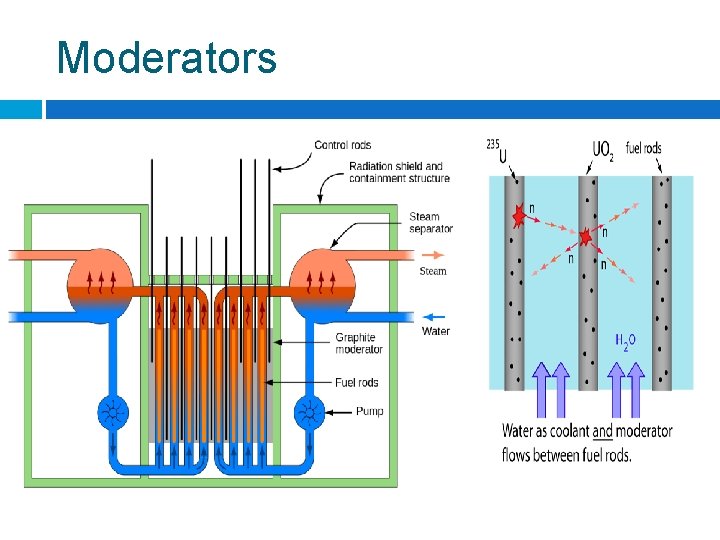
Moderators Only neutrons of a fairly low speed should be used to have controlled chain reaction. To slow down the speed fast moving neutrons produced during the fission process, moderators are used. Moderator reduces the speed of the neutron by absorbing its energy but does not absorb neutron. Graphite, Heavy water and Beryllium are commonly used moderators.
Moderators
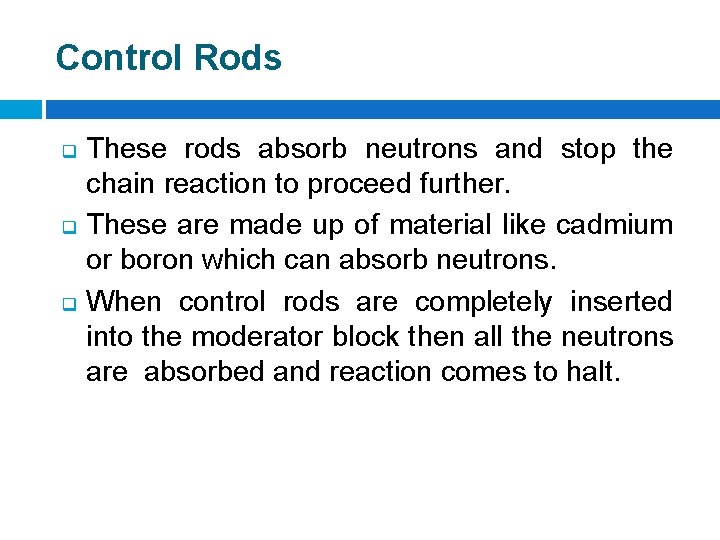
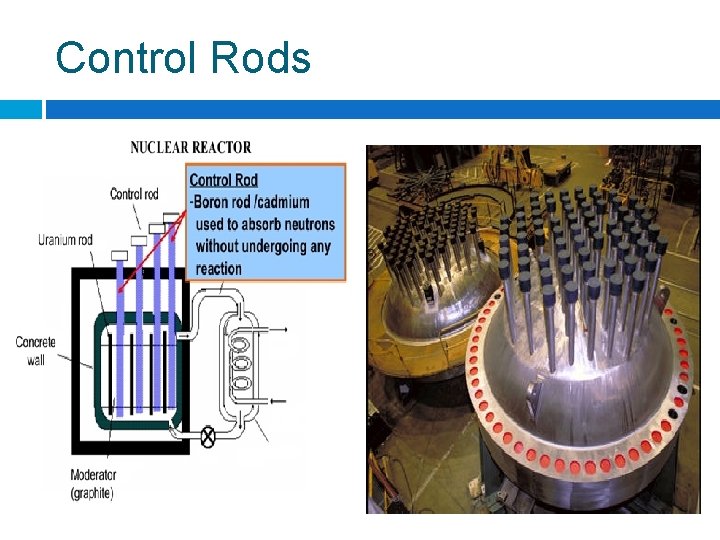
Control Rods q q q These rods absorb neutrons and stop the chain reaction to proceed further. These are made up of material like cadmium or boron which can absorb neutrons. When control rods are completely inserted into the moderator block then all the neutrons are absorbed and reaction comes to halt.
Control Rods
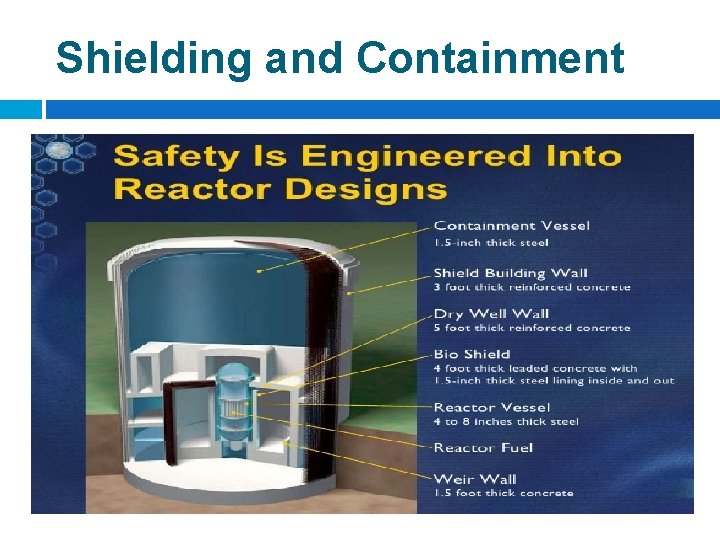
Shielding and Containment q q q Shielding prevents radiations to reach outside the reactor. Lead blocks and concrete enclosure that is strong enough of several meters thickness are used for shielding. Nuclear reactors are encased in heavily reinforced concrete structures to prevent radioactivity escaping in to the atmosphere.
Shielding and Containment
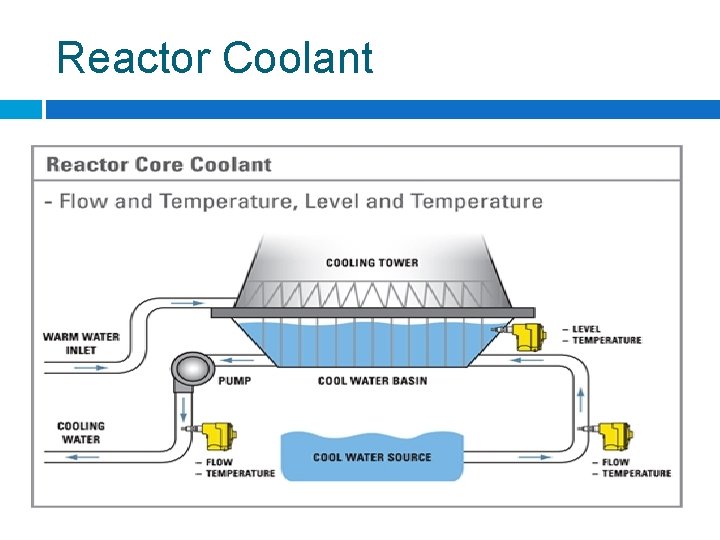
Coolant The coolant is substance in a pipe to the steam generator where water is boiled. This is where heat-exchange process occurs. Heat is absorbed by the coolant that is produced in the reactor. Typical coolants are water, carbon dioxide gas or liquid sodium.
Reactor Coolant
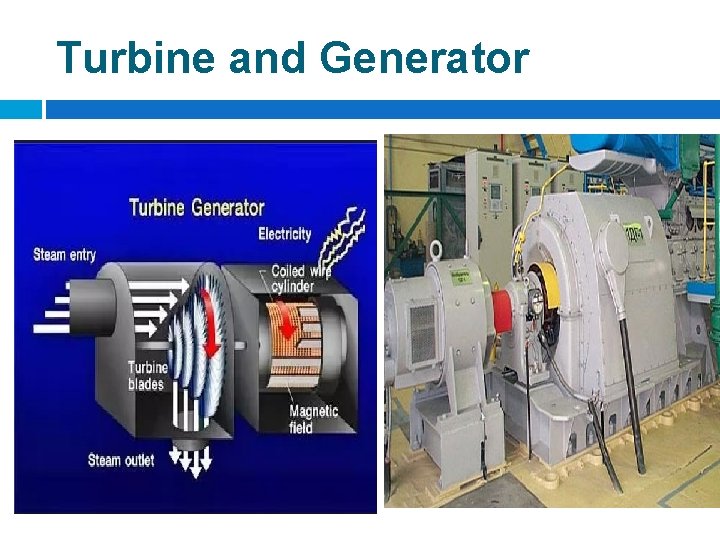
Turbine and Generator Steam produced in the boiler is now passes to a turbine. The force of the steam jet causes the turbine to rotate. Heat energy (steam) is converted to mechanical energy (moving turbine). The generator consists of coils that change the mechanical energy into electric energy. The turbine moves and the change in magnetic flux produce electricity. Which is transmitted to substations for distribution of electric power.
Turbine and Generator
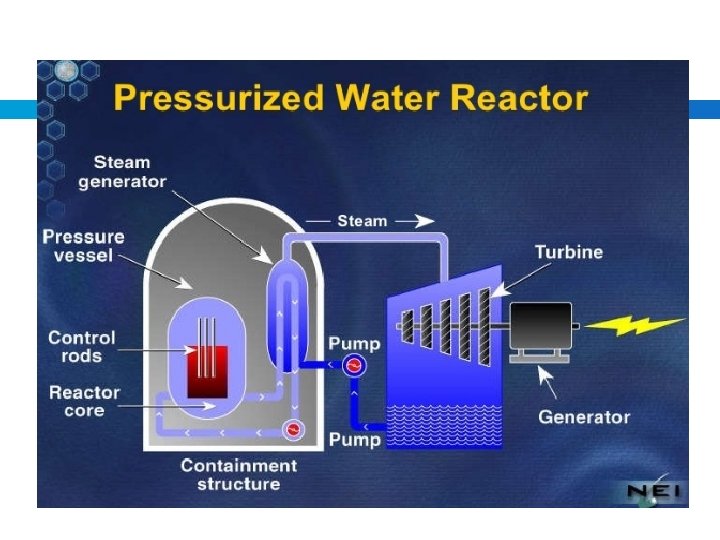
Types of reactors used in Nuclear power plants Pressurised Water Reactor (PWR) Boiling Water Reactor (BWR) Pressurised Heavy Water Reactor (PHWR) Advanced Gas-cooled Reactor (AGR) Light water graphite-moderated reactor Fast neutron reactors (FNR)
Advantages of Nuclear Power The nuclear power plants produce energy without the emission of poisonous gases like carbon dioxide, sulphur dioxide etc. The nuclear waste is confined and small in amount than fossil fuels waste. The nuclear power source is reliable and safe source of power.
Disadvantages Radioactive Waste: The waste produced by nuclear reactors needs to be disposed off at a safe place since they are extremely hazardous and can leak radiations if not stored properly. q Nuclear Accidents: Even small radiation leaks can cause devastating effects. People who work at nuclear power plants and live near those areas are at high risk of facing nuclear radiations, if it happens. q High Cost: Another practical disadvantage of using nuclear energy is that it needs a lot of investment to set up a nuclear power station. q Fuel Availability: Uranium is very scare resource and exist in only few countries of the world.