
Monopoly Monopoly Market Characteristics One firm produces the




- Slides: 32
Monopoly
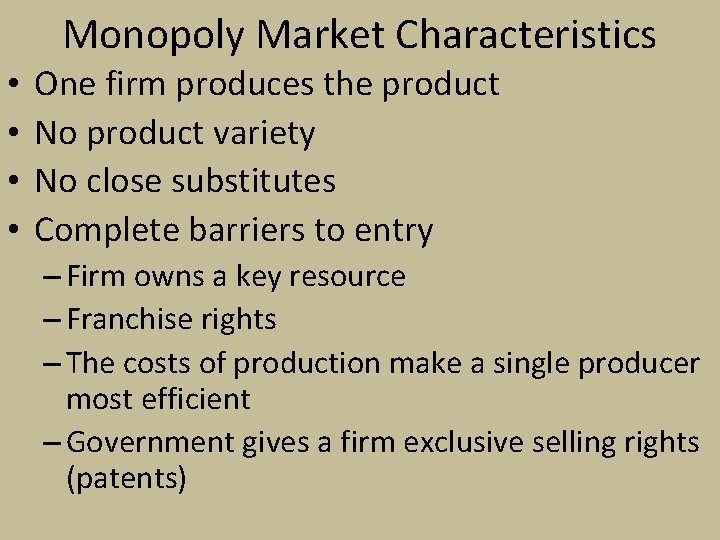
Monopoly Market Characteristics • • One firm produces the product No product variety No close substitutes Complete barriers to entry – Firm owns a key resource – Franchise rights – The costs of production make a single producer most efficient – Government gives a firm exclusive selling rights (patents)
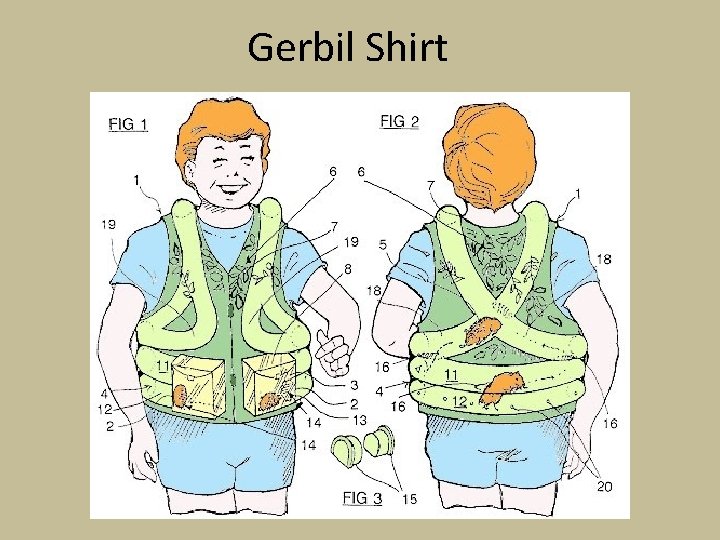
Gerbil Shirt
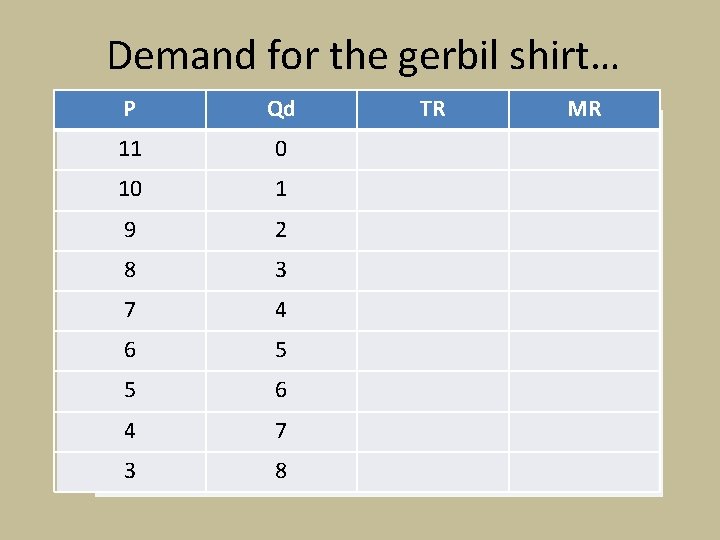
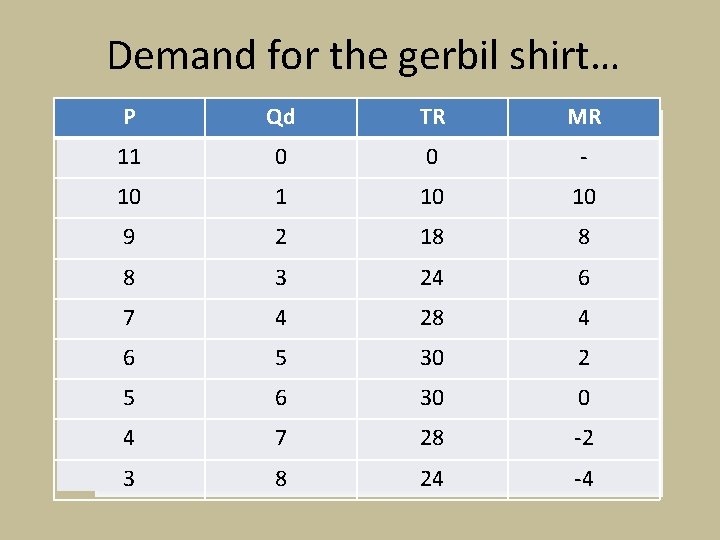
Demand for the gerbil shirt… P Qd 11 0 10 1 9 2 8 3 7 4 6 5 5 6 4 7 3 8 TR MR
Demand for the gerbil shirt… P Qd TR MR 11 0 0 - 10 10 9 2 18 8 8 3 24 6 7 4 28 4 6 5 30 2 5 6 30 0 4 7 28 -2 3 8 24 -4
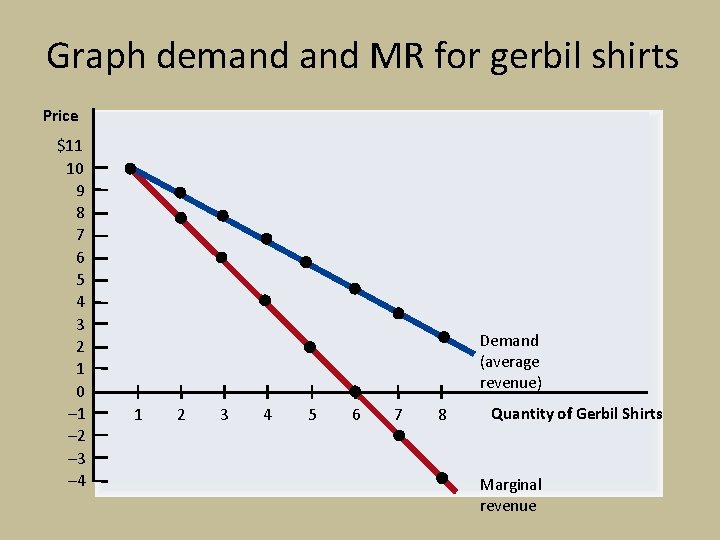
Graph demand MR for gerbil shirts Price $11 10 9 8 7 6 5 4 3 2 1 0 – 1 – 2 – 3 – 4 Demand (average revenue) 1 2 3 4 5 6 7 8 Quantity of Gerbil Shirts Marginal revenue
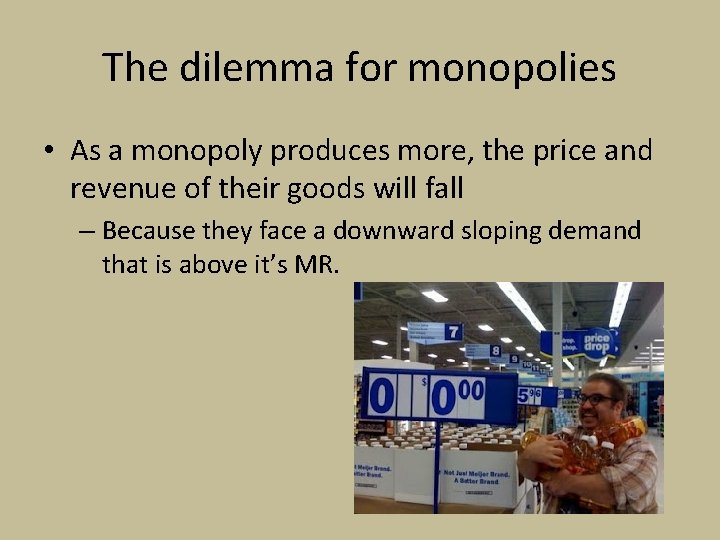
The dilemma for monopolies • As a monopoly produces more, the price and revenue of their goods will fall – Because they face a downward sloping demand that is above it’s MR.
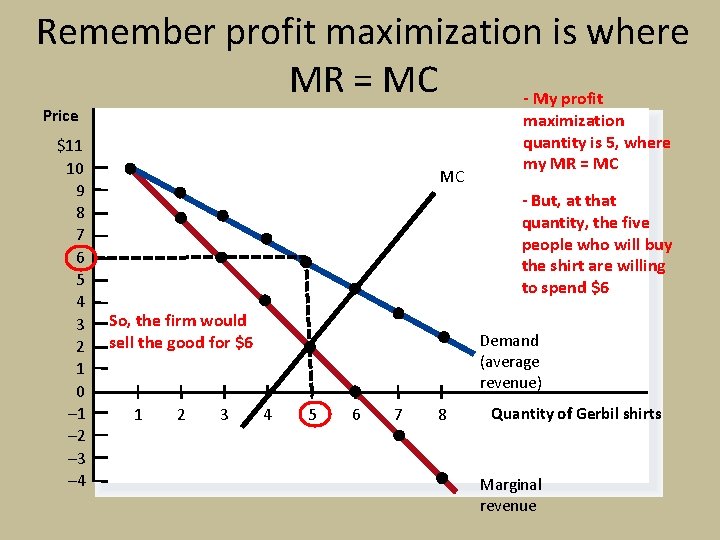
How do Monopolies Maximize Profits? • The same as all other firms! – Produce where MR = MC – Set the maximum prices that consumer are willing to spend (the price at the demand curve).
So let’s go back to the main question, how do I maximize my profits!? !?
Remember profit maximization is where MR = MC - My profit Price $11 10 9 8 7 6 5 4 3 2 1 0 – 1 – 2 – 3 – 4 MC maximization quantity is 5, where my MR = MC - But, at that quantity, the five people who will buy the shirt are willing to spend $6 So, the firm would sell the good for $6 1 2 3 Demand (average revenue) 4 5 6 7 8 Quantity of Gerbil shirts Marginal revenue
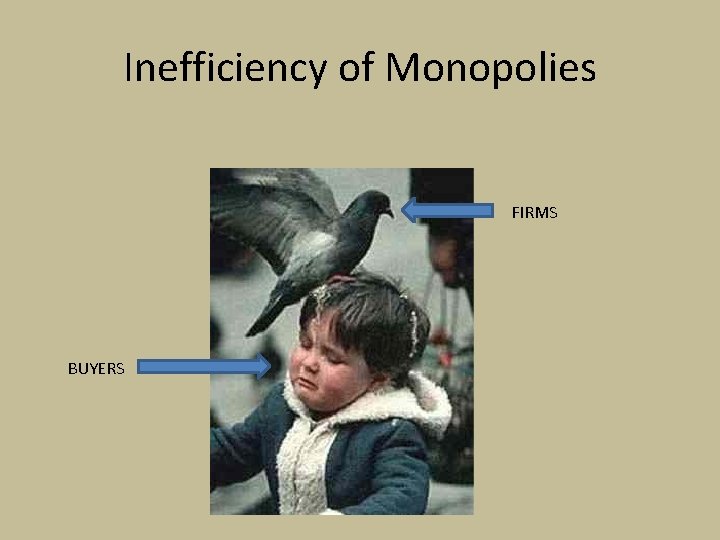
Inefficiency of Monopolies FIRMS BUYERS
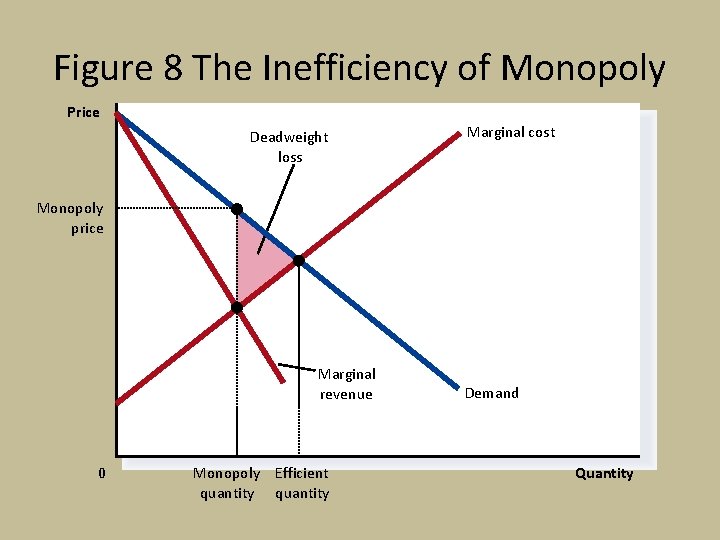
The Deadweight Loss • A monopoly sets a price above its MC – Price is higher than the market price – Quantity is lower than the market quantity – This causes markets to be inefficient • Deadweight loss • Firm produces less than what the market wants
Figure 8 The Inefficiency of Monopoly Price Deadweight loss Marginal cost Monopoly price Marginal revenue 0 Monopoly Efficient quantity Demand Quantity
Review: Monopoly Key Concepts • Monopolies are able to charge a higher price because they have high market power • MR is below demand • The price that a monopoly sets is equal to the demand at the profit maximizing production level (MR=MC) • P > MC • Monopolies cause inefficient markets – Produce less at a higher price
Price Discrimination
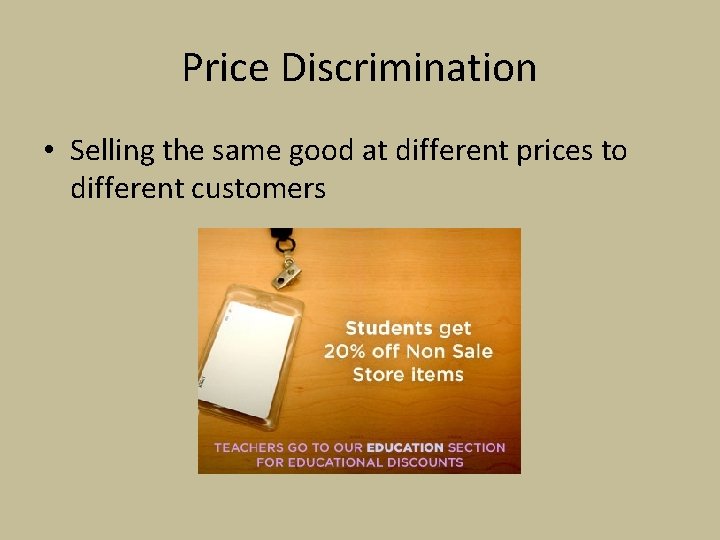
Price Discrimination • Selling the same good at different prices to different customers
Price Discrimination • Selling the same good at different prices to different customers • This can be done only if a firm: – Has market power – Can separate consumers into groups – Can prevent resale between consumers
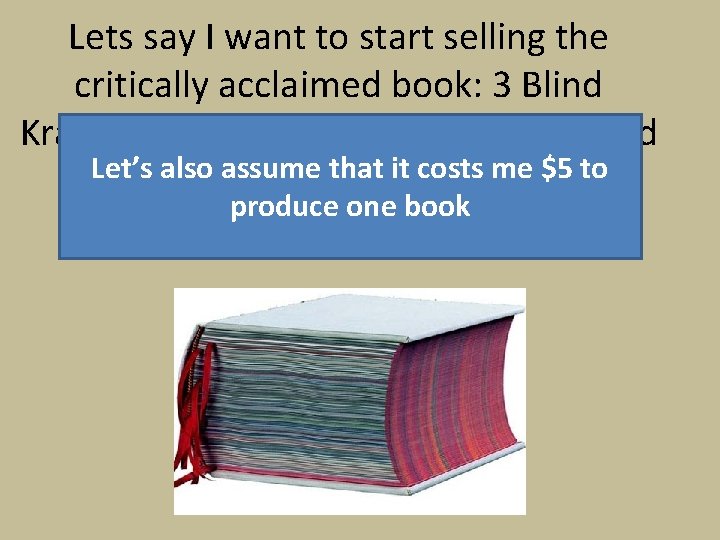
Lets say I want to start selling the critically acclaimed book: 3 Blind Kraus(e): A Tale of Physics, Military and Let’s also assume that it costs me $5 to Street Law produce one book
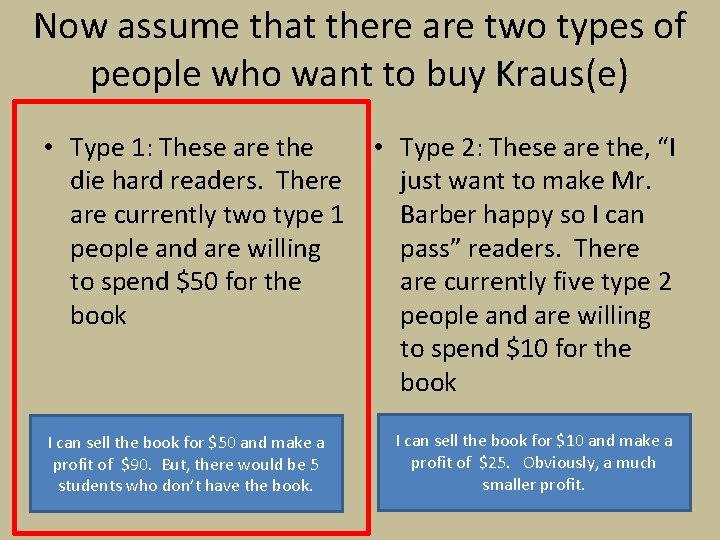
Now assume that there are two types of people who want to buy Kraus(e) • Type 1: These are the die hard readers. There are currently two type 1 people and are willing to spend $50 for the book I can sell the book for $50 and make a profit of $90. But, there would be 5 students who don’t have the book. • Type 2: These are the, “I just want to make Mr. Barber happy so I can pass” readers. There are currently five type 2 people and are willing to spend $10 for the book I can sell the book for $10 and make a profit of $25. Obviously, a much smaller profit.
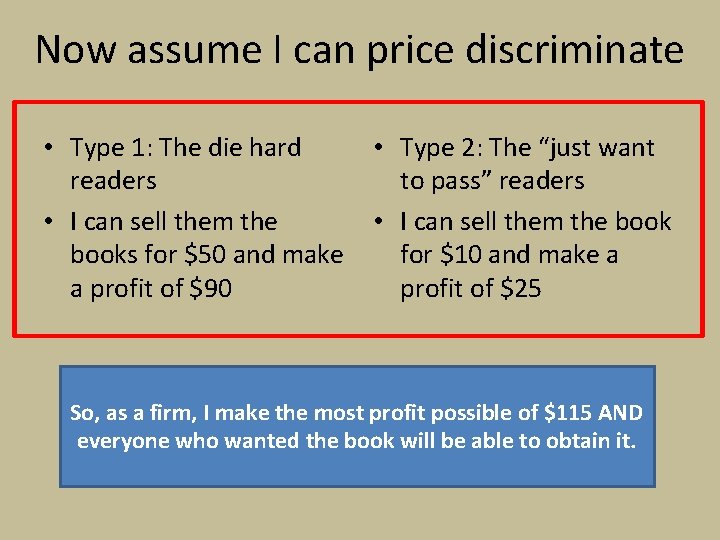
Now assume I can price discriminate • Type 1: The die hard readers • I can sell them the books for $50 and make a profit of $90 • Type 2: The “just want to pass” readers • I can sell them the book for $10 and make a profit of $25 So, as a firm, I make the most profit possible of $115 AND everyone who wanted the book will be able to obtain it.
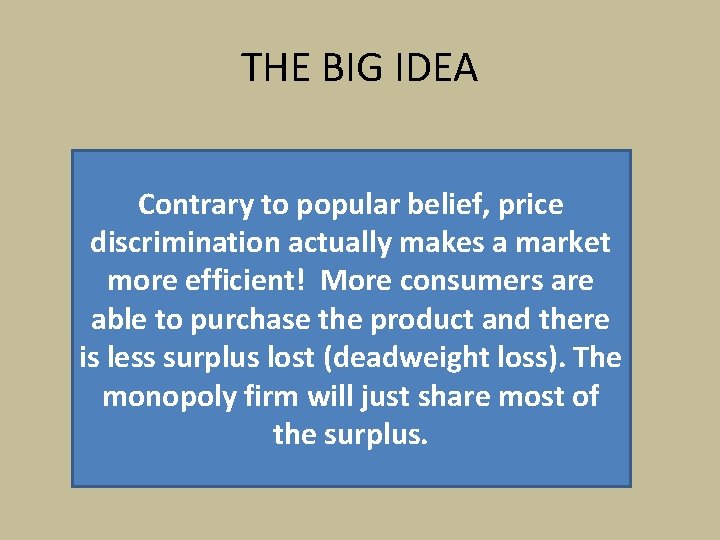
THE BIG IDEA Contrary to popular belief, price discrimination actually makes a market more efficient! More consumers are able to purchase the product and there is less surplus lost (deadweight loss). The monopoly firm will just share most of the surplus.
Final Question If a firm can PERFECTLY price discriminate, who would obtain all of the surplus?
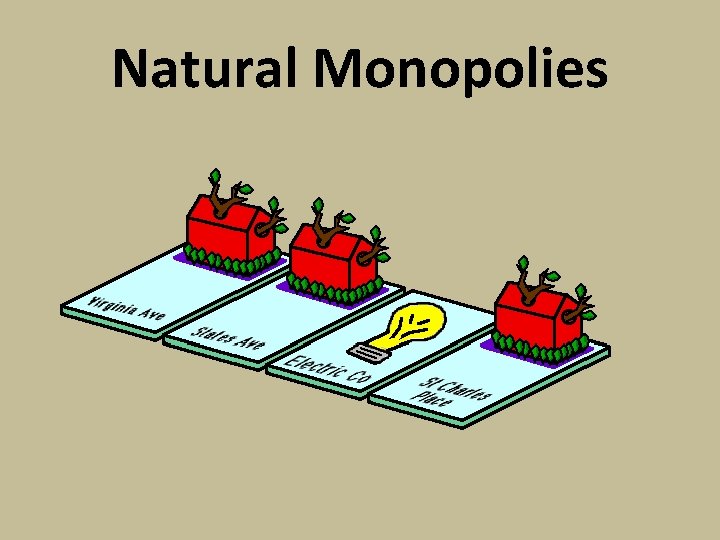
Natural Monopolies
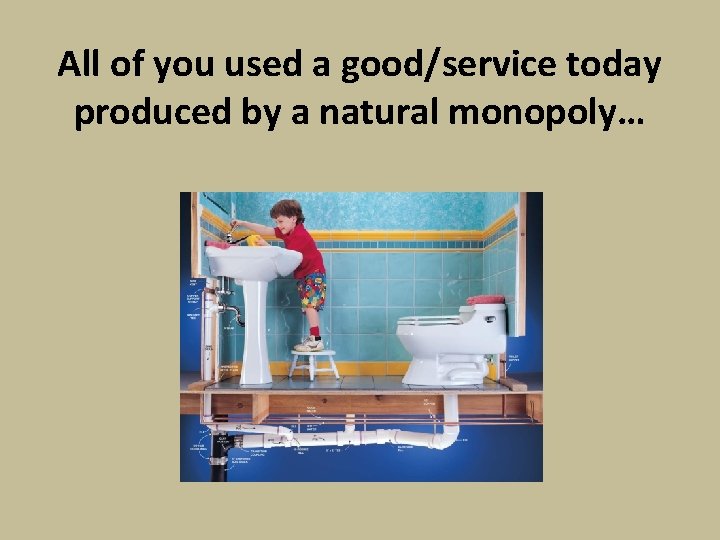
All of you used a good/service today produced by a natural monopoly…
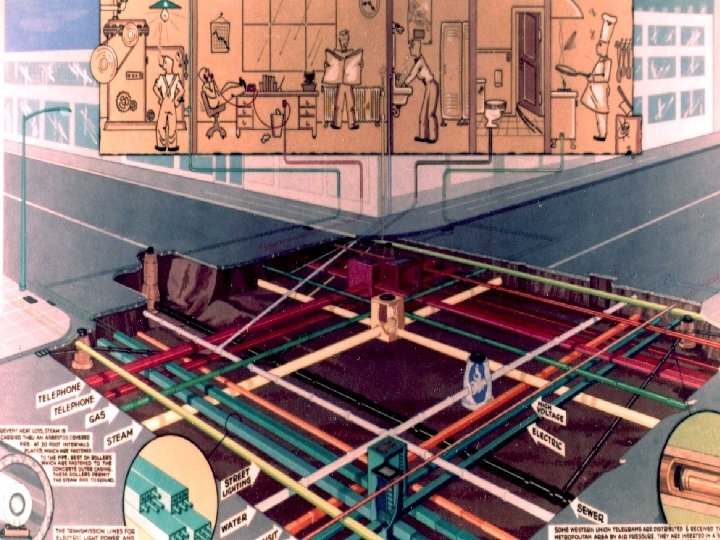
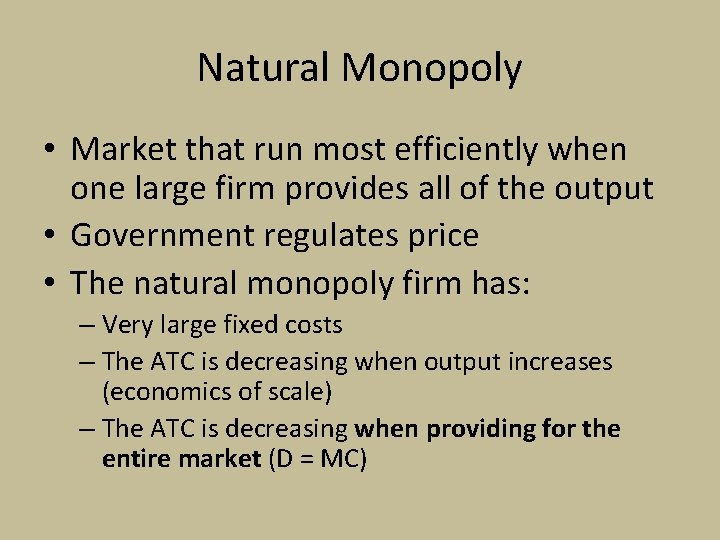
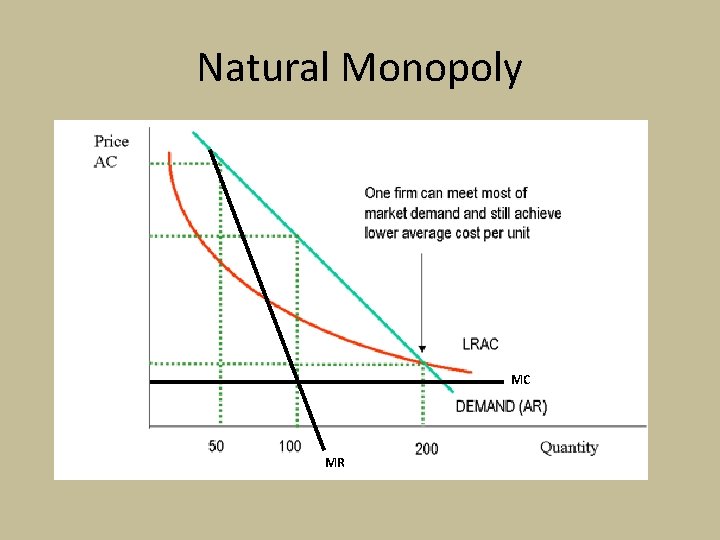
Natural Monopoly • Market that run most efficiently when one large firm provides all of the output • Government regulates price • The natural monopoly firm has: – Very large fixed costs – The ATC is decreasing when output increases (economics of scale) – The ATC is decreasing when providing for the entire market (D = MC)
Natural Monopoly MC MR
Regulating Natural Monopolies • The government sets the price and quantity • The regulated price is where the natural monopoly earns normal profit (price = ATC) – Still not efficient (but more efficient than the unregulated monopoly)
Natural Monopoly Examples • Public Water • Electricity • Cable companies!!