
Monopolistic Competition Chapter 17 Pages 373 386 4
- Slides: 9
Monopolistic Competition Chapter 17 Pages 373 -386
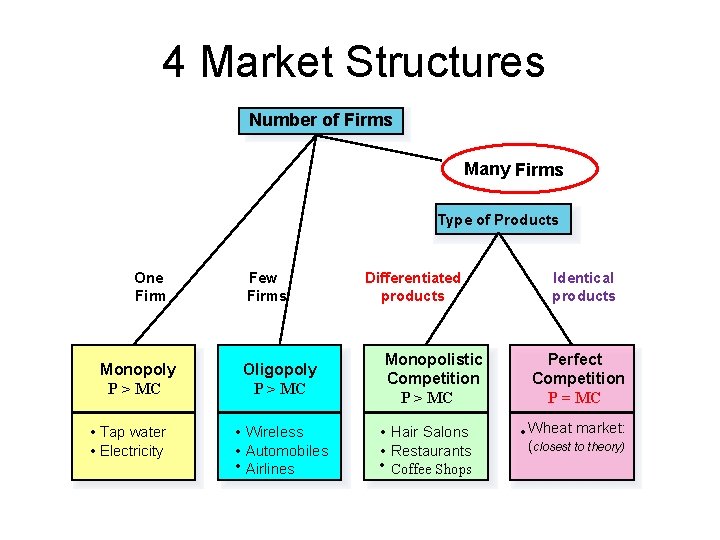
4 Market Structures Number of Firms Many Firms Type of Products One Firm Monopoly P > MC • Tap water • Electricity Few Firms Oligopoly P > MC • Wireless • Automobiles • Airlines Differentiated products Monopolistic Competition P > MC • Hair Salons • Restaurants • Coffee Shops Identical products Perfect Competition P = MC • Wheat market: (closest to theory)
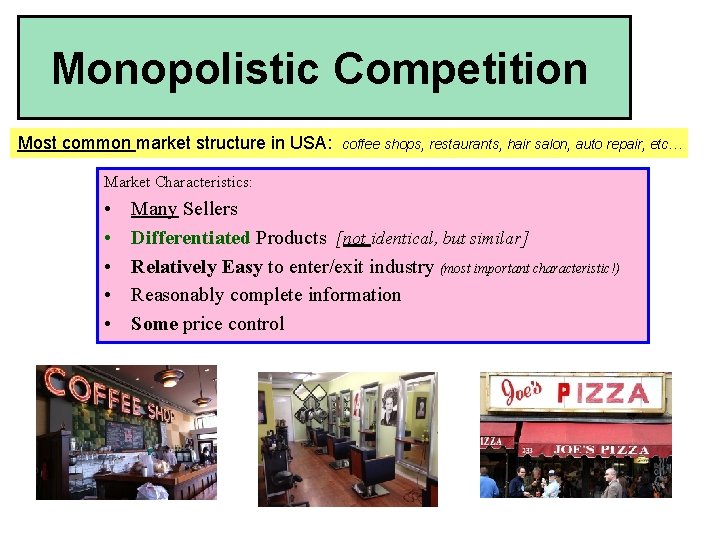
Monopolistic Competition Most common market structure in USA: coffee shops, restaurants, hair salon, auto repair, etc… Market Characteristics: • • • Many Sellers Differentiated Products [not identical, but similar] Relatively Easy to enter/exit industry (most important characteristic!) Reasonably complete information Some price control
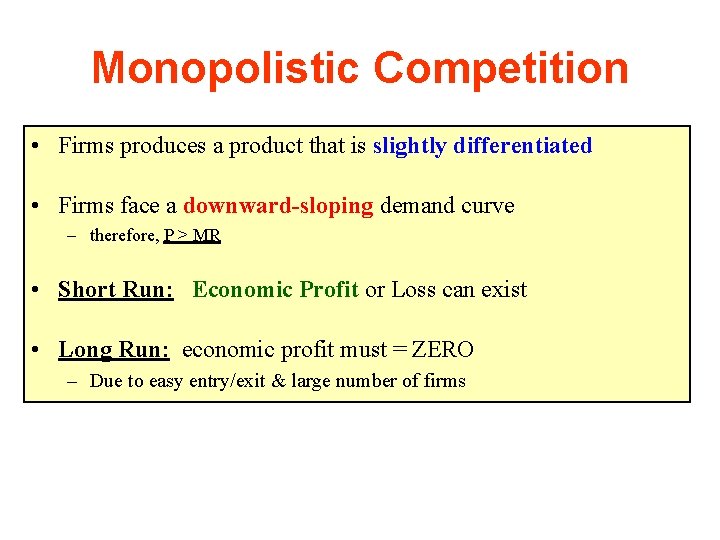
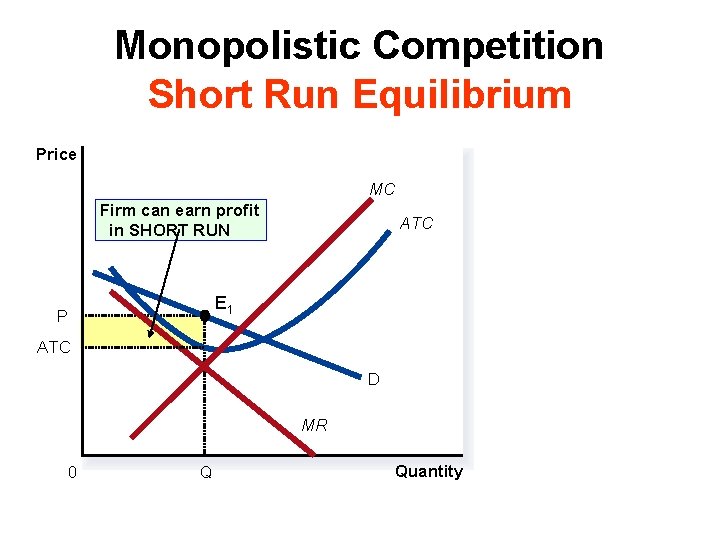
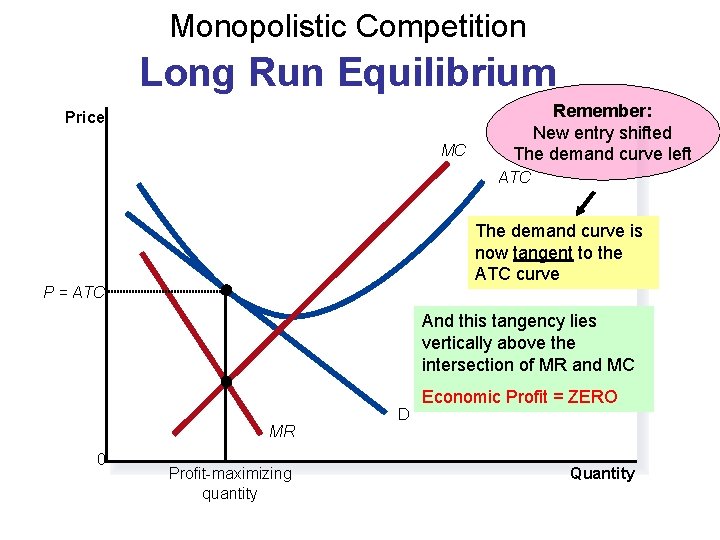
Monopolistic Competition • Firms produces a product that is slightly differentiated • Firms face a downward-sloping demand curve – therefore, P > MR • Short Run: Economic Profit or Loss can exist • Long Run: economic profit must = ZERO – Due to easy entry/exit & large number of firms
Monopolistic Competition Short Run Equilibrium Price MC Firm can earn profit in SHORT RUN ATC E 1 P ATC D MR 0 Q Quantity
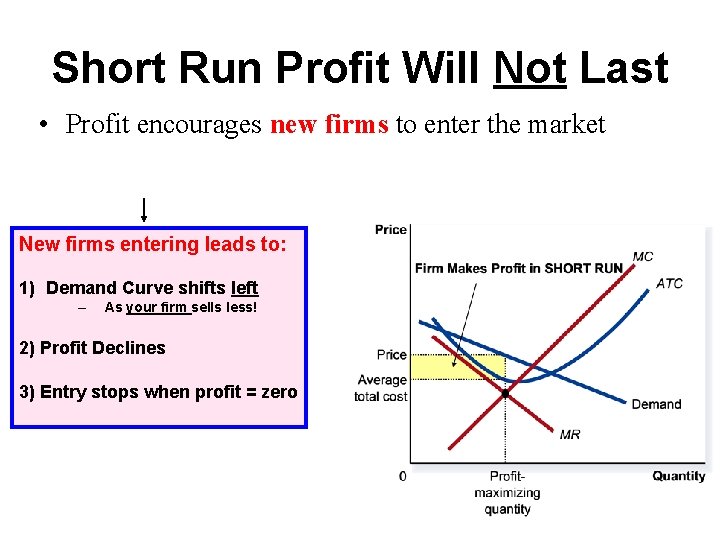
Short Run Profit Will Not Last • Profit encourages new firms to enter the market New firms entering leads to: 1) Demand Curve shifts left – As your firm sells less! 2) Profit Declines 3) Entry stops when profit = zero
Monopolistic Competition Long Run Equilibrium Price MC Remember: New entry shifted The demand curve left ATC The demand curve is now tangent to the ATC curve P = ATC And this tangency lies vertically above the intersection of MR and MC MR 0 Profit-maximizing quantity D Economic Profit = ZERO Quantity
Worksheet • Monopolistic Competition
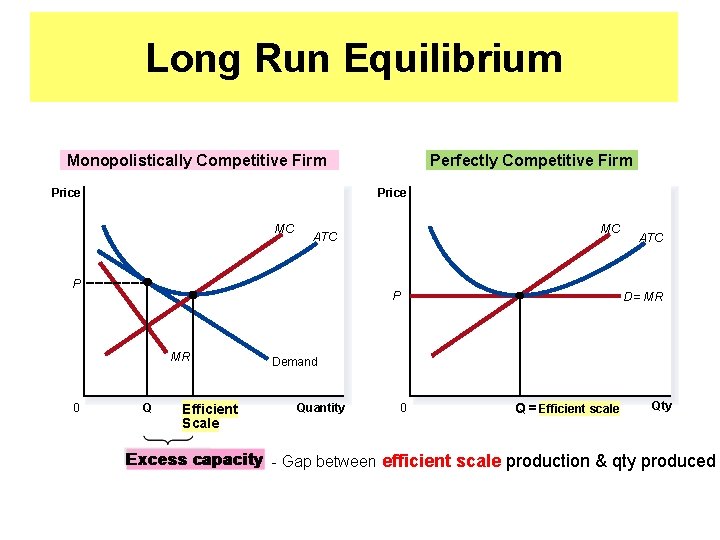
Long Run Equilibrium Monopolistically Competitive Firm Price MC MC ATC P P MR 0 Perfectly Competitive Firm Q Efficient Scale ATC D = MR Demand Quantity 0 Q = Efficient scale Qty - Gap between efficient scale production & qty produced