
Monopolistic Competition and Oligopoly ECONOMICS Principles and Applications
- Slides: 9
Monopolistic Competition and Oligopoly ECONOMICS: Principles and Applications 3 e HALL & LIEBERMAN © 2005 Thomson Business and Professional Publishing
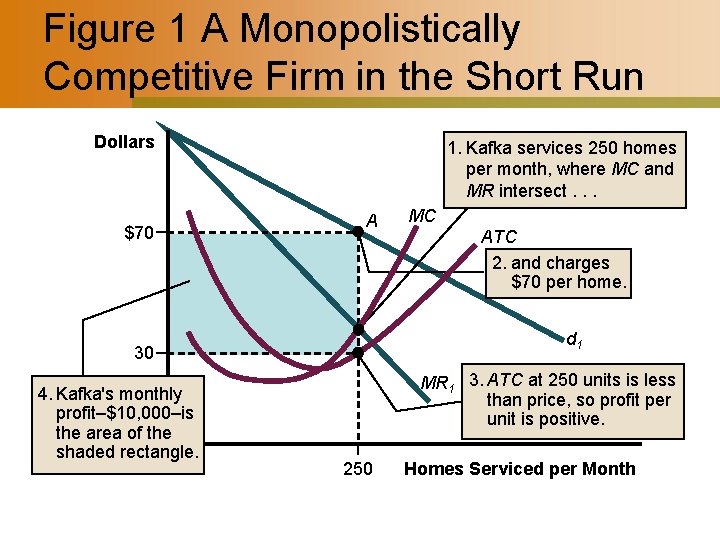
Figure 1 A Monopolistically Competitive Firm in the Short Run Dollars $70 1. Kafka services 250 homes per month, where MC and MR intersect. . . A ATC 2. and charges $70 per home. d 1 30 4. Kafka's monthly profit–$10, 000–is the area of the shaded rectangle. MC MR 1 3. ATC at 250 units is less than price, so profit per unit is positive. 250 Homes Serviced per Month
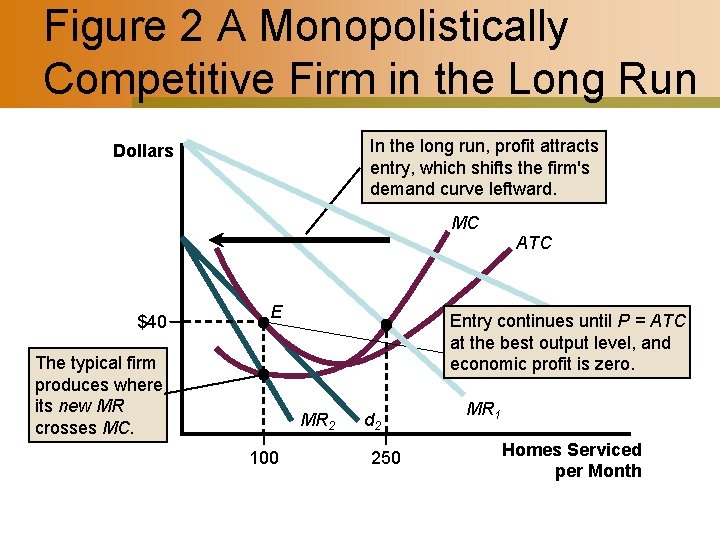
Figure 2 A Monopolistically Competitive Firm in the Long Run In the long run, profit attracts entry, which shifts the firm's demand curve leftward. Dollars MC $40 E The typical firm produces where its new MR crosses MC. Entry continues until P = ATC at the best output level, and d economic profit is zero. 1 MR 2 100 ATC d 2 250 MR 1 Homes Serviced per Month
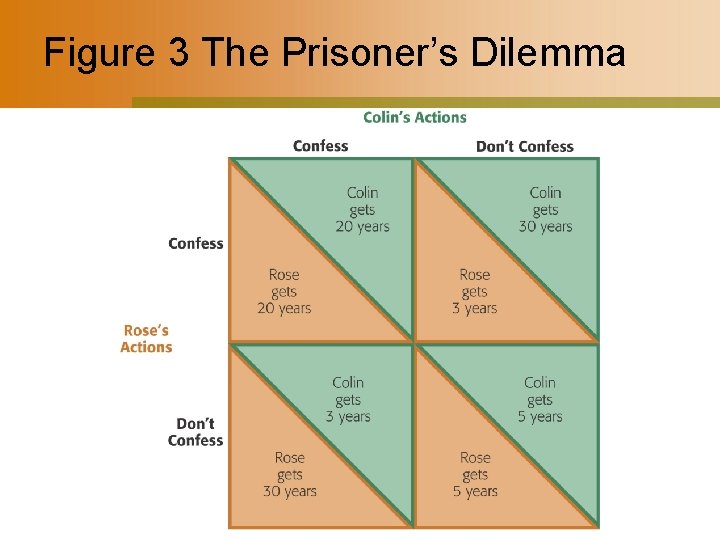
Figure 3 The Prisoner’s Dilemma
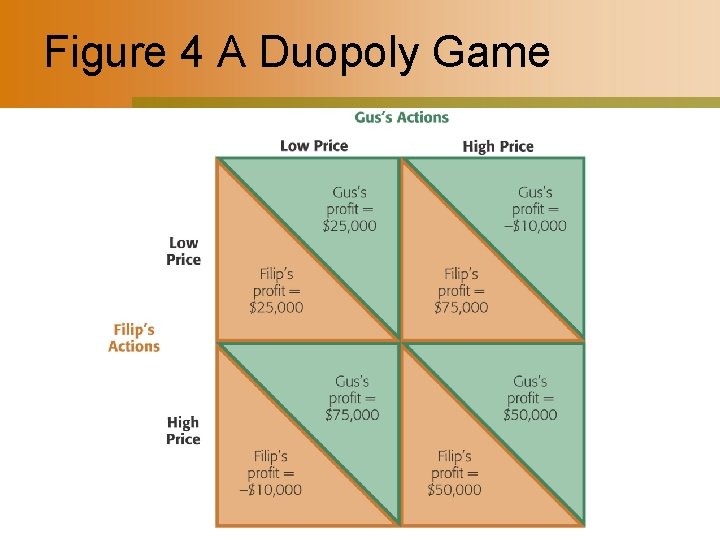
Figure 4 A Duopoly Game
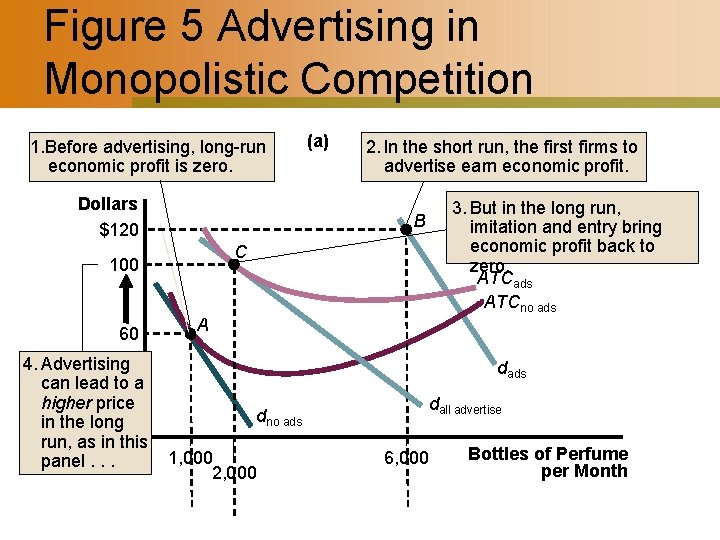
Figure 5 Advertising in Monopolistic Competition 1. Before advertising, long-run economic profit is zero. Dollars $120 4. Advertising can lead to a higher price in the long run, as in this panel. . . 2. In the short run, the first firms to advertise earn economic profit. 3. But in the long run, imitation and entry bring economic profit back to zero. ATCads ATCno ads B C 100 60 (a) A dads dno ads 1, 000 2, 000 dall advertise 6, 000 Bottles of Perfume per Month
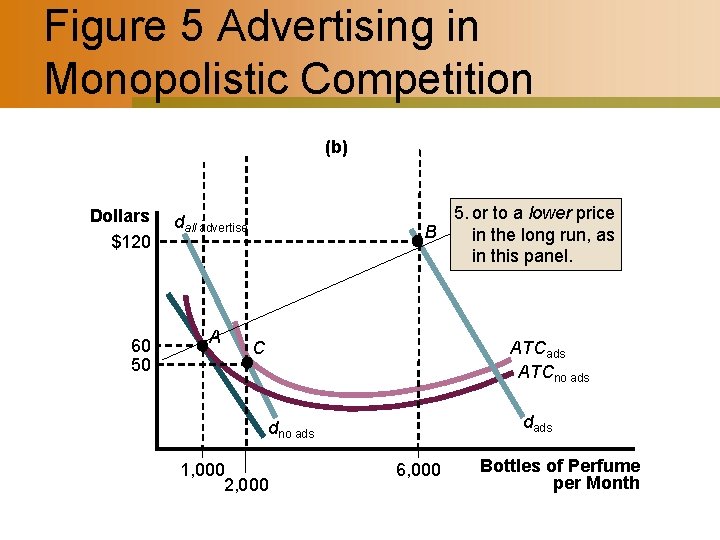
Figure 5 Advertising in Monopolistic Competition (b) Dollars $120 60 50 5. or to a lower price B in the long run, as in this panel. dall advertise A C ATCads ATCno ads dno ads 1, 000 2, 000 6, 000 Bottles of Perfume per Month
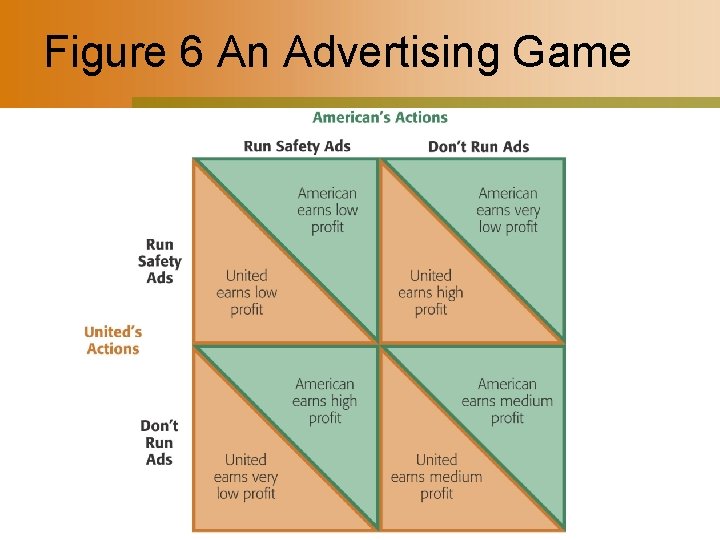
Figure 6 An Advertising Game
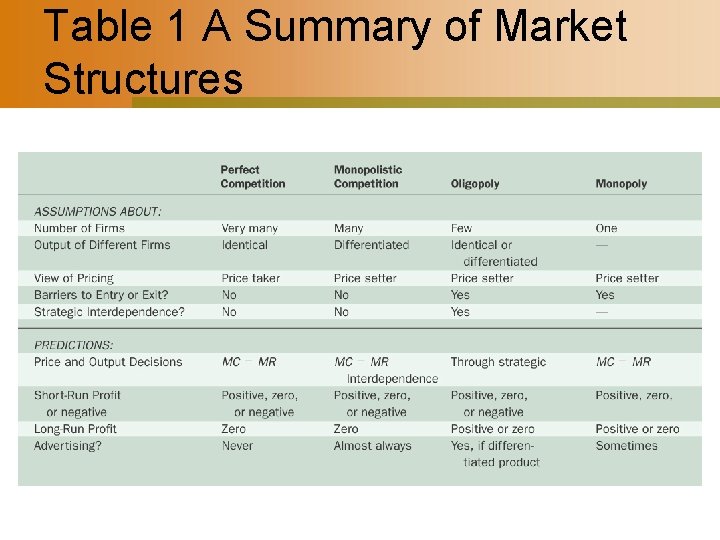
Table 1 A Summary of Market Structures