
Monolithic Integrated Antennas and Nanoantennas for Wireless Sensors
- Slides: 41
Monolithic Integrated Antennas and Nanoantennas for Wireless Sensors and for Wireless Intrachip and Interchip Communication Peter Russer 1, Nikolaus Fichtner 1, Paolo Lugli 1, Wolfgang Porod 2 and Hristomir Yordanov 1 1 Institute for Nanoelectronics, Technische Universität München, Germany 2 Center for Nano Science and Technology, University of Notre Dame, USA Technische Universität München #1
Contents 1. 2. 3. 4. Introduction CMOS Integrated Antennas Nanoantennas with MOM Tunnel Diodes Nanoantennas Based on Carbon Nanotubes and Graphene 5. Alternative Materials and Fabrication Techniques 6. Outlook Technische Universität München #2
On-Chip Nanoantennas for Sensing and Communication • As the structure size of circuit devices and components is continuously decreasing the same will hold for antennas and radiation elements used in integrated circuits for onchip and chip-to-chip communication. • Following the general scaling trend on-chip antennas will soon enter the micrometer- and even the nanometer regime. Technische Universität München #3
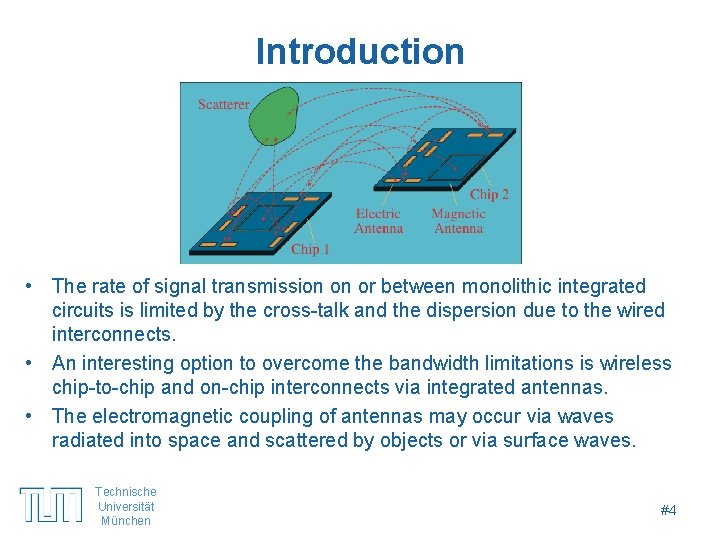
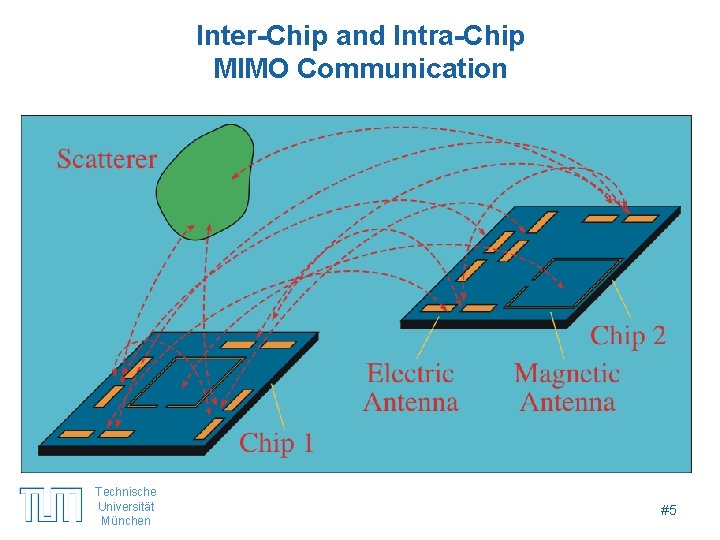
Introduction • The rate of signal transmission on or between monolithic integrated circuits is limited by the cross-talk and the dispersion due to the wired interconnects. • An interesting option to overcome the bandwidth limitations is wireless chip-to-chip and on-chip interconnects via integrated antennas. • The electromagnetic coupling of antennas may occur via waves radiated into space and scattered by objects or via surface waves. Technische Universität München #4
Inter-Chip and Intra-Chip MIMO Communication Technische Universität München #5
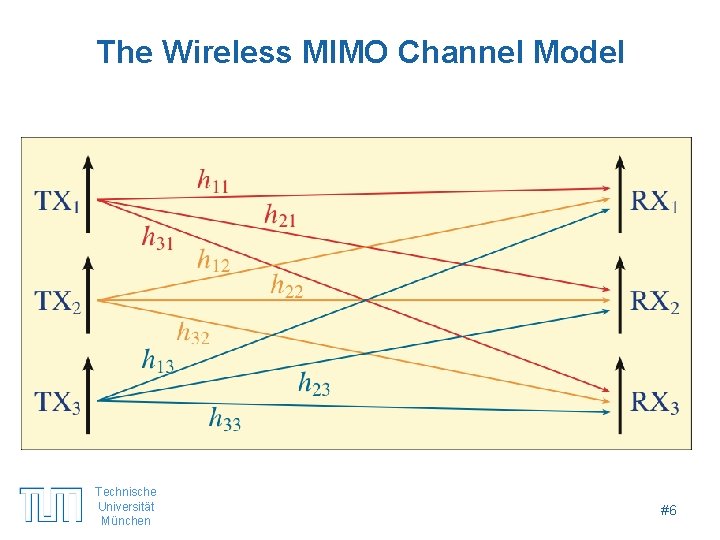
The Wireless MIMO Channel Model Technische Universität München #6
Contents 1. 2. 3. 4. Introduction CMOS Integrated Antennas Nanoantennas with MOM Tunnel Diodes Nanoantennas Based on Carbon Nanotubes and Graphene 5. Alternative Materials and Fabrication Techniques 6. Outlook Technische Universität München #7
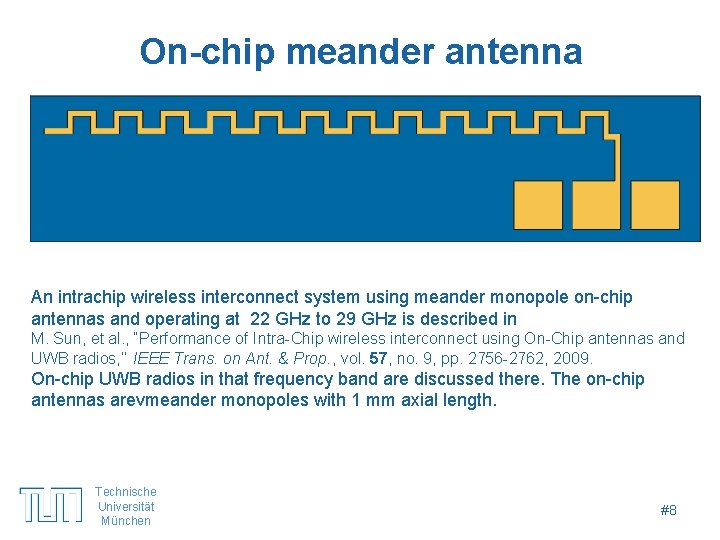
On-chip meander antenna An intrachip wireless interconnect system using meander monopole on-chip antennas and operating at 22 GHz to 29 GHz is described in M. Sun, et al. , “Performance of Intra-Chip wireless interconnect using On-Chip antennas and UWB radios, ’’ IEEE Trans. on Ant. & Prop. , vol. 57, no. 9, pp. 2756 -2762, 2009. On-chip UWB radios in that frequency band are discussed there. The on-chip antennas arevmeander monopoles with 1 mm axial length. Technische Universität München #8
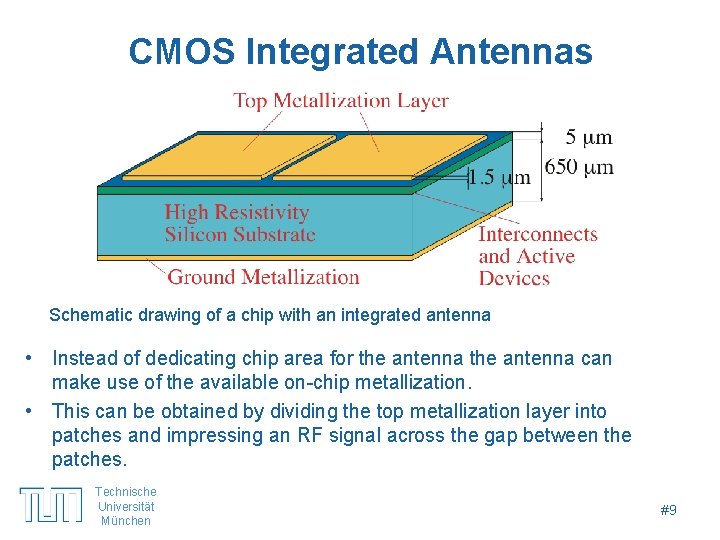
CMOS Integrated Antennas Schematic drawing of a chip with an integrated antenna • Instead of dedicating chip area for the antenna can make use of the available on-chip metallization. • This can be obtained by dividing the top metallization layer into patches and impressing an RF signal across the gap between the patches. Technische Universität München #9
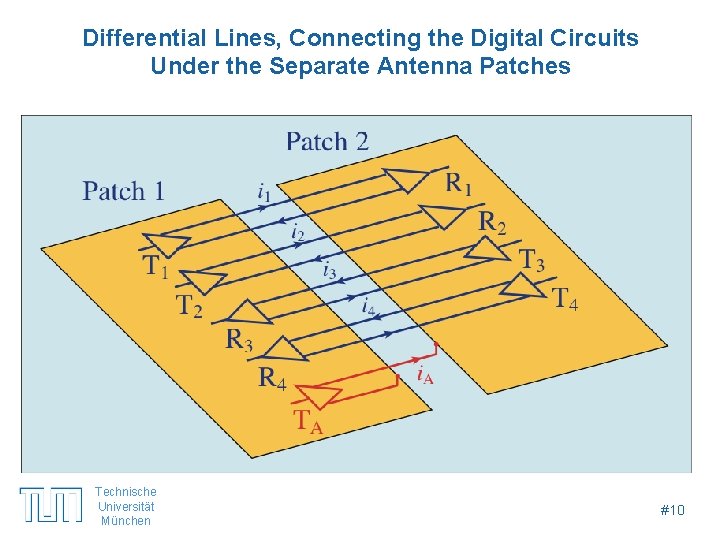
Differential Lines, Connecting the Digital Circuits Under the Separate Antenna Patches Technische Universität München #10
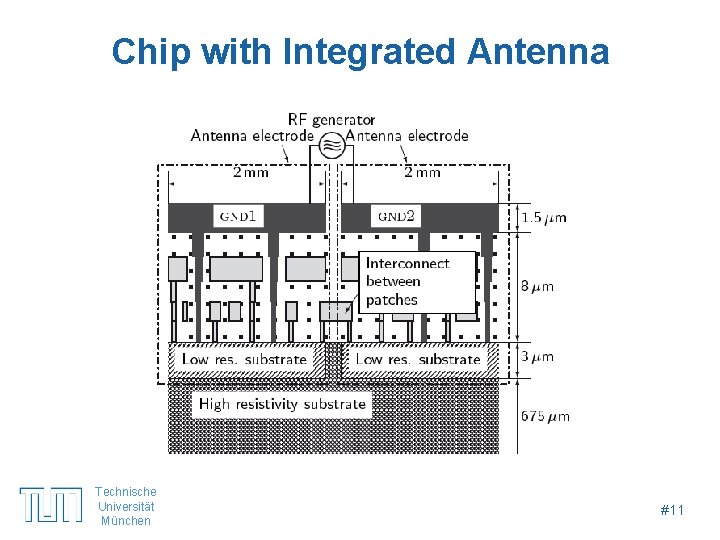
Chip with Integrated Antenna Technische Universität München #11
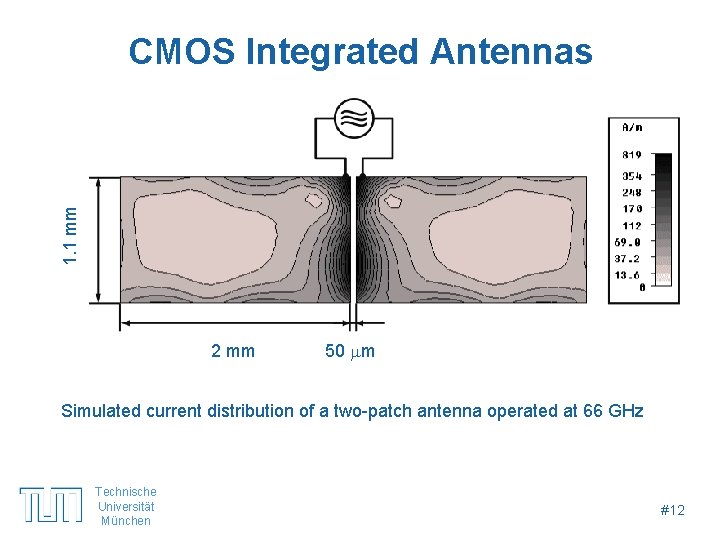
1. 1 mm CMOS Integrated Antennas 2 mm 50 mm Simulated current distribution of a two-patch antenna operated at 66 GHz Technische Universität München #12
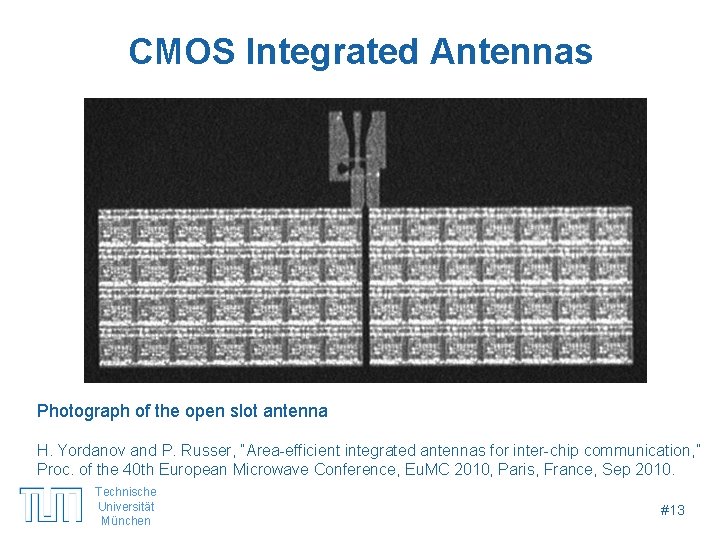
CMOS Integrated Antennas Photograph of the open slot antenna H. Yordanov and P. Russer, “Area-efficient integrated antennas for inter-chip communication, ” Proc. of the 40 th European Microwave Conference, Eu. MC 2010, Paris, France, Sep 2010. Technische Universität München #13
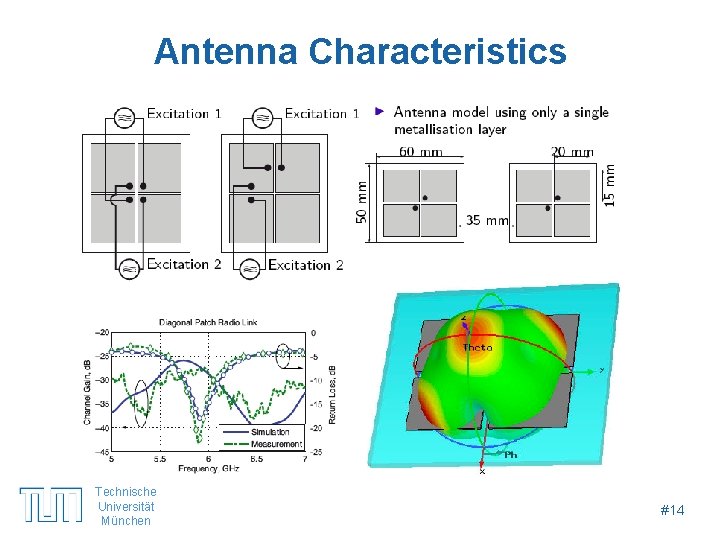
Antenna Characteristics Technische Universität München #14
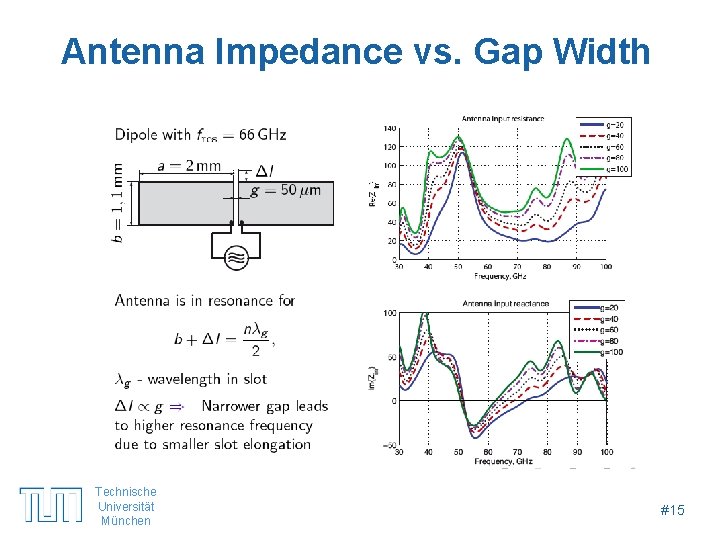
Antenna Impedance vs. Gap Width Technische Universität München #15
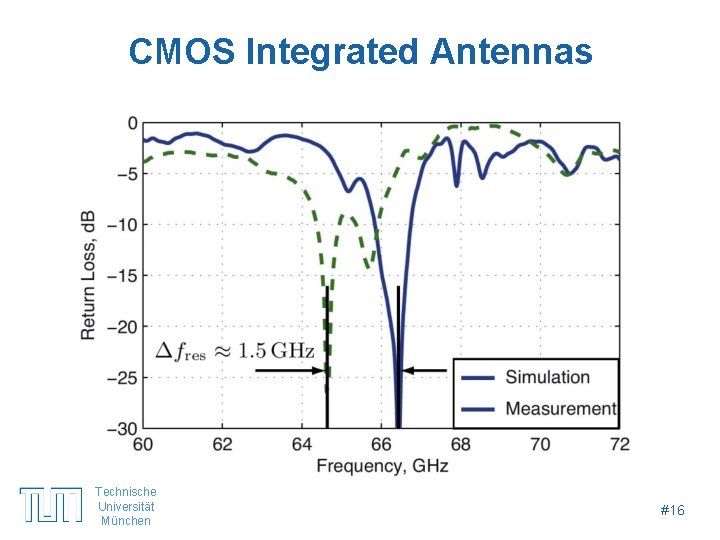
CMOS Integrated Antennas Technische Universität München #16
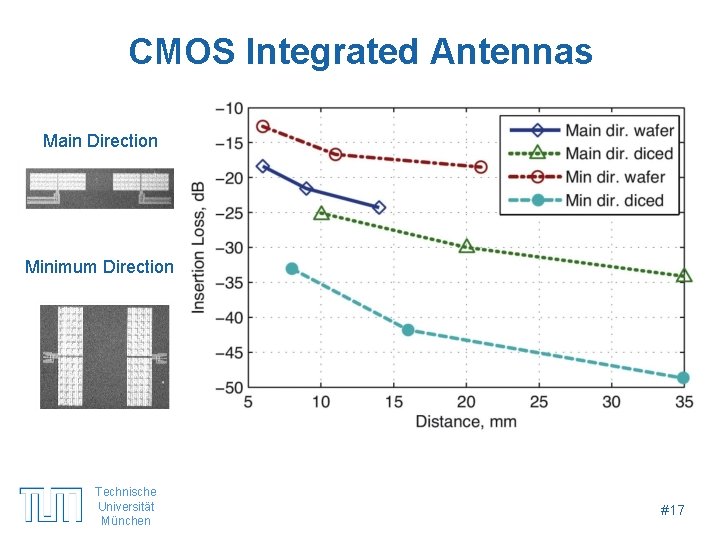
CMOS Integrated Antennas Main Direction Minimum Direction Technische Universität München #17
Contents 1. 2. 3. 4. Introduction CMOS Integrated Antennas Nanoantennas with MOM Tunnel Diodes Nanoantennas Based on Carbon Nanotubes and Graphene 5. Alternative Materials and Fabrication Techniques 6. Outlook Technische Universität München #18
Integration of Antennas with MOM Diodes • A promising novel concept for infrared (IR) detectors is the combination of a nanoantenna with a rectifying element. • The rectifying element extracts a DC component from the rapidly-varying current delivered from the nanoantenna. Semiconductor diodes are widely used, but they encounter frequency limitations for the mm-wave and long-wave IR regime. • It has been demonstrated that MOM tunnel diodes can provide rectification for IR and even optical radiation Technische Universität München #19
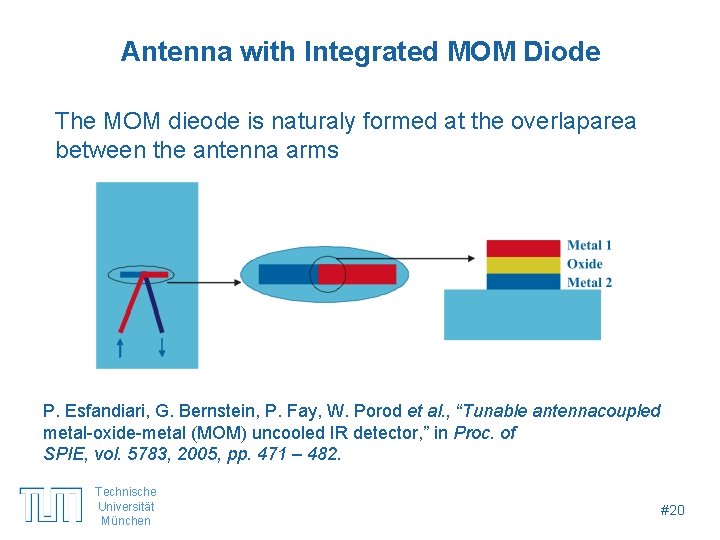
Antenna with Integrated MOM Diode The MOM dieode is naturaly formed at the overlaparea between the antenna arms P. Esfandiari, G. Bernstein, P. Fay, W. Porod et al. , “Tunable antennacoupled metal-oxide-metal (MOM) uncooled IR detector, ” in Proc. of SPIE, vol. 5783, 2005, pp. 471 – 482. Technische Universität München #20
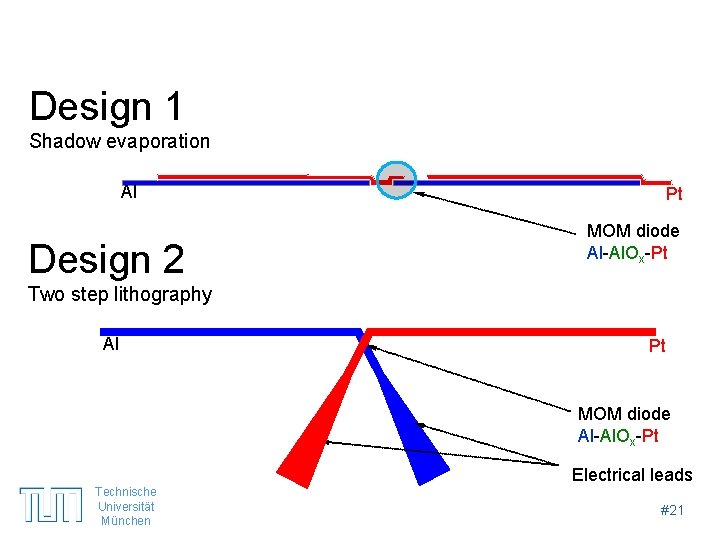
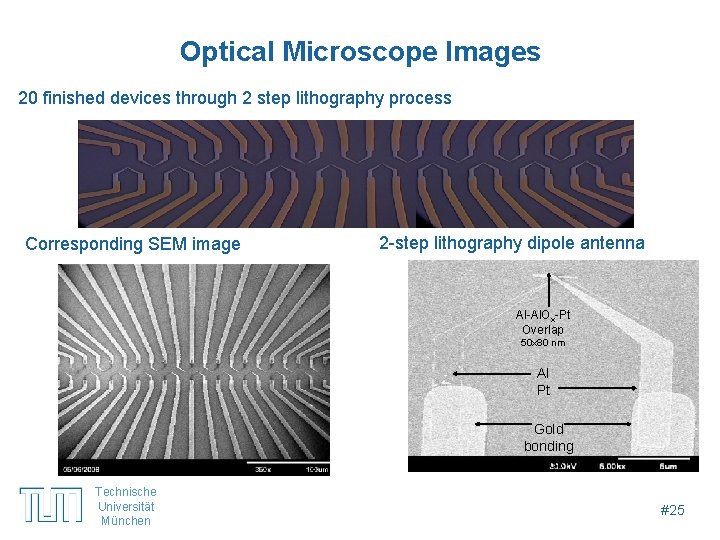
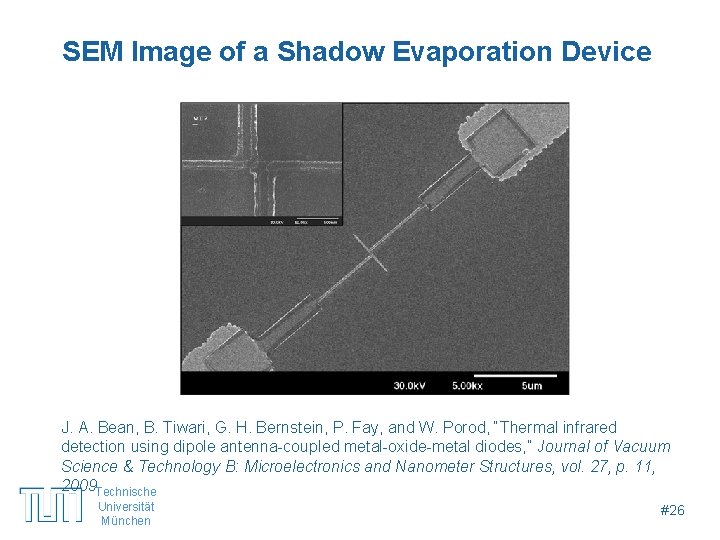
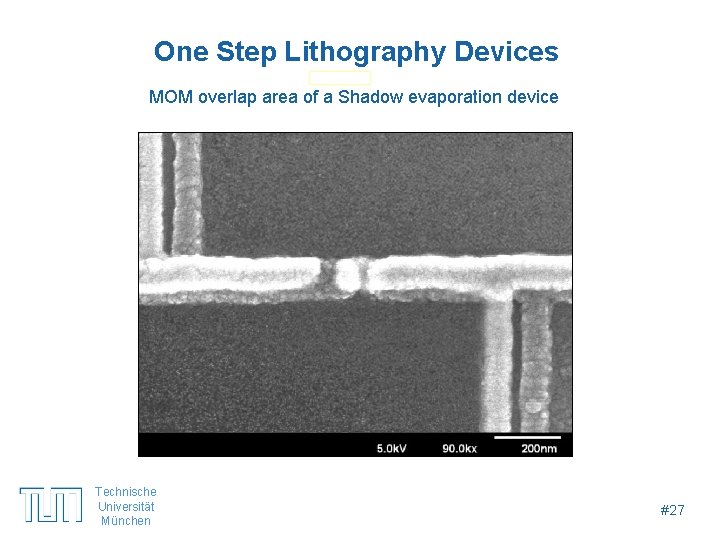
ACMOMD Design 1 Shadow evaporation diode formed antenna Al Design 2 Pt MOM diode Al-Al. Ox-Pt Two step lithography Al Pt MOM diode Al-Al. Ox-Pt Electrical leads Technische Universität München #21
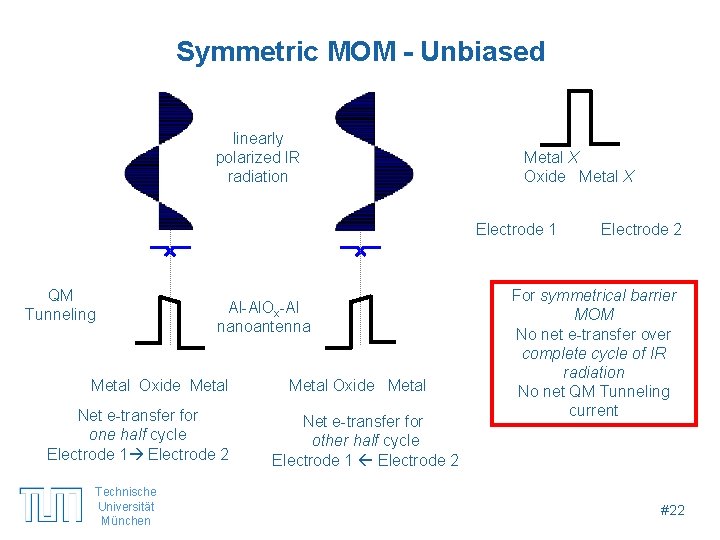
Symmetric MOM - Unbiased linearly polarized IR radiation Metal X Oxide Metal X Electrode 1 QM Tunneling Al-Al. Ox-Al nanoantenna Metal Oxide Metal Net e-transfer for one half cycle Electrode 1 Electrode 2 Technische Universität München Metal Oxide Metal Net e-transfer for other half cycle Electrode 1 Electrode 2 For symmetrical barrier MOM No net e-transfer over complete cycle of IR radiation No net QM Tunneling current #22
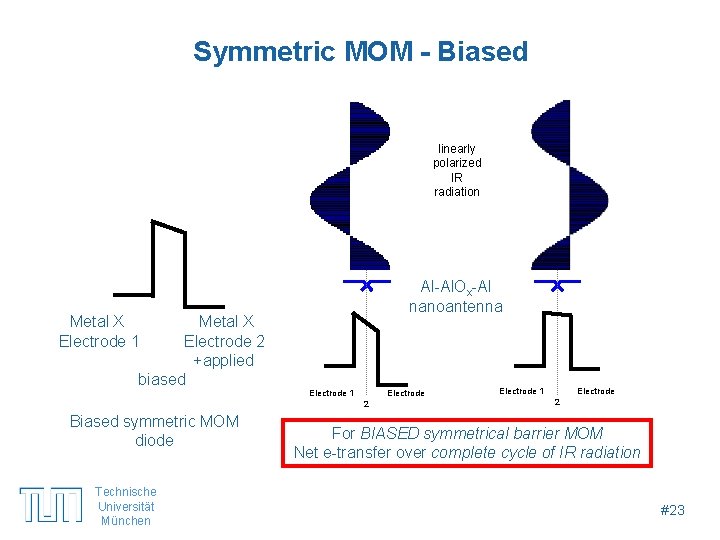
Symmetric MOM - Biased linearly polarized IR radiation Metal X Electrode 2 +applied biased Al-Al. Ox-Al nanoantenna Metal X Electrode 1 Electrode 2 Biased symmetric MOM diode Technische Universität München Electrode 1 Electrode 2 For BIASED symmetrical barrier MOM Net e-transfer over complete cycle of IR radiation #23
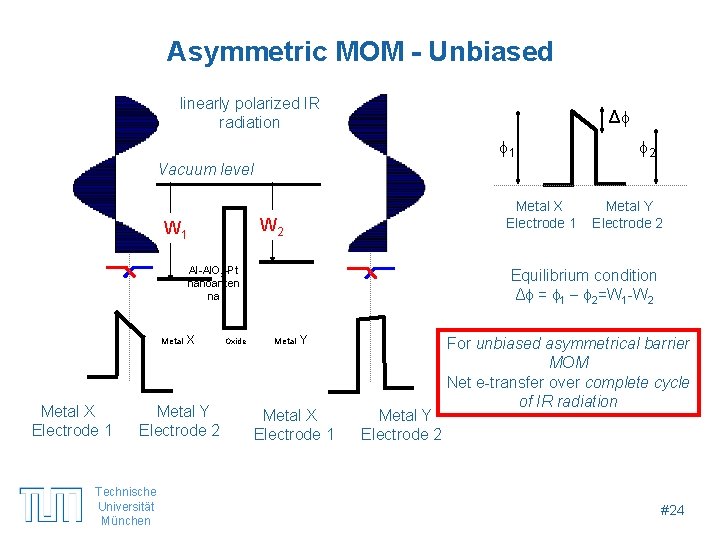
Asymmetric MOM - Unbiased linearly polarized IR radiation Δ 1 2 Vacuum level Metal X Electrode 1 W 2 W 1 Al-Al. Ox-Pt nanoanten na Metal X Electrode 1 X Metal Y Electrode 2 Technische Universität München Oxide Metal Y Electrode 2 Equilibrium condition Δ = 1 2=W 1 -W 2 Metal Y Metal X Electrode 1 Metal Y Electrode 2 For unbiased asymmetrical barrier MOM Net e-transfer over complete cycle of IR radiation #24
Two Step Lithography Devices Optical Microscope Images 20 finished devices through 2 step lithography process Corresponding SEM image 2 -step lithography dipole antenna Al-Al. Ox-Pt Overlap 50 x 80 nm Al Pt Gold bonding pads Technische Universität München #25
SEM Image of a Shadow Evaporation Device J. A. Bean, B. Tiwari, G. H. Bernstein, P. Fay, and W. Porod, “Thermal infrared detection using dipole antenna-coupled metal-oxide-metal diodes, ” Journal of Vacuum Science & Technology B: Microelectronics and Nanometer Structures, vol. 27, p. 11, 2009. Technische Universität München #26
One Step Lithography Devices MOM overlap area of a Shadow evaporation device Technische Universität München #27
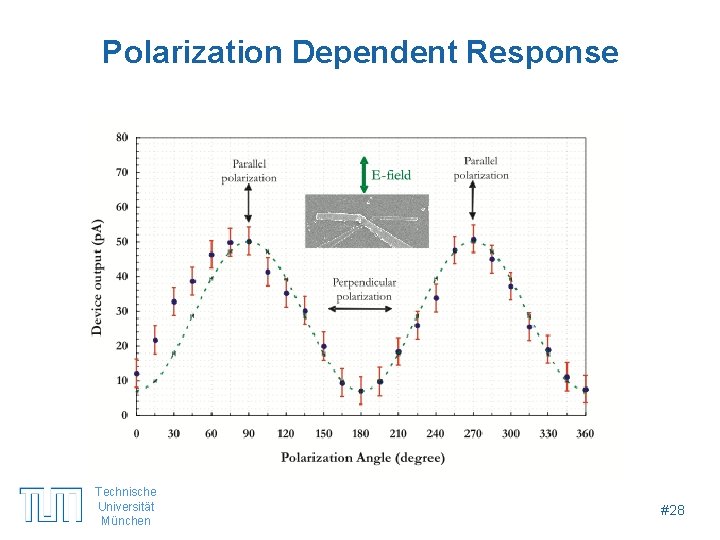
Polarization Dependent Response Technische Universität München #28
Contents 1. 2. 3. 4. Introduction CMOS Integrated Antennas Nanoantennas with MOM Tunnel Diodes Nanoantennas Based on Carbon Nanotubes and Graphene 5. Alternative Materials and Fabrication Techniques 6. Outlook Technische Universität München #29
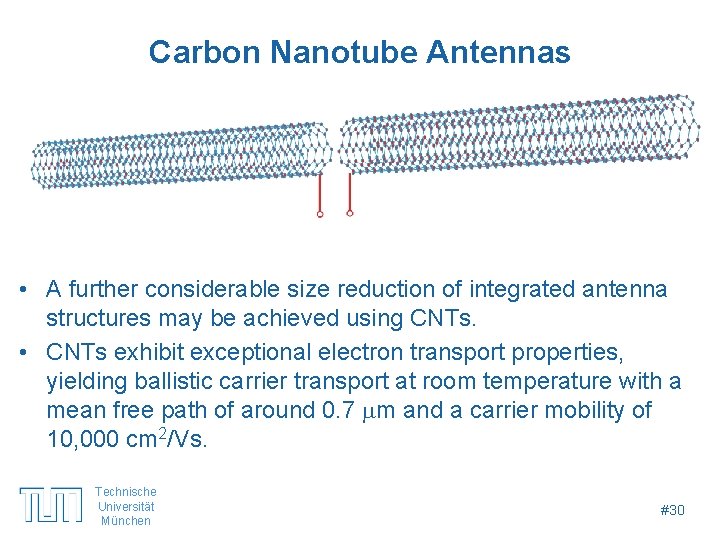
Carbon Nanotube Antennas • A further considerable size reduction of integrated antenna structures may be achieved using CNTs. • CNTs exhibit exceptional electron transport properties, yielding ballistic carrier transport at room temperature with a mean free path of around 0. 7 mm and a carrier mobility of 10, 000 cm 2/Vs. Technische Universität München #30
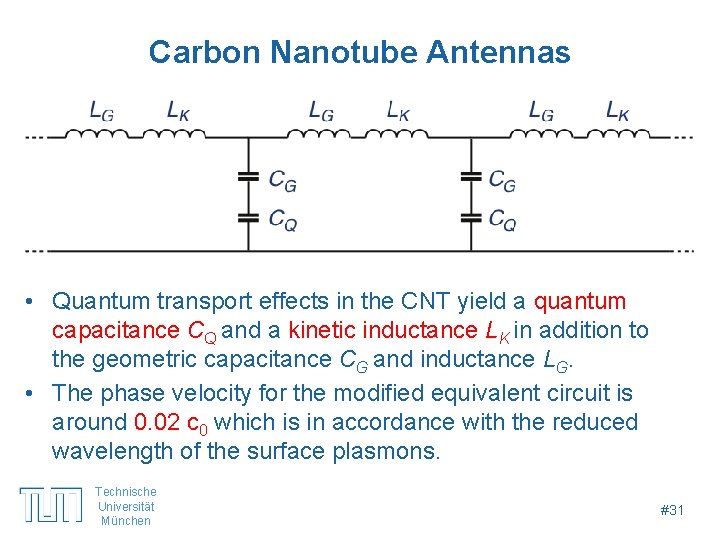
Carbon Nanotube Antennas • Quantum transport effects in the CNT yield a quantum capacitance CQ and a kinetic inductance LK in addition to the geometric capacitance CG and inductance LG. • The phase velocity for the modified equivalent circuit is around 0. 02 c 0 which is in accordance with the reduced wavelength of the surface plasmons. Technische Universität München #31
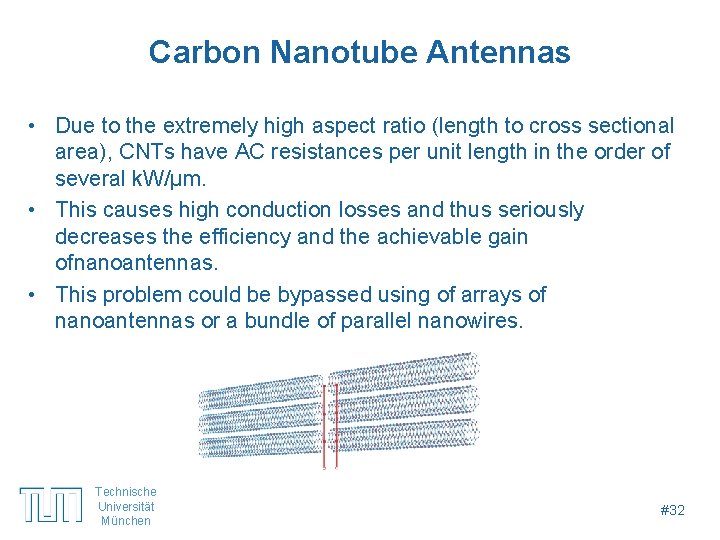
Carbon Nanotube Antennas • Due to the extremely high aspect ratio (length to cross sectional area), CNTs have AC resistances per unit length in the order of several k. W/μm. • This causes high conduction losses and thus seriously decreases the efficiency and the achievable gain ofnanoantennas. • This problem could be bypassed using of arrays of nanoantennas or a bundle of parallel nanowires. Technische Universität München #32
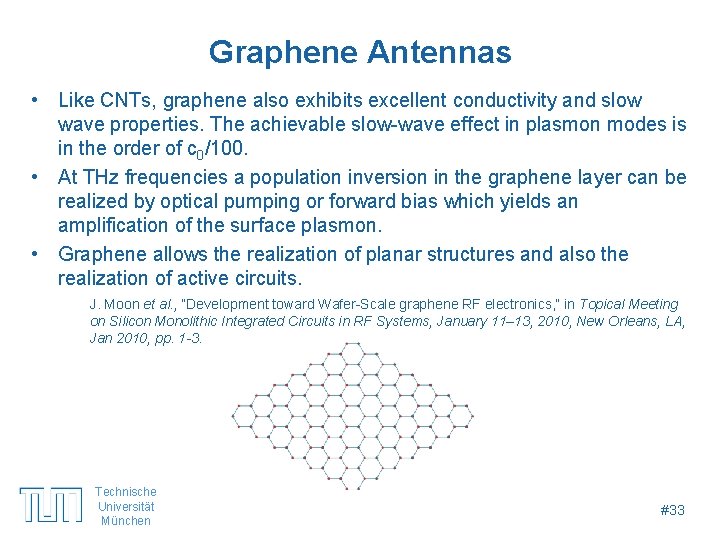
Graphene Antennas • Like CNTs, graphene also exhibits excellent conductivity and slow wave properties. The achievable slow-wave effect in plasmon modes is in the order of c 0/100. • At THz frequencies a population inversion in the graphene layer can be realized by optical pumping or forward bias which yields an amplification of the surface plasmon. • Graphene allows the realization of planar structures and also the realization of active circuits. J. Moon et al. , “Development toward Wafer-Scale graphene RF electronics, ” in Topical Meeting on Silicon Monolithic Integrated Circuits in RF Systems, January 11– 13, 2010, New Orleans, LA, Jan 2010, pp. 1 -3. Technische Universität München #33
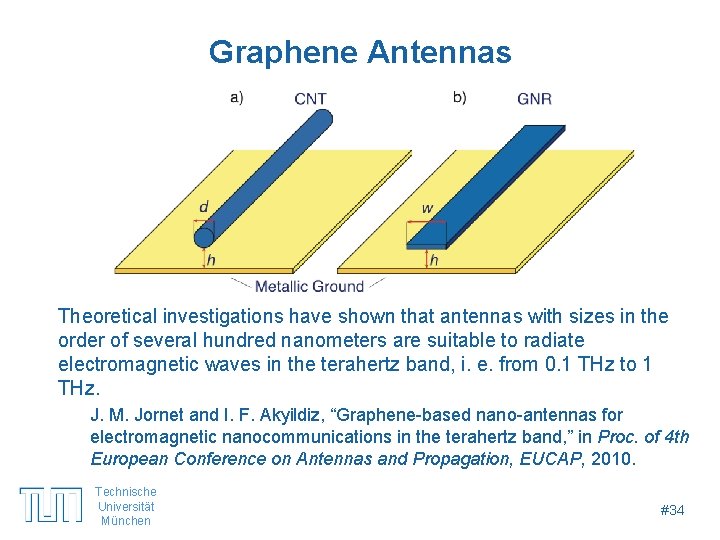
Graphene Antennas Theoretical investigations have shown that antennas with sizes in the order of several hundred nanometers are suitable to radiate electromagnetic waves in the terahertz band, i. e. from 0. 1 THz to 1 THz. J. M. Jornet and I. F. Akyildiz, “Graphene-based nano-antennas for electromagnetic nanocommunications in the terahertz band, ” in Proc. of 4 th European Conference on Antennas and Propagation, EUCAP, 2010. Technische Universität München #34
Contents 1. 2. 3. 4. Introduction CMOS Integrated Antennas Nanoantennas with MOM Tunnel Diodes Nanoantennas Based on Carbon Nanotubes and Graphene 5. Alternative Materials and Fabrication Techniques 6. Outlook Technische Universität München #35
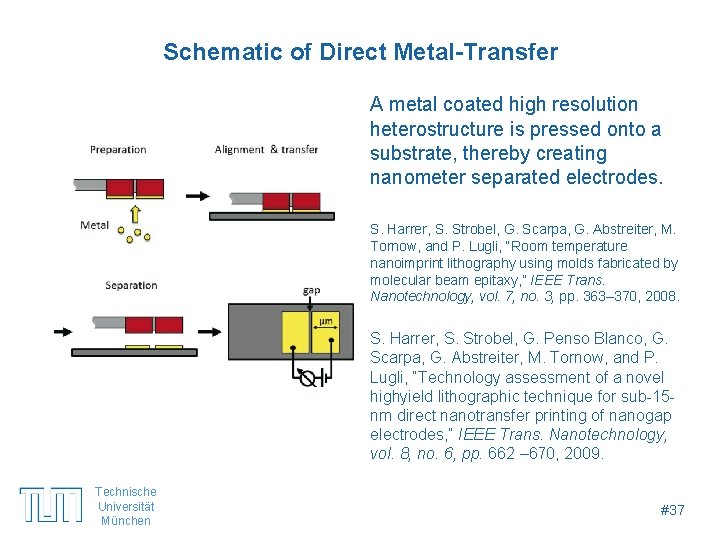
Alternative Materials and Fabrication Techniques • The antennas described previously are generally fabricated with conventional technologies, namely evaporation of the metallic films followed by patterning via photo or electronlithography. • In the CNT or graphene case, the conductive layers have to be grown epitaxially on the given substrate. • Especially when small dimensions are required, as for the nanometer gaps required in plasmonic structures or in nanometer scale MOM diodes, a very interesting alternative could be offered by nanotransfer techniques. Technische Universität München #36
Schematic of Direct Metal-Transfer A metal coated high resolution heterostructure is pressed onto a substrate, thereby creating nanometer separated electrodes. S. Harrer, S. Strobel, G. Scarpa, G. Abstreiter, M. Tornow, and P. Lugli, “Room temperature nanoimprint lithography using molds fabricated by molecular beam epitaxy, ” IEEE Trans. Nanotechnology, vol. 7, no. 3, pp. 363– 370, 2008. S. Harrer, S. Strobel, G. Penso Blanco, G. Scarpa, G. Abstreiter, M. Tornow, and P. Lugli, “Technology assessment of a novel highyield lithographic technique for sub-15 nm direct nanotransfer printing of nanogap electrodes, ” IEEE Trans. Nanotechnology, vol. 8, no. 6, pp. 662 – 670, 2009. Technische Universität München #37
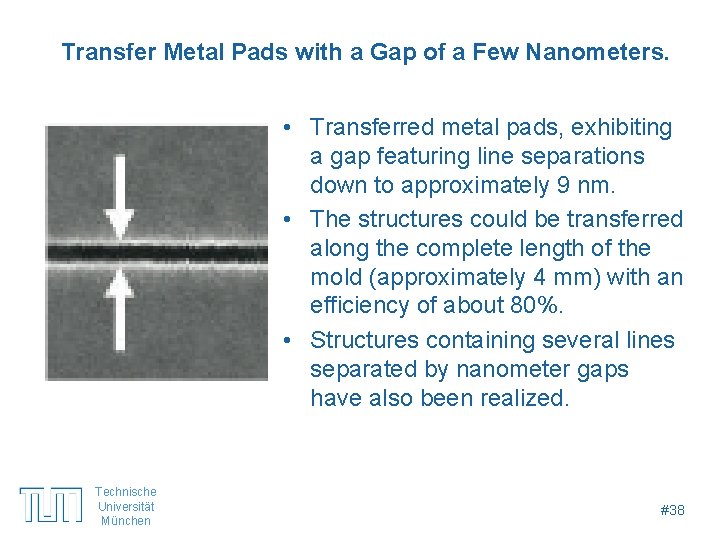
Transfer Metal Pads with a Gap of a Few Nanometers. • Transferred metal pads, exhibiting a gap featuring line separations down to approximately 9 nm. • The structures could be transferred along the complete length of the mold (approximately 4 mm) with an efficiency of about 80%. • Structures containing several lines separated by nanometer gaps have also been realized. Technische Universität München #38
Contents 1. 2. 3. 4. Introduction CMOS Integrated Antennas Nanoantennas with MOM Tunnel Diodes Nanoantennas Based on Carbon Nanotubes and Graphene 5. Alternative Materials and Fabrication Techniques 6. Outlook Technische Universität München #39
Conclusion and Outlook • As the structure size of circuit devices and components is continuously decreasing the same will hold for antennas and radiation elements used in integrated circuits for onchip and chip-to-chip communication. • Following the general scaling trend, on-chip antennas will soon enter the m- and even the nanometer regime. • Integrated antennas based on nanoelectronics provide a tremendous potential for the realization of novel devices and systems from DC up to the optical range. • The applications will cover wireless intra-chip and interchip transmission at Gbit/s rates, field sensors and photon harvesting systems. Technische Universität München #40
Conclusion and Outlook • Intrachip and interchip wireless broadband communication at millimeterwave carrier frequencies can be realized in CMOS technology and will allow the transfer of Gbit/s data rates. • A further size reduction of antenna structures will be possible by integration of CNT and graphene antenna structures. • When small dimensions are required, as for the nanometer gaps required in plasmonic structures or in nanometer scale MOM diodes, a very interesting alternative could be offered by nanotransfer techniques. Technische Universität München #41