
Monocot Roots large vascular cylinder in center ring
- Slides: 22
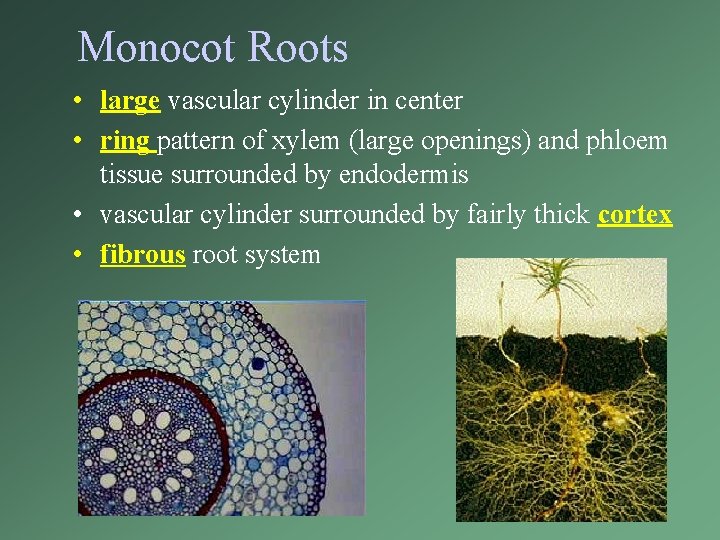
Monocot Roots • large vascular cylinder in center • ring pattern of xylem (large openings) and phloem tissue surrounded by endodermis • vascular cylinder surrounded by fairly thick cortex • fibrous root system
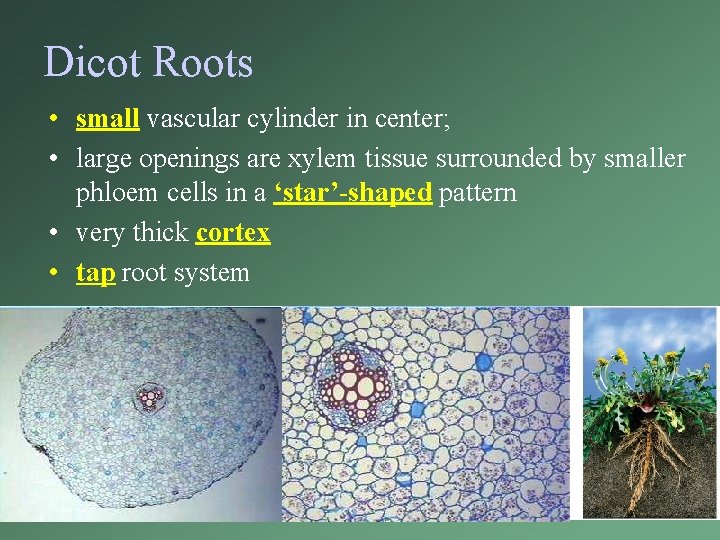
Dicot Roots • small vascular cylinder in center; • large openings are xylem tissue surrounded by smaller phloem cells in a ‘star’-shaped pattern • very thick cortex • tap root system
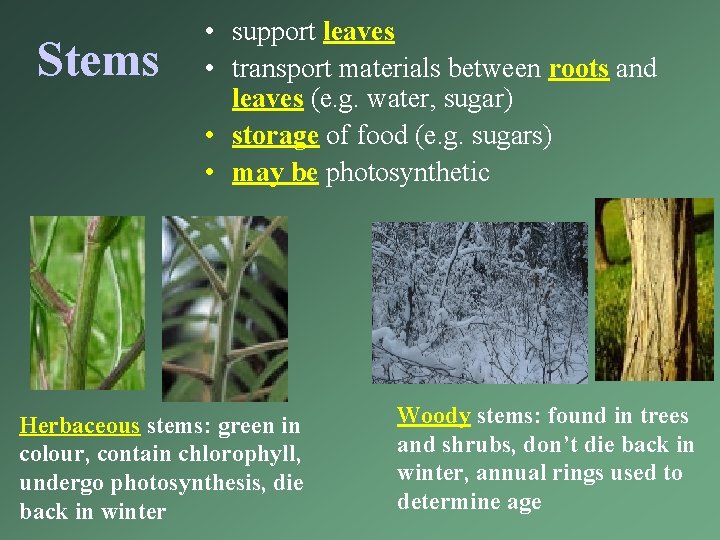
Stems • support leaves • transport materials between roots and leaves (e. g. water, sugar) • storage of food (e. g. sugars) • may be photosynthetic Herbaceous stems: green in colour, contain chlorophyll, undergo photosynthesis, die back in winter Woody stems: found in trees and shrubs, don’t die back in winter, annual rings used to determine age
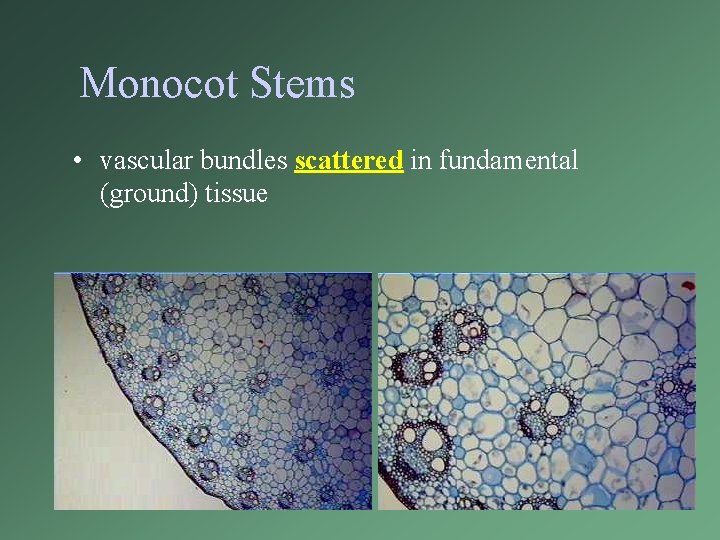
Monocot Stems • vascular bundles scattered in fundamental (ground) tissue
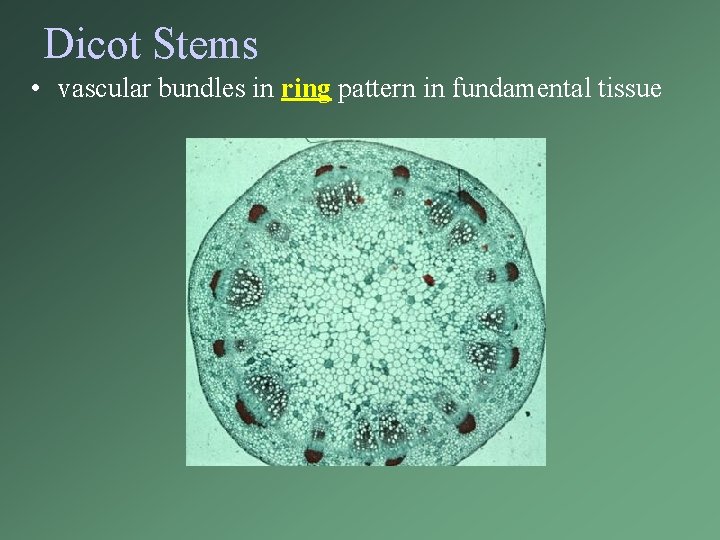
Dicot Stems • vascular bundles in ring pattern in fundamental tissue
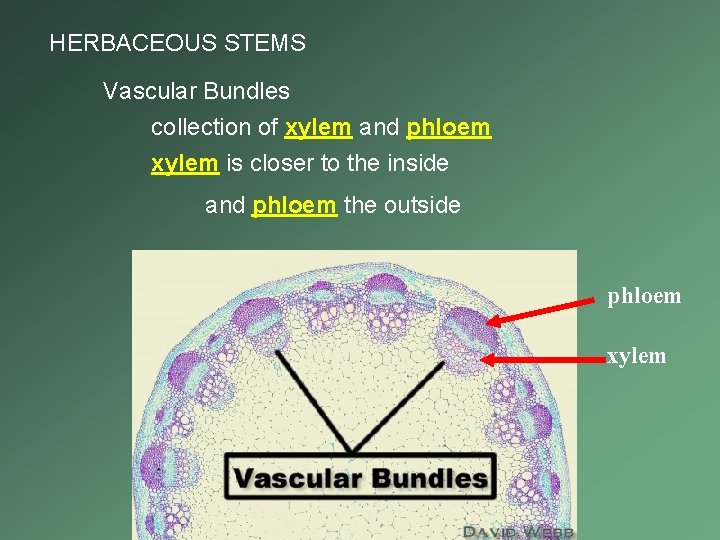
HERBACEOUS STEMS Vascular Bundles collection of xylem and phloem xylem is closer to the inside and phloem the outside phloem xylem
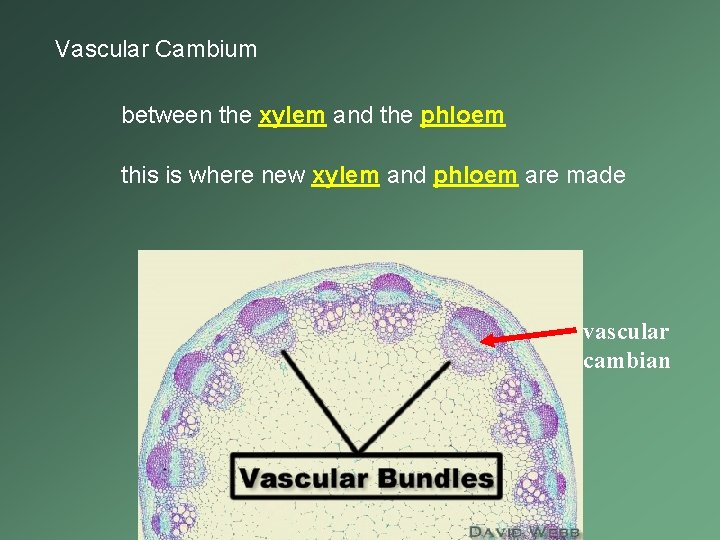
Vascular Cambium between the xylem and the phloem this is where new xylem and phloem are made vascular cambian
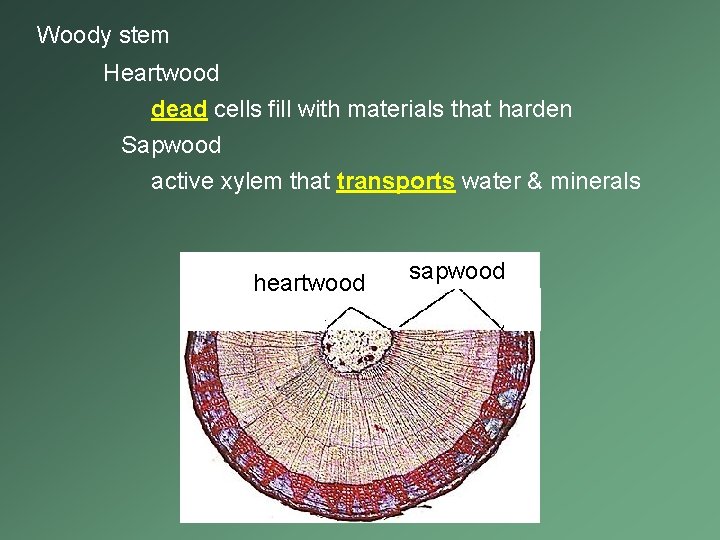
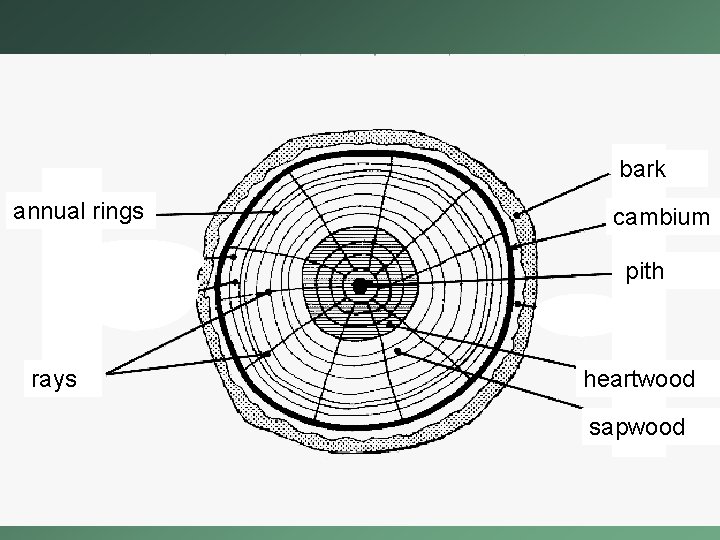
Woody stem Heartwood dead cells fill with materials that harden Sapwood active xylem that transports water & minerals heartwood sapwood
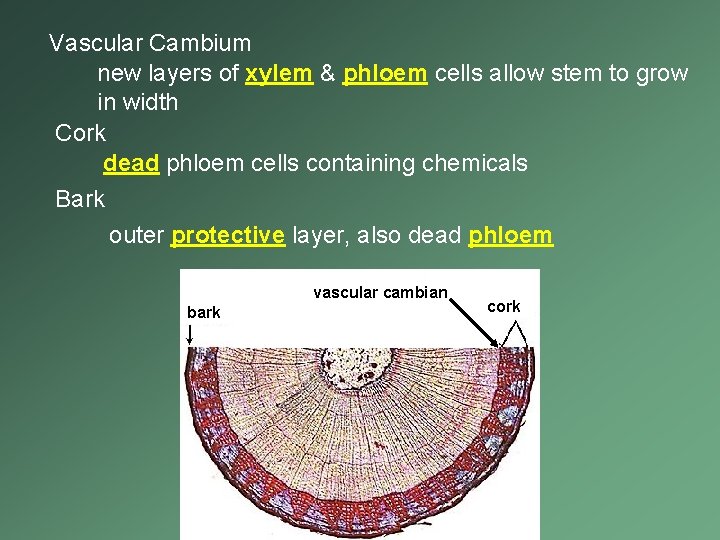
Vascular Cambium new layers of xylem & phloem cells allow stem to grow in width Cork dead phloem cells containing chemicals Bark outer protective layer, also dead phloem vascular cambian bark cork
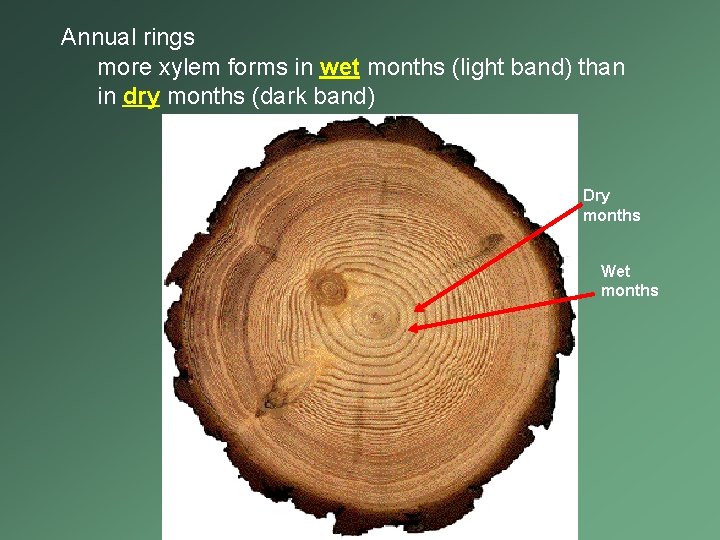
Annual rings more xylem forms in wet months (light band) than in dry months (dark band) Dry months Wet months
bark annual rings cambium pith rays heartwood sapwood
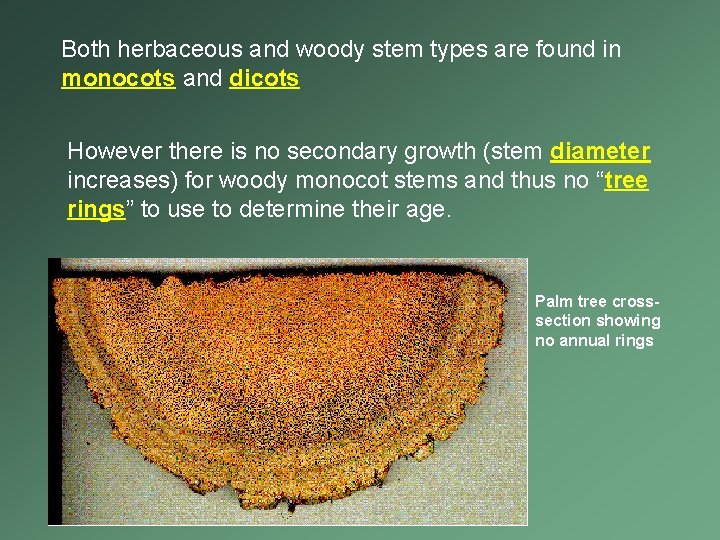
Both herbaceous and woody stem types are found in monocots and dicots However there is no secondary growth (stem diameter increases) for woody monocot stems and thus no “tree rings” to use to determine their age. Palm tree crosssection showing no annual rings
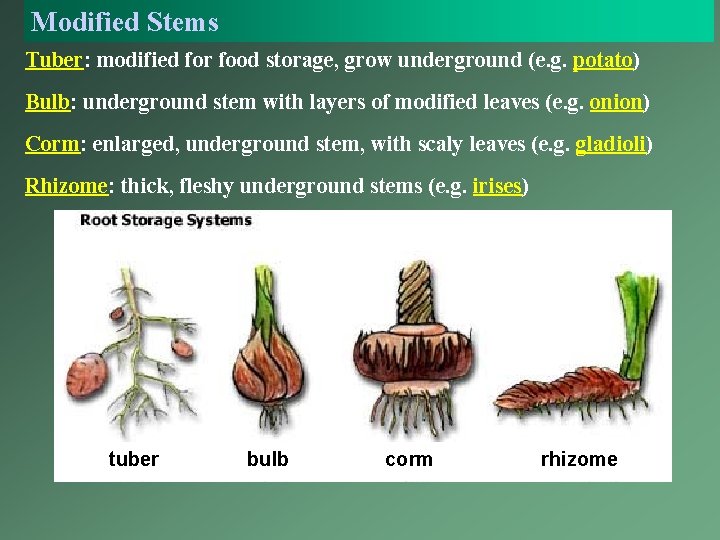
Modified Stems Tuber: modified for food storage, grow underground (e. g. potato) Bulb: underground stem with layers of modified leaves (e. g. onion) Corm: enlarged, underground stem, with scaly leaves (e. g. gladioli) Rhizome: thick, fleshy underground stems (e. g. irises) tuber bulb corm rhizome
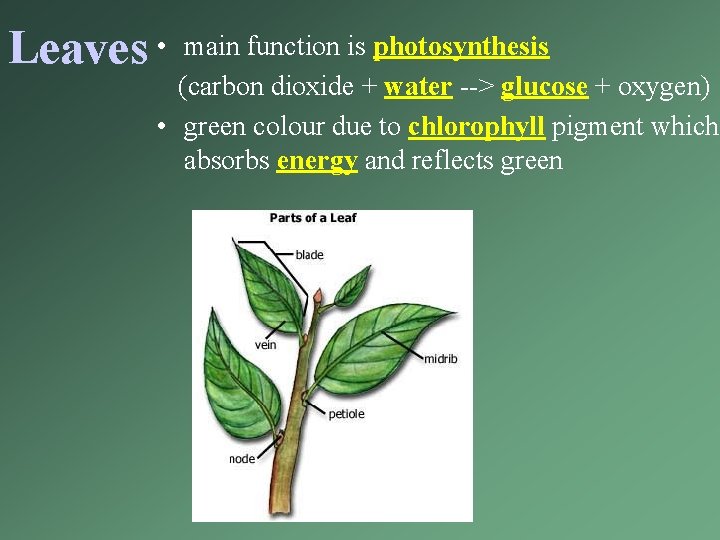
Leaves • main function is photosynthesis (carbon dioxide + water --> glucose + oxygen) • green colour due to chlorophyll pigment which absorbs energy and reflects green
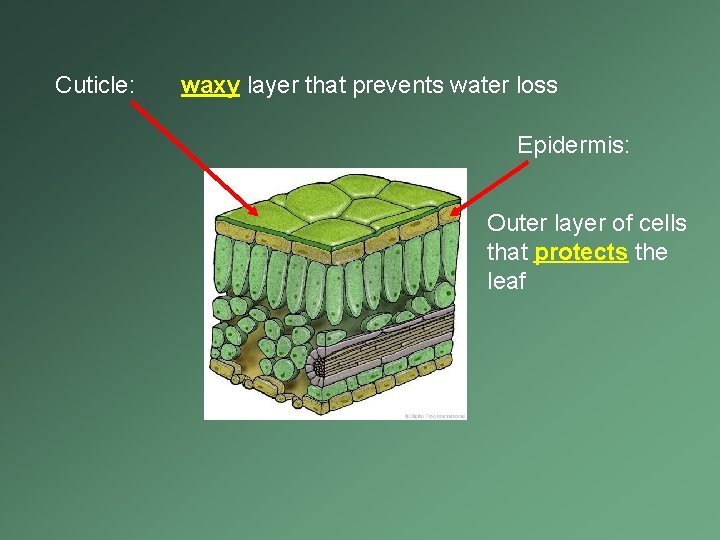
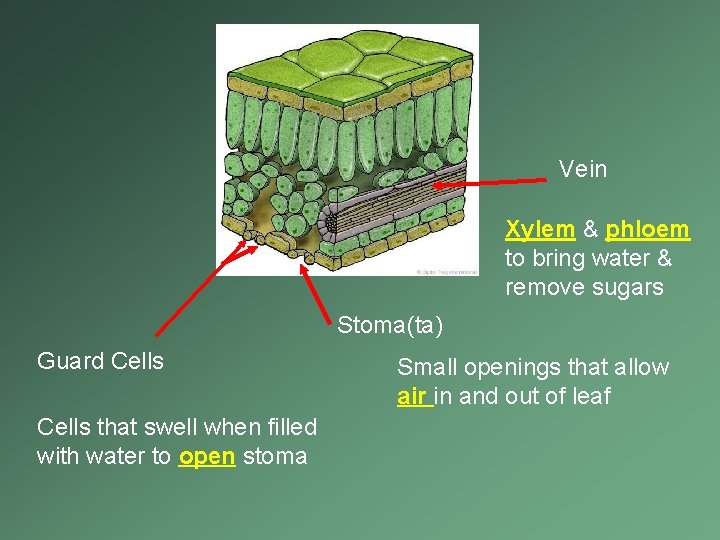
Cuticle: waxy layer that prevents water loss Epidermis: Outer layer of cells that protects the leaf
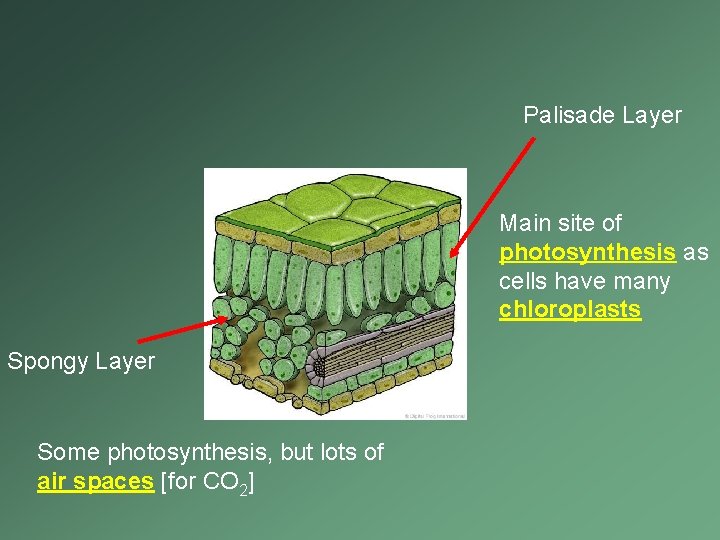
Palisade Layer Main site of photosynthesis as cells have many chloroplasts Spongy Layer Some photosynthesis, but lots of air spaces [for CO 2]
Vein Xylem & phloem to bring water & remove sugars Stoma(ta) Guard Cells that swell when filled with water to open stoma Small openings that allow air in and out of leaf
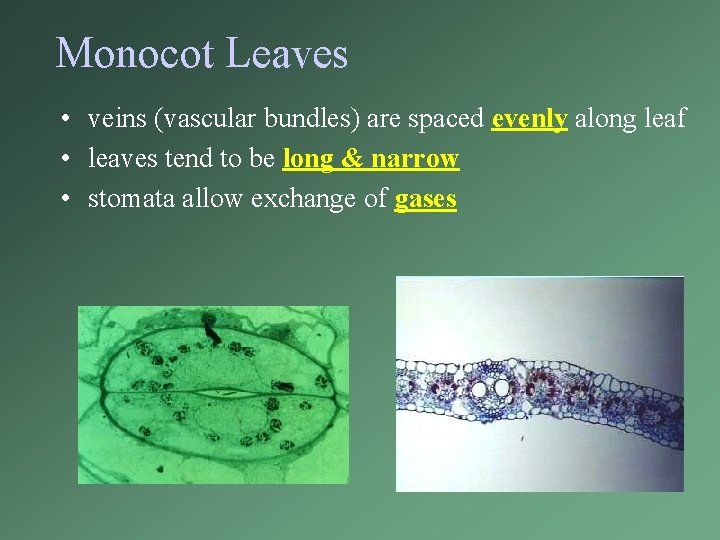
Monocot Leaves • veins (vascular bundles) are spaced evenly along leaf • leaves tend to be long & narrow • stomata allow exchange of gases
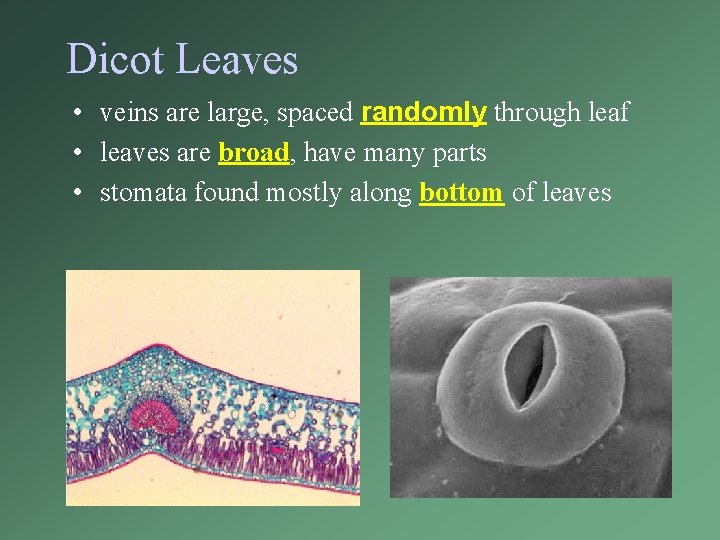
Dicot Leaves • veins are large, spaced randomly through leaf • leaves are broad, have many parts • stomata found mostly along bottom of leaves
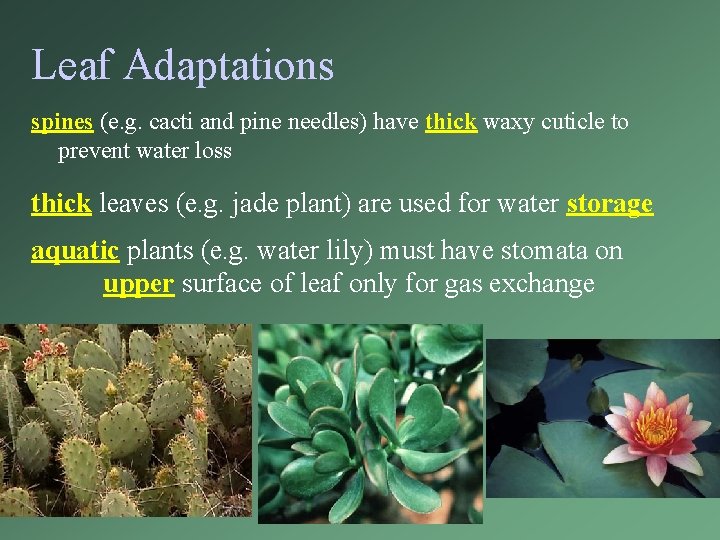
Leaf Adaptations spines (e. g. cacti and pine needles) have thick waxy cuticle to prevent water loss thick leaves (e. g. jade plant) are used for water storage aquatic plants (e. g. water lily) must have stomata on upper surface of leaf only for gas exchange
Drawing some plant parts Draw a cross section of each the following: Monocot root and dicot root (using the ‘wedge’) Monocot stem and dicot stem (using the ‘wedge’) Monocot leaf and dicot leaf (drawing everything)
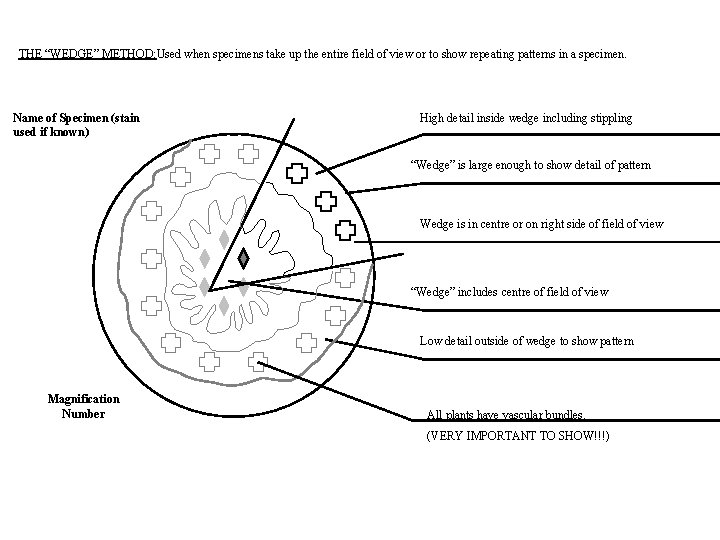
THE “WEDGE” METHOD: Used when specimens take up the entire field of view or to show repeating patterns in a specimen. Name of Specimen (stain used if known) High detail inside wedge including stippling “Wedge” is large enough to show detail of pattern Wedge is in centre or on right side of field of view “Wedge” includes centre of field of view Low detail outside of wedge to show pattern Magnification Number All plants have vascular bundles. (VERY IMPORTANT TO SHOW!!!)