
Monitoring of Instrumentation for Critical Nuclear Fusion Plasma

- Slides: 25
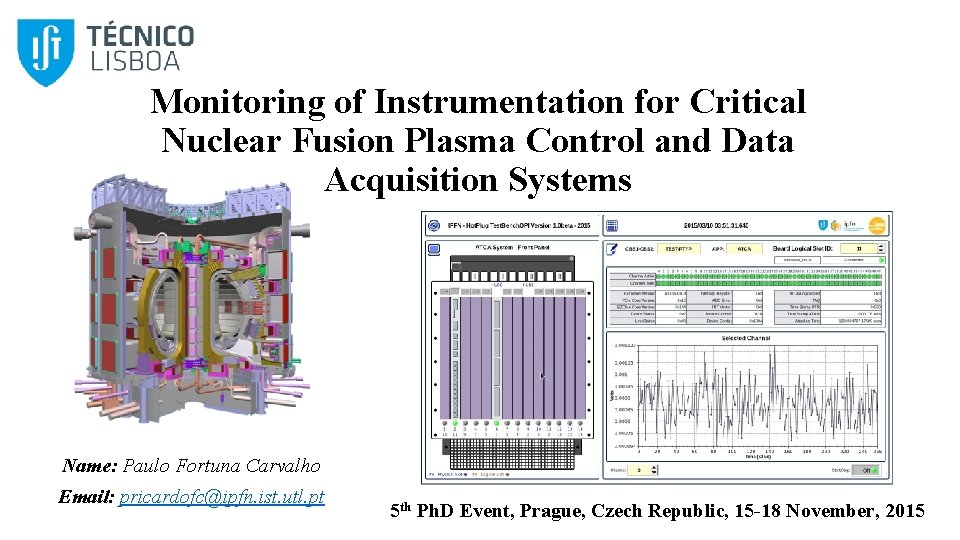
Monitoring of Instrumentation for Critical Nuclear Fusion Plasma Control and Data Acquisition Systems Name: Paulo Fortuna Carvalho Email: pricardofc@ipfn. ist. utl. pt 5 th Ph. D Event, Prague, Czech Republic, 15 -18 November, 2015
Main Topics 1. 2. 3. 4. 5. 6. 7. 8. 9. 10. 11. Introduction: Control in Nuclear Fusion Plasmas Purpose Why Monitoring? Why ATCA and u. TCA Systems? ATCA Control and Data Acquisition System Components Software Modules Hardware Management External System Management Conclusions References 2
Purpose Development of a System Manager Application for Monitoring and Management of a Control and Data Acquisition System Hardware. 3
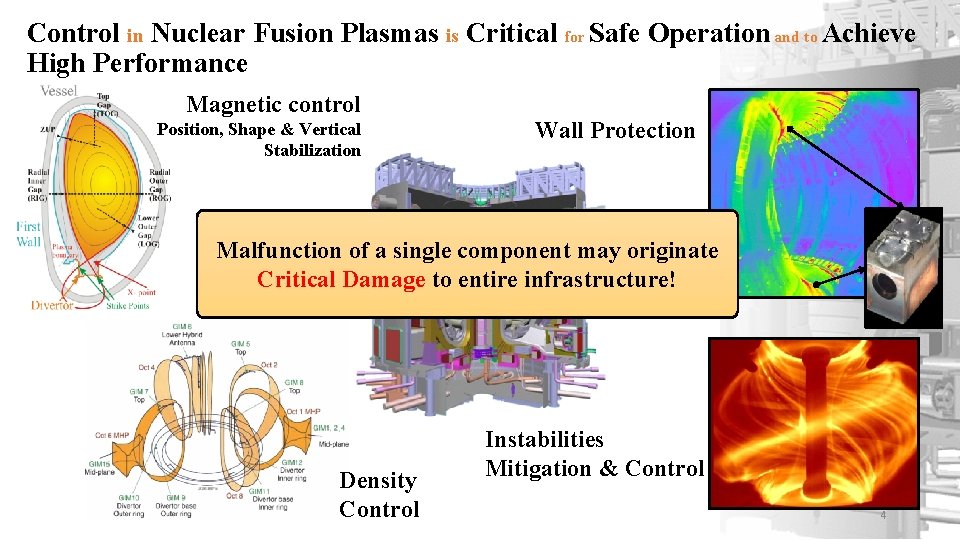
Control in Nuclear Fusion Plasmas is Critical for Safe Operation and to Achieve High Performance Magnetic control Position, Shape & Vertical Stabilization Wall Protection Malfunction of a single component may originate Critical Damage to entire infrastructure! Density Control Instabilities Mitigation & Control 4
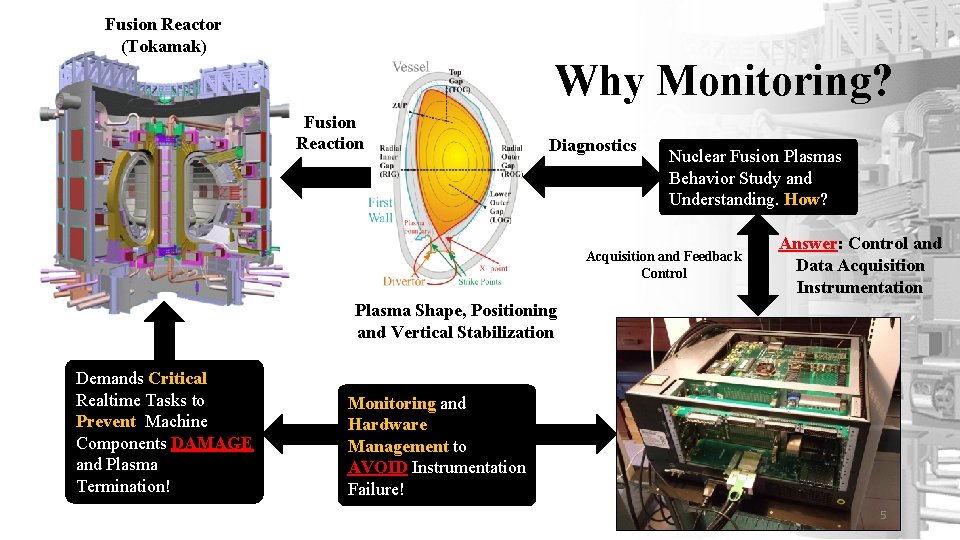
Fusion Reactor (Tokamak) Why Monitoring? Fusion Reaction Diagnostics Nuclear Fusion Plasmas Behavior Study and Understanding. How? Acquisition and Feedback Control Answer: Control and Data Acquisition Instrumentation Plasma Shape, Positioning and Vertical Stabilization Demands Critical Realtime Tasks to Prevent Machine Components DAMAGE and Plasma Termination! Monitoring and Hardware Management to AVOID Instrumentation Failure! 5
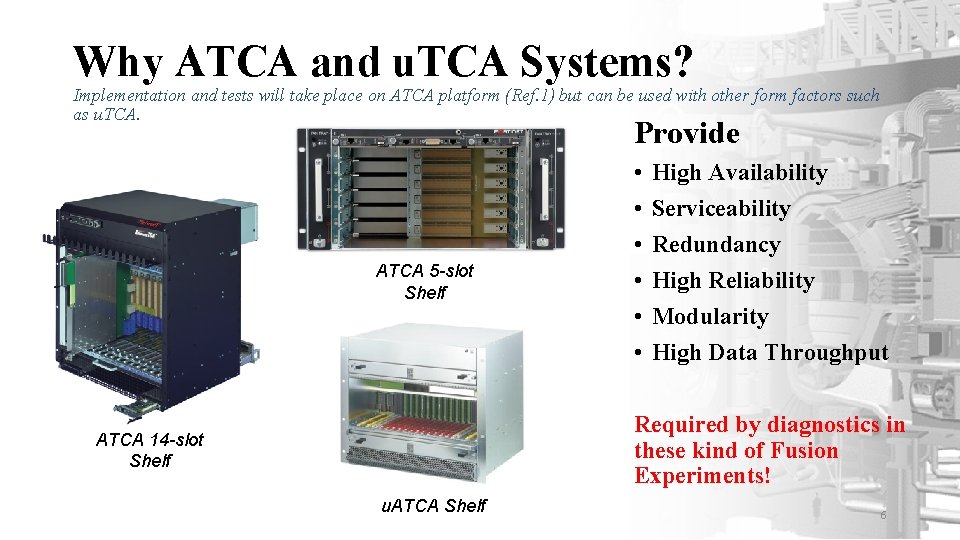
Why ATCA and u. TCA Systems? Implementation and tests will take place on ATCA platform (Ref. 1) but can be used with other form factors such as u. TCA. Provide ATCA 5 -slot Shelf • • • High Availability Serviceability Redundancy s High Reliability Modularity High Data Throughput Required by diagnostics in these kind of Fusion Experiments! ATCA 14 -slot Shelf u. ATCA Shelf 6
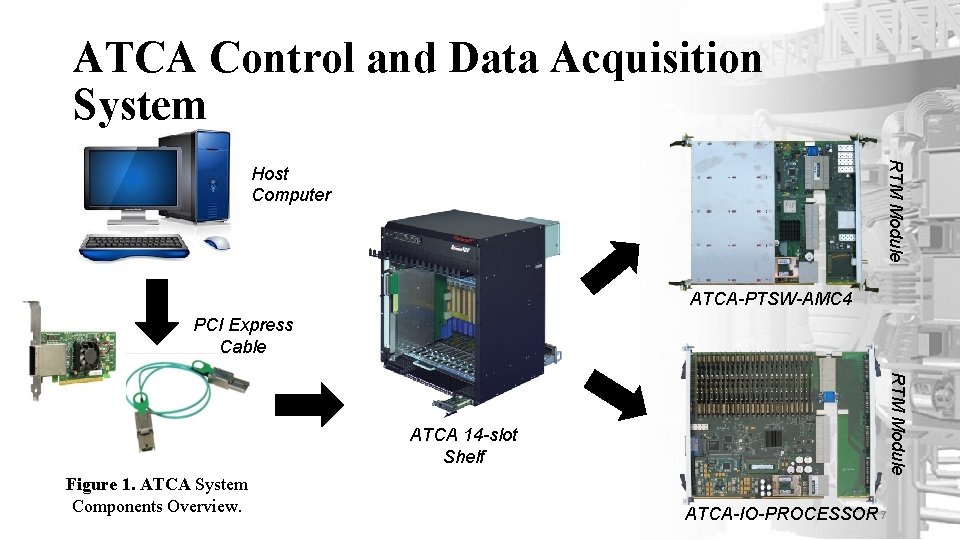
ATCA Control and Data Acquisition System RTM Module Host Computer ATCA-PTSW-AMC 4 PCI Express Cable RTM Module ATCA 14 -slot Shelf Figure 1. ATCA System Components Overview. ATCA-IO-PROCESSOR 7
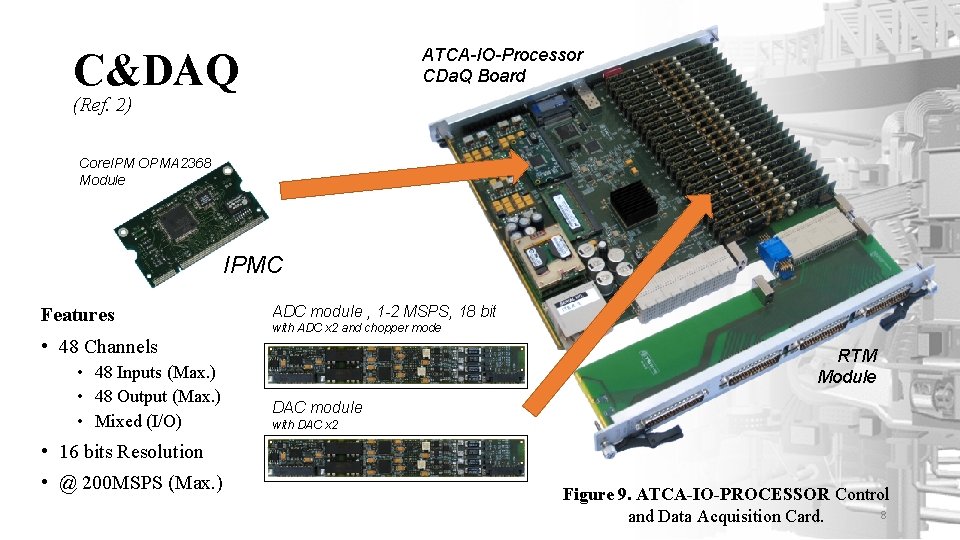
ATCA-IO-Processor CDa. Q Board C&DAQ (Ref. 2) Core. IPM OPMA 2368 Module IPMC Features • 48 Channels • 48 Inputs (Max. ) • 48 Output (Max. ) • Mixed (I/O) ADC module , 1 -2 MSPS, 18 bit with ADC x 2 and chopper mode RTM Module DAC module with DAC x 2 • 16 bits Resolution • @ 200 MSPS (Max. ) Figure 9. ATCA-IO-PROCESSOR Control 8 and Data Acquisition Card.
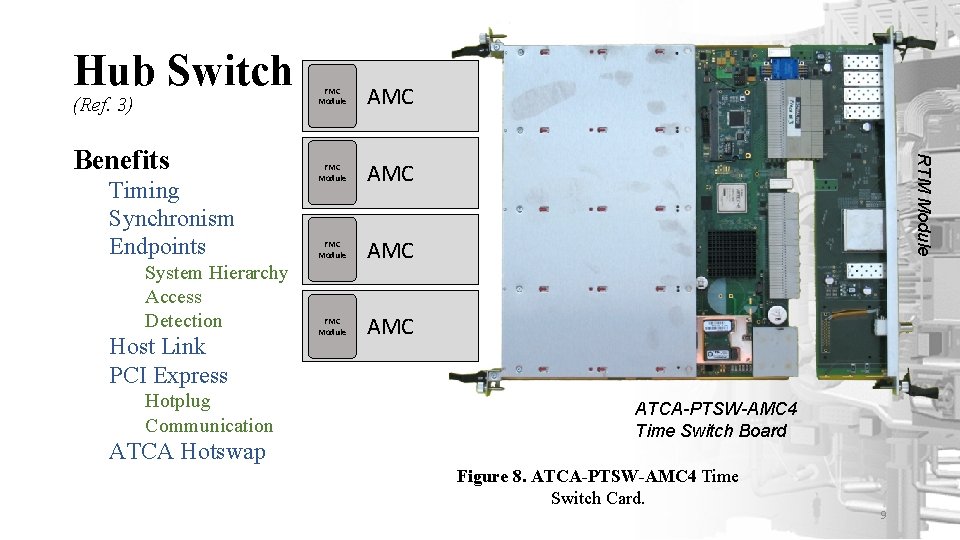
Hub Switch (Ref. 3) Timing Synchronism Endpoints System Hierarchy Access Detection Host Link PCI Express Hotplug Communication ATCA Hotswap AMC FMC Module AMC RTM Module Benefits FMC Module ATCA-PTSW-AMC 4 Time Switch Board Figure 8. ATCA-PTSW-AMC 4 Time Switch Card. 9
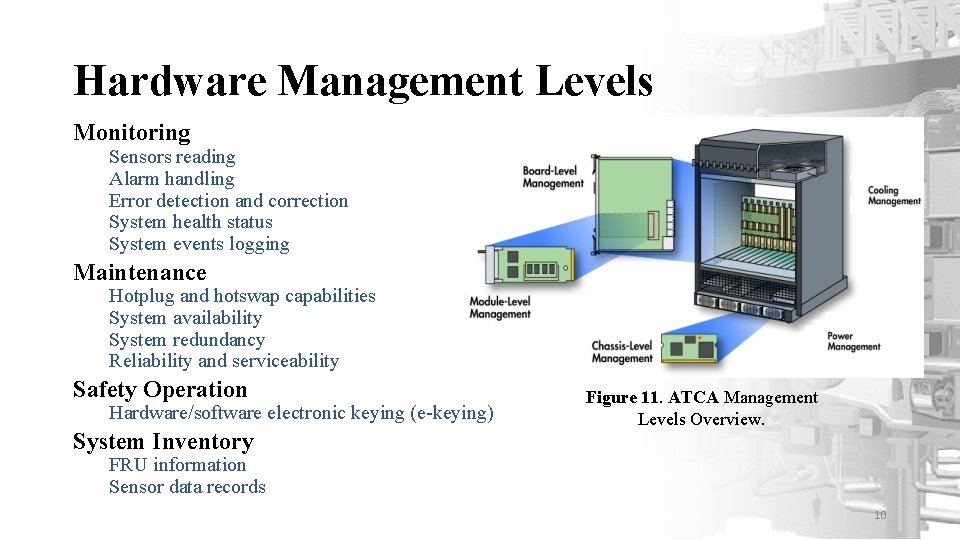
Hardware Management Levels Monitoring Sensors reading Alarm handling Error detection and correction System health status System events logging Maintenance Hotplug and hotswap capabilities System availability System redundancy Reliability and serviceability Safety Operation Hardware/software electronic keying (e-keying) System Inventory Figure 11. ATCA Management Levels Overview. FRU information Sensor data records 10
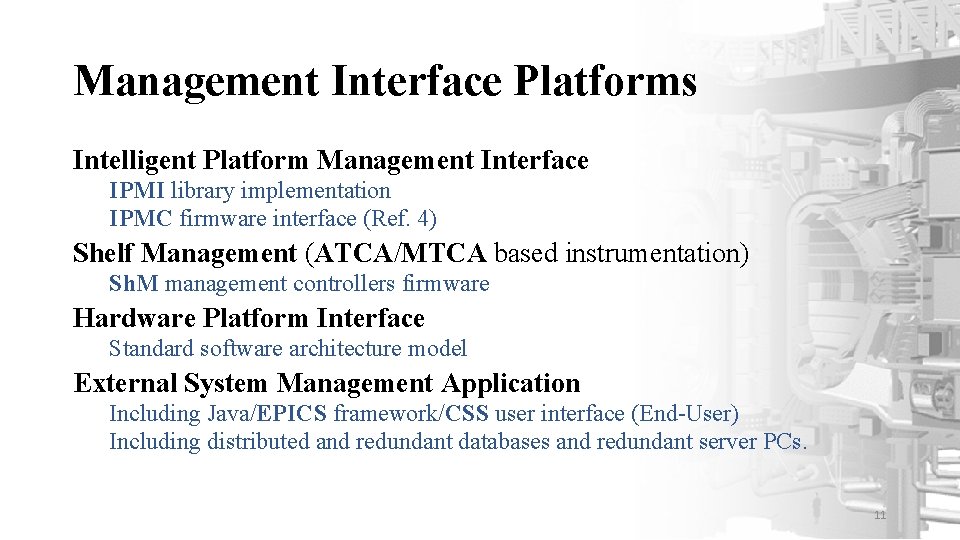
Management Interface Platforms Intelligent Platform Management Interface IPMI library implementation IPMC firmware interface (Ref. 4) Shelf Management (ATCA/MTCA based instrumentation) Sh. M management controllers firmware Hardware Platform Interface Standard software architecture model External System Management Application Including Java/EPICS framework/CSS user interface (End-User) Including distributed and redundant databases and redundant server PCs. 11
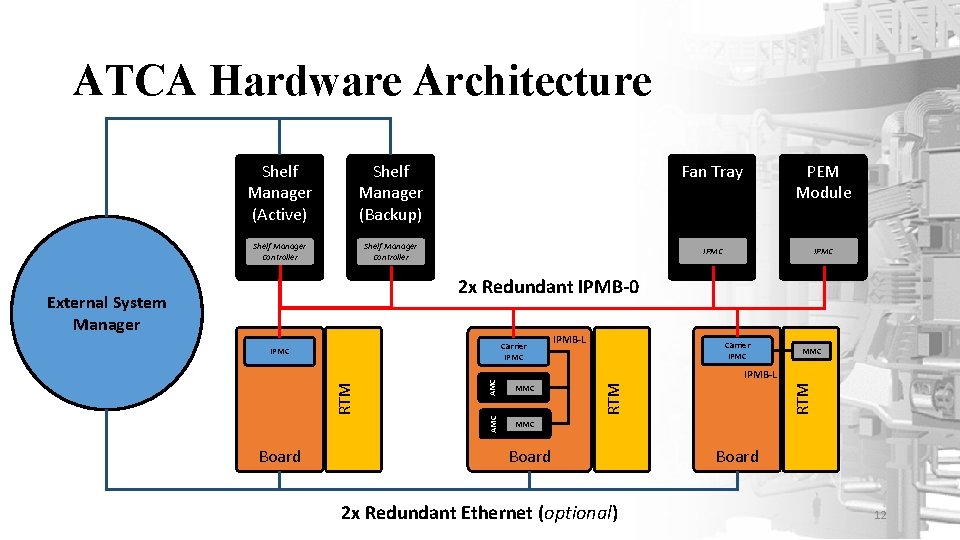
ATCA Hardware Architecture Shelf Manager (Active) Shelf Manager (Backup) Shelf Manager Controller Fan Tray PEM Module IPMC 2 x Redundant IPMB-0 Carrier IPMC Board IPMB-L Carrier IPMC MMC RTM AMC IPMB-L MMC AMC RTM IPMC RTM External System Manager Board 2 x Redundant Ethernet (optional) Board 12
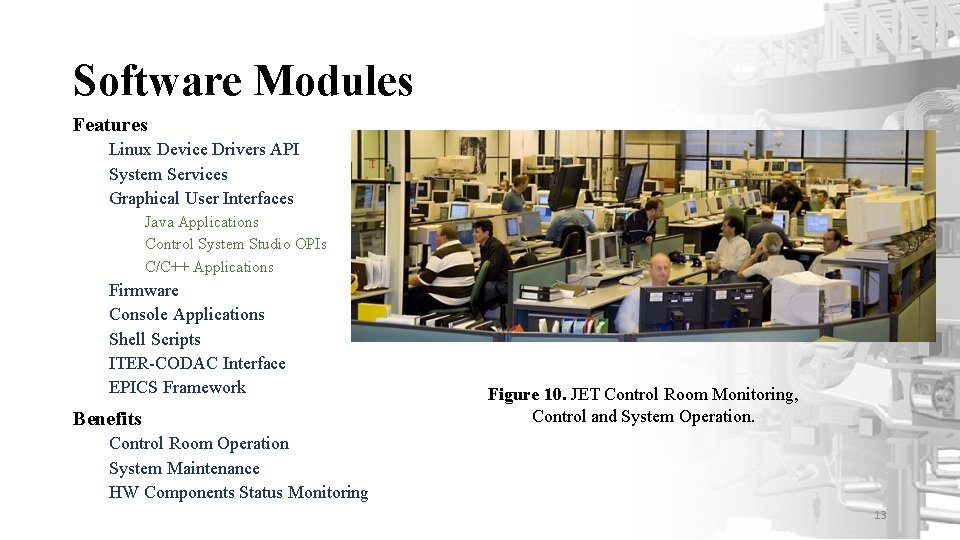
Software Modules Features Linux Device Drivers API System Services Graphical User Interfaces Java Applications Control System Studio OPIs C/C++ Applications Firmware Console Applications Shell Scripts ITER-CODAC Interface EPICS Framework Benefits Figure 10. JET Control Room Monitoring, Control and System Operation. Control Room Operation System Maintenance HW Components Status Monitoring 13
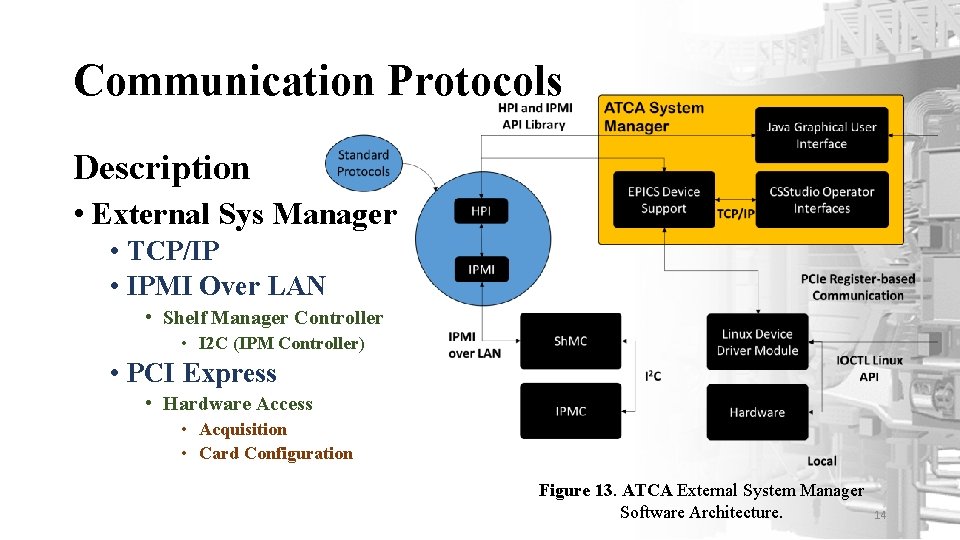
Communication Protocols Description • External Sys Manager • TCP/IP • IPMI Over LAN • Shelf Manager Controller • I 2 C (IPM Controller) • PCI Express • Hardware Access • Acquisition • Card Configuration Figure 13. ATCA External System Manager Software Architecture. 14
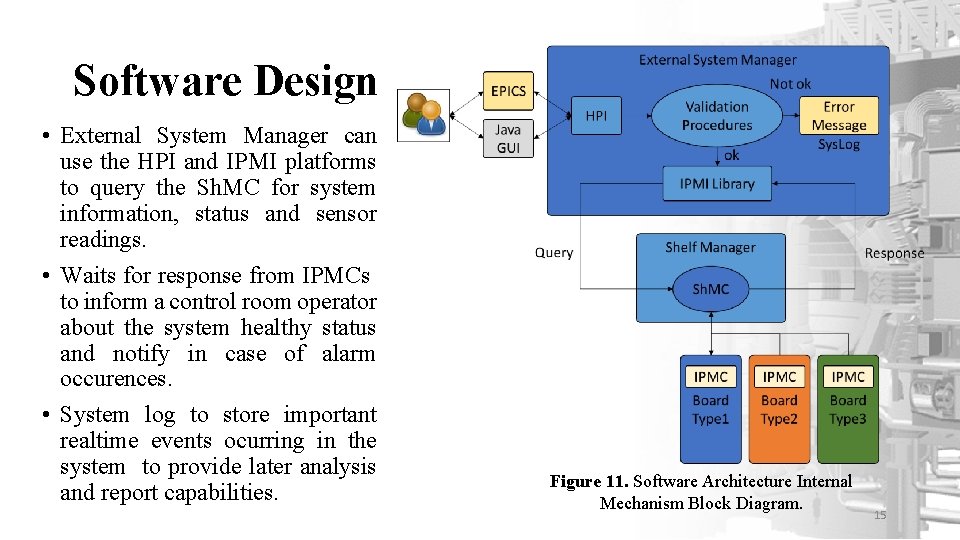
Software Design • External System Manager can use the HPI and IPMI platforms to query the Sh. MC for system information, status and sensor readings. • Waits for response from IPMCs to inform a control room operator about the system healthy status and notify in case of alarm occurences. • System log to store important realtime events ocurring in the system to provide later analysis and report capabilities. Figure 11. Software Architecture Internal Mechanism Block Diagram. 15
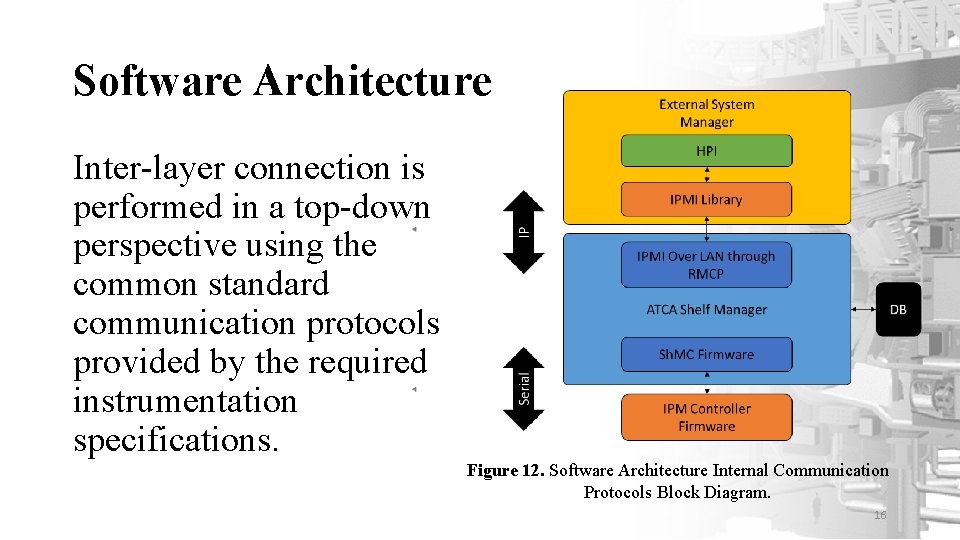
Software Architecture Inter-layer connection is performed in a top-down perspective using the common standard communication protocols provided by the required instrumentation specifications. Figure 12. Software Architecture Internal Communication Protocols Block Diagram. 16
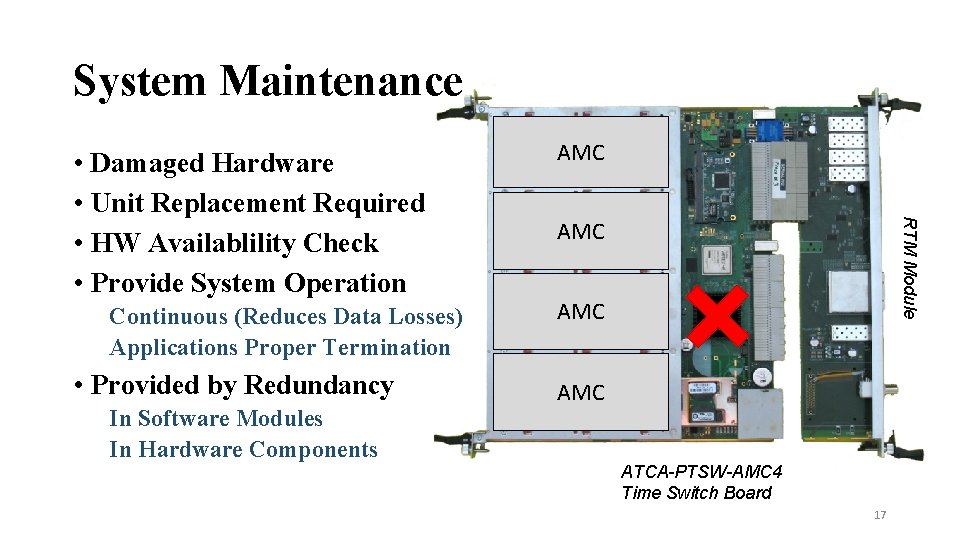
System Maintenance Continuous (Reduces Data Losses) Applications Proper Termination • Provided by Redundancy In Software Modules In Hardware Components AMC RTM Module • Damaged Hardware • Unit Replacement Required • HW Availablility Check • Provide System Operation AMC AMC ATCA-PTSW-AMC 4 Time Switch Board 17
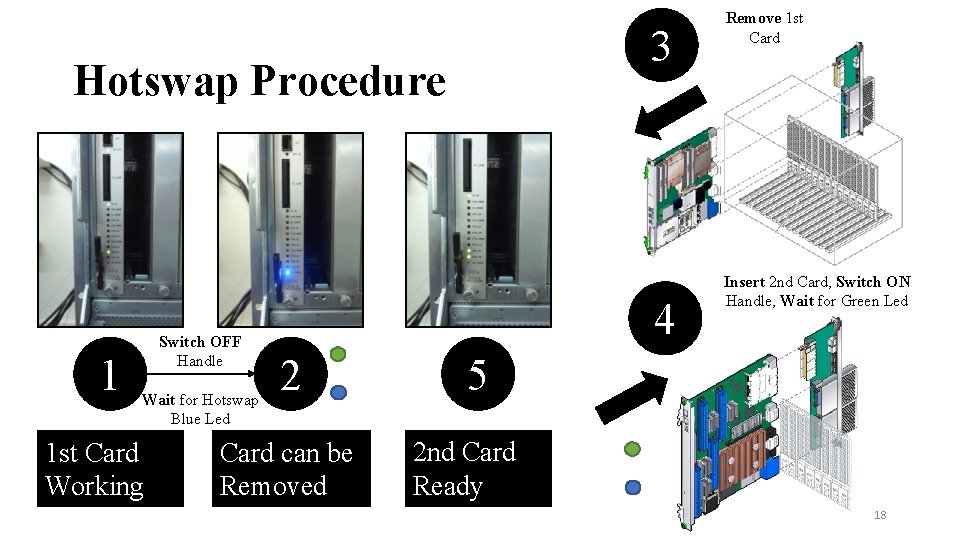
3 Hotswap Procedure 1 Switch OFF Handle Wait for Hotswap Blue Led 1 st Card Working 4 2 Card can be Removed Remove 1 st Card Insert 2 nd Card, Switch ON Handle, Wait for Green Led 5 2 nd Card Ready 18
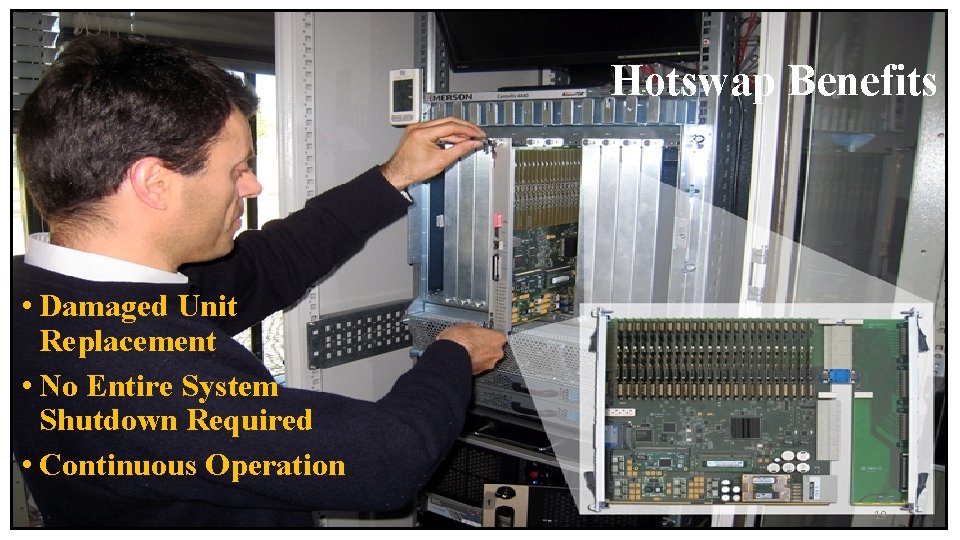
Hotswap Benefits • Damaged Unit Replacement • No Entire System Shutdown Required • Continuous Operation 19
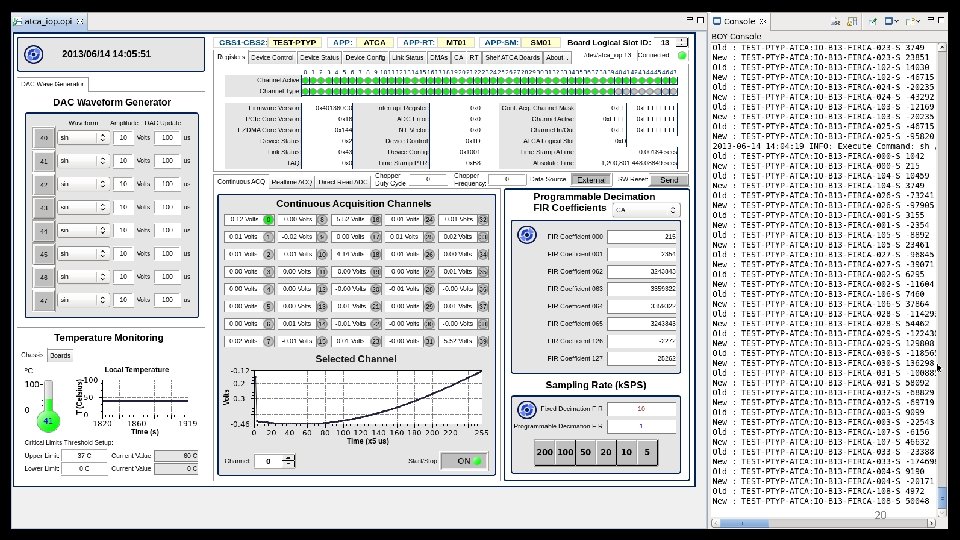
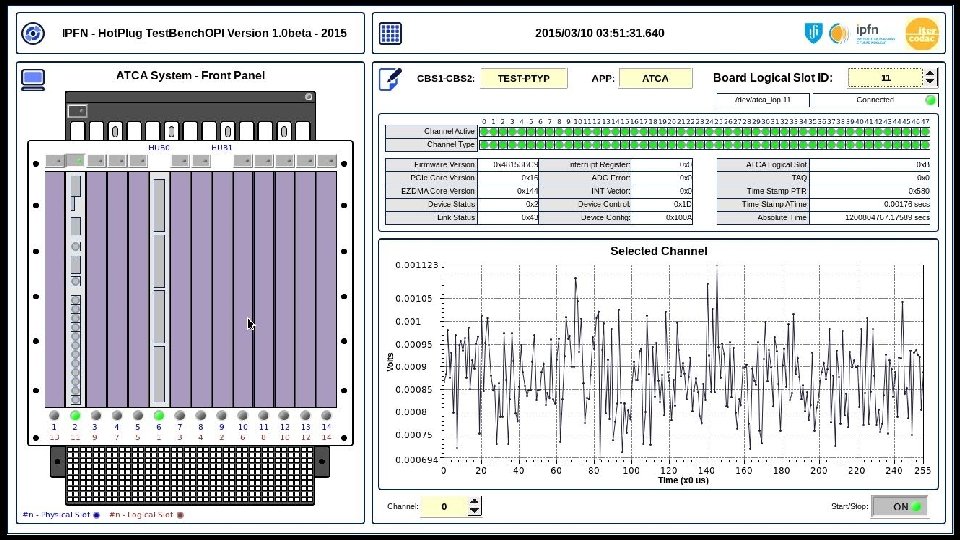
20
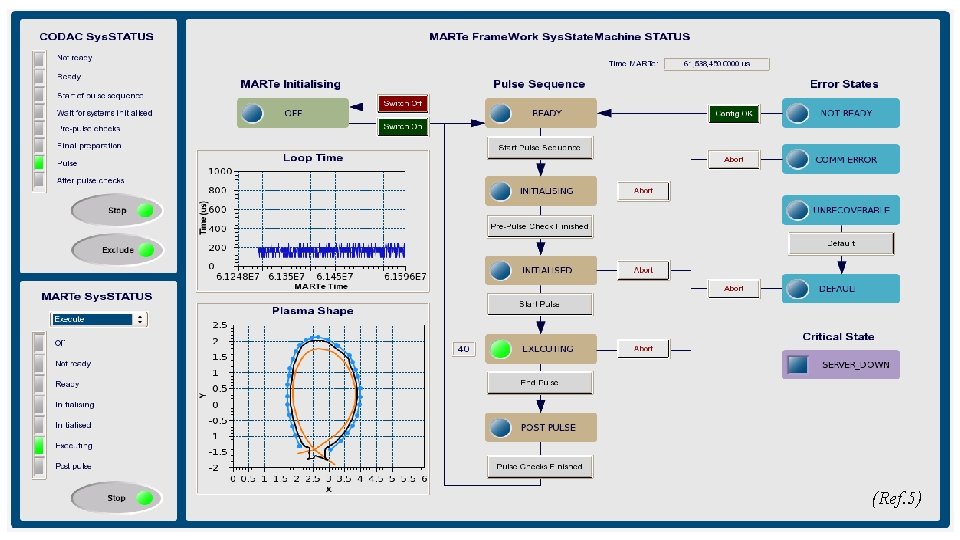
(Ref. 5) 21
22
Conclusions • Guarantees better response to control and data acquisition systems failures. • Prevents plasma disruptions in nuclear fusion experiments and tokamak machine components damages. • Allows acquisition transfers with less data losses operating in a nonstop environment. • Provides system information, acquisition and configuration, safety operation, simplifies hardware maintenance, allows local or remote software and firmware upgrades and system databases updates. • Ensures fusion power plant preservation, avoids instrumentation failure, grants people and environment protection. 23
References 1. ITER prototype fast plant system controller based on ATCA platform, B. Goncalves · J. Sousa · B. B. Carvalho · A Batista · A Neto · B. Santos · A Duarte · D. Valcarcel · D. Alves · M. Correia · [. . . ] · N. Utzel · P. Makijarvi · C Leong · V Bexiga · I C Teixeira · J P Teixeira · A Barbalace · P Lousa · J Godinho · P Mota, Proc. IEEE Nuclear Science Symp. and Medical Imaging Conf. (NSS/MIC); 01/2011 2. Control and data acquisition ATCA/AXIe board designed for high system availability and reliability of nuclear fusion experiments, A. J. N. Batista · C. Leong · V. Bexiga · A. P. Rodrigues · A. Combo · B. B. Carvalho · P. F. Carvalho · J. Fortunato · B. Santos · P. F. Carvalho · M. Correia · J. P. Teixeira · I. C. Teixeira · J. Sousa · B. Goncalves · C. A. F. Varandas 3. Timing distribution and synchronization of an ATCA fast controller for fusion devices, M. Correia · J. Sousa · B. B. Carvalho · A. Combo · A. P. Rodrigues · A. J. N. Batista · B. Santos · P. F. Carvalho · B. Goncalves · C. M. B. A. Correia · C. A. F. Varandas, Real Time Conference (RT), 2012 18 th IEEE-NPSS; 01/2012 4. Intelligent Platform Management Controller Software Architecture in ATCA Modules for Fast Control Systems, A. P. Rodrigues · Miguel Correia · A. Batista · P. R. Carvalho · Bruno Santos · B. B. Carvalho · J. Sousa · B. Gonçalves · C. M. B. Correia · C. A. F. Varandas, IEEE Transactions on Nuclear Science 01/2012; 61(4). DOI: 10. 1109/RTC. 2012. 6418387 5. The ITER Fast Plant System Controller ATCA prototype Real-Time Software Architecture, B. B. Carvalho · B. Santos · P. F. Carvalho · A. Neto · L. Boncagni · A. J. N. Batista · M. Correia · J. Sousa · B. Gonçalves 24
Thank You! 25