
MONITORING EVALUATING CAPACITY BUILDING IN MALAWI Presentation by
MONITORING & EVALUATING CAPACITY BUILDING IN MALAWI Presentation by: Shamiso Najira and Evans Njewa Environmental Affairs Department Malawi.
Overview • Institutional Set-up • Monitoring and Evaluation Indicators for climate change • Performance Management System, as an M&E tool.
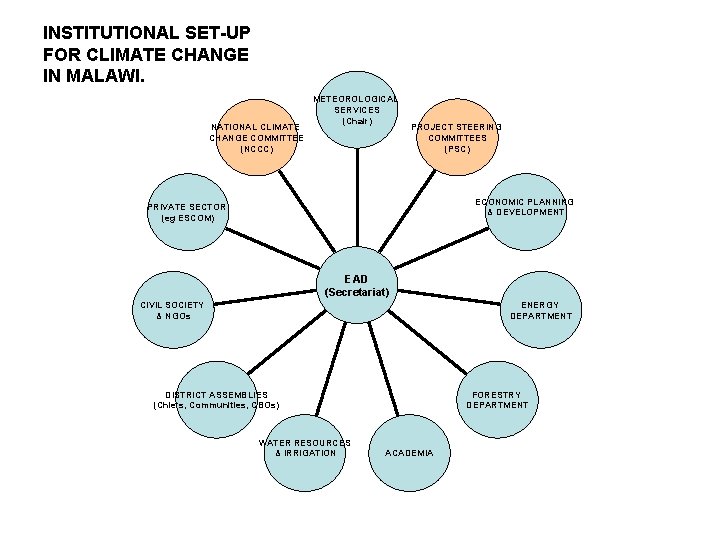
INSTITUTIONAL SET-UP FOR CLIMATE CHANGE IN MALAWI. NATIONAL CLIMATE CHANGE COMMITTEE (NCCC) METEOROLOGICAL SERVICES (Chair) PROJECT STEERING COMMITTEES (PSC) ECONOMIC PLANNING & DEVELOPMENT PRIVATE SECTOR (eg ESCOM) EAD (Secretariat) CIVIL SOCIETY & NGOs ENERGY DEPARTMENT DISTRICT ASSEMBLIES (Chiefs, Communities, CBOs) WATER RESOURCES & IRRIGATION FORESTRY DEPARTMENT ACADEMIA
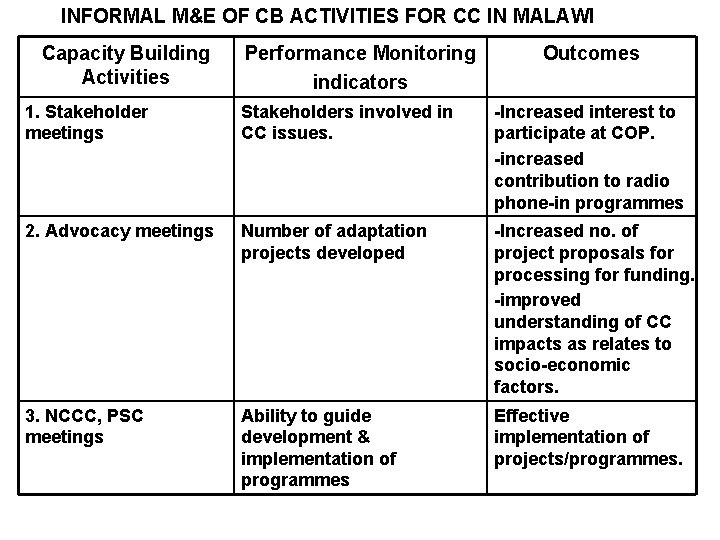
INFORMAL M&E OF CB ACTIVITIES FOR CC IN MALAWI Capacity Building Activities Performance Monitoring indicators Outcomes 1. Stakeholder meetings Stakeholders involved in CC issues. -Increased interest to participate at COP. -increased contribution to radio phone-in programmes 2. Advocacy meetings Number of adaptation projects developed -Increased no. of project proposals for processing for funding. -improved understanding of CC impacts as relates to socio-economic factors. 3. NCCC, PSC meetings Ability to guide development & implementation of programmes Effective implementation of projects/programmes.
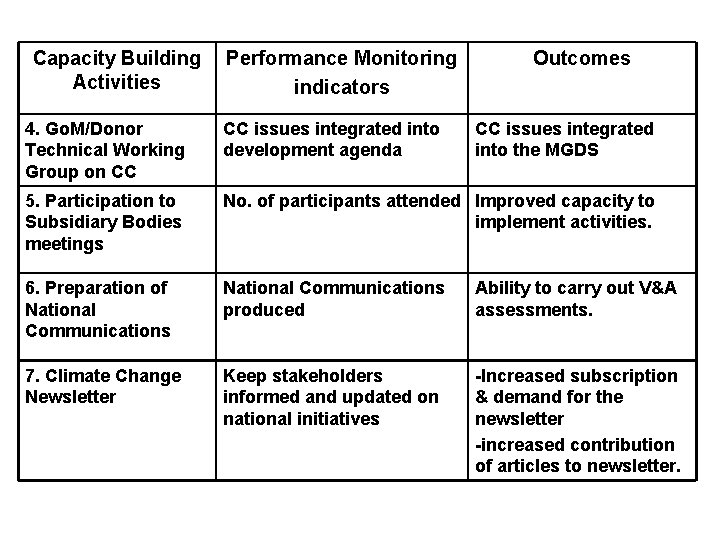
Capacity Building Activities Performance Monitoring indicators Outcomes 4. Go. M/Donor Technical Working Group on CC CC issues integrated into development agenda CC issues integrated into the MGDS 5. Participation to Subsidiary Bodies meetings No. of participants attended Improved capacity to implement activities. 6. Preparation of National Communications produced Ability to carry out V&A assessments. 7. Climate Change Newsletter Keep stakeholders informed and updated on national initiatives -Increased subscription & demand for the newsletter -increased contribution of articles to newsletter.
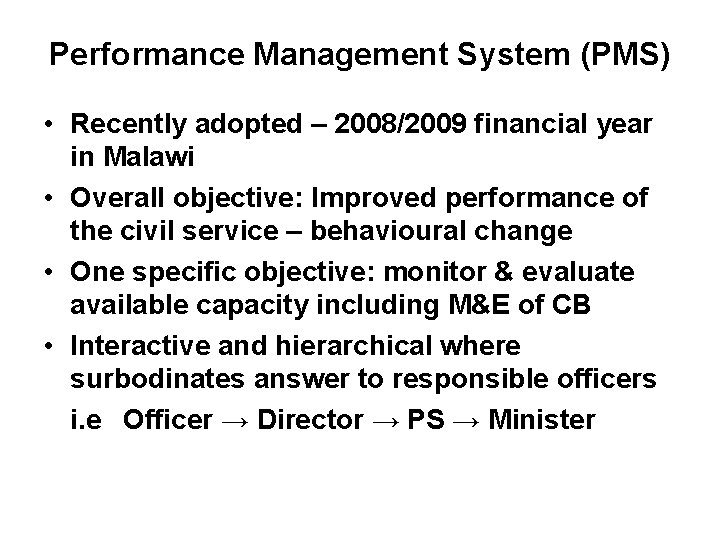
Performance Management System (PMS) • Recently adopted – 2008/2009 financial year in Malawi • Overall objective: Improved performance of the civil service – behavioural change • One specific objective: monitor & evaluate available capacity including M&E of CB • Interactive and hierarchical where surbodinates answer to responsible officers i. e Officer → Director → PS → Minister
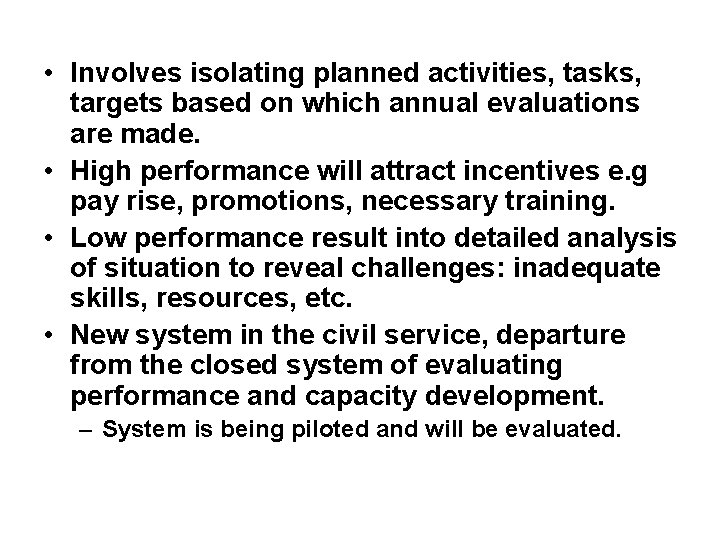
• Involves isolating planned activities, tasks, targets based on which annual evaluations are made. • High performance will attract incentives e. g pay rise, promotions, necessary training. • Low performance result into detailed analysis of situation to reveal challenges: inadequate skills, resources, etc. • New system in the civil service, departure from the closed system of evaluating performance and capacity development. – System is being piloted and will be evaluated.
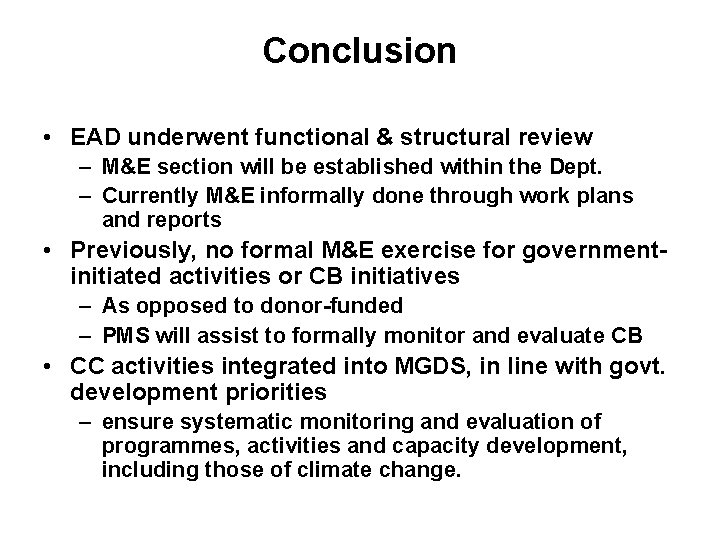
Conclusion • EAD underwent functional & structural review – M&E section will be established within the Dept. – Currently M&E informally done through work plans and reports • Previously, no formal M&E exercise for governmentinitiated activities or CB initiatives – As opposed to donor-funded – PMS will assist to formally monitor and evaluate CB • CC activities integrated into MGDS, in line with govt. development priorities – ensure systematic monitoring and evaluation of programmes, activities and capacity development, including those of climate change.

END OF PRESENTATION THANK YOU
- Slides: 9