
Monitoring Creatures Great and Small Computer Vision Systems


- Slides: 25
Monitoring Creatures Great and Small: Computer Vision Systems for Looking at Grizzly Bears, Fish, and Grasshoppers Greg Mori, Maryam Moslemi, Andy Rova, Payam Sabzmeydani, Jens Wawerla Simon Fraser University VAIB workshop - December 7, 2008
Captivating Cinema video: Prof. Larry Dill, SFU Biological Sciences
Computer Vision for Data Collection • “Looking at Animals” problems • • • Sifting through video to find animals Determining what the animals are up to Classifying species of animals • Symbiotic relationship • • Natural scientists receive data Computer scientists receive real-world datasets ground truth for quantifiable success/failure • •
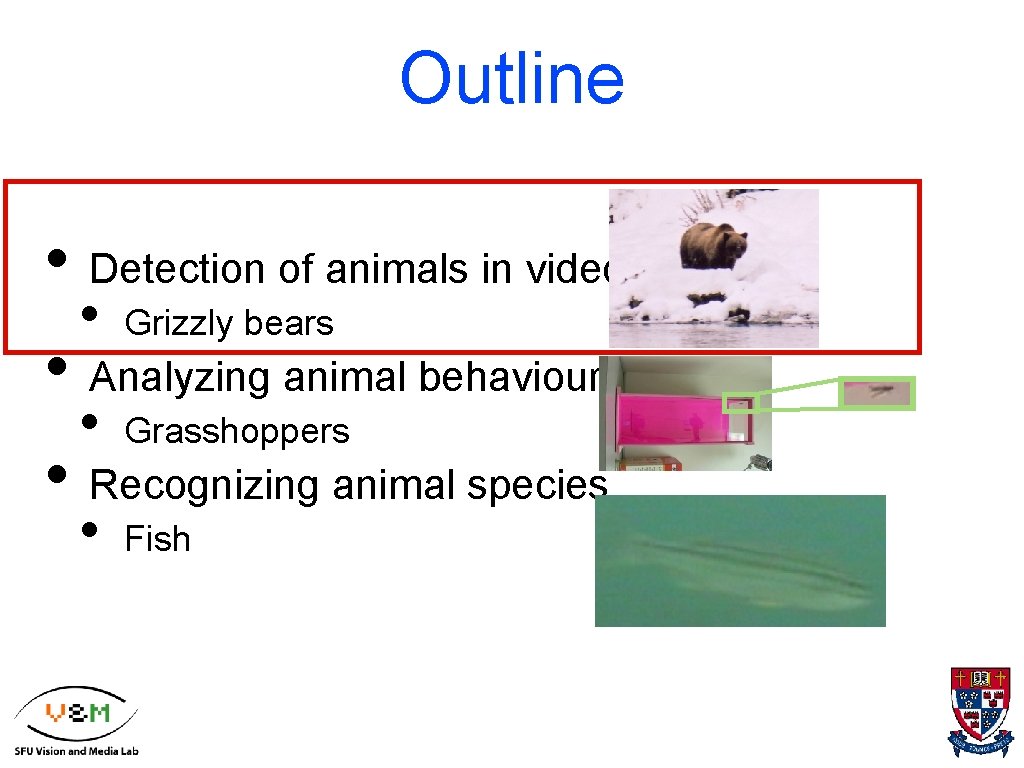
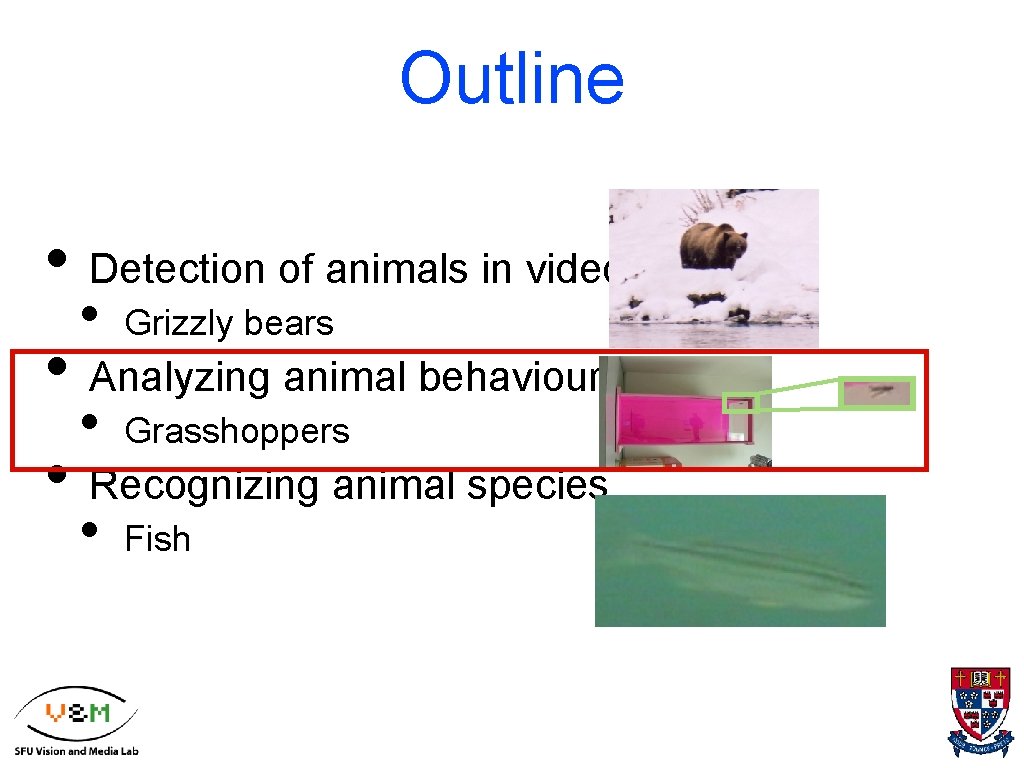
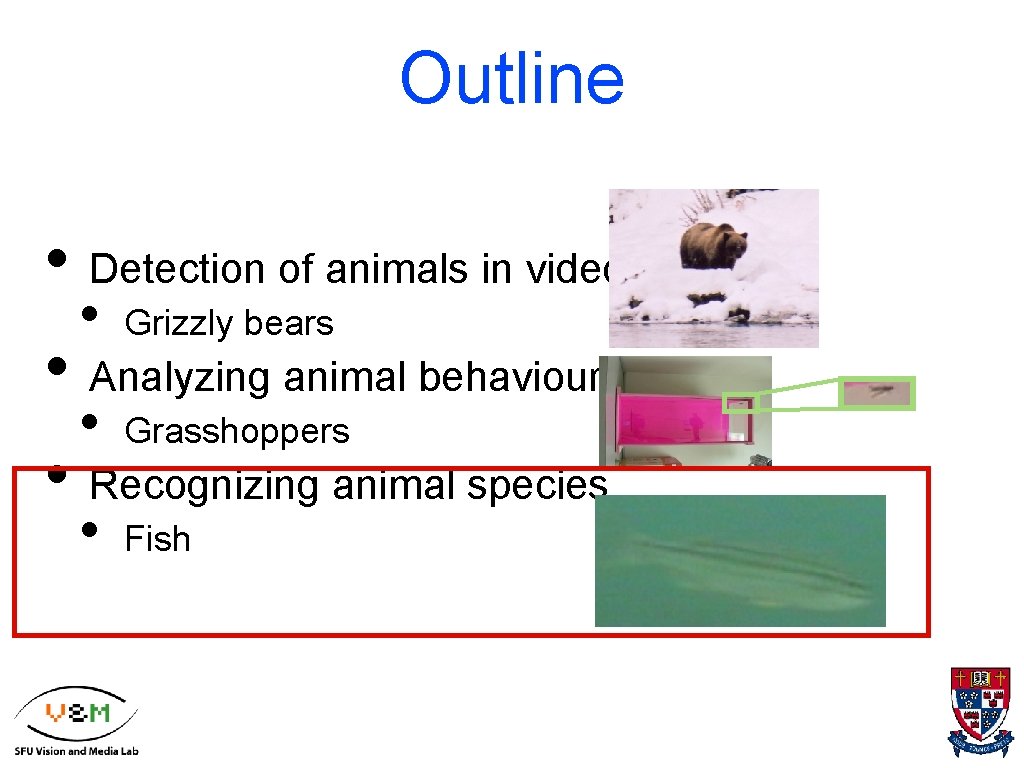
Outline • Detection of animals in video • Grizzly bears • Analyzing animal behaviours • Grasshoppers • Recognizing animal species • Fish
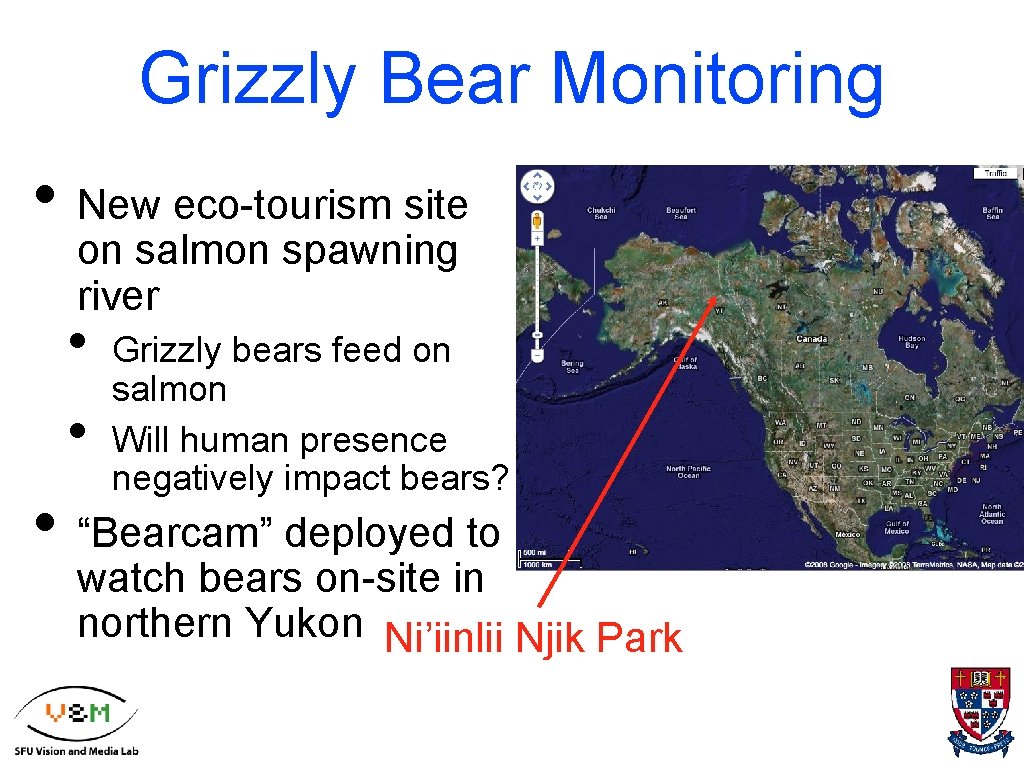
Grizzly Bear Monitoring • New eco-tourism site on salmon spawning river • • Grizzly bears feed on salmon Will human presence negatively impact bears? • “Bearcam” deployed to watch bears on-site in northern Yukon Ni’iinlii Njik Park
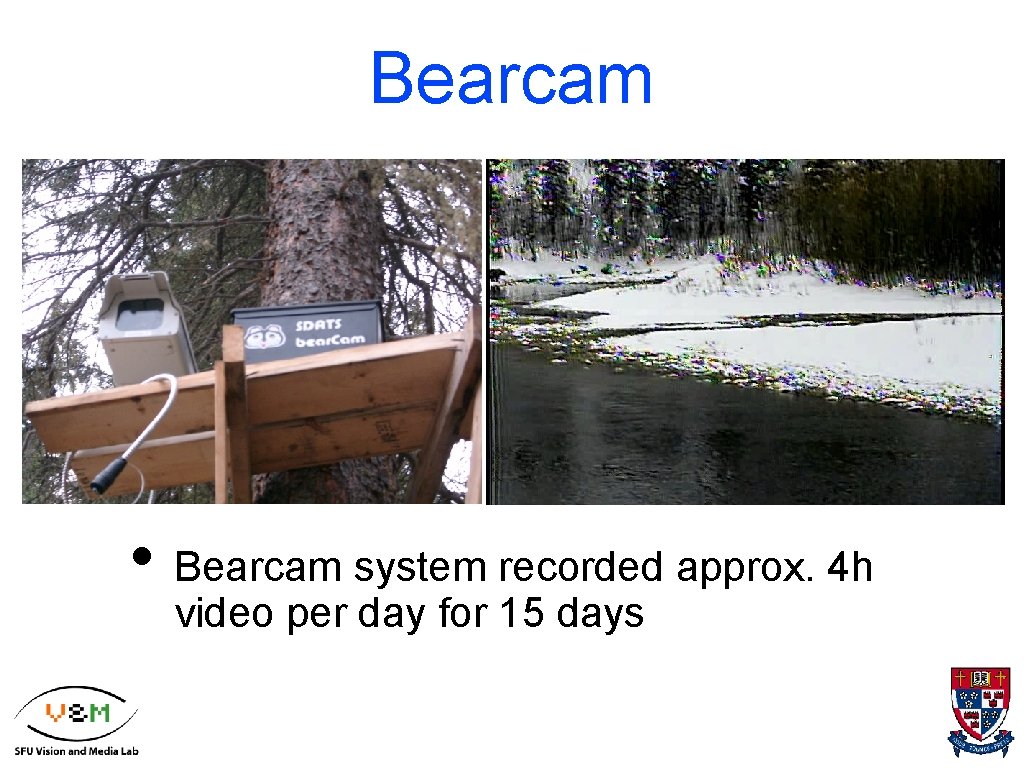
Bearcam • Bearcam system recorded approx. 4 h video per day for 15 days
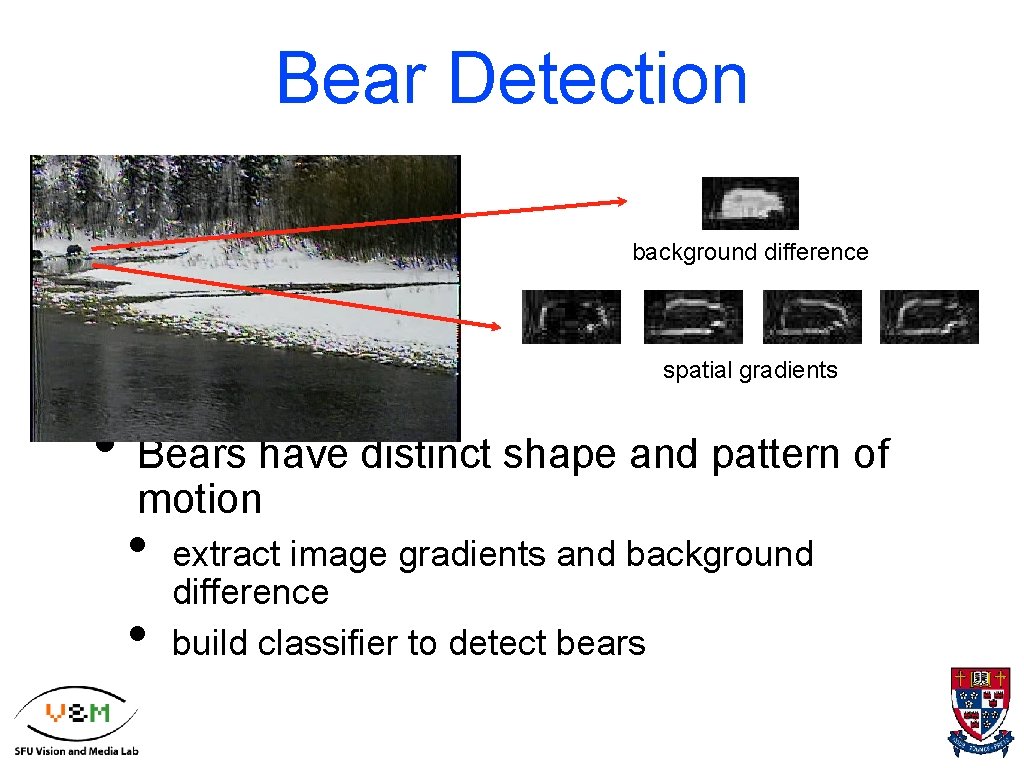
Bear Detection background difference spatial gradients • Bears have distinct shape and pattern of motion • • extract image gradients and background difference build classifier to detect bears
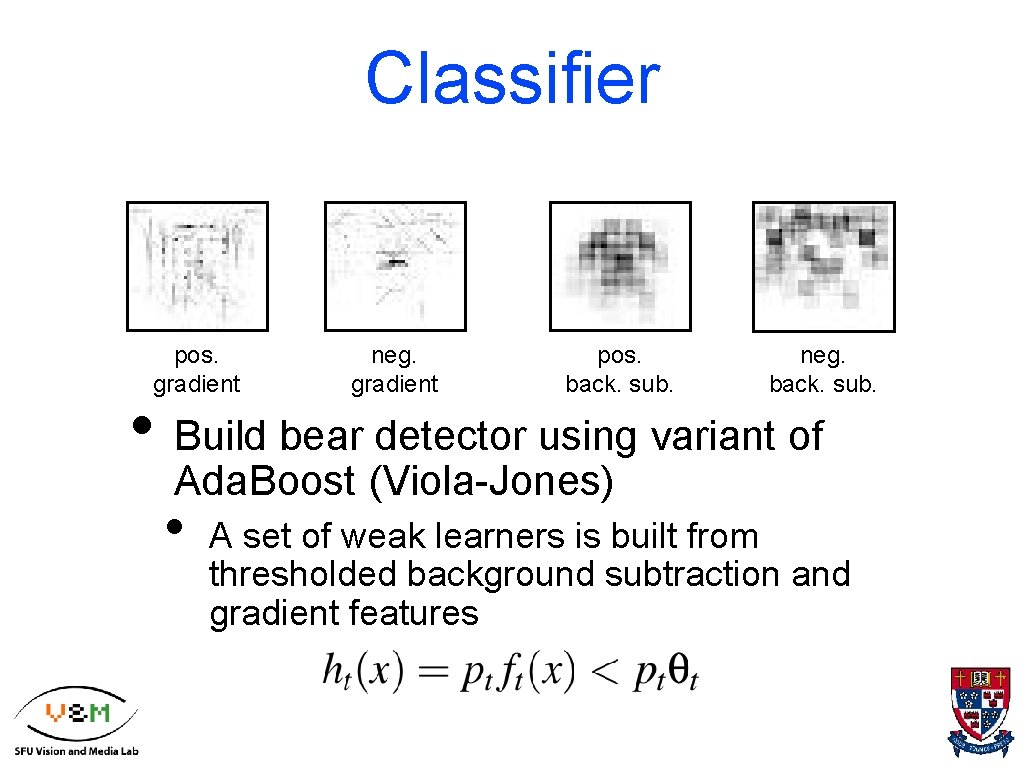
Classifier pos. gradient neg. gradient pos. back. sub. neg. back. sub. • Build bear detector using variant of Ada. Boost (Viola-Jones) • A set of weak learners is built from thresholded background subtraction and gradient features
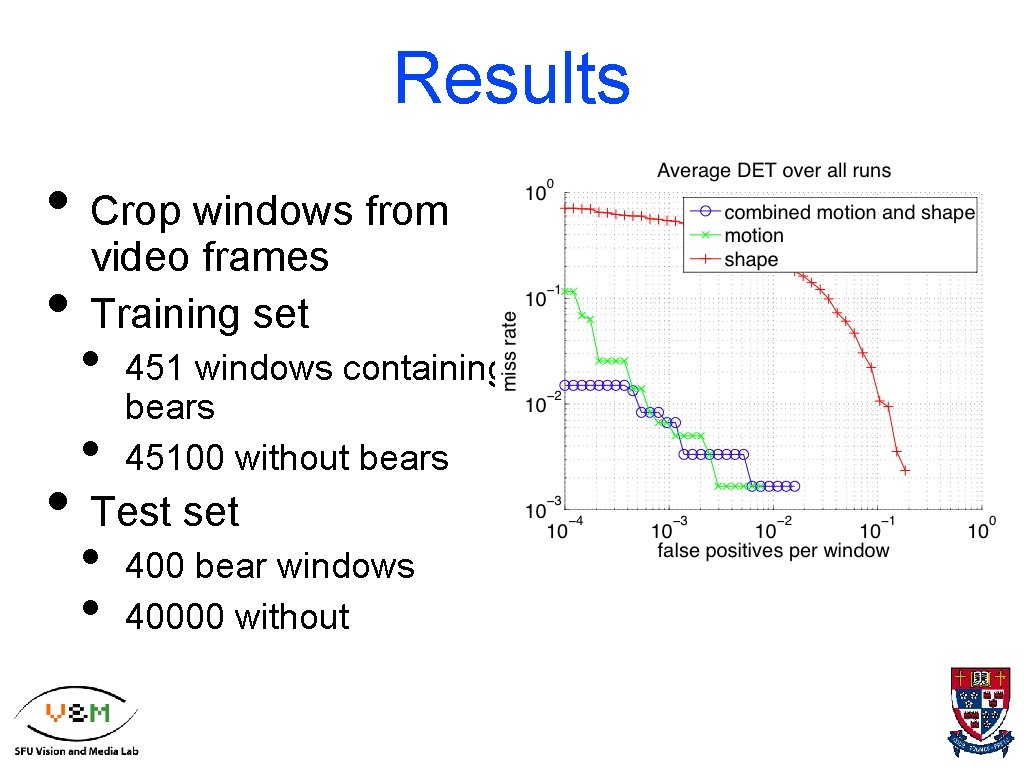
Results • Crop windows from video frames • Training set • • 451 windows containing bears 45100 without bears • • 400 bear windows 40000 without • Test set
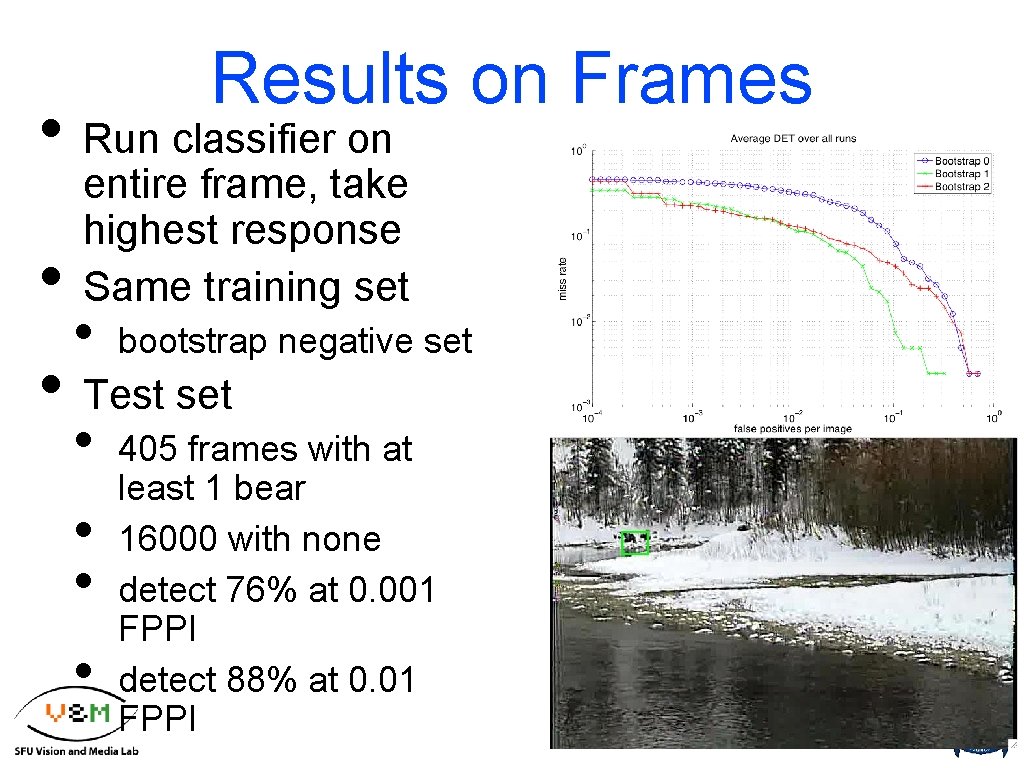
Results on Frames • Run classifier on entire frame, take highest response Same training set • • bootstrap negative set • Test set • • 405 frames with at least 1 bear 16000 with none detect 76% at 0. 001 FPPI detect 88% at 0. 01 FPPI
Outline • Detection of animals in video • Grizzly bears • Analyzing animal behaviours • Grasshoppers • Recognizing animal species • Fish
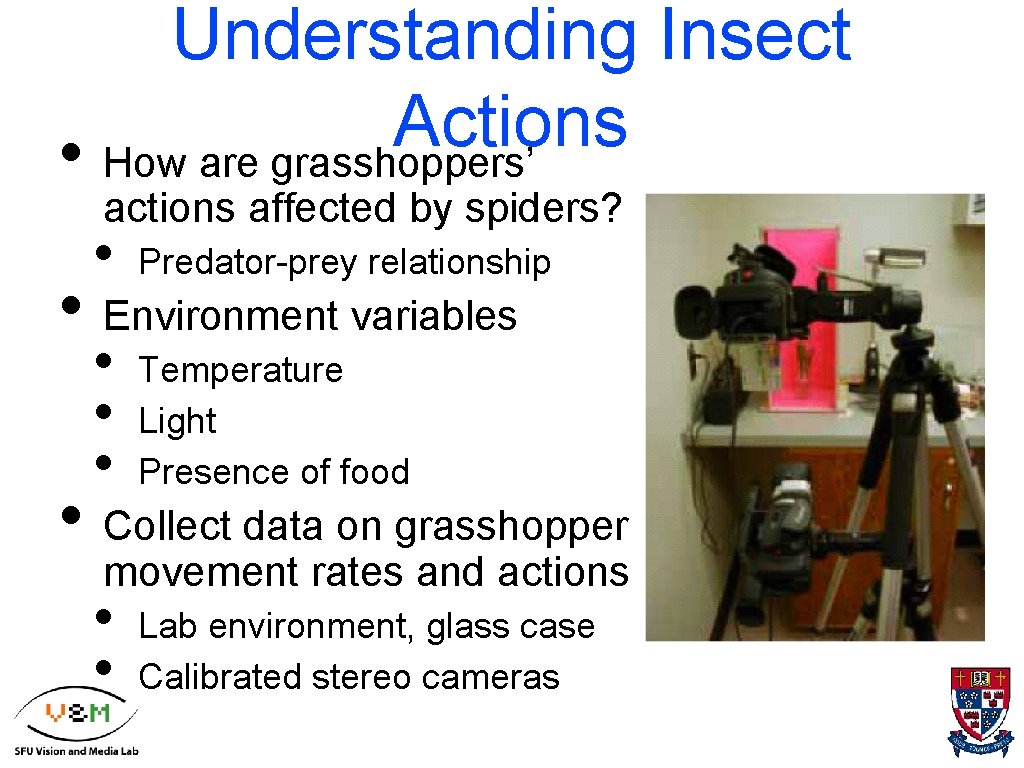
Understanding Insect Actions • How are grasshoppers’ actions affected by spiders? • Predator-prey relationship • • • Temperature Light Presence of food • Environment variables • Collect data on grasshopper movement rates and actions • • Lab environment, glass case Calibrated stereo cameras
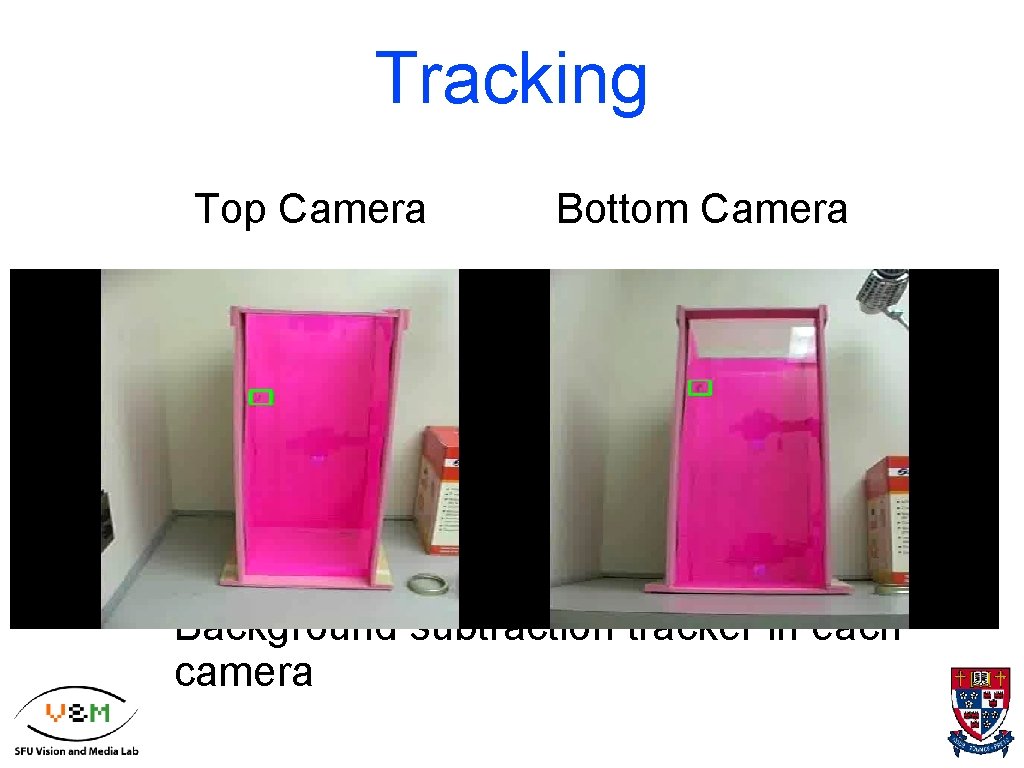
Tracking Top Camera Bottom Camera • Background subtraction tracker in each camera
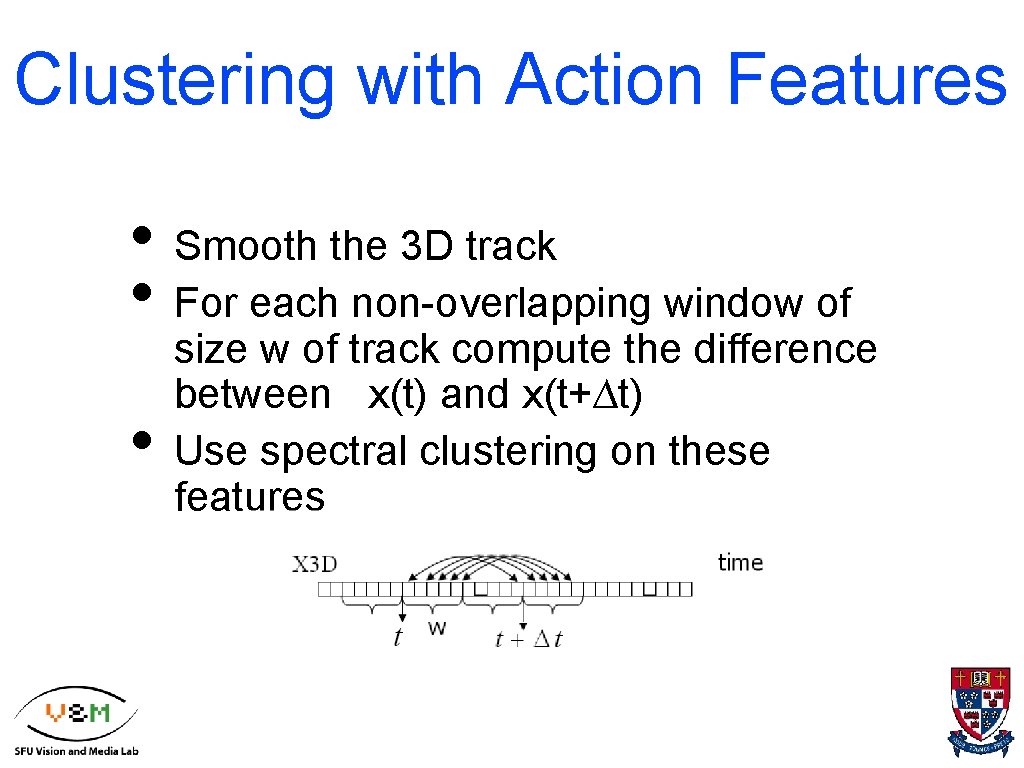
Clustering with Action Features • Smooth the 3 D track • For each non-overlapping window of • size w of track compute the difference between x(t) and x(t+∆t) Use spectral clustering on these features
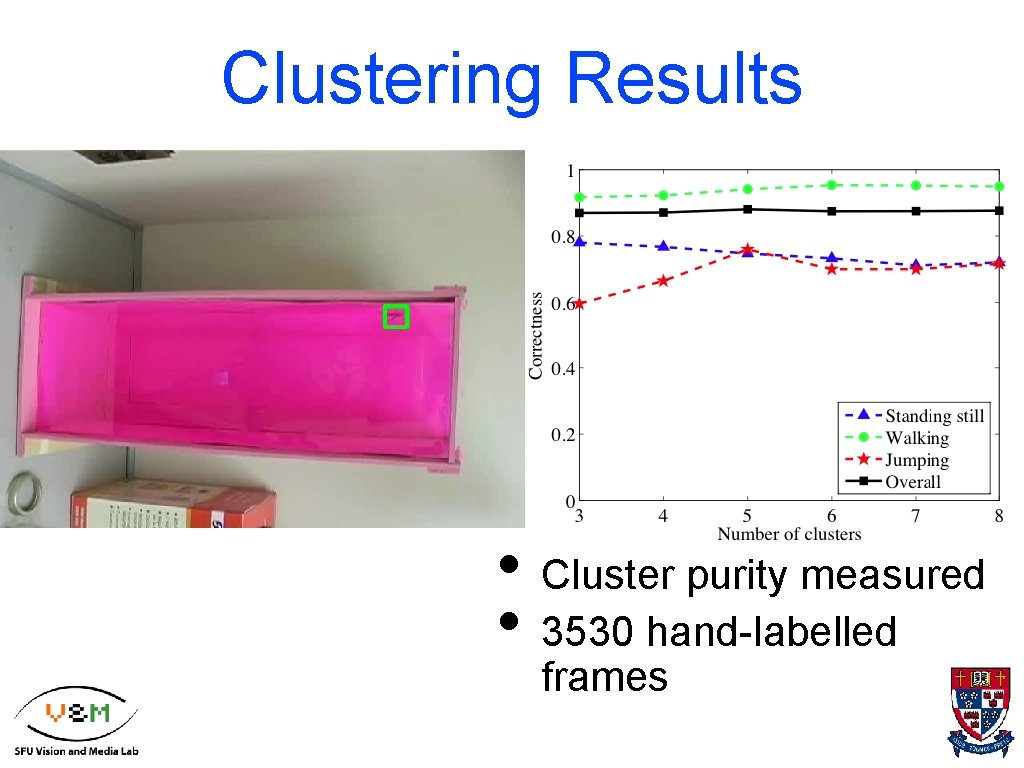
Clustering Results • Cluster purity measured • 3530 hand-labelled frames
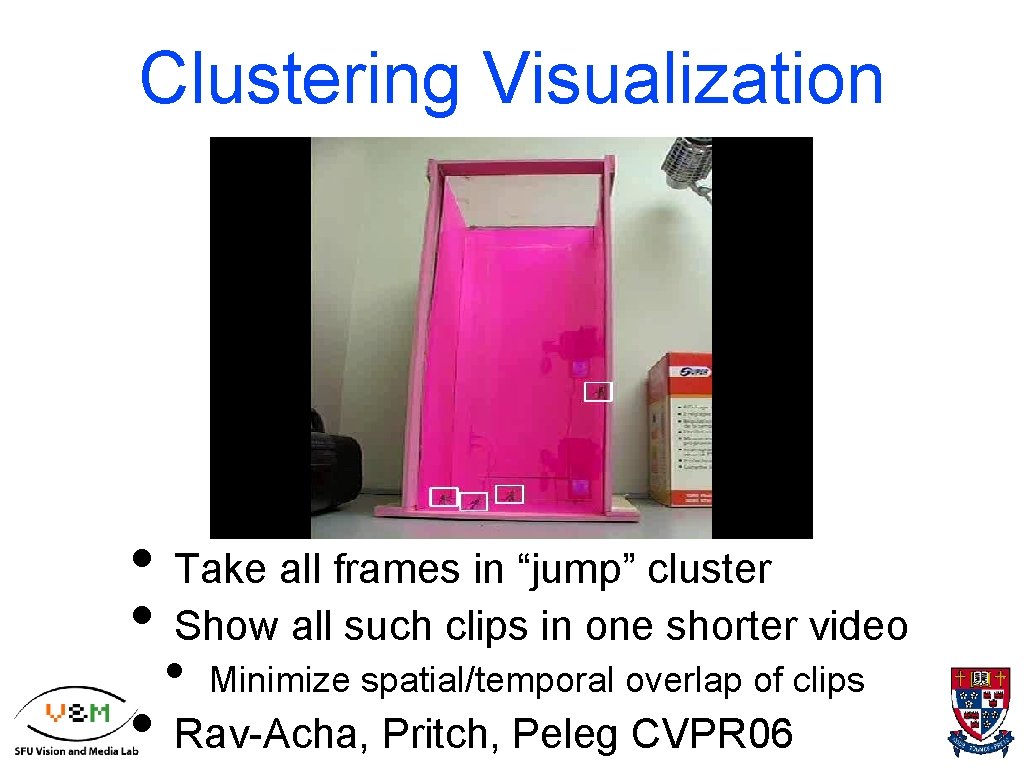
Clustering Visualization • Take all frames in “jump” cluster • Show all such clips in one shorter video • Minimize spatial/temporal overlap of clips • Rav-Acha, Pritch, Peleg CVPR 06
Outline • Detection of animals in video • Grizzly bears • Analyzing animal behaviours • Grasshoppers • Recognizing animal species • Fish
Counting Fish • Biologists have many hours of underwater video footage • • Require count of fish by species • Use as proxy for tiger shark count Currently, people must watch and manually identify/count • Automatic system could save many hours of labour
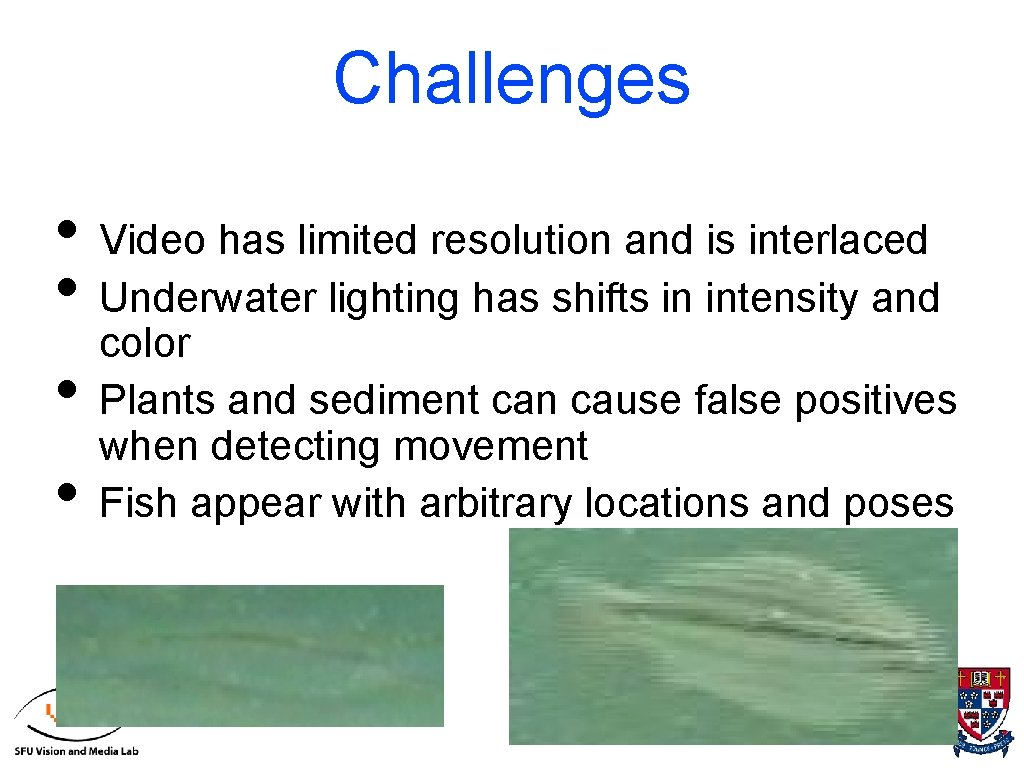
Challenges • Video has limited resolution and is interlaced • Underwater lighting has shifts in intensity and color • Plants and sediment can cause false positives when detecting movement • Fish appear with arbitrary locations and poses
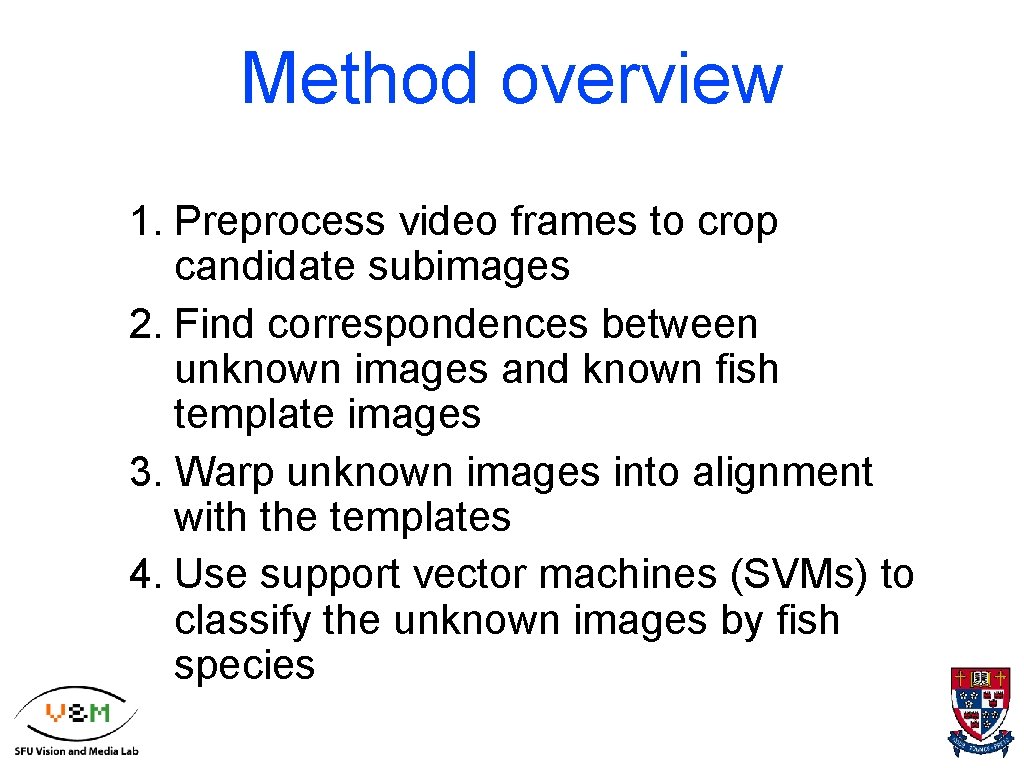
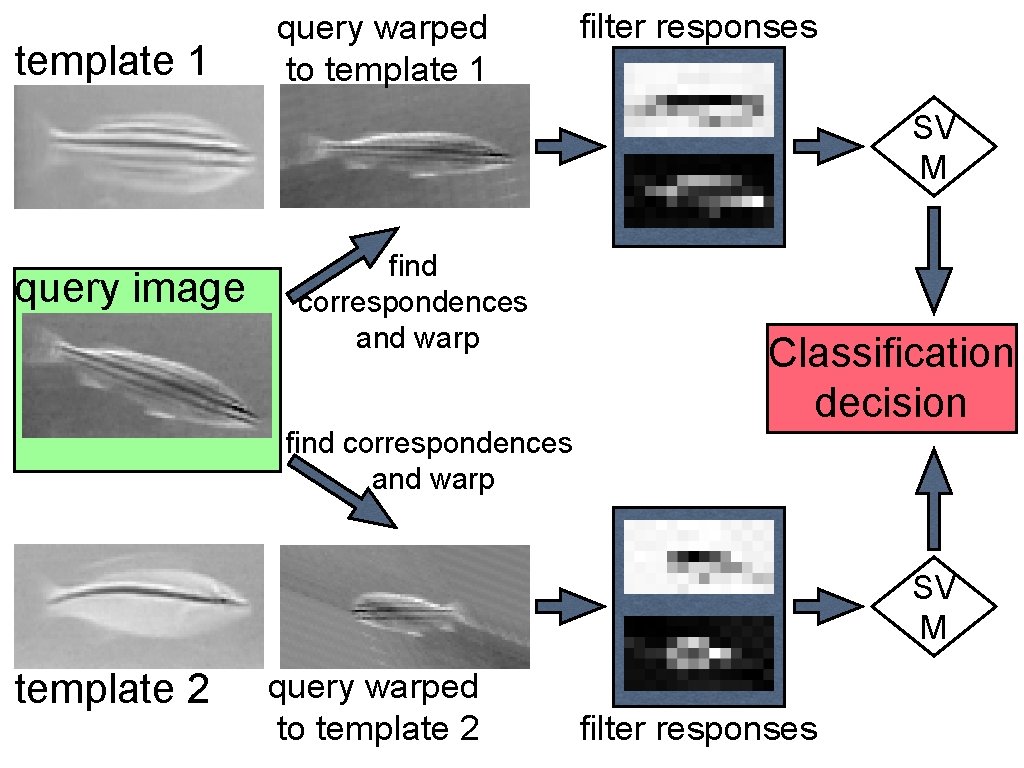
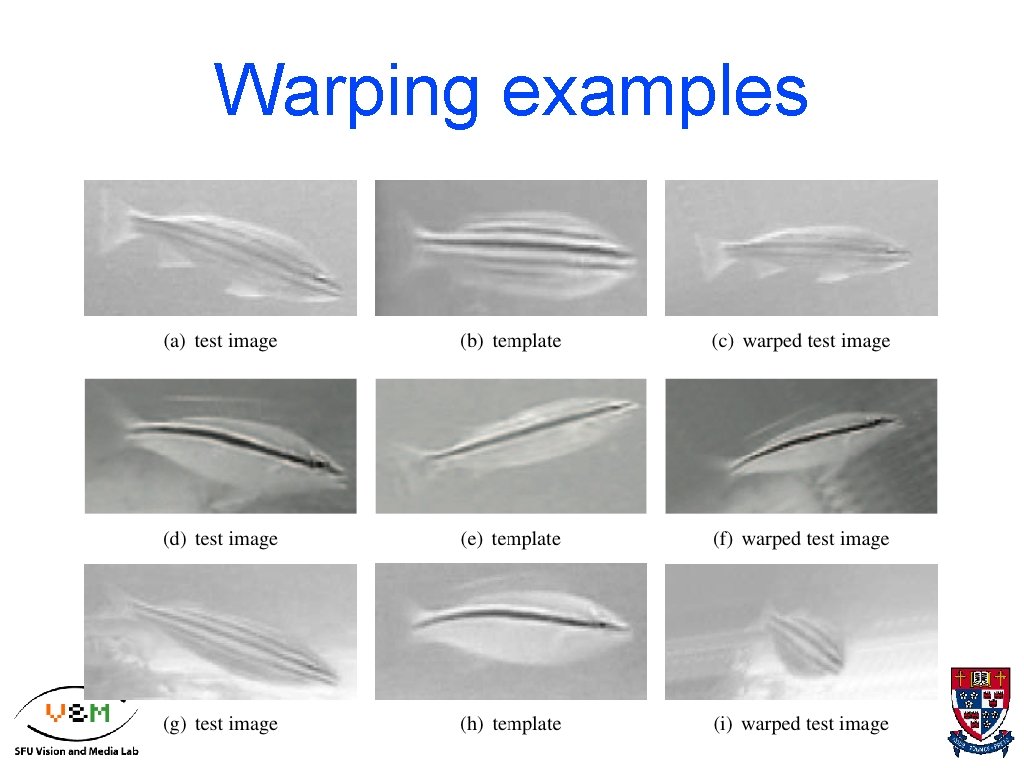
Method overview 1. Preprocess video frames to crop candidate subimages 2. Find correspondences between unknown images and known fish template images 3. Warp unknown images into alignment with the templates 4. Use support vector machines (SVMs) to classify the unknown images by fish species
template 1 query warped to template 1 filter responses SV M query image find correspondences and warp Classification decision SV M template 2 query warped to template 2 filter responses
Warping examples
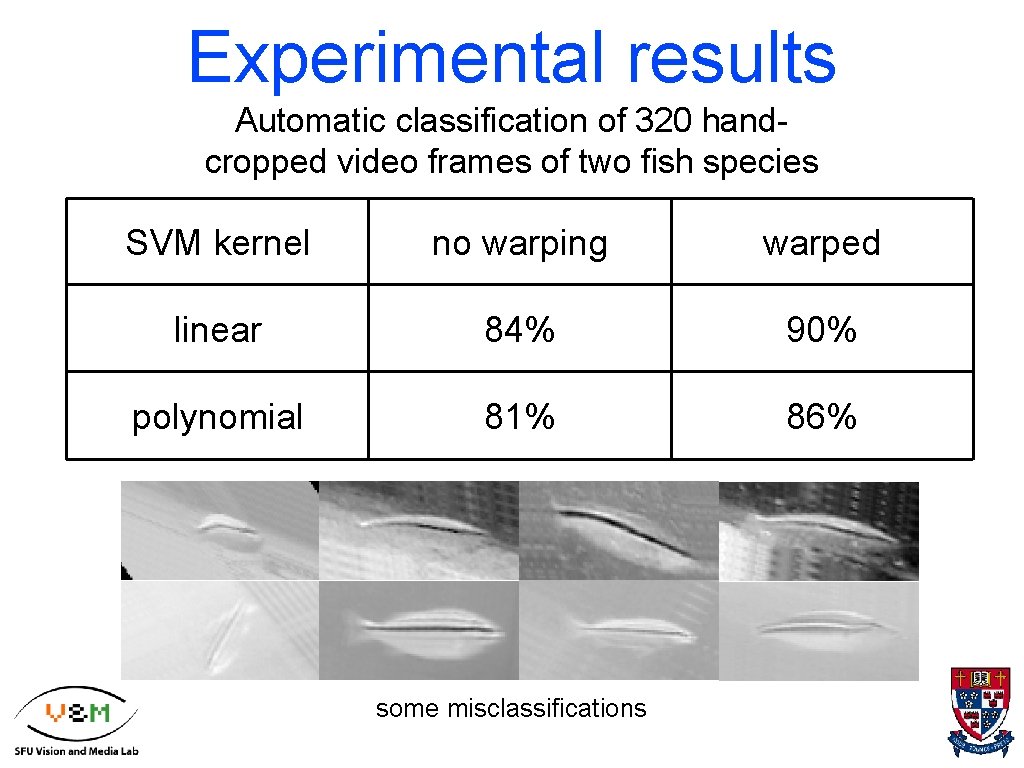
Experimental results Automatic classification of 320 handcropped video frames of two fish species SVM kernel no warping warped linear 84% 90% polynomial 81% 86% some misclassifications
Acknowledgements • graduate students • natural scientist collaborators • Prof. Dill, Prof. Rothley, S. Marshall, G. Dutton • funding from Canada Foundation for Innovation / BC Knowledge Development Fund • Scientific Data Acquisition, Transmission, and Storage (SDATS) project
Thank you