
Monitoring and responding to AESI DRAFT MRB Learning
Monitoring and responding to AESI DRAFT MRB
Learning objectives: The learner should be able to DRAFT 1 1 2 3 Define an AESI & describe its practical applications in the country context 3 2 Explain the process of implementing AESI through Active Vaccine Safety Surveillance (AVSS) systems Plan the application of AESI in special populations and unique situations MRB
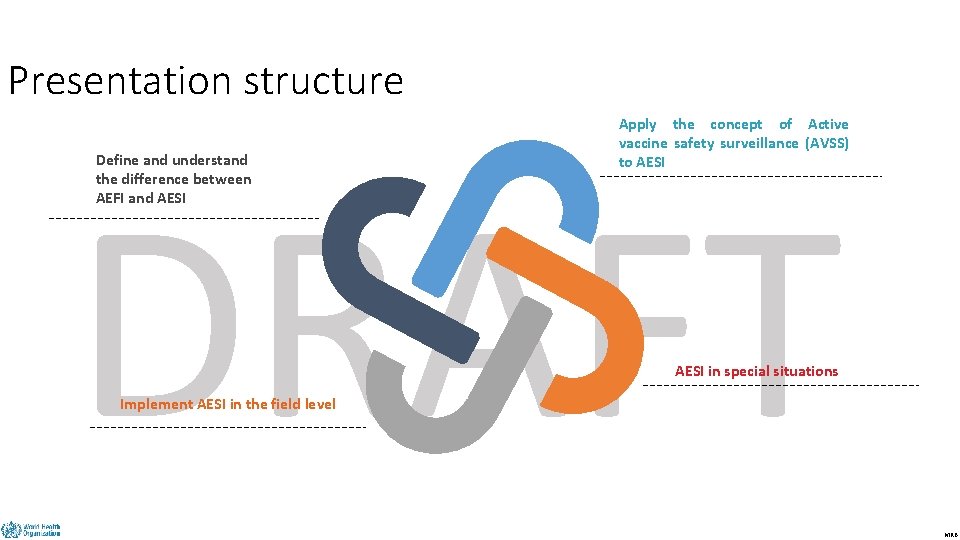
Presentation structure Apply the concept of Active vaccine safety surveillance (AVSS) to AESI DRAFT Define and understand the difference between AEFI and AESI in special situations Implement AESI in the field level MRB
Definition: Adverse events of special interest (AESI) DRAFT 40 • An AESI is a pre-specified medically-significant event that has the potential to be causally associated with a vaccine product that needs to be carefully monitored and confirmed by further special studies 30 50 20 60 10 70 MRB
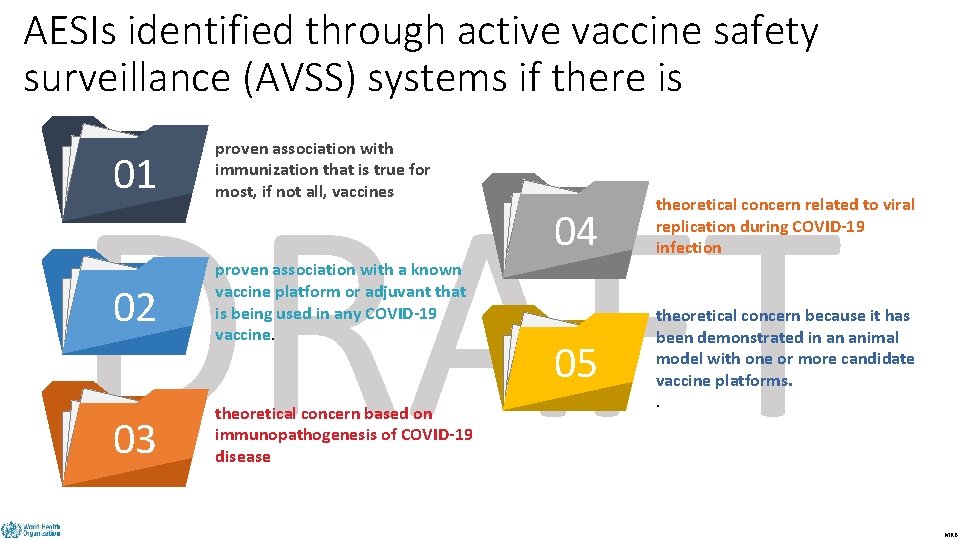
AESIs identified through active vaccine safety surveillance (AVSS) systems if there is proven association with immunization that is true for most, if not all, vaccines DRAFT 01 02 03 proven association with a known vaccine platform or adjuvant that is being used in any COVID-19 vaccine. theoretical concern based on immunopathogenesis of COVID-19 disease 04 theoretical concern related to viral replication during COVID-19 infection 05 theoretical concern because it has been demonstrated in an animal model with one or more candidate vaccine platforms. . MRB
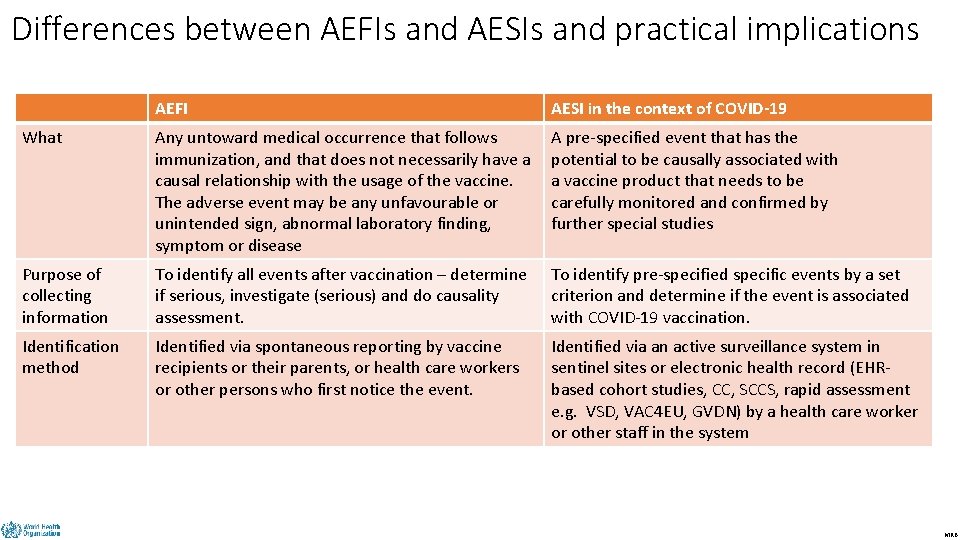
Differences between AEFIs and AESIs and practical implications AEFI AESI in the context of COVID-19 Any untoward medical occurrence that follows immunization, and that does not necessarily have a causal relationship with the usage of the vaccine. The adverse event may be any unfavourable or unintended sign, abnormal laboratory finding, symptom or disease A pre-specified event that has the potential to be causally associated with a vaccine product that needs to be carefully monitored and confirmed by further special studies Purpose of collecting information To identify all events after vaccination – determine if serious, investigate (serious) and do causality assessment. To identify pre-specified specific events by a set criterion and determine if the event is associated with COVID-19 vaccination. Identification method Identified via spontaneous reporting by vaccine recipients or their parents, or health care workers or other persons who first notice the event. Identified via an active surveillance system in sentinel sites or electronic health record (EHRbased cohort studies, CC, SCCS, rapid assessment e. g. VSD, VAC 4 EU, GVDN) by a health care worker or other staff in the system What DRAFT MRB

Differences between AEFIs and AESIs and practical implications AEFI AESI in the context of COVID-19 Case definitions Important Critical Type of reporting All events that follow immunization and are notified to the health care system. All events identified through active surveillance that fit the case definition, irrespective of immunization status Training All frontline immunization staff in health care facilities (public and private); and other relevant staff for reporting, investigation, data analysis, and causality assessment Immunization staff and other health care workers in sentinel sites and predefined active surveillance systems, NIP/EPI mangers, NRA, research staff, national AEFI committee Users Health care workers, NIP/EPI managers, NRA, surveillance and information managers, epidemiologists, surveillance and information managers, vaccine safety partners including the community Sentinel site staff, NIP/EPI managers, NRA, epidemiologists, national AEFI committees, study teams DRAFT MRB
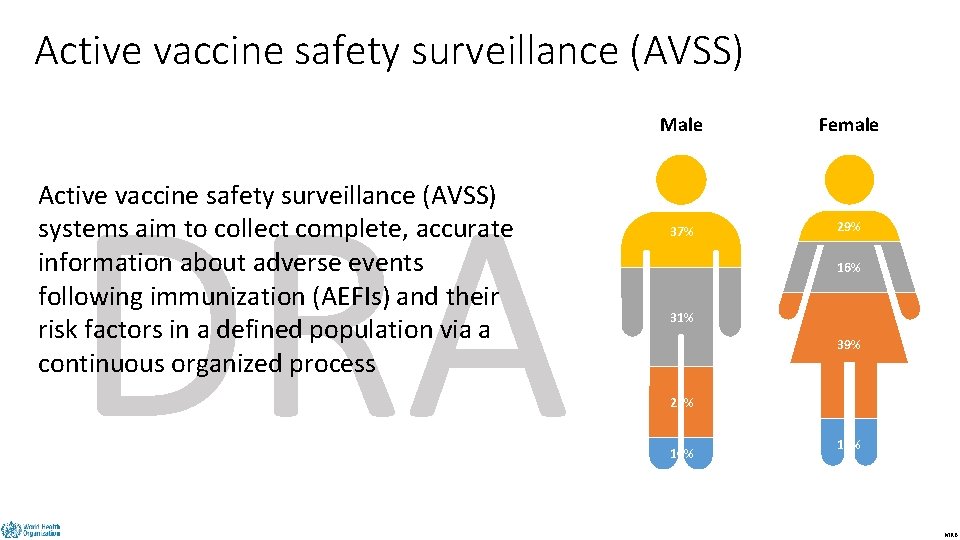
Active vaccine safety surveillance (AVSS) Male Female DRAFT Active vaccine safety surveillance (AVSS) systems aim to collect complete, accurate information about adverse events following immunization (AEFIs) and their risk factors in a defined population via a continuous organized process 37% 29% 16% 31% 39% 22% 10% 16% MRB
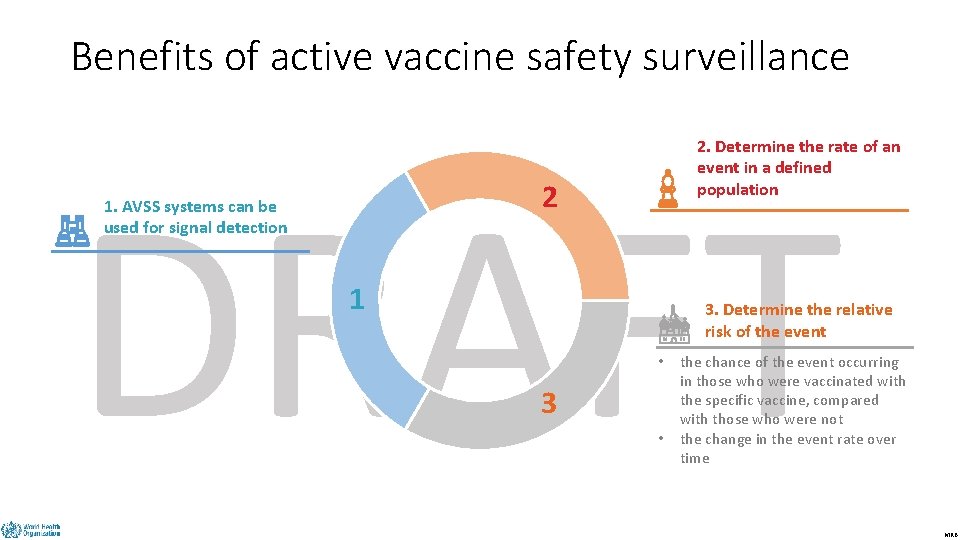
Benefits of active vaccine safety surveillance 2. Determine the rate of an event in a defined population DRAFT 2 1. AVSS systems can be used for signal detection 1 3. Determine the relative risk of the event • 3 • the chance of the event occurring in those who were vaccinated with the specific vaccine, compared with those who were not the change in the event rate over time MRB
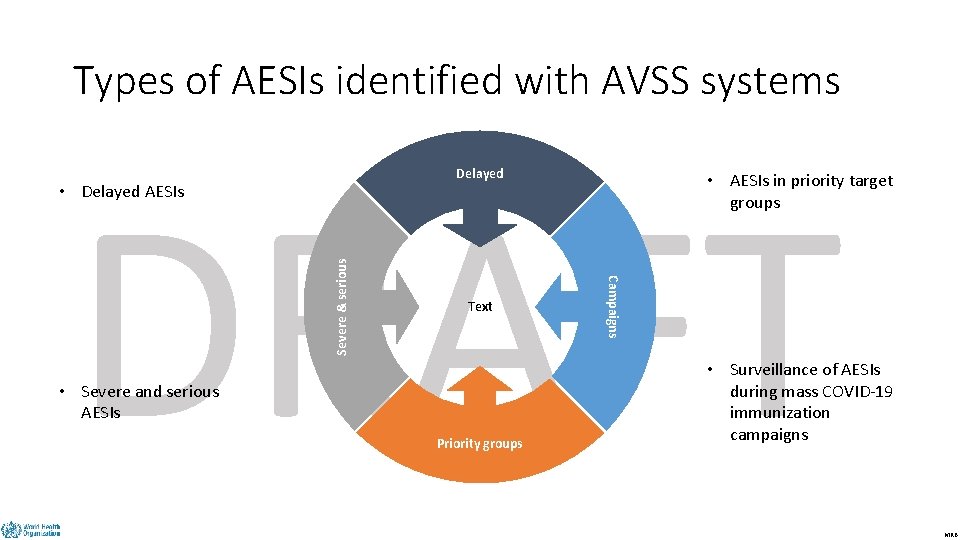
Types of AESIs identified with AVSS systems DRAFT Delayed Text • Severe and serious AESIs Priority groups • AESIs in priority target groups Campaigns Severe & serious • Delayed AESIs • Surveillance of AESIs during mass COVID-19 immunization campaigns MRB
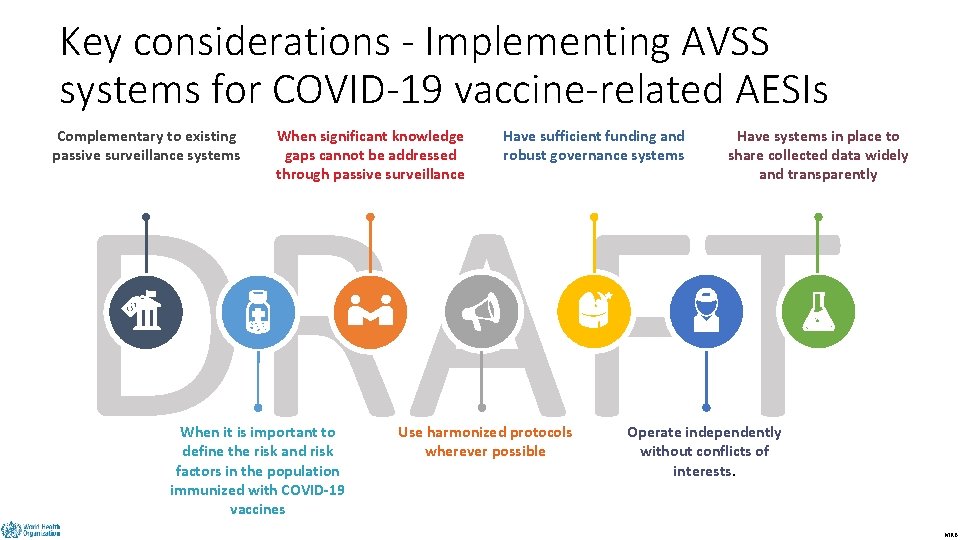
Key considerations - Implementing AVSS systems for COVID-19 vaccine-related AESIs Complementary to existing passive surveillance systems When significant knowledge gaps cannot be addressed through passive surveillance Have sufficient funding and robust governance systems Have systems in place to share collected data widely and transparently DRAFT When it is important to define the risk and risk factors in the population immunized with COVID-19 vaccines Use harmonized protocols wherever possible Operate independently without conflicts of interests. MRB
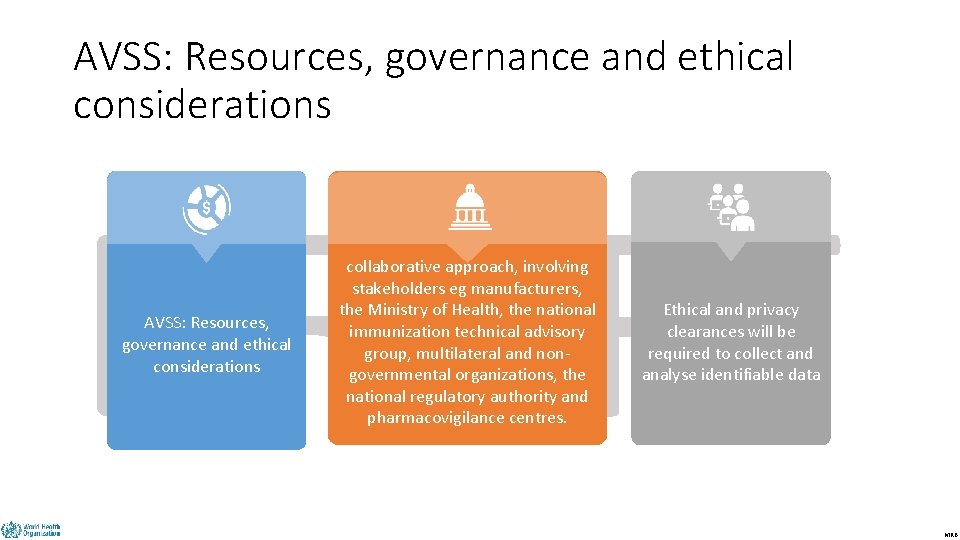
AVSS: Resources, governance and ethical considerations DRAFT AVSS: Resources, governance and ethical considerations collaborative approach, involving stakeholders eg manufacturers, the Ministry of Health, the national immunization technical advisory group, multilateral and nongovernmental organizations, the national regulatory authority and pharmacovigilance centres. Ethical and privacy clearances will be required to collect and analyse identifiable data MRB
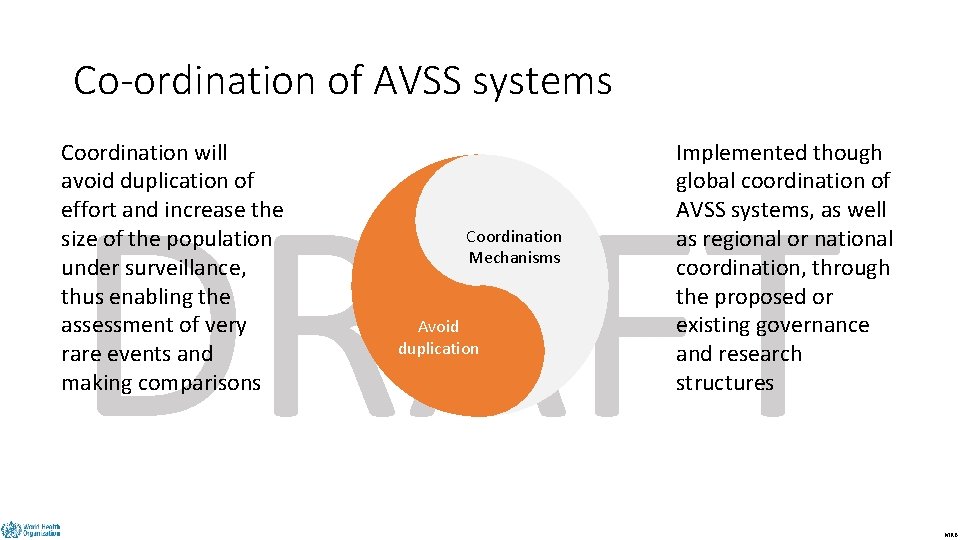
Co-ordination of AVSS systems Coordination will avoid duplication of effort and increase the size of the population under surveillance, thus enabling the assessment of very rare events and making comparisons Implemented though global coordination of AVSS systems, as well as regional or national coordination, through the proposed or existing governance and research structures DRAFT Coordination Mechanisms Avoid duplication MRB
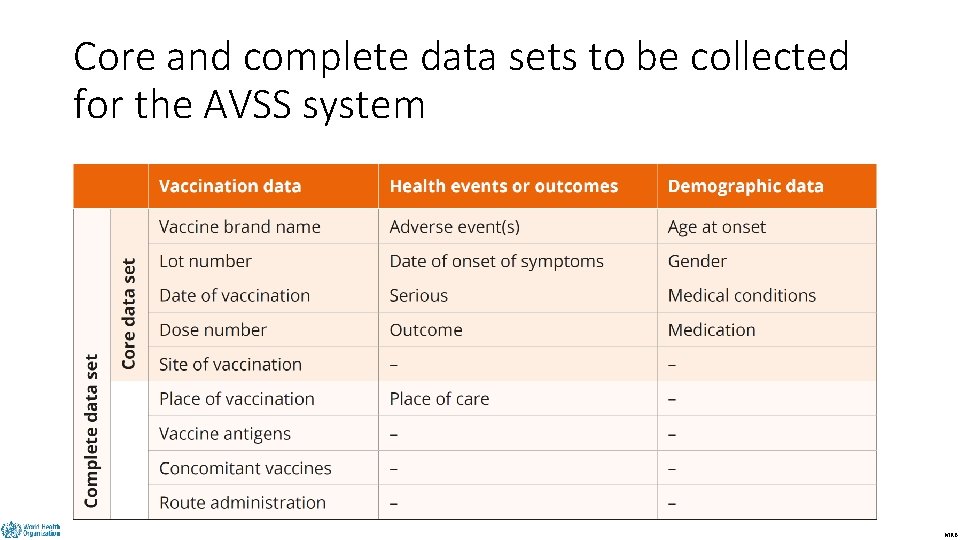
Core and complete data sets to be collected for the AVSS system DRAFT MRB
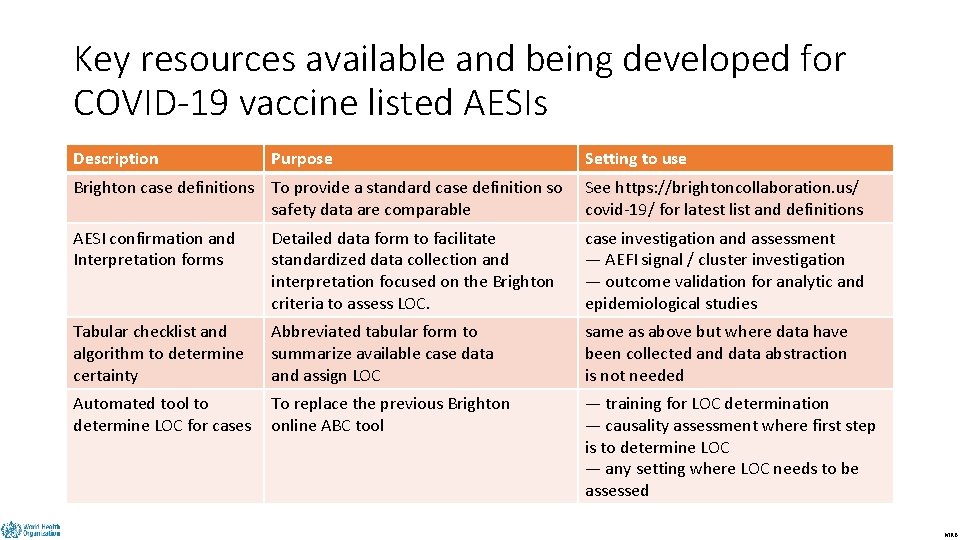
Key resources available and being developed for COVID-19 vaccine listed AESIs DRAFT Description Purpose Setting to use Brighton case definitions To provide a standard case definition so safety data are comparable See https: //brightoncollaboration. us/ covid-19/ for latest list and definitions AESI confirmation and Interpretation forms Detailed data form to facilitate standardized data collection and interpretation focused on the Brighton criteria to assess LOC. case investigation and assessment — AEFI signal / cluster investigation — outcome validation for analytic and epidemiological studies Tabular checklist and algorithm to determine certainty Abbreviated tabular form to summarize available case data and assign LOC same as above but where data have been collected and data abstraction is not needed Automated tool to determine LOC for cases To replace the previous Brighton online ABC tool — training for LOC determination — causality assessment where first step is to determine LOC — any setting where LOC needs to be assessed MRB
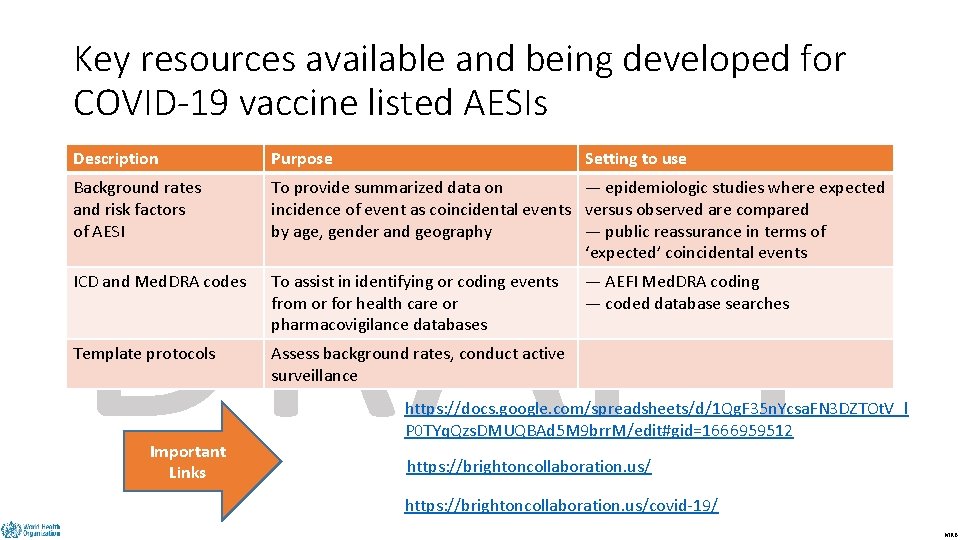
Key resources available and being developed for COVID-19 vaccine listed AESIs DRAFT Description Purpose Background rates and risk factors of AESI To provide summarized data on — epidemiologic studies where expected incidence of event as coincidental events versus observed are compared by age, gender and geography — public reassurance in terms of ‘expected’ coincidental events ICD and Med. DRA codes To assist in identifying or coding events from or for health care or pharmacovigilance databases Template protocols Assess background rates, conduct active surveillance Important Links Setting to use — AEFI Med. DRA coding — coded database searches https: //docs. google. com/spreadsheets/d/1 Qg. F 35 n. Ycsa. FN 3 DZTOt. V_l P 0 TYq. Qzs. DMUQBAd 5 M 9 brr. M/edit#gid=1666959512 https: //brightoncollaboration. us/covid-19/ MRB
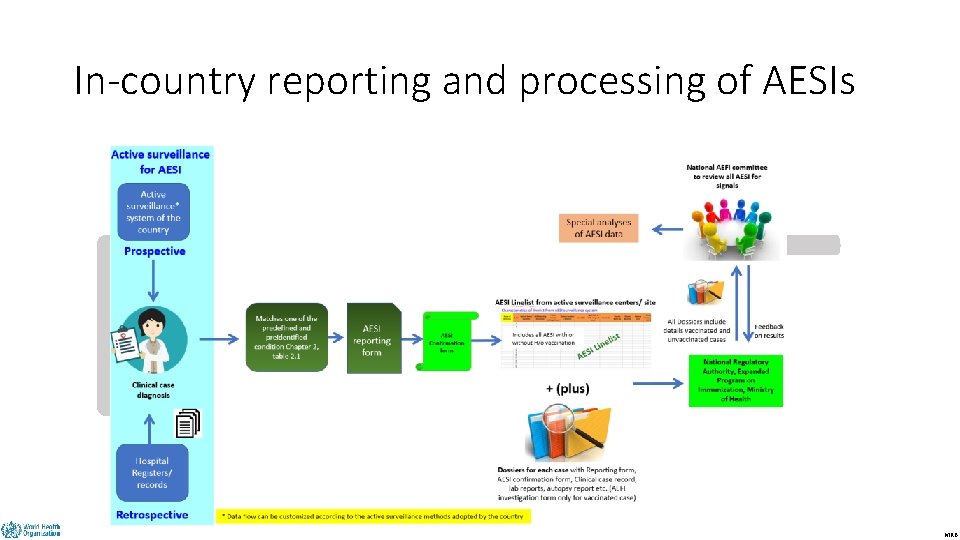
In-country reporting and processing of AESIs DRAFT MRB
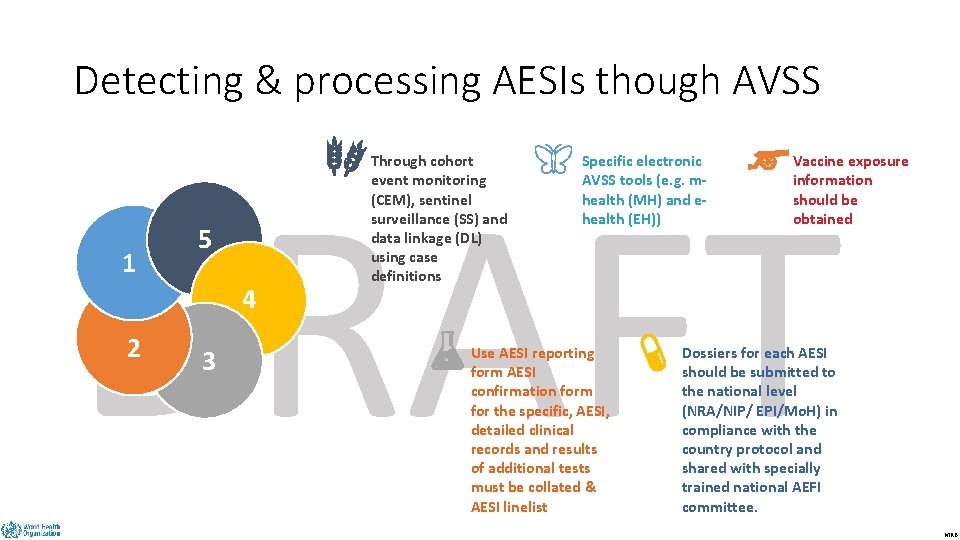
Detecting & processing AESIs though AVSS DRAFT 1 5 4 2 3 Through cohort event monitoring (CEM), sentinel surveillance (SS) and data linkage (DL) using case definitions Specific electronic AVSS tools (e. g. mhealth (MH) and ehealth (EH)) Use AESI reporting form AESI confirmation form for the specific, AESI, detailed clinical records and results of additional tests must be collated & AESI linelist Vaccine exposure information should be obtained Dossiers for each AESI should be submitted to the national level (NRA/NIP/ EPI/Mo. H) in compliance with the country protocol and shared with specially trained national AEFI committee. MRB
Initial causality assessment of Covid 19 vaccinated AESI After confirming the absence of programmatic errors, Immunization stress related responses or coincidental events, Covid 19 vaccinated AESI cases will have to be categorised by the committee as DRAFT “‘B 1 -Indeterminate’ because the temporal relationship is consistent but there is insufficient definitive evidence for vaccine causing the event (it may be a new vaccine-linked event)” MRB
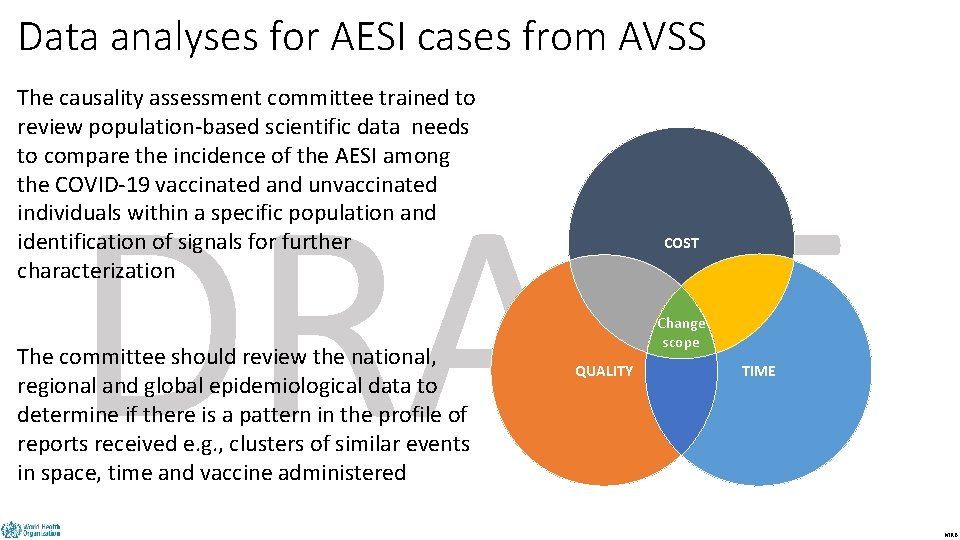
Data analyses for AESI cases from AVSS The causality assessment committee trained to review population-based scientific data needs to compare the incidence of the AESI among the COVID-19 vaccinated and unvaccinated individuals within a specific population and identification of signals for further characterization DRAFT The committee should review the national, regional and global epidemiological data to determine if there is a pattern in the profile of reports received e. g. , clusters of similar events in space, time and vaccine administered COST Change scope QUALITY TIME MRB
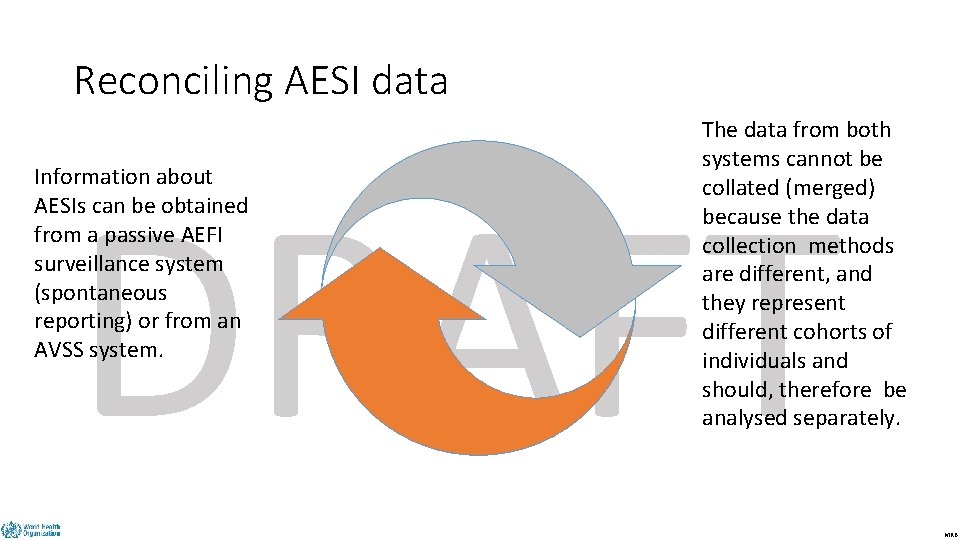
Reconciling AESI data The data from both systems cannot be collated (merged) because the data collection methods are different, and they represent different cohorts of individuals and should, therefore be analysed separately. DRAFT Information about AESIs can be obtained from a passive AEFI surveillance system (spontaneous reporting) or from an AVSS system. MRB
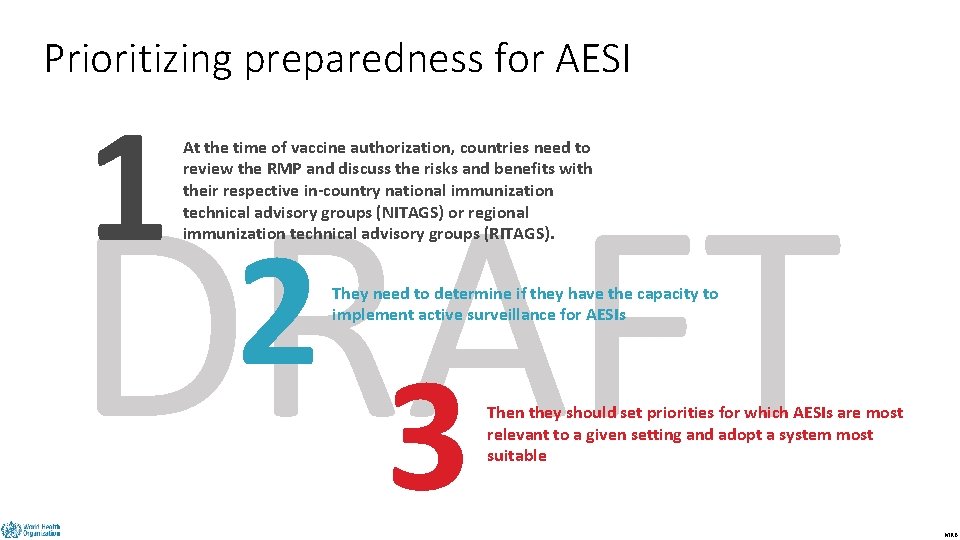
Prioritizing preparedness for AESI 1 At the time of vaccine authorization, countries need to review the RMP and discuss the risks and benefits with their respective in-country national immunization technical advisory groups (NITAGS) or regional immunization technical advisory groups (RITAGS). DRAFT 3 2 They need to determine if they have the capacity to implement active surveillance for AESIs Then they should set priorities for which AESIs are most relevant to a given setting and adopt a system most suitable MRB
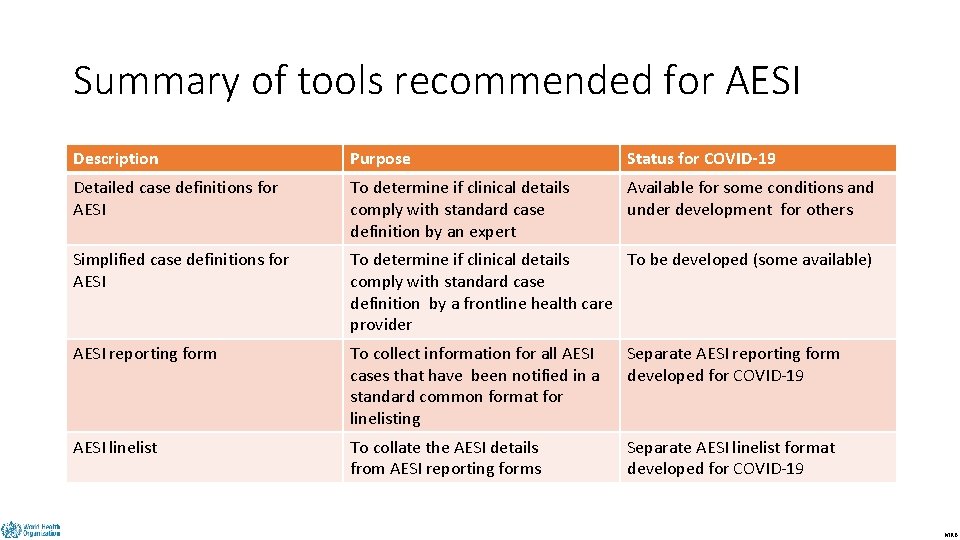
Summary of tools recommended for AESI DRAFT Description Purpose Status for COVID-19 Detailed case definitions for AESI To determine if clinical details comply with standard case definition by an expert Available for some conditions and under development for others Simplified case definitions for AESI To determine if clinical details To be developed (some available) comply with standard case definition by a frontline health care provider AESI reporting form To collect information for all AESI cases that have been notified in a standard common format for linelisting Separate AESI reporting form developed for COVID-19 AESI linelist To collate the AESI details from AESI reporting forms Separate AESI linelist format developed for COVID-19 MRB
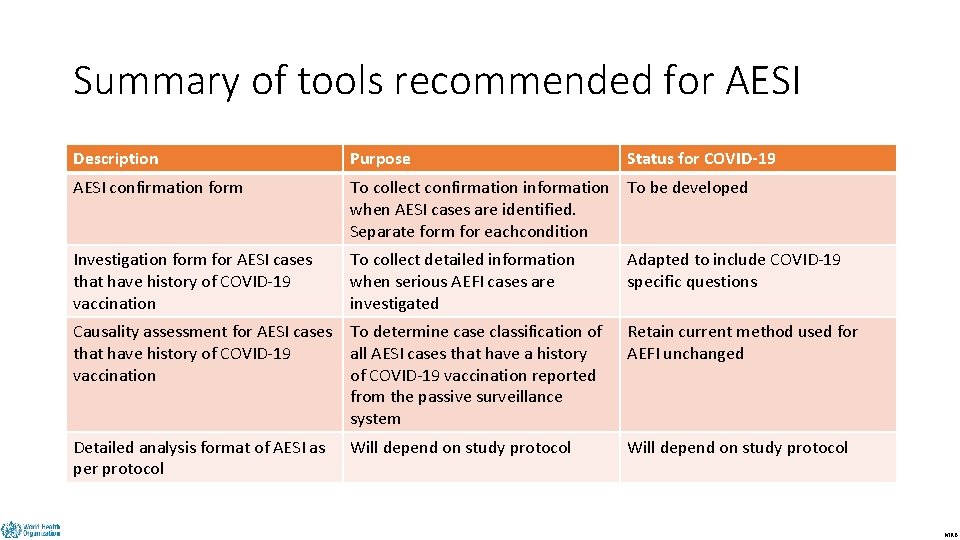
Summary of tools recommended for AESI DRAFT Description Purpose Status for COVID-19 AESI confirmation form To collect confirmation information To be developed when AESI cases are identified. Separate form for eachcondition Investigation form for AESI cases that have history of COVID-19 vaccination To collect detailed information when serious AEFI cases are investigated Adapted to include COVID-19 specific questions Causality assessment for AESI cases that have history of COVID-19 vaccination To determine case classification of all AESI cases that have a history of COVID-19 vaccination reported from the passive surveillance system Retain current method used for AEFI unchanged Detailed analysis format of AESI as per protocol Will depend on study protocol MRB
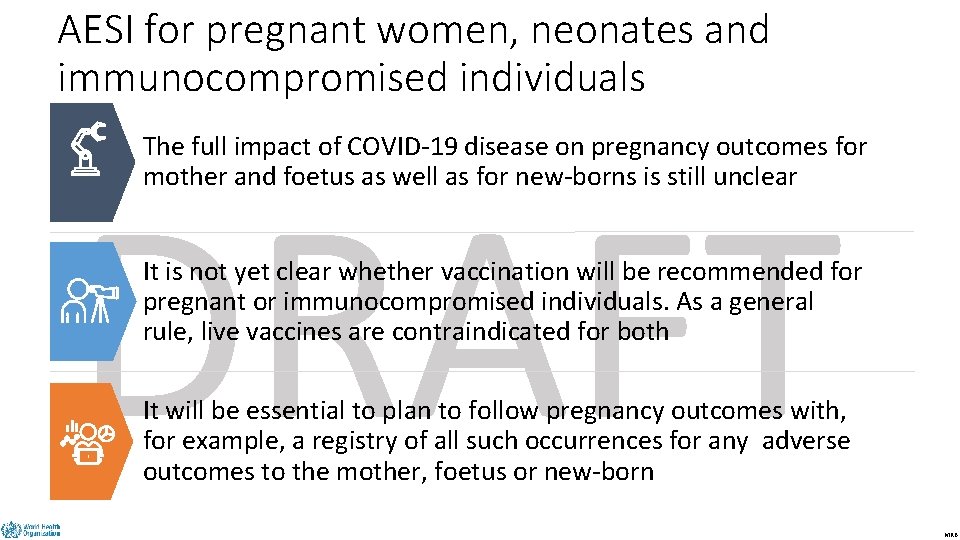
AESI for pregnant women, neonates and immunocompromised individuals The full impact of COVID-19 disease on pregnancy outcomes for mother and foetus as well as for new-borns is still unclear DRAFT It is not yet clear whether vaccination will be recommended for pregnant or immunocompromised individuals. As a general rule, live vaccines are contraindicated for both It will be essential to plan to follow pregnancy outcomes with, for example, a registry of all such occurrences for any adverse outcomes to the mother, foetus or new-born MRB
Sudden unexpected death as an AESI Sudden death has not yet been added to the AESI list. However, it will be essential to be prepared to enable rapid response DRAFT A thorough field investigation should be conducted and autopsy performed according to the protocol for suspected COVID-19 cause of death. https: //pubmed. ncbi. nlm. nih. gov/32653819/ Knowing regional and age-specific background incidence of sudden deaths as well as relevant risk factors will be essential for causality assessment. Appropriate communication at all stages of investigation, causality assessment and its outcomes will be critical. MRB
Key points to remember 01 02 03 04 DRAFT AVSS should be implemented complementary to the country’s passive surveillance (spontaneous reporting) system AVSS for AESI can be implemented through Cohort event monitoring, sentinel site surveillance or data linkage AESI should be prioritized and shortlisted for AVSS Specific protocols and tools will need to be adopted by the country based on the local situation MRB
References DRAFT • CIOMS. Guide to active vaccine safety surveillance. Available from: https: //cioms. ch/publications/product/cioms-guideto-active-vaccinesafety-surveillance/ • Data linkage https: //www. cdc. gov/vaccinesafety/ensuringsafety/monitoring/vsd/i ndex. html • Global Advisory Committee on Vaccine Safety, 27 -28 May 2020 https: //www. who. int/vaccine_safety/committee/reports/May_2020/ en/ • Safety Platform for Emergency v. ACcines (SPEAC). https: //brightoncollaboration. us/speac/ MRB
- Slides: 28