
Monitoraggio Geodetico e Telerilevamento Introduction to satellite orbits
Monitoraggio Geodetico e Telerilevamento Introduction to satellite orbits Carla Braitenberg Si ringrazia: Peter Wisser, Delft University 22. 03. 2018

• Integration to Page 36 of the Tutorial.
Kepler laws Three laws of Johannes Kepler (1571 -1630) First law: Conical sections • Planets move in ellipses with the Sun at one focus • Planets/satellites/comets all move along conical sections Second law: Area law • Planets sweep out equal areas in equal times • Law of conservation of angular momentum Third law: Orbital period • The square of the orbital period of a planet is proportional to • the cube of the length of (semi-)major axis of the ellipse • Soon after appeared also to hold for the moons of Jupiter
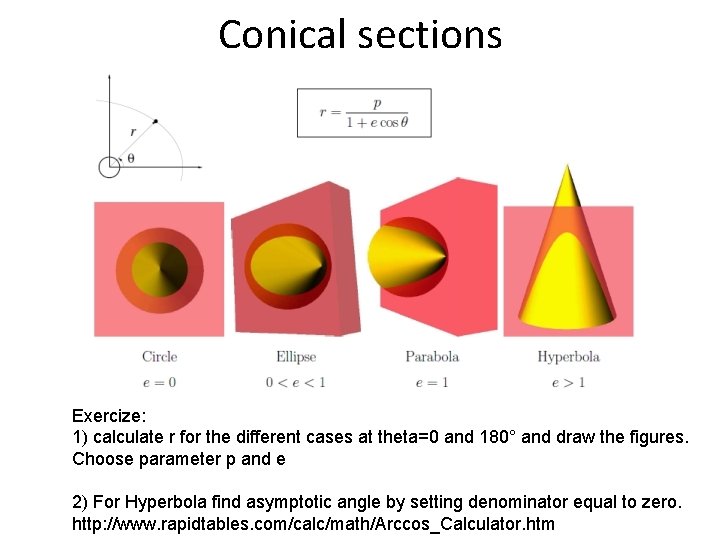
Conical sections Exercize: 1) calculate r for the different cases at theta=0 and 180° and draw the figures. Choose parameter p and e 2) For Hyperbola find asymptotic angle by setting denominator equal to zero. http: //www. rapidtables. com/calc/math/Arccos_Calculator. htm
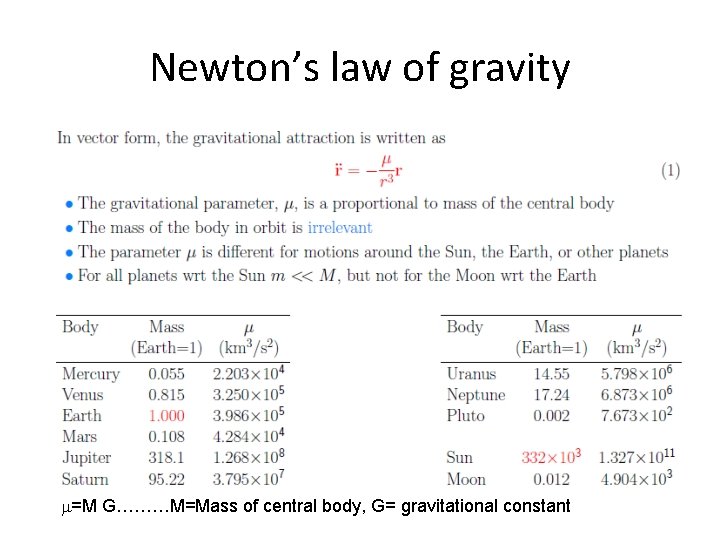
Newton’s law of gravity m=M G………M=Mass of central body, G= gravitational constant
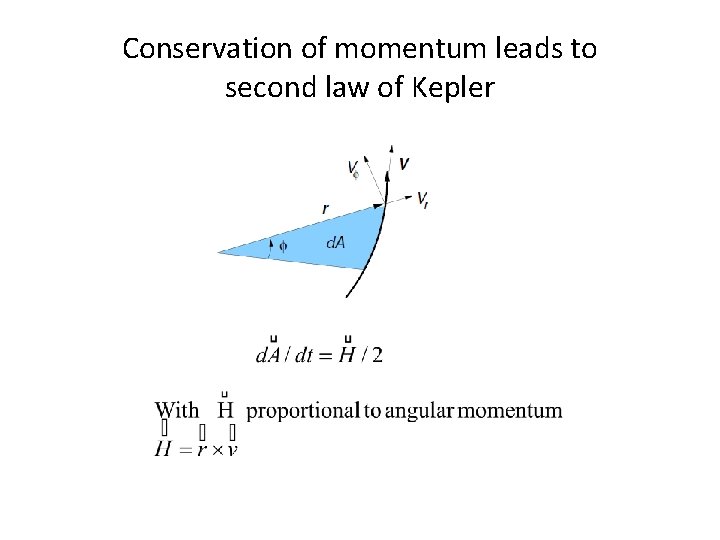
Conservation of momentum leads to second law of Kepler
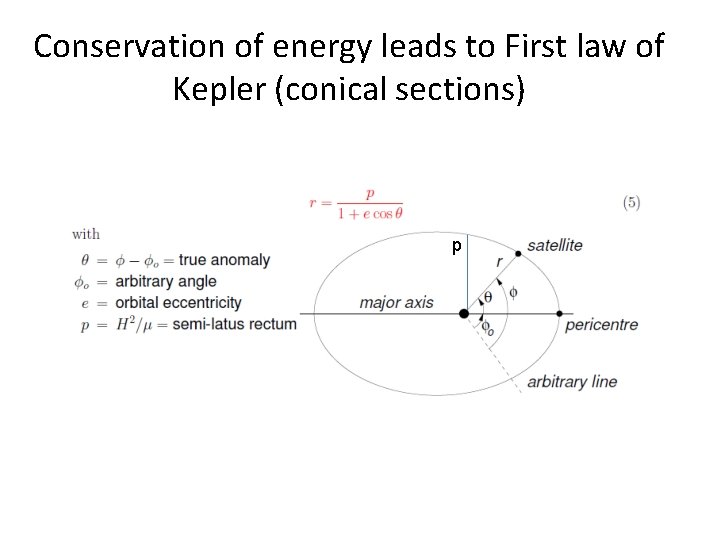
Conservation of energy leads to First law of Kepler (conical sections) p
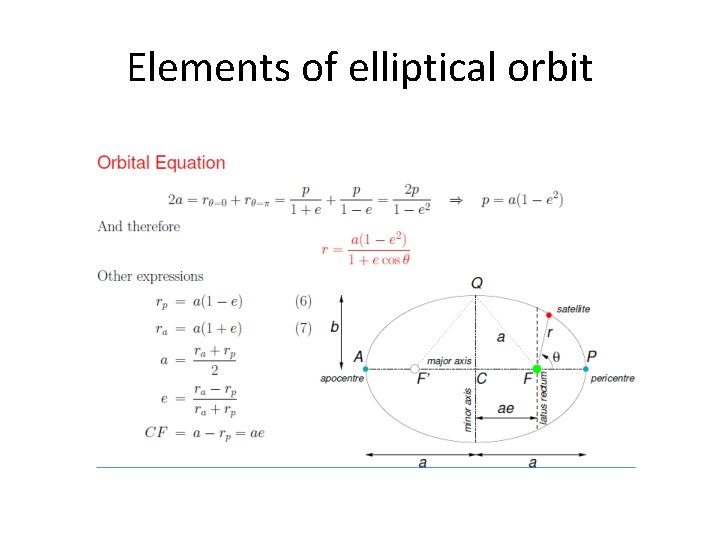
Elements of elliptical orbit
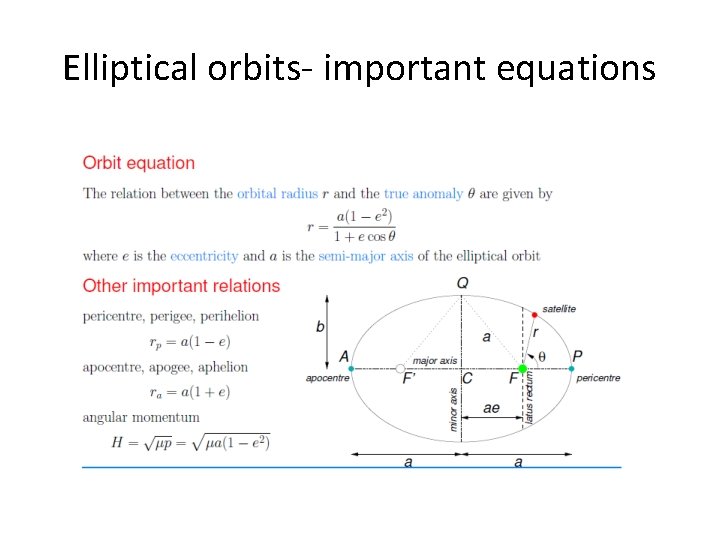
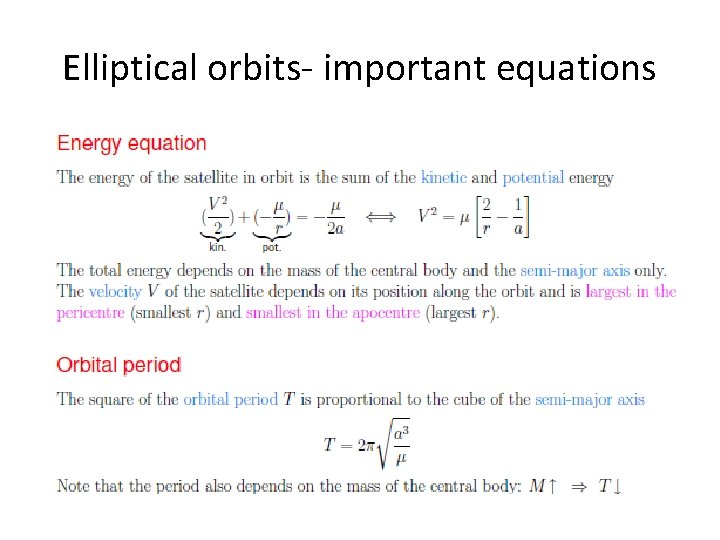
Elliptical orbits- important equations
Elliptical orbits- important equations
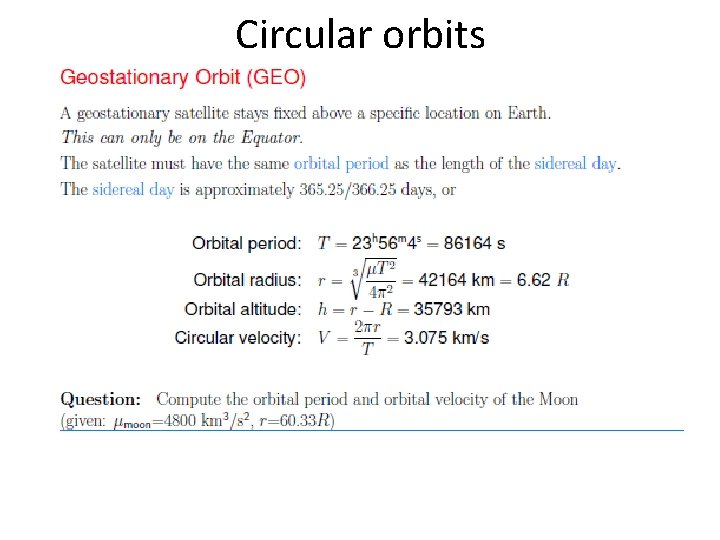
Circular orbits
Circular orbit
Circular orbits with Earth in center
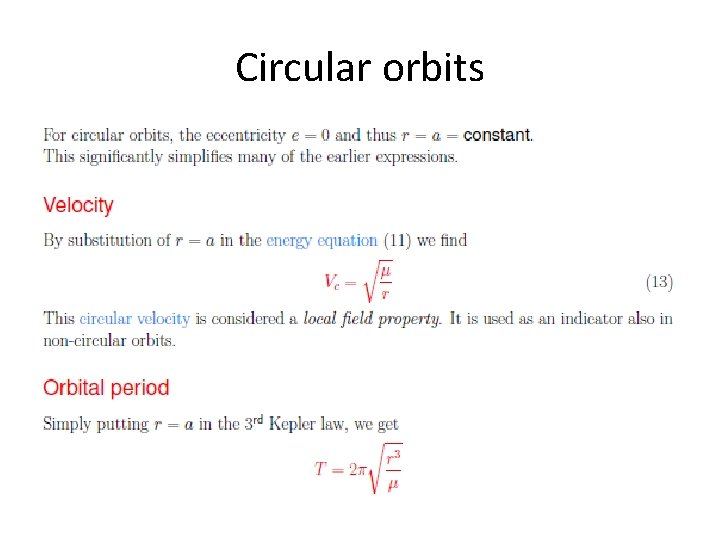
Circular orbits
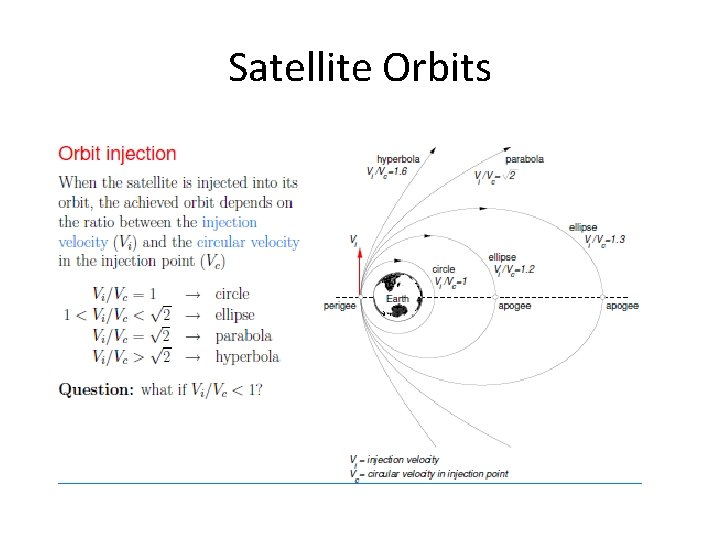
Satellite Orbits
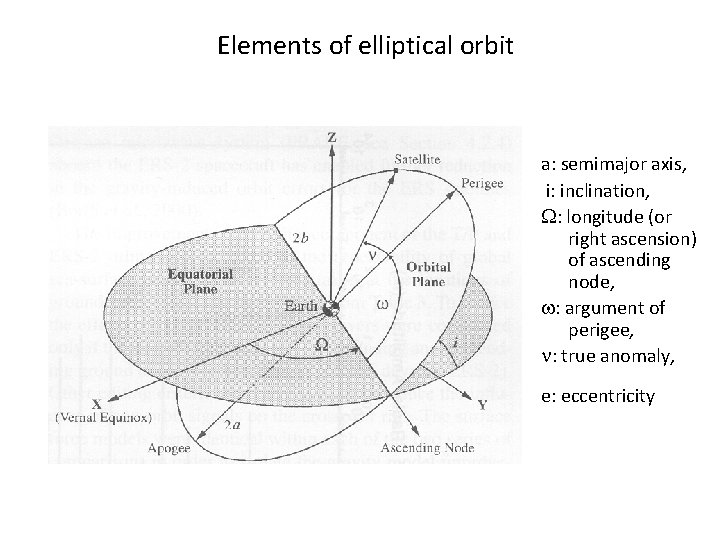
Elements of elliptical orbit a: semimajor axis, i: inclination, : longitude (or right ascension) of ascending node, : argument of perigee, : true anomaly, e: eccentricity
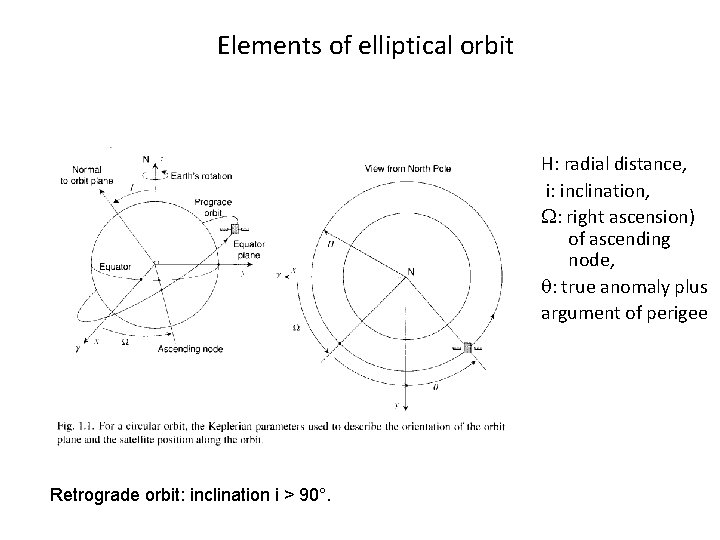
Elements of elliptical orbit H: radial distance, i: inclination, : right ascension) of ascending node, : true anomaly plus argument of perigee Retrograde orbit: inclination i > 90°.
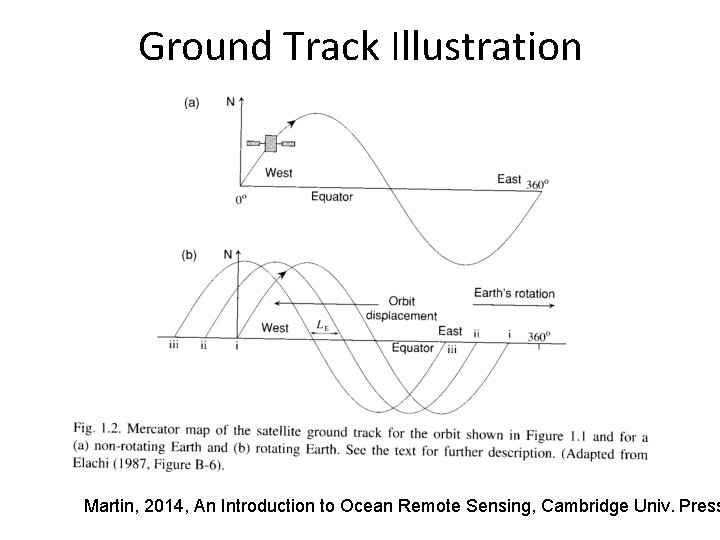
Ground Track Illustration Martin, 2014, An Introduction to Ocean Remote Sensing, Cambridge Univ. Press
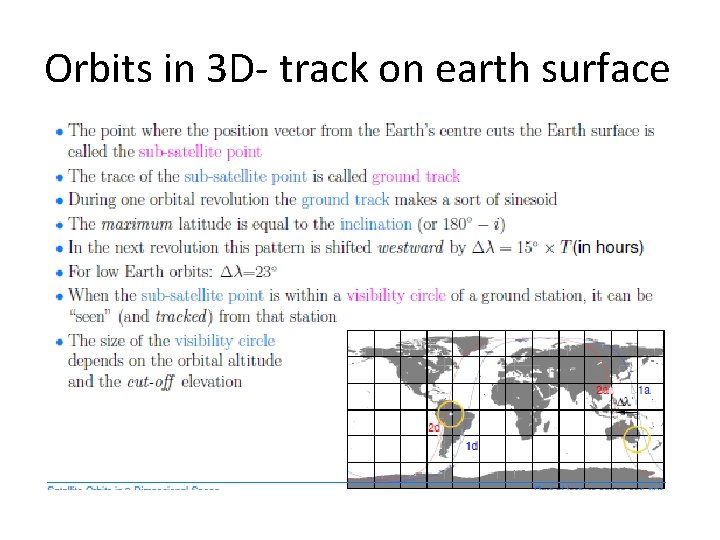
Orbits in 3 D- track on earth surface
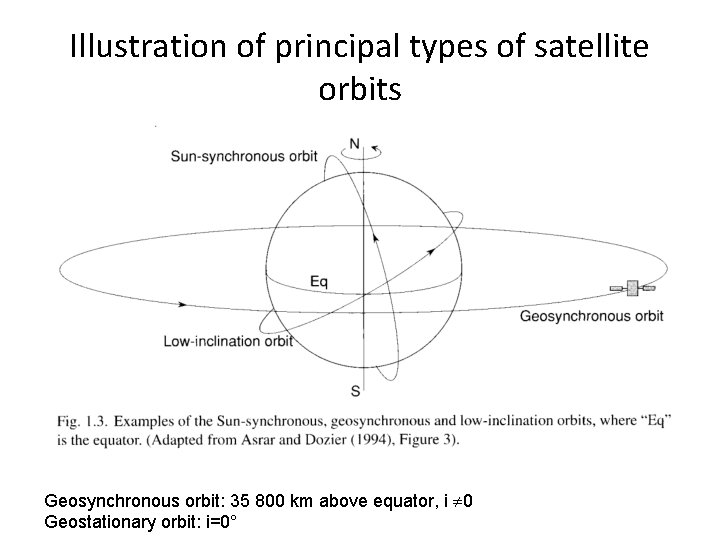
Illustration of principal types of satellite orbits Geosynchronous orbit: 35 800 km above equator, i 0 Geostationary orbit: i=0°
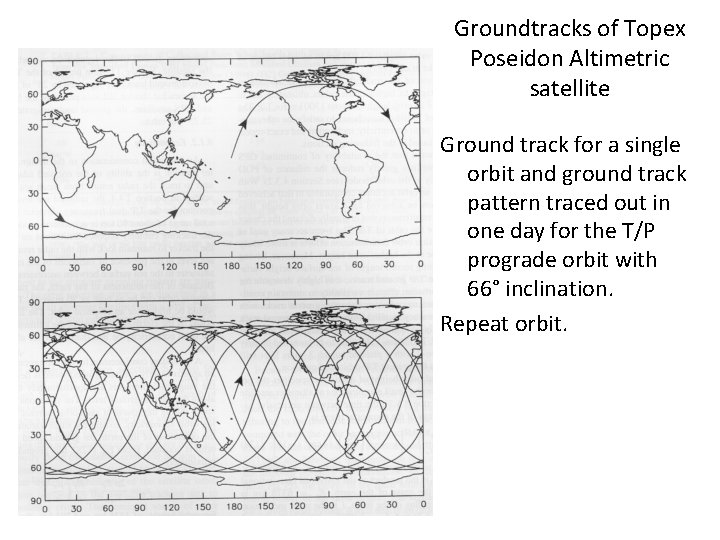
Groundtracks of Topex Poseidon Altimetric satellite Ground track for a single orbit and ground track pattern traced out in one day for the T/P prograde orbit with 66° inclination. Repeat orbit.
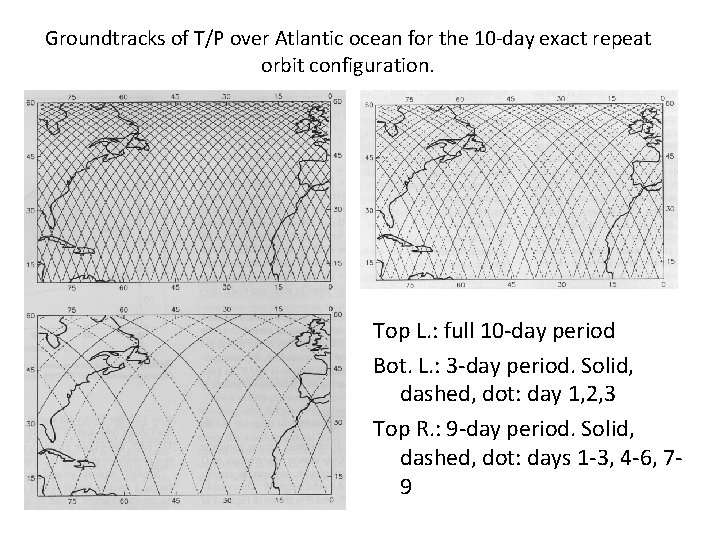
Groundtracks of T/P over Atlantic ocean for the 10 -day exact repeat orbit configuration. Top L. : full 10 -day period Bot. L. : 3 -day period. Solid, dashed, dot: day 1, 2, 3 Top R. : 9 -day period. Solid, dashed, dot: days 1 -3, 4 -6, 79
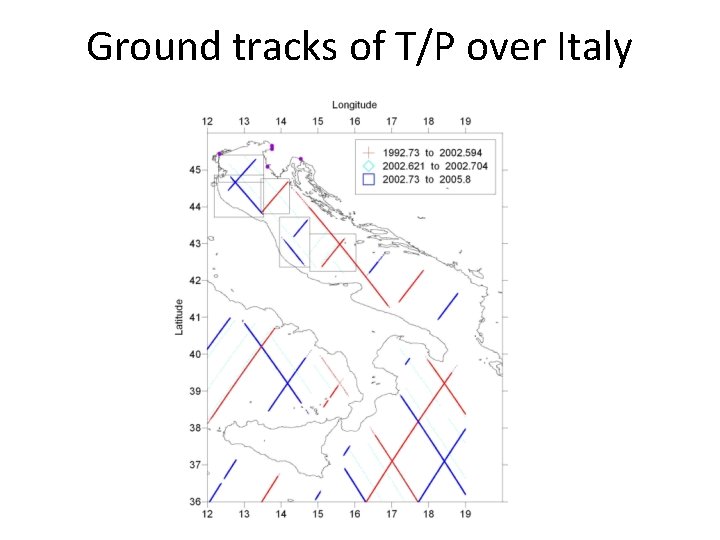
Ground tracks of T/P over Italy
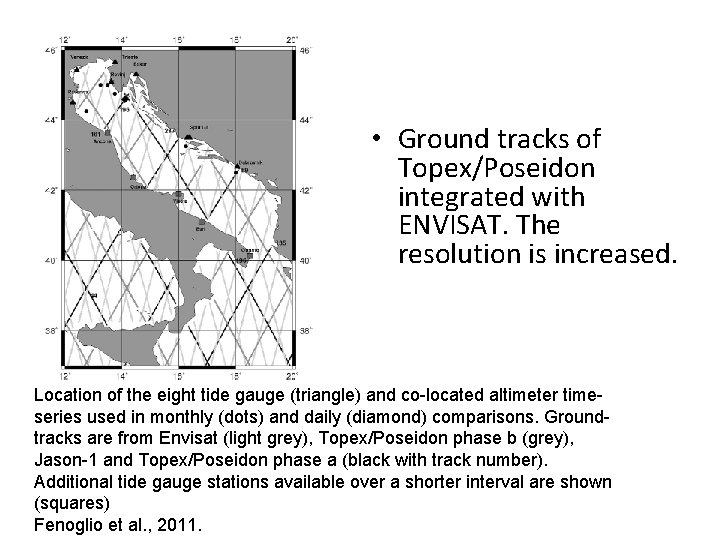
• Ground tracks of Topex/Poseidon integrated with ENVISAT. The resolution is increased. Location of the eight tide gauge (triangle) and co-located altimeter timeseries used in monthly (dots) and daily (diamond) comparisons. Groundtracks are from Envisat (light grey), Topex/Poseidon phase b (grey), Jason-1 and Topex/Poseidon phase a (black with track number). Additional tide gauge stations available over a shorter interval are shown (squares) Fenoglio et al. , 2011.
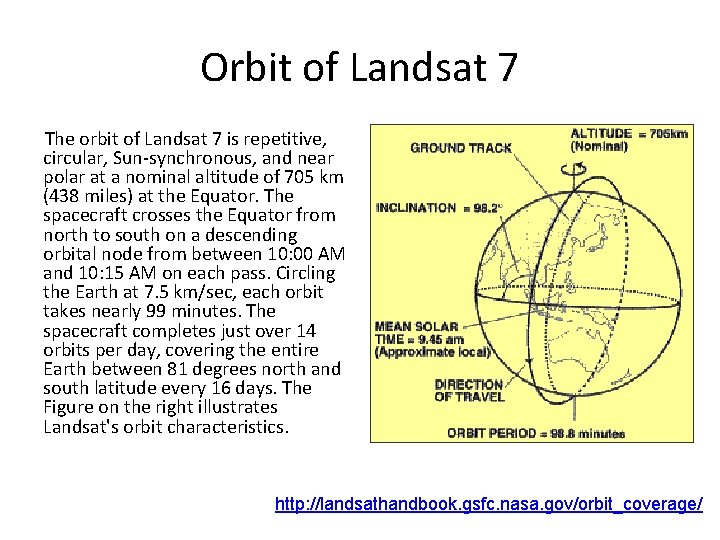
Orbit of Landsat 7 The orbit of Landsat 7 is repetitive, circular, Sun-synchronous, and near polar at a nominal altitude of 705 km (438 miles) at the Equator. The spacecraft crosses the Equator from north to south on a descending orbital node from between 10: 00 AM and 10: 15 AM on each pass. Circling the Earth at 7. 5 km/sec, each orbit takes nearly 99 minutes. The spacecraft completes just over 14 orbits per day, covering the entire Earth between 81 degrees north and south latitude every 16 days. The Figure on the right illustrates Landsat's orbit characteristics. http: //landsathandbook. gsfc. nasa. gov/orbit_coverage/
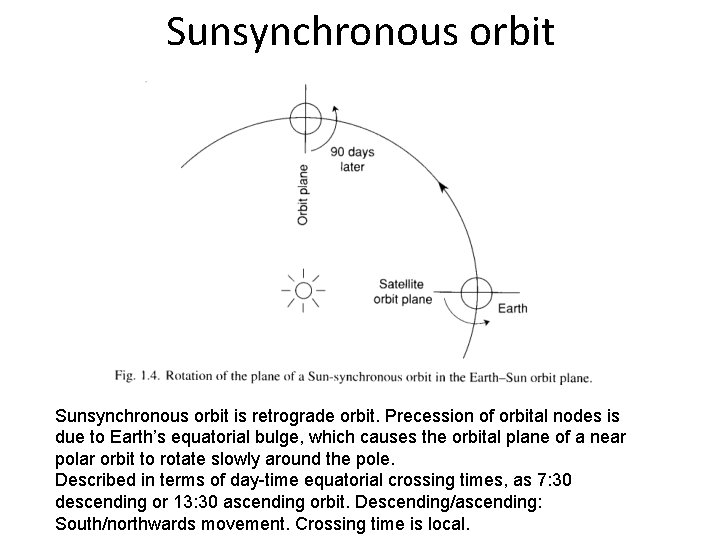
Sunsynchronous orbit is retrograde orbit. Precession of orbital nodes is due to Earth’s equatorial bulge, which causes the orbital plane of a near polar orbit to rotate slowly around the pole. Described in terms of day-time equatorial crossing times, as 7: 30 descending or 13: 30 ascending orbit. Descending/ascending: South/northwards movement. Crossing time is local.
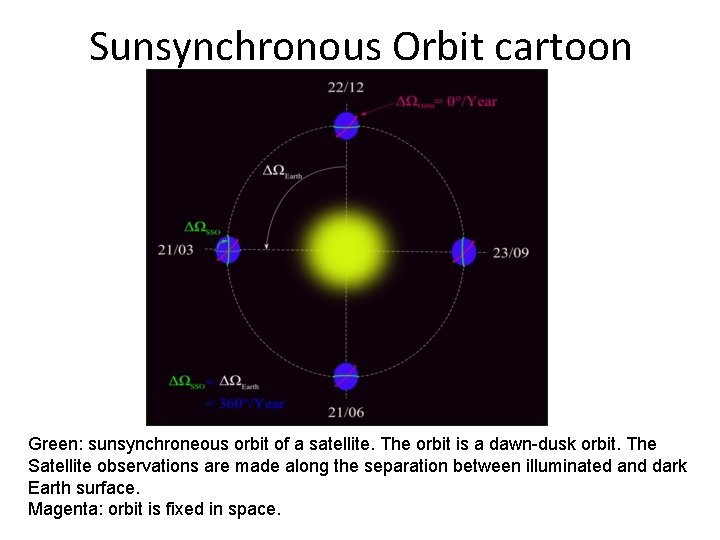
Sunsynchronous Orbit cartoon Green: sunsynchroneous orbit of a satellite. The orbit is a dawn-dusk orbit. The Satellite observations are made along the separation between illuminated and dark Earth surface. Magenta: orbit is fixed in space.
Satellite environment- perturbations to the satellite orbit and instruments • Lunar and solar gravity fields • Radiation pressure from solar wind • Atmospheric drag, increasing at decreasing orbit radius • Space debris and decomissioned satellites collision • Monitoring programs: – NASA Orbital Debris program – ESA monitoring of debris
Details on Space debris • http: //www. esa. int/spaceinvideos/Videos/2013/04/Space_debris_story • http: //orbitaldebris. jsc. nasa. gov/index. html • https: //orbitaldebris. jsc. nasa. gov/quarterly-news/newsletter. html • Documented collisions: • February 2009: LEO, American commercial satellite collided with defunct Russian military satellite Kosmos-2251 -> created 2000 pieces of debris • In 2009 five satellite manouvers had to be done to avoid further collisions with the fragments: ACQUA, LANDSAT 7 (700 km), Space Station, Space Shuttle 400 km, NASA tracking and Data Relay Satellite. • Recent measures: satellites should brought down to sufficient low orbit (example several 100 km) in order to decelerate in a decade of years and reenter the atmosphere
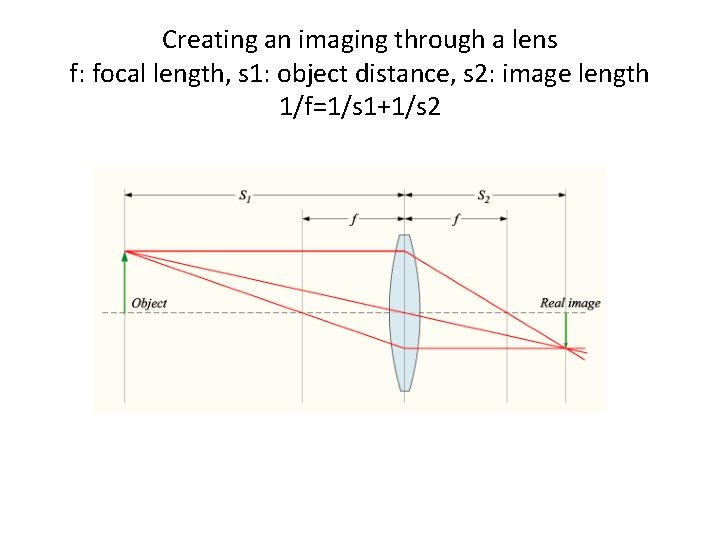
Creating an imaging through a lens f: focal length, s 1: object distance, s 2: image length 1/f=1/s 1+1/s 2

Schede di approfondimento
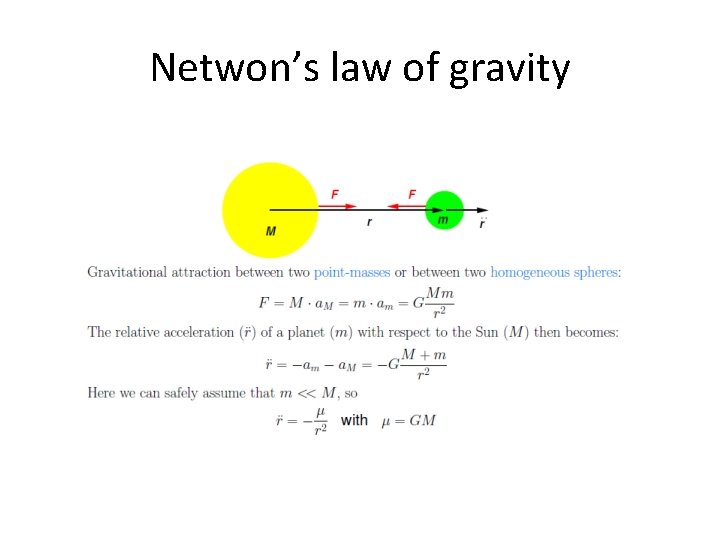
Netwon’s law of gravity
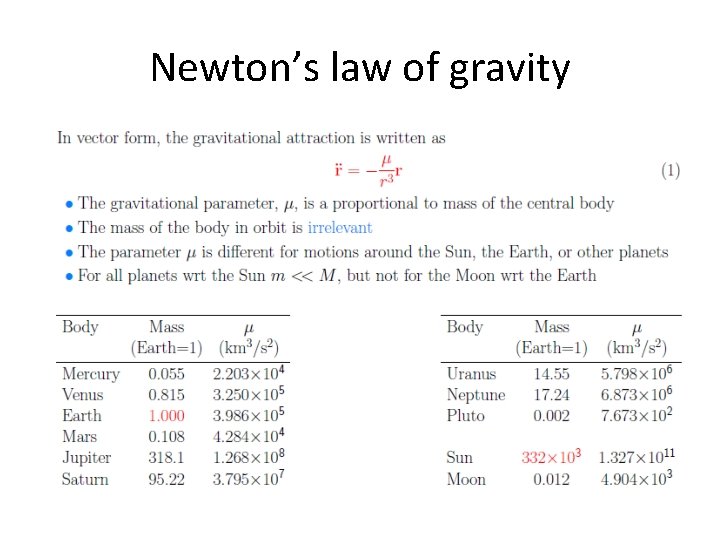
Newton’s law of gravity
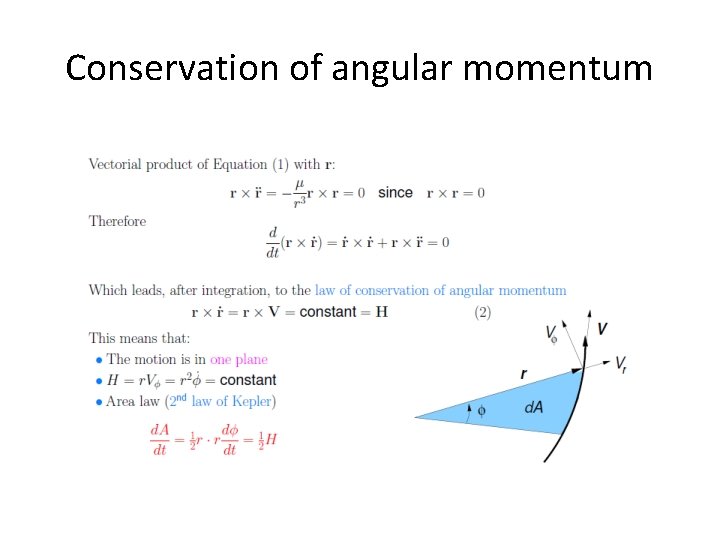
Conservation of angular momentum
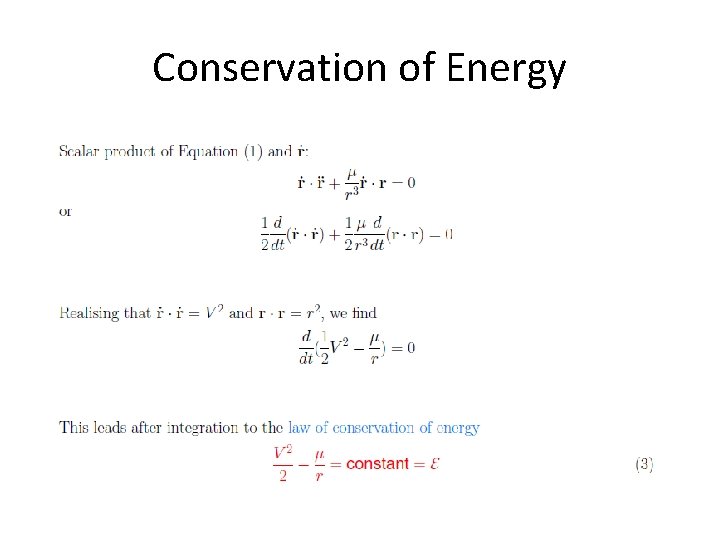
Conservation of Energy
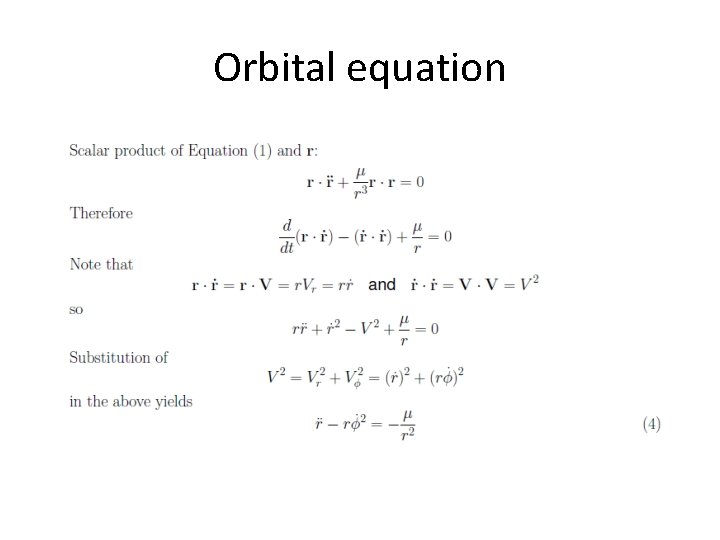
Orbital equation
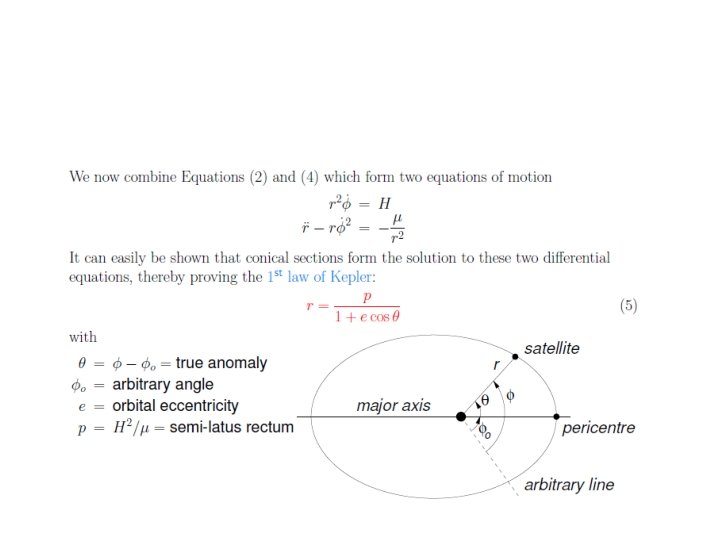
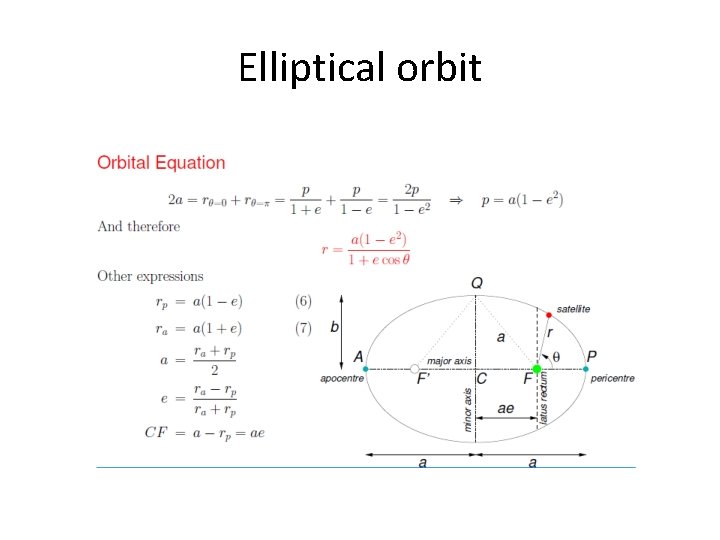
Elliptical orbit
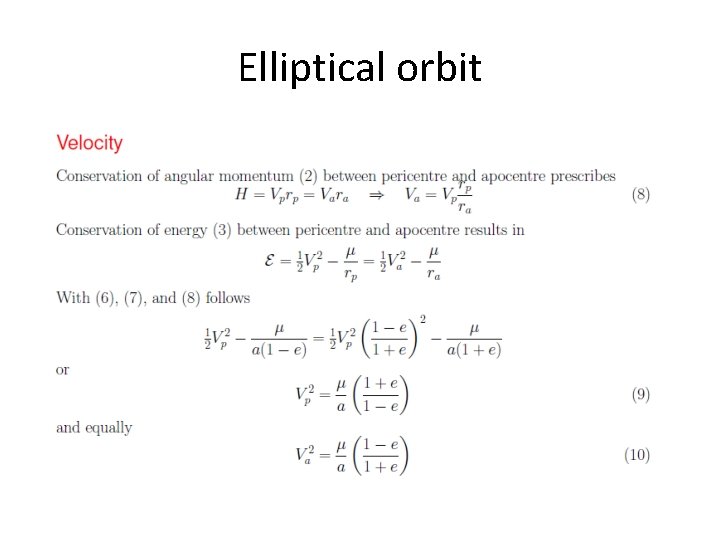
Elliptical orbit
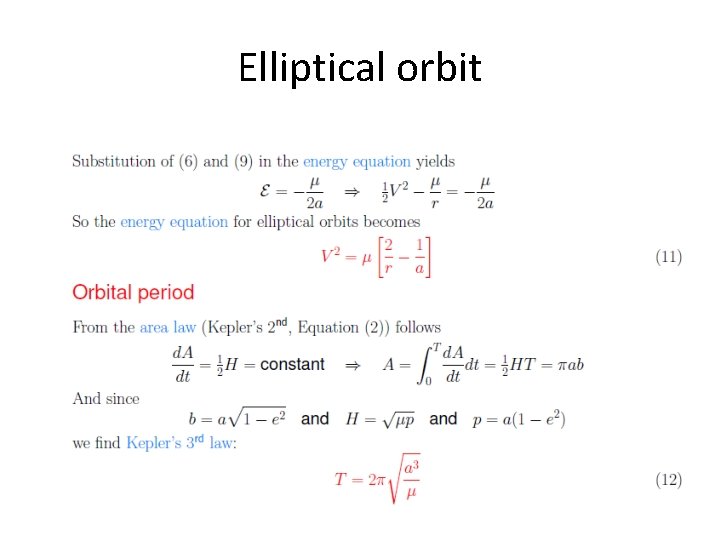
Elliptical orbit
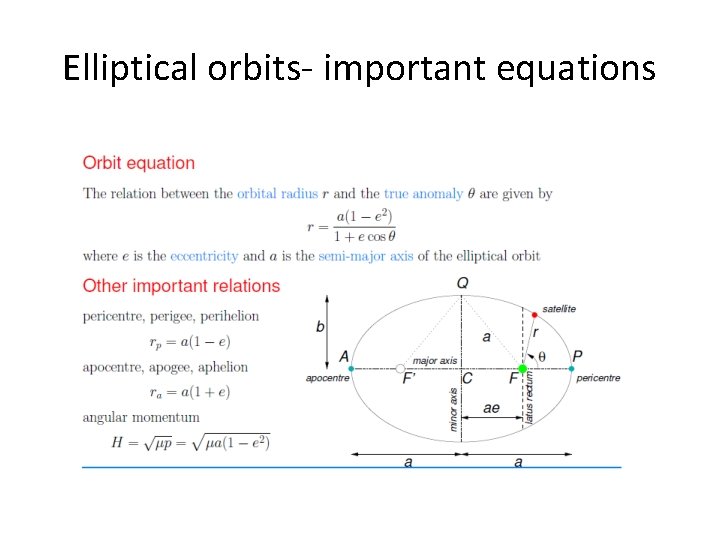
Elliptical orbits- important equations
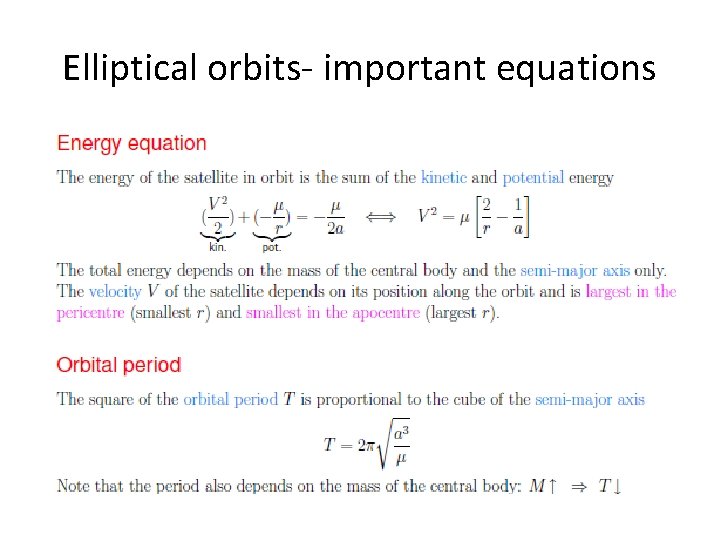
Elliptical orbits- important equations
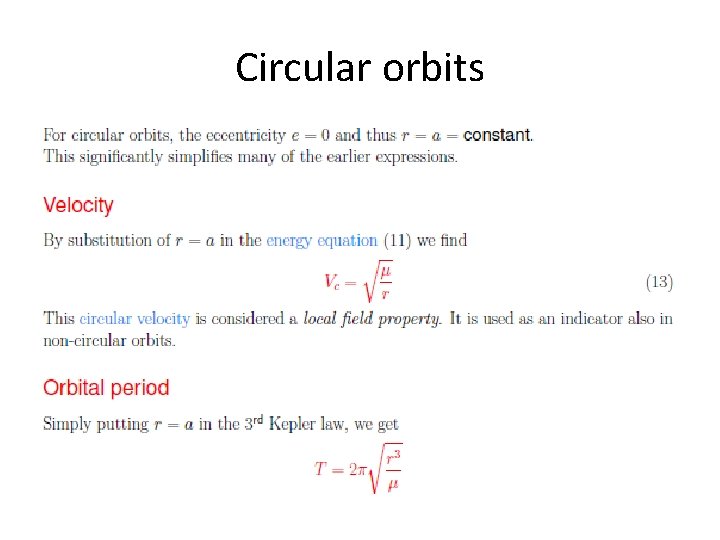
Circular orbits
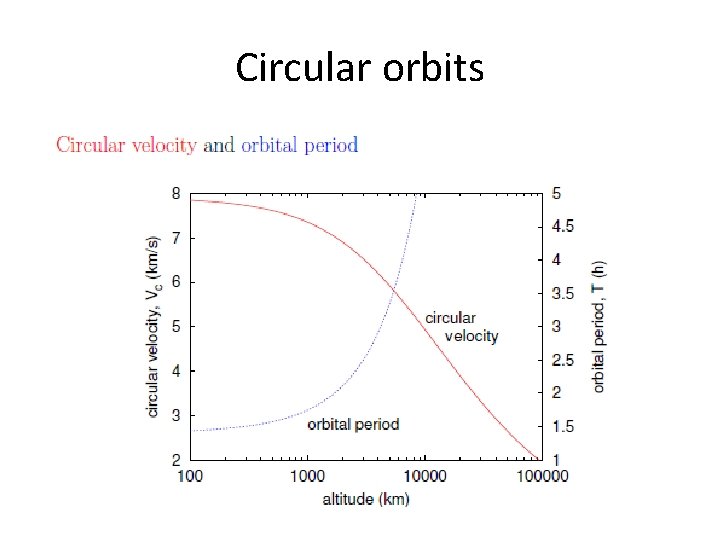
Circular orbits
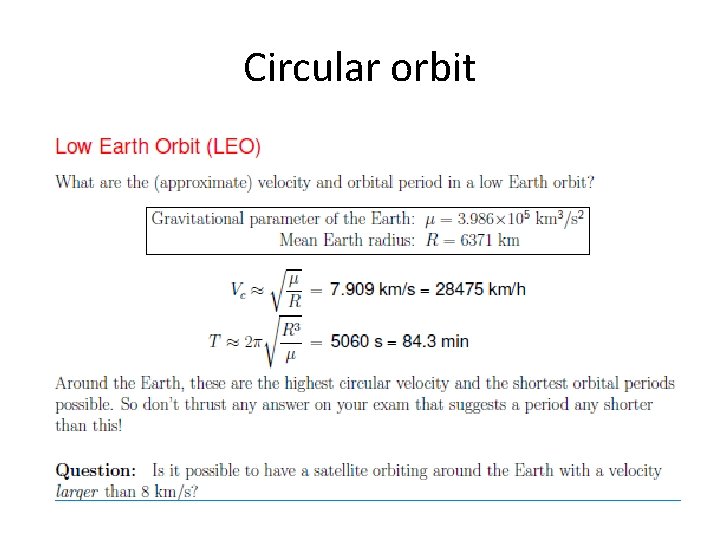
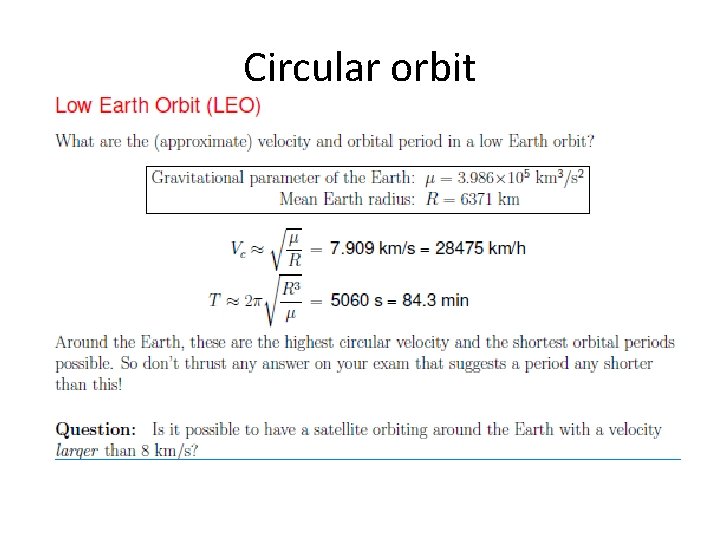
Circular orbit
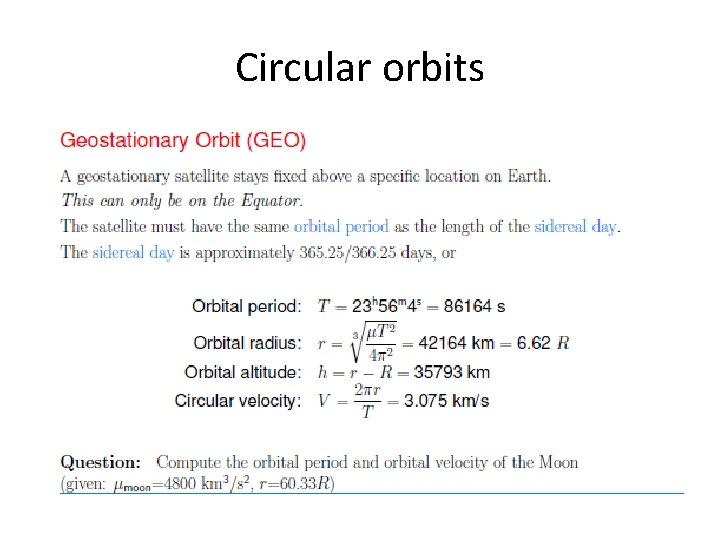
Circular orbits
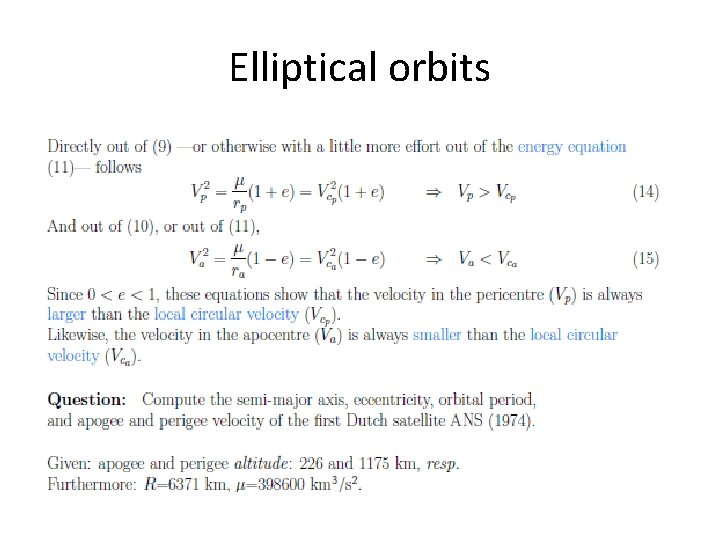
Elliptical orbits
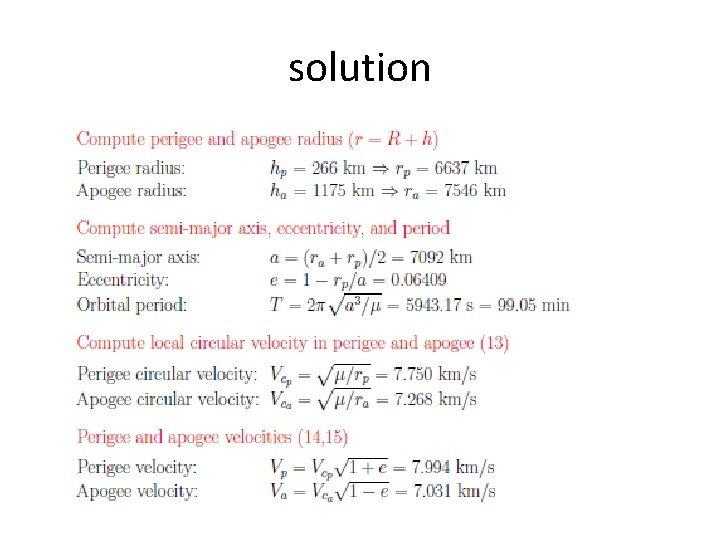
solution
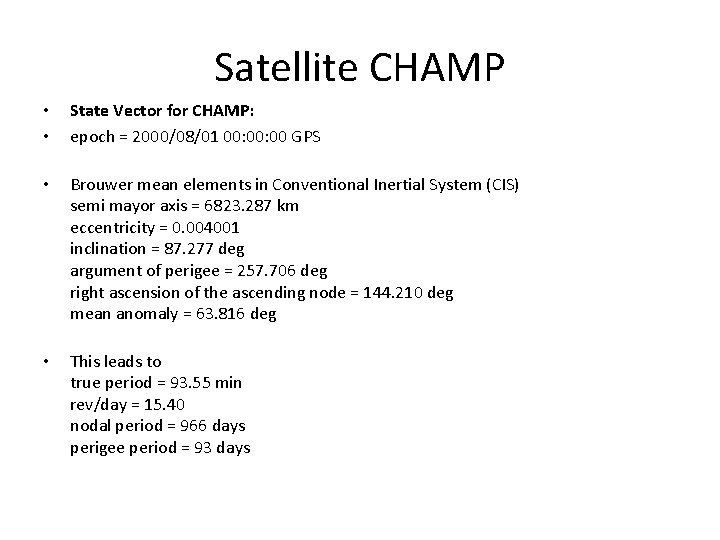
Satellite CHAMP • • State Vector for CHAMP: epoch = 2000/08/01 00: 00 GPS • Brouwer mean elements in Conventional Inertial System (CIS) semi mayor axis = 6823. 287 km eccentricity = 0. 004001 inclination = 87. 277 deg argument of perigee = 257. 706 deg right ascension of the ascending node = 144. 210 deg mean anomaly = 63. 816 deg • This leads to true period = 93. 55 min rev/day = 15. 40 nodal period = 966 days perigee period = 93 days
- Slides: 49