
Monitor and Manage Client Fee Collections Financial Management



- Slides: 28
Monitor and Manage Client Fee Collections
Financial Management Best Practices 1. Bill the correct payer and optimal amount 2. Monitor and manage client fee collections 3. Monitor and manage payments from third-party payers Link: Financial Management Change Package 2
Financial Management Best Practice 2 Monitor and manage client fee collections 3
Meeting Objectives By the end of today, you should be able to: • Describe the importance of monitoring and managing client fee collections • Identify at least one strategy to improve client fee collections at time of visit • Identify one performance indicator sites can utilize to measure performance • Describe at least one tool available to manage client fees 4
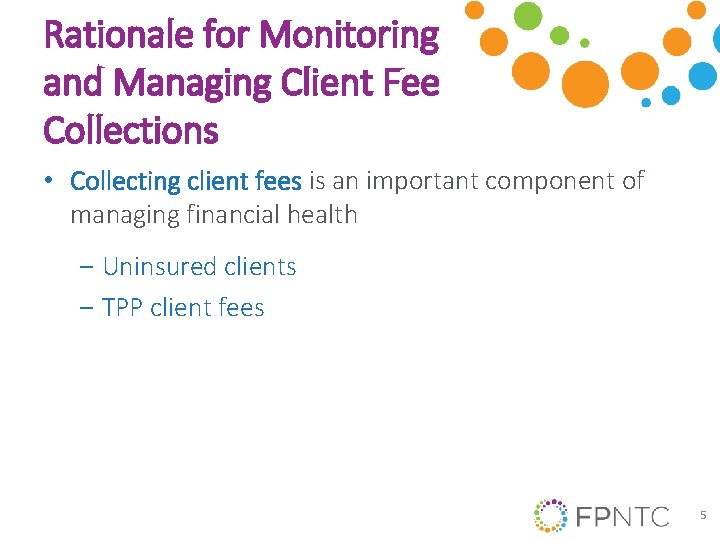
Rationale for Monitoring and Managing Client Fee Collections • Collecting client fees is an important component of managing financial health ‒ Uninsured clients ‒ TPP client fees 5
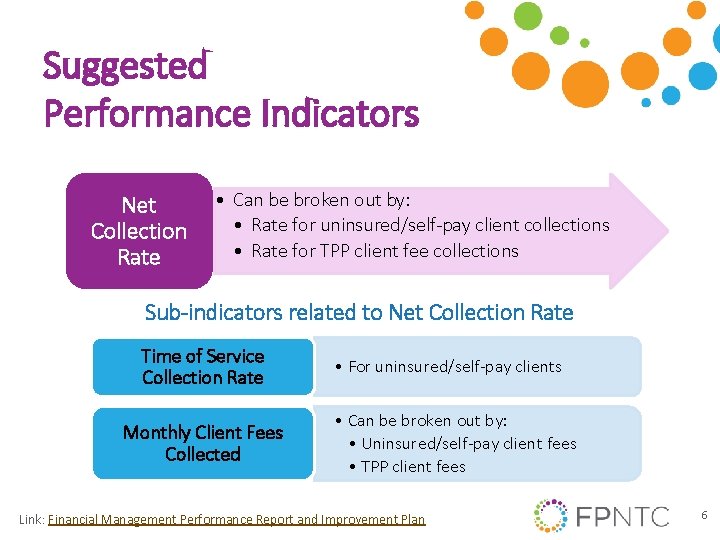
Suggested Performance Indicators Net Collection Rate • Can be broken out by: • Rate for uninsured/self-pay client collections • Rate for TPP client fee collections Sub-indicators related to Net Collection Rate Time of Service Collection Rate Monthly Client Fees Collected • For uninsured/self-pay clients • Can be broken out by: • Uninsured/self-pay client fees • TPP client fees Link: Financial Management Performance Report and Improvement Plan 6
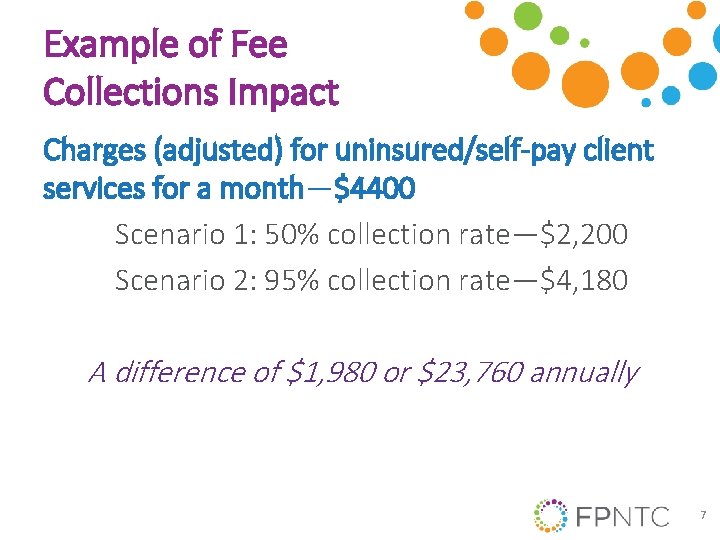
Example of Fee Collections Impact Charges (adjusted) for uninsured/self-pay client services for a month—$4400 Scenario 1: 50% collection rate—$2, 200 Scenario 2: 95% collection rate—$4, 180 A difference of $1, 980 or $23, 760 annually 7
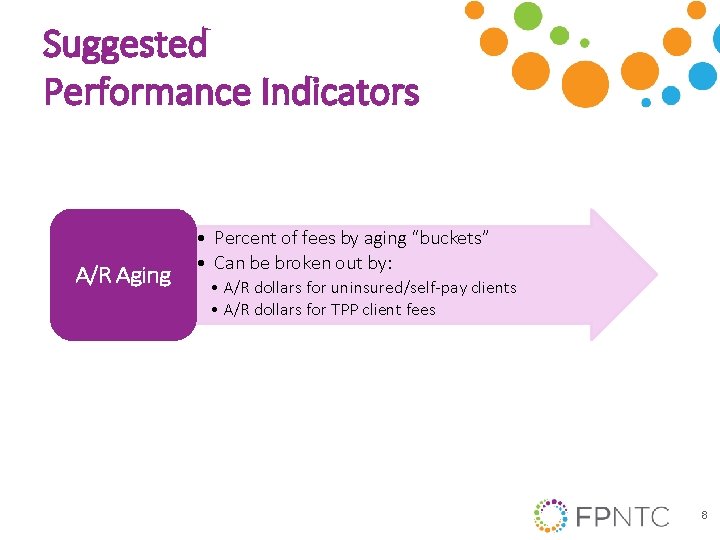
Suggested Performance Indicators A/R Aging • Percent of fees by aging “buckets” • Can be broken out by: • A/R dollars for uninsured/self-pay clients • A/R dollars for TPP client fees 8
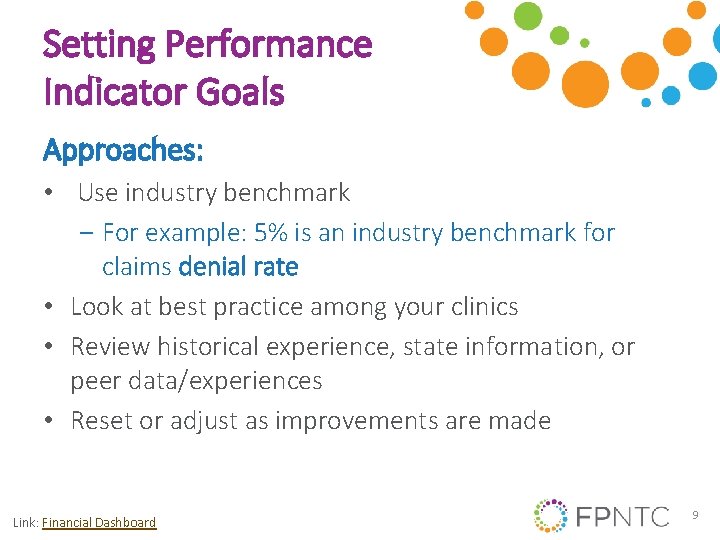
Setting Performance Indicator Goals Approaches: • Use industry benchmark ‒ For example: 5% is an industry benchmark for claims denial rate • Look at best practice among your clinics • Review historical experience, state information, or peer data/experiences • Reset or adjust as improvements are made Link: Financial Dashboard 9
Overview of Strategies for Best Practice 2 • Establish and/or update and implement policies on client payment and collection processes • Manage discounted fee collections at time of visit for uninsured/self-pay clients • Accurately discount and bill for TPP client fees – Copays, deductibles, and coinsurance 10
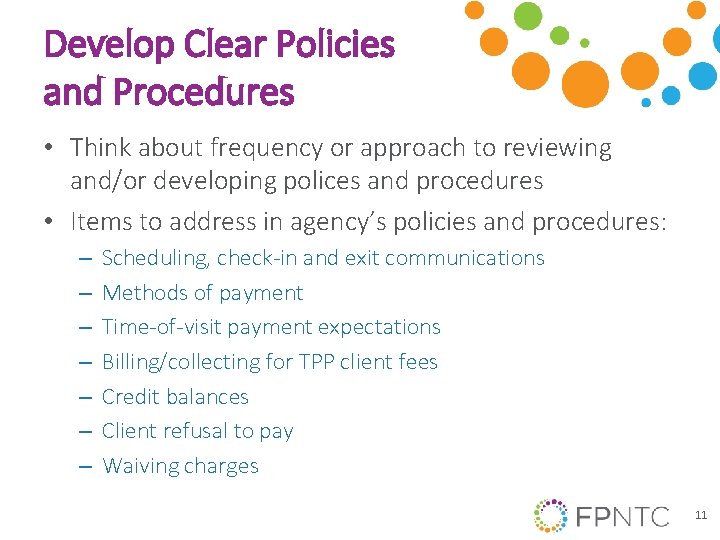
Develop Clear Policies and Procedures • Think about frequency or approach to reviewing and/or developing polices and procedures • Items to address in agency’s policies and procedures: – – – – Scheduling, check-in and exit communications Methods of payment Time-of-visit payment expectations Billing/collecting for TPP client fees Credit balances Client refusal to pay Waiving charges 11
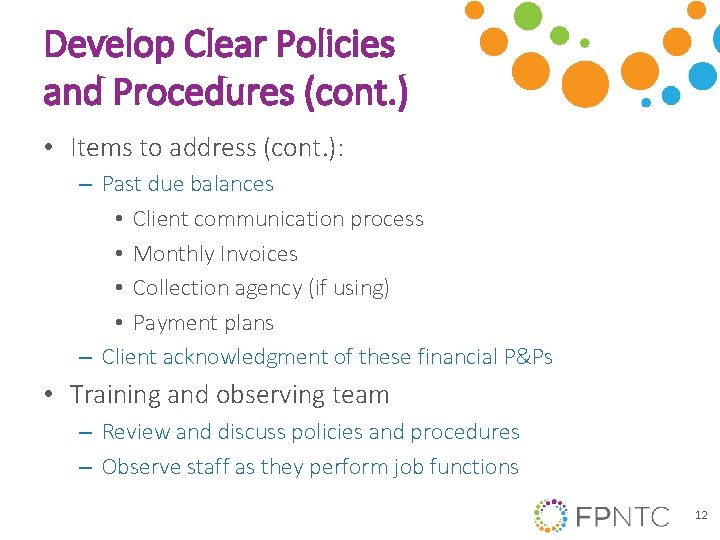
Develop Clear Policies and Procedures (cont. ) • Items to address (cont. ): – Past due balances • Client communication process • Monthly Invoices • Collection agency (if using) • Payment plans – Client acknowledgment of these financial P&Ps • Training and observing team – Review and discuss policies and procedures – Observe staff as they perform job functions 12
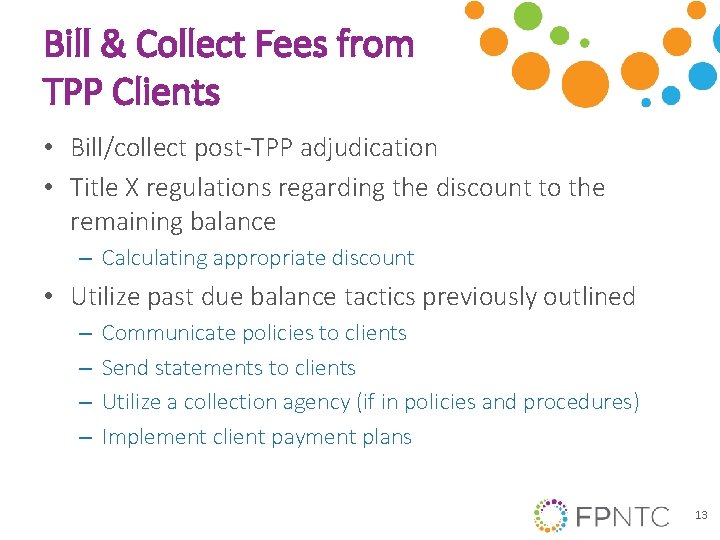
Bill & Collect Fees from TPP Clients • Bill/collect post-TPP adjudication • Title X regulations regarding the discount to the remaining balance – Calculating appropriate discount • Utilize past due balance tactics previously outlined – – Communicate policies to clients Send statements to clients Utilize a collection agency (if in policies and procedures) Implement client payment plans 13
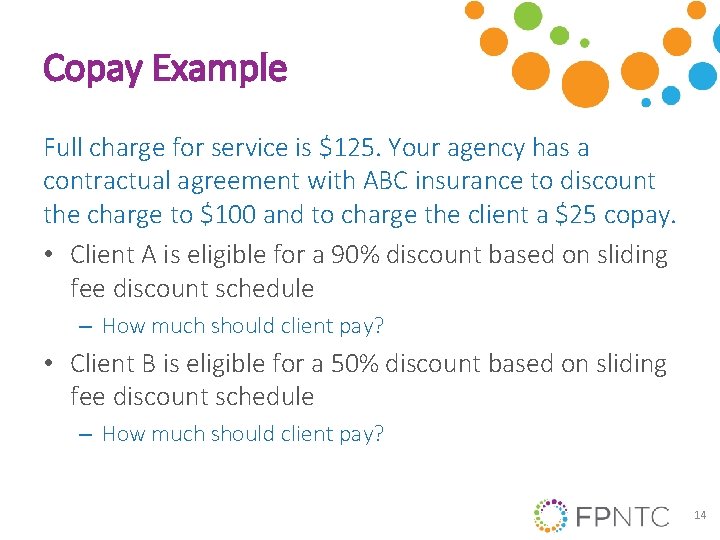
Copay Example Full charge for service is $125. Your agency has a contractual agreement with ABC insurance to discount the charge to $100 and to charge the client a $25 copay. • Client A is eligible for a 90% discount based on sliding fee discount schedule – How much should client pay? • Client B is eligible for a 50% discount based on sliding fee discount schedule – How much should client pay? 14
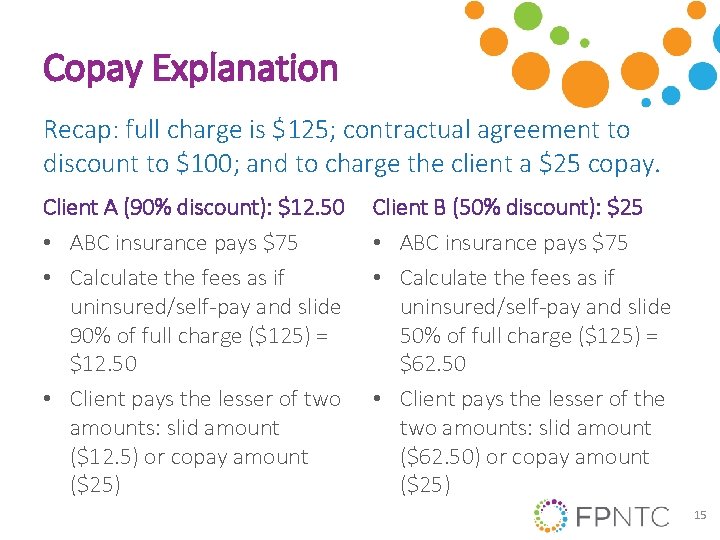
Copay Explanation Recap: full charge is $125; contractual agreement to discount to $100; and to charge the client a $25 copay. Client A (90% discount): $12. 50 Client B (50% discount): $25 • ABC insurance pays $75 • Calculate the fees as if uninsured/self-pay and slide 90% of full charge ($125) = $12. 50 • Client pays the lesser of two amounts: slid amount ($12. 5) or copay amount ($25) • ABC insurance pays $75 • Calculate the fees as if uninsured/self-pay and slide 50% of full charge ($125) = $62. 50 • Client pays the lesser of the two amounts: slid amount ($62. 50) or copay amount ($25) 15
Focus on: Manage Discounted Fee Collections 16
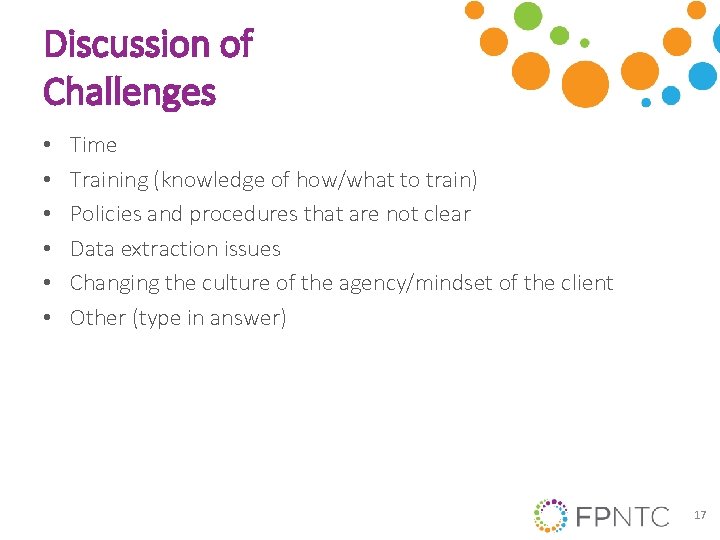
Discussion of Challenges • • • Time Training (knowledge of how/what to train) Policies and procedures that are not clear Data extraction issues Changing the culture of the agency/mindset of the client Other (type in answer) 17
Manage Fee Collections for Uninsured/Self-pay Clients Why is collecting fees at time of visit important? Answer: Best chance of collecting fees • Culture change for agency and clients • Changing organizational culture • Changing client behavior • Suggested methods of payment to accept: cash, check, credit, and debit cards 18
Manage Fee Collections After the Visit Review process for managing past due balances (for all clients) • Implement monthly invoice process • Consider payment plans and/or collection agencies for balances past 120 days • Communicate agency expectations about fees to clients ‒ At time of scheduling ‒ At check-in or exit 19
Communicate Fee Expectations to all Clients • When scheduling, at check-in, and at exit, communicate: ‒ Documents needed at time of visit ‒ Charges/discounts ‒ Payment expectations, methods accepted ‒ Collection policies ‒ Donations ‒ TPP billing of deductibles and co-pays • Client acknowledgement of financial policies 20
Communications Example “How will you be paying for your services today? ” versus “How much can you pay for services today? ” 21
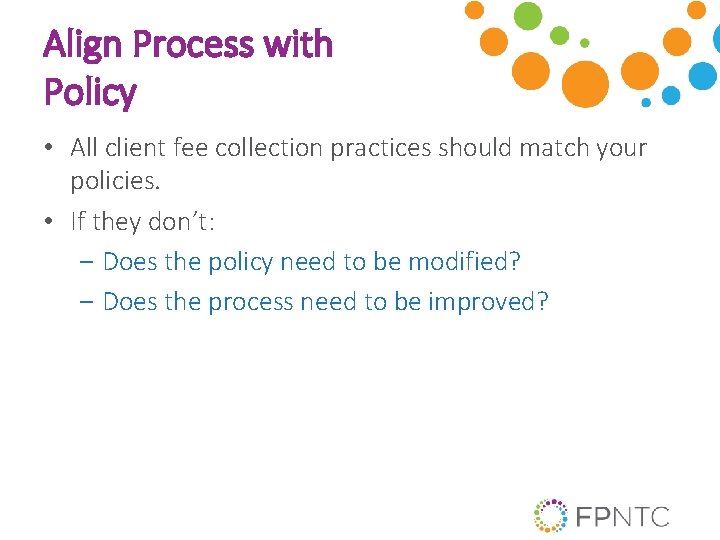
Align Process with Policy • All client fee collection practices should match your policies. • If they don’t: ‒ Does the policy need to be modified? ‒ Does the process need to be improved?
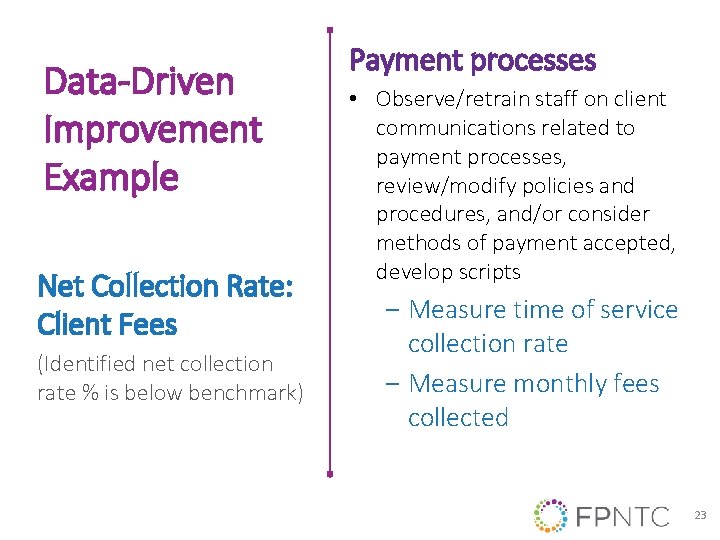
Data-Driven Improvement Example Net Collection Rate: Client Fees (Identified net collection rate % is below benchmark) Payment processes • Observe/retrain staff on client communications related to payment processes, review/modify policies and procedures, and/or consider methods of payment accepted, develop scripts ‒ Measure time of service collection rate ‒ Measure monthly fees collected 23
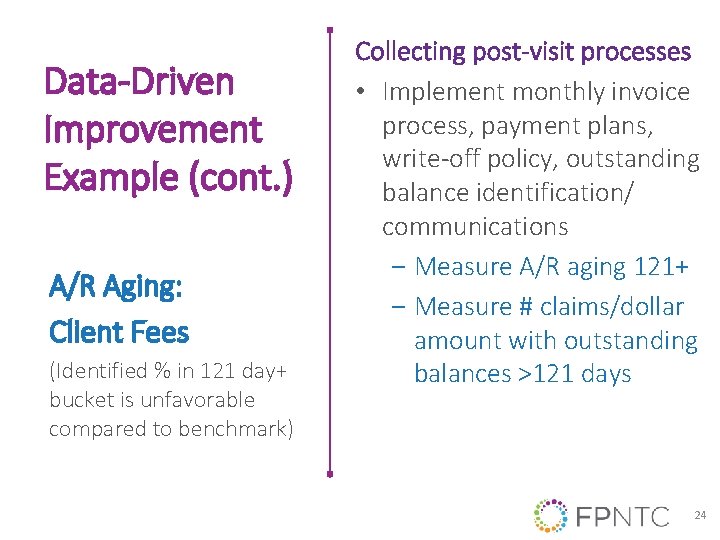
Data-Driven Improvement Example (cont. ) A/R Aging: Client Fees (Identified % in 121 day+ bucket is unfavorable compared to benchmark) Collecting post-visit processes • Implement monthly invoice process, payment plans, write-off policy, outstanding balance identification/ communications ‒ Measure A/R aging 121+ ‒ Measure # claims/dollar amount with outstanding balances >121 days 24
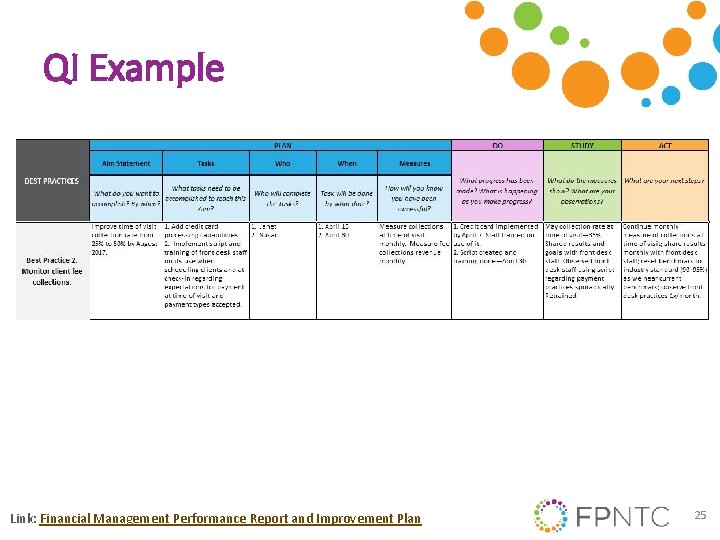
QI Example Link: Financial Management Performance Report and Improvement Plan 25
Resources • Financial Management Change Package • Financial Management Performance Report and Improvement Plan • Client Fees Calculator • Title X Client Fee Collections Frequently Asked Questions 26
Do you have any questions? 27
Thank you! Contact: fpntc@jsi. com 28