
Money and Banking The Federal Reserve and Monetary
Money and Banking The Federal Reserve and Monetary Policy
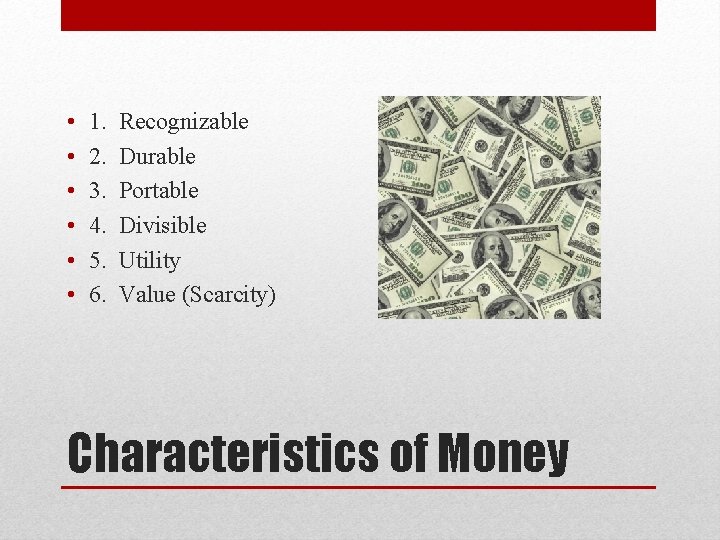
• • • 1. 2. 3. 4. 5. 6. Recognizable Durable Portable Divisible Utility Value (Scarcity) Characteristics of Money
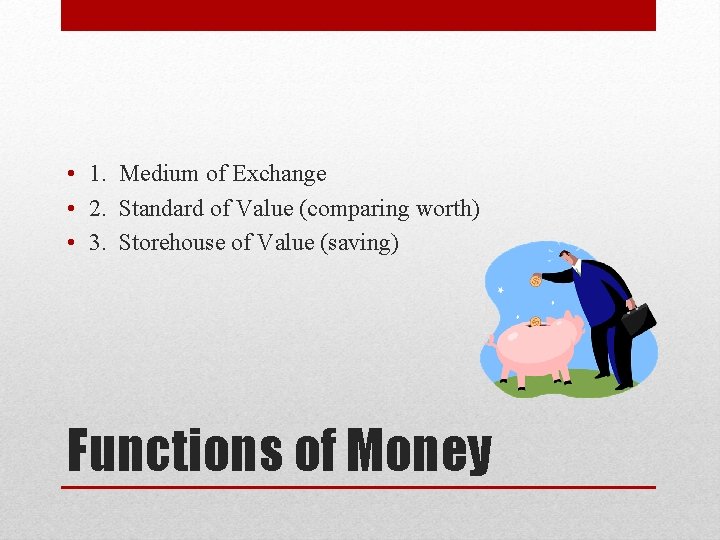
• 1. Medium of Exchange • 2. Standard of Value (comparing worth) • 3. Storehouse of Value (saving) Functions of Money
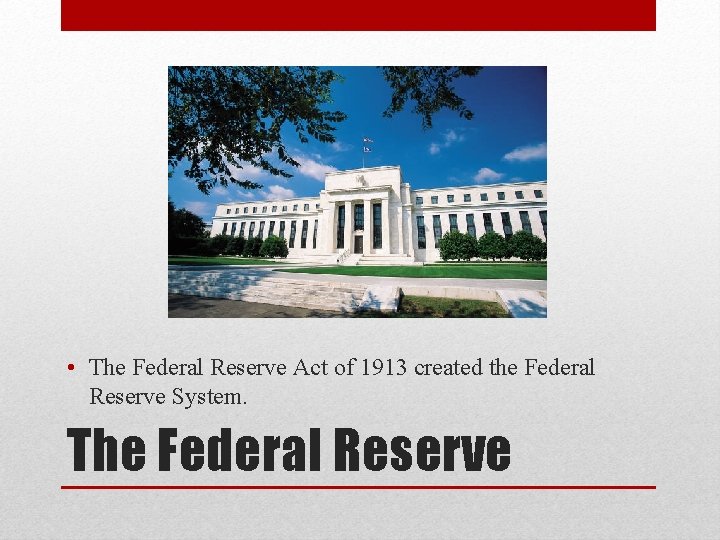
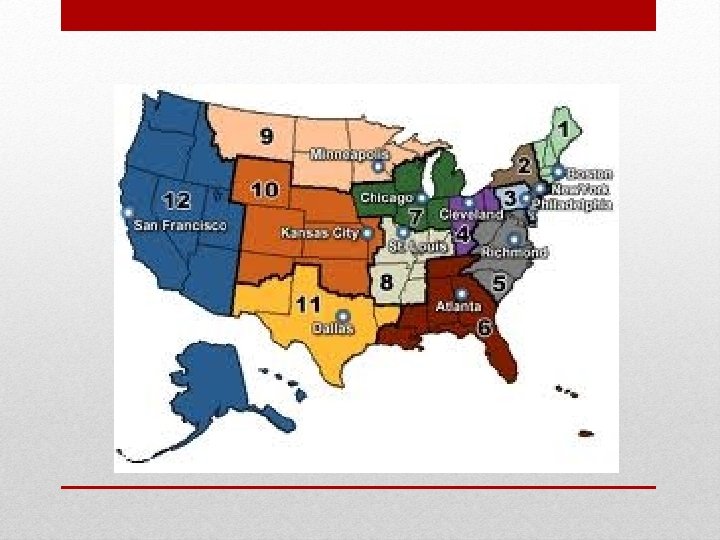
• The Federal Reserve Act of 1913 created the Federal Reserve System. The Federal Reserve

• 1. Supervises and regulates financial institutions • 2. Issues coin and currency • 3. Provides financial services to banks and the government. • 4. Monetary Policy Functions of the Fed
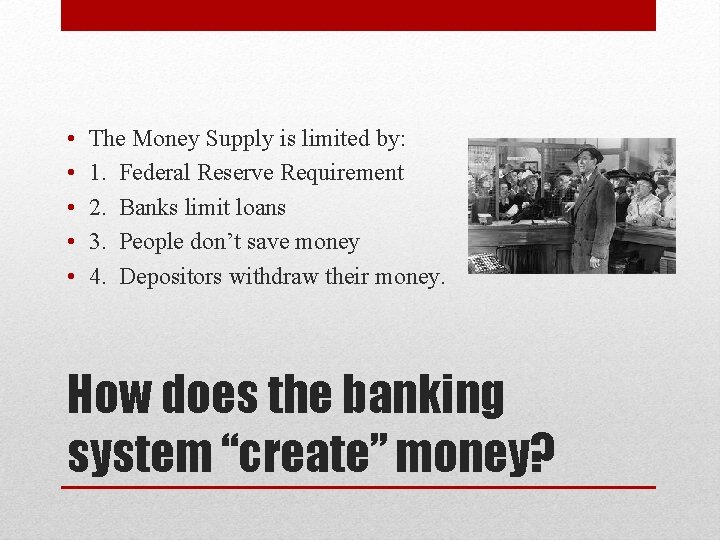
• • • The Money Supply is limited by: 1. Federal Reserve Requirement 2. Banks limit loans 3. People don’t save money 4. Depositors withdraw their money. How does the banking system “create” money?
• M-1 – money supply componets conforming to money’s role as a medium of exchange; coins, currency, checks and other demand deposits, traveler’s checks • M-2 – money supply components conforming to money’s role as a store of value; M 1, savings deposits, time deposits. Categories of money
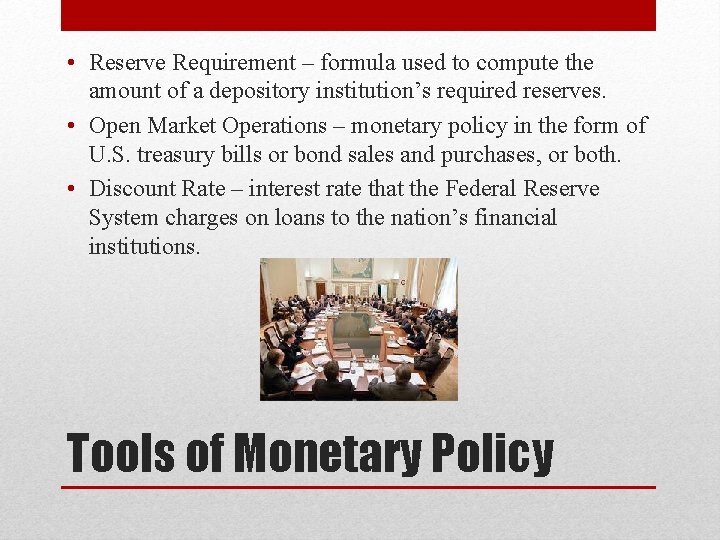
• Reserve Requirement – formula used to compute the amount of a depository institution’s required reserves. • Open Market Operations – monetary policy in the form of U. S. treasury bills or bond sales and purchases, or both. • Discount Rate – interest rate that the Federal Reserve System charges on loans to the nation’s financial institutions. Tools of Monetary Policy
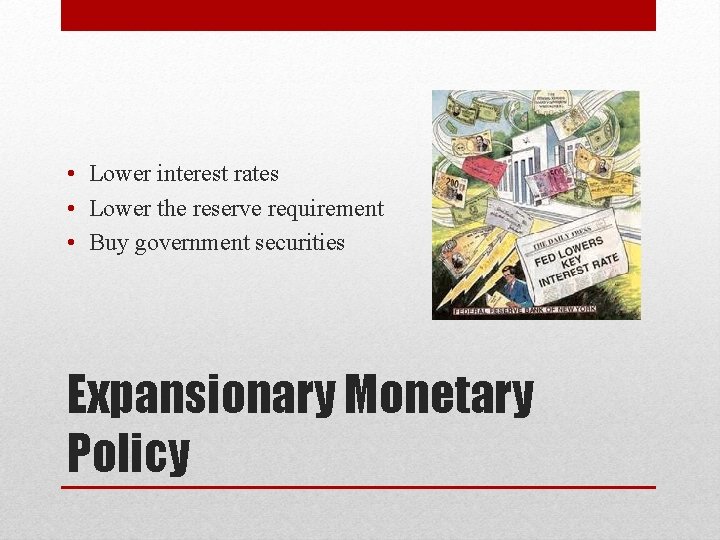
• Lower interest rates • Lower the reserve requirement • Buy government securities Expansionary Monetary Policy
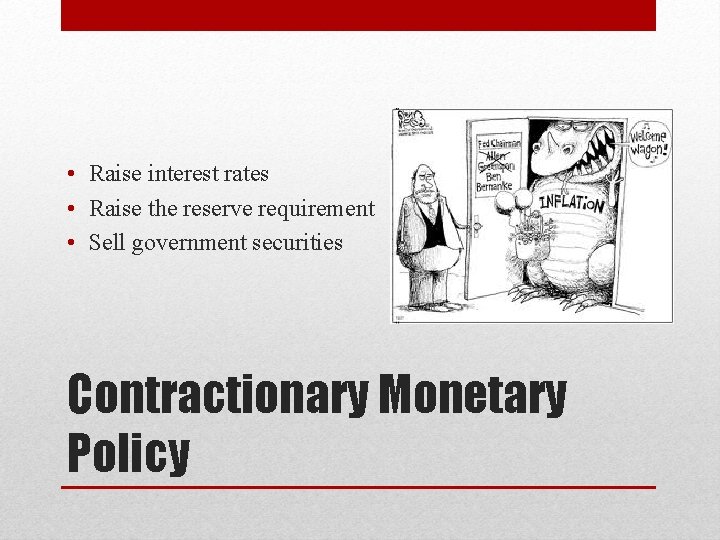
• Raise interest rates • Raise the reserve requirement • Sell government securities Contractionary Monetary Policy
- Slides: 11