
Monday Question of the Day How prepared will



- Slides: 32
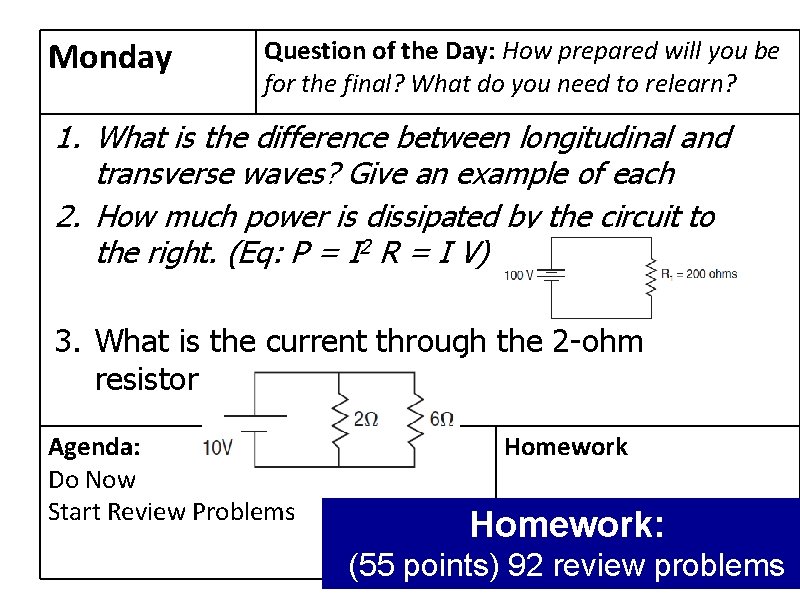
Monday Question of the Day: How prepared will you be for the final? What do you need to relearn? 1. What is the difference between longitudinal and transverse waves? Give an example of each 2. How much power is dissipated by the circuit to the right. (Eq: P = I 2 R = I V) 3. What is the current through the 2 -ohm resistor below? Agenda: Do Now Start Review Problems Homework: (55 points) 92 review problems
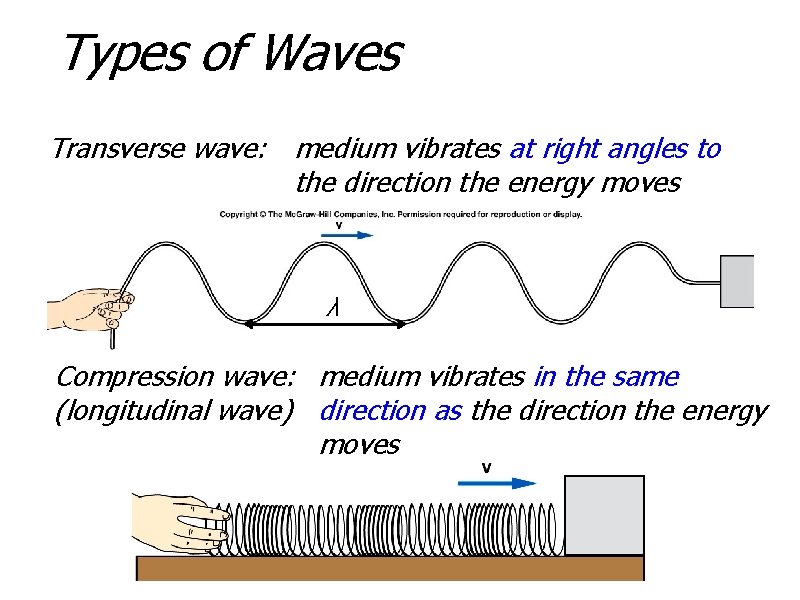
Types of Waves Transverse wave: medium vibrates at right angles to the direction the energy moves λ Compression wave: medium vibrates in the same (longitudinal wave) direction as the direction the energy moves
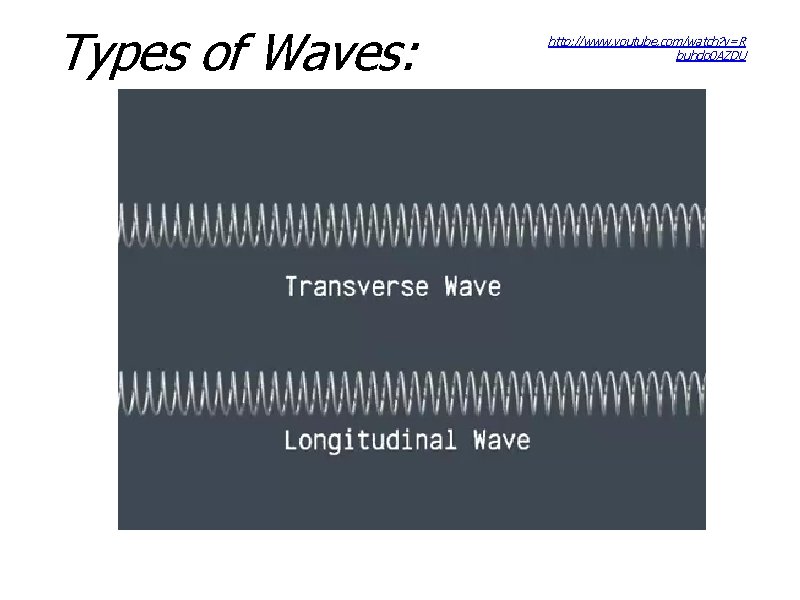
Types of Waves: http: //www. youtube. com/watch? v=R buhdo 0 AZDU
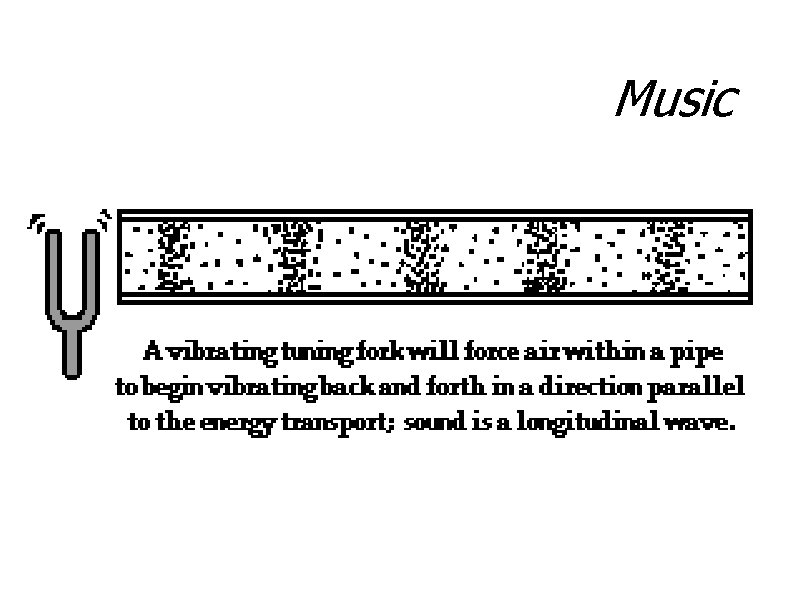
Music
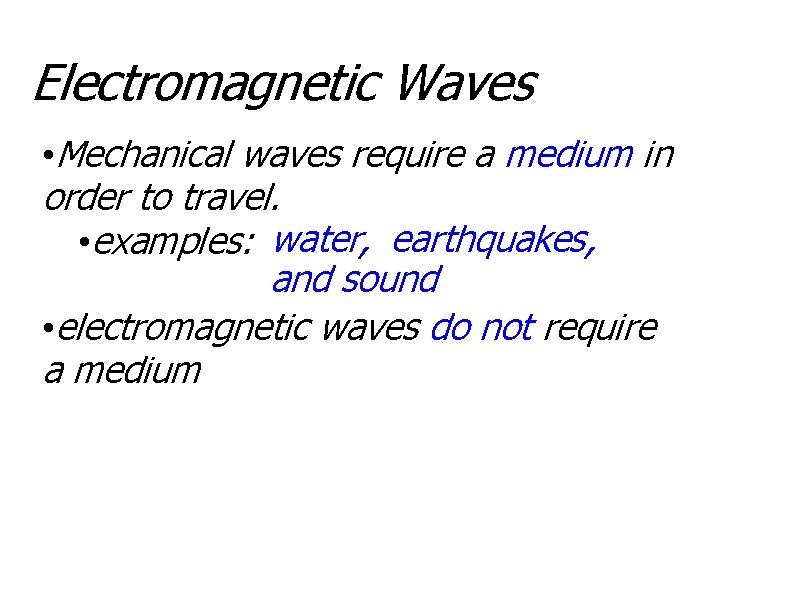
Electromagnetic Waves • Mechanical waves require a medium in order to travel. • examples: water, earthquakes, and sound • electromagnetic waves do not require a medium
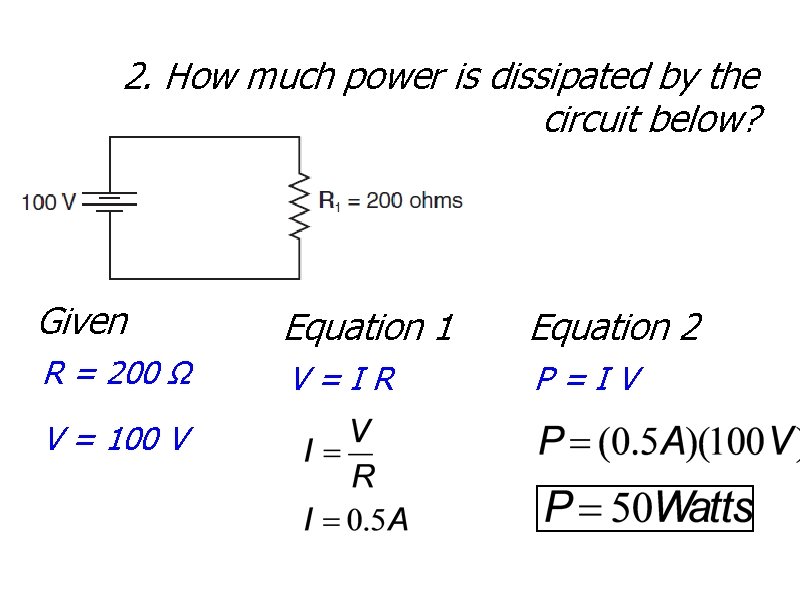
2. How much power is dissipated by the circuit below? Given Equation 1 Equation 2 R = 200 Ω V=IR P=IV V = 100 V
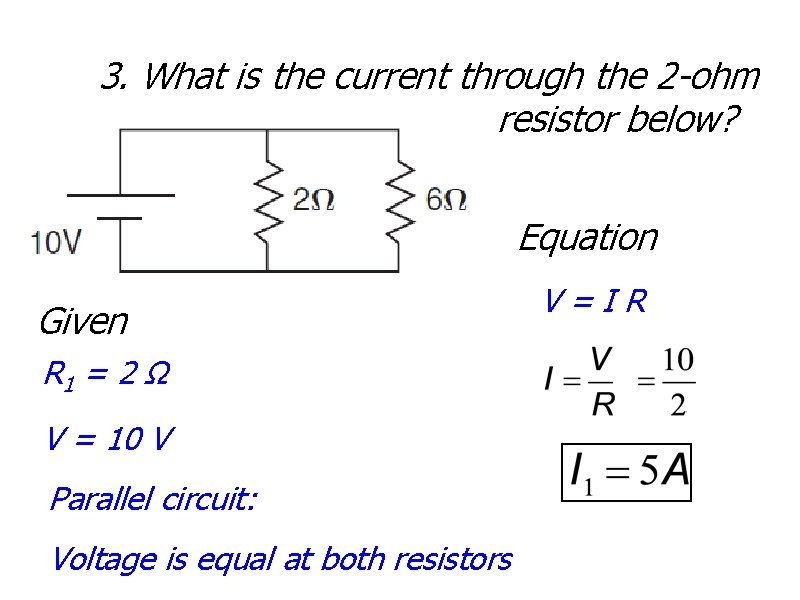
3. What is the current through the 2 -ohm resistor below? Equation Given R 1 = 2 Ω V = 10 V Parallel circuit: Voltage is equal at both resistors V=IR
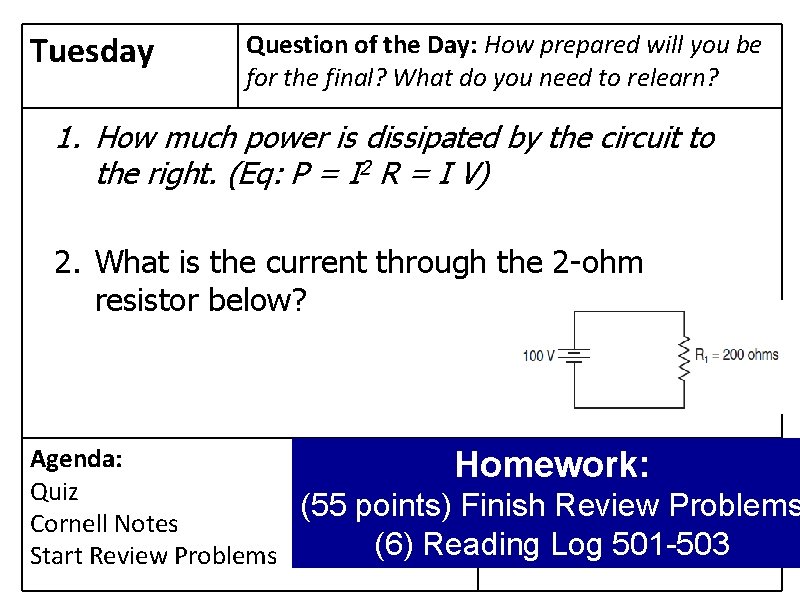
Tuesday Question of the Day: How prepared will you be for the final? What do you need to relearn? 1. How much power is dissipated by the circuit to the right. (Eq: P = I 2 R = I V) 2. What is the current through the 2 -ohm resistor below? Agenda: Homework: Quiz (55 points) Finish Review Problems Cornell Notes (6) Reading Log 501 -503 Start Review Problems
Quiz! FClear your desks! FGrab a pencil! FGet ready!. . . Get set!…. GO!
MOMENTUM
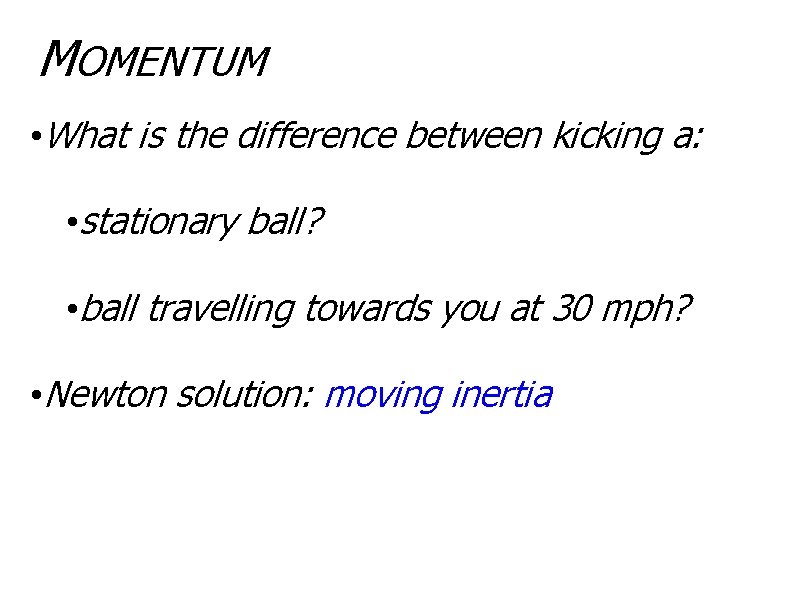
MOMENTUM • What is the difference between kicking a: • stationary ball? • ball travelling towards you at 30 mph? • Newton solution: moving inertia
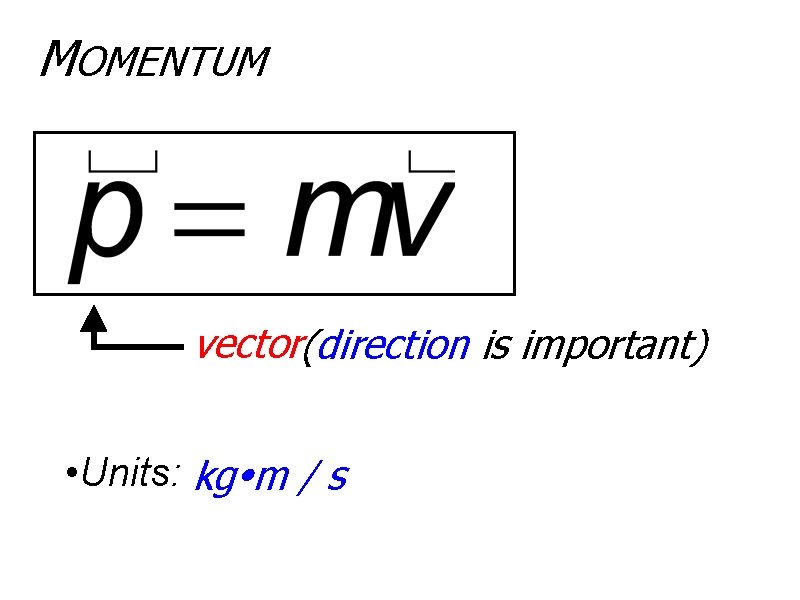
MOMENTUM vector(direction is important) • Units: kg m / s
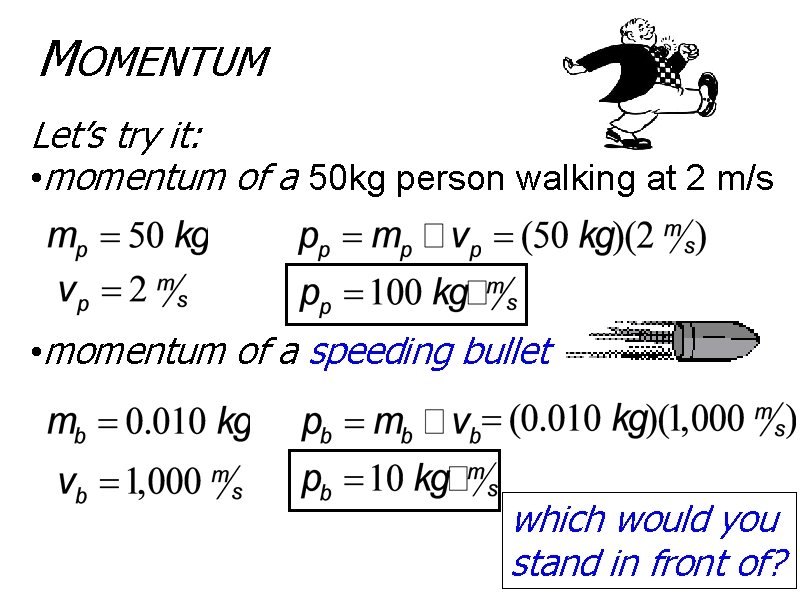
MOMENTUM Let’s try it: • momentum of a 50 kg person walking at 2 m/s • momentum of a speeding bullet which would you stand in front of?
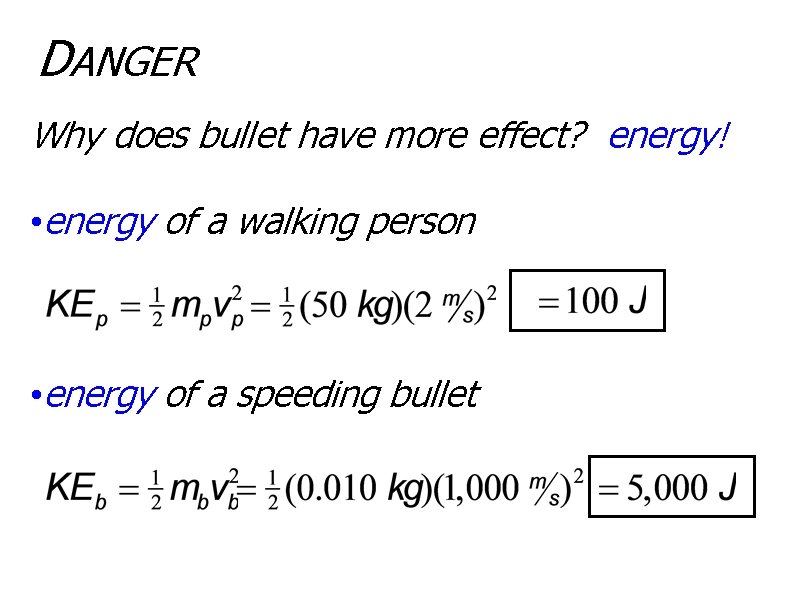
DANGER Why does bullet have more effect? energy! • energy of a walking person • energy of a speeding bullet
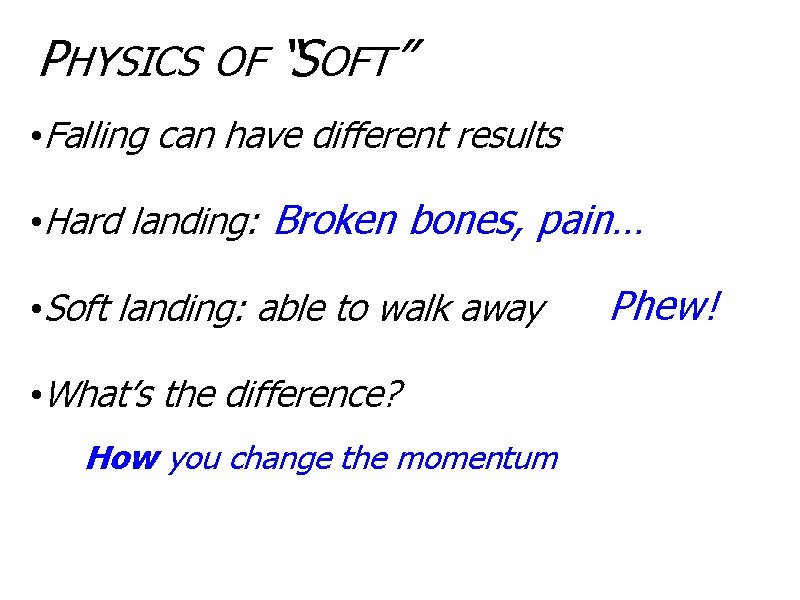
PHYSICS OF “SOFT” • Falling can have different results • Hard landing: Broken bones, pain… • Soft landing: able to walk away • What’s the difference? How you change the momentum Phew!
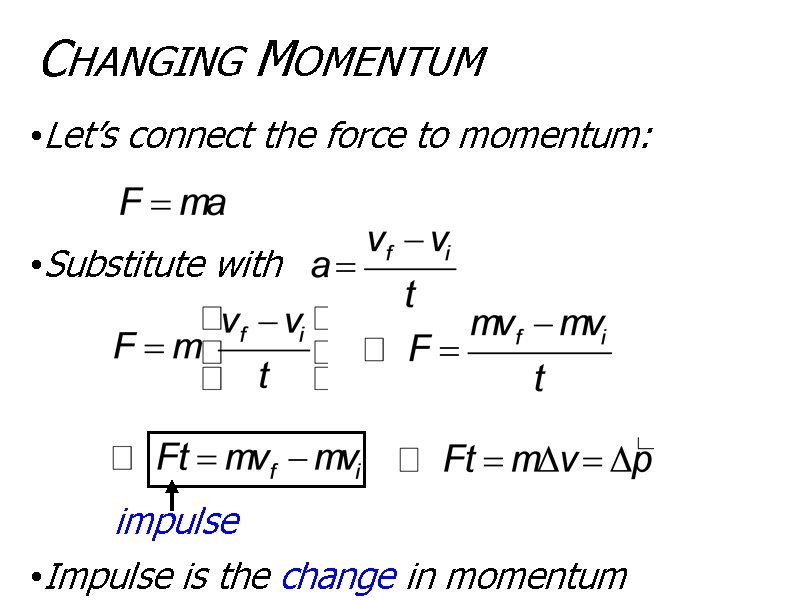
CHANGING MOMENTUM • Let’s connect the force to momentum: • Substitute with impulse • Impulse is the change in momentum
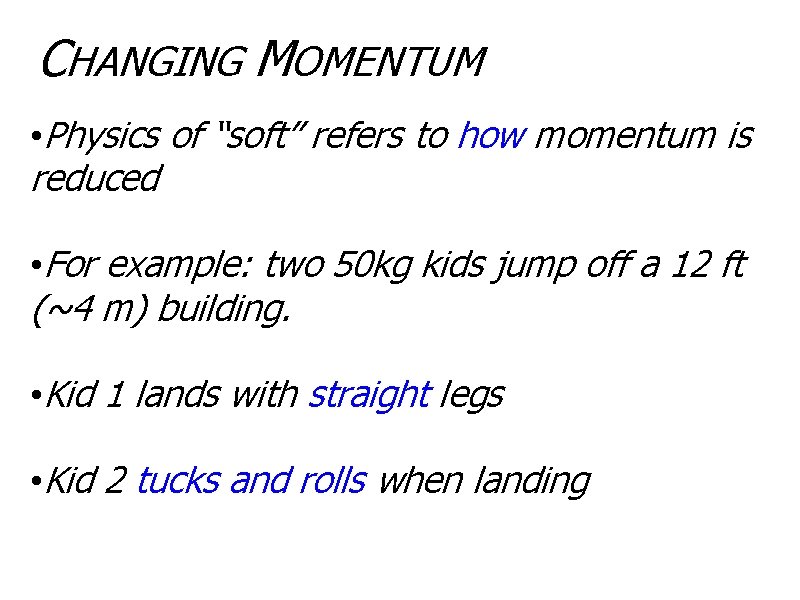
CHANGING MOMENTUM • Physics of “soft” refers to how momentum is reduced • For example: two 50 kg kids jump off a 12 ft (~4 m) building. • Kid 1 lands with straight legs • Kid 2 tucks and rolls when landing
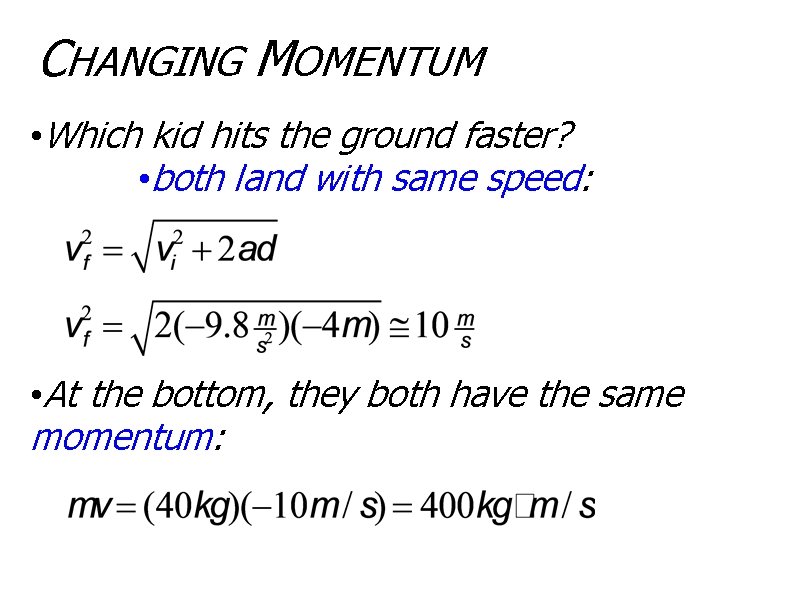
CHANGING MOMENTUM • Which kid hits the ground faster? • both land with same speed: • At the bottom, they both have the same momentum:
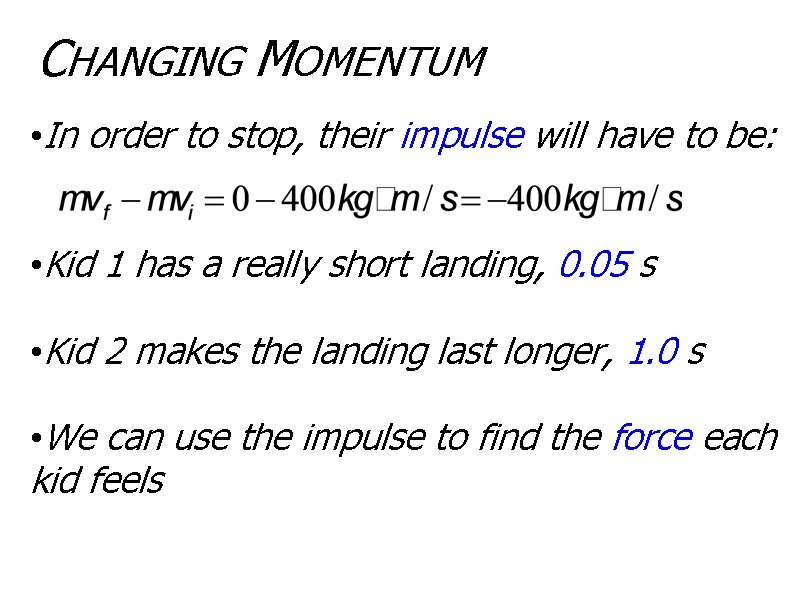
CHANGING MOMENTUM • In order to stop, their impulse will have to be: • Kid 1 has a really short landing, 0. 05 s • Kid 2 makes the landing last longer, 1. 0 s • We can use the impulse to find the force each kid feels
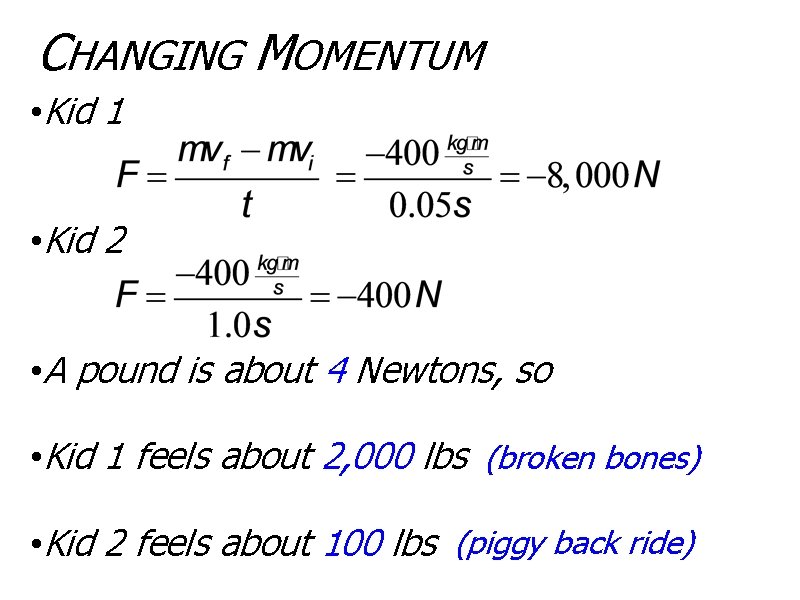
CHANGING MOMENTUM • Kid 1 • Kid 2 • A pound is about 4 Newtons, so • Kid 1 feels about 2, 000 lbs (broken bones) • Kid 2 feels about 100 lbs (piggy back ride)
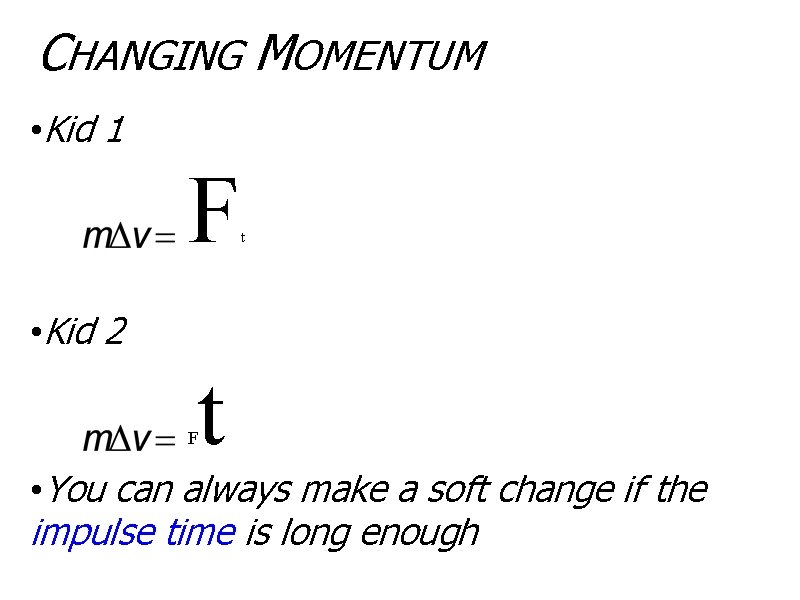
CHANGING MOMENTUM • Kid 1 F t • Kid 2 F t • You can always make a soft change if the impulse time is long enough
Time to Practice Go to pg. 506
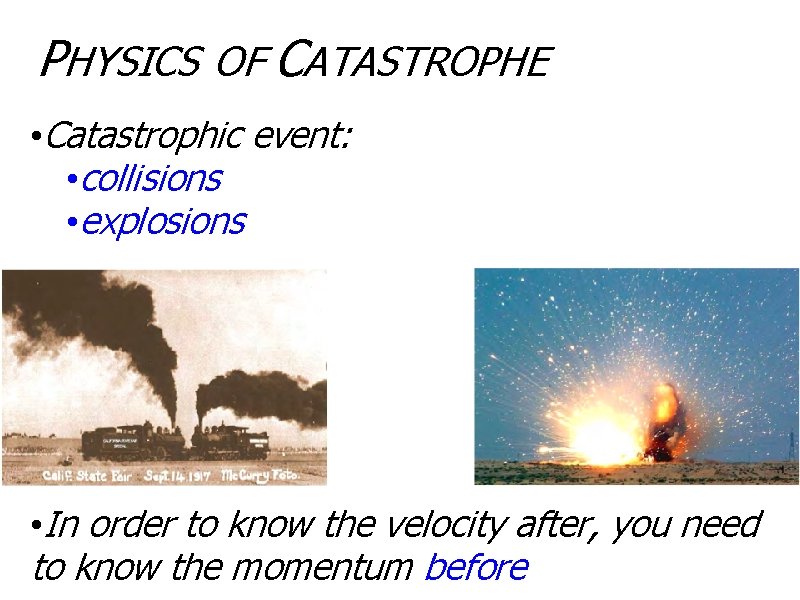
PHYSICS OF CATASTROPHE • Catastrophic event: • collisions • explosions • In order to know the velocity after, you need to know the momentum before
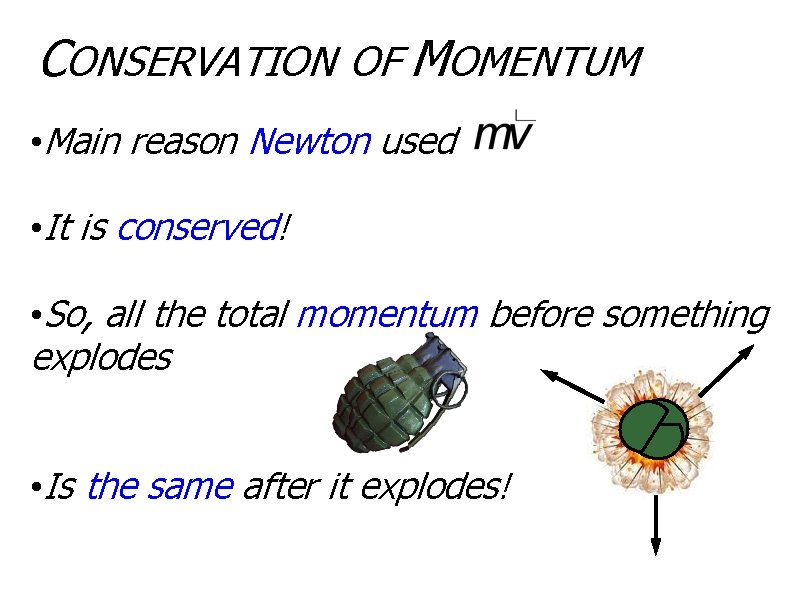
CONSERVATION OF MOMENTUM • Main reason Newton used • It is conserved! • So, all the total momentum before something explodes • Is the same after it explodes!
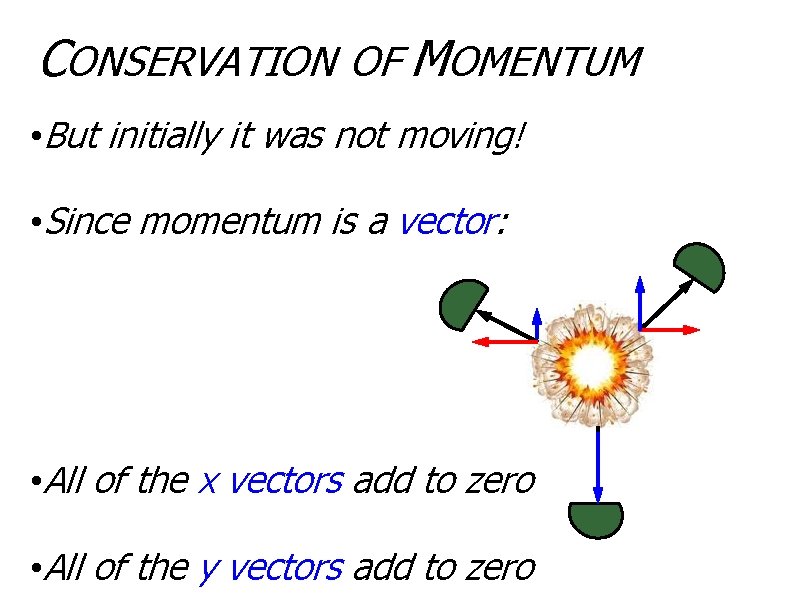
CONSERVATION OF MOMENTUM • But initially it was not moving! • Since momentum is a vector: • All of the x vectors add to zero • All of the y vectors add to zero
CONSERVATION OF MOMENTUM • Same for crashes • All the momentum before the crash • Is the same after the crash • Let’s try one…
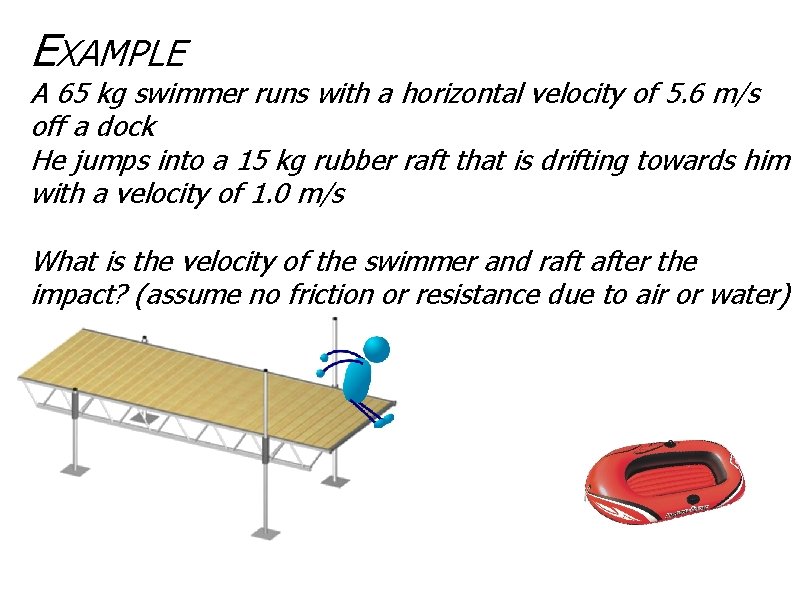
EXAMPLE A 65 kg swimmer runs with a horizontal velocity of 5. 6 m/s off a dock He jumps into a 15 kg rubber raft that is drifting towards him with a velocity of 1. 0 m/s What is the velocity of the swimmer and raft after the impact? (assume no friction or resistance due to air or water)
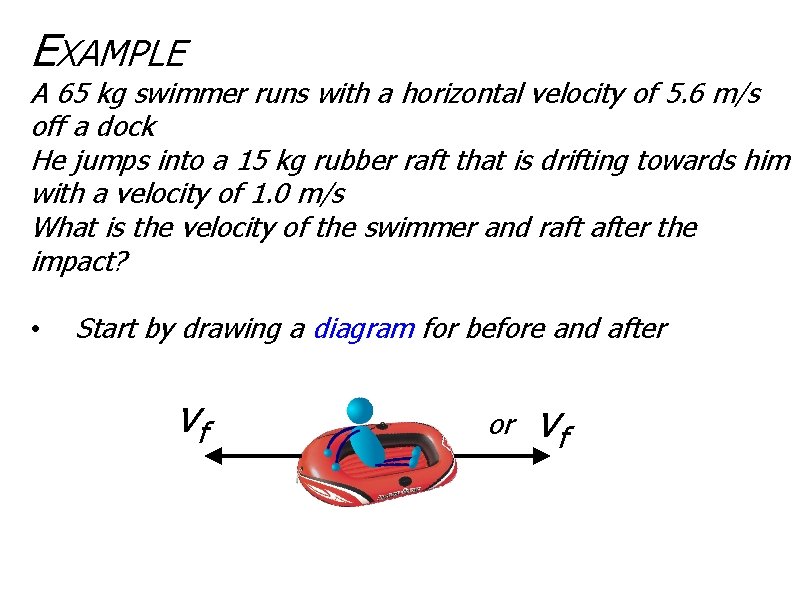
EXAMPLE A 65 kg swimmer runs with a horizontal velocity of 5. 6 m/s off a dock He jumps into a 15 kg rubber raft that is drifting towards him with a velocity of 1. 0 m/s What is the velocity of the swimmer and raft after the impact? • Start by drawing a diagram for before and after vf or vf
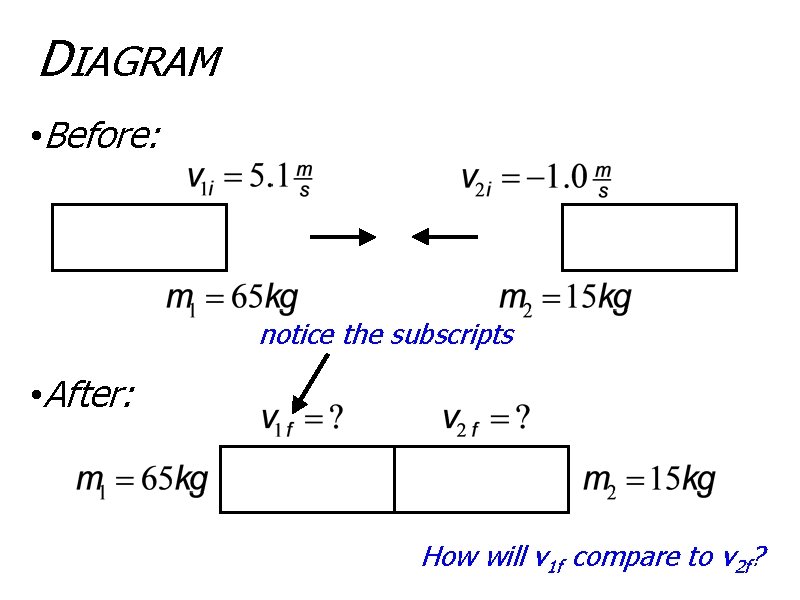
DIAGRAM • Before: notice the subscripts • After: How will v 1 f compare to v 2 f?
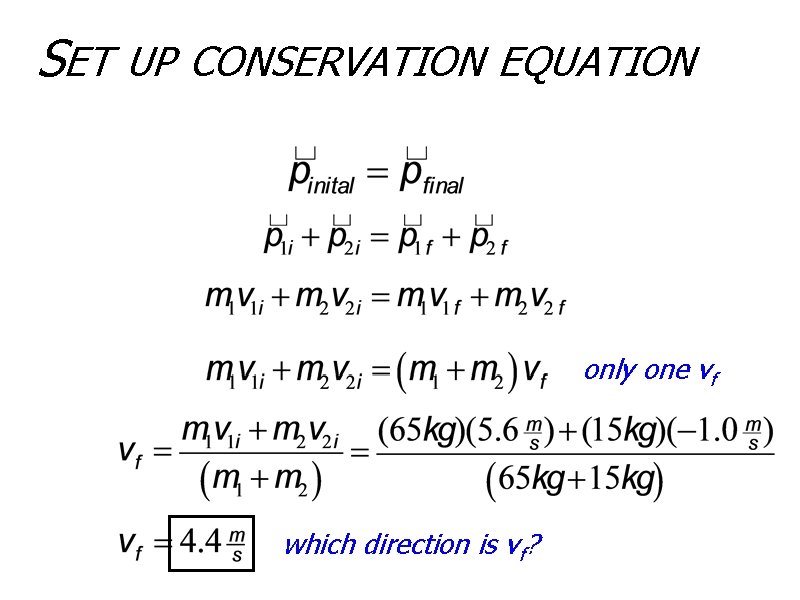
SET UP CONSERVATION EQUATION only one vf which direction is vf?
Try this out! Answer questions 89 -92 on your review sheet Turn it in on a separate piece of paper by the end of class (Disclaimer: These questions do not count as part of your 42 problems)