
Monday Night with Research To Practice An 8
- Slides: 72
Monday Night with Research To Practice: An 8 -Part Live CME Webcast Series Part V: Central Nervous System Cancers Monday, October 18, 2010 7: 30 PM - 8: 30 PM ET Copyright © 2010, Research To Practice, All rights reserved.
Tracy Batchelor, MD, MPH Executive Director Stephen E and Catherine Pappas Center for Neuro-Oncology Associate Professor of Neurology, Harvard Medical School Associate Neurologist, Massachusetts General Hospital Boston, Massachusetts James J Vredenburgh, MD Professor of Medicine Preston Robert Tisch Brain Tumor Center Duke University Medical Center Durham, North Carolina Neil Love, MD Moderator Research To Practice Miami, Florida
Disclosures for Moderator Neil Love, MD Dr Love is president and CEO of Research To Practice, which receives funds in the form of educational grants to develop CME activities from the following commercial interests: Abraxis Bio. Science, Allos Therapeutics, Amgen Inc, Astra. Zeneca Pharmaceuticals LP, Aureon Laboratories Inc, Bayer Health. Care Pharmaceuticals/Onyx Pharmaceuticals Inc, Biogen Idec, Boehringer Ingelheim Pharmaceuticals Inc, Bristol-Myers Squibb Company, Celgene Corporation, Cephalon Inc, Eisai Inc, EMD Serono Inc, Genentech Bio. Oncology, Genomic Health Inc, Lilly USA LLC, Millennium Pharmaceuticals Inc, Myriad Genetics, Inc, Novartis Pharmaceuticals Corporation, OSI Oncology, Sanofi. Aventis and Spectrum Pharmaceuticals Inc.
Disclosures for Tracy Batchelor, MD, MPH Consulting Agreements Roche Laboratories Inc, Schering-Plough Corporation Research Support Astra. Zeneca Pharmaceuticals LP, Millennium Pharmaceuticals Inc.
Disclosures for James J Vredenburgh, MD Advisory Committee and Genentech Bio. Oncology Consulting Agreements Paid Research N/A Speakers Bureau N/A = Not Applicable
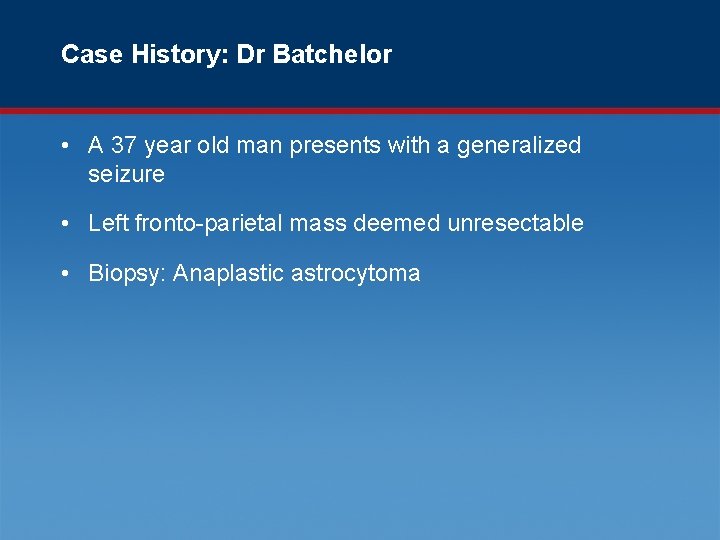
Case History: Dr Batchelor • A 37 year old man presents with a generalized seizure • Left fronto-parietal mass deemed unresectable • Biopsy: Anaplastic astrocytoma
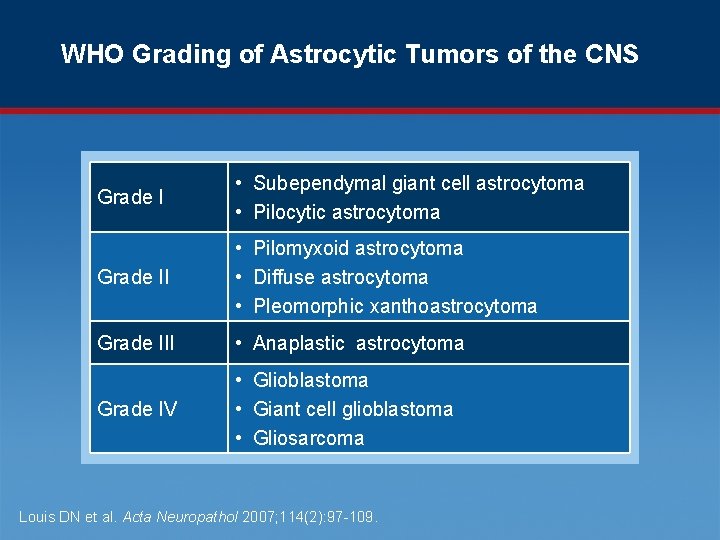
WHO Grading of Astrocytic Tumors of the CNS Grade I • Subependymal giant cell astrocytoma • Pilocytic astrocytoma Grade II • Pilomyxoid astrocytoma • Diffuse astrocytoma • Pleomorphic xanthoastrocytoma Grade III • Anaplastic astrocytoma Grade IV • Glioblastoma • Giant cell glioblastoma • Gliosarcoma Louis DN et al. Acta Neuropathol 2007; 114(2): 97 -109.
1) What treatment would you recommend for this patient? Radiation therapy Temozolomide Radiation therapy plus temozolomide Other
Case History: Dr Batchelor (continued) • Received radiation therapy/temozolomide on RTOG 98 -13 • Follow-up MRI 9 months after diagnosis revealed increased size of the mass • Biopsy: GBM
2) What treatment would you recommend for this patient? Bevacizumab Chemo/bevacizumab Temozolomide Nitrosourea Combination PCV Cyclophosphamide Platinum-based regimen Other
Case History: Dr Batchelor (continued) • Phase II study with cilengitide monotherapy, with radiographic partial response • After > 1 year on cilengitide, nodular enhancement outside the radiation field • Cediranib x 4 months with initial tumor reduction followed by progression of FLAIR signal abnormality
Phase I/IIa Study of Cilengitide and Temozolomide With Concomitant Radiotherapy Followed by Cilengitide and Temozolomide Maintenance Therapy in Patients With Newly Diagnosed Glioblastoma Stupp R et al. J Clin Oncol 2010; 28(16): 2712 -8. Copyright © 2010, Research To Practice, All rights reserved.
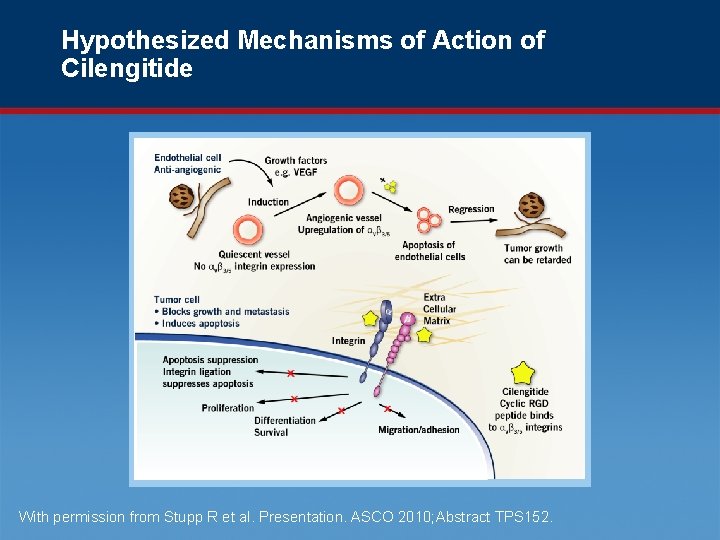
Hypothesized Mechanisms of Action of Cilengitide With permission from Stupp R et al. Presentation. ASCO 2010; Abstract TPS 152.
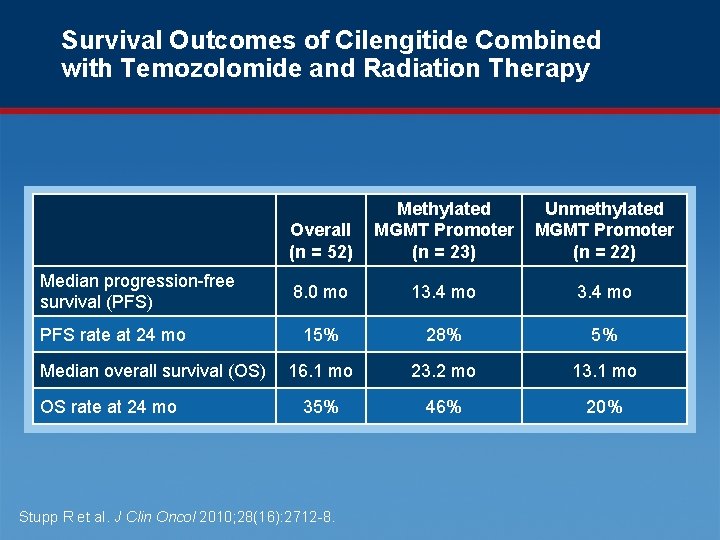
Survival Outcomes of Cilengitide Combined with Temozolomide and Radiation Therapy Median progression-free survival (PFS) PFS rate at 24 mo Median overall survival (OS) OS rate at 24 mo Overall (n = 52) Methylated MGMT Promoter (n = 23) Unmethylated MGMT Promoter (n = 22) 8. 0 mo 13. 4 mo 15% 28% 5% 16. 1 mo 23. 2 mo 13. 1 mo 35% 46% 20% Stupp R et al. J Clin Oncol 2010; 28(16): 2712 -8.
Phase II Study of Cediranib, an Oral Pan-vascular Endothelial Growth Factor Receptor Tyrosine Kinase Inhibitor, in Patients With Recurrent Glioblastoma Batchelor TT et al. J Clin Oncol 2010; 28(17): 2817 -23. Copyright © 2010, Research To Practice, All rights reserved.
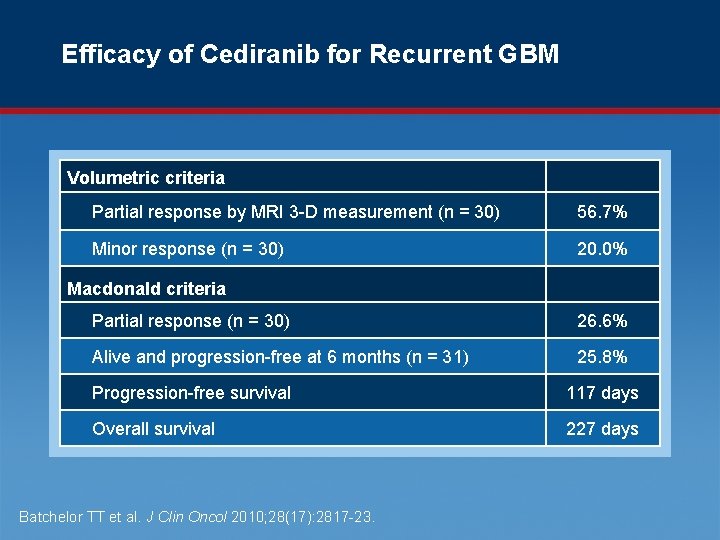
Efficacy of Cediranib for Recurrent GBM Volumetric criteria Partial response by MRI 3 -D measurement (n = 30) 56. 7% Minor response (n = 30) 20. 0% Macdonald criteria Partial response (n = 30) 26. 6% Alive and progression-free at 6 months (n = 31) 25. 8% Progression-free survival 117 days Overall survival 227 days Batchelor TT et al. J Clin Oncol 2010; 28(17): 2817 -23.
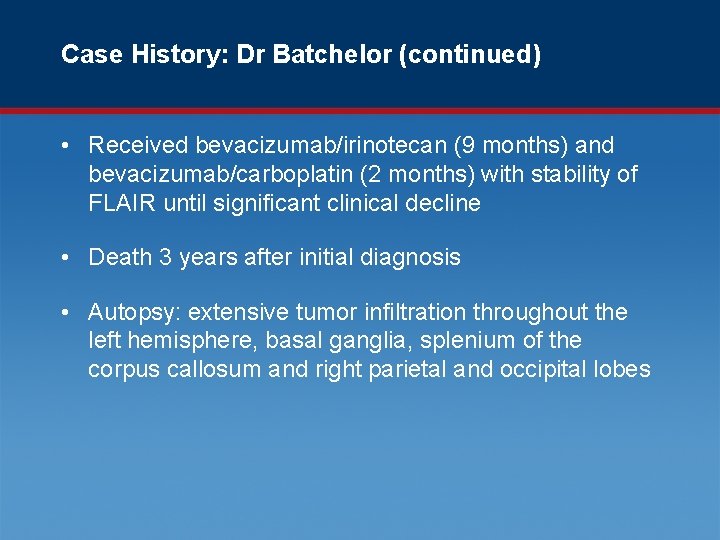
Case History: Dr Batchelor (continued) • Received bevacizumab/irinotecan (9 months) and bevacizumab/carboplatin (2 months) with stability of FLAIR until significant clinical decline • Death 3 years after initial diagnosis • Autopsy: extensive tumor infiltration throughout the left hemisphere, basal ganglia, splenium of the corpus callosum and right parietal and occipital lobes
Updated Safety and Survival of Patients with Relapsed Glioblastoma Treated with Bevacizumab in the BRAIN Study Cloughesy T et al. Proc ASCO 2010; Abstract 2008. Copyright © 2010, Research To Practice, All rights reserved.
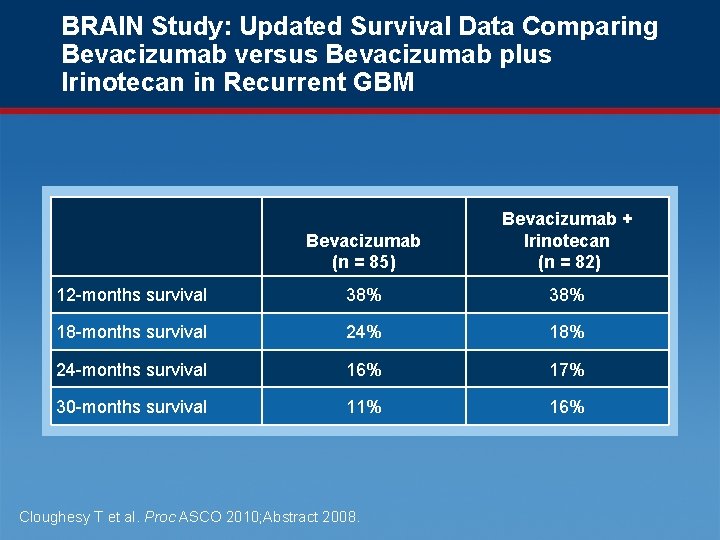
BRAIN Study: Updated Survival Data Comparing Bevacizumab versus Bevacizumab plus Irinotecan in Recurrent GBM Bevacizumab (n = 85) Bevacizumab + Irinotecan (n = 82) 12 -months survival 38% 18 -months survival 24% 18% 24 -months survival 16% 17% 30 -months survival 11% 16% Cloughesy T et al. Proc ASCO 2010; Abstract 2008.
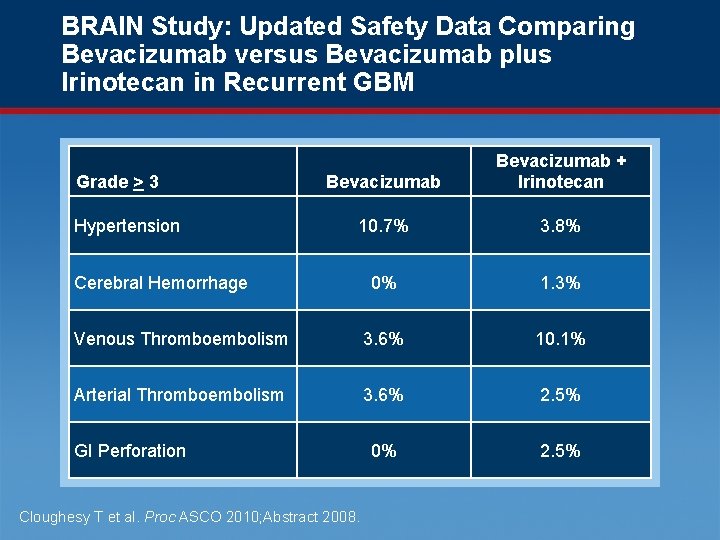
BRAIN Study: Updated Safety Data Comparing Bevacizumab versus Bevacizumab plus Irinotecan in Recurrent GBM Bevacizumab + Irinotecan 10. 7% 3. 8% 0% 1. 3% Venous Thromboembolism 3. 6% 10. 1% Arterial Thromboembolism 3. 6% 2. 5% 0% 2. 5% Grade > 3 Hypertension Cerebral Hemorrhage GI Perforation Cloughesy T et al. Proc ASCO 2010; Abstract 2008.
Long-Term Survival from the Initial Trial of Bevacizumab and Irinotecan Desjardins A et al. Proc ASCO 2010; Abstract 2045. Copyright © 2010, Research To Practice, All rights reserved.
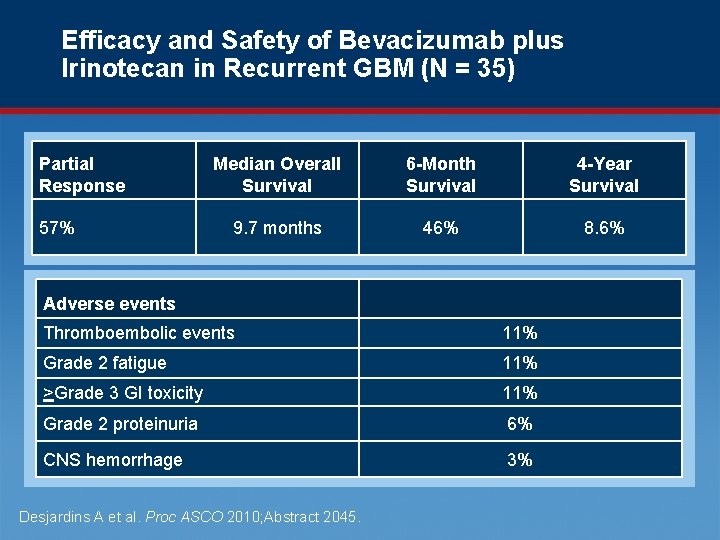
Efficacy and Safety of Bevacizumab plus Irinotecan in Recurrent GBM (N = 35) Partial Response 57% Median Overall Survival 6 -Month Survival 4 -Year Survival 9. 7 months 46% 8. 6% Adverse events Thromboembolic events 11% Grade 2 fatigue 11% >Grade 3 GI toxicity 11% Grade 2 proteinuria 6% CNS hemorrhage 3% Desjardins A et al. Proc ASCO 2010; Abstract 2045.
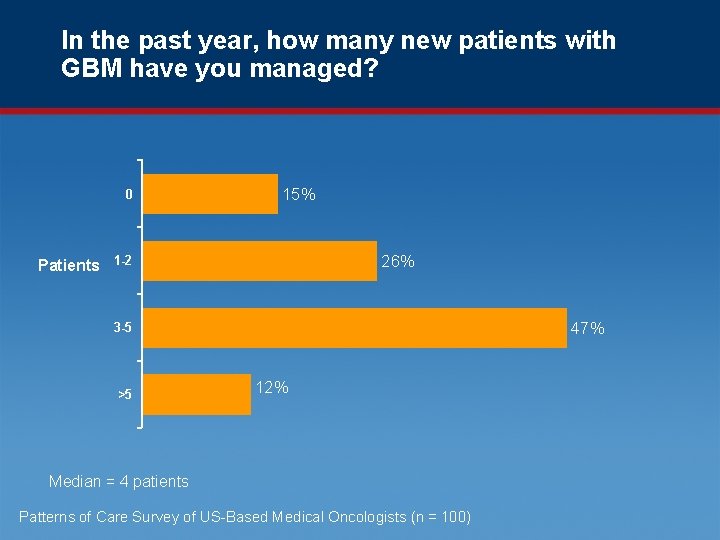
In the past year, how many new patients with GBM have you managed? 0 15% 26% Patients 1 -2 47% 3 -5 >5 12% Median = 4 patients Patterns of Care Survey of US-Based Medical Oncologists (n = 100)
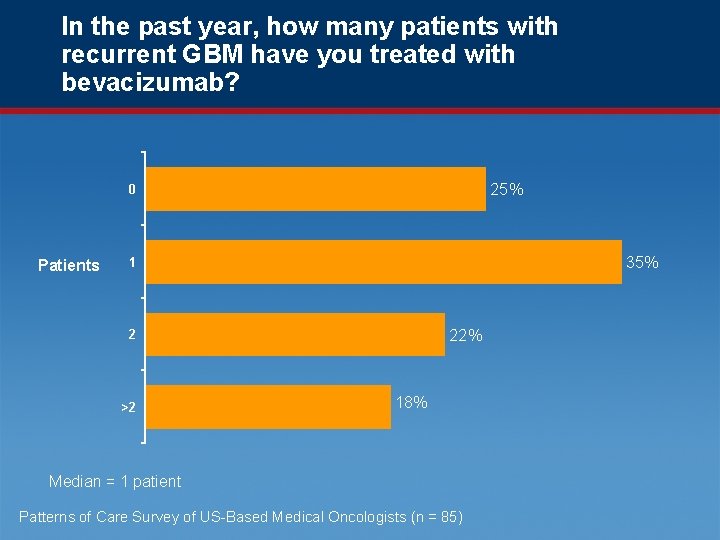
In the past year, how many patients with recurrent GBM have you treated with bevacizumab? 25% 0 Patients 35% 1 22% 2 >2 18% Median = 1 patient Patterns of Care Survey of US-Based Medical Oncologists (n = 85)
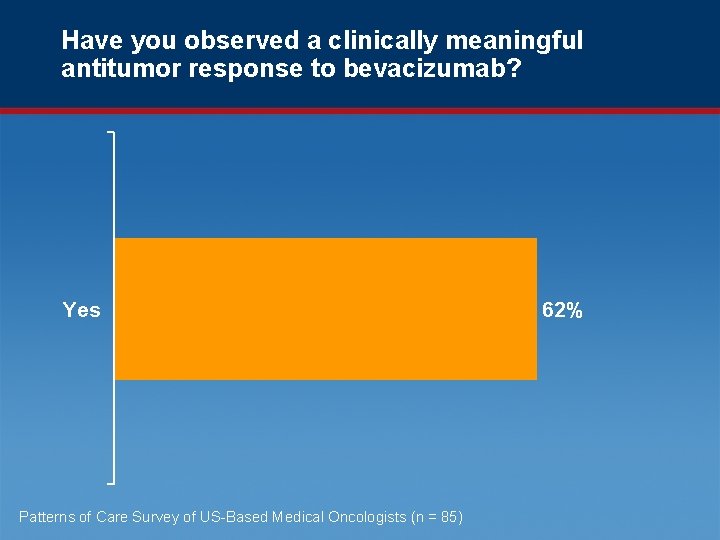
Have you observed a clinically meaningful antitumor response to bevacizumab? Yes Patterns of Care Survey of US-Based Medical Oncologists (n = 85) 62%
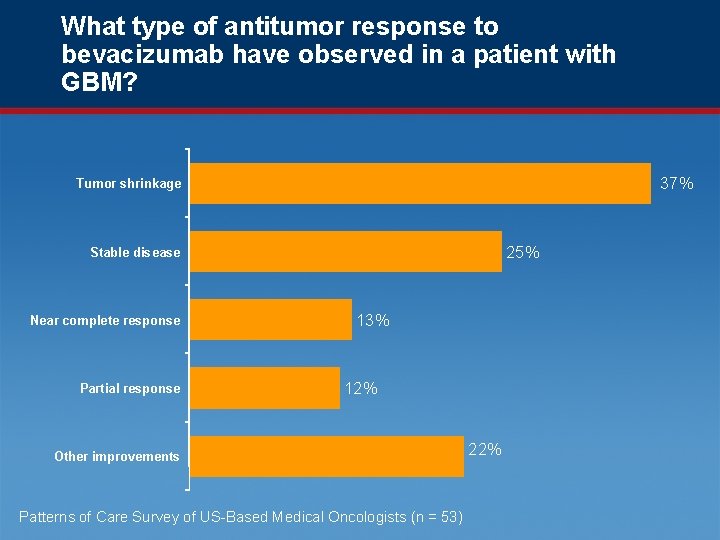
What type of antitumor response to bevacizumab have observed in a patient with GBM? 37% Tumor shrinkage 25% Stable disease Near complete response Partial response 13% 12% Other improvements Patterns of Care Survey of US-Based Medical Oncologists (n = 53) 22%
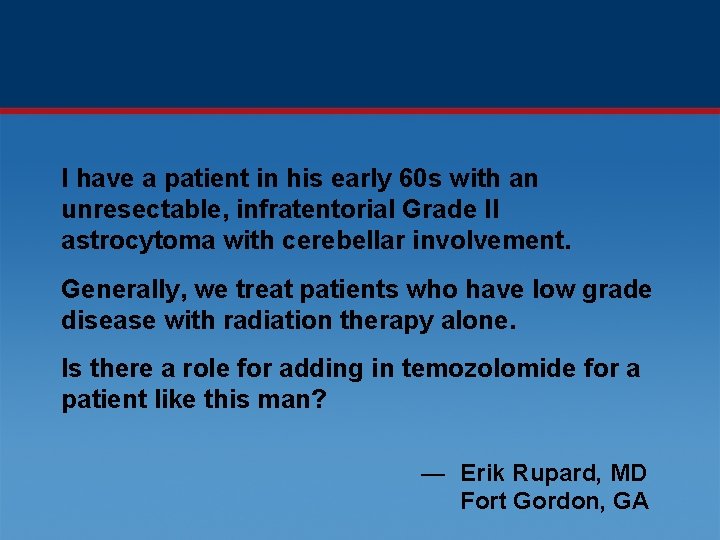
I have a patient in his early 60 s with an unresectable, infratentorial Grade II astrocytoma with cerebellar involvement. Generally, we treat patients who have low grade disease with radiation therapy alone. Is there a role for adding in temozolomide for a patient like this man? — Erik Rupard, MD Fort Gordon, GA
I am treating a 27 -year-old woman with a resected anaplastic astrocytoma. She is receiving radiation therapy/temozolomide and tolerating therapy well. Would the thought leaders consider adding bevacizumab to temozolomide in an off-protocol setting, given her age, after she finishes chemo/radiation? — Frank Rodriguez, MD Fort Myers, FL
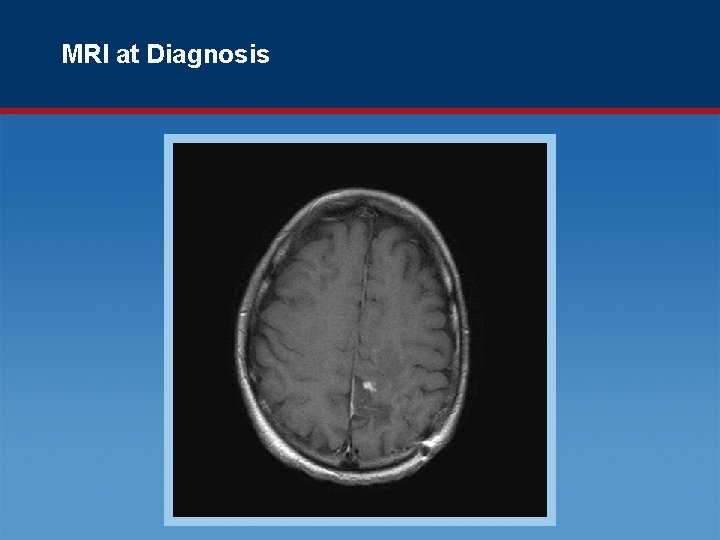
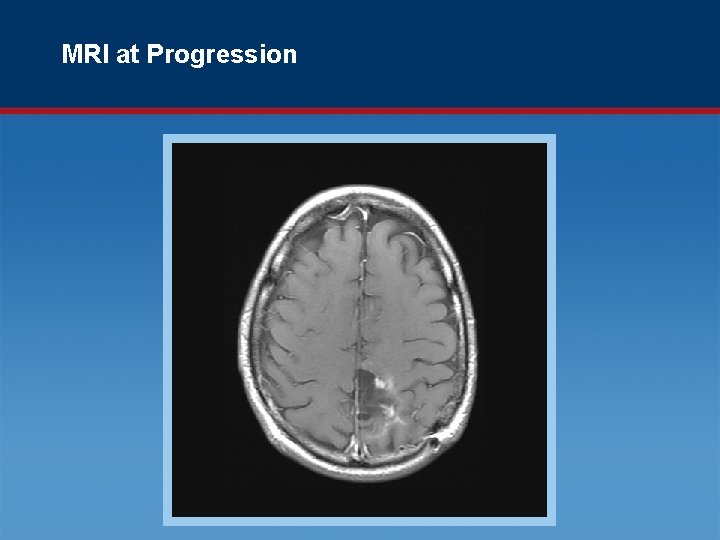
Case History: Dr Vredenburgh • A 46 year old man with GBM • Radiation therapy/temozolomide followed by temozolomide x 8 before progression • Tumor EGFRv 3 -positive, PTEN-normal
3) What treatment would you generally recommend? Bevacizumab Chemo/bevacizumab Temozolomide Nitrosourea Combination PCV Cyclophosphamide Platinum-based regimen Other
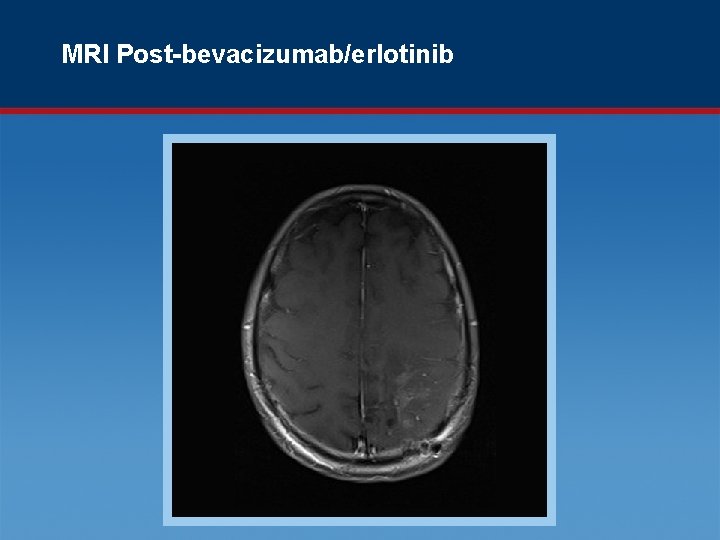
Case History: Dr Vredenburgh (continued) • Received bevacizumab/erlotinib x 8 months, with response and clinical improvement • Developed 1+, 2+, 3+ proteinuria
Case History: Dr Vredenburgh (continued) • Patient continues receiving bevacizumab 5 mg/kg plus erlotinib for 19 months
MRI at Diagnosis
MRI at Progression
MRI Post-bevacizumab/erlotinib
Clinical Features, Mechanisms, and Management of Pseudoprogression in Malignant Gliomas Brandsma D et al. Lancet Oncol 2008; 9(5): 453 -61. Copyright © 2010, Research To Practice, All rights reserved.
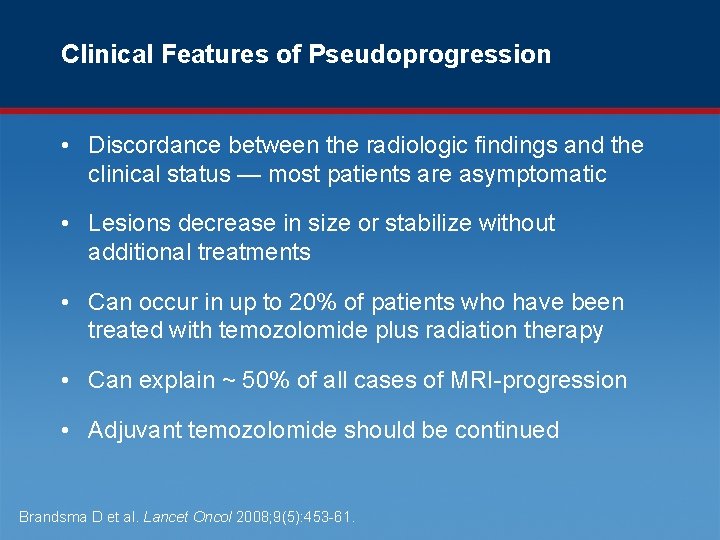
Clinical Features of Pseudoprogression • Discordance between the radiologic findings and the clinical status — most patients are asymptomatic • Lesions decrease in size or stabilize without additional treatments • Can occur in up to 20% of patients who have been treated with temozolomide plus radiation therapy • Can explain ~ 50% of all cases of MRI-progression • Adjuvant temozolomide should be continued Brandsma D et al. Lancet Oncol 2008; 9(5): 453 -61.
Updated Response Assessment Criteria for High-Grade Gliomas: Response Assessment in Neuro. Oncology (RANO) Working Group Wen PY et al. J Clin Oncol 2010; 28(11): 1963 -72. Copyright © 2010, Research To Practice, All rights reserved.
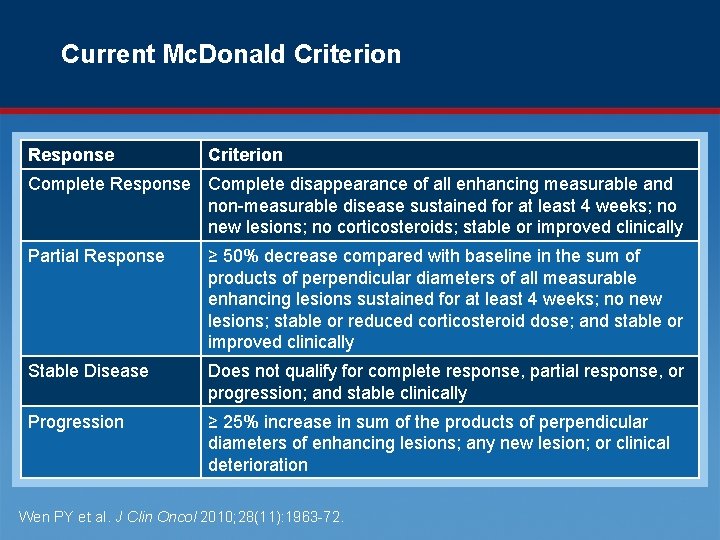
Current Mc. Donald Criterion Response Criterion Complete Response Complete disappearance of all enhancing measurable and non-measurable disease sustained for at least 4 weeks; no new lesions; no corticosteroids; stable or improved clinically Partial Response ≥ 50% decrease compared with baseline in the sum of products of perpendicular diameters of all measurable enhancing lesions sustained for at least 4 weeks; no new lesions; stable or reduced corticosteroid dose; and stable or improved clinically Stable Disease Does not qualify for complete response, partial response, or progression; and stable clinically Progression ≥ 25% increase in sum of the products of perpendicular diameters of enhancing lesions; any new lesion; or clinical deterioration Wen PY et al. J Clin Oncol 2010; 28(11): 1963 -72.
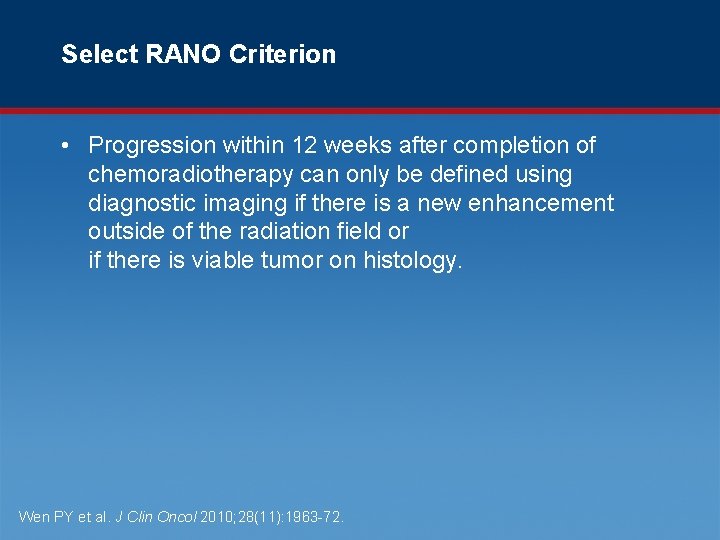
Select RANO Criterion • Progression within 12 weeks after completion of chemoradiotherapy can only be defined using diagnostic imaging if there is a new enhancement outside of the radiation field or if there is viable tumor on histology. Wen PY et al. J Clin Oncol 2010; 28(11): 1963 -72.
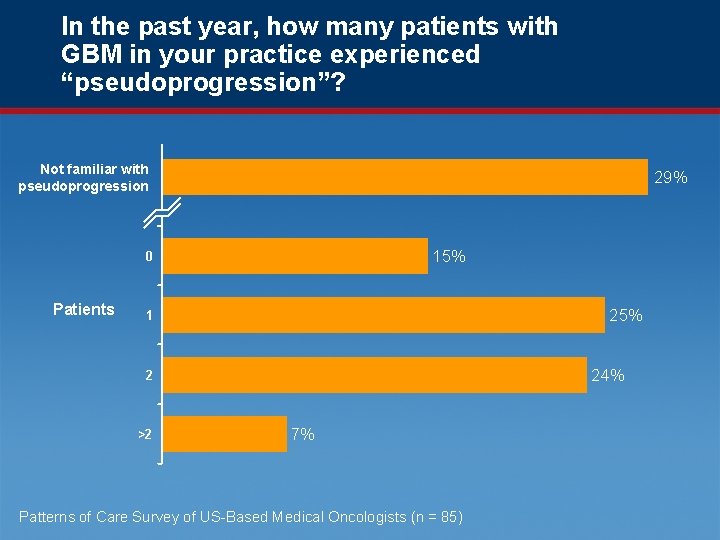
In the past year, how many patients with GBM in your practice experienced “pseudoprogression”? Not familiar with pseudoprogression 29% 15% 0 Patients 25% 1 24% 2 >2 7% Patterns of Care Survey of US-Based Medical Oncologists (n = 85)
Radiotherapy plus Concomitant and Adjuvant Temozolomide for Glioblastoma Stupp R et al. N Engl J Med 2005; 352(10): 987 -96. Copyright © 2010, Research To Practice, All rights reserved.
Effects of Radiotherapy with Concomitant and Adjuvant Temozolomide versus Radiotherapy Alone on Survival in Glioblastoma in a Randomised Phase III Study: 5 -year Analysis of the EORTC-NCIC Trial Stupp R et al. Lancet Oncol 2009; 10(5): 459 -66. Copyright © 2010, Research To Practice, All rights reserved.
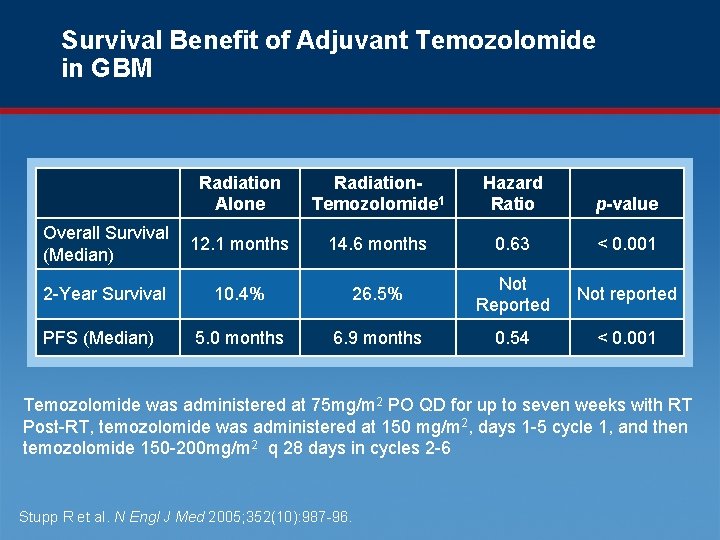
Survival Benefit of Adjuvant Temozolomide in GBM Radiation Alone Radiation. Temozolomide 1 Hazard Ratio p-value Overall Survival (Median) 12. 1 months 14. 6 months 0. 63 < 0. 001 2 -Year Survival 10. 4% 26. 5% Not Reported Not reported 5. 0 months 6. 9 months 0. 54 < 0. 001 PFS (Median) Temozolomide was administered at 75 mg/m 2 PO QD for up to seven weeks with RT Post-RT, temozolomide was administered at 150 mg/m 2, days 1 -5 cycle 1, and then temozolomide 150 -200 mg/m 2 q 28 days in cycles 2 -6 Stupp R et al. N Engl J Med 2005; 352(10): 987 -96.
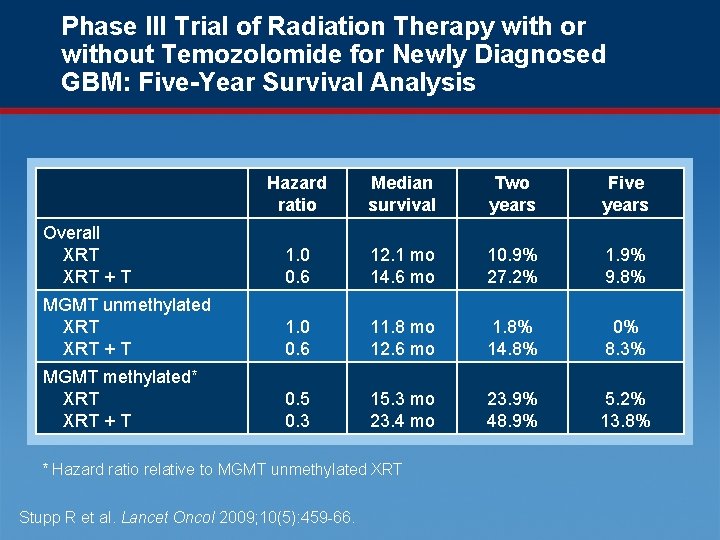
Phase III Trial of Radiation Therapy with or without Temozolomide for Newly Diagnosed GBM: Five-Year Survival Analysis Hazard ratio Median survival Two years Five years Overall XRT + T 1. 0 0. 6 12. 1 mo 14. 6 mo 10. 9% 27. 2% 1. 9% 9. 8% MGMT unmethylated XRT + T 1. 0 0. 6 11. 8 mo 12. 6 mo 1. 8% 14. 8% 0% 8. 3% MGMT methylated* XRT + T 0. 5 0. 3 15. 3 mo 23. 4 mo 23. 9% 48. 9% 5. 2% 13. 8% * Hazard ratio relative to MGMT unmethylated XRT Stupp R et al. Lancet Oncol 2009; 10(5): 459 -66.
Bevacizumab (BEV) in Combination With Temozolomide (TMZ) and Radiation Therapy (XRT) Followed by BEV, TMZ, and Irinotecan for Newly Diagnosed Glioblastoma Multiforme (GBM) Vredenburgh JJ et al. Proc ASCO 2010; Abstract 2023. Copyright © 2010, Research To Practice, All rights reserved.
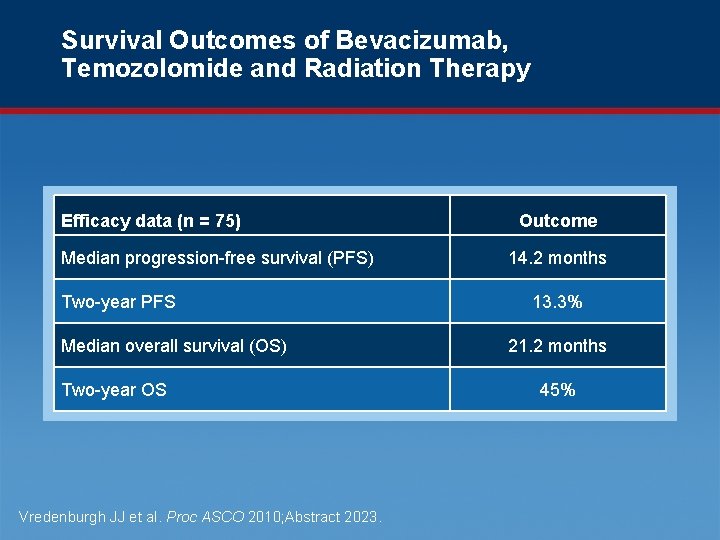
Survival Outcomes of Bevacizumab, Temozolomide and Radiation Therapy Efficacy data (n = 75) Median progression-free survival (PFS) Two-year PFS Median overall survival (OS) Two-year OS Vredenburgh JJ et al. Proc ASCO 2010; Abstract 2023. Outcome 14. 2 months 13. 3% 21. 2 months 45%
Phase II trial of Bevacizumab in Combination with Temozolomide and Regional Radiation Therapy for Up-front Treatment of Patients with Newly Diagnosed Glioblastoma Multiforme Lai A et al. Proc ASCO 2009; Abstract 2000. Copyright © 2010, Research To Practice, All rights reserved.
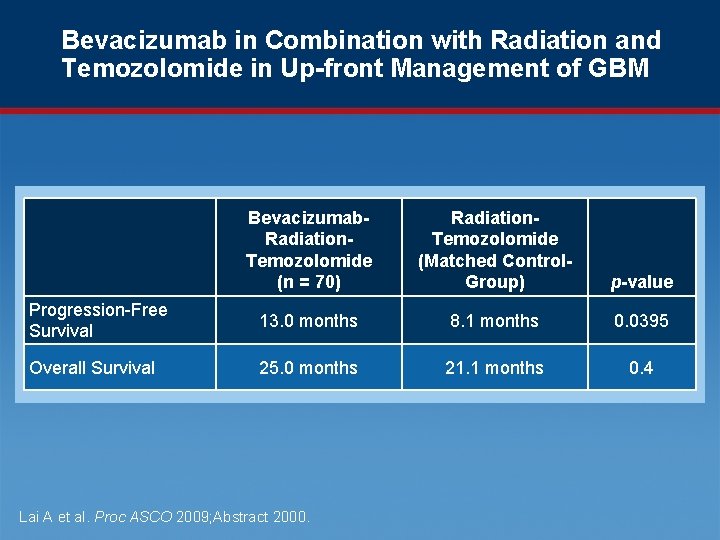
Bevacizumab in Combination with Radiation and Temozolomide in Up-front Management of GBM Bevacizumab. Radiation. Temozolomide (n = 70) Radiation. Temozolomide (Matched Control. Group) p-value Progression-Free Survival 13. 0 months 8. 1 months 0. 0395 Overall Survival 25. 0 months 21. 1 months 0. 4 Lai A et al. Proc ASCO 2009; Abstract 2000.
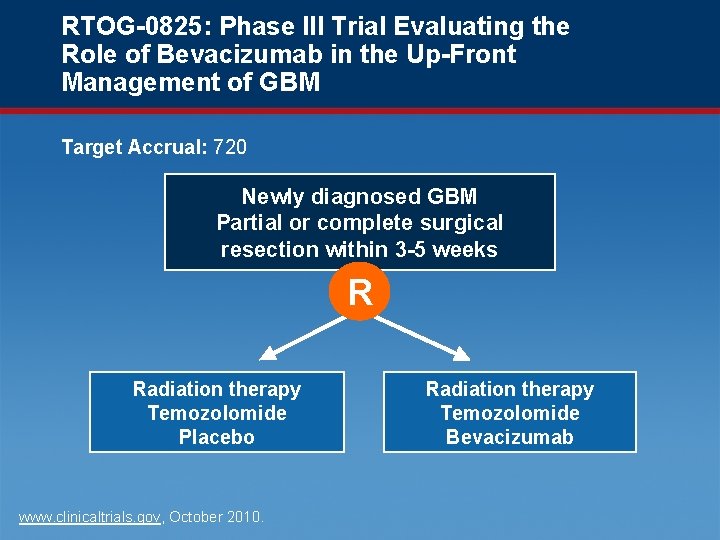
RTOG-0825: Phase III Trial Evaluating the Role of Bevacizumab in the Up-Front Management of GBM Target Accrual: 720 Newly diagnosed GBM Partial or complete surgical resection within 3 -5 weeks R Radiation therapy Temozolomide Placebo www. clinicaltrials. gov, October 2010. Radiation therapy Temozolomide Bevacizumab
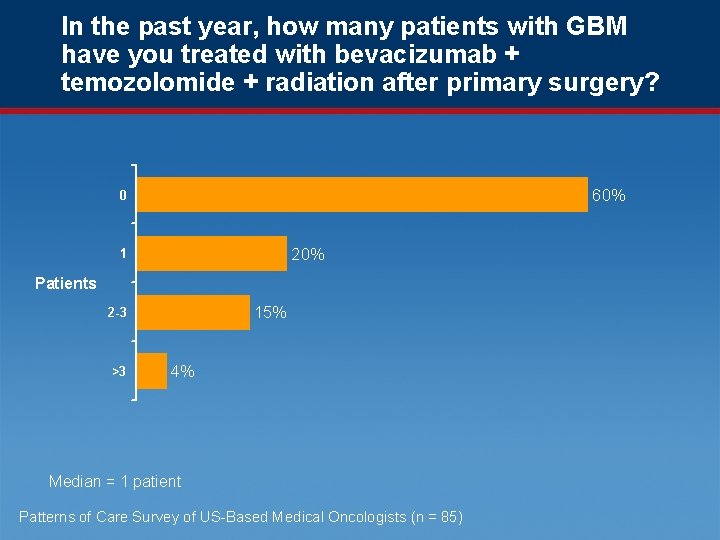
In the past year, how many patients with GBM have you treated with bevacizumab + temozolomide + radiation after primary surgery? 60% 0 20% 1 Patients 15% 2 -3 >3 4% Median = 1 patient Patterns of Care Survey of US-Based Medical Oncologists (n = 85)
Recently, I treated two men in their 40 s who had GBMs with nearly complete resections and radiation therapy/temozolomide. I sent them to Duke and both were put on bevacizumab and continued temozolomide. That’s in variance with many of our consultants in Boston, who do not tend to use bevacizumab as initial adjuvant therapy. Any thoughts? — Richard Polkinghorn, MD Brunswick, ME
I was intrigued by reports at ASCO this year, which raised the issue of whether radiation therapy was indicated in elderly patients with GBM. What do the investigators think about that data? Treating patients with temozolomide alone would probably result in a big improvement in quality-of-life for some patients. — Neal Fishbach, MD Fairfield, CT
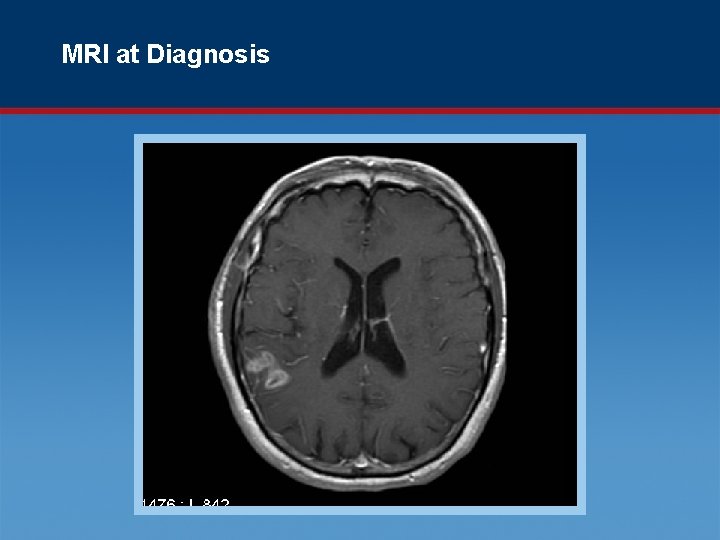
Case History: Dr Batchelor • A 68 -year-old man presents with a generalized seizure • MRI: Right parietal mass • Subtotal-resection of a pathologically-confirmed GBM
MRI at Diagnosis
4) Which additional diagnostic tests would you obtain on this patient? MGMT methylation status of the tumor Chromosome 1 p and 19 q testing Spinal MRI to screen for extent of tumor dissemination None
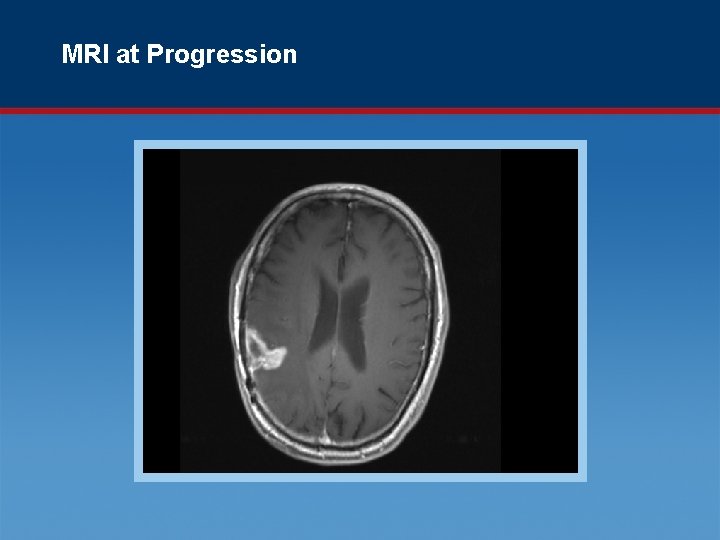
Case History: Dr Batchelor (continued) • Patient receives radiation and temozolomide • Evidence of tumor progression at 26 -months after initial diagnosis
MRI at Progression
5) How would you manage the patient now? Hospice care Dose-dense temozolomide Bevacizumab monotherapy Bevacizumab + irinotecan Second course of radiation
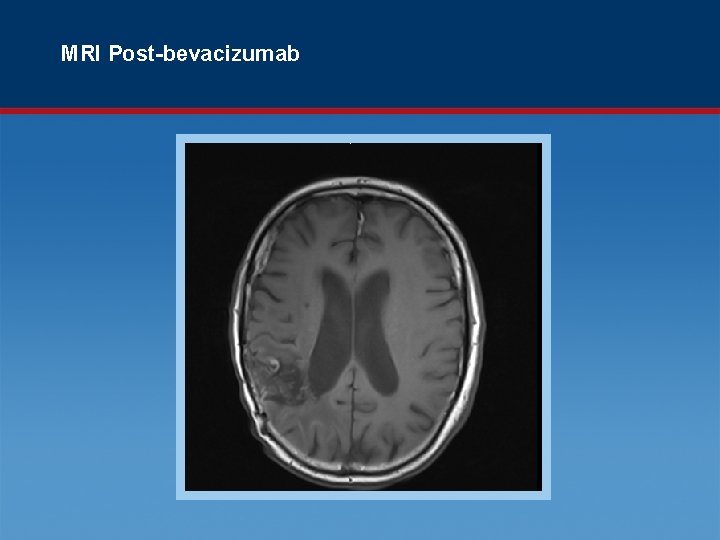
Case History: Dr Batchelor (continued) • Patient started on bevacizumab therapy with objective improvement • Remains on bevacizumab therapy for 24 months with sustained disease control and mild fatigue
MRI Post-bevacizumab
6) Would you continue bevacizumab? Yes No
NOA-08 Randomized Phase III Trial of 1 -week-on/1 -week-off Temozolomide Versus Involved. Field Radiotherapy in Elderly (Older Than Age 65) Patients With Newly Diagnosed Anaplastic Astrocytoma or Glioblastoma (Methusalem) Wick W et al. Proc ASCO 2010; Abstract LBA 2001. Copyright © 2010, Research To Practice, All rights reserved.
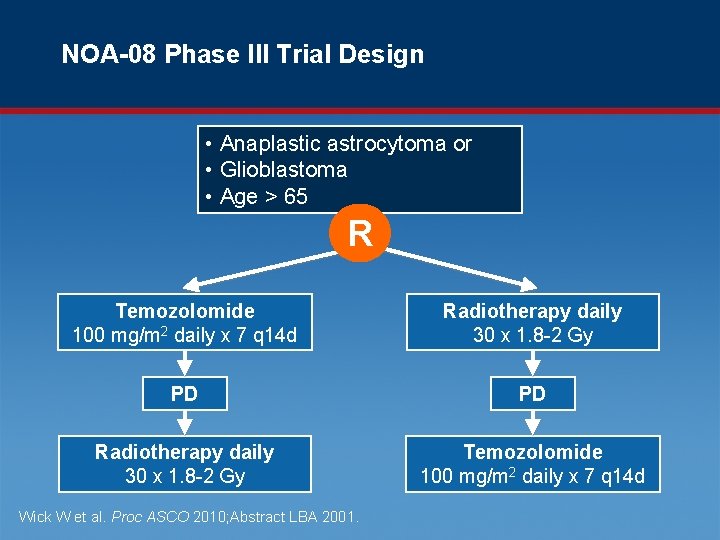
NOA-08 Phase III Trial Design • Anaplastic astrocytoma or • Glioblastoma • Age > 65 R Temozolomide 100 mg/m 2 daily x 7 q 14 d Radiotherapy daily 30 x 1. 8 -2 Gy PD PD Radiotherapy daily 30 x 1. 8 -2 Gy Temozolomide 100 mg/m 2 daily x 7 q 14 d Wick W et al. Proc ASCO 2010; Abstract LBA 2001.
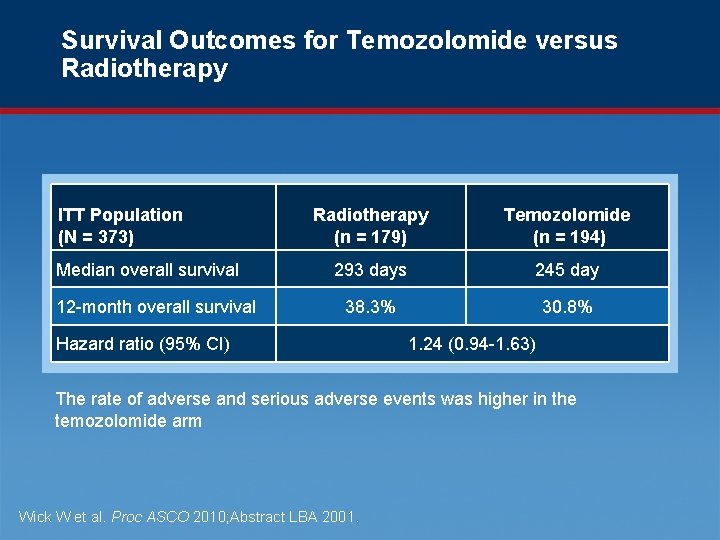
Survival Outcomes for Temozolomide versus Radiotherapy ITT Population (N = 373) Median overall survival 12 -month overall survival Radiotherapy (n = 179) Temozolomide (n = 194) 293 days 245 day 38. 3% 30. 8% Hazard ratio (95% CI) 1. 24 (0. 94 -1. 63) The rate of adverse and serious adverse events was higher in the temozolomide arm Wick W et al. Proc ASCO 2010; Abstract LBA 2001.
Glioblastoma (GBM) in Elderly Patients: A Randomized Phase III Trial Comparing Survival in Patients Treated with 6 -week Radiotherapy (RT) Versus Hypofractionated RT Over 2 Weeks versus Temozolomide Single-Agent Chemotherapy (TMZ) Malmstrom A et al. Proc ASCO 2010; Abstract LBA 2002. Copyright © 2010, Research To Practice, All rights reserved.
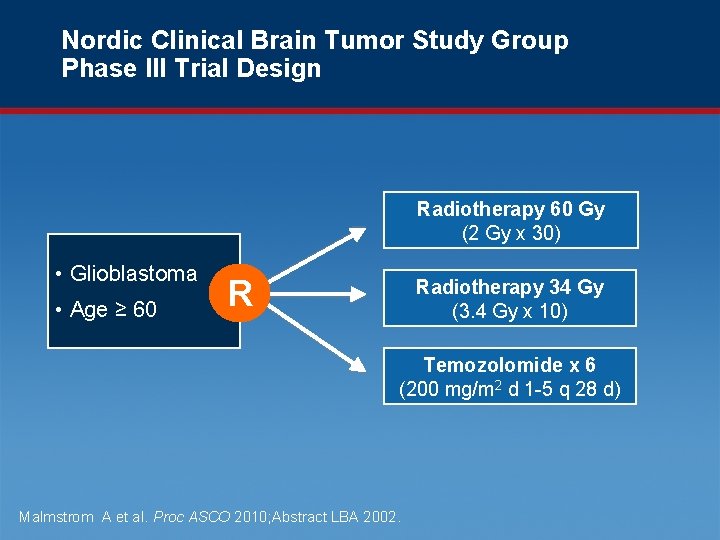
Nordic Clinical Brain Tumor Study Group Phase III Trial Design Radiotherapy 60 Gy (2 Gy x 30) • Glioblastoma • Age ≥ 60 R Radiotherapy 34 Gy (3. 4 Gy x 10) Temozolomide x 6 (200 mg/m 2 d 1 -5 q 28 d) Malmstrom A et al. Proc ASCO 2010; Abstract LBA 2002.
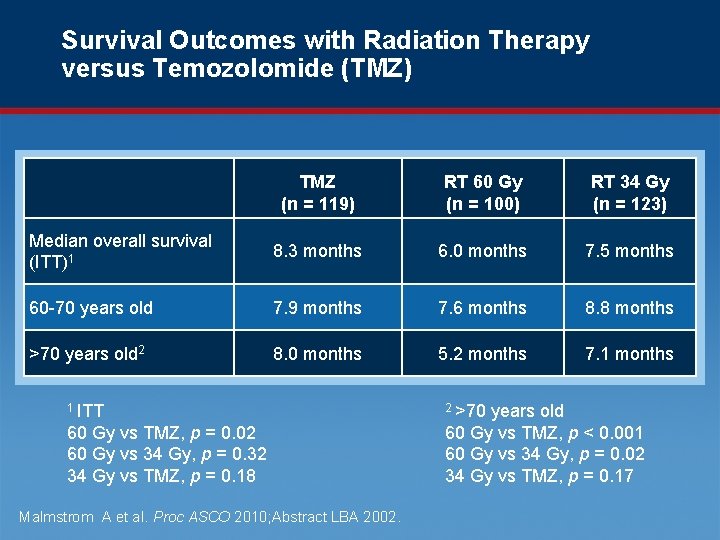
Survival Outcomes with Radiation Therapy versus Temozolomide (TMZ) TMZ (n = 119) RT 60 Gy (n = 100) RT 34 Gy (n = 123) Median overall survival (ITT)1 8. 3 months 6. 0 months 7. 5 months 60 -70 years old 7. 9 months 7. 6 months 8. 8 months >70 years old 2 8. 0 months 5. 2 months 7. 1 months 1 ITT 60 Gy vs TMZ, p = 0. 02 60 Gy vs 34 Gy, p = 0. 32 34 Gy vs TMZ, p = 0. 18 Malmstrom A et al. Proc ASCO 2010; Abstract LBA 2002. 2 >70 years old 60 Gy vs TMZ, p < 0. 001 60 Gy vs 34 Gy, p = 0. 02 34 Gy vs TMZ, p = 0. 17
Is there data to support retreatment with bevacizumab in patients with progressive primary CNS tumors?
I’m interested in your comment regarding telling patients on bevacizumab to get out and exercise. I may have missed something, but is that to counter-act the fatigue that occurs with the drug? Sarasota, FL