
Monday March 5 th Coelomate Invertebrates Mollusca Snails
Monday, March 5 th Coelomate Invertebrates
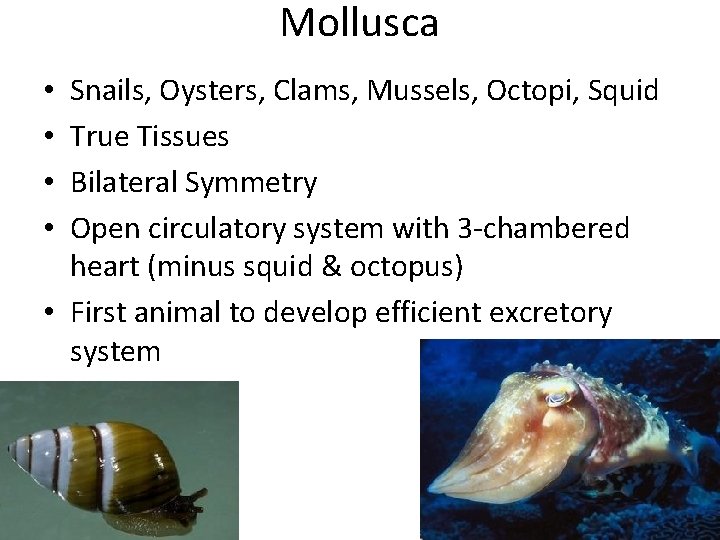
Mollusca Snails, Oysters, Clams, Mussels, Octopi, Squid True Tissues Bilateral Symmetry Open circulatory system with 3 -chambered heart (minus squid & octopus) • First animal to develop efficient excretory system • •
Mollusks • Wide range of variation • Evolved in the oceans, but snails and slugs have invaded terrestrial habitats • Mantle - a thick tissue layer that secretes the calcium carbonate of the shell • Muscular foot primary means of movement (except for octopuses, squid)
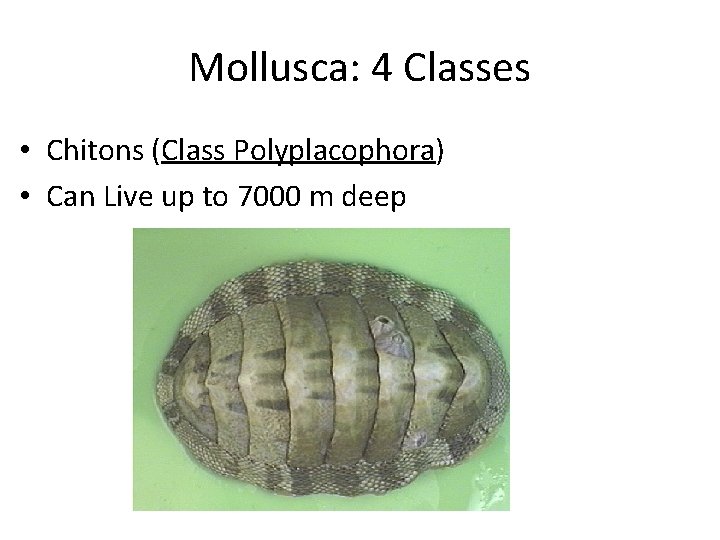
Mollusca: 4 Classes • Chitons (Class Polyplacophora) • Can Live up to 7000 m deep
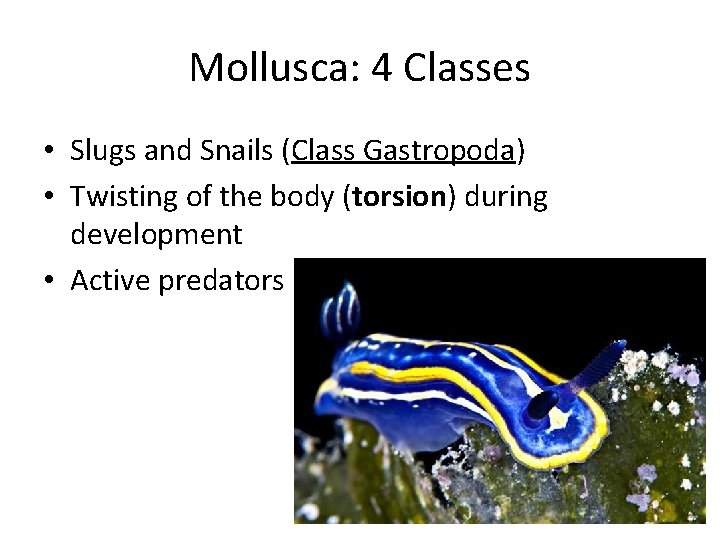
Mollusca: 4 Classes • Slugs and Snails (Class Gastropoda) • Twisting of the body (torsion) during development • Active predators

Mollusca: 4 Classes • Clams, Muscles, Cockles (Class Bivalvia) • Have inhalant and exhalant siphon
Mollusca: 4 Classes • Octopuses, squids, nautiluses (Class Cephalopoda) • Largest relative brain sizes among invertebrates http: //www. youtube. com/watch? v=SNx. Jw. CGJts A http: //www. youtube. com/watch? v=t. LTWFn. Gmeg
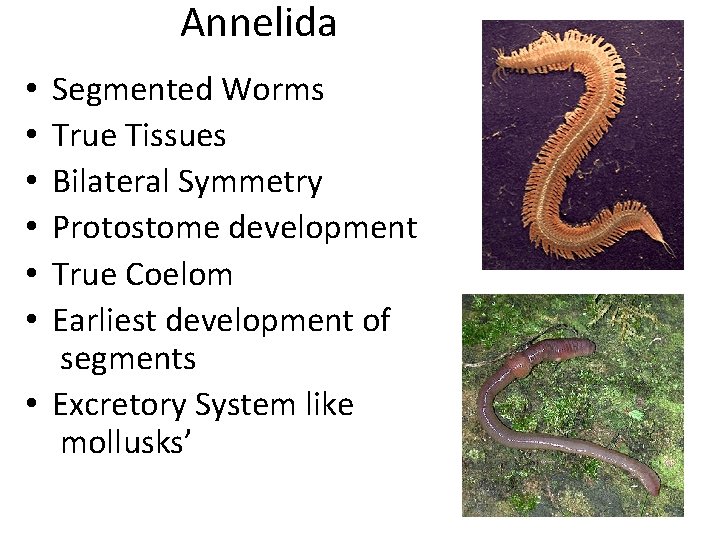
Annelida Segmented Worms True Tissues Bilateral Symmetry Protostome development True Coelom Earliest development of segments • Excretory System like mollusks’ • • •
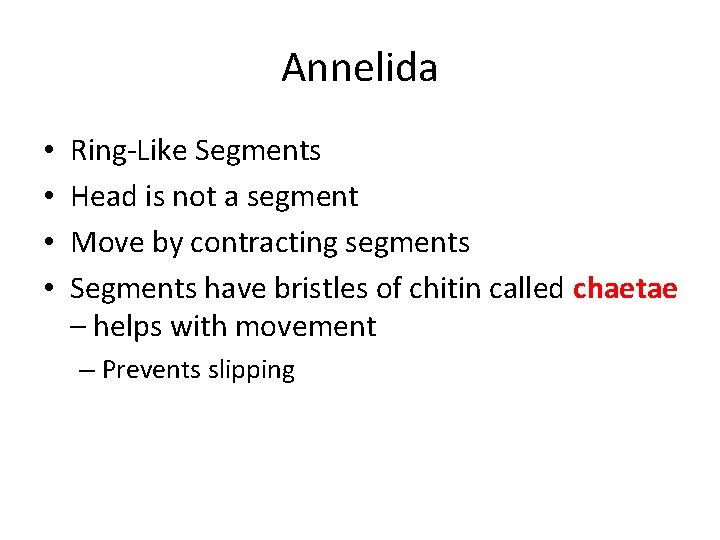
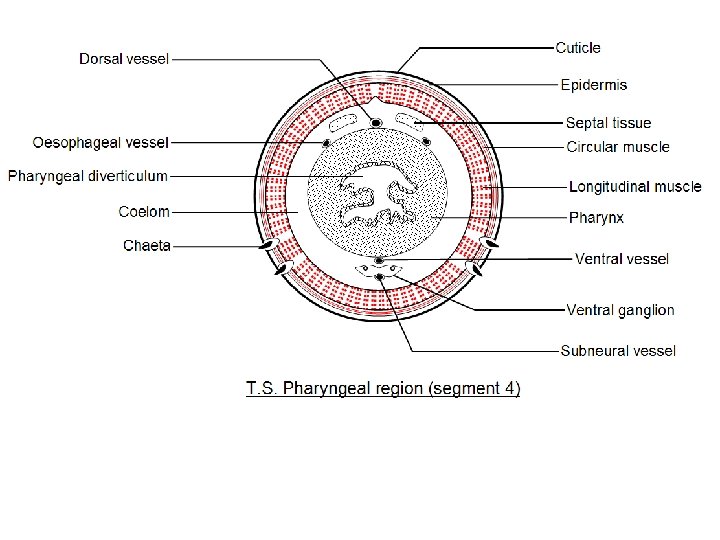
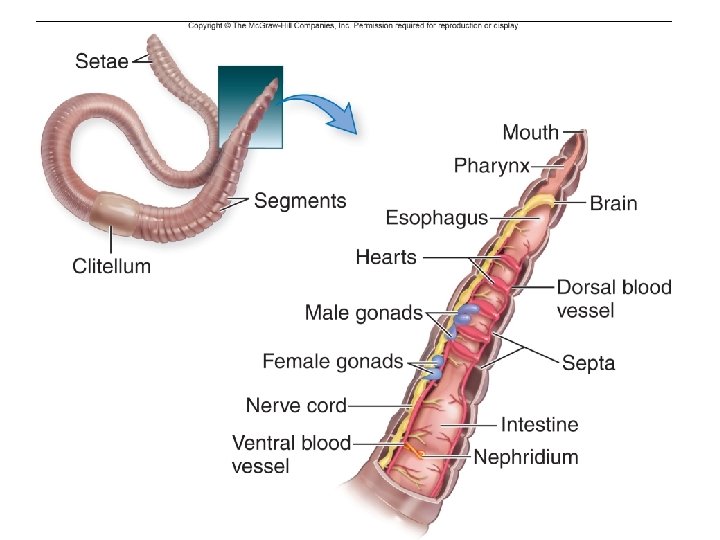
Annelida • • Ring-Like Segments Head is not a segment Move by contracting segments Segments have bristles of chitin called chaetae – helps with movement – Prevents slipping
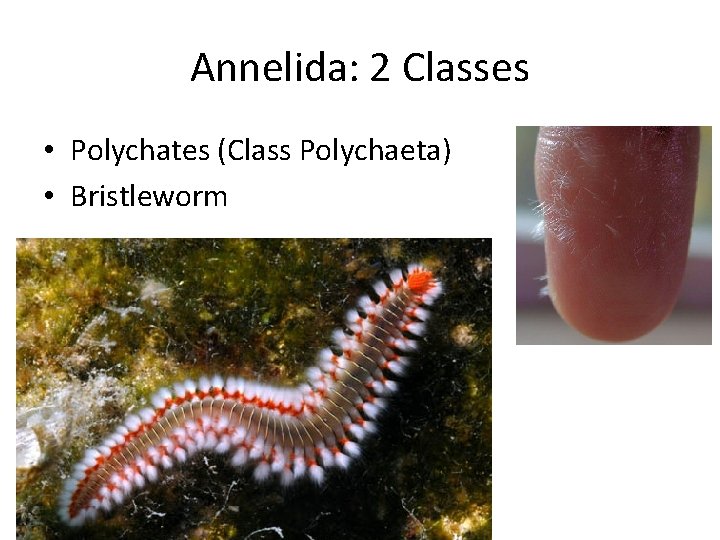
Annelida: 2 Classes • Polychates (Class Polychaeta) • Bristleworm
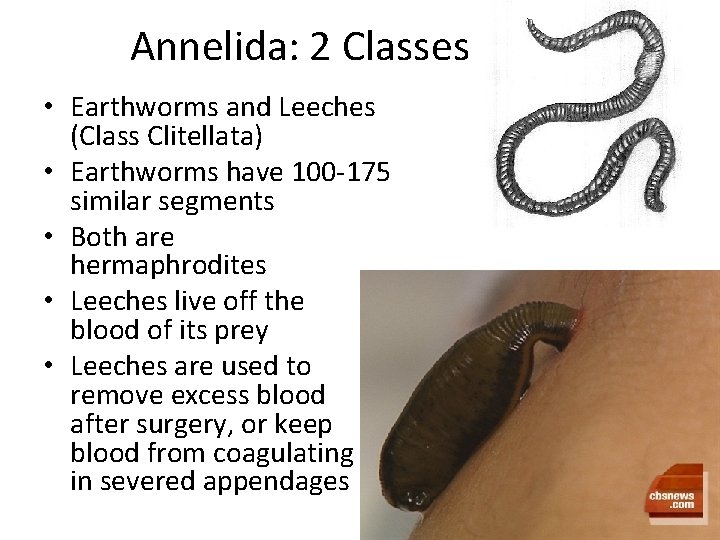
Annelida: 2 Classes • Earthworms and Leeches (Class Clitellata) • Earthworms have 100 -175 similar segments • Both are hermaphrodites • Leeches live off the blood of its prey • Leeches are used to remove excess blood after surgery, or keep blood from coagulating in severed appendages
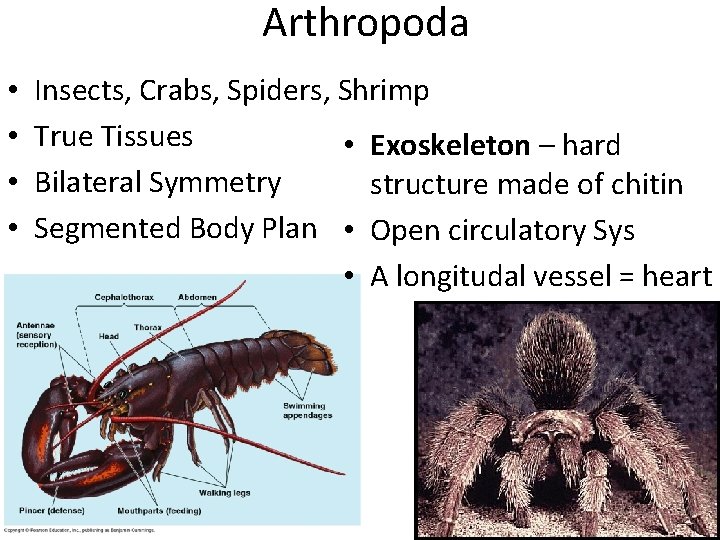
Arthropoda • • Insects, Crabs, Spiders, Shrimp True Tissues • Exoskeleton – hard Bilateral Symmetry structure made of chitin Segmented Body Plan • Open circulatory Sys • A longitudal vessel = heart
Arthropods • Exoskeleton – rigid external skeleton, made of chitin and protein, muscles can attach to it, prevents water loss, requires molting • Segmentation – specialized segments perform specific tasks, some body segments may look alike. • Compound Eyes – hundreds of individual visual units called ommatidia • http: //www. youtube. com/watch? v=MSNLtix. S G 0 s (I’m only playing this video for the awesome music intro and exit)
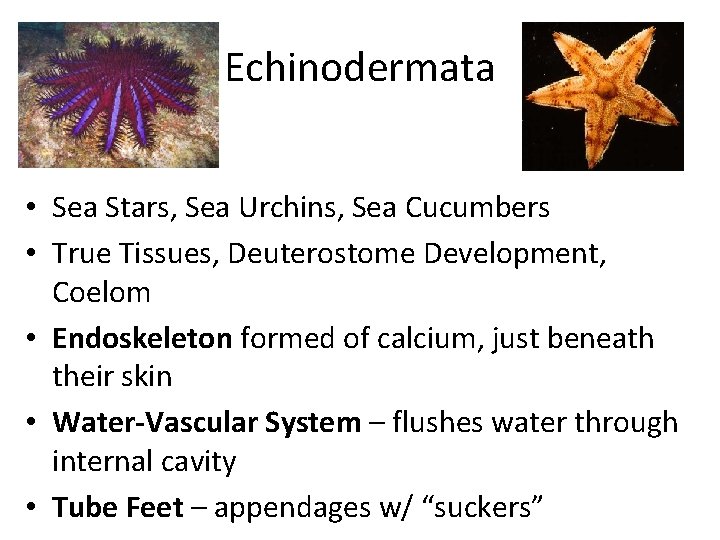
Echinodermata • Sea Stars, Sea Urchins, Sea Cucumbers • True Tissues, Deuterostome Development, Coelom • Endoskeleton formed of calcium, just beneath their skin • Water-Vascular System – flushes water through internal cavity • Tube Feet – appendages w/ “suckers”
Echinodermata • http: //www. youtube. com/watch? v=HG 17 Tsg V_q. I • http: //www. youtube. com/watch? v=N 3 PLg. Cqk g. Lo (some plagiarism seen in this video…)
“Extras” If Time • Giant Jellyfish impact Japanese Fishing http: //www. youtube. com/watch? v=ya. C 4 Miet ew 0 • Venus Fly Trap – http: //www. youtube. com/watch? v=O 7 e. QKSf 0 Lm. Y (Thigmotropism)


- Slides: 20