
Monday 26 Sept Get your poster set up

- Slides: 28
Monday 26 Sept. Get your poster set up on your table. Get out your Molecules of Life – Movie Reviews (the scoring rubric) Put your name on both scoring rubrics Get out Guided Reading 2 -3 Homework and Stamp Sheet. Put signed Progress Report in the bin by the door.
Organic Chemistry Carbon compounds
Movie Reviews Today!! First, review two different movies using the scoring rubric. Be sure to read the poster and plot thoroughly before grading. Next, write a short review answering the following questions: Did the movie/story keep you interested? Were the poster and story creative? What specifically did you learn about the scientific topic of the movie? Did the group cite all their resources? Ask TWO additional questions that you have about the scientific topic of the movie.
Tuesday 27 September Get your posters and your Team’s movie reviews from yesterday Get out your class notes You are presenting information about your scientific topic today as we take notes QUIZ Friday on organic molecules, atoms, and molecular bonds!!
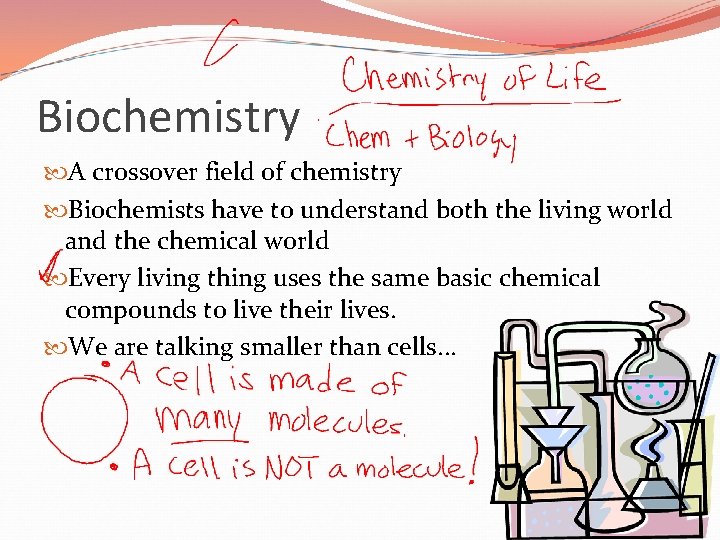
Biochemistry A crossover field of chemistry Biochemists have to understand both the living world and the chemical world Every living thing uses the same basic chemical compounds to live their lives. We are talking smaller than cells. . .
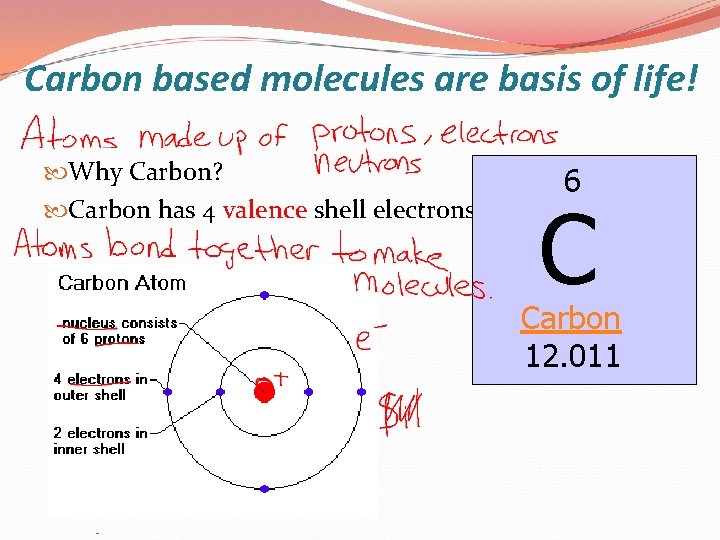
Carbon based molecules are basis of life! Why Carbon? Carbon has 4 valence shell electrons 6 C Carbon 12. 011
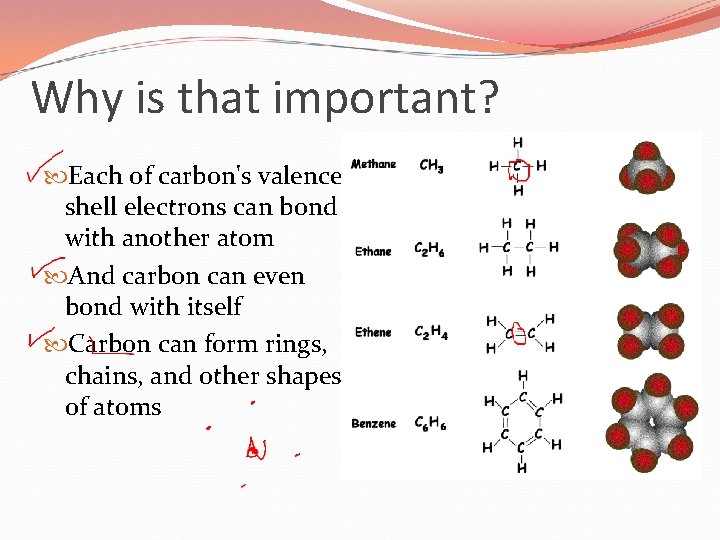
Why is that important? Each of carbon's valence shell electrons can bond with another atom And carbon can even bond with itself Carbon can form rings, chains, and other shapes of atoms
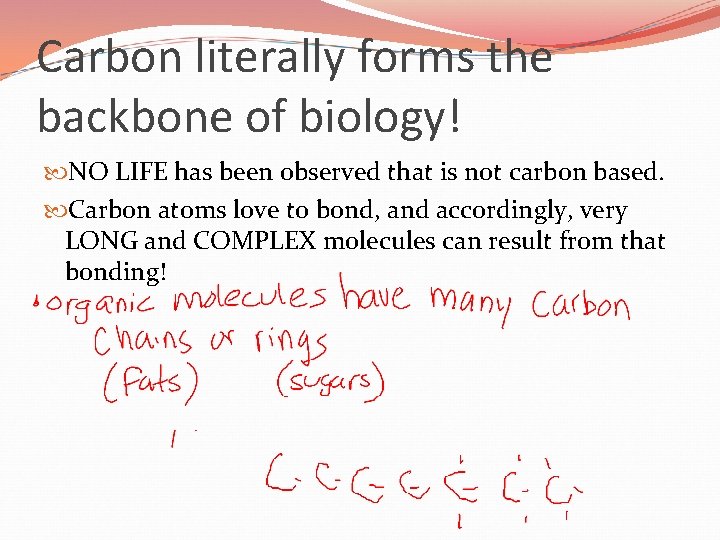
Carbon literally forms the backbone of biology! NO LIFE has been observed that is not carbon based. Carbon atoms love to bond, and accordingly, very LONG and COMPLEX molecules can result from that bonding!
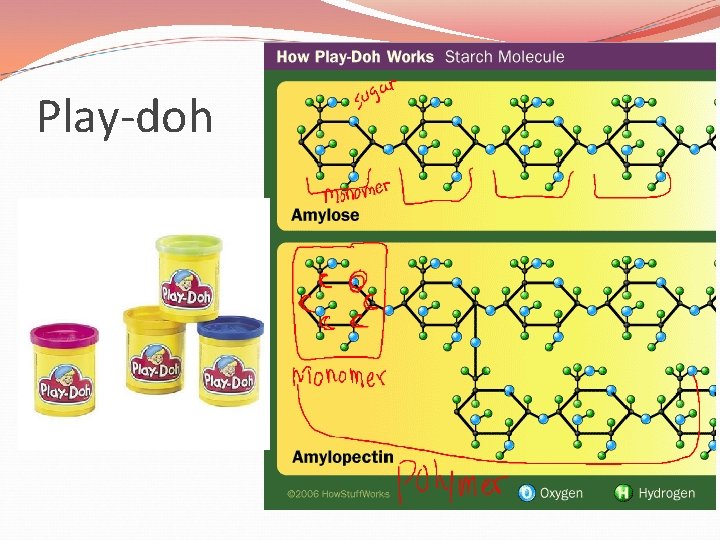
Play-doh
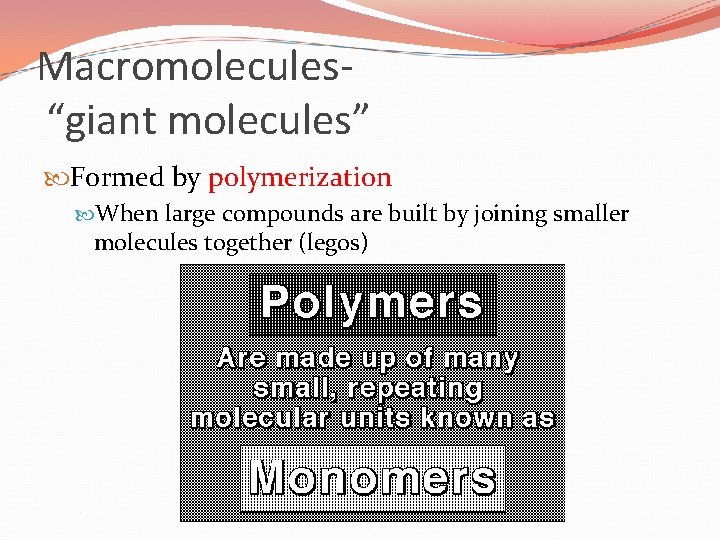
Macromolecules“giant molecules” Formed by polymerization When large compounds are built by joining smaller molecules together (legos)
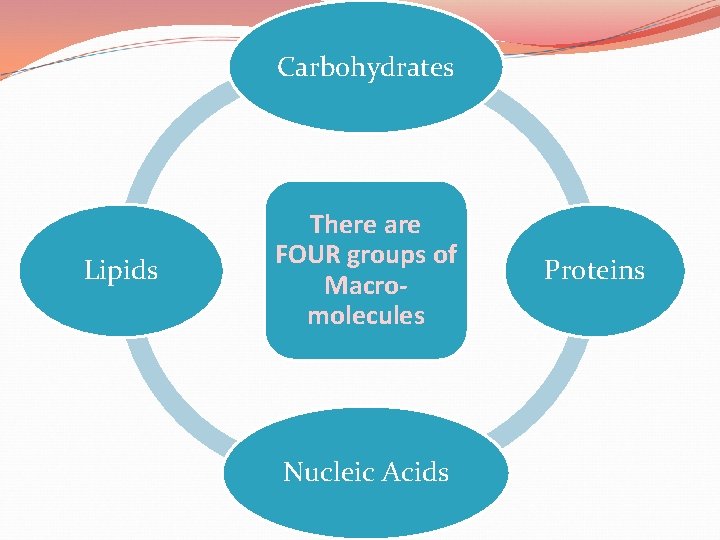
Carbohydrates Lipids There are FOUR groups of Macromolecules Nucleic Acids Proteins
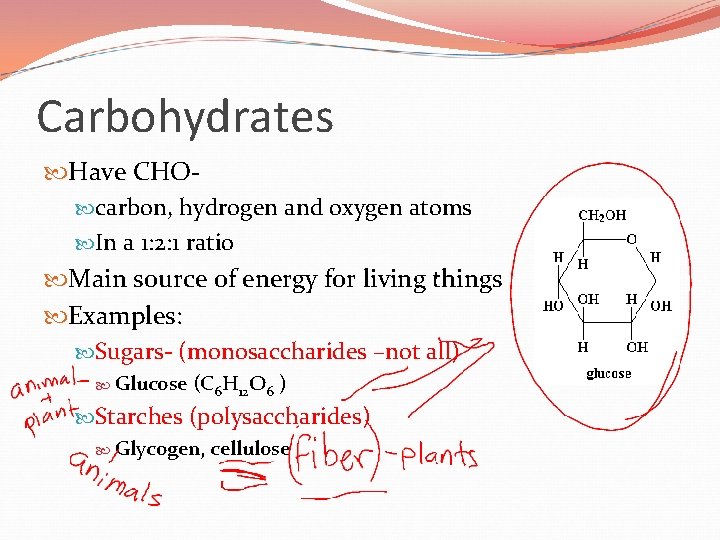
Carbohydrates Have CHO carbon, hydrogen and oxygen atoms In a 1: 2: 1 ratio Main source of energy for living things Examples: Sugars- (monosaccharides –not all) Glucose (C 6 H 12 O 6 ) Starches (polysaccharides) Glycogen, cellulose
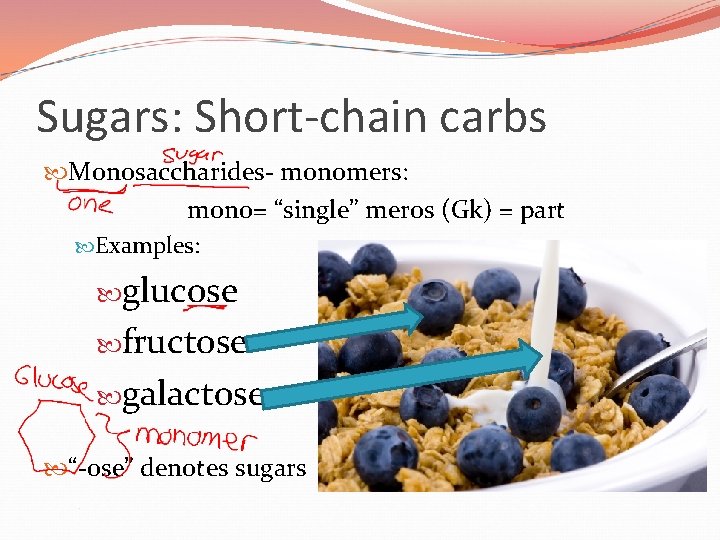
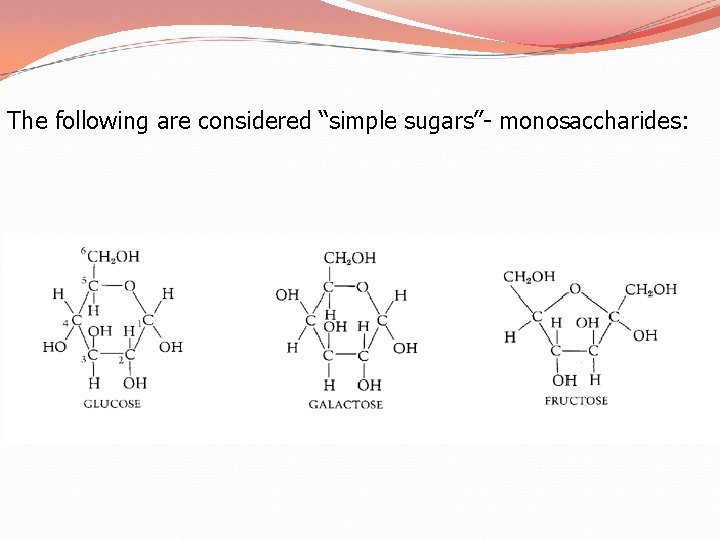
Sugars: Short-chain carbs Monosaccharides- monomers: mono= “single” meros (Gk) = part Examples: glucose fructose galactose “-ose” denotes sugars
The following are considered “simple sugars”- monosaccharides:
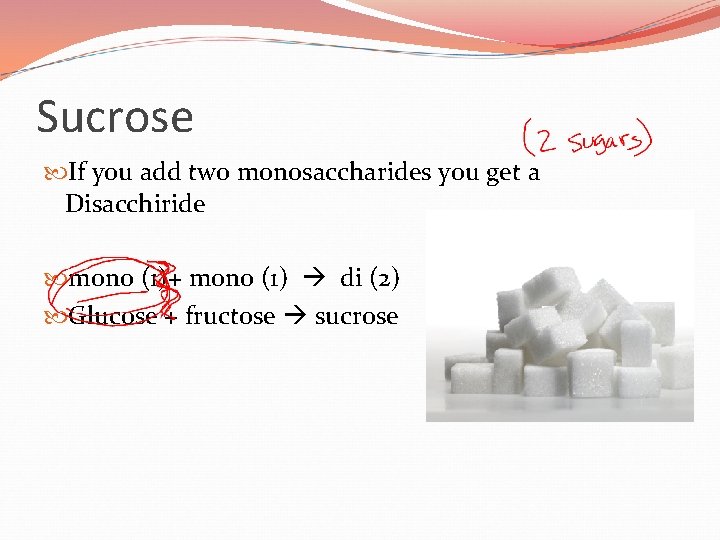
Sucrose If you add two monosaccharides you get a Disacchiride mono (1)+ mono (1) di (2) Glucose + fructose sucrose
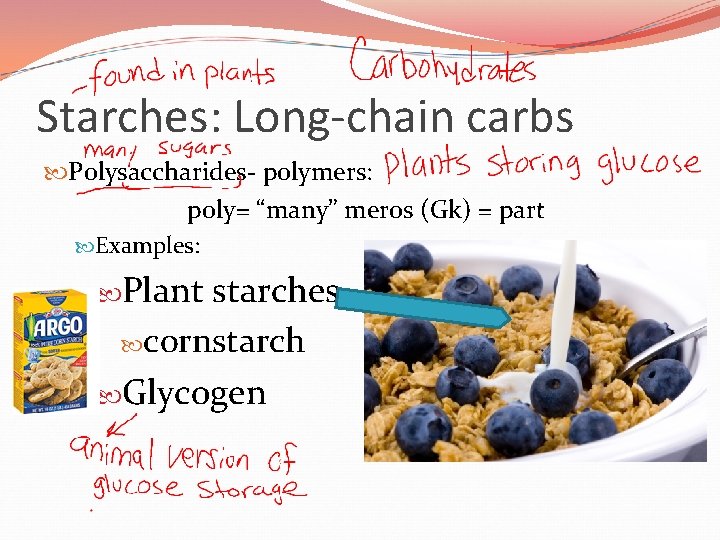
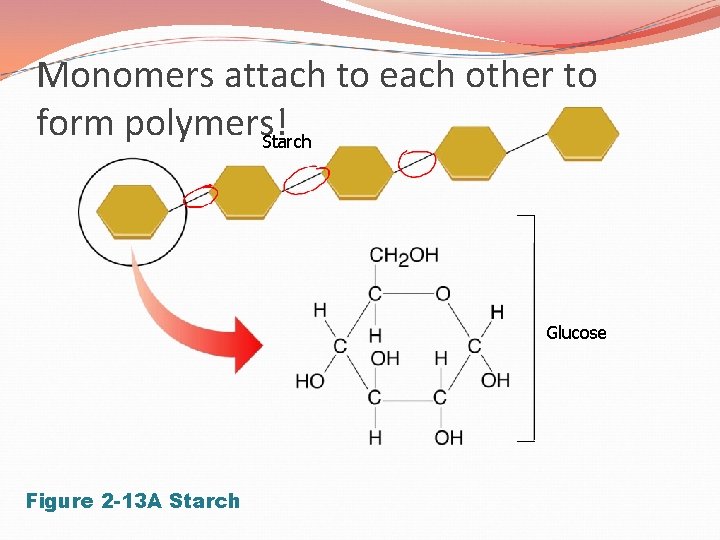
Starches: Long-chain carbs Polysaccharides- polymers: poly= “many” meros (Gk) = part Examples: Plant starches cornstarch Glycogen
Monomers attach to each other to form polymers! Starch Glucose Figure 2 -13 A Starch
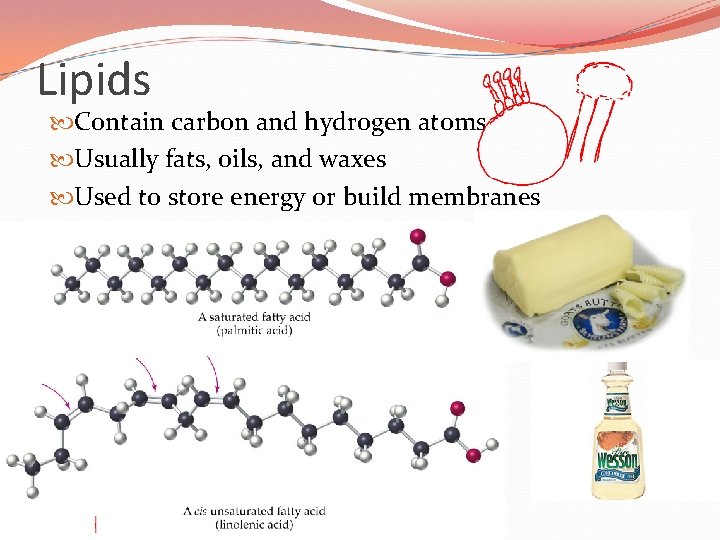
Lipids Contain carbon and hydrogen atoms Usually fats, oils, and waxes Used to store energy or build membranes
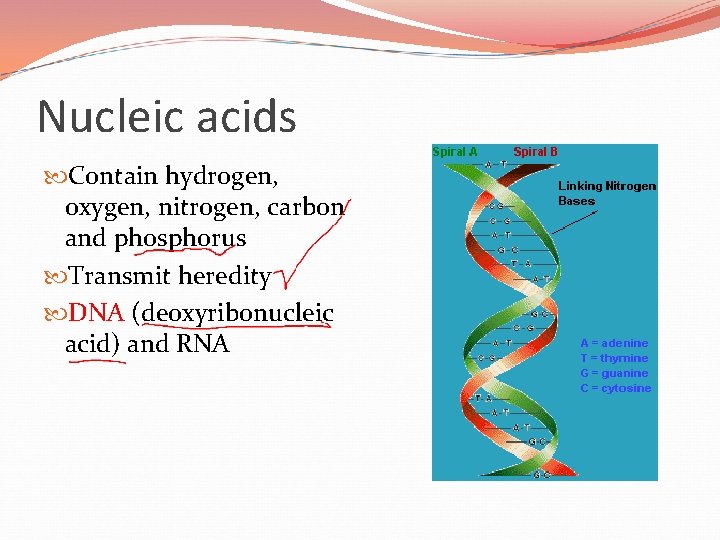
Nucleic acids Contain hydrogen, oxygen, nitrogen, carbon and phosphorus Transmit heredity DNA (deoxyribonucleic acid) and RNA
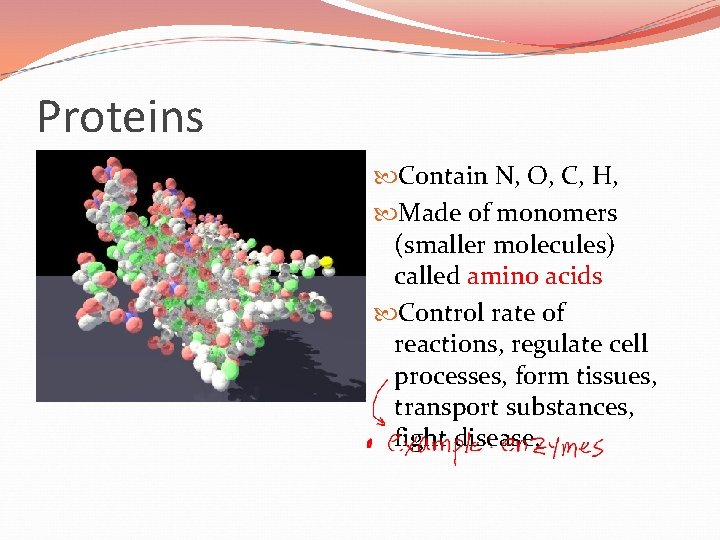
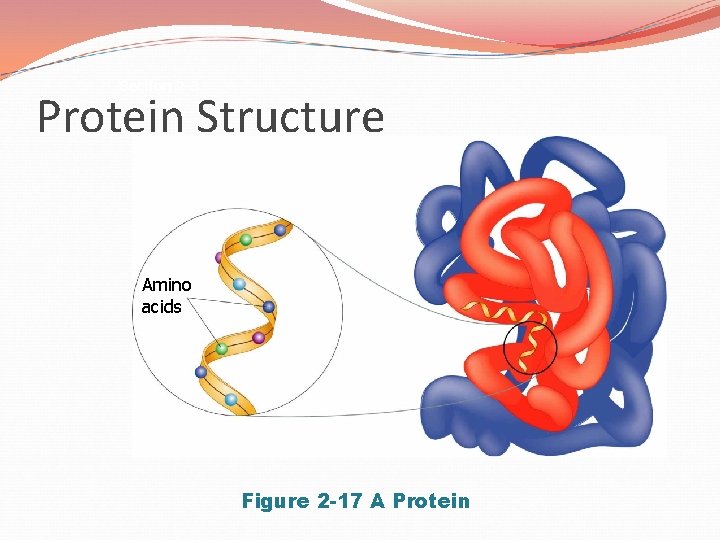
Proteins Contain N, O, C, H, Made of monomers (smaller molecules) called amino acids Control rate of reactions, regulate cell processes, form tissues, transport substances, fight disease.
Section 2 -3 Protein Structure Amino acids Figure 2 -17 A Protein
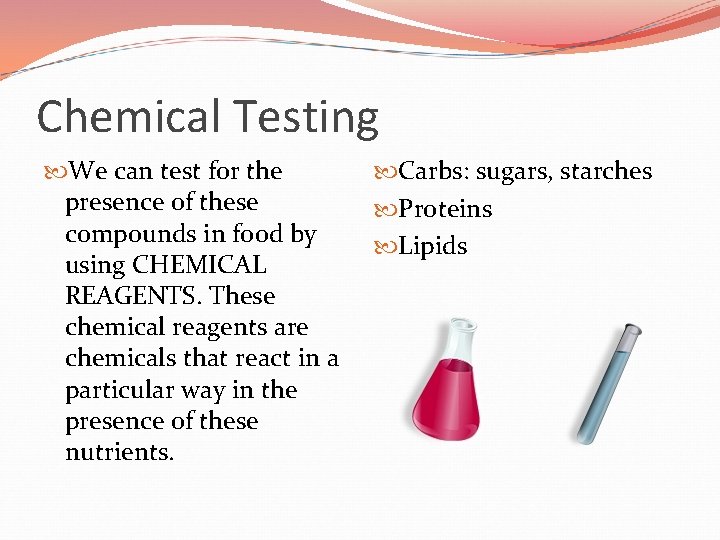
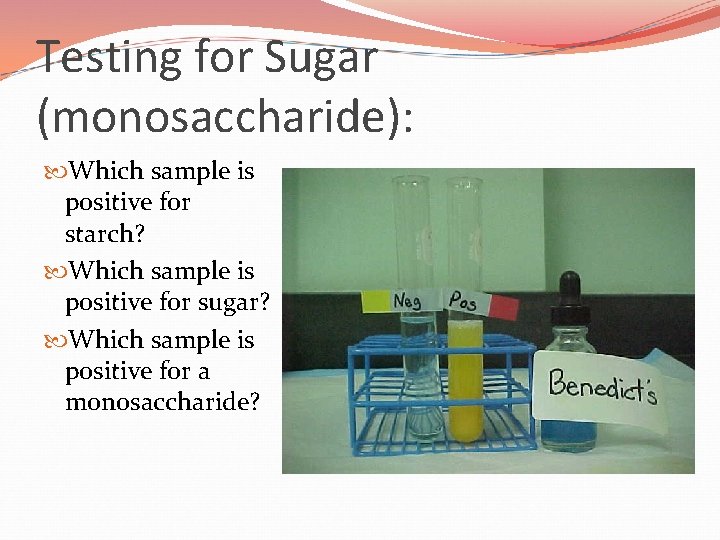
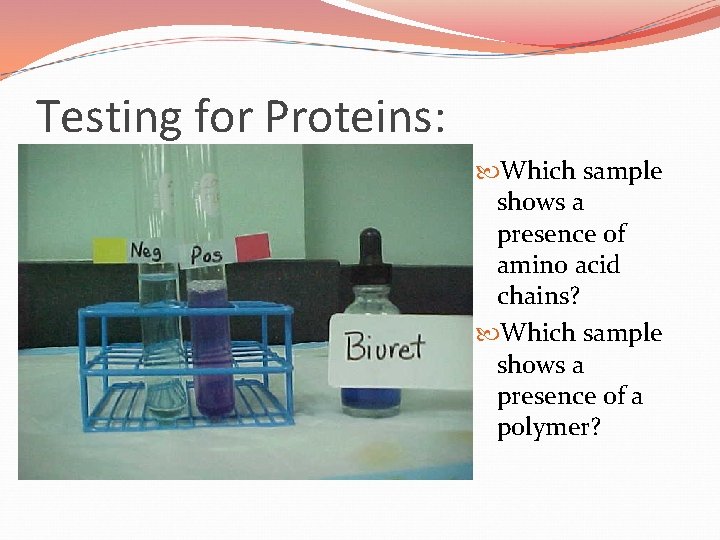
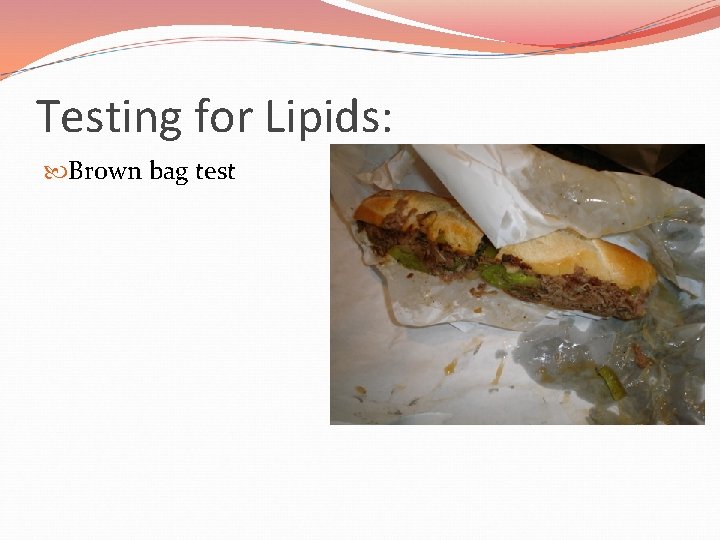
Chemical Testing We can test for the presence of these compounds in food by using CHEMICAL REAGENTS. These chemical reagents are chemicals that react in a particular way in the presence of these nutrients. Carbs: sugars, starches Proteins Lipids
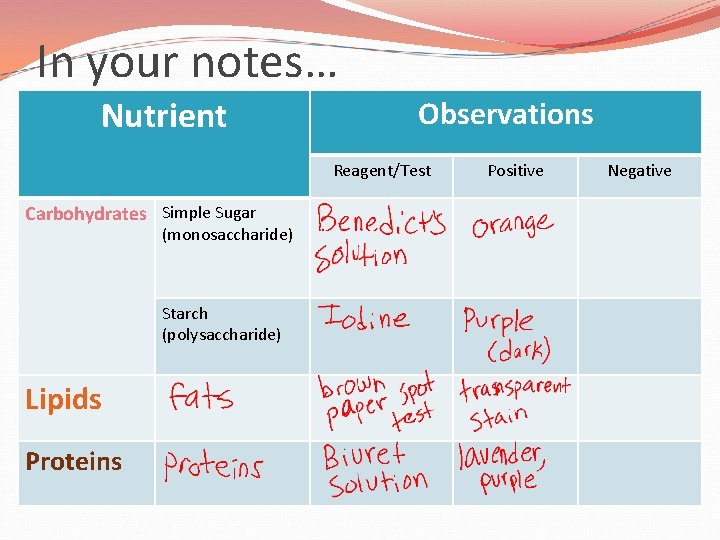
In your notes… Nutrient Observations Reagent/Test Carbohydrates Simple Sugar (monosaccharide) Starch (polysaccharide) Lipids Proteins Positive Negative
Experimentation with the 4 indicators chemicals provided observations which let us create a hypothesis. With the last item (from the blender) you will make predictions and see if our hypothesis was supported.
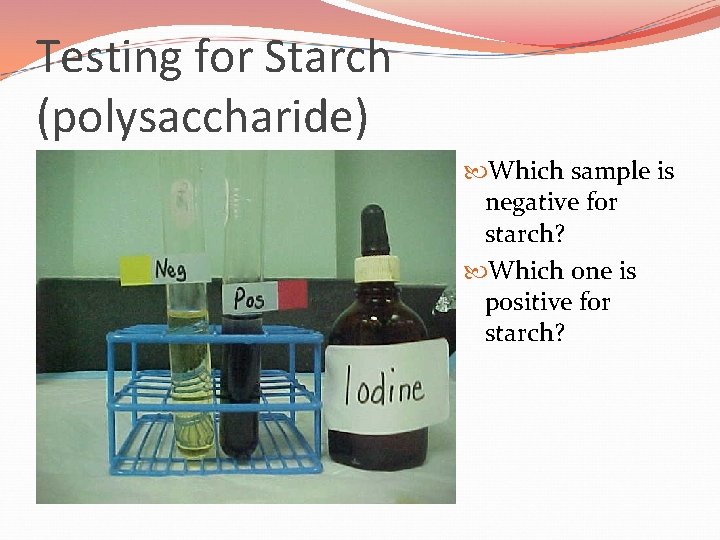
Testing for Starch (polysaccharide) Which sample is negative for starch? Which one is positive for starch?
Testing for Sugar (monosaccharide): Which sample is positive for starch? Which sample is positive for sugar? Which sample is positive for a monosaccharide?
Testing for Proteins: Which sample shows a presence of amino acid chains? Which sample shows a presence of a polymer?
Testing for Lipids: Brown bag test