
MONARCH BUTTERFLY LIFE CYCLE AND CONSERVATION This presentation
MONARCH BUTTERFLY LIFE CYCLE AND CONSERVATION This presentation adapted from slides prepared by a collaboration of the University of Minnesota Monarch Lab. , Monarch Joint Venture and the U. S. Fish and Wildlife Service
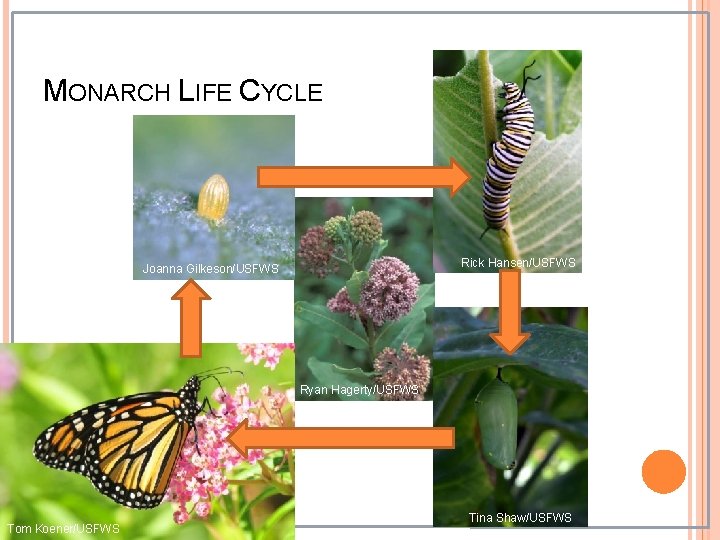
MONARCH LIFE CYCLE Rick Hansen/USFWS Joanna Gilkeson/USFWS Ryan Hagerty/USFWS Tom Koener/USFWS Tina Shaw/USFWS

Egg First Instar Fifth Instar: Period between larval molts. Monarchs have 5 instars. Karen Oberhauser 3
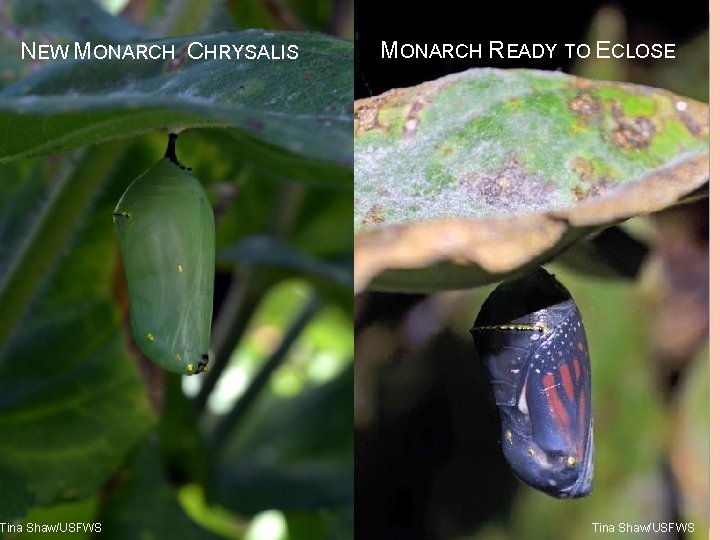
NEW MONARCH CHRYSALIS Tina Shaw/USFWS MONARCH READY TO ECLOSE 4 Tina Shaw/USFWS
VIDEO OF MONARCH EMERGING FROM CHRYSALIS USFWS Video available at: https: //www. youtube. com/watch? v=ux. If 3 Ylezt. I :
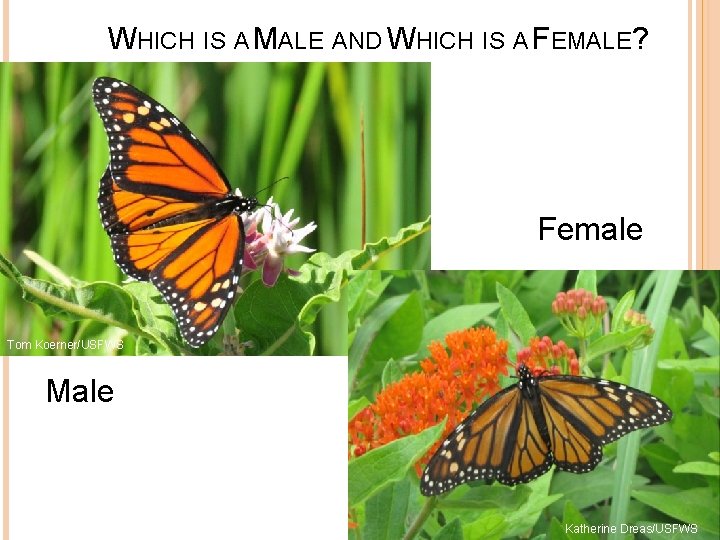
WHICH IS A MALE AND WHICH IS A FEMALE? Female Tom Koerner/USFWS Male Katherine Dreas/USFWS Mark Musselman/National Audubon Society
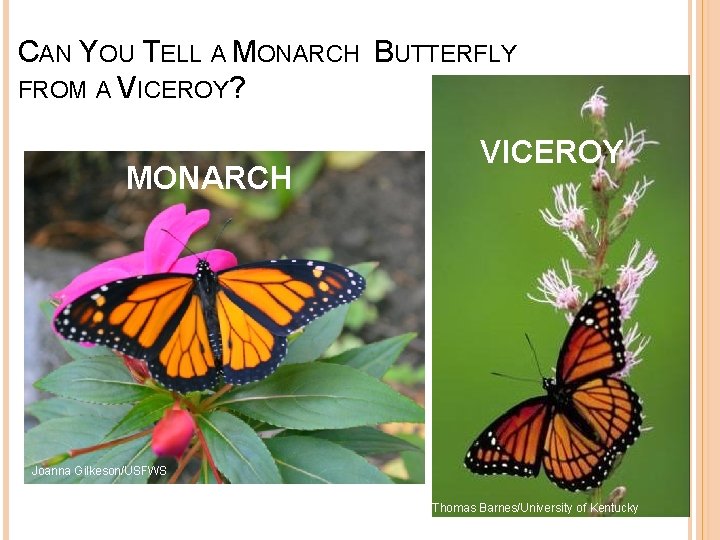
CAN YOU TELL A MONARCH BUTTERFLY FROM A VICEROY? MONARCH Female VICEROY Male Joanna Gilkeson/USFWS 7 Thomas Barnes/University of Kentucky
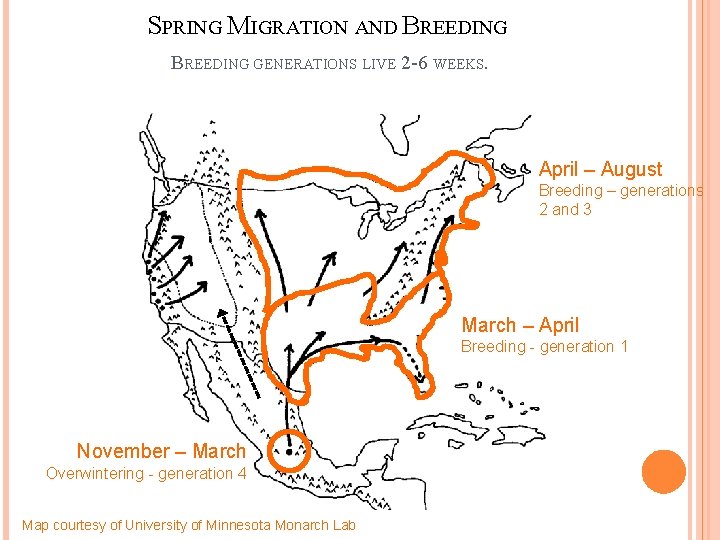
SPRING MIGRATION AND BREEDING GENERATIONS LIVE 2 -6 WEEKS. April – August Breeding – generations 2 and 3 March – April Breeding - generation 1 November – March Overwintering - generation 4 Map courtesy of University of Minnesota Monarch Lab
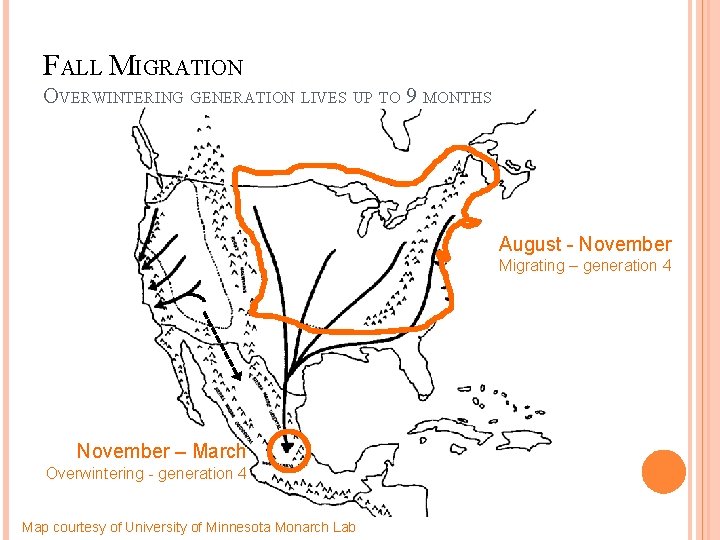
FALL MIGRATION OVERWINTERING GENERATION LIVES UP TO 9 MONTHS August - November Migrating – generation 4 November – March Overwintering - generation 4 Map courtesy of University of Minnesota Monarch Lab
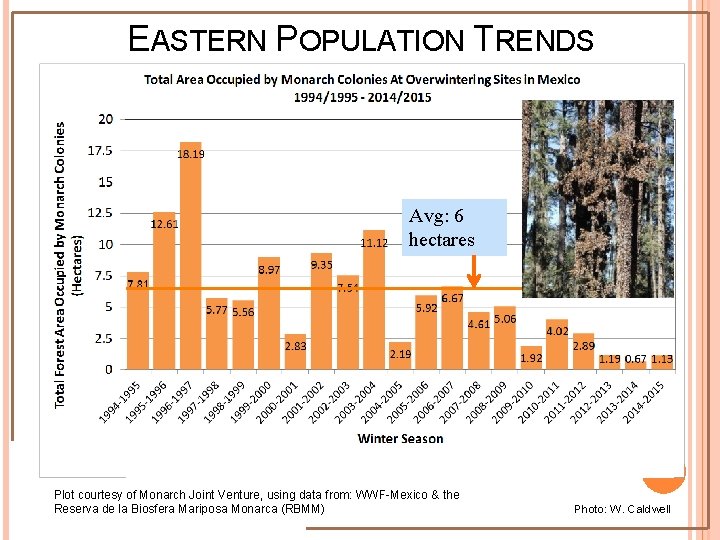
EASTERN POPULATION TRENDS Avg: 6 hectares Plot courtesy of Monarch Joint Venture, using data from: WWF-Mexico & the Reserva de la Biosfera Mariposa Monarca (RBMM) Photo: W. Caldwell
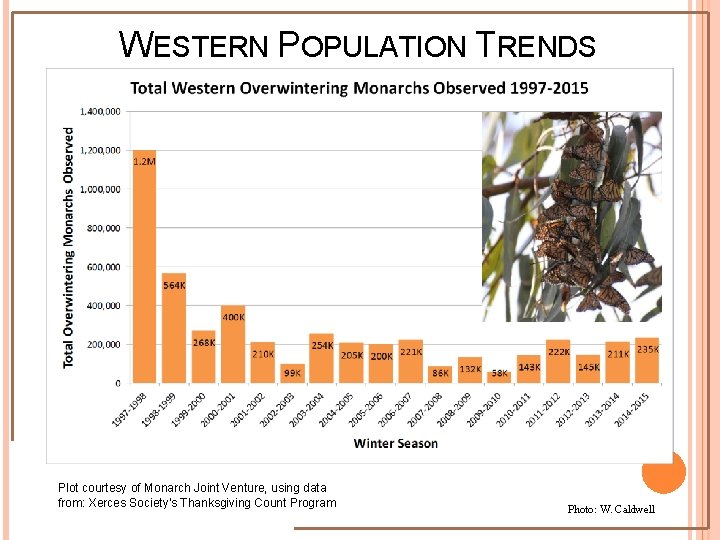
WESTERN POPULATION TRENDS Plot courtesy of Monarch Joint Venture, using data from: Xerces Society’s Thanksgiving Count Program Photo: W. Caldwell
THREATS Wendy Caldwell
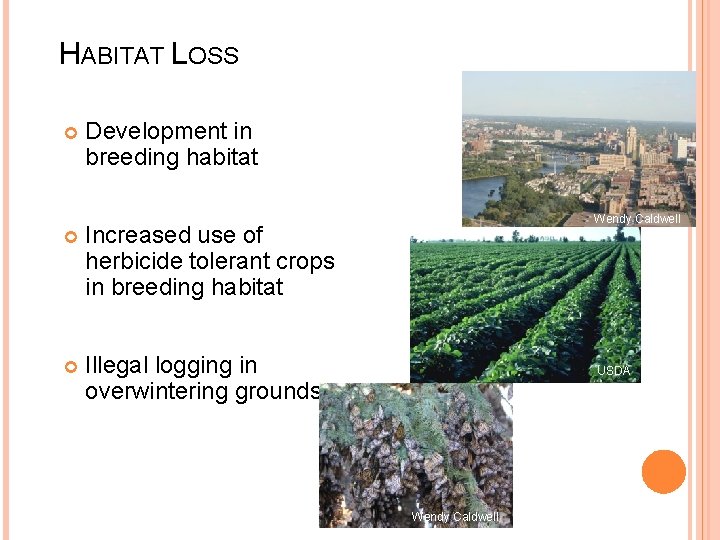
HABITAT LOSS Development in breeding habitat Increased use of herbicide tolerant crops in breeding habitat Wendy Caldwell Sarah Len – National Geographic Illegal logging in overwintering grounds USDA Wendy Caldwell
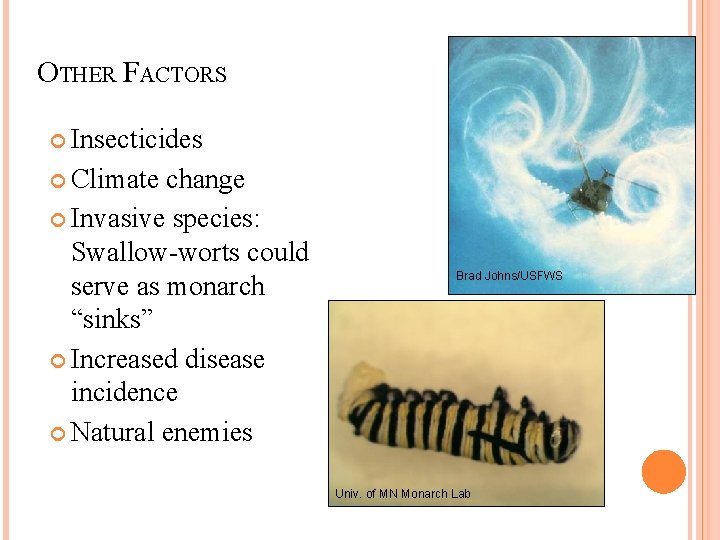
OTHER FACTORS Insecticides Climate change Invasive species: Swallow-worts could serve as monarch “sinks” Increased disease incidence Natural enemies Brad Johns/USFWS Univ. of MN Monarch Lab

HOW CAN YOU HELP? Ryan Hagerty/USFWS
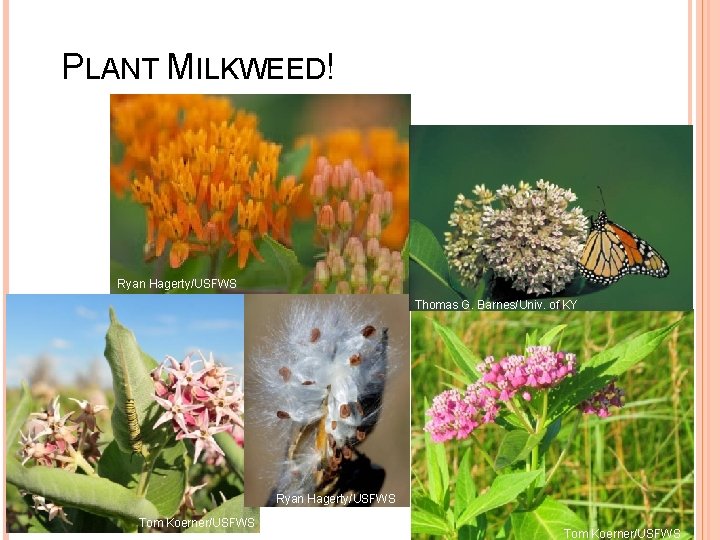
PLANT MILKWEED! Ryan Hagerty/USFWS Thomas G. Barnes/Univ. of KY 16 Ryan Hagerty/USFWS Tom Koerner/USFWS of KY Tom Koerner/USFWS
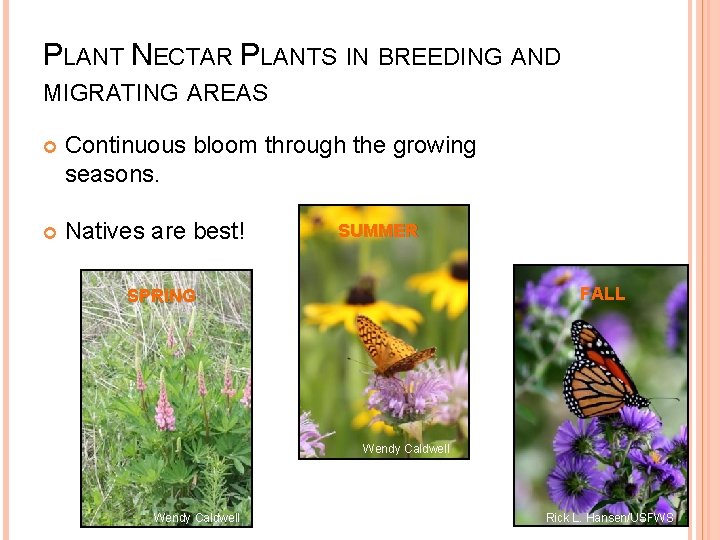
PLANT NECTAR PLANTS IN BREEDING AND MIGRATING AREAS Continuous bloom through the growing seasons. Natives are best! SUMMER FALL SPRING Wendy Caldwell Barbara Powers Jim Ellis Wendy Caldwell Rick L. Hansen/USFWS
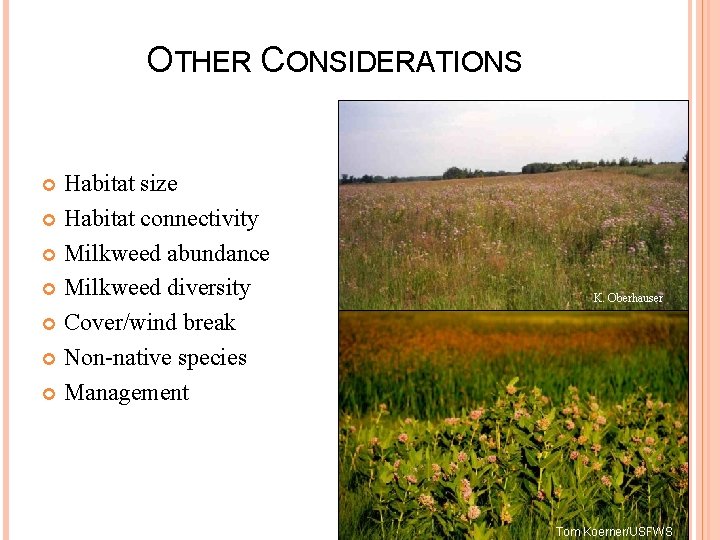
OTHER CONSIDERATIONS Habitat size Habitat connectivity Milkweed abundance Milkweed diversity Cover/wind break Non-native species Management K. Oberhauser Tom Koerner/USFWS
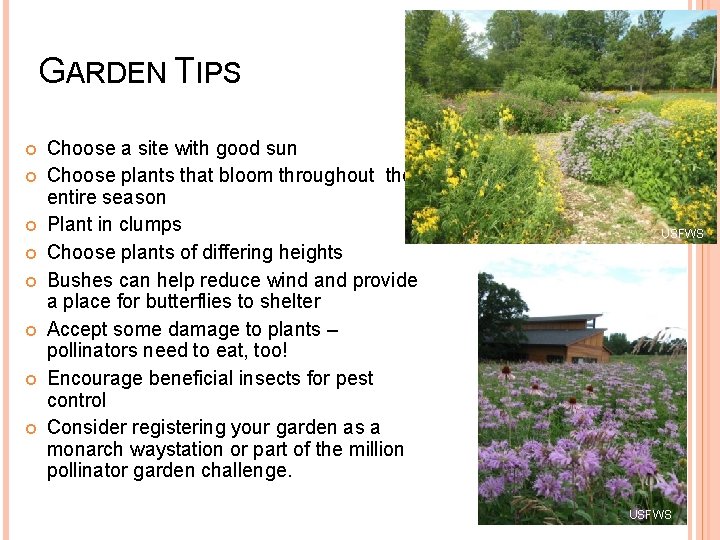
GARDEN TIPS Choose a site with good sun Choose plants that bloom throughout the entire season Plant in clumps Choose plants of differing heights Bushes can help reduce wind and provide a place for butterflies to shelter Accept some damage to plants – pollinators need to eat, too! Encourage beneficial insects for pest control Consider registering your garden as a monarch waystation or part of the million pollinator garden challenge. USFWS
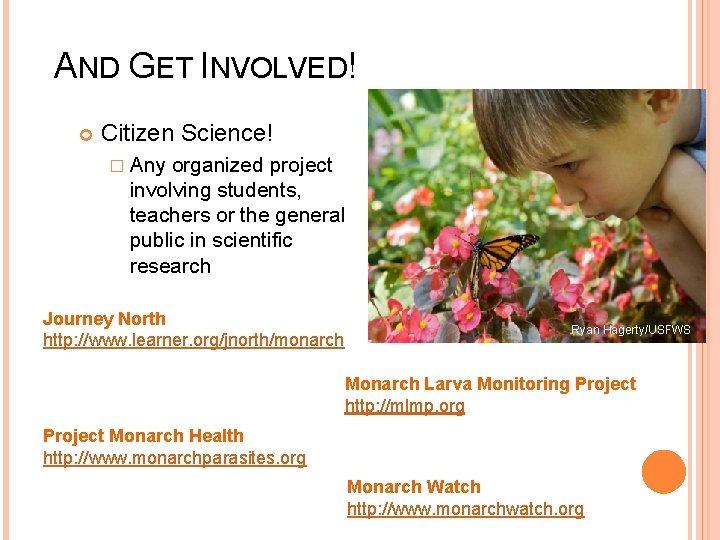
AND GET INVOLVED! Citizen Science! � Any organized project involving students, teachers or the general public in scientific research Journey North http: //www. learner. org/jnorth/monarch Ryan Hagerty/USFWS Monarch Larva Monitoring Project http: //mlmp. org Project Monarch Health http: //www. monarchparasites. org Monarch Watch http: //www. monarchwatch. org
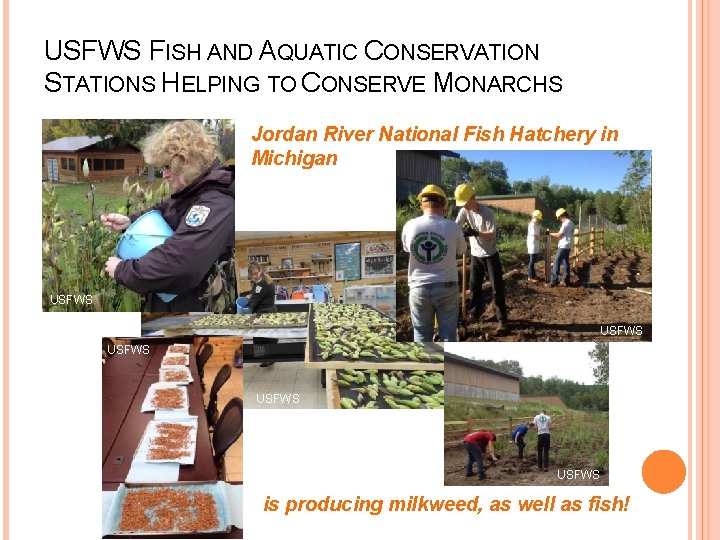
USFWS FISH AND AQUATIC CONSERVATION STATIONS HELPING TO CONSERVE MONARCHS Jordan River National Fish Hatchery in Michigan USFWS USFWS is producing milkweed, as well as fish!
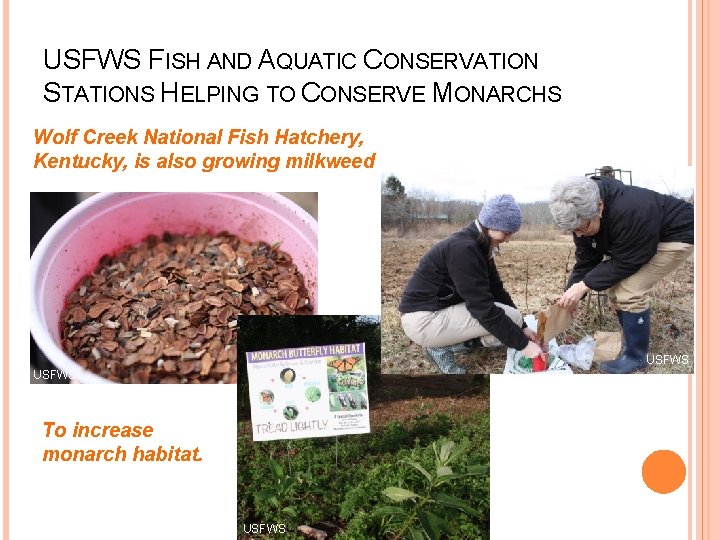
USFWS FISH AND AQUATIC CONSERVATION STATIONS HELPING TO CONSERVE MONARCHS Wolf Creek National Fish Hatchery, Kentucky, is also growing milkweed USFWS To increase monarch habitat. USFWS
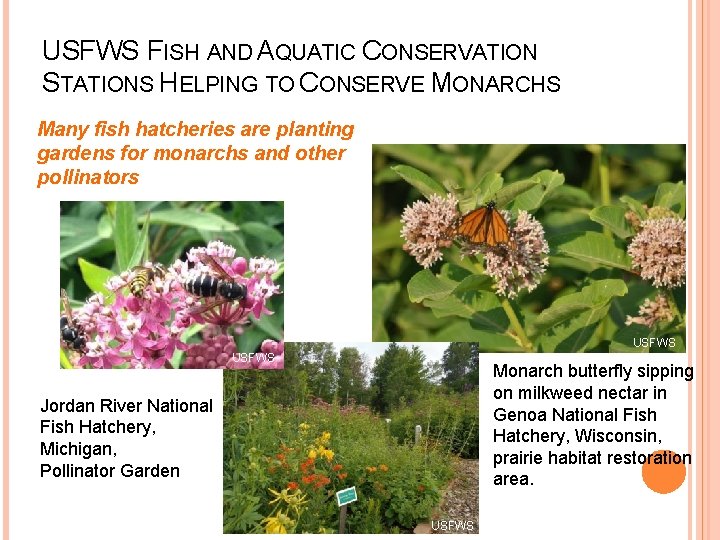
USFWS FISH AND AQUATIC CONSERVATION STATIONS HELPING TO CONSERVE MONARCHS Many fish hatcheries are planting gardens for monarchs and other pollinators USFWS Monarch butterfly sipping on milkweed nectar in Genoa National Fish Hatchery, Wisconsin, prairie habitat restoration area. Jordan River National Fish Hatchery, Michigan, Pollinator Garden USFWS
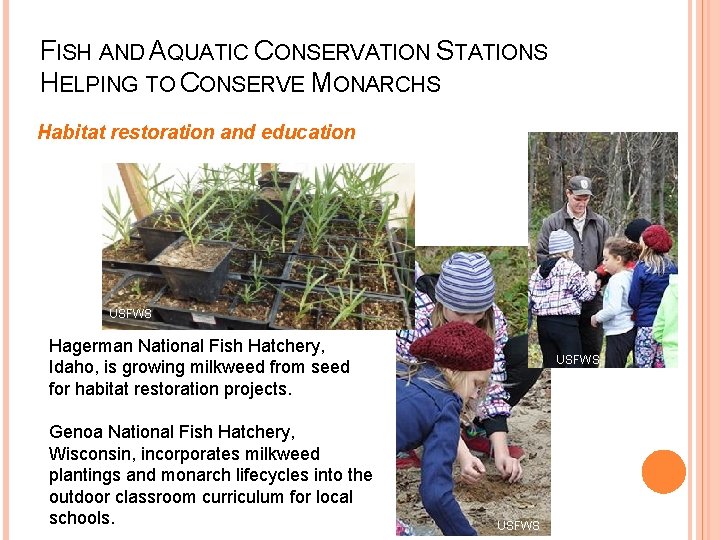
FISH AND AQUATIC CONSERVATION STATIONS HELPING TO CONSERVE MONARCHS Habitat restoration and education USFWS Hagerman National Fish Hatchery, Idaho, is growing milkweed from seed for habitat restoration projects. Genoa National Fish Hatchery, Wisconsin, incorporates milkweed plantings and monarch lifecycles into the outdoor classroom curriculum for local schools. USFWS
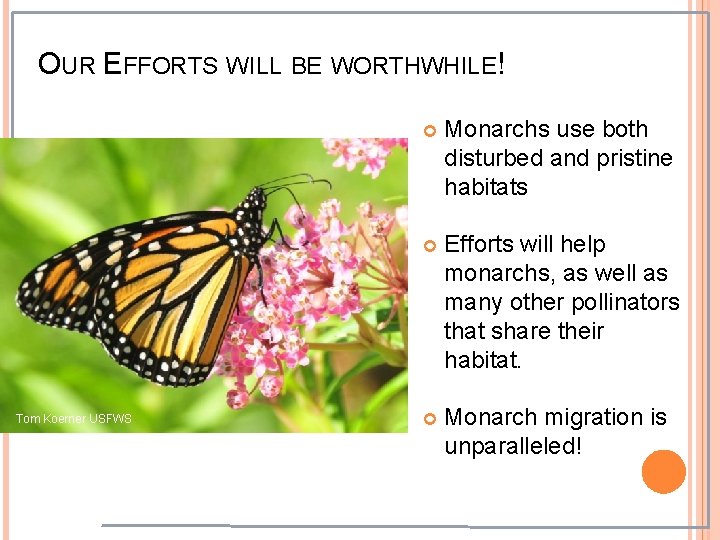
OUR EFFORTS WILL BE WORTHWHILE! Tom Koerner USFWS Monarchs use both disturbed and pristine habitats Efforts will help monarchs, as well as many other pollinators that share their habitat. Monarch migration is unparalleled! Source: Kelly Nail
RESOURCES General www. fws. gov/savethemonarch www. fws. gov/pollinators www. monarchjointventure Gardening/Habitat for Monarchs www. plantmilkweed. org http: //monarchjointventure. org/images/uploads/documents/Gardeningfor Monarchs. pdf Milkweed http: //monarchjointventure. org/images/uploads/documents/Milkweed. Fact Sheet. FINAL. pdf http: //www. xerces. org/milkweed-seed-finder/ http: //monarchwatch. org/milkweed/market/ http: //www. xerces. org/milkweeds-a-conservation-practitioners-guide/ Photo: USFWS
RESOURCES Nectar Plants http: //www. pollinator. org/guides. htm http: //www. plantnative. org/: http: //www. wildflower. org/ Pest Control http: //www. fws. gov/pollinators/pdfs/Reducing_Risks_to_Pollinators_from _Pest_Control_factsheet. pdf Citizen Science http: //monarchjointventure. org/get-involved/study-monarchs-citizenscience-opportunities/ Garden Certification http: //www. monarchwatch. org/waystations/certify. html http: //millionpollinatorgardens. org/ Photo: USFWS
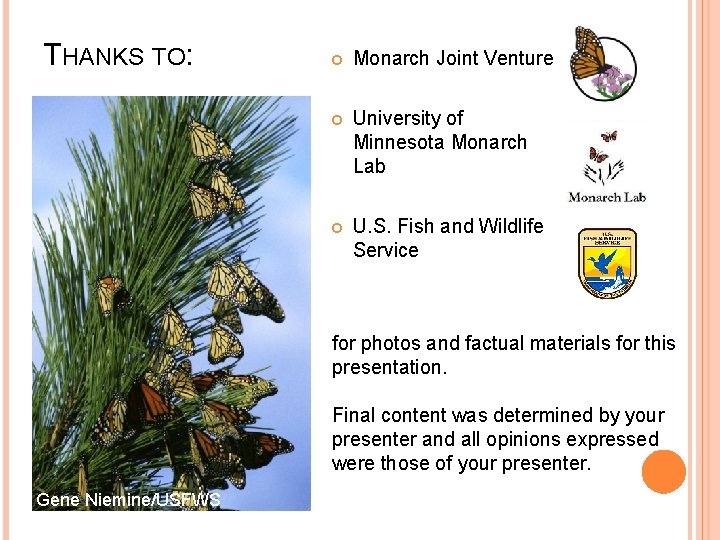
THANKS TO: Monarch Joint Venture University of Minnesota Monarch Lab U. S. Fish and Wildlife Service for photos and factual materials for this presentation. Final content was determined by your presenter and all opinions expressed were those of your presenter. Gene Niemine/USFWS Hollingsworth/USFWS
- Slides: 28