
Momentum of Population Time and Scale The future
- Slides: 39
Momentum of Population: Time and Scale The future of countries’ population size, depending on three scenarios of fertility decline to replacement level Matthew Hamilton, MS, MPH Venture Strategies for Health and Development Berkeley, California March 18, 2011
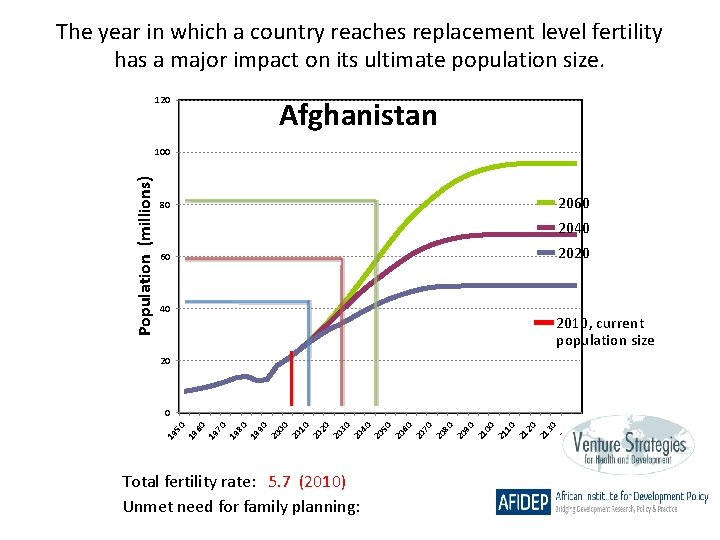
The year in which a country reaches replacement level fertility has a major impact on its ultimate population size. 120 Afghanistan Population (millions) 100 80 2060 2040 60 40 2020 2010, current population size 20 19 50 19 60 19 70 19 80 19 90 20 00 20 10 20 20 20 30 20 40 20 50 20 60 20 70 20 80 20 90 21 00 21 10 21 20 21 30 21 40 0 Total fertility rate: 5. 7 (2010) Unmet need for family planning:
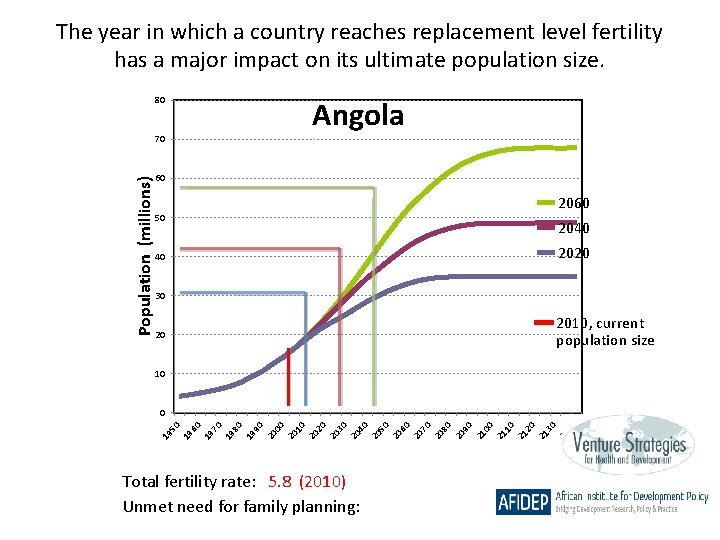
The year in which a country reaches replacement level fertility has a major impact on its ultimate population size. 80 Population (millions) 70 Angola 60 50 40 2060 2040 2020 30 20 2010, current population size 10 19 50 19 60 19 70 19 80 19 90 20 00 20 10 20 20 20 30 20 40 20 50 20 60 20 70 20 80 20 90 21 00 21 10 21 20 21 30 21 40 0 Total fertility rate: 5. 8 (2010) Unmet need for family planning:
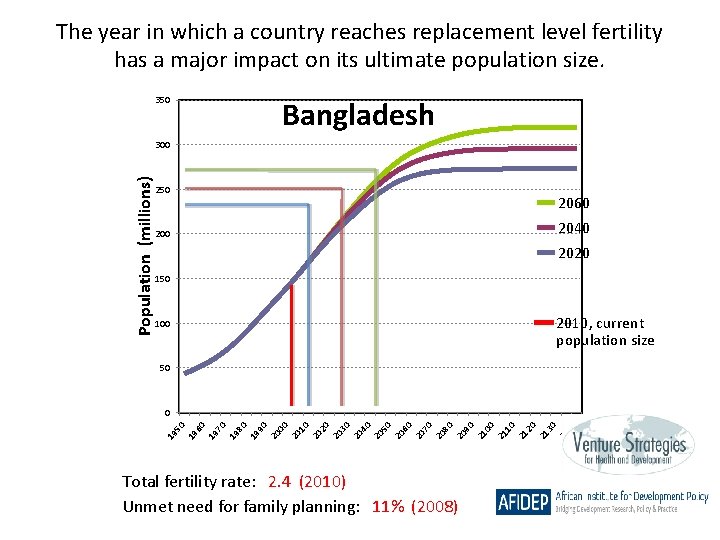
The year in which a country reaches replacement level fertility has a major impact on its ultimate population size. 350 Bangladesh Population (millions) 300 250 2060 2040 2020 150 100 2010, current population size 50 19 60 19 70 19 80 19 90 20 00 20 10 20 20 20 30 20 40 20 50 20 60 20 70 20 80 20 90 21 00 21 10 21 20 21 30 21 40 0 Total fertility rate: 2. 4 (2010) Unmet need for family planning: 11% (2008)
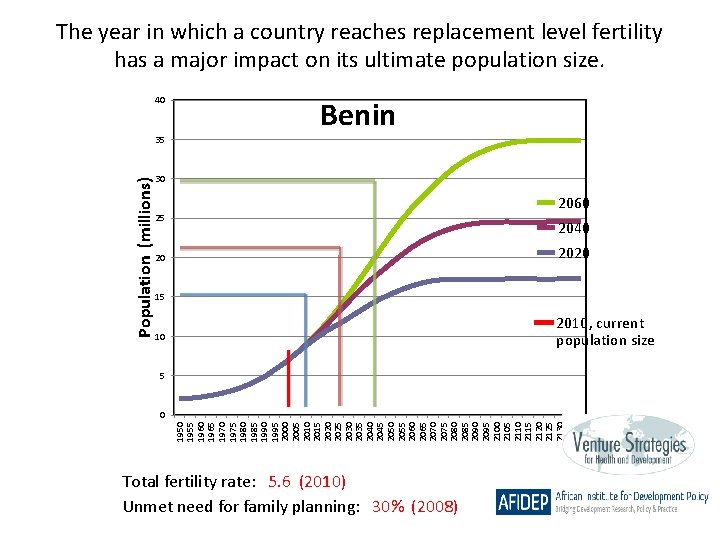
The year in which a country reaches replacement level fertility has a major impact on its ultimate population size. 40 Population (millions) 35 Benin 30 2060 25 2040 2020 20 15 2010, current population size 10 5 1950 1955 1960 1965 1970 1975 1980 1985 1990 1995 2000 2005 2010 2015 2020 2025 2030 2035 2040 2045 2050 2055 2060 2065 2070 2075 2080 2085 2090 2095 2100 2105 2110 2115 2120 2125 2130 2135 2140 0 Total fertility rate: 5. 6 (2010) Unmet need for family planning: 30% (2008)
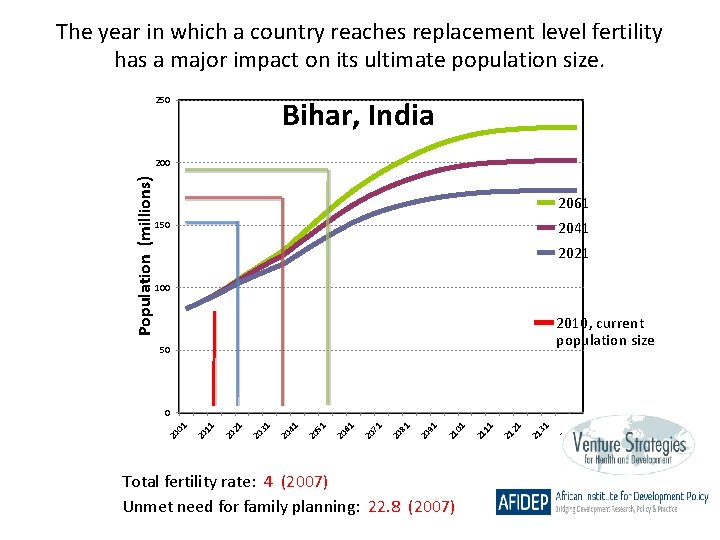
The year in which a country reaches replacement level fertility has a major impact on its ultimate population size. 250 Bihar, India Population (millions) 200 2061 2041 150 2021 100 2010, current population size 50 Total fertility rate: 4 (2007) Unmet need for family planning: 22. 8 (2007) 21 41 21 31 21 21 21 11 21 01 20 91 20 81 20 71 20 61 20 51 20 41 20 31 20 21 20 11 20 01 0
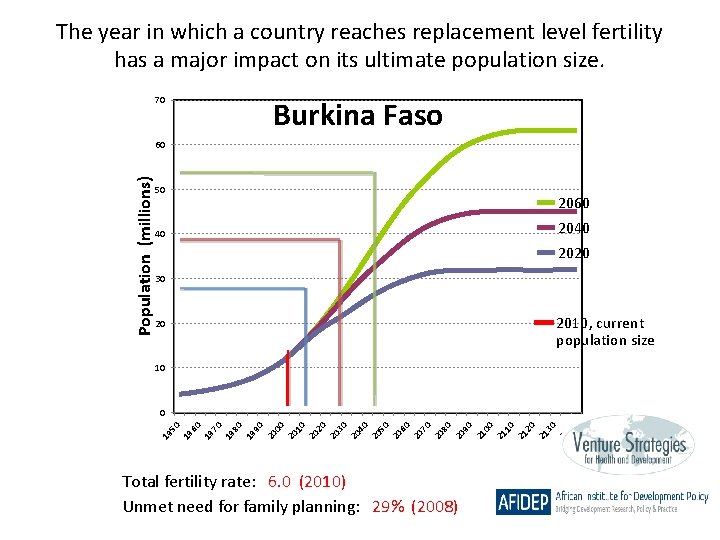
The year in which a country reaches replacement level fertility has a major impact on its ultimate population size. 70 Burkina Faso Population (millions) 60 50 40 2060 2040 2020 30 20 2010, current population size 10 19 50 19 60 19 70 19 80 19 90 20 00 20 10 20 20 20 30 20 40 20 50 20 60 20 70 20 80 20 90 21 00 21 10 21 20 21 30 21 40 0 Total fertility rate: 6. 0 (2010) Unmet need for family planning: 29% (2008)
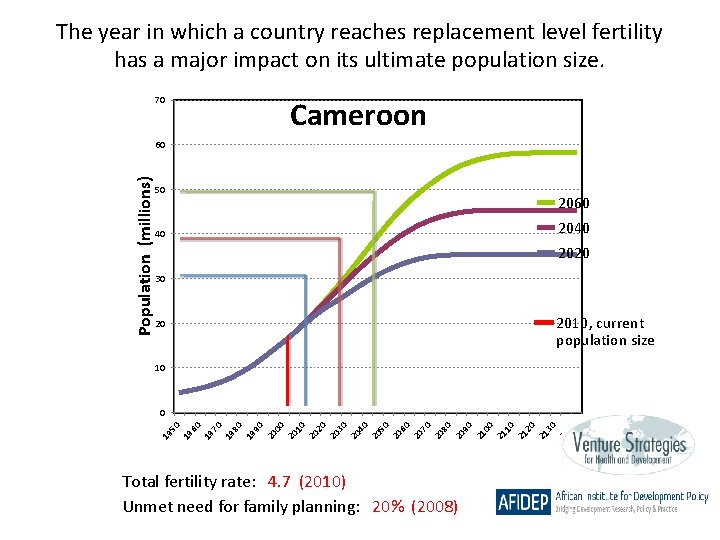
The year in which a country reaches replacement level fertility has a major impact on its ultimate population size. 70 Cameroon Population (millions) 60 50 40 2060 2040 2020 30 20 2010, current population size 10 19 50 19 60 19 70 19 80 19 90 20 00 20 10 20 20 20 30 20 40 20 50 20 60 20 70 20 80 20 90 21 00 21 10 21 20 21 30 21 40 0 Total fertility rate: 4. 7 (2010) Unmet need for family planning: 20% (2008)
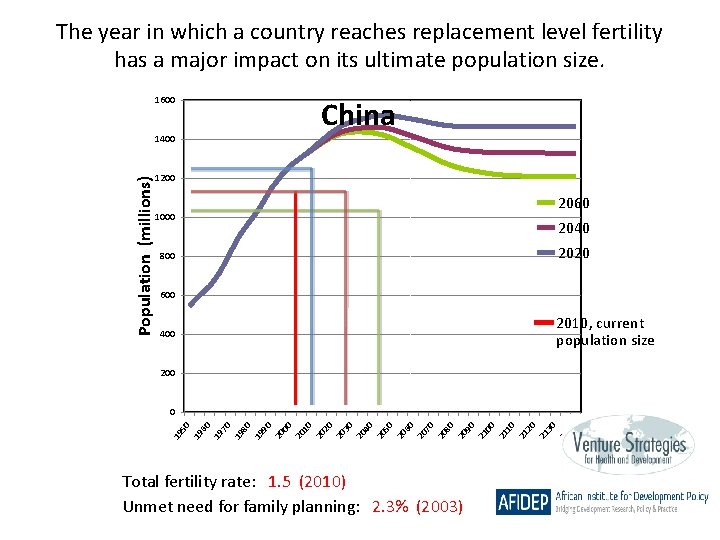
The year in which a country reaches replacement level fertility has a major impact on its ultimate population size. 1600 Population (millions) 1400 China 1200 1000 800 2060 2040 2020 600 400 2010, current population size 200 19 50 19 60 19 70 19 80 19 90 20 00 20 10 20 20 20 30 20 40 20 50 20 60 20 70 20 80 20 90 21 00 21 10 21 20 21 30 21 40 0 Total fertility rate: 1. 5 (2010) Unmet need for family planning: 2. 3% (2003)
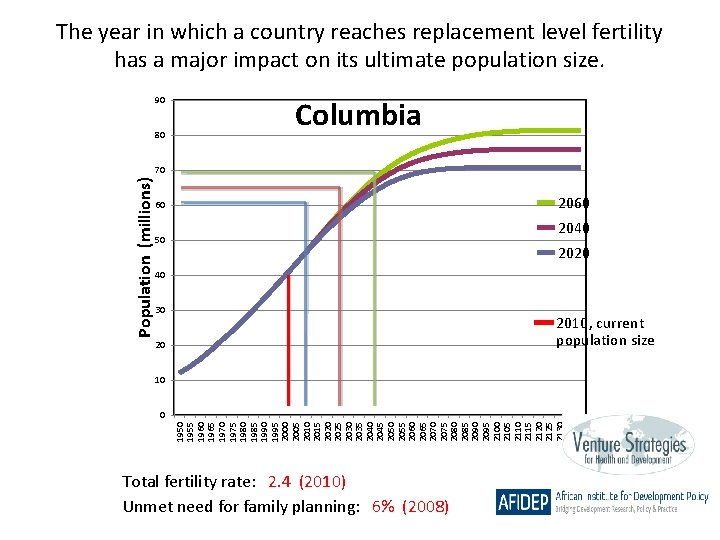
The year in which a country reaches replacement level fertility has a major impact on its ultimate population size. 90 80 Columbia Population (millions) 70 2060 60 2040 50 2020 40 30 2010, current population size 20 10 1955 1960 1965 1970 1975 1980 1985 1990 1995 2000 2005 2010 2015 2020 2025 2030 2035 2040 2045 2050 2055 2060 2065 2070 2075 2080 2085 2090 2095 2100 2105 2110 2115 2120 2125 2130 2135 2140 0 Total fertility rate: 2. 4 (2010) Unmet need for family planning: 6% (2008)
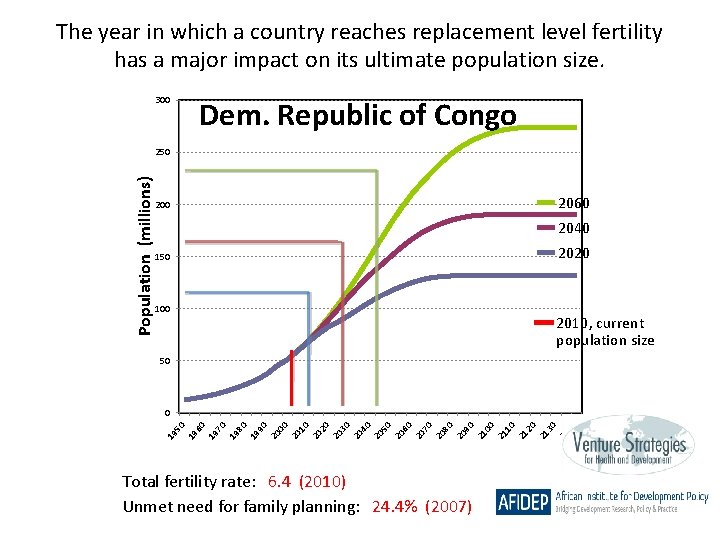
The year in which a country reaches replacement level fertility has a major impact on its ultimate population size. 300 Dem. Republic of Congo Population (millions) 250 2060 2040 150 100 2020 2010, current population size 50 19 60 19 70 19 80 19 90 20 00 20 10 20 20 20 30 20 40 20 50 20 60 20 70 20 80 20 90 21 00 21 10 21 20 21 30 21 40 0 Total fertility rate: 6. 4 (2010) Unmet need for family planning: 24. 4% (2007)
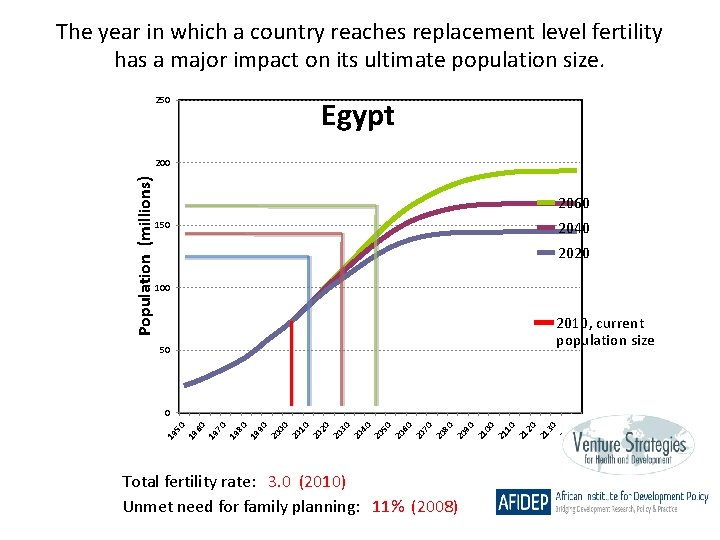
The year in which a country reaches replacement level fertility has a major impact on its ultimate population size. 250 Egypt Population (millions) 200 2060 150 2040 2020 100 50 2010, current population size 19 50 19 60 19 70 19 80 19 90 20 00 20 10 20 20 20 30 20 40 20 50 20 60 20 70 20 80 20 90 21 00 21 10 21 20 21 30 21 40 0 Total fertility rate: 3. 0 (2010) Unmet need for family planning: 11% (2008)
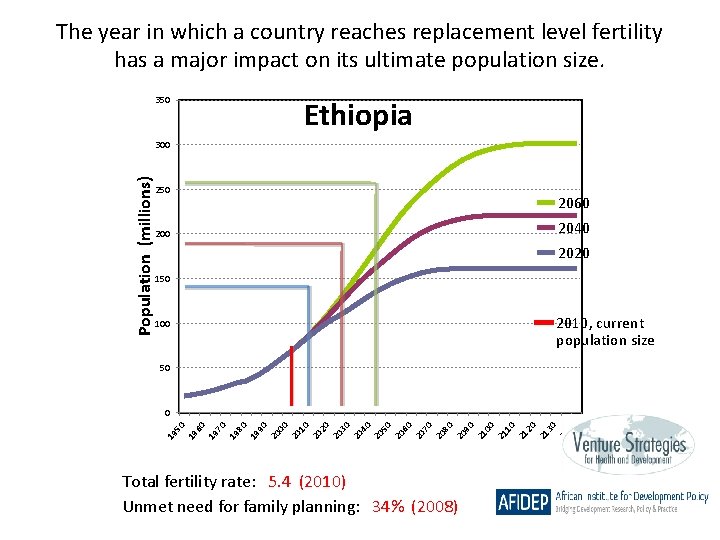
The year in which a country reaches replacement level fertility has a major impact on its ultimate population size. 350 Ethiopia Population (millions) 300 250 2060 2040 2020 150 100 2010, current population size 50 19 60 19 70 19 80 19 90 20 00 20 10 20 20 20 30 20 40 20 50 20 60 20 70 20 80 20 90 21 00 21 10 21 20 21 30 21 40 0 Total fertility rate: 5. 4 (2010) Unmet need for family planning: 34% (2008)
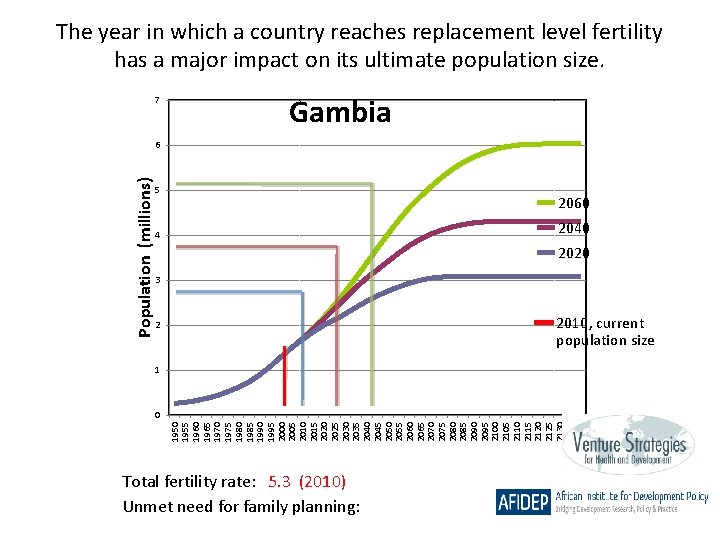
The year in which a country reaches replacement level fertility has a major impact on its ultimate population size. 7 Gambia Population (millions) 6 5 2060 2040 4 2020 3 2010, current population size 2 1 1950 1955 1960 1965 1970 1975 1980 1985 1990 1995 2000 2005 2010 2015 2020 2025 2030 2035 2040 2045 2050 2055 2060 2065 2070 2075 2080 2085 2090 2095 2100 2105 2110 2115 2120 2125 2130 2135 2140 0 Total fertility rate: 5. 3 (2010) Unmet need for family planning:
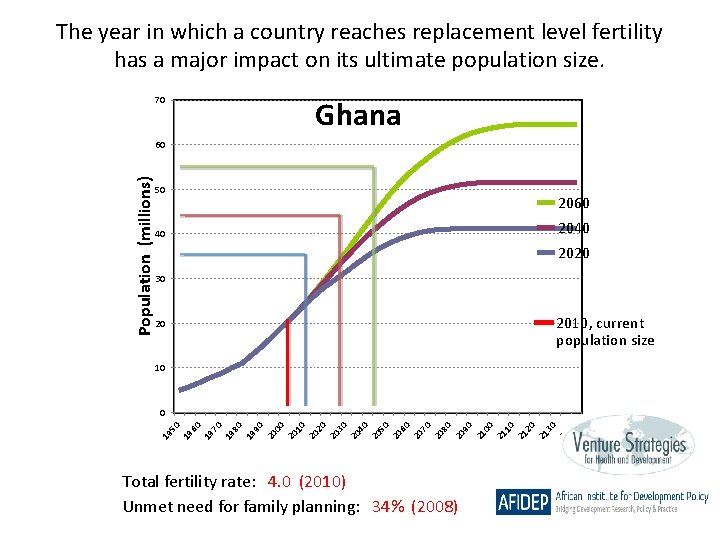
The year in which a country reaches replacement level fertility has a major impact on its ultimate population size. 70 Ghana Population (millions) 60 50 40 2060 2040 2020 30 20 2010, current population size 10 19 50 19 60 19 70 19 80 19 90 20 00 20 10 20 20 20 30 20 40 20 50 20 60 20 70 20 80 20 90 21 00 21 10 21 20 21 30 21 40 0 Total fertility rate: 4. 0 (2010) Unmet need for family planning: 34% (2008)
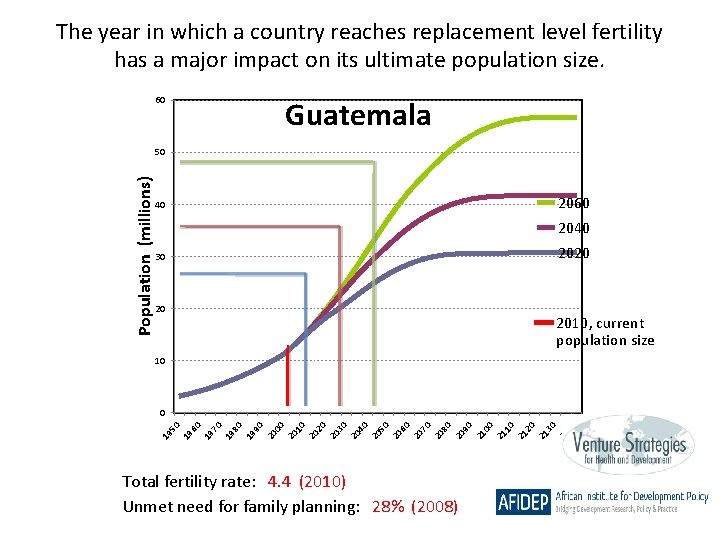
The year in which a country reaches replacement level fertility has a major impact on its ultimate population size. 60 Guatemala Population (millions) 50 40 2060 2040 30 20 2010, current population size 10 19 50 19 60 19 70 19 80 19 90 20 00 20 10 20 20 20 30 20 40 20 50 20 60 20 70 20 80 20 90 21 00 21 10 21 20 21 30 21 40 0 Total fertility rate: 4. 4 (2010) Unmet need for family planning: 28% (2008)
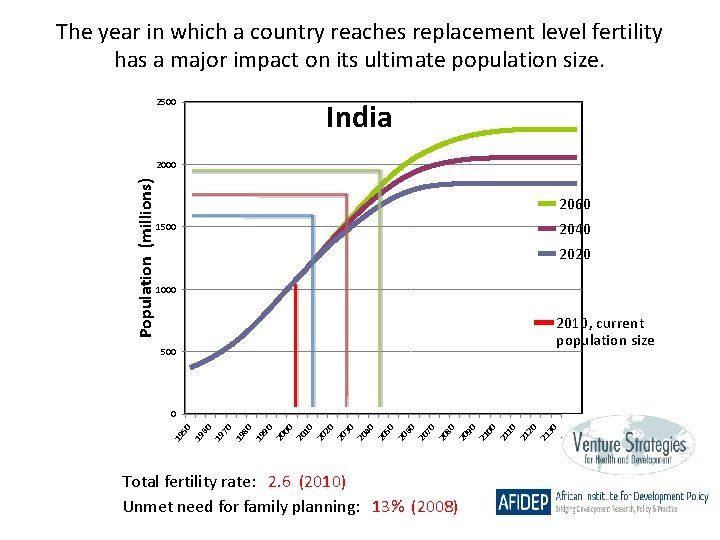
The year in which a country reaches replacement level fertility has a major impact on its ultimate population size. 2500 India Population (millions) 2000 2060 1500 2040 2020 1000 500 2010, current population size 19 50 19 60 19 70 19 80 19 90 20 00 20 10 20 20 20 30 20 40 20 50 20 60 20 70 20 80 20 90 21 00 21 10 21 20 21 30 21 40 0 Total fertility rate: 2. 6 (2010) Unmet need for family planning: 13% (2008)
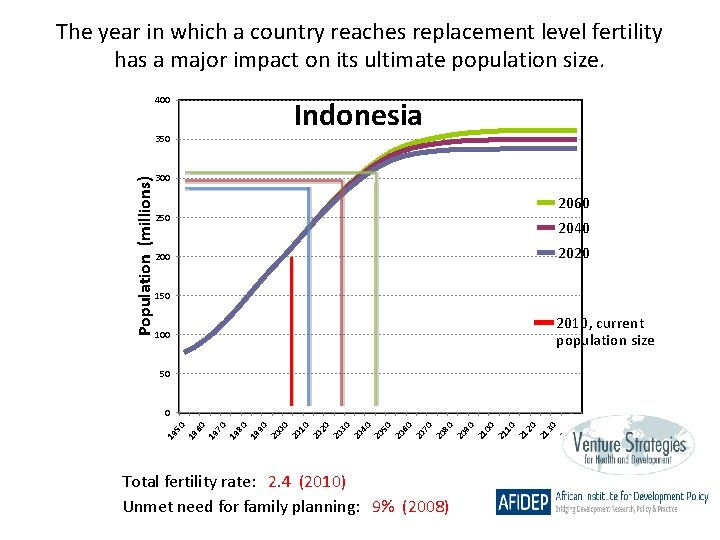
The year in which a country reaches replacement level fertility has a major impact on its ultimate population size. 400 Population (millions) 350 Indonesia 300 250 2060 2040 2020 150 100 2010, current population size 50 19 60 19 70 19 80 19 90 20 00 20 10 20 20 20 30 20 40 20 50 20 60 20 70 20 80 20 90 21 00 21 10 21 20 21 30 21 40 0 Total fertility rate: 2. 4 (2010) Unmet need for family planning: 9% (2008)
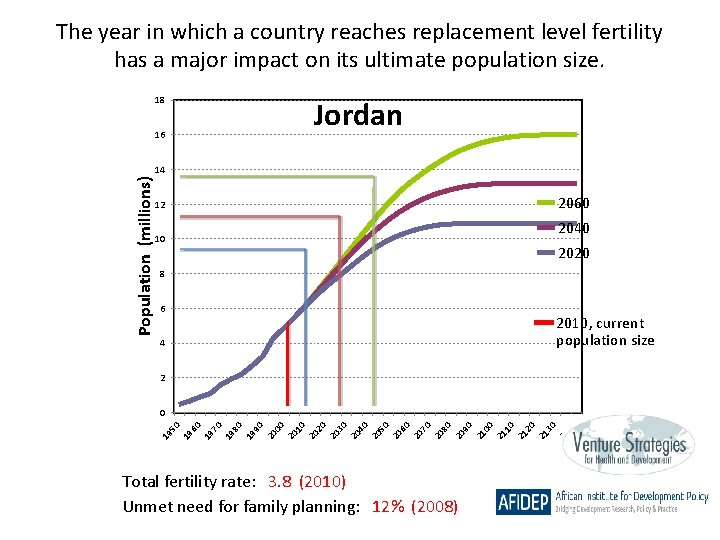
The year in which a country reaches replacement level fertility has a major impact on its ultimate population size. 18 16 Jordan Population (millions) 14 12 10 2060 2040 2020 8 6 4 2010, current population size 2 19 50 19 60 19 70 19 80 19 90 20 00 20 10 20 20 20 30 20 40 20 50 20 60 20 70 20 80 20 90 21 00 21 10 21 20 21 30 21 40 0 Total fertility rate: 3. 8 (2010) Unmet need for family planning: 12% (2008)
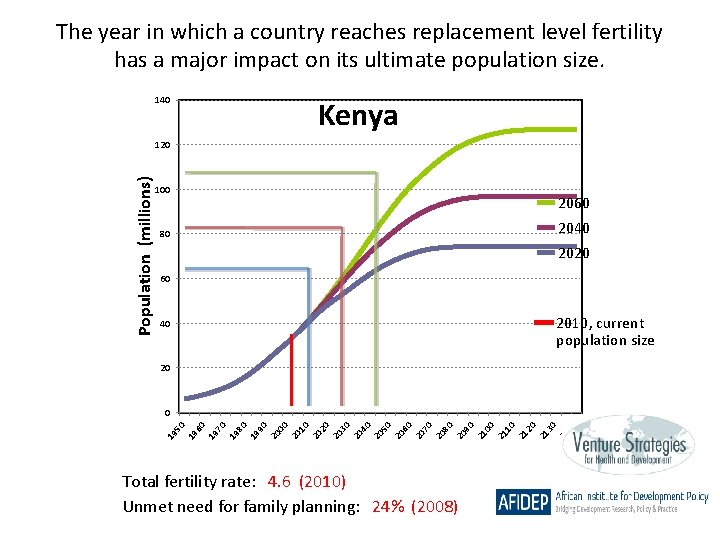
The year in which a country reaches replacement level fertility has a major impact on its ultimate population size. 140 Kenya Population (millions) 120 100 80 2060 2040 2020 60 40 2010, current population size 20 19 50 19 60 19 70 19 80 19 90 20 00 20 10 20 20 20 30 20 40 20 50 20 60 20 70 20 80 20 90 21 00 21 10 21 20 21 30 21 40 0 Total fertility rate: 4. 6 (2010) Unmet need for family planning: 24% (2008)
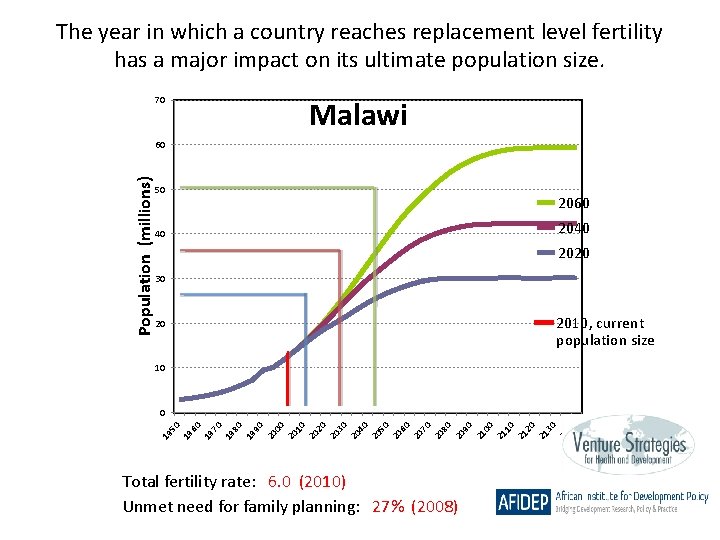
The year in which a country reaches replacement level fertility has a major impact on its ultimate population size. 70 Malawi Population (millions) 60 50 40 2060 2040 2020 30 20 2010, current population size 10 19 50 19 60 19 70 19 80 19 90 20 00 20 10 20 20 20 30 20 40 20 50 20 60 20 70 20 80 20 90 21 00 21 10 21 20 21 30 21 40 0 Total fertility rate: 6. 0 (2010) Unmet need for family planning: 27% (2008)
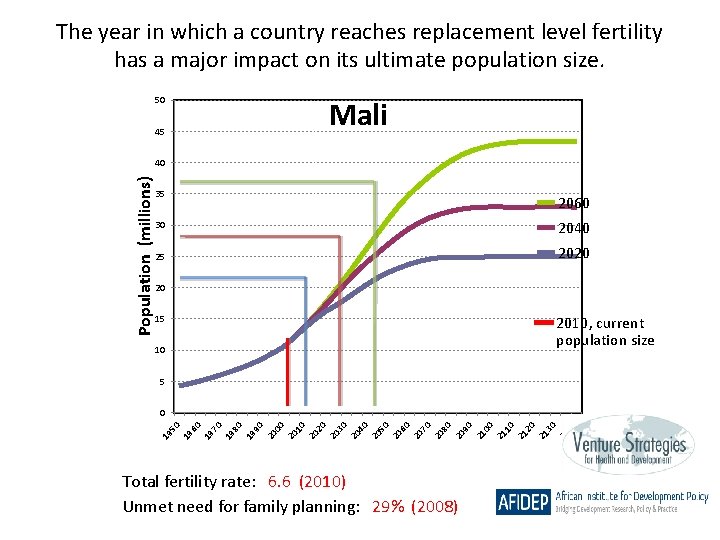
The year in which a country reaches replacement level fertility has a major impact on its ultimate population size. 50 45 Mali Population (millions) 40 35 2060 30 2040 25 2020 20 15 10 2010, current population size 5 19 50 19 60 19 70 19 80 19 90 20 00 20 10 20 20 20 30 20 40 20 50 20 60 20 70 20 80 20 90 21 00 21 10 21 20 21 30 21 40 0 Total fertility rate: 6. 6 (2010) Unmet need for family planning: 29% (2008)
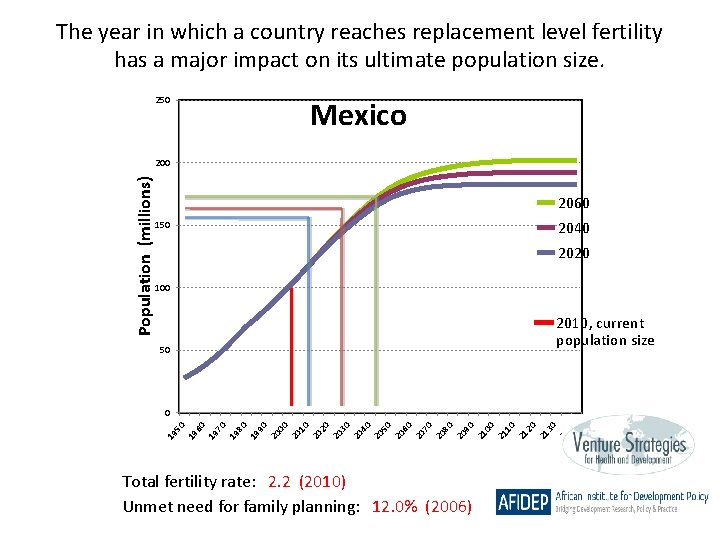
The year in which a country reaches replacement level fertility has a major impact on its ultimate population size. 250 Mexico Population (millions) 200 2060 150 2040 2020 100 50 2010, current population size 19 50 19 60 19 70 19 80 19 90 20 00 20 10 20 20 20 30 20 40 20 50 20 60 20 70 20 80 20 90 21 00 21 10 21 20 21 30 21 40 0 Total fertility rate: 2. 2 (2010) Unmet need for family planning: 12. 0% (2006)
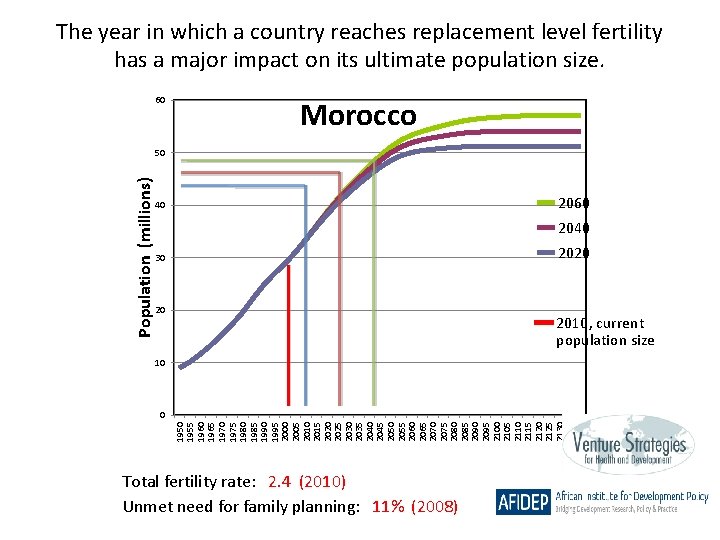
The year in which a country reaches replacement level fertility has a major impact on its ultimate population size. 60 Morocco Population (millions) 50 2060 40 2020 30 20 2010, current population size 10 1955 1960 1965 1970 1975 1980 1985 1990 1995 2000 2005 2010 2015 2020 2025 2030 2035 2040 2045 2050 2055 2060 2065 2070 2075 2080 2085 2090 2095 2100 2105 2110 2115 2120 2125 2130 2135 2140 0 Total fertility rate: 2. 4 (2010) Unmet need for family planning: 11% (2008)
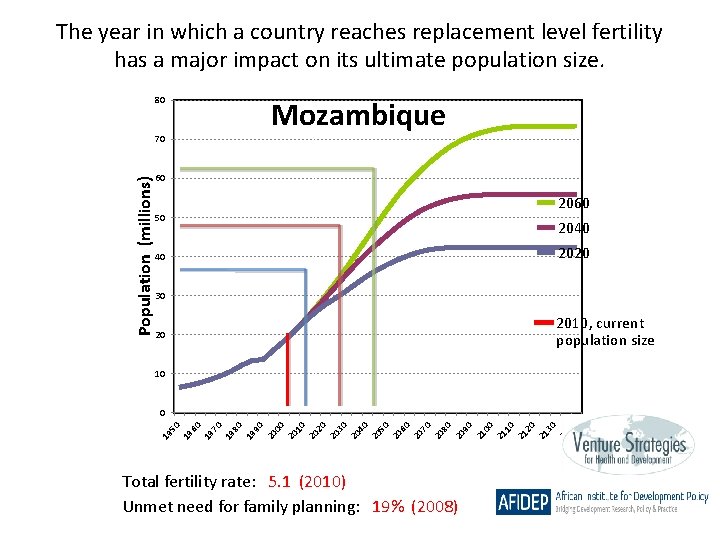
The year in which a country reaches replacement level fertility has a major impact on its ultimate population size. 80 Population (millions) 70 Mozambique 60 50 40 2060 2040 2020 30 20 2010, current population size 10 19 50 19 60 19 70 19 80 19 90 20 00 20 10 20 20 20 30 20 40 20 50 20 60 20 70 20 80 20 90 21 00 21 10 21 20 21 30 21 40 0 Total fertility rate: 5. 1 (2010) Unmet need for family planning: 19% (2008)
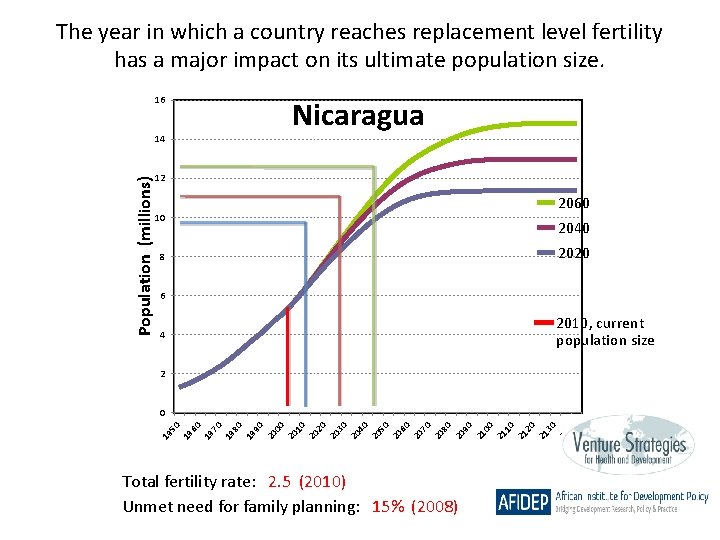
The year in which a country reaches replacement level fertility has a major impact on its ultimate population size. 16 Population (millions) 14 Nicaragua 12 10 8 2060 2040 2020 6 4 2010, current population size 2 19 50 19 60 19 70 19 80 19 90 20 00 20 10 20 20 20 30 20 40 20 50 20 60 20 70 20 80 20 90 21 00 21 10 21 20 21 30 21 40 0 Total fertility rate: 2. 5 (2010) Unmet need for family planning: 15% (2008)
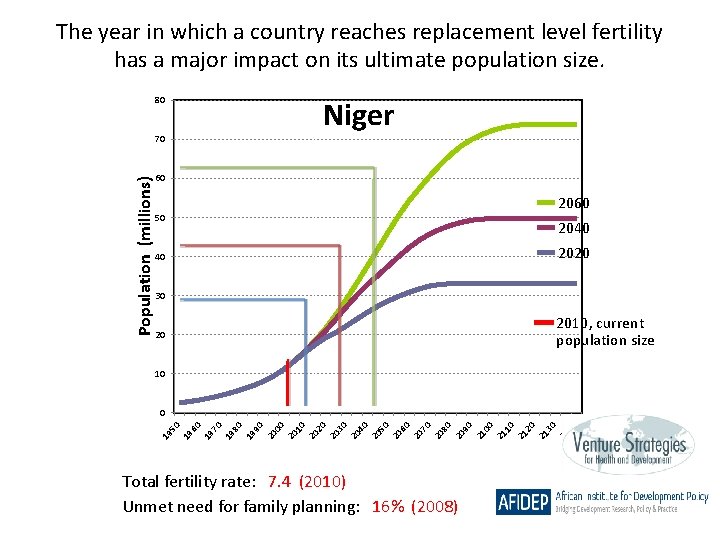
The year in which a country reaches replacement level fertility has a major impact on its ultimate population size. 80 Population (millions) 70 Niger 60 50 40 2060 2040 2020 30 20 2010, current population size 10 19 50 19 60 19 70 19 80 19 90 20 00 20 10 20 20 20 30 20 40 20 50 20 60 20 70 20 80 20 90 21 00 21 10 21 20 21 30 21 40 0 Total fertility rate: 7. 4 (2010) Unmet need for family planning: 16% (2008)
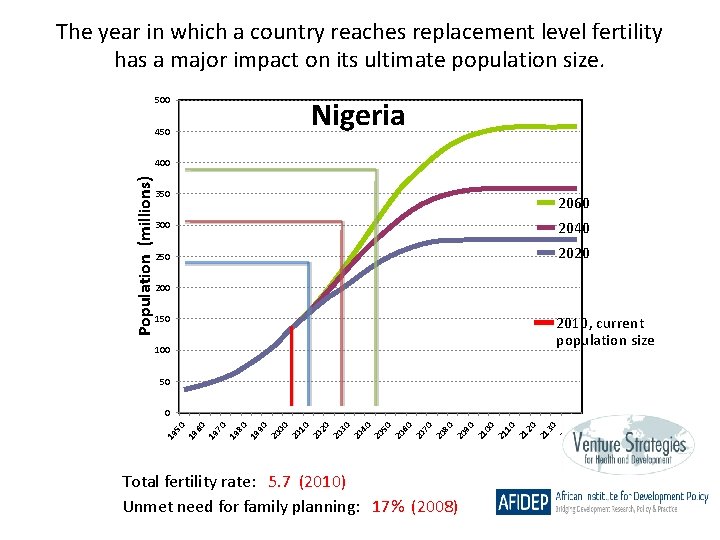
The year in which a country reaches replacement level fertility has a major impact on its ultimate population size. 500 450 Nigeria Population (millions) 400 350 2060 300 2040 250 2020 200 150 100 2010, current population size 50 19 60 19 70 19 80 19 90 20 00 20 10 20 20 20 30 20 40 20 50 20 60 20 70 20 80 20 90 21 00 21 10 21 20 21 30 21 40 0 Total fertility rate: 5. 7 (2010) Unmet need for family planning: 17% (2008)
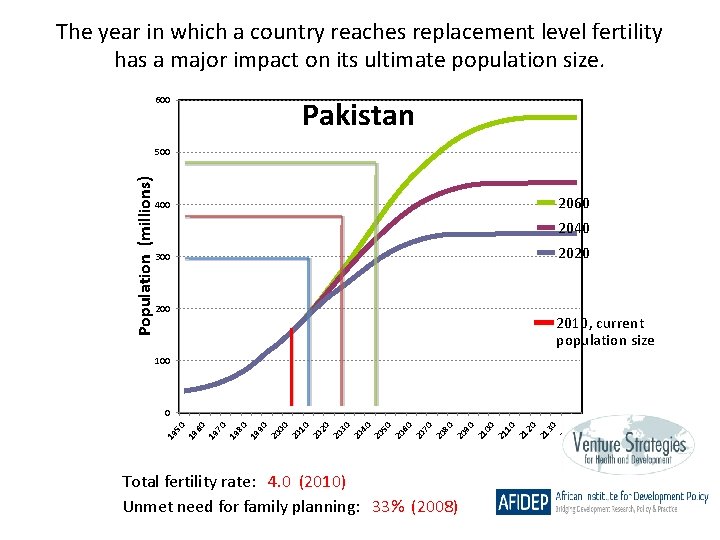
The year in which a country reaches replacement level fertility has a major impact on its ultimate population size. 600 Pakistan Population (millions) 500 400 2060 2040 300 2020 2010, current population size 100 19 50 19 60 19 70 19 80 19 90 20 00 20 10 20 20 20 30 20 40 20 50 20 60 20 70 20 80 20 90 21 00 21 10 21 20 21 30 21 40 0 Total fertility rate: 4. 0 (2010) Unmet need for family planning: 33% (2008)
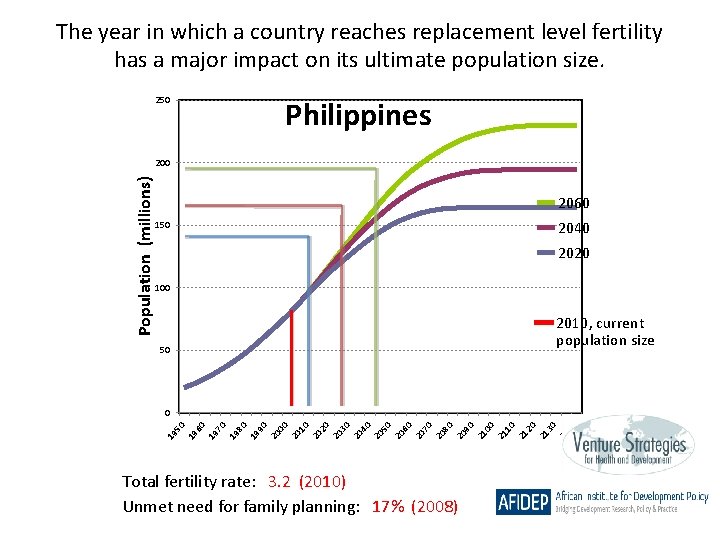
The year in which a country reaches replacement level fertility has a major impact on its ultimate population size. 250 Philippines Population (millions) 200 2060 150 2040 2020 100 50 2010, current population size 19 50 19 60 19 70 19 80 19 90 20 00 20 10 20 20 20 30 20 40 20 50 20 60 20 70 20 80 20 90 21 00 21 10 21 20 21 30 21 40 0 Total fertility rate: 3. 2 (2010) Unmet need for family planning: 17% (2008)
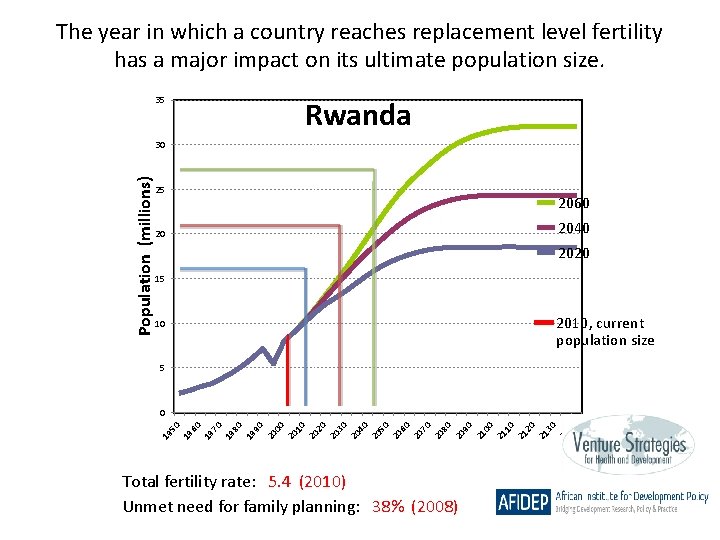
The year in which a country reaches replacement level fertility has a major impact on its ultimate population size. 35 Rwanda Population (millions) 30 25 20 2060 2040 2020 15 10 2010, current population size 5 19 50 19 60 19 70 19 80 19 90 20 00 20 10 20 20 20 30 20 40 20 50 20 60 20 70 20 80 20 90 21 00 21 10 21 20 21 30 21 40 0 Total fertility rate: 5. 4 (2010) Unmet need for family planning: 38% (2008)
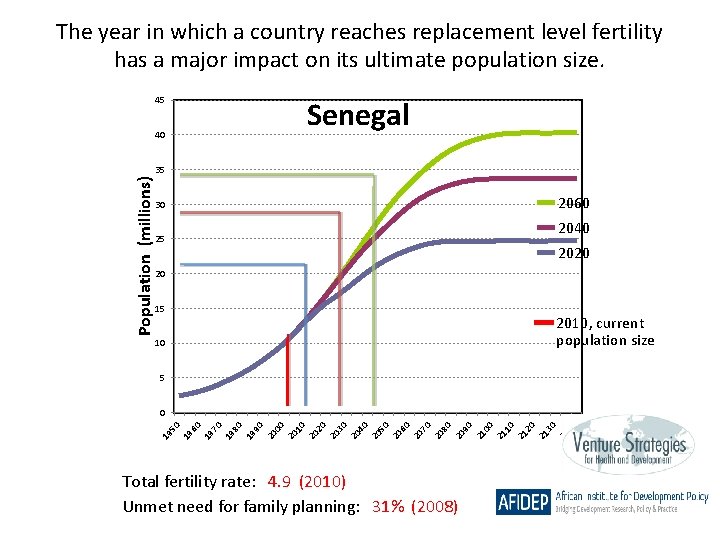
The year in which a country reaches replacement level fertility has a major impact on its ultimate population size. 45 40 Senegal Population (millions) 35 30 25 2060 2040 2020 20 15 10 2010, current population size 5 19 50 19 60 19 70 19 80 19 90 20 00 20 10 20 20 20 30 20 40 20 50 20 60 20 70 20 80 20 90 21 00 21 10 21 20 21 30 21 40 0 Total fertility rate: 4. 9 (2010) Unmet need for family planning: 31% (2008)
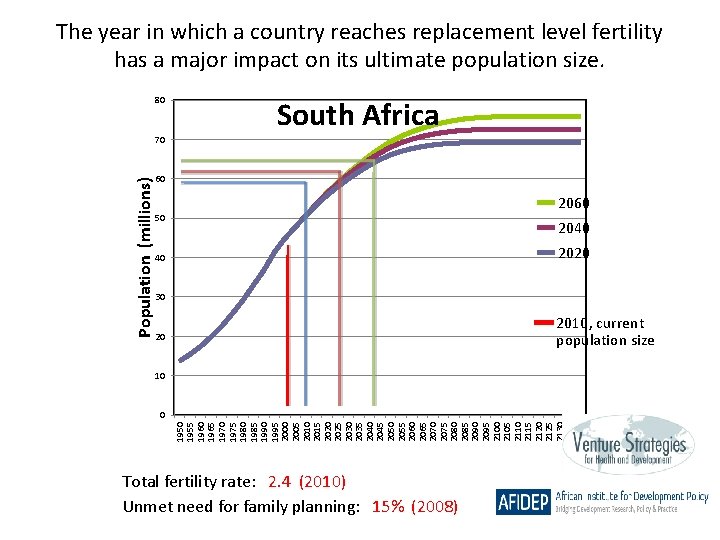
The year in which a country reaches replacement level fertility has a major impact on its ultimate population size. 80 Population (millions) 70 South Africa 60 2060 50 2040 2020 40 30 2010, current population size 20 10 1955 1960 1965 1970 1975 1980 1985 1990 1995 2000 2005 2010 2015 2020 2025 2030 2035 2040 2045 2050 2055 2060 2065 2070 2075 2080 2085 2090 2095 2100 2105 2110 2115 2120 2125 2130 2135 2140 0 Total fertility rate: 2. 4 (2010) Unmet need for family planning: 15% (2008)
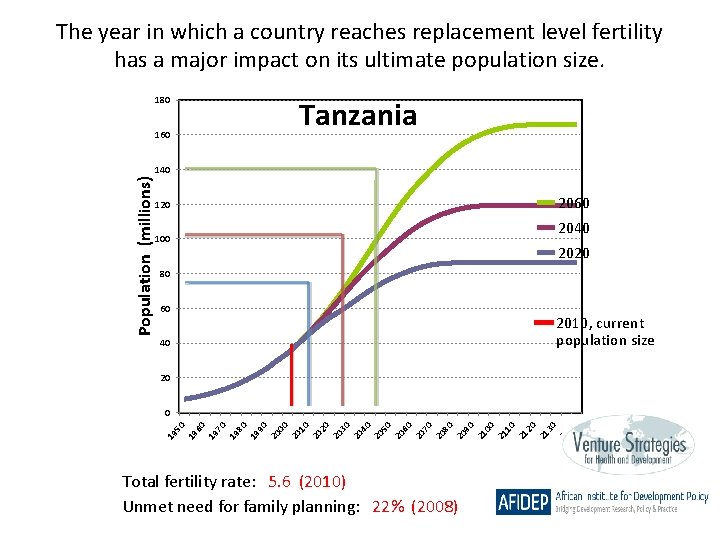
The year in which a country reaches replacement level fertility has a major impact on its ultimate population size. 180 160 Tanzania Population (millions) 140 120 100 2060 2040 2020 80 60 40 2010, current population size 20 19 50 19 60 19 70 19 80 19 90 20 00 20 10 20 20 20 30 20 40 20 50 20 60 20 70 20 80 20 90 21 00 21 10 21 20 21 30 21 40 0 Total fertility rate: 5. 6 (2010) Unmet need for family planning: 22% (2008)
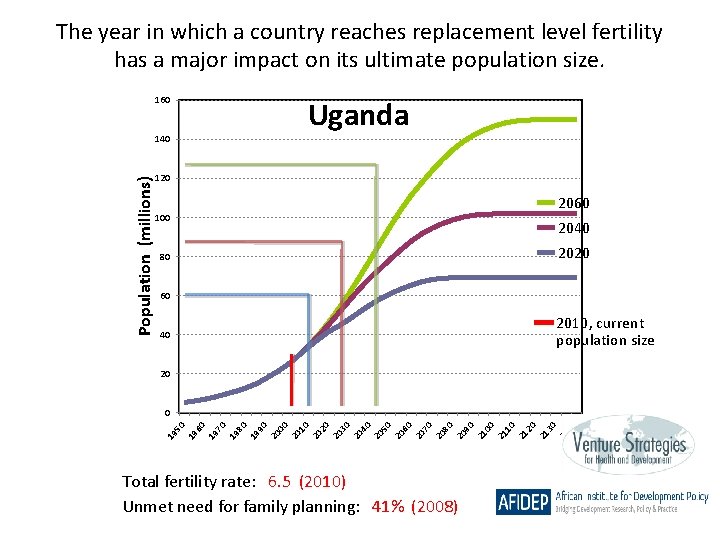
The year in which a country reaches replacement level fertility has a major impact on its ultimate population size. 160 Population (millions) 140 Uganda 120 100 80 2060 2040 2020 60 40 2010, current population size 20 19 50 19 60 19 70 19 80 19 90 20 00 20 10 20 20 20 30 20 40 20 50 20 60 20 70 20 80 20 90 21 00 21 10 21 20 21 30 21 40 0 Total fertility rate: 6. 5 (2010) Unmet need for family planning: 41% (2008)
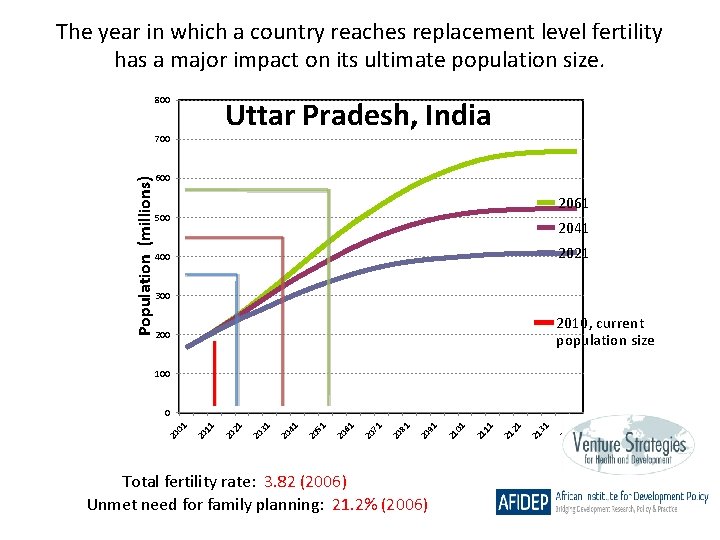
The year in which a country reaches replacement level fertility has a major impact on its ultimate population size. 800 Uttar Pradesh, India Population (millions) 700 600 2061 500 2041 2021 400 300 2010, current population size 200 100 Total fertility rate: 3. 82 (2006) Unmet need for family planning: 21. 2% (2006) 21 41 21 31 21 21 21 11 21 01 20 91 20 81 20 71 20 61 20 51 20 41 20 31 20 21 20 11 20 01 0
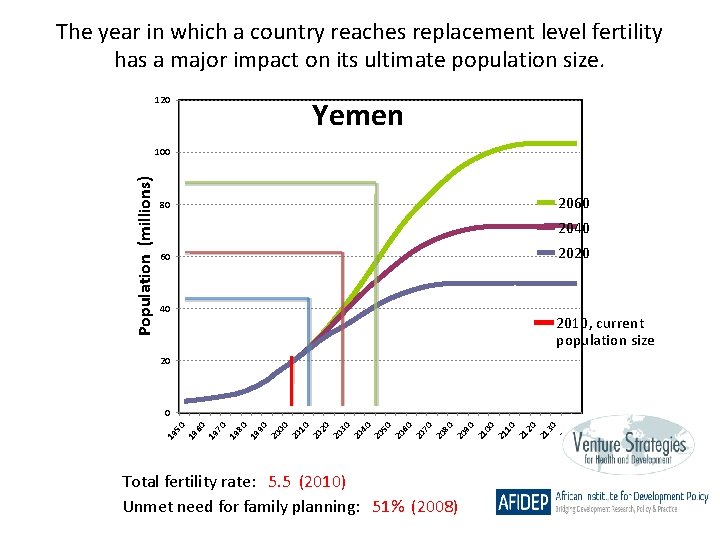
The year in which a country reaches replacement level fertility has a major impact on its ultimate population size. 120 Yemen Population (millions) 100 80 2060 2040 60 40 2020 2010, current population size 20 19 50 19 60 19 70 19 80 19 90 20 00 20 10 20 20 20 30 20 40 20 50 20 60 20 70 20 80 20 90 21 00 21 10 21 20 21 30 21 40 0 Total fertility rate: 5. 5 (2010) Unmet need for family planning: 51% (2008)
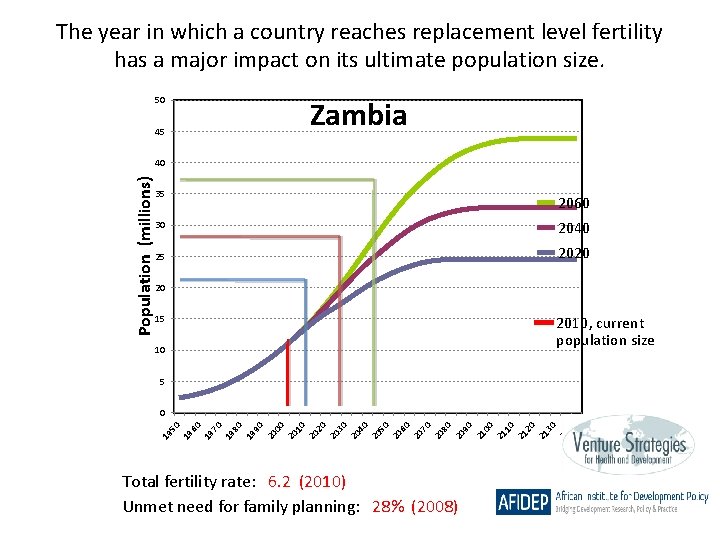
The year in which a country reaches replacement level fertility has a major impact on its ultimate population size. 50 45 Zambia Population (millions) 40 35 2060 30 2040 25 2020 20 15 10 2010, current population size 5 19 50 19 60 19 70 19 80 19 90 20 00 20 10 20 20 20 30 20 40 20 50 20 60 20 70 20 80 20 90 21 00 21 10 21 20 21 30 21 40 0 Total fertility rate: 6. 2 (2010) Unmet need for family planning: 28% (2008)
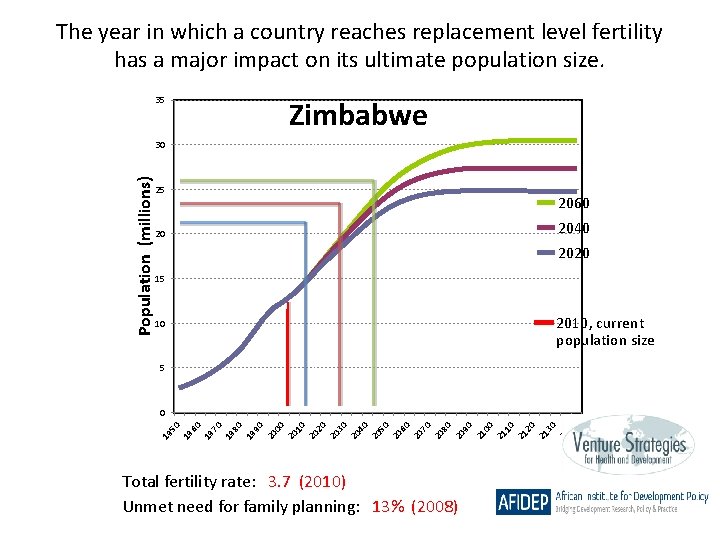
The year in which a country reaches replacement level fertility has a major impact on its ultimate population size. 35 Zimbabwe Population (millions) 30 25 20 2060 2040 2020 15 10 2010, current population size 5 19 50 19 60 19 70 19 80 19 90 20 00 20 10 20 20 20 30 20 40 20 50 20 60 20 70 20 80 20 90 21 00 21 10 21 20 21 30 21 40 0 Total fertility rate: 3. 7 (2010) Unmet need for family planning: 13% (2008)