
Mollusks TSW identify and describe the basic characteristics
Mollusks TSW identify and describe the basic characteristics of mollusks
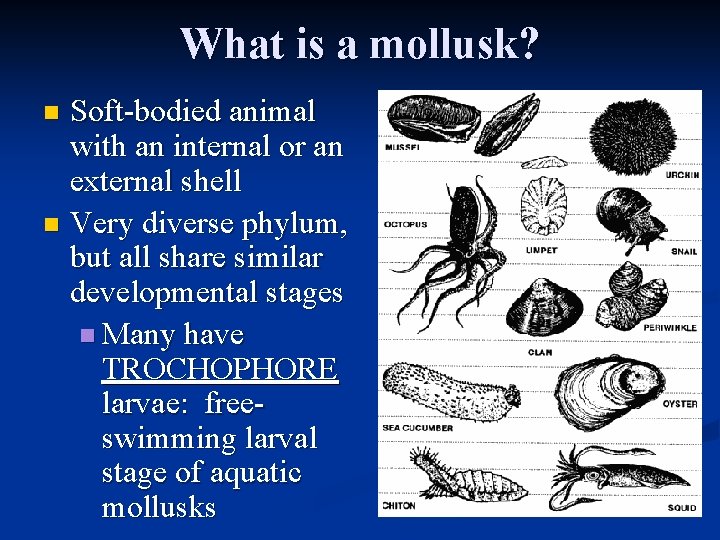
What is a mollusk? Soft-bodied animal with an internal or an external shell n Very diverse phylum, but all share similar developmental stages n Many have TROCHOPHORE larvae: freeswimming larval stage of aquatic mollusks n
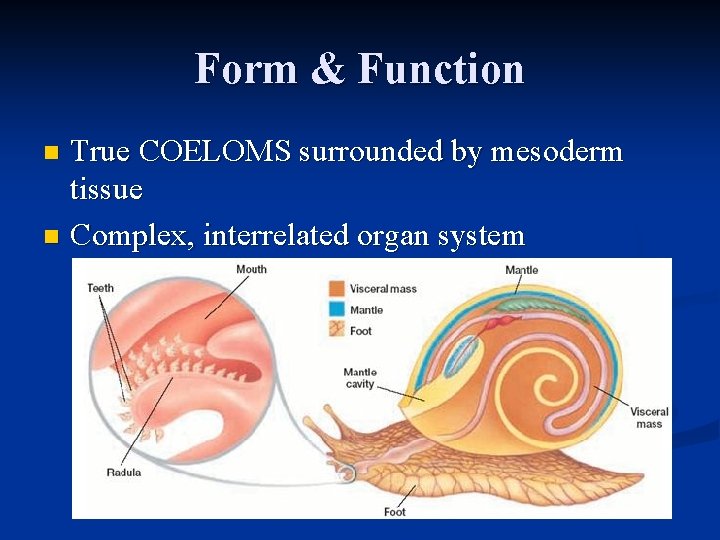
Form & Function True COELOMS surrounded by mesoderm tissue n Complex, interrelated organ system n
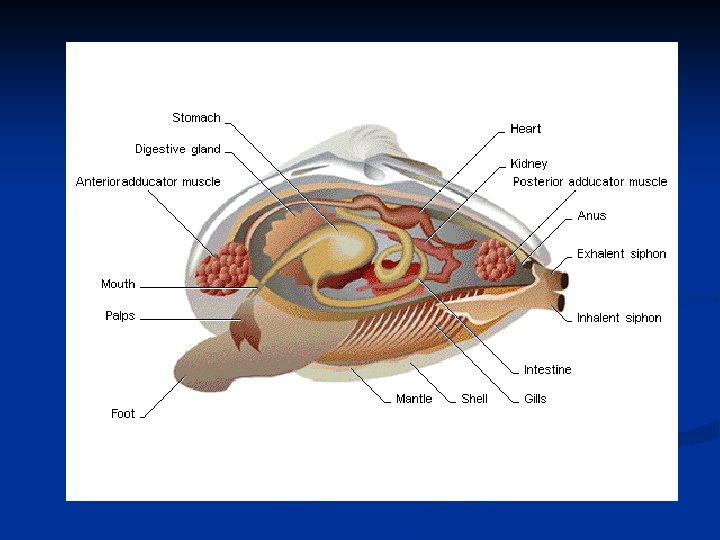
Body Plan 4 Main Parts n FOOT: Muscular, used for crawling, burrowing, & capturing prey n MANTLE: Thin layer of tissue covering the mollusk’s body like a cloak n SHELL: Made of calcium carbonate; has been lost in some groups n VISCERAL MASS: Internal organs n
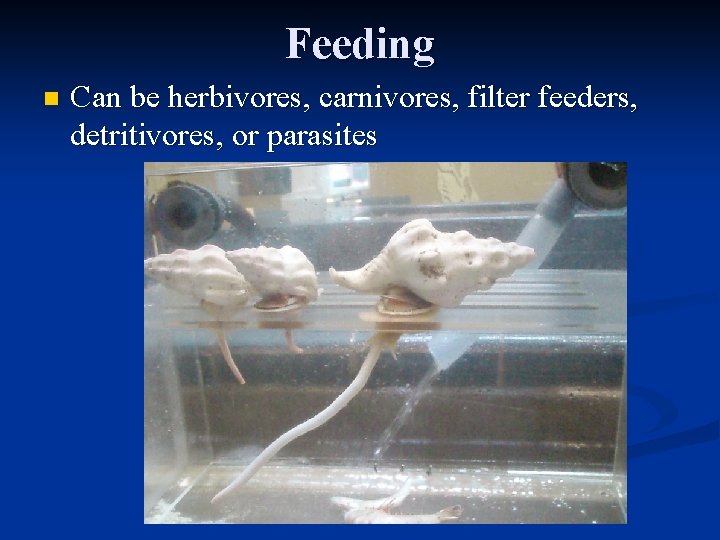
Feeding n Can be herbivores, carnivores, filter feeders, detritivores, or parasites
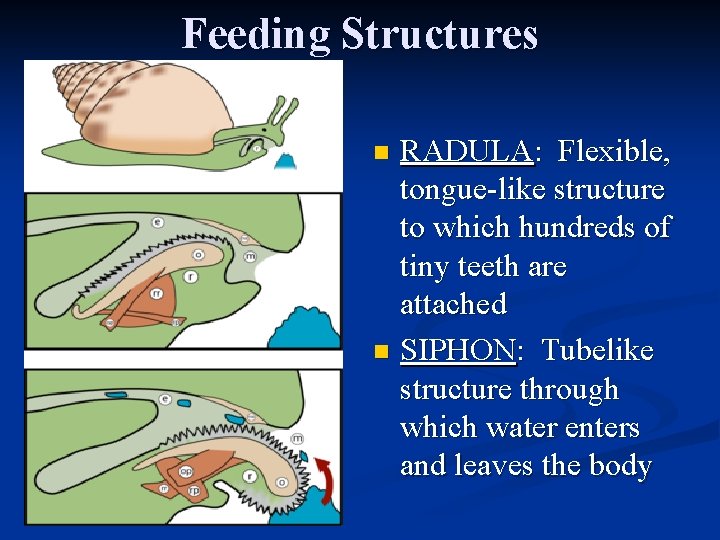
Feeding Structures RADULA: Flexible, tongue-like structure to which hundreds of tiny teeth are attached n SIPHON: Tubelike structure through which water enters and leaves the body n
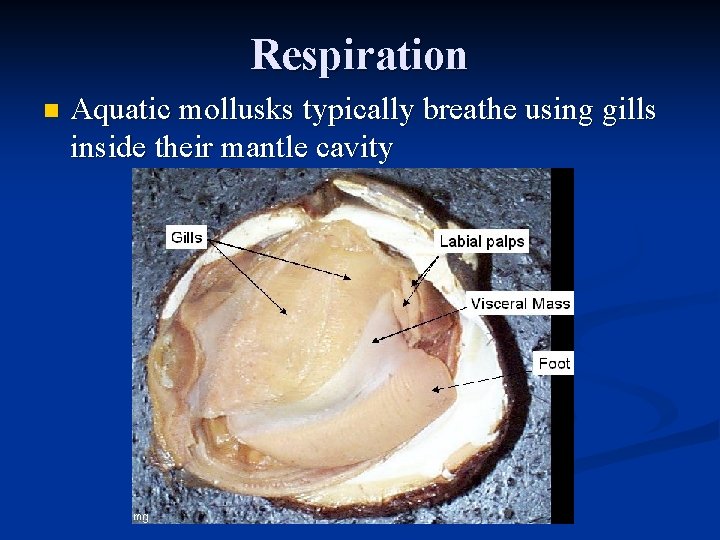
Respiration n Aquatic mollusks typically breathe using gills inside their mantle cavity
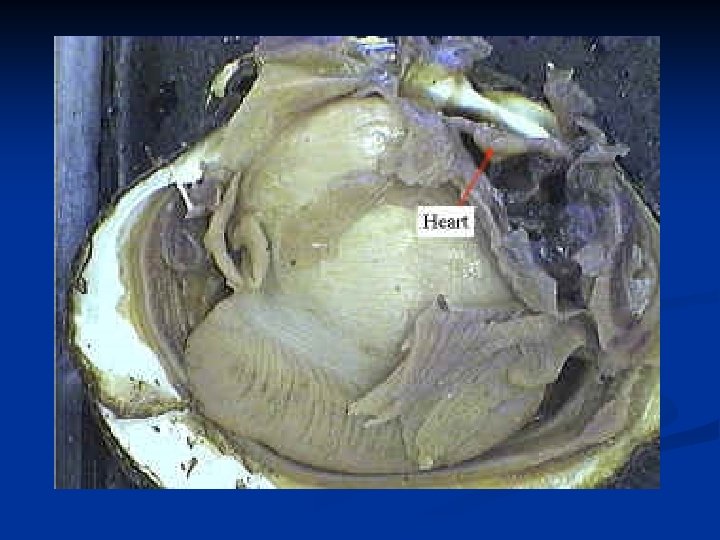
Circulation Oxygen & nutrients are carried to all parts of a mollusk’s body via an open or closed circulatory system n OPEN: Blood is pumped through vessels by a simple heart sinuses gills heart n Works best in slow-moving mollusks (snails & clams) b/c their demand for oxygen is low n
Excretion Cells release nitrogen-containing waste into the blood in the form of ammonia n Nephridia: tubular structures that collect fluids from the coelom and exchange salts and other substances with body tissues as the fluid passes along the tubules for excretion. n
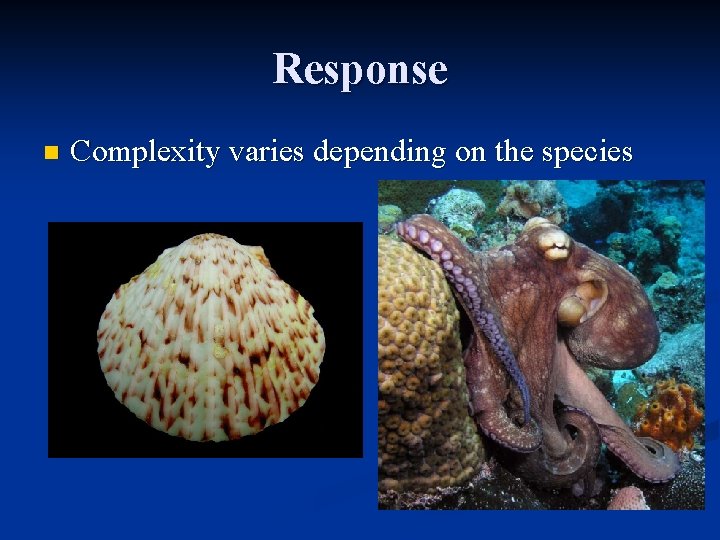
Response n Complexity varies depending on the species
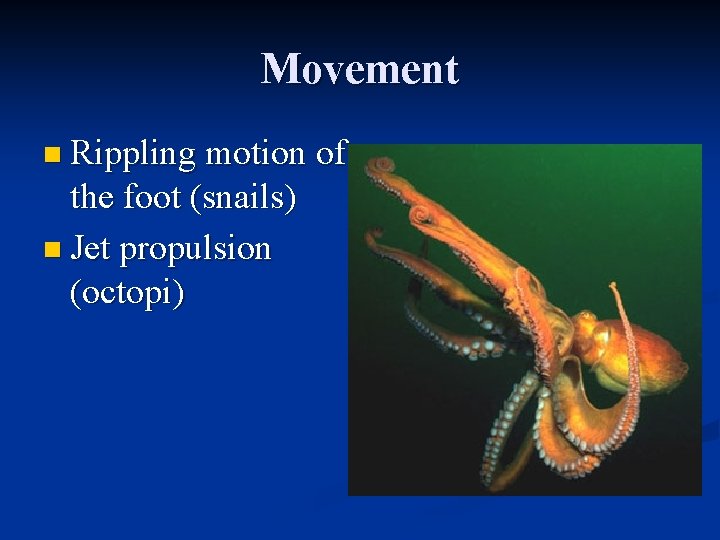
Movement n Rippling motion of the foot (snails) n Jet propulsion (octopi)
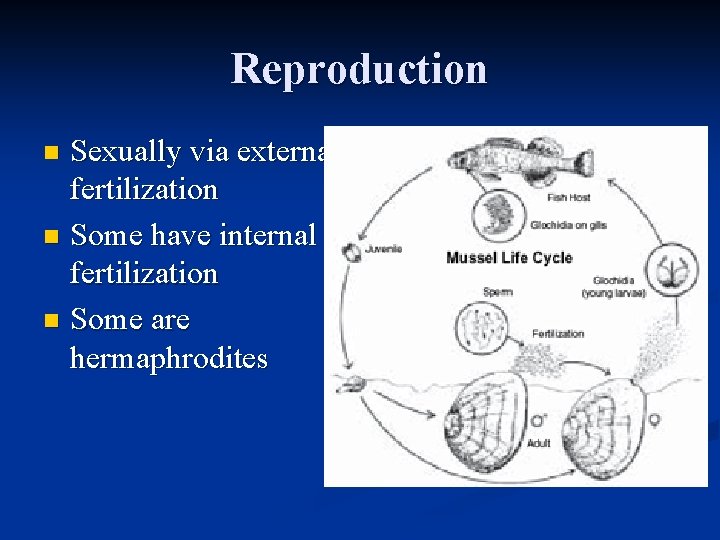
Reproduction Sexually via external fertilization n Some have internal fertilization n Some are hermaphrodites n
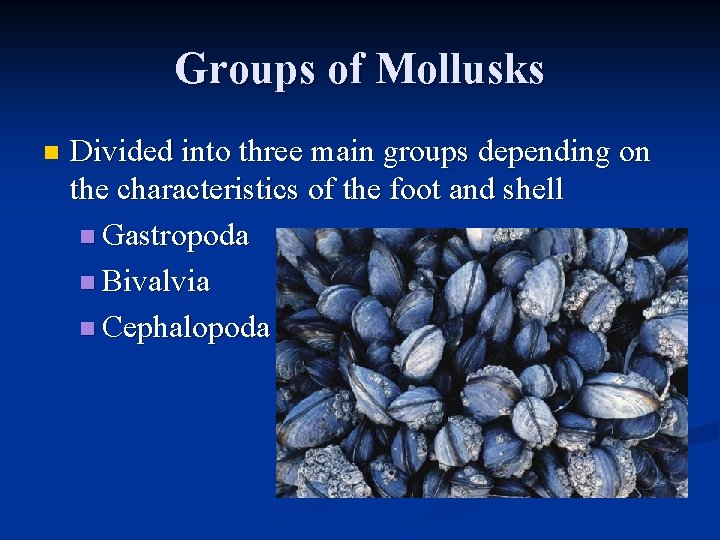
Groups of Mollusks n Divided into three main groups depending on the characteristics of the foot and shell n Gastropoda n Bivalvia n Cephalopoda
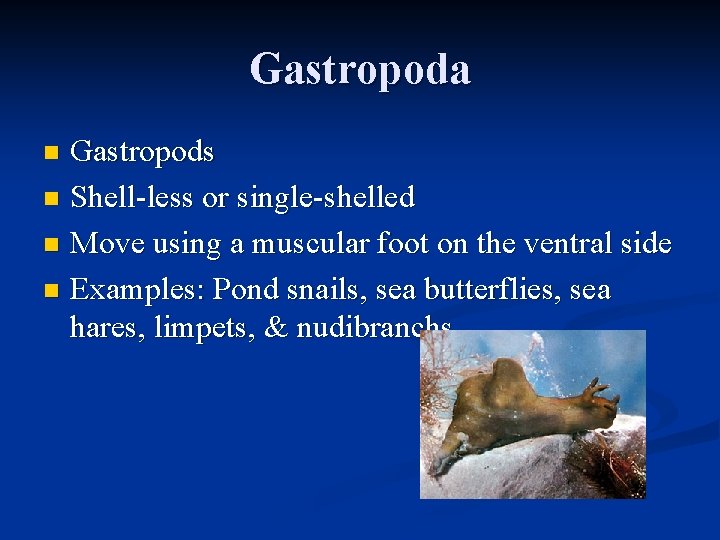
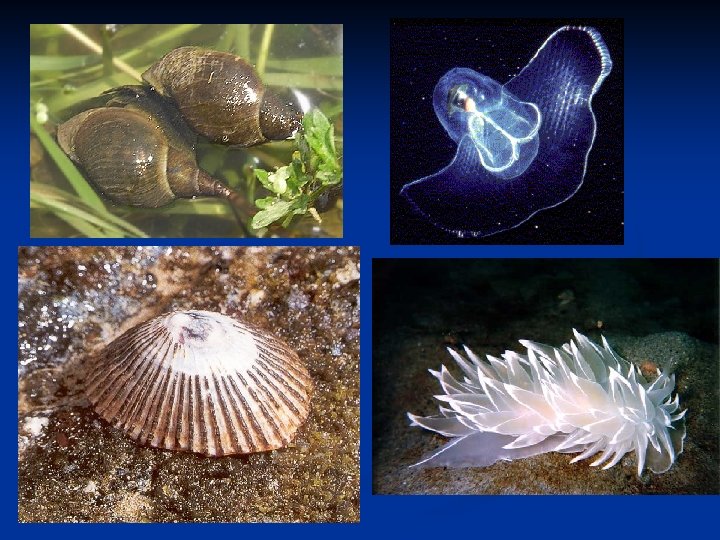
Gastropoda Gastropods n Shell-less or single-shelled n Move using a muscular foot on the ventral side n Examples: Pond snails, sea butterflies, sea hares, limpets, & nudibranchs n
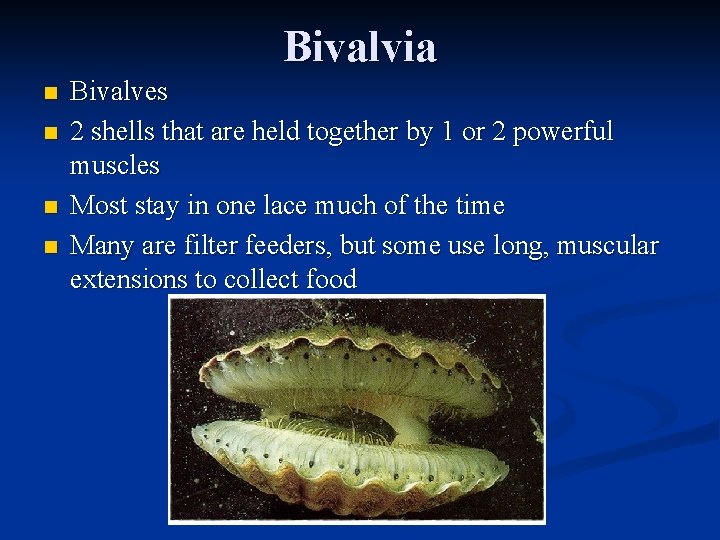
Bivalvia n n Bivalves 2 shells that are held together by 1 or 2 powerful muscles Most stay in one lace much of the time Many are filter feeders, but some use long, muscular extensions to collect food
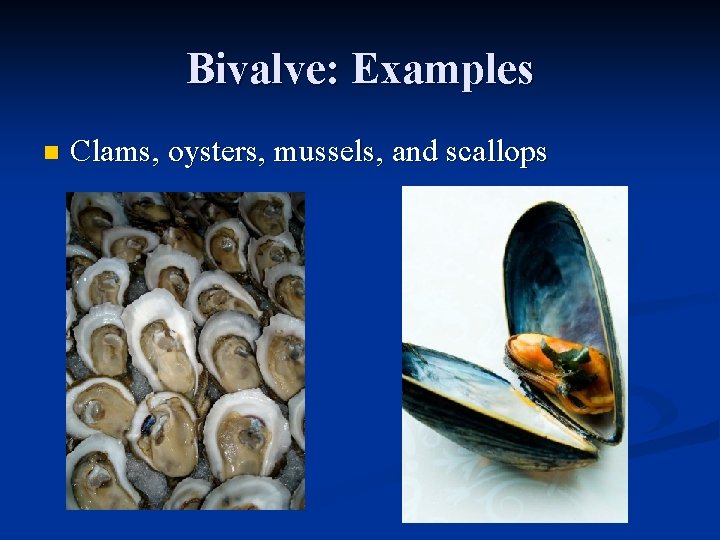
Bivalve: Examples n Clams, oysters, mussels, and scallops
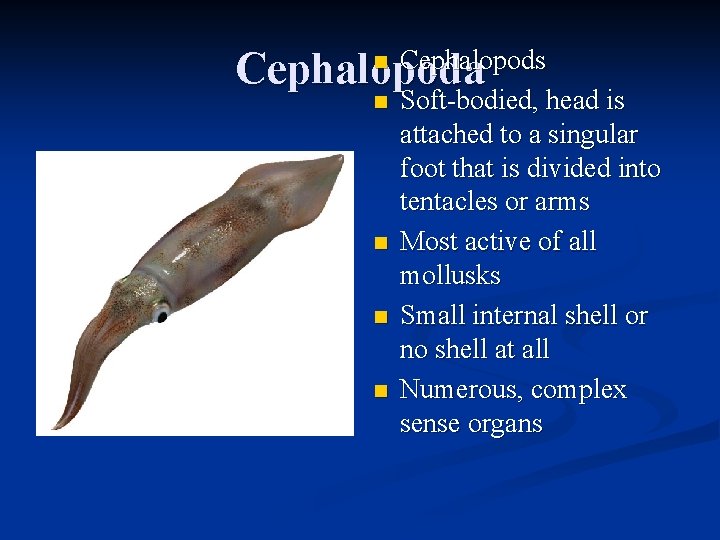
n Cephalopods Cephalopoda n n Soft-bodied, head is attached to a singular foot that is divided into tentacles or arms Most active of all mollusks Small internal shell or no shell at all Numerous, complex sense organs
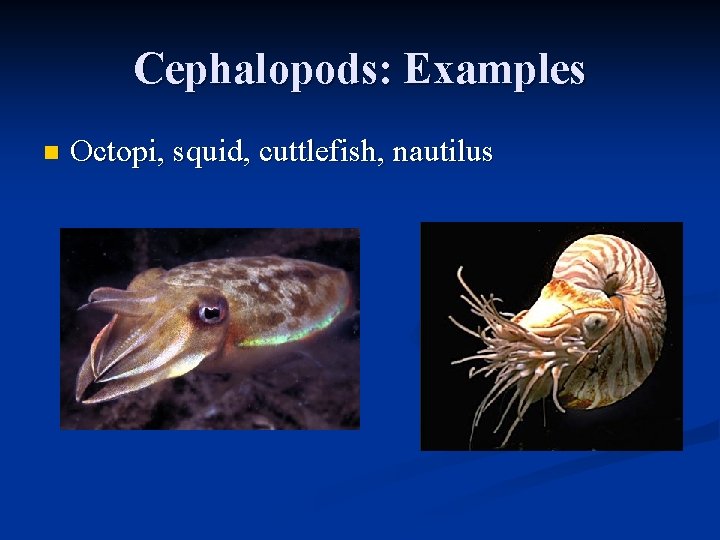
Cephalopods: Examples n Octopi, squid, cuttlefish, nautilus
- Slides: 21