
Mollusks The soft bodied animals Characteristics Visceral Mass
Mollusks The “soft bodied” animals
Characteristics • Visceral Mass- contains the organs- the “soft bodied” part • Mantle- makes a shell in most organisms. • Foot- muscular lower part used for movement • Shell in most • Radula - tongue-like structure, sharp • Head area- that contains the brain and sense organs • Systems: digestive, muscle, nervous, circulatory, reproductive, respiratory (gills)

Examples • Gastropod (also called univalves)“stomach-foot”-- looks like the crawl on their “stomach” • Open circulatory system Snails Slugs
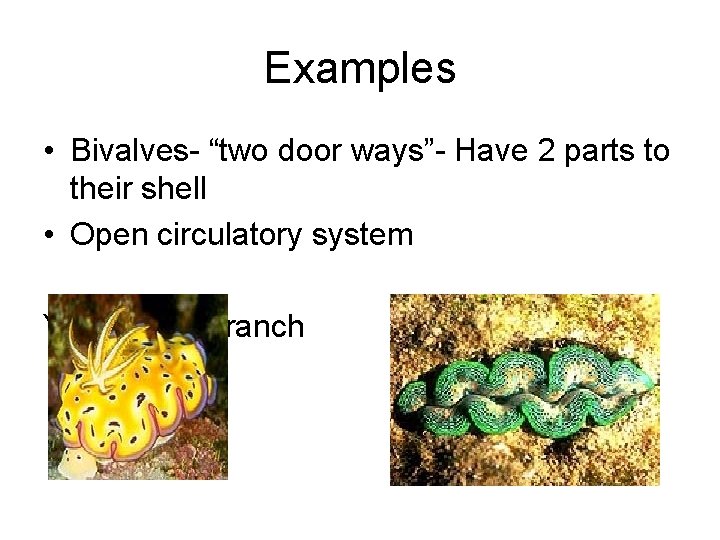
Examples • Bivalves- “two door ways”- Have 2 parts to their shell • Open circulatory system Yellow nudibranch Giant clam
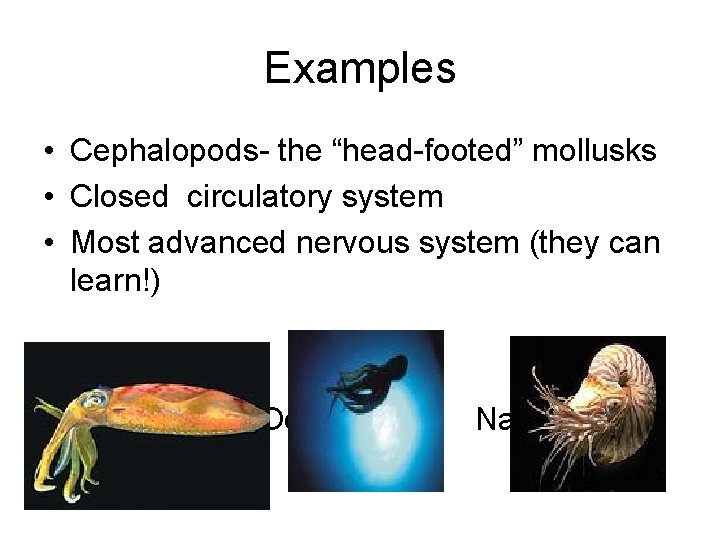
Examples • Cephalopods- the “head-footed” mollusks • Closed circulatory system • Most advanced nervous system (they can learn!) Atlantic squid Octopus Nautilus
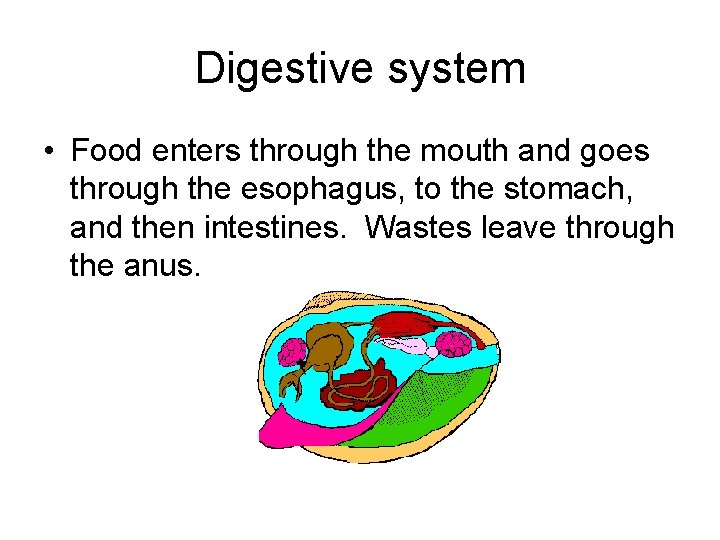
Digestive system • Food enters through the mouth and goes through the esophagus, to the stomach, and then intestines. Wastes leave through the anus.
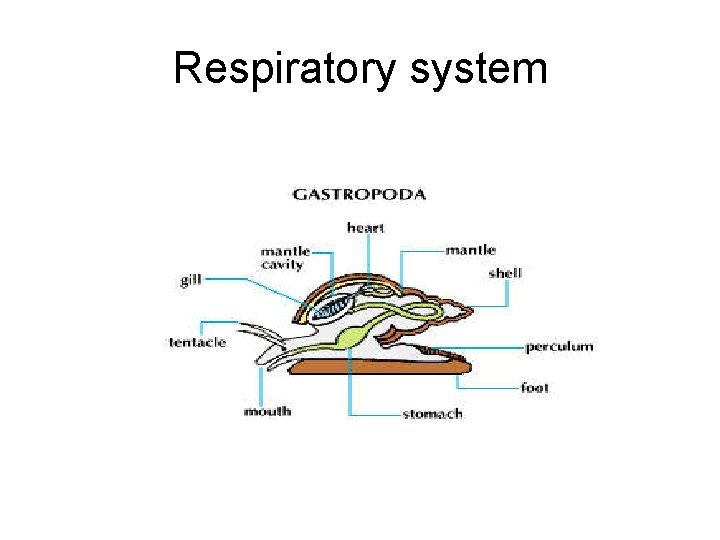
Respiratory system
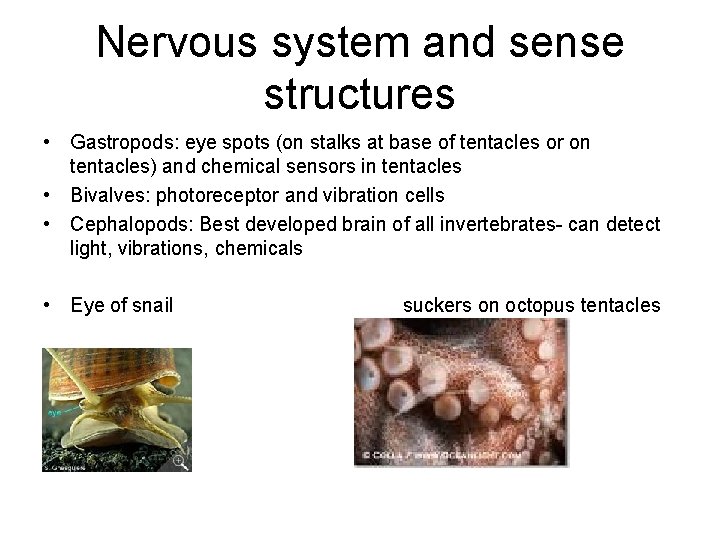
Nervous system and sense structures • Gastropods: eye spots (on stalks at base of tentacles or on tentacles) and chemical sensors in tentacles • Bivalves: photoreceptor and vibration cells • Cephalopods: Best developed brain of all invertebrates- can detect light, vibrations, chemicals • Eye of snail suckers on octopus tentacles
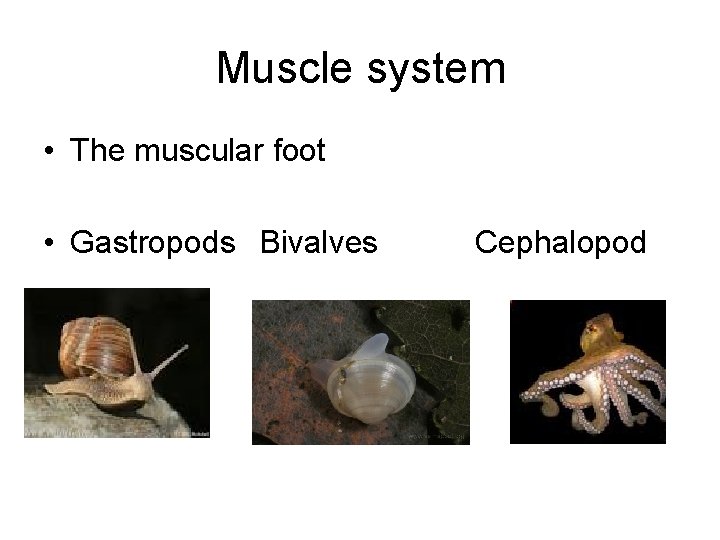
Muscle system • The muscular foot • Gastropods Bivalves Cephalopod
Mollusk defenses • Changing color. – Cephalopods have an amazing ability to change color very rapidly. – Chromatophores, pigment-filled bags, are found in the skin and expand contract to reveal or conceal small dots of color.
- Slides: 10