
Mollusks Polyplacophora Gastropoda Bivalvia Cephalopoda Eucoelomates Trochophore Larva
Mollusks Polyplacophora Gastropoda Bivalvia Cephalopoda
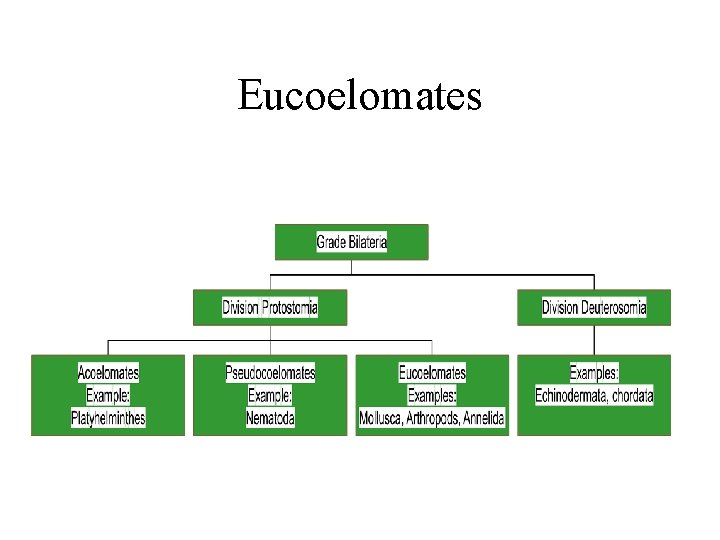
Eucoelomates
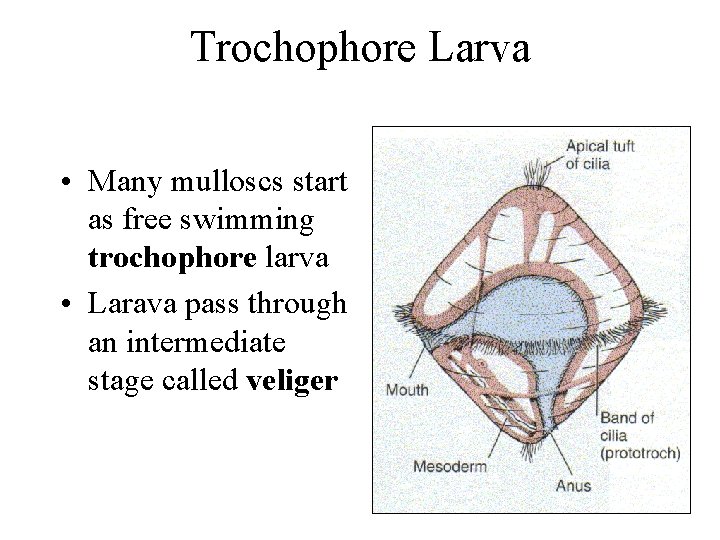
Trochophore Larva • Many mulloscs start as free swimming trochophore larva • Larava pass through an intermediate stage called veliger
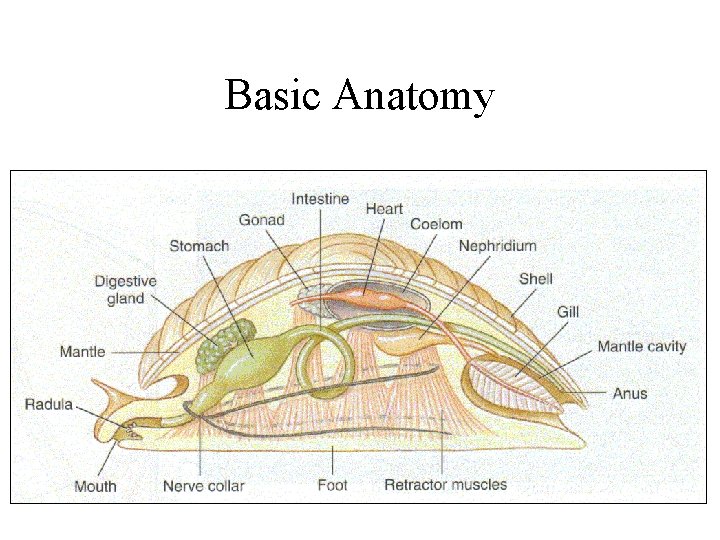
Basic Anatomy
Body Plan • Head/Foot – Sense organs, locomotion, mouth • Visceral Mass – Organ systems • Mantle – Secretes shell – Gaseous exchange (gills or lungs)
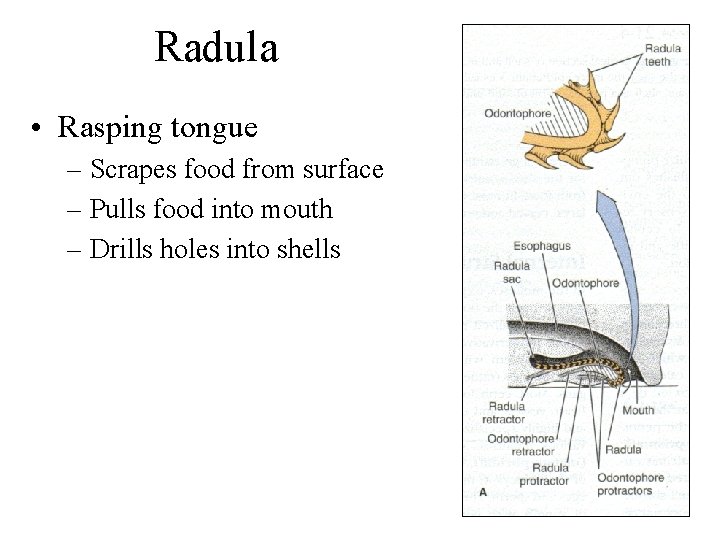
Radula • Rasping tongue – Scrapes food from surface – Pulls food into mouth – Drills holes into shells
Class Polyplacophora • Chitons • Shell made of plates • Organs – Three chambered heart – 2 kidneys – Mouth and anus open at opposite ends
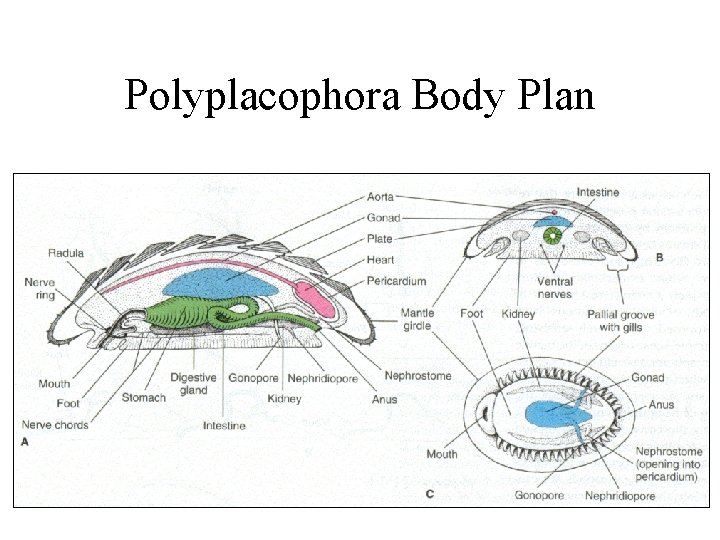
Polyplacophora Body Plan
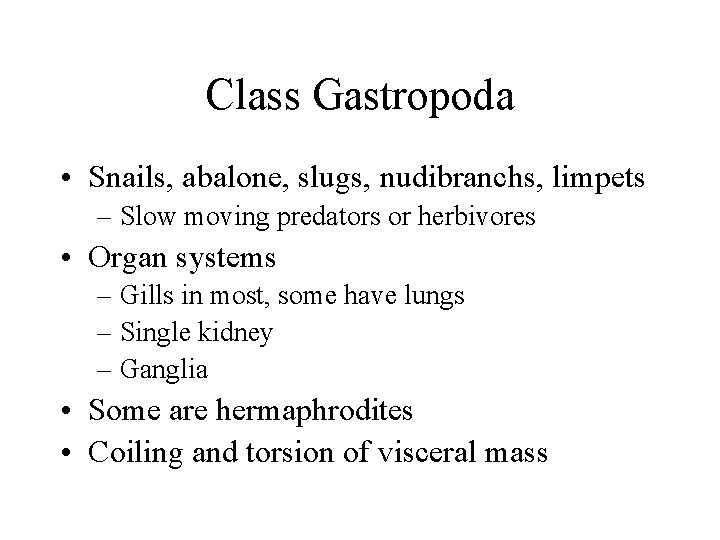
Class Gastropoda • Snails, abalone, slugs, nudibranchs, limpets – Slow moving predators or herbivores • Organ systems – Gills in most, some have lungs – Single kidney – Ganglia • Some are hermaphrodites • Coiling and torsion of visceral mass
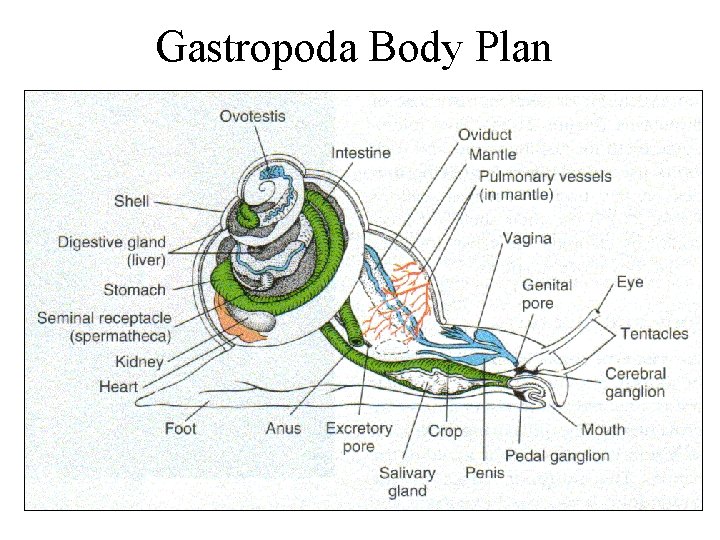
Gastropoda Body Plan
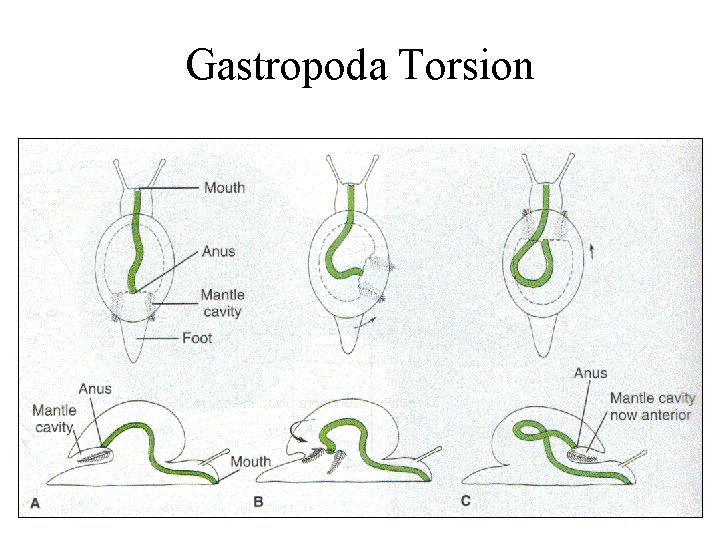
Gastropoda Torsion
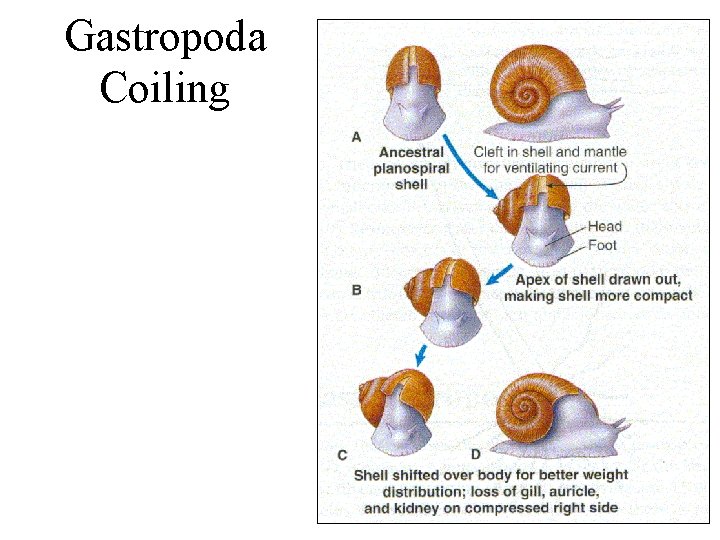
Gastropoda Coiling
Class Bivalvia • Clams, muscles, scallops – Laterally compressed – Shell in two halves, hinged – Suspension feeders • Organ systems – Three chambered heart – Three small ganglia – Scallops have multiple complex eyes
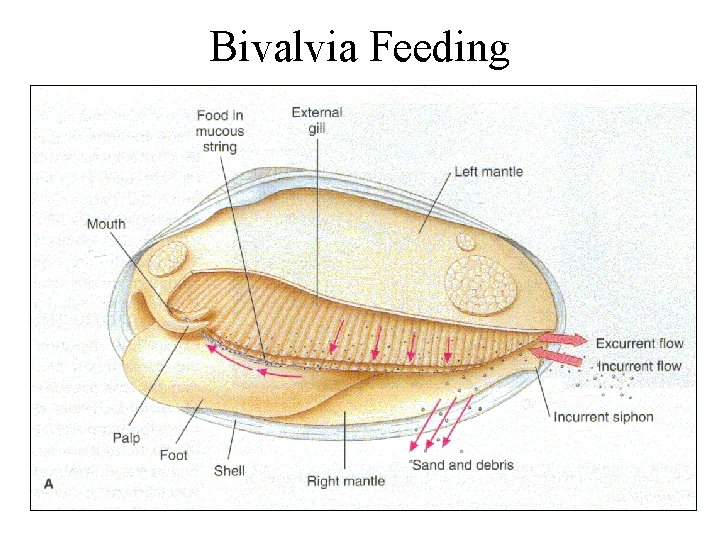
Bivalvia Feeding
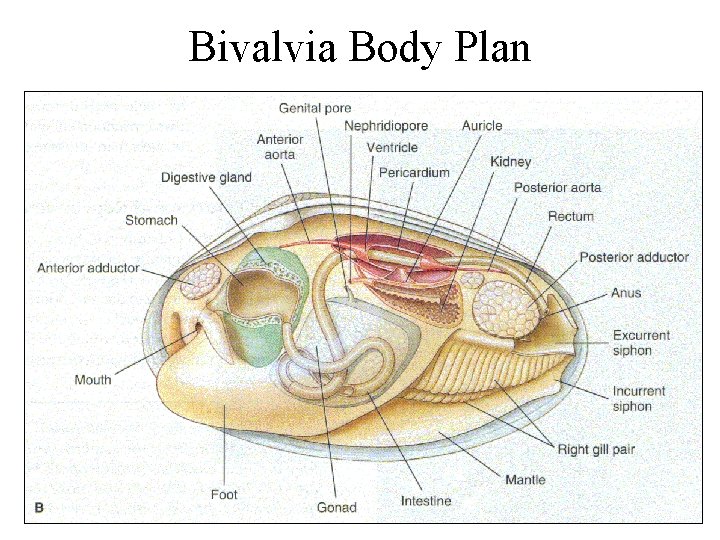
Bivalvia Body Plan
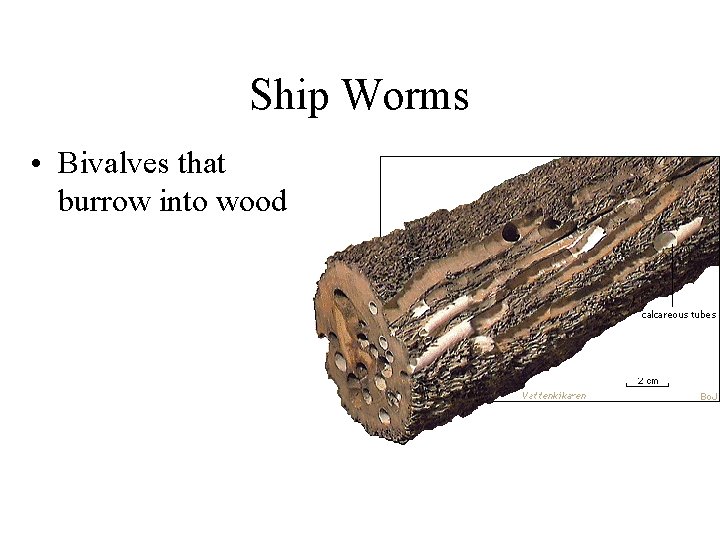
Ship Worms • Bivalves that burrow into wood
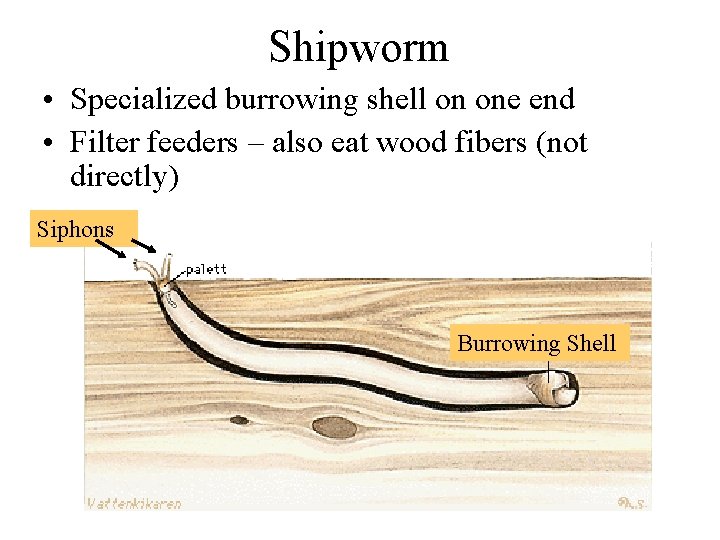
Shipworm • Specialized burrowing shell on one end • Filter feeders – also eat wood fibers (not directly) Siphons Burrowing Shell
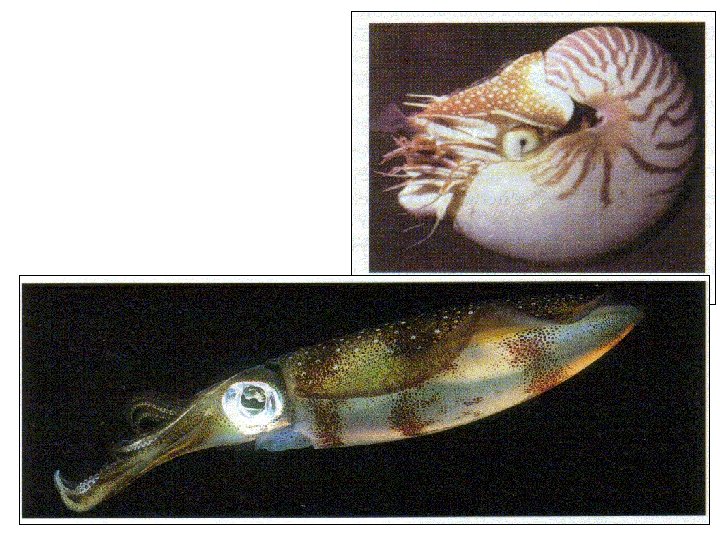
Class Cephalopoda • Octopus, squid, nautilus – Foot developed into tentacles – Very mobile predators • Organ systems – Highly advanced brain and eyes – Closed circulatory system
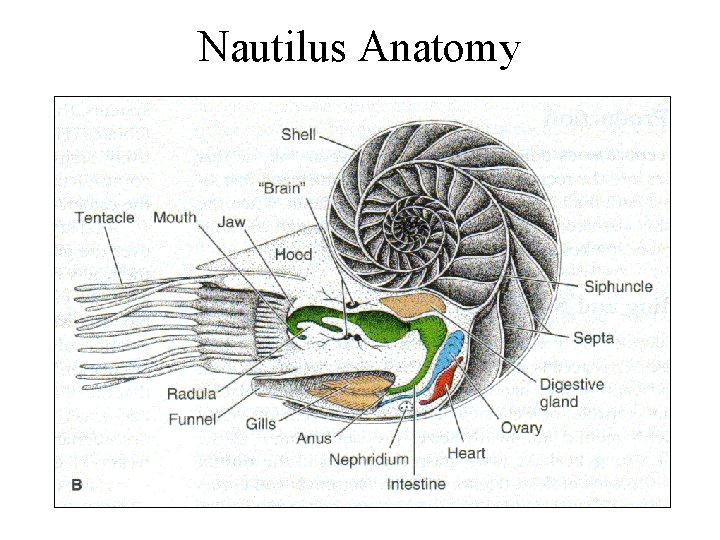
Nautilus Anatomy
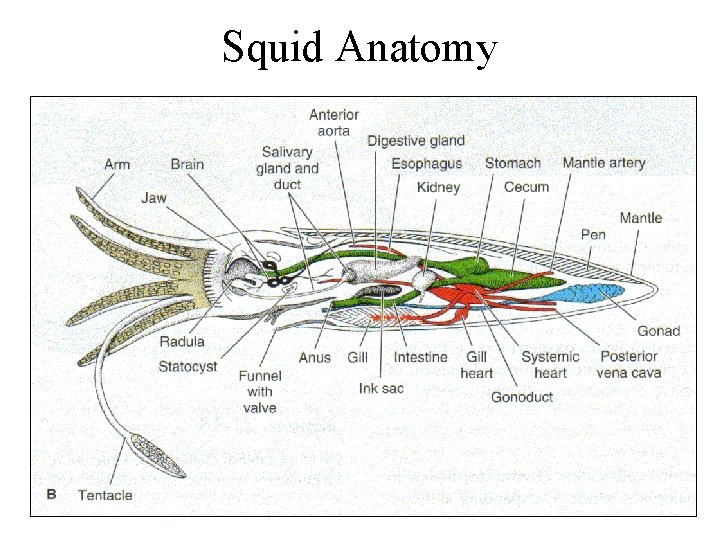
Squid Anatomy
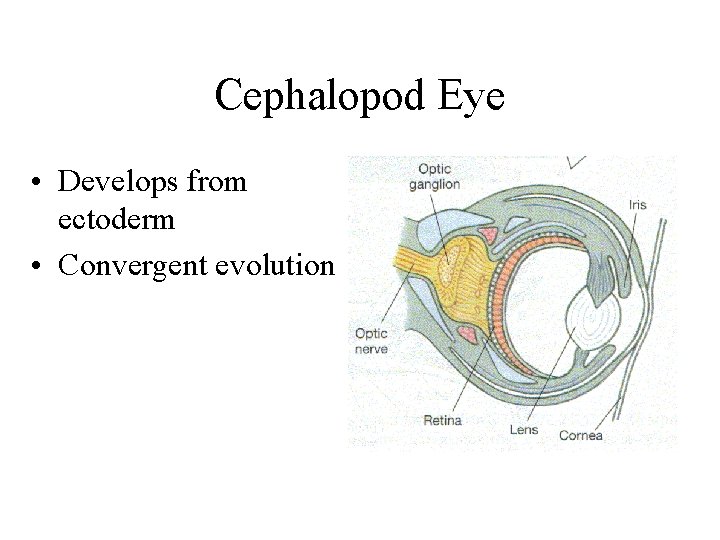
Cephalopod Eye • Develops from ectoderm • Convergent evolution
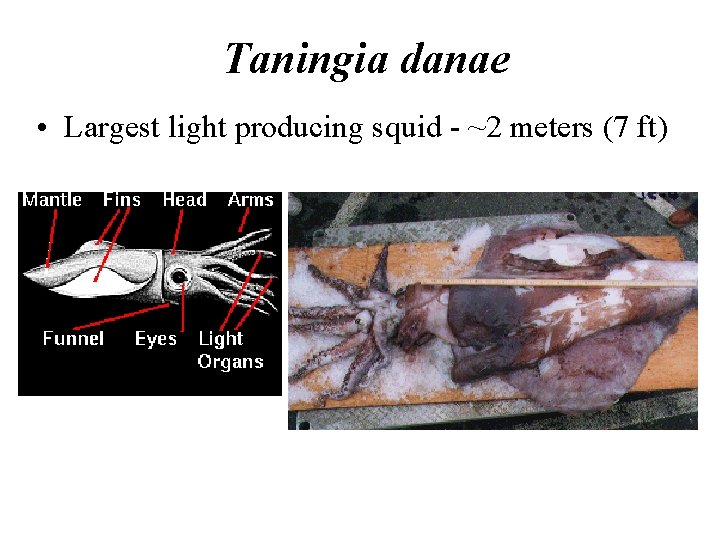
Taningia danae • Largest light producing squid - ~2 meters (7 ft)
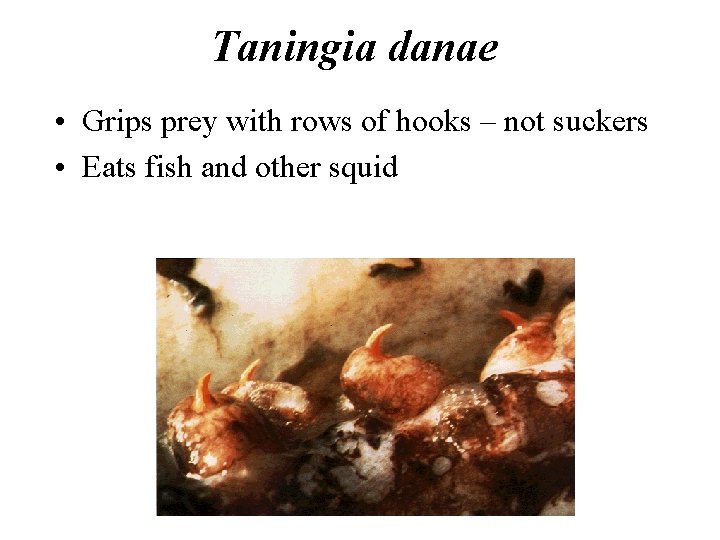
Taningia danae • Grips prey with rows of hooks – not suckers • Eats fish and other squid
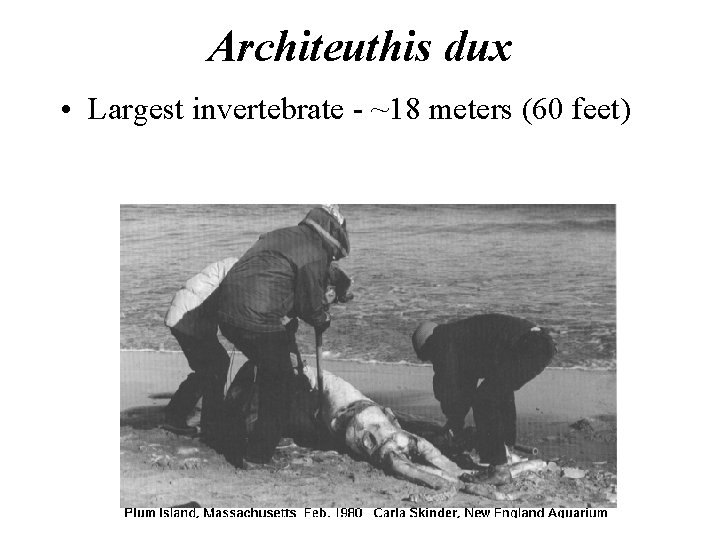
Architeuthis dux • Largest invertebrate - ~18 meters (60 feet)
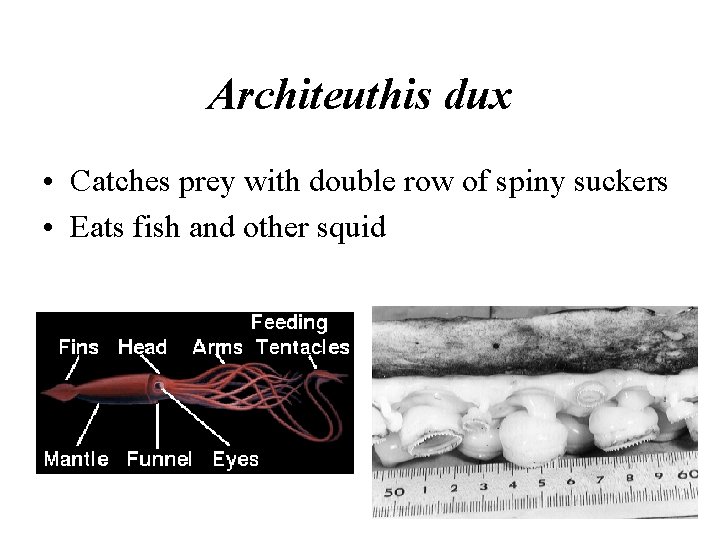
Architeuthis dux • Catches prey with double row of spiny suckers • Eats fish and other squid
- Slides: 26