
Mollusks Habitat marine and fresh water terrestrial Body
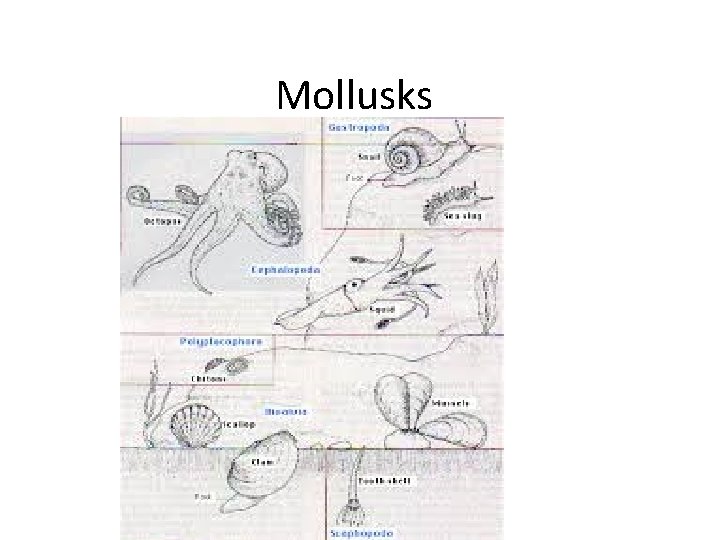
Mollusks
• Habitat: marine and fresh water; terrestrial • Body Plan: Mollusks have a soft, unsegmented body and often move with a strong muscular foot on its ventral surface.
• The visceral mass is a central section that contains the mollusk’s organs. • The mantle is a heavy fold of tissue that forms the outer layer of the body. • Finally, every mollusk has a muscular region called a foot, which is used primarily for locomotion.
Many mollusks have either one or two shells that serve as an exoskeleton, protecting their soft body. All mollusks except bivalves have a radula, a tongue-like organ located in their mouth. The radula has thousands of pointed, backwardcurving teeth arranged in rows.
• Class Gastropod • Class Bivalvia • Class Cephalopoda
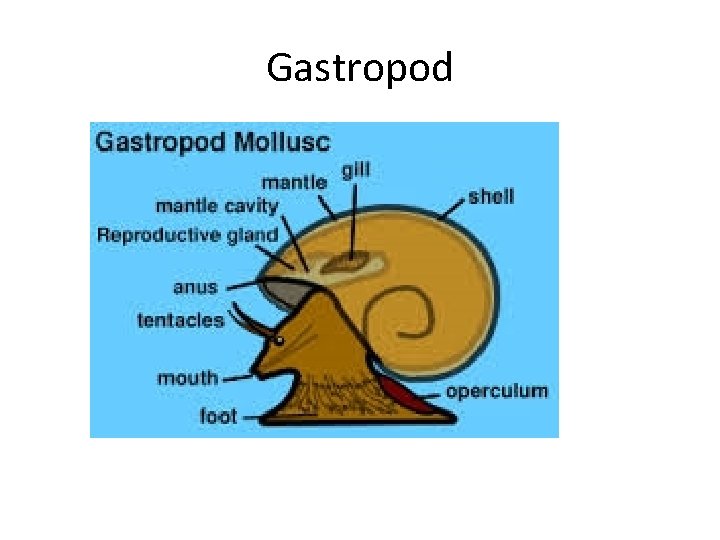
Gastropod

• snails, slugs, limpets, nudibranchs (sea slugs), and conch • Shell-less or single shelled • Move by a muscular foot • Some are poisonous, bright colors
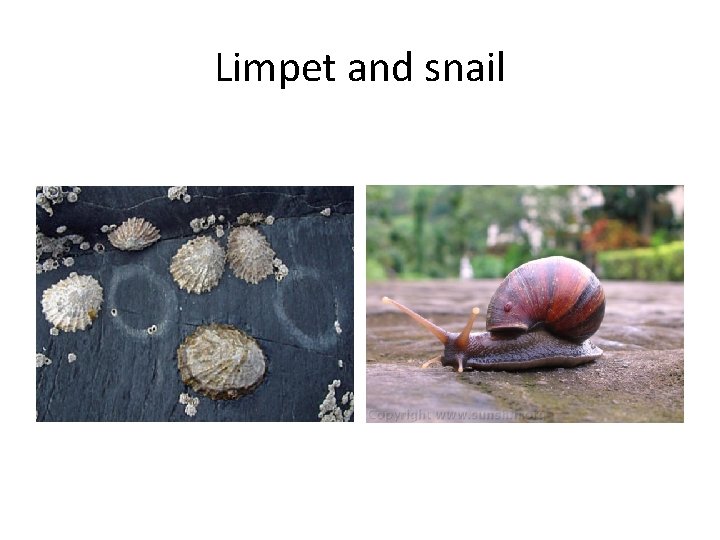
Limpet and snail

Slug and nudibranchs
• Bivalvia- scallop, mussel, clam, oyster • Bivalves are covered by a hard protective hinged shell • Bivalves are unique among the mollusks because they do not have a distinct head region or a radula. • The have two thick muscles, the adductor muscles, connect the valves. When these muscles are contracted, they cause the valves to close tightly
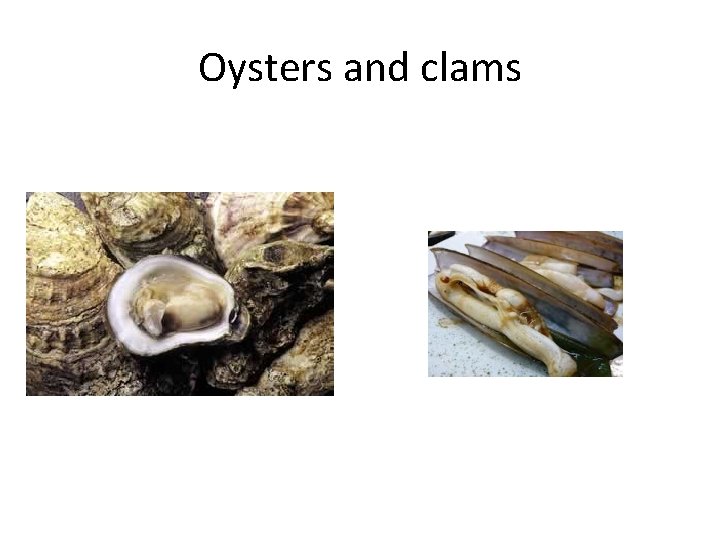
Oysters and clams
• Cephalopoda- nautilus, squid, octopus, cuttlefish • Cephalopod means “head-foot”. • soft-bodied , head is attached to foot • foot is divided into tentacles with sucking disks • small internal shells or no shell at all
• Nautilus is only present day cephalopod with shell • Squid have a modified shell called a pen • Well developed eyes • most complex of the mollusks
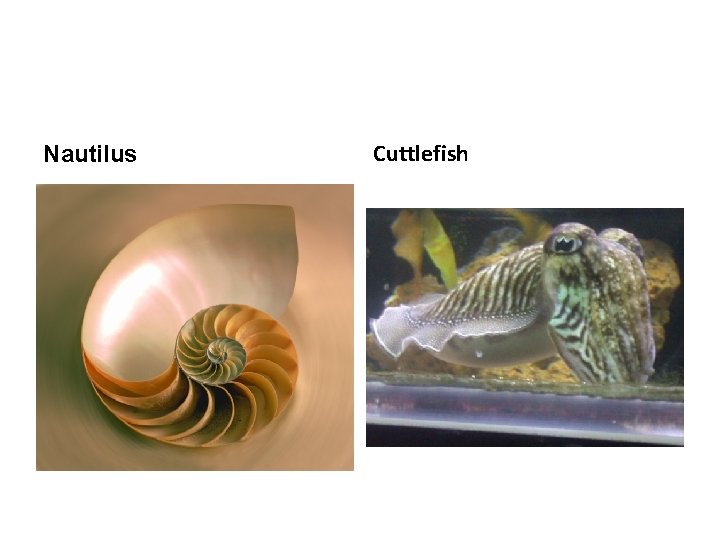
Nautilus Cuttlefish
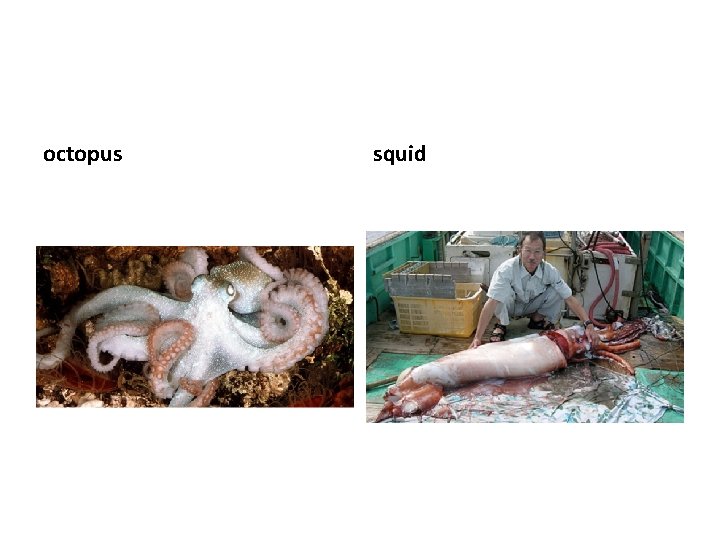
octopus squid
- Slides: 15