
Mollusks Examples Mussels scallops oysters Clams abalone Limpets
Mollusks
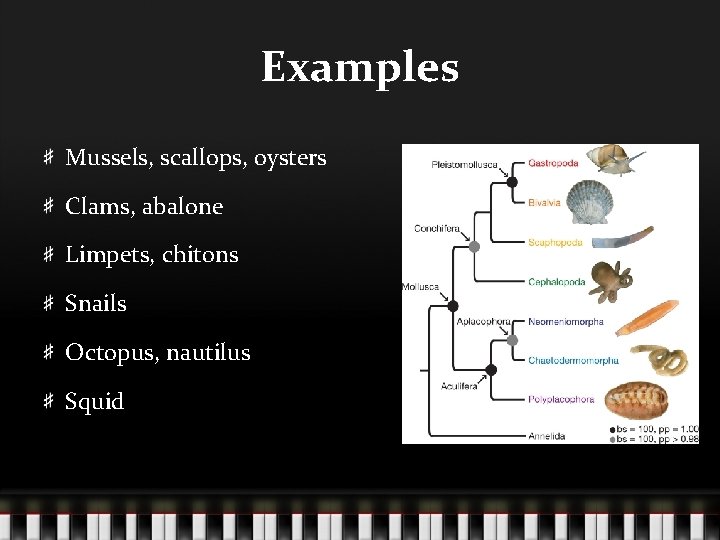
Examples Mussels, scallops, oysters Clams, abalone Limpets, chitons Snails Octopus, nautilus Squid
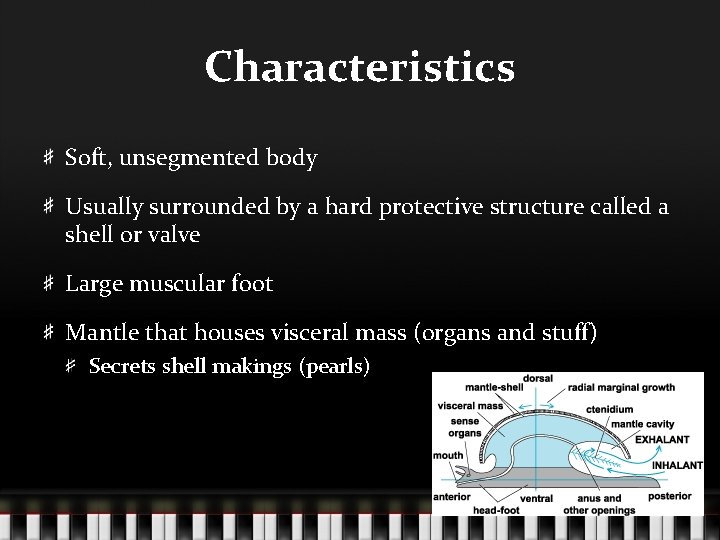
Characteristics Soft, unsegmented body Usually surrounded by a hard protective structure called a shell or valve Large muscular foot Mantle that houses visceral mass (organs and stuff) Secrets shell makings (pearls)
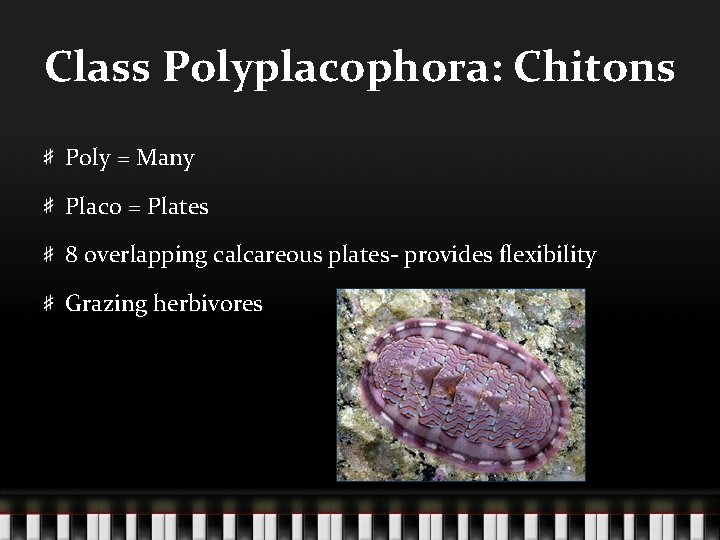
Class Polyplacophora: Chitons Poly = Many Placo = Plates 8 overlapping calcareous plates- provides flexibility Grazing herbivores
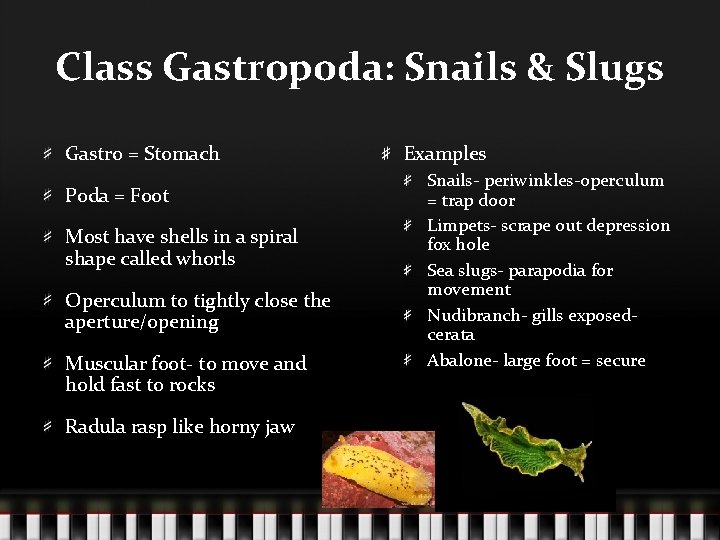
Class Gastropoda: Snails & Slugs Gastro = Stomach Poda = Foot Most have shells in a spiral shape called whorls Operculum to tightly close the aperture/opening Muscular foot- to move and hold fast to rocks Radula rasp like horny jaw Examples Snails- periwinkles-operculum = trap door Limpets- scrape out depression fox hole Sea slugs- parapodia for movement Nudibranch- gills exposedcerata Abalone- large foot = secure
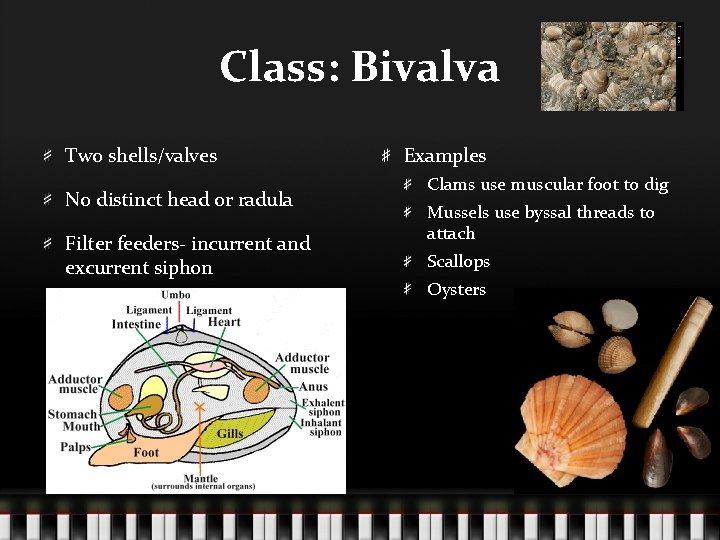
Class: Bivalva Two shells/valves No distinct head or radula Filter feeders- incurrent and excurrent siphon Examples Clams use muscular foot to dig Mussels use byssal threads to attach Scallops Oysters
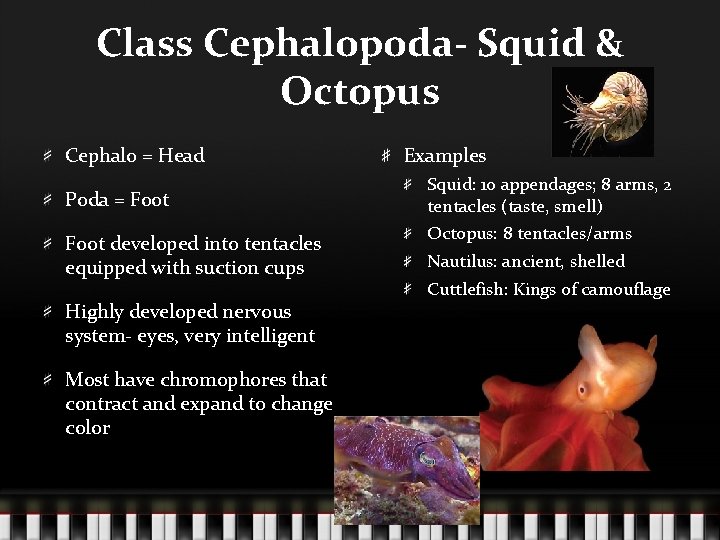
Class Cephalopoda- Squid & Octopus Cephalo = Head Poda = Foot developed into tentacles equipped with suction cups Highly developed nervous system- eyes, very intelligent Most have chromophores that contract and expand to change color Examples Squid: 10 appendages; 8 arms, 2 tentacles (taste, smell) Octopus: 8 tentacles/arms Nautilus: ancient, shelled Cuttlefish: Kings of camouflage
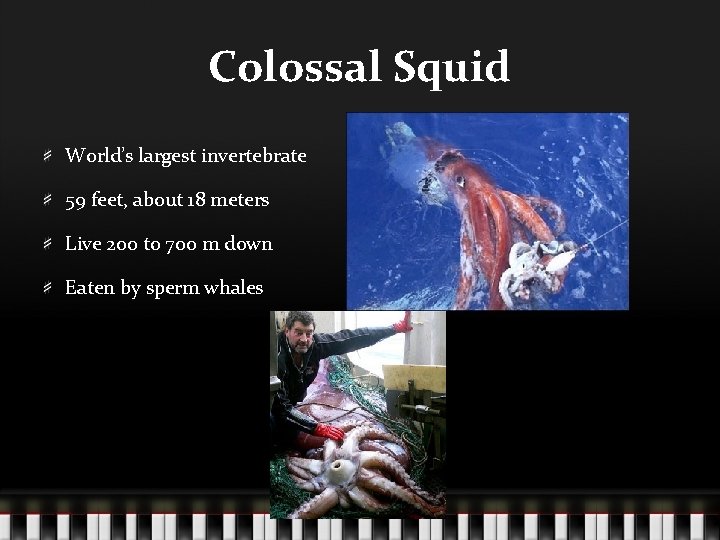
Colossal Squid World’s largest invertebrate 59 feet, about 18 meters Live 200 to 700 m down Eaten by sperm whales
- Slides: 8