
Molecule Compound Notes Most atoms are elements unless
- Slides: 32
Molecule & Compound Notes
Most atoms are elements unless they are combined with other atoms.
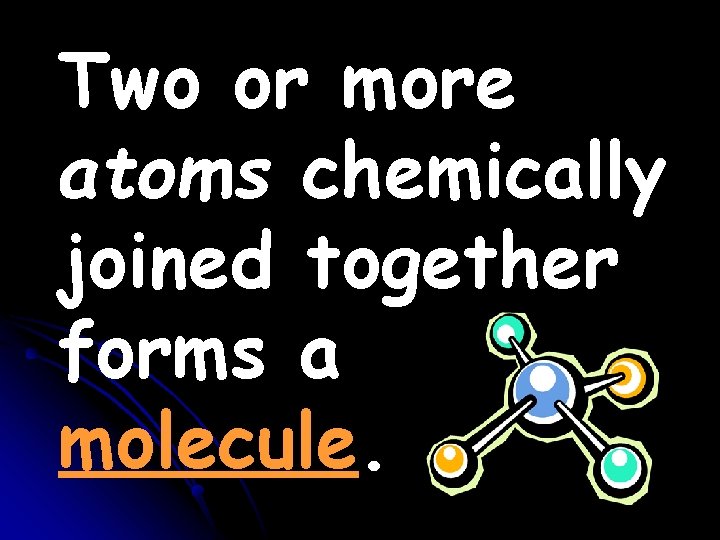
Two or more atoms chemically joined together forms a molecule.
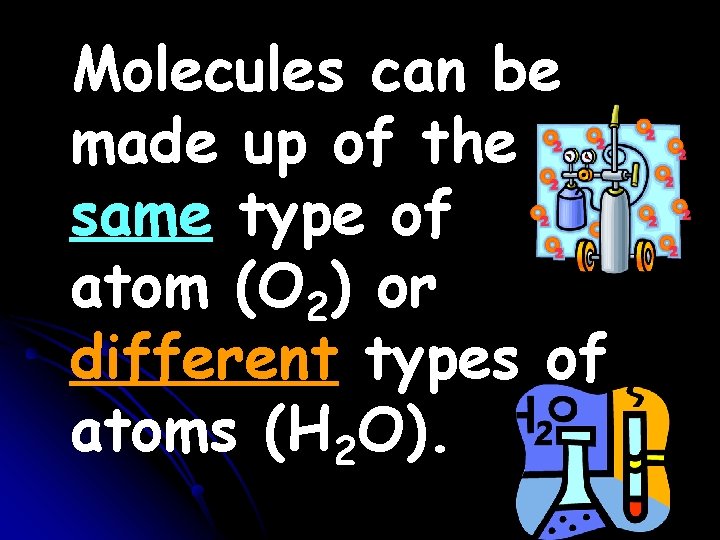
Molecules can be made up of the same type of atom (O 2) or different types of atoms (H 2 O).
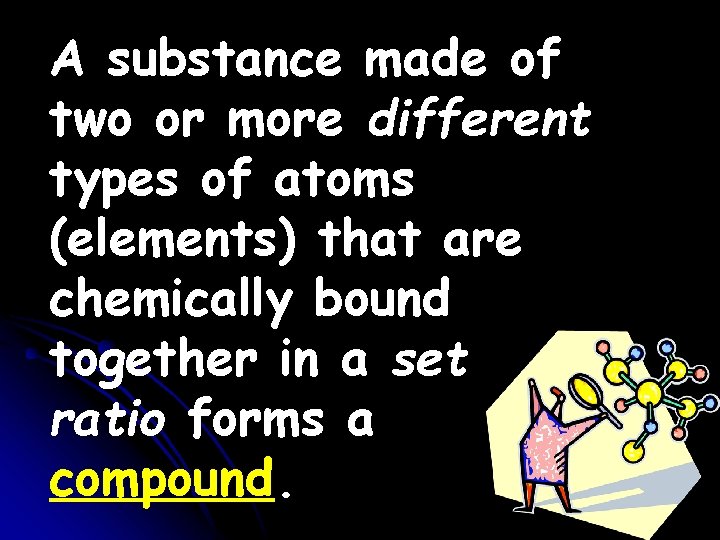
A substance made of two or more different types of atoms (elements) that are chemically bound together in a set ratio forms a compound.
Chemical bond Force that holds the atoms of molecules & compounds together.
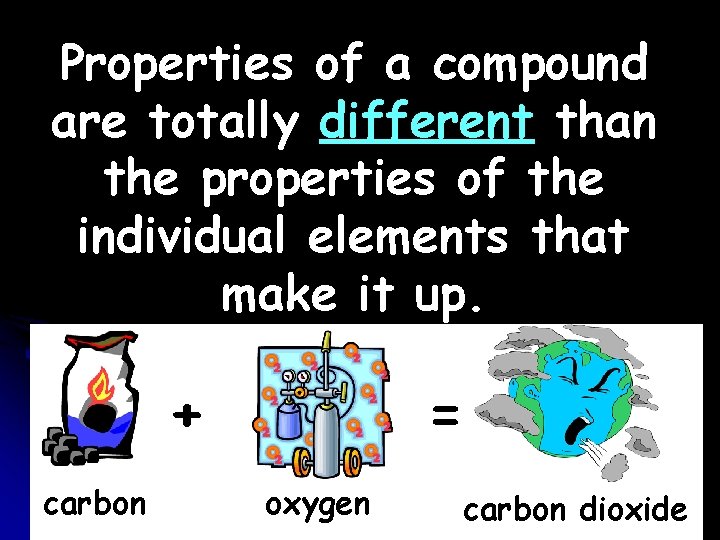
Properties of a compound are totally different than the properties of the individual elements that make it up. + carbon = oxygen carbon dioxide
Chemical formula Uses element symbols & subscripts to show the ratio of elements in a compound.
A substance made of two or more different types of atoms (elements) that are chemically bound together in a set ratio forms a compound.
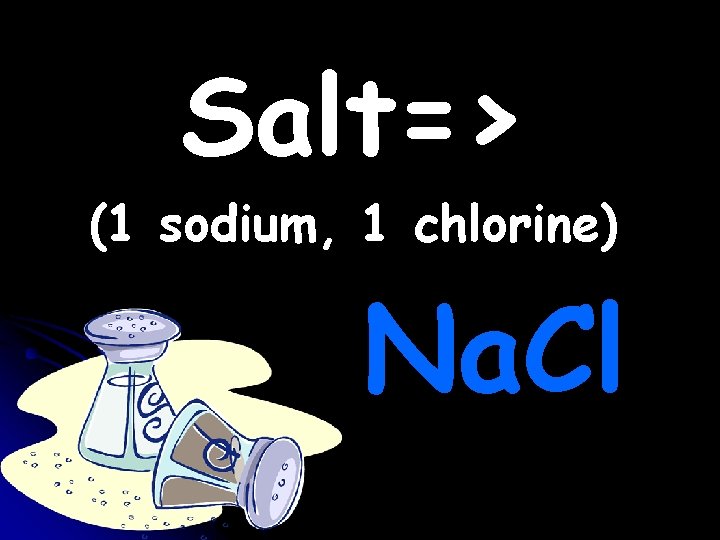
Salt=> (1 sodium, 1 chlorine) Na. Cl
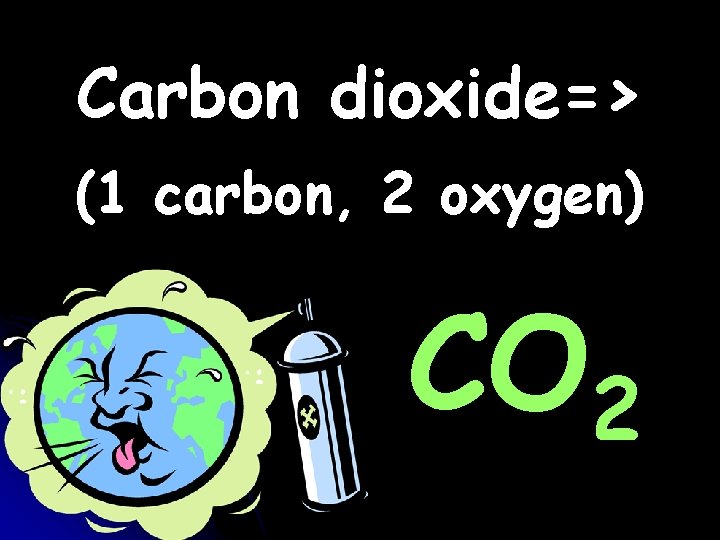
Carbon dioxide=> (1 carbon, 2 oxygen) CO 2
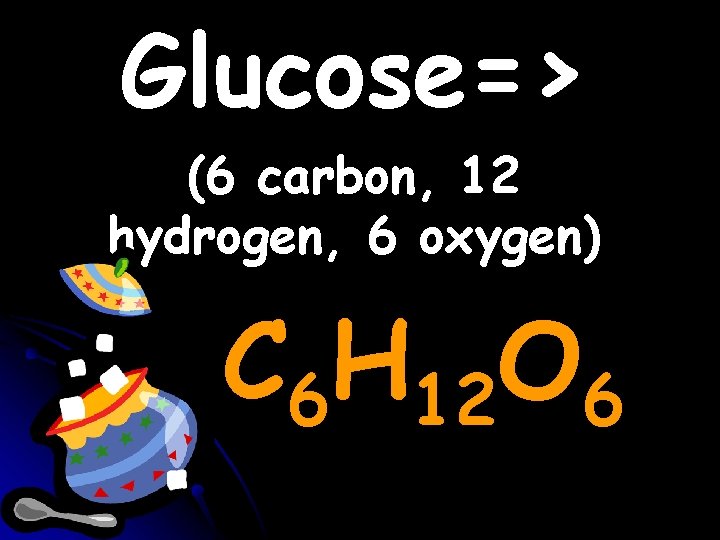
Glucose=> (6 carbon, 12 hydrogen, 6 oxygen) C 6 H 12 O 6
Chemical reaction Occurs when bonds are formed or broken=> requires or gives off energy.
Chemical equation Short, simple way to describe a chemical reactions using symbols & formulas instead of words.
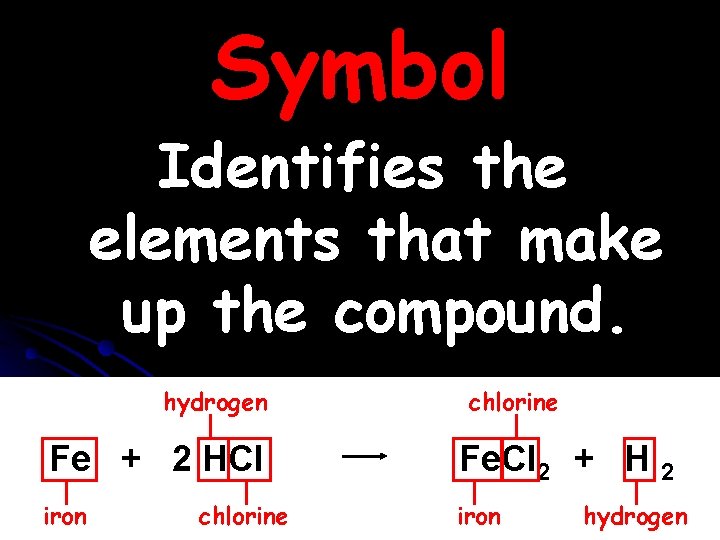
Symbol Identifies the elements that make up the compound. hydrogen chlorine Fe + 2 HCl Fe. Cl 2 + H 2 iron chlorine hydrogen
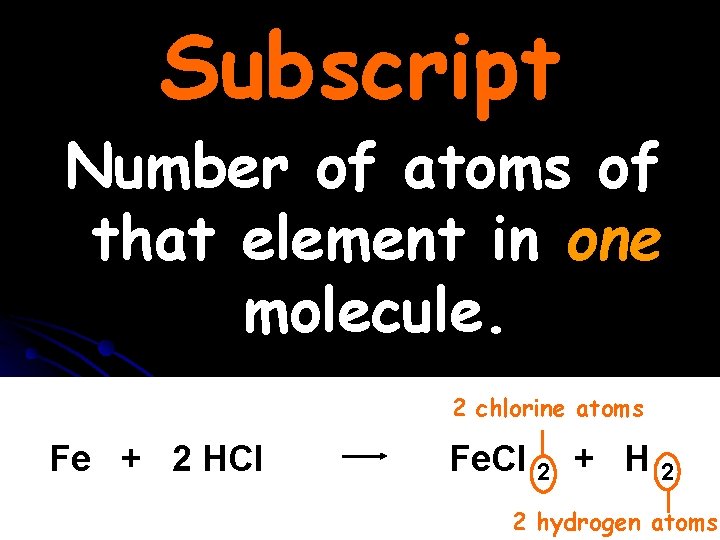
Subscript Number of atoms of that element in one molecule. 2 chlorine atoms Fe + 2 HCl Fe. Cl 2 + H 2 2 hydrogen atoms
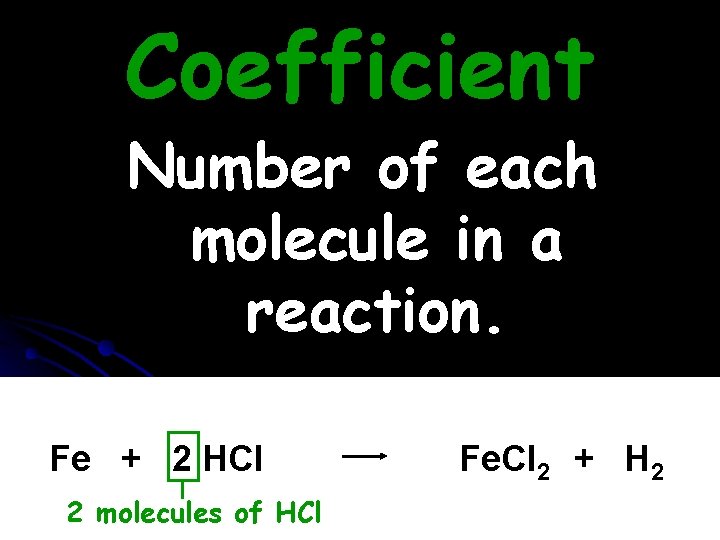
Coefficient Number of each molecule in a reaction. Fe + 2 HCl 2 molecules of HCl Fe. Cl 2 + H 2
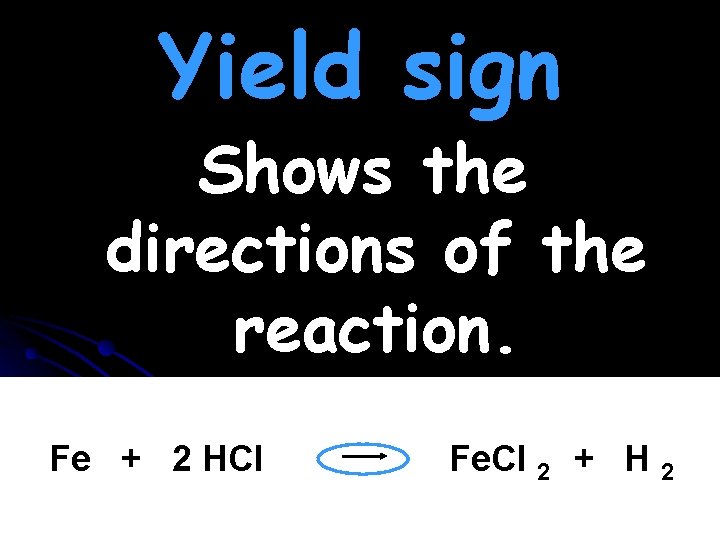
Yield sign Shows the directions of the reaction. Fe + 2 HCl Fe. Cl 2 + H 2
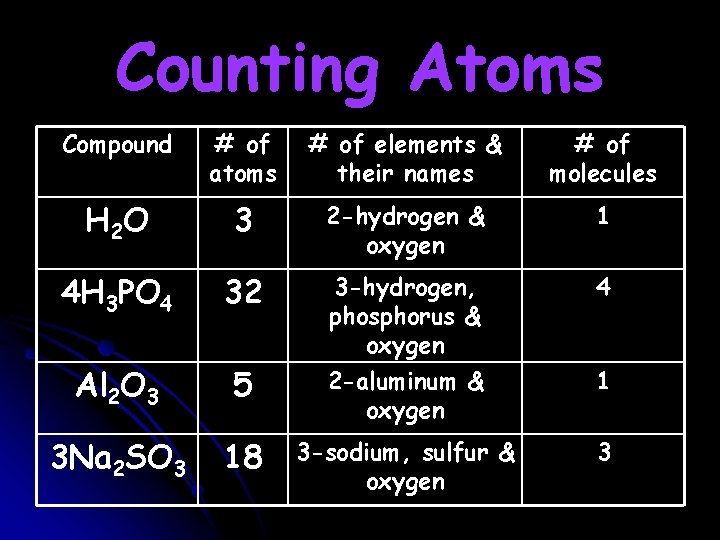
Counting Atoms Compound # of atoms # of elements & their names # of molecules H 2 O 3 2 -hydrogen & oxygen 1 4 H 3 PO 4 32 3 -hydrogen, phosphorus & oxygen 4 Al 2 O 3 5 2 -aluminum & oxygen 1 3 Na 2 SO 3 18 3 -sodium, sulfur & oxygen 3
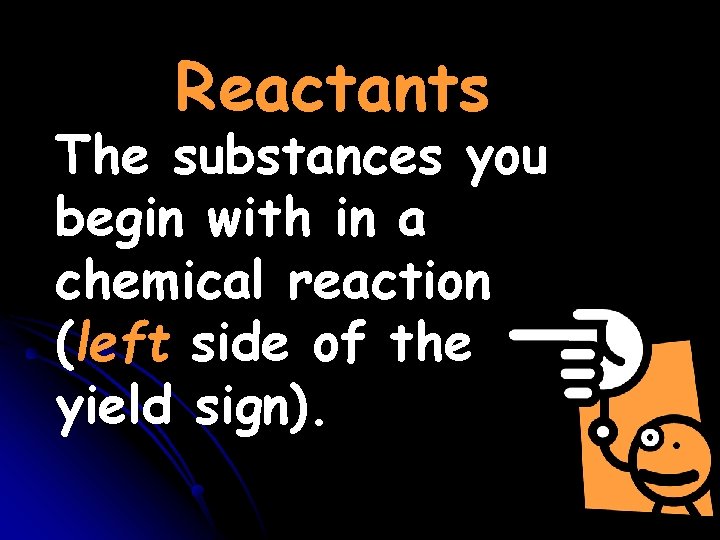
Reactants The substances you begin with in a chemical reaction (left side of the yield sign).
Products The substances you end with in a chemical reaction (right side of the yield sign).
Basic Rules for Balanced Equations
Every chemical compound has a formula that CANNOT be altered!
NEVER change a formula when balancing equations!!
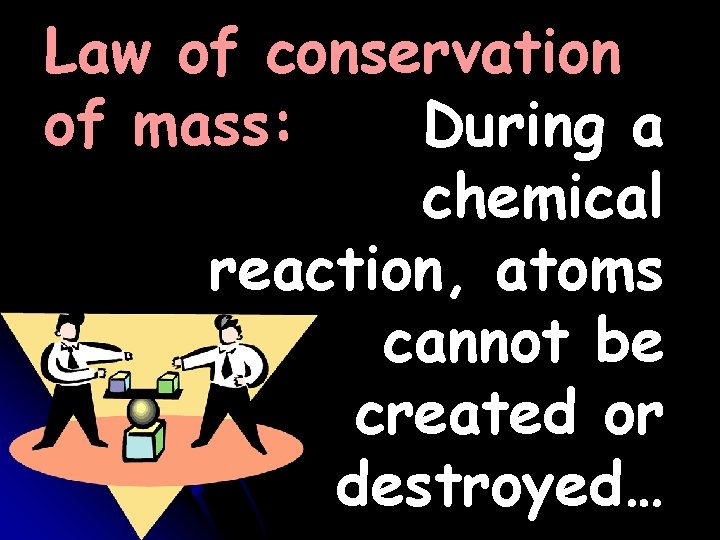
Law of conservation of mass: During a chemical reaction, atoms cannot be created or destroyed…
So the number of atoms at the beginning of a reaction MUST match the number at the end of the reaction!
Coefficients can be added before an element or molecule.
Subscripts are always found after an element or molecule & cannot be changed without changing the substance!
How can you tell that the following equation is not balanced?
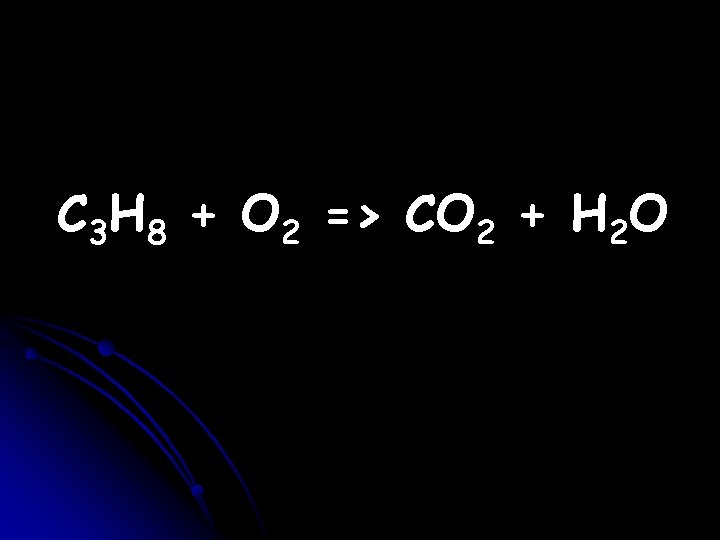
C 3 H 8 + O 2 => CO 2 + H 2 O
For fun… let’s see if you can balance it! (HINT: remember that you must have the same number of each atom on both sides!)
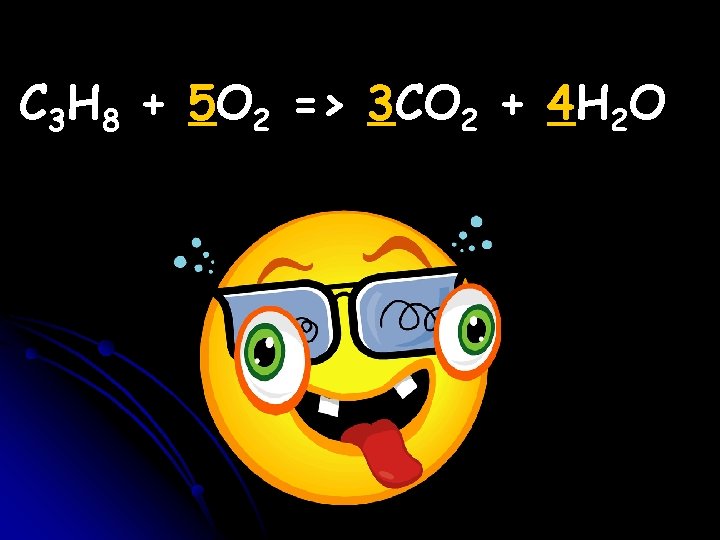
C 3 H 8 + 5 O 2 => 3 CO 2 + 4 H 2 O