
Molecular Mouse Genetics 11 Regulating development 2003 B
Molecular Mouse Genetics #11 Regulating development © 2003 B. Smith Frank Chan 23. May. 2019
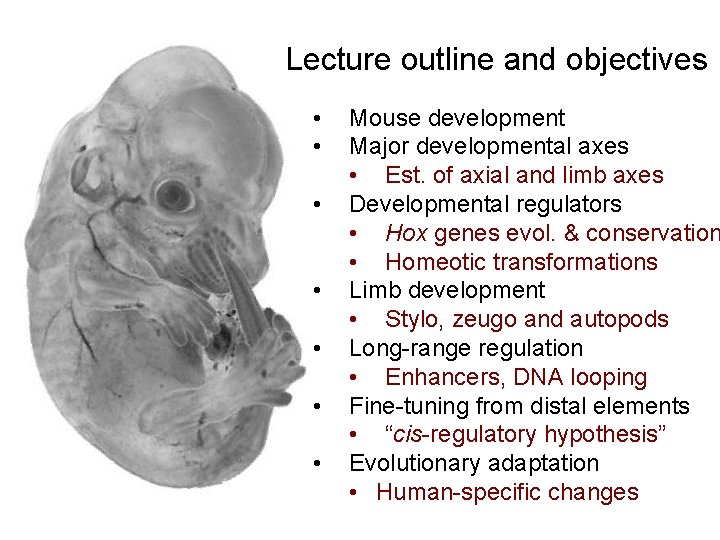
Lecture outline and objectives • • Mouse development Major developmental axes • Est. of axial and limb axes Developmental regulators • Hox genes evol. & conservation • Homeotic transformations Limb development • Stylo, zeugo and autopods Long-range regulation • Enhancers, DNA looping Fine-tuning from distal elements • “cis-regulatory hypothesis” Evolutionary adaptation • Human-specific changes
© 2003 B. Smith
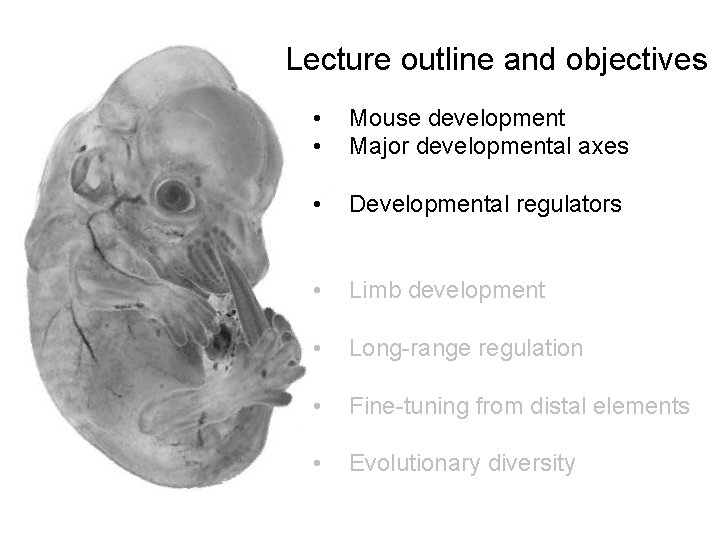
Lecture outline and objectives • • Mouse development Major developmental axes • Developmental regulators • Limb development • Long-range regulation • Fine-tuning from distal elements • Evolutionary diversity
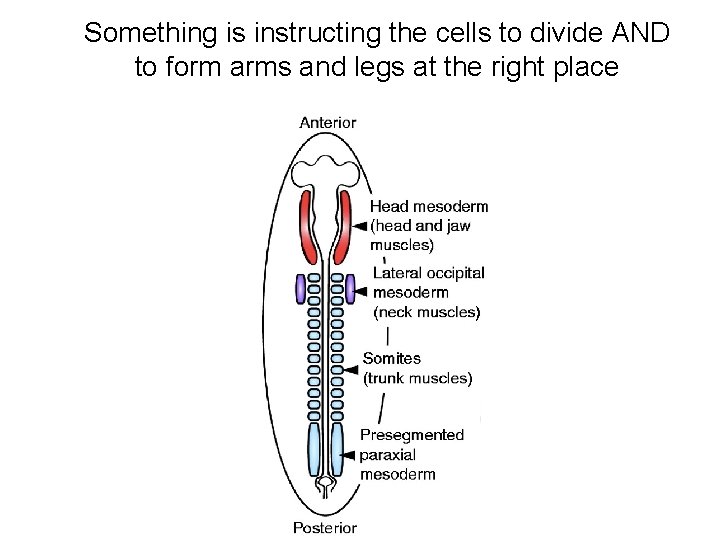
Something is instructing the cells to divide AND to form arms and legs at the right place
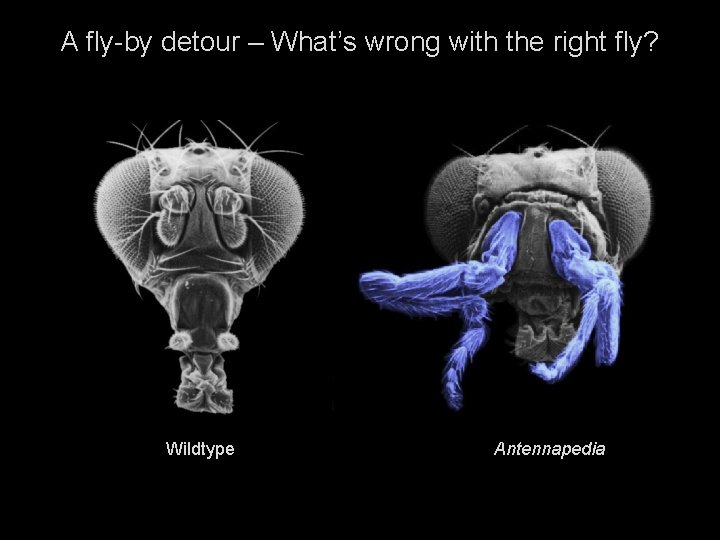
A fly-by detour – What’s wrong with the right fly? Wildtype Antennapedia
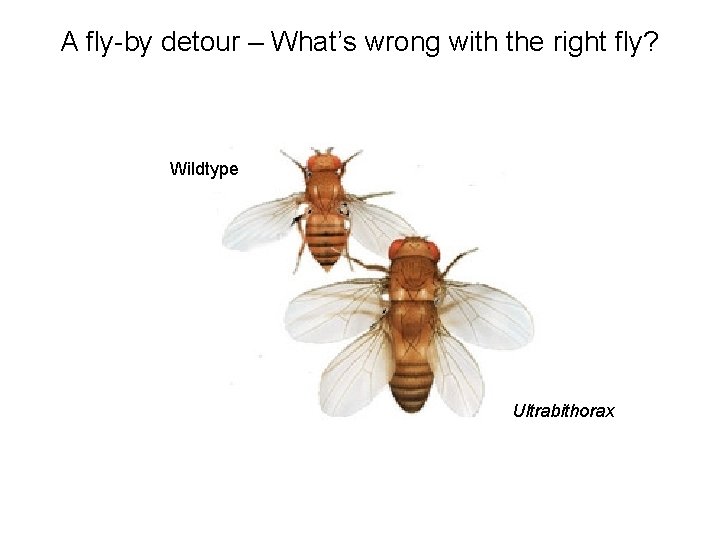
A fly-by detour – What’s wrong with the right fly? Wildtype Ultrabithorax
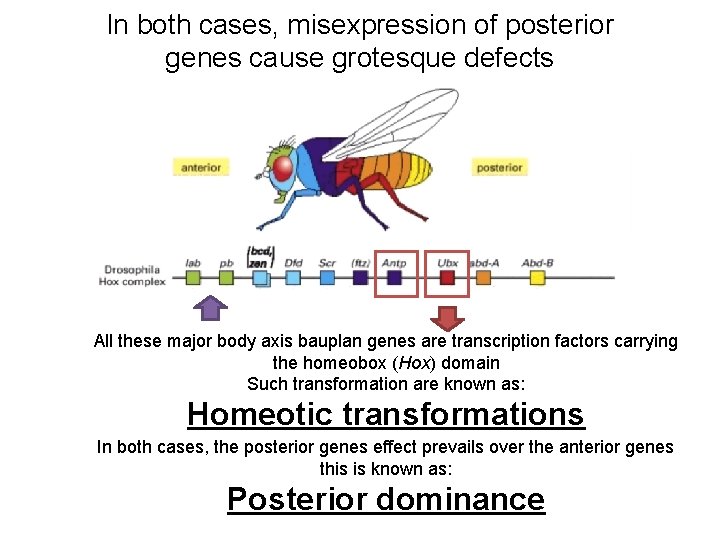
In both cases, misexpression of posterior genes cause grotesque defects All these major body axis bauplan genes are transcription factors carrying the homeobox (Hox) domain Such transformation are known as: Homeotic transformations In both cases, the posterior genes effect prevails over the anterior genes this is known as: Posterior dominance
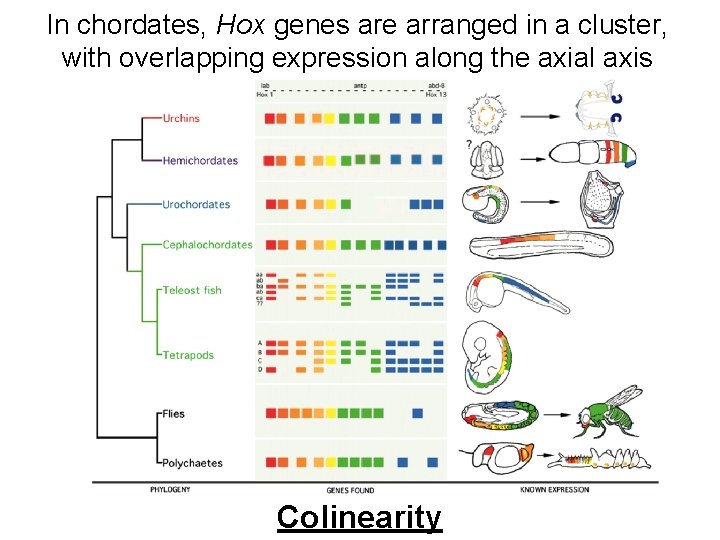
In chordates, Hox genes are arranged in a cluster, with overlapping expression along the axial axis Colinearity
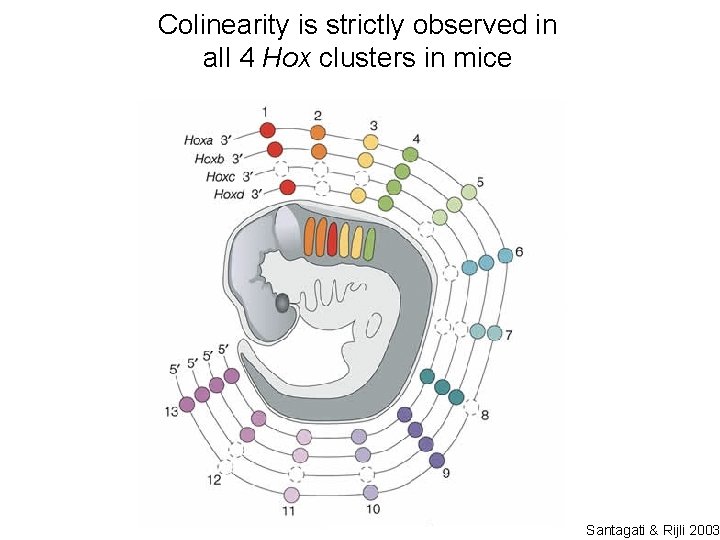
Colinearity is strictly observed in all 4 Hox clusters in mice Santagati & Rijli 2003
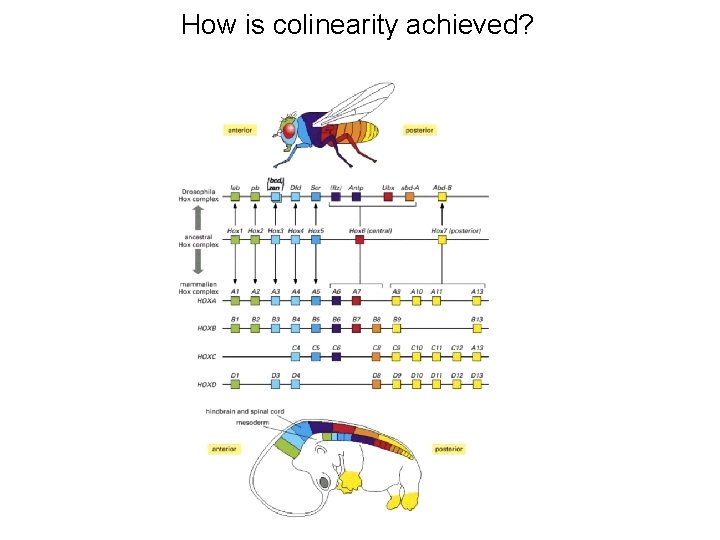
How is colinearity achieved?
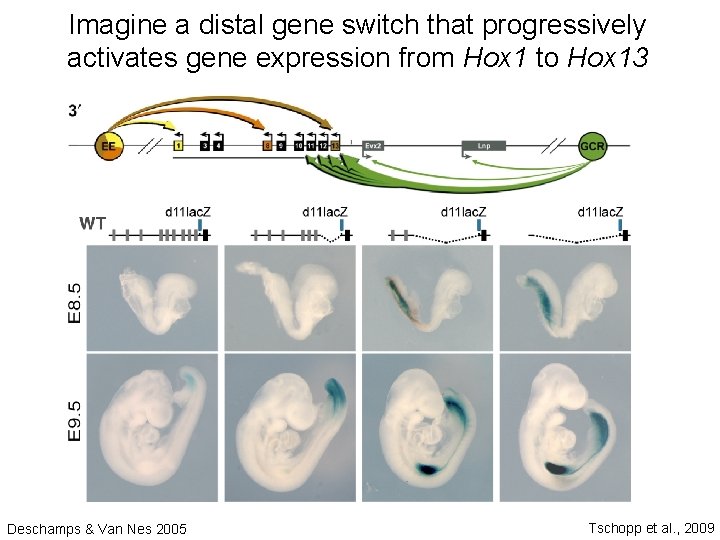
Imagine a distal gene switch that progressively activates gene expression from Hox 1 to Hox 13 Deschamps & Van Nes 2005 Tschopp et al. , 2009
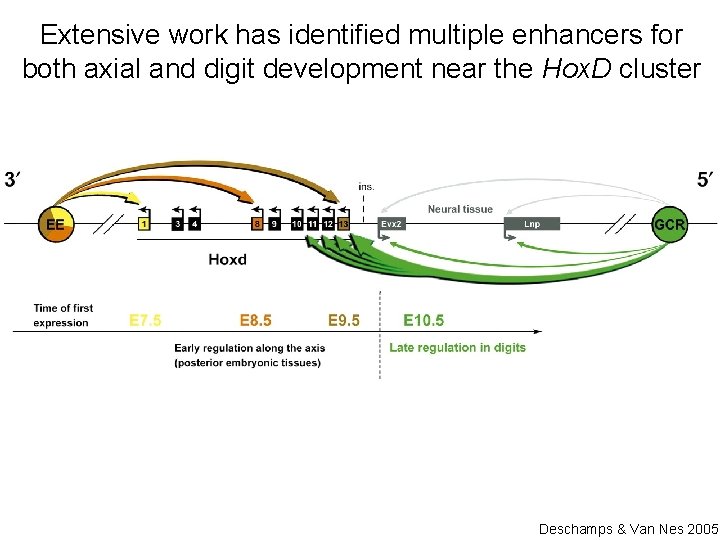
Extensive work has identified multiple enhancers for both axial and digit development near the Hox. D cluster Deschamps & Van Nes 2005
Lecture outline and objectives • • Mouse development Major developmental axes • Developmental regulators • Limb development • Long-range regulation • Fine-tuning from distal elements • Evolutionary adaptation
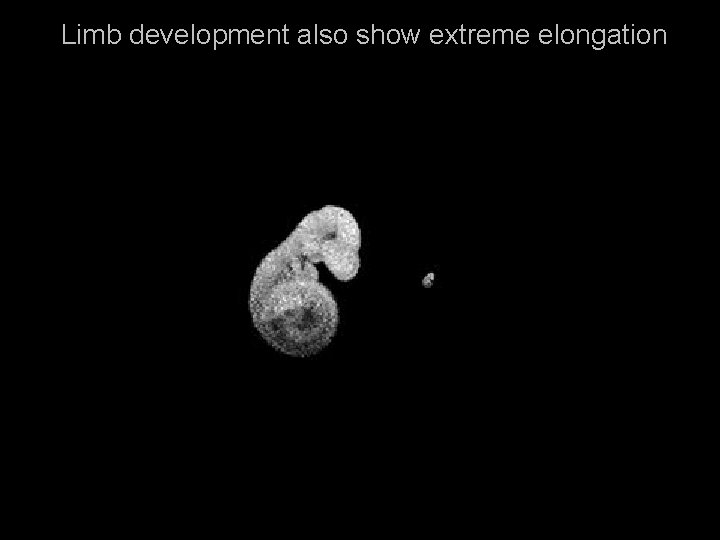
Limb development also show extreme elongation
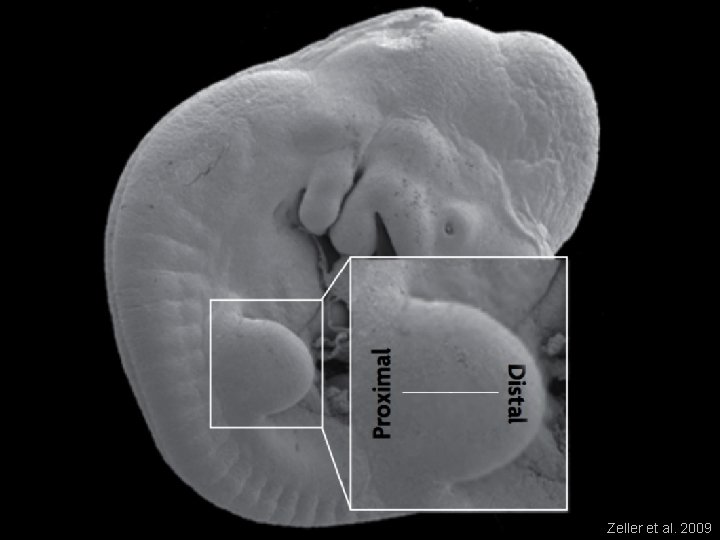
Zeller et al. 2009
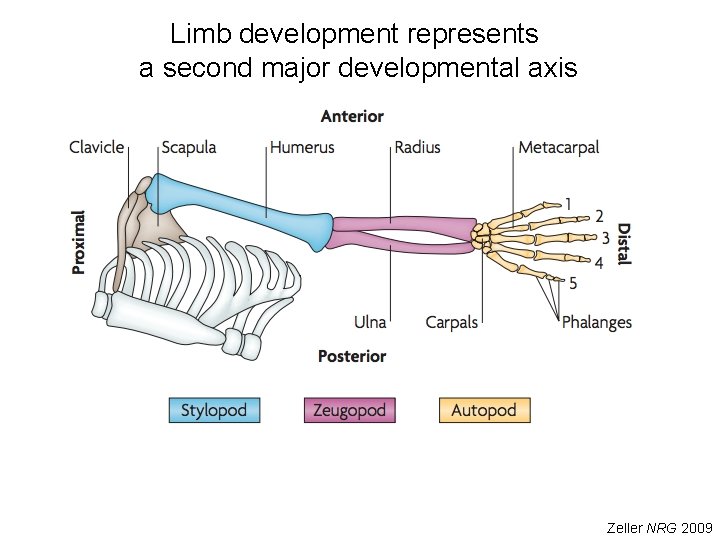
Limb development represents a second major developmental axis Zeller NRG 2009
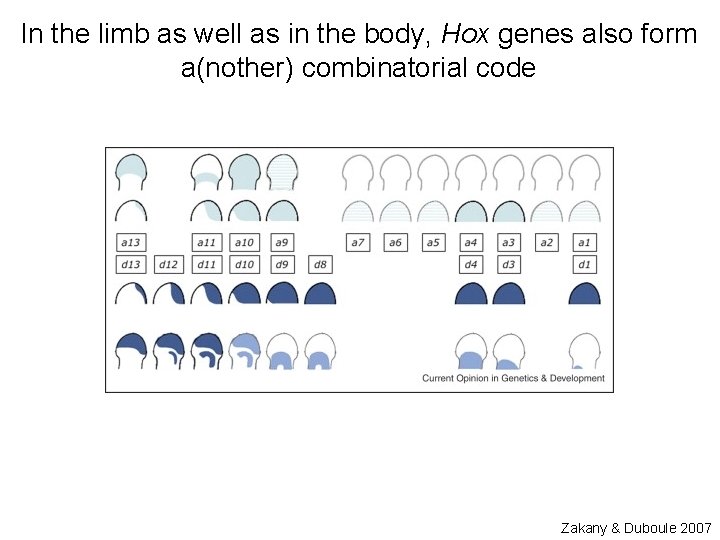
In the limb as well as in the body, Hox genes also form a(nother) combinatorial code Zakany & Duboule 2007
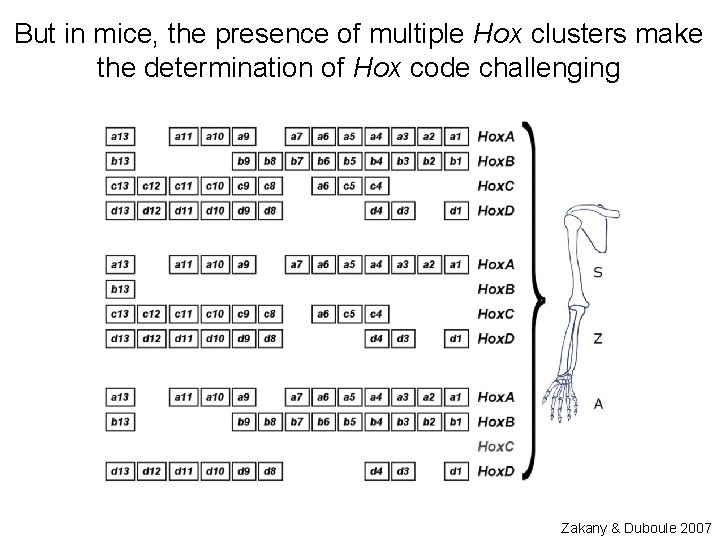
But in mice, the presence of multiple Hox clusters make the determination of Hox code challenging Zakany & Duboule 2007
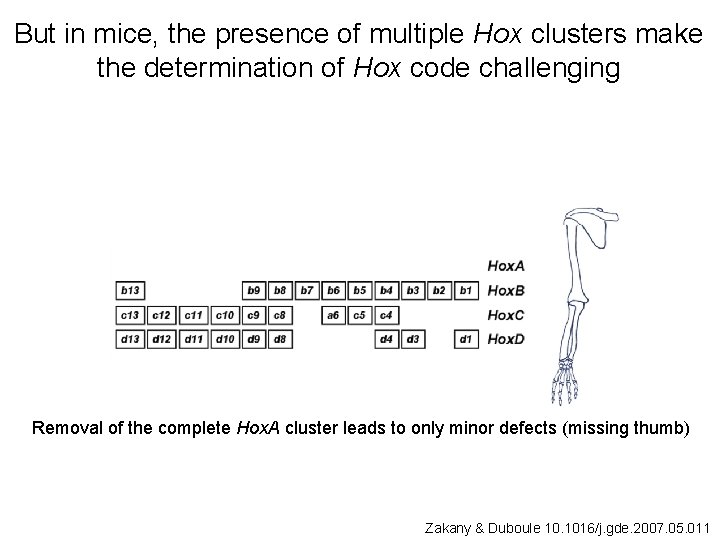
But in mice, the presence of multiple Hox clusters make the determination of Hox code challenging Removal of the complete Hox. A cluster leads to only minor defects (missing thumb) Zakany & Duboule 10. 1016/j. gde. 2007. 05. 011
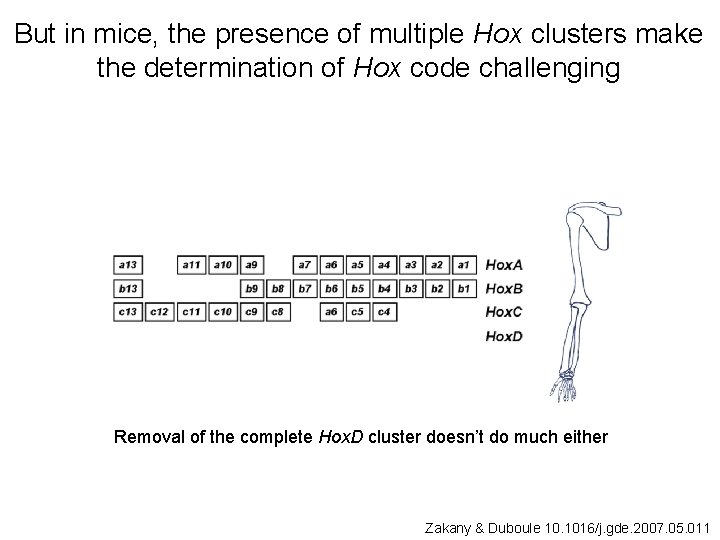
But in mice, the presence of multiple Hox clusters make the determination of Hox code challenging Removal of the complete Hox. D cluster doesn’t do much either Zakany & Duboule 10. 1016/j. gde. 2007. 05. 011
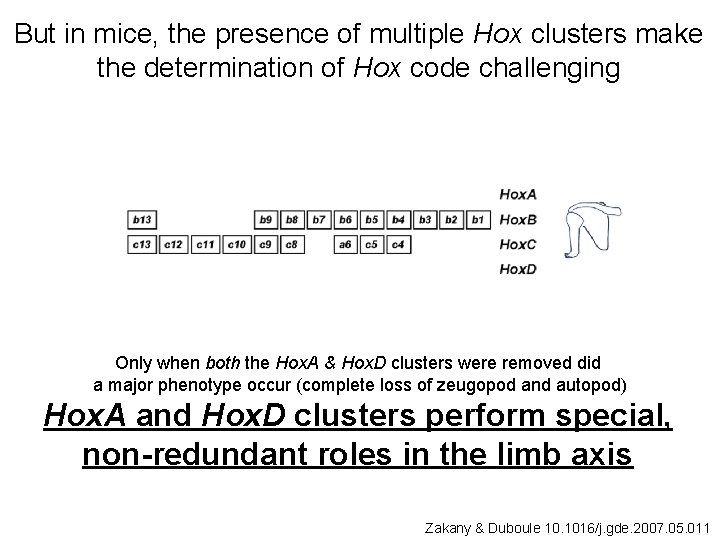
But in mice, the presence of multiple Hox clusters make the determination of Hox code challenging Only when both the Hox. A & Hox. D clusters were removed did a major phenotype occur (complete loss of zeugopod and autopod) Hox. A and Hox. D clusters perform special, non-redundant roles in the limb axis Zakany & Duboule 10. 1016/j. gde. 2007. 05. 011
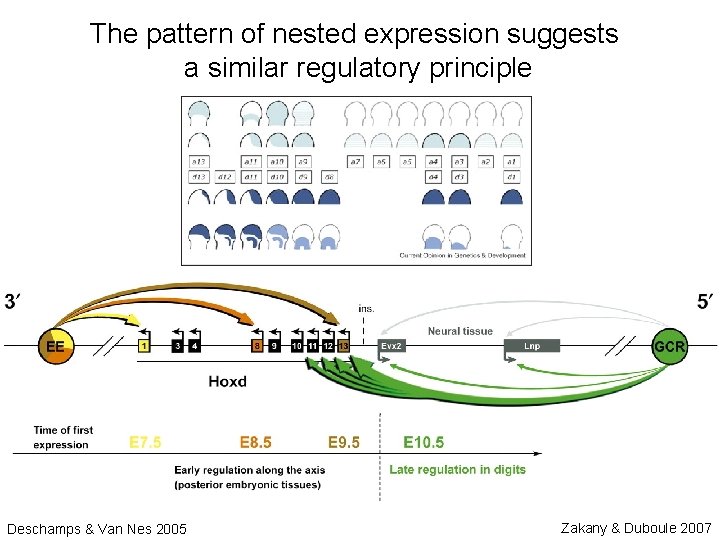
The pattern of nested expression suggests a similar regulatory principle Deschamps & Van Nes 2005 Zakany & Duboule 2007
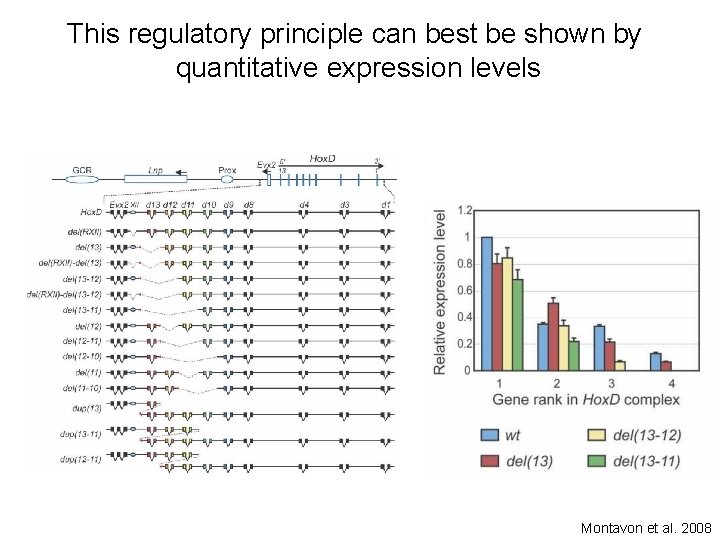
This regulatory principle can best be shown by quantitative expression levels Montavon et al. 2008
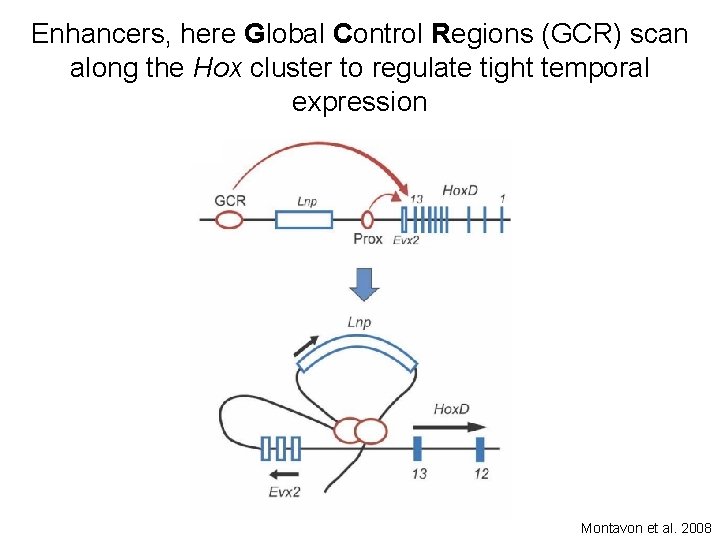
Enhancers, here Global Control Regions (GCR) scan along the Hox cluster to regulate tight temporal expression Montavon et al. 2008
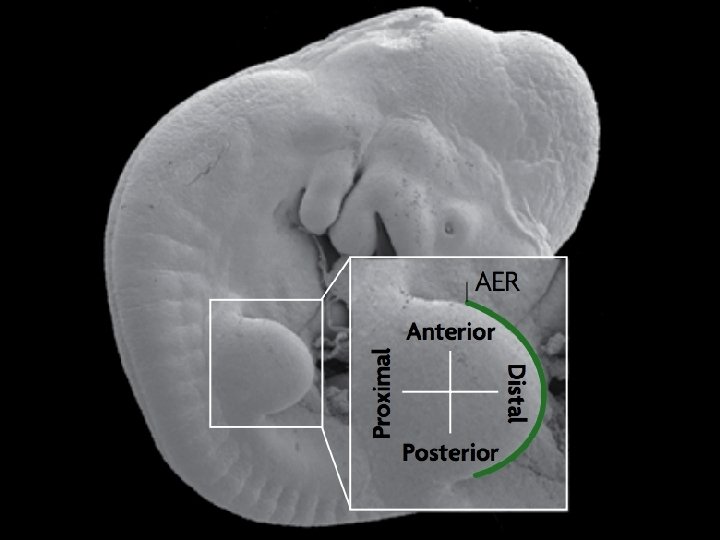
Zeller NRG 2009
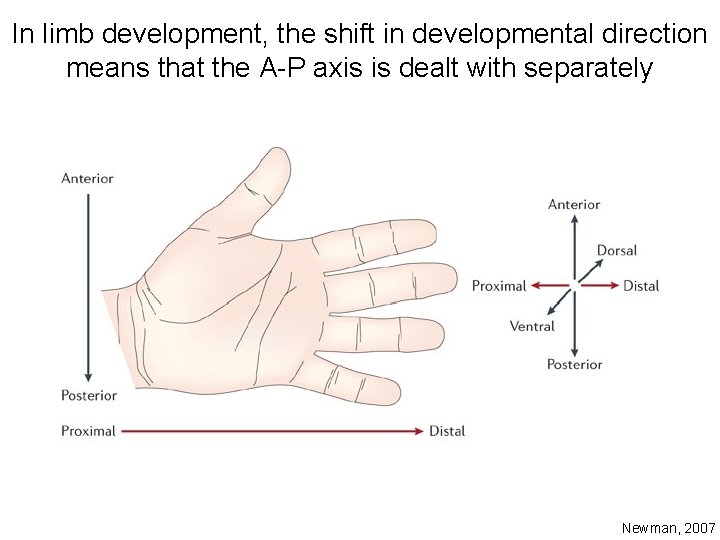
In limb development, the shift in developmental direction means that the A-P axis is dealt with separately Newman, 2007
Lecture outline and objectives • • Mouse development Major developmental axes • Developmental regulators • Limb development • Long-range regulation • Fine-tuning from distal elements • Evolutionary adaptation
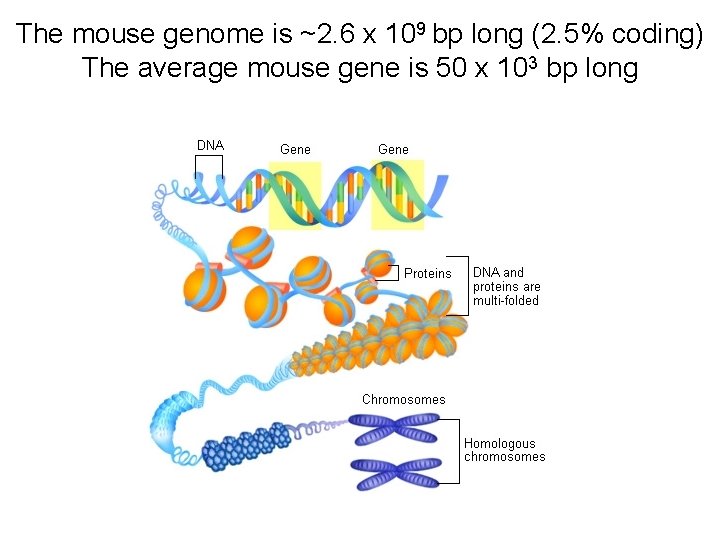
The mouse genome is ~2. 6 x 10⁹ bp long (2. 5% coding) The average mouse gene is 50 x 103 bp long
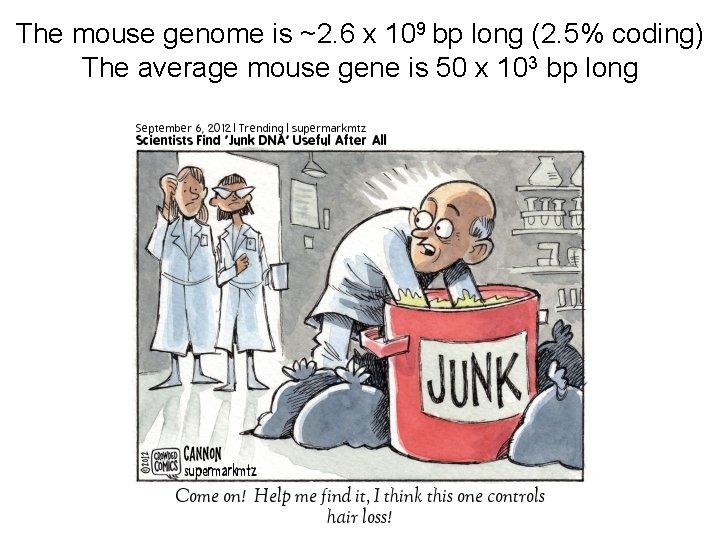
The mouse genome is ~2. 6 x 10⁹ bp long (2. 5% coding) The average mouse gene is 50 x 103 bp long
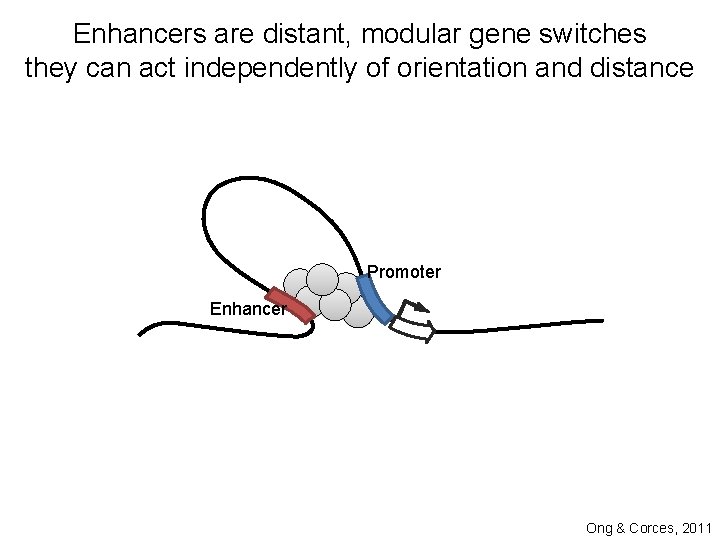
Enhancers are distant, modular gene switches they can act independently of orientation and distance Promoter Enhancer Ong & Corces, 2011
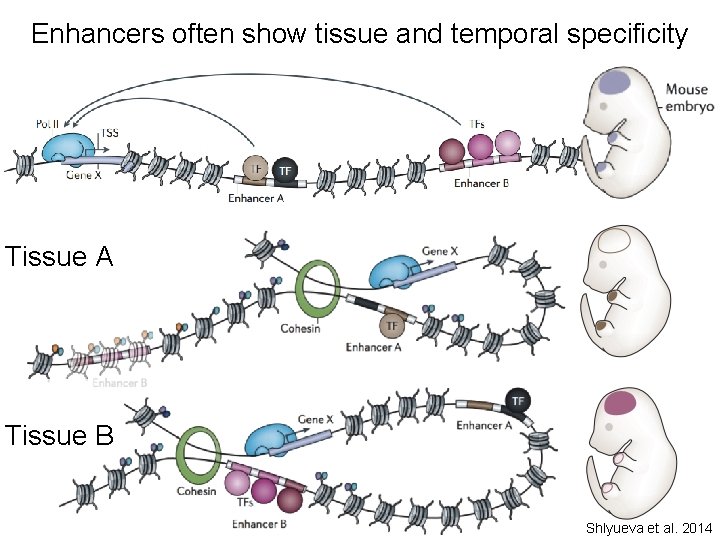
Enhancers often show tissue and temporal specificity Tissue A Tissue B Shlyueva et al. 2014
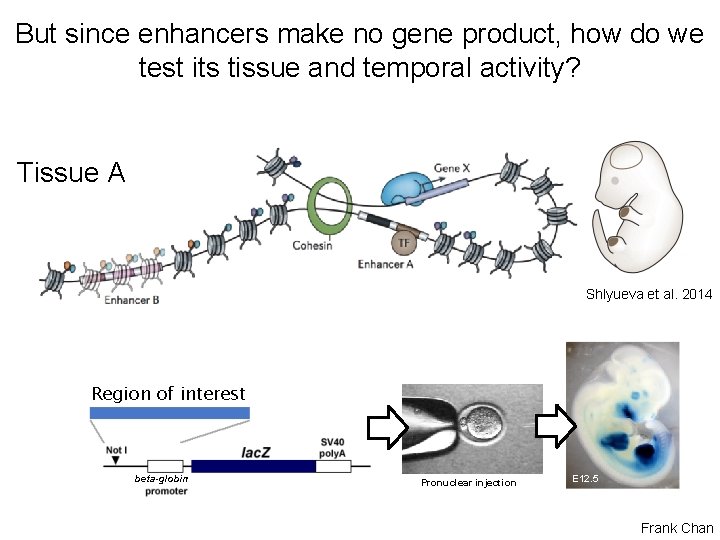
But since enhancers make no gene product, how do we test its tissue and temporal activity? Tissue A Shlyueva et al. 2014 Region of interest beta-globin Pronuclear injection E 12. 5 Frank Chan
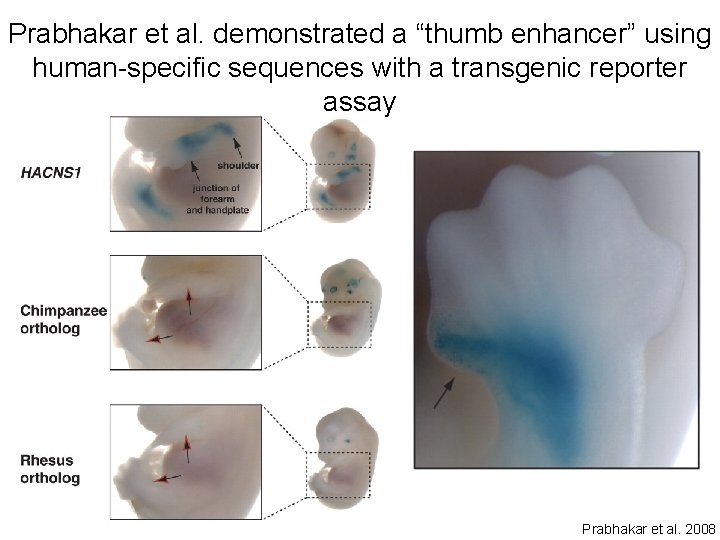
Prabhakar et al. demonstrated a “thumb enhancer” using human-specific sequences with a transgenic reporter assay Prabhakar et al. 2008
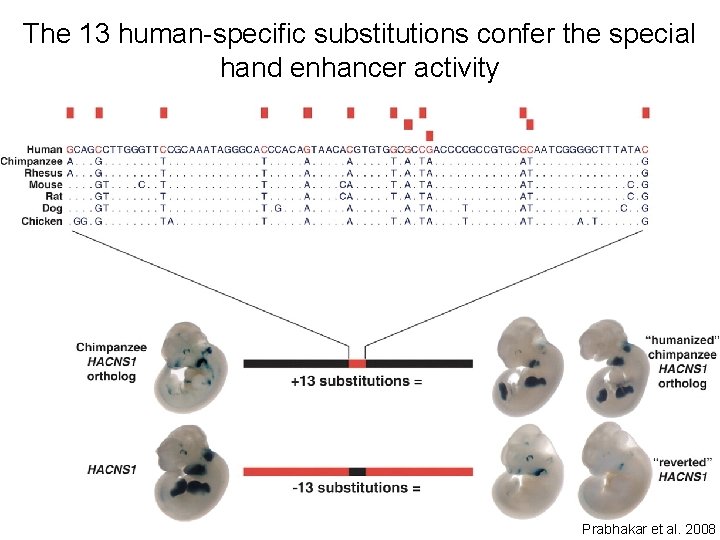
The 13 human-specific substitutions confer the special hand enhancer activity Prabhakar et al. 2008
Lecture outline and objectives • • Mouse development Major developmental axes • Est. of axial and limb axes Developmental regulators • Hox genes evol. & conservation • Homeotic transformations Limb development • Stylo, zeugo and autopods Long-range regulation • Enhancers, DNA looping Fine-tuning from distal elements • “cis-regulatory hypothesis” Evolutionary adaptation • Human-specific changes
- Slides: 36