
Molecular Hematology Normal somatic cell has 46 chromosomes
- Slides: 22
Molecular Hematology
Normal somatic cell has 46 chromosomes = diploid. Ova and sperm have 23 chromosomes = haploid. Karyotype shows the chromosomes from a mitotic cell in numerical order. Aneuploid: A somatic cell with more or less than 46 chromosomes is termed
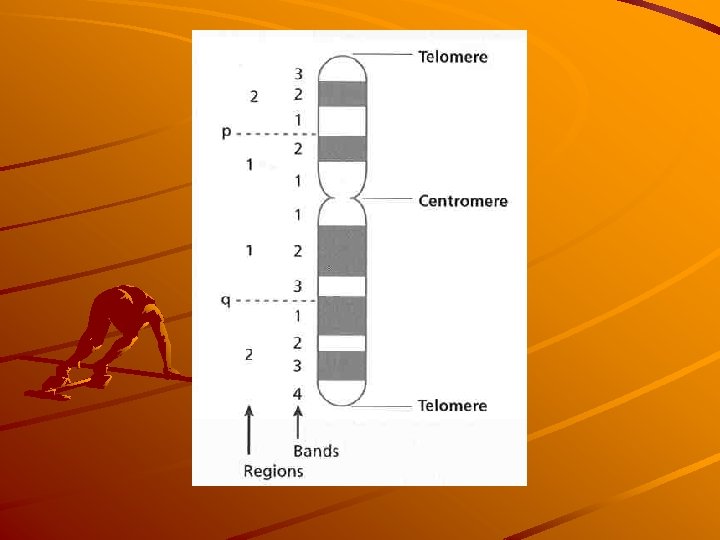
Hyperdiploid: More than 46 chromosomes Hypodiploid : Less than 46 chromosomes. Pseudodiploid: 46 chromosomes but with rearrangements. Each chromosome has two arms: short arm = p and long arm = q. Centromere: Short and long arms meet at the. Telomeres: Ends of the chromosomes. Each arm is divided into regions numbered outwards from the centromere. Each region is divided into bands.
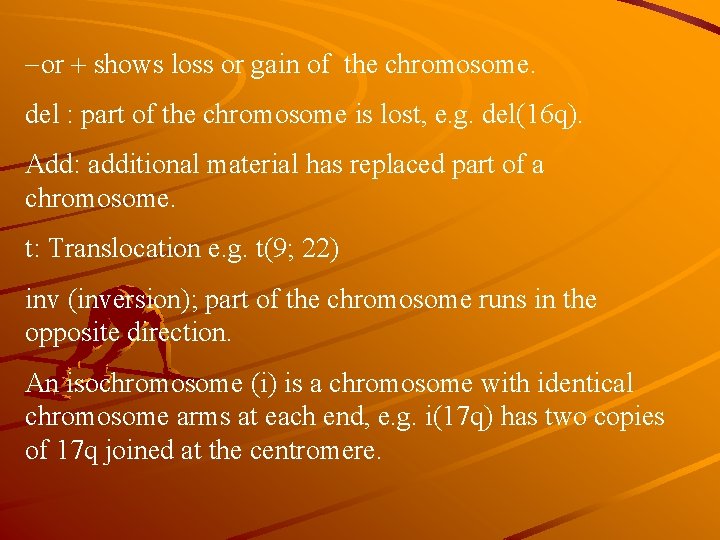
-or shows loss or gain of the chromosome. del : part of the chromosome is lost, e. g. del(16 q). Add: additional material has replaced part of a chromosome. t: Translocation e. g. t(9; 22) inv (inversion); part of the chromosome runs in the opposite direction. An isochromosome (i) is a chromosome with identical chromosome arms at each end, e. g. i(17 q) has two copies of 17 q joined at the centromere.
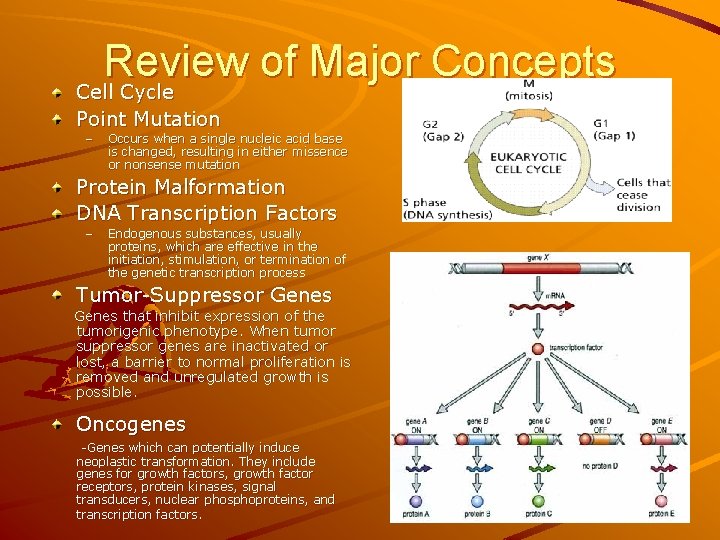
Review of Major Concepts Cell Cycle Point Mutation – Occurs when a single nucleic acid base is changed, resulting in either missence or nonsense mutation Protein Malformation DNA Transcription Factors – Endogenous substances, usually proteins, which are effective in the initiation, stimulation, or termination of the genetic transcription process Tumor-Suppressor Genes that inhibit expression of the tumorigenic phenotype. When tumor suppressor genes are inactivated or lost, a barrier to normal proliferation is removed and unregulated growth is possible. Oncogenes -Genes which can potentially induce neoplastic transformation. They include genes for growth factors, growth factor receptors, protein kinases, signal transducers, nuclear phosphoproteins, and transcription factors.
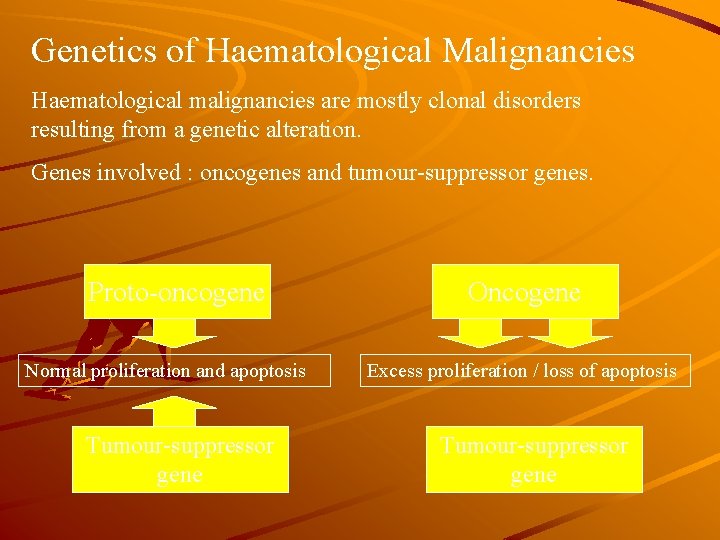
Genetics of Haematological Malignancies Haematological malignancies are mostly clonal disorders resulting from a genetic alteration. Genes involved : oncogenes and tumour-suppressor genes. Proto-oncogene Normal proliferation and apoptosis Tumour-suppressor gene Oncogene Excess proliferation / loss of apoptosis Tumour-suppressor gene
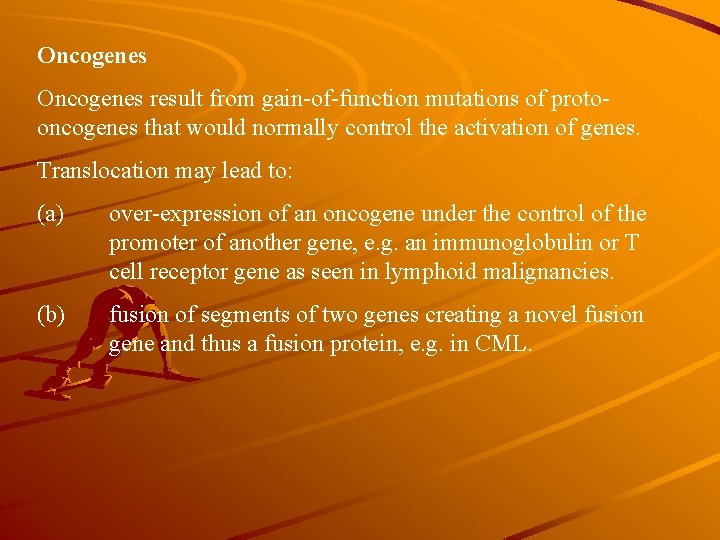
Oncogenes result from gain-of-function mutations of protooncogenes that would normally control the activation of genes. Translocation may lead to: (a) over-expression of an oncogene under the control of the promoter of another gene, e. g. an immunoglobulin or T cell receptor gene as seen in lymphoid malignancies. (b) fusion of segments of two genes creating a novel fusion gene and thus a fusion protein, e. g. in CML.
Tumour-Suppressor Genes Tumour-suppressor genes are subject to loss-of-function mutations (point mutation or deletion) and thus malignant transformation. Tumour-suppressor genes help regulate cells to pass through different phases of the cell cycle, e. g. G 1 to S, S to G 2 and mitosis. Clonal Progression Malignant cells may acquire new characteristics resulting from new chromosomal changes causing acceleration. Multidrug resistance (MDR) is one complication. The cells may start to express a protein which actively pumps the chemotherapeutic agent to the outside of the cells.
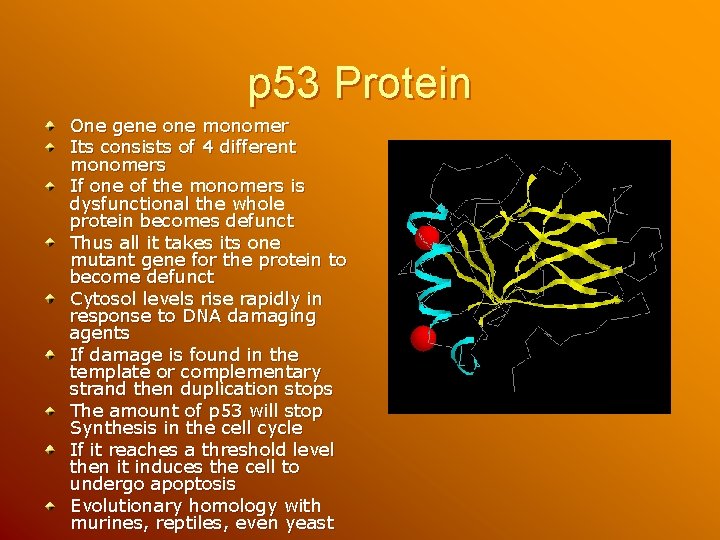
p 53 Protein One gene one monomer Its consists of 4 different monomers If one of the monomers is dysfunctional the whole protein becomes defunct Thus all it takes its one mutant gene for the protein to become defunct Cytosol levels rise rapidly in response to DNA damaging agents If damage is found in the template or complementary strand then duplication stops The amount of p 53 will stop Synthesis in the cell cycle If it reaches a threshold level then it induces the cell to undergo apoptosis Evolutionary homology with murines, reptiles, even yeast P 53 monomer
Causes of leukemia? ? ? Clonal expansion a cell that has the ability to self-replicate but unable to differentiate Genetics – Higher incidence in siblings and twins Virus – Clusters of leukemia Ionizing radiation – Survivors of Hiroshima and Nagasaki
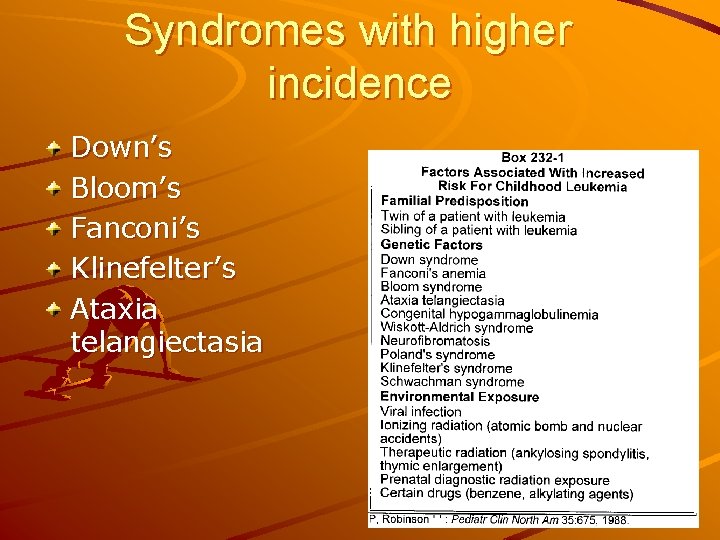
Syndromes with higher incidence Down’s Bloom’s Fanconi’s Klinefelter’s Ataxia telangiectasia
Methods Used to Study the Genetics of Malignant Cells 1 -Karyotype Analysis(Cytogenetic studies) Images of chromosomes are captured when cell is in metaphase. 2 -Immunofluorescence Staining Can be useful for a few chromosomal abnormalities, e. g. promyelocytic leukaemia protein which normally has a punctate distribution but is diffusely scattered in acute promyelocytic leukaemia with the t(15; 17) translocation. Abnormal fusion proteins may also be detected by specific monoclonal antibodies.
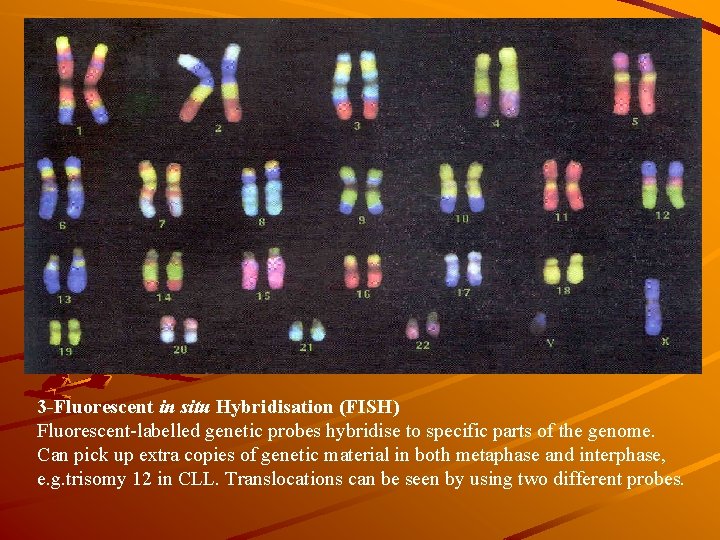
3 -Fluorescent in situ Hybridisation (FISH) Fluorescent-labelled genetic probes hybridise to specific parts of the genome. Can pick up extra copies of genetic material in both metaphase and interphase, e. g. trisomy 12 in CLL. Translocations can be seen by using two different probes.
4 -Southern Blot Analysis Restriction enzyme digestion of DNA, gel electrophoresis and “blotting” to a suitable membrane. DNA fragments are hybridised to a probe complementary to the gene of interest. If the probe recognises a segment within the boundaries of a single fragment one band is identified. If the gene has been translocated to a new area in the genome a novel band of different electrophoretic mobility is seen. 5 -Polymerase Chain Reaction (PCR) Can identify specific translocations, e. g. t(9; 22). Can also detect clonal cells of B- or T-cell lineage by immunoglobulin or T-cell receptor (TCR) gene rearrangement analysis. Sensitivity (can detect one abnormal cell in 105– 106 normal cells) makes this of value in monitoring patients with minimal residual disease (MRD).
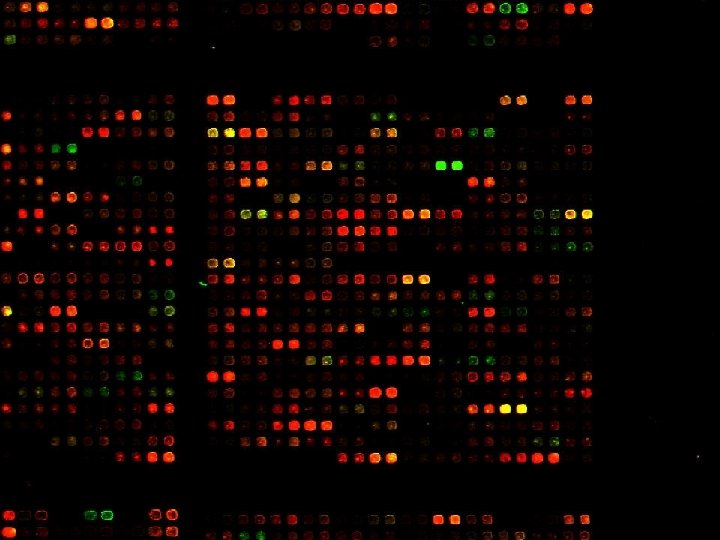
6 -DNA Microarray Platforms Rapid and comprehensive analysis of cellular transcription by hybridising labelled cellular m. RNA to DNA probes immobilised on a solid support. Oligonucleotides or complementary DNA (c. DNA) arrays are immobilised on the array and fluorescent labelled RNA from the cell sample is annealed to the DNA matrix. Can determine the m. RNA expression pattern of different leukaemia subtypes.
Thalassemias are a heterogenous group of genetic disorders – Heterozygous individuals exhibit varying levels of severity – The disorders are due to mutations that decrease the rate of synthesis of one of the two globin chains ( or ). The genetic defect may be the result of:
Thalassemias A mutation in the noncoding introns of the gene resulting in inefficient RNA splicing to produce m. RNA, and therefore, decreased m. RNA production The partial or total deletion of a globin gene A mutation in the promoter leading to decreased expression A mutation at the termination site leading to production of longer, unstable m. RNA A nonsense mutation – Any of these defects lead to: An excess of the other normal globin chain A decrease in the normal amount of physiologic hemoglobin made Development of a hypochromic, microcytic anemia
Thalassemias The clinical expression of the different gene combinations (1 from mom and 1 from dad) are as follows: – 0/ 0, +1/ +1, or 0/ +1, +2, or +3 = thalassemia major, the most severe form of the disease. Imbalanced synthesis leads to decreased total RBC hemoglobin production and a hypochromic, microcytic anemia. Excess chains precipitate causing hemolysis of RBC precursors in the bone marrow leading to ineffective erythropoiesis In circulating RBCs, chains may also precipitate leading to pitting in the spleen and decreased RBC survival via a chronic hemolytic process. The major cause of the severe anemia is the ineffective erythropoiesis.
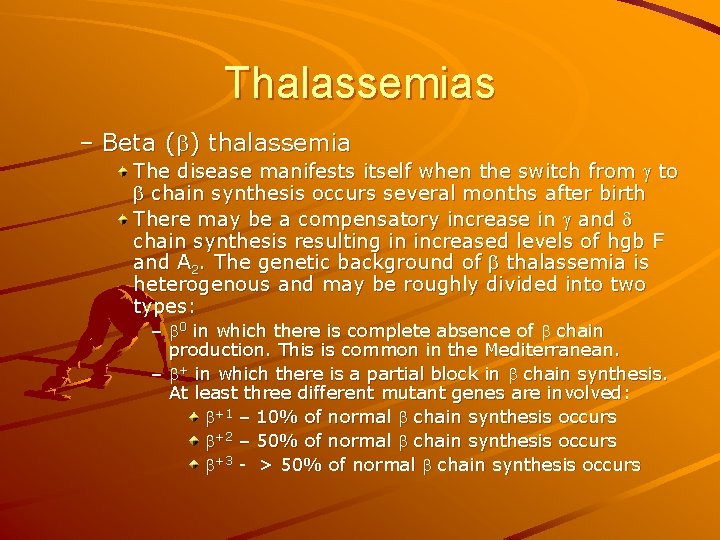
Thalassemias – Beta ( ) thalassemia The disease manifests itself when the switch from to chain synthesis occurs several months after birth There may be a compensatory increase in and chain synthesis resulting in increased levels of hgb F and A 2. The genetic background of thalassemia is heterogenous and may be roughly divided into two types: – 0 in which there is complete absence of chain production. This is common in the Mediterranean. – + in which there is a partial block in chain synthesis. At least three different mutant genes are involved: +1 – 10% of normal chain synthesis occurs +2 – 50% of normal chain synthesis occurs +3 - > 50% of normal chain synthesis occurs
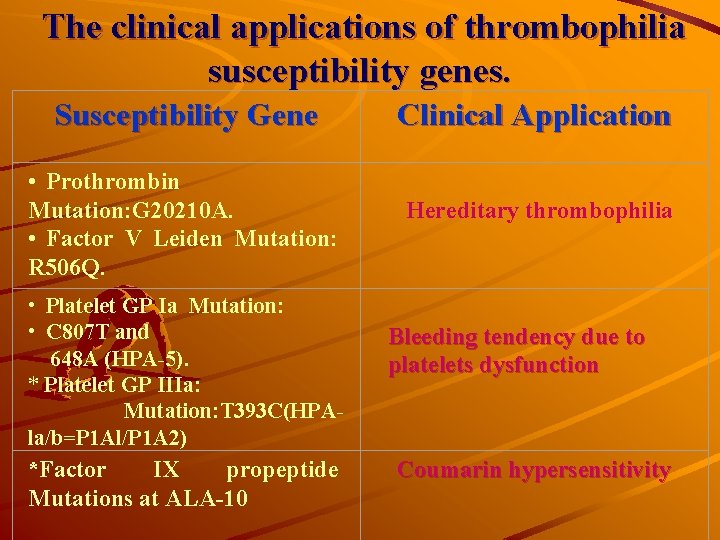
The clinical applications of thrombophilia susceptibility genes. Susceptibility Gene Clinical Application • Prothrombin Mutation: G 20210 A. • Factor V Leiden Mutation: R 506 Q. Hereditary thrombophilia • Platelet GP Ia Mutation: • C 807 T and 648 A (HPA-5). * Platelet GP IIIa: Mutation: T 393 C(HPAla/b=P 1 Al/P 1 A 2) *Factor IX propeptide Bleeding tendency due to platelets dysfunction Mutations at ALA-10 Coumarin hypersensitivity